Blog Archives
A Journey Into Manhood From the Path of an Idiot
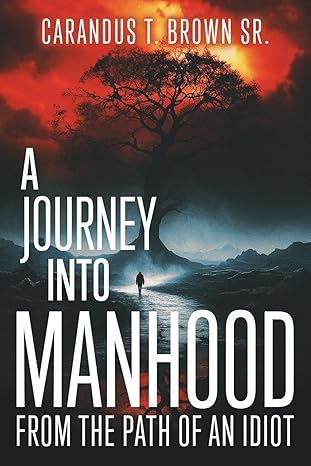

Carandus Brown’s A Journey into Manhood from the Path of an Idiot is a raw and deeply personal memoir that chronicles one man’s long, often painful climb from childhood confusion to adult accountability. With each chapter framed as a “lesson,” Brown reflects on his life from traumatic events and broken family dynamics to brushes with the law, misguided relationships, and spiritual reckonings. What starts as a candid account of pain and dysfunction slowly morphs into a powerful meditation on growth, faith, and the courage to confront your past. This is a book about how a boy with no clear path to manhood stumbles, fights, learns, and ultimately walks that road anyway.
Reading this book felt like being handed someone’s journal, written with no filter and no concern for appearances. I admired that. Brown’s writing is emotional and gritty, full of hurt and hope in equal measure. He doesn’t try to dress up his experiences. He owns his mistakes, often with heartbreaking honesty, and that kind of vulnerability resonated with me. Some parts were painful to get through, especially the loss of his nephew and the scenes with his father, but those chapters gripped me. It’s not just the storytelling, though. It’s how Brown unpacks each memory, not just to remember it, but to understand what it meant, what it cost, and how it changed him.
There were moments when the writing got a little long-winded. I sometimes wished he’d pulled back just enough to let the reader breathe. But even in those moments, I could feel the sincerity behind every word. And there’s poetry in how he writes, even when he’s angry or confused; there’s rhythm and raw beauty to the way he strings his thoughts together. His lesson on education, how he faked reading as a kid just to survive the shame, hit me in the gut. And the spiritual themes, especially his talks with God, felt real. Not polished. Not preachy. Just real.
This isn’t a polished self-help book or a clinical story of recovery. It’s a firestorm of memory and meaning, one that will resonate with anyone who’s ever felt lost, unloved, or misunderstood. I’d recommend A Journey into Manhood from the Path of an Idiot to young men navigating tough upbringings, to anyone grappling with forgiveness, and to readers who crave stories that bleed truth. Brown may have taken the long way to manhood, but this book proves he got there, and he brought a whole lot of wisdom with him.
Pages: 160 | ISBN : 978-1681116082

KNOWLEDGE AND WISDOM: SUBLIME THOUGHTS TO ELEVATE YOUR LIFE
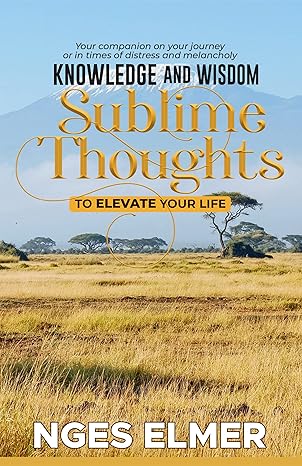

Knowledge and Wisdom: Sublime Thoughts to Elevate Your Life is a pocket-sized collection of over 300 quotations arranged alphabetically by subject, compiled by Nges Elmer. It draws from a wide range of historical and contemporary figures like philosophers, writers, leaders, and anonymous voices alike. The book presents bite-sized pieces of wisdom meant to inspire reflection, action, and growth in everyday life. Topics range from ambition and change to prayer and resilience, with each quote centered around themes such as education, love, forgiveness, success, and character. Designed to be carried easily, it’s positioned as both a spiritual and practical companion for personal development and social living.
Reading this book felt like walking through a garden of timeless truths. Some quotes struck me deeply, like William Wordsworth’s musing on the value of small acts of kindness or Emerson’s call to greet each day afresh. I appreciated that Elmer included reflections from diverse cultures and centuries, making the book feel universal in its intent. It’s not a narrative journey but a mosaic of ideas. I sometimes longed for more context or commentary to link them together, but maybe that’s the point: let the reader draw their own connections.
Stylistically, the book leans heavily on structure over storytelling, but it does what it sets out to do. Elmer’s choices are thoughtful, occasionally surprising, and clearly personal. I liked how he mixed sacred and secular wisdom without pushing an agenda. There’s a gentle, humble spirit throughout the compilation that makes it feel like advice from a wise friend rather than a lofty lecture. While not every quote felt equally strong or relevant, I found myself pausing to reflect more often than I expected.
Sublime Thoughts is a book I’d recommend for readers who like to sit with an idea and turn it over in their mind. It’s perfect for morning meditation, journaling prompts, or just flipping through when life feels noisy. Teachers, preachers, and writers looking for inspiration will likely find this a handy resource.
Pages: 114 | ASIN : B09JWRVMLK

The Shepherd: Experiencing Psalm 23

The Shepherd is a heartfelt and personal exploration of Psalm 23, written by James Collins, a pastor and veteran with a deep love for scripture. The book walks readers line by line through the famous psalm, connecting each phrase to stories from the Bible, real-life events, and personal anecdotes. It’s not a theological tome but rather a reflection, aiming to make the beauty and depth of Psalm 23 come alive for the everyday believer. With each chapter, Collins unpacks a single verse or idea, emphasizing God’s love, guidance, and care for His people in a way that’s accessible and full of warmth.
Collins writes simply, sometimes with humor, and often with deep emotion. He doesn’t try to impress the reader with scholarship; instead, he reaches for the heart. What stood out most to me was his ability to make ancient words feel fresh. His use of stories like the little boy in the hospital holding his ring finger or the Civil War soldier saved by a song brought me to tears. The message that “the Lord is always with you” is a good one, and it is repeated often.
I also appreciated Collins’s honesty about his own limitations. He says right out that he doesn’t know much about sheep, which makes his exploration of shepherding all the more relatable. That humility gives the book a kind of strength. But I also found myself wishing the book went deeper in parts. There’s a lot of comfort here, but not always a challenge. At times, it leaned into sentiment, which was moving.
By the end, I was glad I read it. This book is full of kindness. It doesn’t shout or try to prove anything. It gently reminds you that you’re not alone. I’d recommend The Shepherd to anyone who is hurting, anyone who’s looking for comfort, or anyone who wants to revisit the Psalms with a fresh set of eyes. It’s a good book to give to a friend going through something hard. It’s also a great companion to quiet mornings with coffee and prayer. It won’t shake up your theology, but it might just soothe your heart.
Pages: 114 | ASIN : B0F6M678SY
I’ve Lived It

Stoic Empathy is a sharp and heartfelt exploration of how two seemingly opposing traits, stoicism and empathy, can be merged into a potent tool for influence, resilience, and personal growth. Why was this an important book for you to write?
Because I’ve lived it. I’ve had to. I grew up in war-torn Tehran, navigating missile strikes and ideological oppression, and then started over as a refugee in Canada. Years later, I was leading high-stakes negotiations in sleek boardrooms as a corporate lawyer in America. Through it all, I found myself constantly reaching for two tools: my ability to stay calm and principled under pressure (stoicism), and my deep desire to understand and connect with others (empathy). People often see these as opposites, but in my life, they were partners—my survival tools, my leadership compass, my parenting strategy. I wrote Stoic Empathy because I wanted to offer a roadmap for others who are trying to live with power and integrity at once, in a world that often tells them they have to choose.
What were some ideas that were important for you to share in this book?
One was that self-control is not about suppression—it’s about clarity.
The other was that empathy doesn’t have to make you soft; it can actually make you sharper.
I wanted to challenge the misconception that empathy is merely emotional absorption. In truth, it can be tactical, discerning, and fierce. I also wanted to speak to people who feel deeply but don’t know what to do with that depth—especially those in leadership positions. And lastly, I needed to share the idea that influence doesn’t require dominance; it requires alignment—between who we are, what we believe, and how we show up.
Did you find anything in your research of this book that surprised you?
Yes—how many ancient philosophers were deeply attuned to what we now call emotional intelligence. I expected to pull heavily from modern psychology and neuroscience, and I did, but what surprised me was how relevant the writings of Epictetus and Marcus Aurelius felt when filtered through the lens of human connection. I also discovered fascinating neurological evidence that validated what I’d experienced instinctively as a survivor of oppression and war, but also as a lawyer and a mother—that our brains are wired to both mirror and regulate emotions, and that mastering that dance is what gives us real power.
What is one thing that you hope readers take away from Stoic Empathy?
That strength and sensitivity are not at odds. In fact, our most effective leaders, partners, and creators are often those who can feel deeply but act with discipline. If there’s one thing I hope readers take away, it’s this: You are allowed to feel everything—but you don’t have to do everything those feelings suggest. Power lies not in shutting down or giving in, but in standing calmly at the center of it all, discerning what matters, and choosing how to move forward with grace.
Author Website
Stoicism combined with empathy may sound like a contradiction in terms. But when these seemingly opposing forces are harnessed together, they have the power to change your life.
From surviving missile attacks and political oppression in Iran to leading high-stakes legal teams and negotiations in corporate America, Shermin Kruse’s journey fuels her mission to merge empathy and stoicism as tools for navigating power, justice, and human connection in every facet of life. In this eye-opening book, she offers you this radical perspective shift—anchored in up-to-the-minute research—to help you navigate life’s challenges with power and principles.
We often think of empathy as an emotional stance: we feel what someone else is feeling. But Kruse outlines a form of empathy that’s based in cognition, not emotion—a way for us to understand what the other person is thinking and feeling while keeping a distance from their feeling state—and shows us how we can strategically maneuver our level of engagement from “emotional empathy” to “cognitive empathy” in different circumstances. Then she utilizes Stoic philosophy and modern science to outline the how of emotional regulation and control. The bridge she builds between Stoicism and empathy gives us the knowledge and discipline we need to:
Calmly assess the power dynamics of any situation
Understand and manage our own emotions as well as the emotions of others
Defuse danger and turn conflict into connection
Skillfully steer a challenging conversation toward the result we want
Whether you’re a leader striving to succeed in your role with integrity, an educator seeking to guide curious minds with compassion, a parent nurturing resilience in your children, or simply facing a personal or professional crossroads, Stoic Empathy is an essential toolkit for negotiating success in every area of your life.
Stoic Empathy: The Road Map to a Life of Influence, Self-Leadership, and Integrity
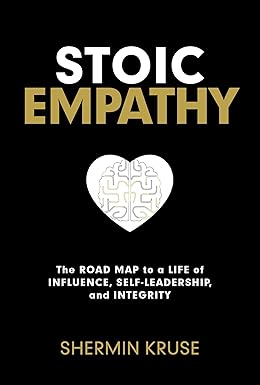
Shermin Kruse’s Stoic Empathy is a sharp and heartfelt exploration of how two seemingly opposing traits, stoicism and empathy, can be merged into a potent tool for influence, resilience, and personal growth. The book mixes personal history, ancient philosophy, neuroscience, and practical advice to introduce the concept of “Stoic Empathy,” the intentional blend of emotional awareness and emotional control. Kruse breaks down cognitive and emotional empathy, offers techniques from both domains, and delivers them through compelling stories, case studies, and reflections from her own turbulent journey from Iran to North America. The message is clear: you can be strong without being cold, and kind without being soft.
What struck me right away was Kruse’s voice. She doesn’t hide behind academic detachment or preach from a mountaintop. Instead, she lays her life bare—stories of war, immigration, trauma, injustice, love, and ambition. And she does it in prose that is raw but composed, often poetic but never indulgent. I felt moved, more than once, not just because of what she lived through, but how she translated those scars into strength. Her writing is both precise and deeply emotional, a difficult balance she pulls off with skill. Kruse somehow made a guidebook feel like a memoir.
Now, in terms of the ideas, some of them hit like a lightning bolt. The way she differentiates cognitive and emotional empathy, then teaches you when to use each, is flat-out brilliant. I’ve read plenty of books on leadership and emotional intelligence, but few are this actionable and easily understood. She doesn’t just give you theory, she shows how it plays out in hard rooms with high stakes. There’s pain in this book. There’s injustice. But Kruse doesn’t wallow. She’s honest about the ugliness in the world, but relentless in her belief that we can navigate it ethically, if we keep both a cool head and a warm heart.
I’d recommend Stoic Empathy to anyone who leads, whether that’s in a boardroom, a classroom, a household, or a movement. It’s especially relevant for folks juggling high-pressure decisions with a desire to stay kind and ethical. But more than that, it’s for anyone who’s ever felt torn between being tough and being tender. Kruse shows you how to be both, and more importantly, how to use that combination to change your world.
Pages: 288 | ASIN : B0D3YVPRX6
Finding Hanna’s Happy Place

Hanna’s on a mission. Her day starts with cookies and toys, but something still feels off, she can’t seem to find her Happy Place. So she heads outside with her trusty dog, Puppy B, and sets off on a heartwarming journey through the mountains. Along the way, she meets a buffalo, a fox, a moose, a bear, and a snowy owl, each with their own idea of happiness. In the end, with a little help from her furry friend and a wise owl’s advice, Hanna discovers her Happy Place was right at home all along.
I really enjoyed this picture book. I’m always hunting for stories that not only capture my kids’ attention but also spark meaningful conversations. This one hit the sweet spot. The writing is gentle and warm, with a natural rhythm that made it a dream to read aloud. I appreciated how the story gave space for emotions. Hanna doesn’t quite know why she feels off, and that confusion is something kids really relate to. It doesn’t rush to fix the problem. It gives it air and lets it unfold. And the way the book wove in mindfulness without calling it that was brilliant.
The part where Hanna imagines her Happy Place and it’s not some big, wild adventure but sitting by the fire with her family? That moment had me. There’s a cozy magic to the message that feels like a hug. The hand-drawn illustrations are soft, sweet, and full of personality. Puppy B is the kind of character kids instantly fall in love with. My kids were giggling, pointing, and asking if we could read it again.
If you teach young kids or have young kids, Finding Hanna’s Happy Place is a gem. It’s perfect for talking about feelings, imagination, and what it means to feel at peace. I’d recommend it to families, educators, counselors—anyone who wants to help kids understand themselves a little better. It’s warm, wise, and wonderful.
Pages: 49 | ASIN : B0F5NMDZZS
One Grain of Sand
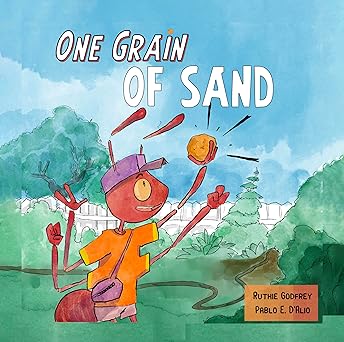
This sweet children’s book by Ruthie Godfrey starts with a colony of ants who are thrown into chaos when what they think is an earthquake turns out to be a dog named Scruffy digging with wild abandon. Their carefully built home is in shambles. Just when things look a little hopeless, an elder ant shares how the colony was first built—patiently and bit by bit, “one grain of sand at a time.” Inspired by that wisdom, the young ants rally together and rebuild their home through teamwork and determination. It’s a simple message wrapped in a colorful and heartwarming tale.
There’s something so powerful about how the book takes such a big idea—perseverance—and shrinks it down into something kids can really get. I loved the part where the elder ant said, “Each day we worked. Little by little, bit by bit.” It’s the same thing I tell my students when they’re frustrated with math or trying to read a big book. The story doesn’t shy away from showing how hard things can feel at first, which makes the ending so satisfying.
And oh my goodness, the illustrations! Pablo D’Alio nails it. The ants are full of personality, especially the one in the purple cap—my kids started cheering when he rallied everyone. The expressions are priceless, and the way the chaos of the dog turns into organized teamwork by the end is just awesome.
One Grain of Sand is a gem. It’s the kind of picture book that’s fun to read out loud, sparks big conversations, and leaves kids feeling like they can do big things—even if it’s one tiny step at a time. I’d recommend it for any classroom, especially early elementary. It’s also a great pick for bedtime reading with a message that sticks. Teachers, parents, counselors—basically anyone raising or teaching little humans—this one’s for you.
Pages: 37 | ASIN : B0D8RCYXF4
Timely Help and Inspiration

Get Your Mind Right is a deep dive into mindset, self-worth, manifestation, and personal growth from someone who has lived it. Why was this an important book for you to write?
This was an important book for me to write because of the aftermath of it. I was actually averse to writing this book because it was difficult at the time to see myself as an author. I endured the writing process because I figured that writing a book could only be a good thing, generally speaking. Now that it is out in the world and has been well received, I am glad I stepped out of my comfort zone and created a body of work that does a good job at amplifying my heart and intentions, with regard to how I exist in the world and get to connect with others.
What were some ideas that were important for you to share in this book?
The idea of “getting your mind right” was [obviously] important to me. This is a good time to say that this book is not politically charged. People who have read the book haven’t made that correlation to my knowledge, which I am grateful for; but I just wanted to take this opportunity to state that for the record. Get your mind right was an idea that I encountered more than once at a low point in my life. And what I took away from how it was presented to me during those times was that there is you then there is the world around you. How you relate to yourself and how you relate to the people, places, and things around and or connected to you impact your lived experience immensely. The problem you may encounter, however, is that you may not know how to have proper relationships with any of the aforementioned because maybe no one informed you on how to do so, or you were intentionally or unintentionally misinformed on how to do so. I don’t want to belabor this point, which is the value and job of the book, but it was important for me to drive this point home, so much so that “Get Your Mind Right” is the title of the book itself and the first chapter.
Another idea that is core to this book is paying things forward. Besides this book not existing without certain positive influences in my life, there are other aspects of the book that are the byproduct of me receiving timely help and inspiration. It’s difficult for me to describe besides anecdotally, the value in someone in an objectively better place in life helping someone who isn’t. Help is multidimensional and while most people probably value material help, some of the most impactful help I’ve received has been help to gain perspective, help to have a vision for my life, and help to live, exist, and operate, on higher plains of reality. For the purposes of this book, I like the idea of providing a relative truth and allowing a reader to glean personal insight from it. I think that depending on who reads this book one of the paradigm-shifting takeaways will be, “What can I do within reason that can objectively improve the life of someone to some degree, that is in my sphere of influence, and or that I have an affinity towards?”
What is one piece of advice someone gave you that changed your life?
I was talking to my uncle who I don’t get to see often and while I was sharing a work-related story with him, he said to me that people know exactly what they are doing when they treat you a certain way. Prior to that conversation I had never fully thought through the idea that some of what I go through isn’t my fault. That doesn’t mean that I or you or anyone else is absolved of personal responsibility, but it takes two tango, as is often said. Proverbially and metaphorically, they knew they were trying to get you to resign, they knew they were getting on your nerves, and they know they are purposefully making things difficult for you. They want to see how you are going to respond. Inconsiderate actions are actions that resonate with a certain level of disrespect. The point is, however, that however anyone close to you in proximity (family member, significant other, friend, associate, co-worker, etc.) treats you is simply a reflection of how they view themselves through you. Sometimes you are subjugated because whatever person, place, or thing doing the subjugating doesn’t like you because you exemplify some aspect of themselves that they don’t like. Someone else’s insecurities aren’t your problem, that said, you have to choose whether or not you want to put up with them and the repercussions thereof.
What do you hope is one thing readers take away from your book?
I hope this book has at least a little something specific for everyone who reads it. Depending on where you are in your life when you encounter this book, I want the book to encourage you that you’re not crazy, dramatic, or anything else someone may call you for being you. If that’s not relevant to you, then I want this book to cause you to consider the depth and breadth of your impact, influence, and longevity.
Author Links: GoodReads | X (Twitter) | Website | Amazon
Live well but more than that, live period. When you are empowered to generate health and purpose that is what will materialize in your life. Allow yourself to be empowered. Think better, do better, believe better, be better. Some of the nouns in your life are literally either demons or the devil himself. Nefarious forces don’t want you to have a revelation. They want you to be a loser like them. That’s why certain nouns knock you down or undermine you whenever you [try to] accomplish something great with yourself. They don’t want to see you win. They don’t want you to win because they know you can win, and that type of winning will never happen for them in a validating way. The good in you and in your life is more bountiful than the bad, but certain nouns may be amplifying the bad in your life and making it worse. Get your mind right. You only receive what you believe you are worthy of receiving. Believe you are worthy of receiving joy, happiness, promotions, support, love, care, meaning, and purpose. Get and stay around positivity and affirm the good in your life. Go against the people, places, and things that don’t want you to live. Learn how to have and proliferate a meaningful life for yourself.



 LITERARY TITAN