Blog Archives
THE ECHOES OF ENIGMA


In The Echoes of Enigma: Illuminating Life’s Profound Akashic Mysteries, Ramzi Najjar thoughtfully explores spiritual and existential themes, drawing from his experiences as a spiritual seeker and teacher. His writing style blends poetic elegance with a keen focus on abstract concepts, providing a unique lens through which readers can explore topics like Karma, the cosmos, and the human soul’s journey.
The book delves into a variety of philosophical questions, covering topics such as the nature of human existence, soul journeys, generational issues, and the concept of Karma, all examined through the lens of the Akashic records. These records, as presented by Najjar, act as a repository of universal knowledge, showing how human thoughts and actions can influence reality in multifaceted ways. Najjar also discusses the importance of self-purification across physical, mental, and spiritual dimensions, suggesting strategies for achieving balance and harmony. The intertwining of neuroscience and spirituality in his approach offers an intriguing perspective on how the mind and universe are interconnected. The latter part of the book applies these spiritual concepts to practical aspects of daily life, addressing contemporary challenges. This section is particularly useful for readers looking to incorporate spiritual wisdom into their everyday experiences, enhancing both spiritual understanding and physical wellness.
The Echoes of Enigma is more than a spiritual guide; it’s a contemplative journey through Eastern spirituality and cosmic wisdom. Its narrative style is both immersive and insightful, inviting readers to reflect on the power of the Akashic records and the human spirit’s journey. This book is a noteworthy read for those interested in spirituality, particularly those drawn to Eastern philosophical perspectives.
Pages: 333 | ASIN : B0CVBFVWJG

If I Could Wish
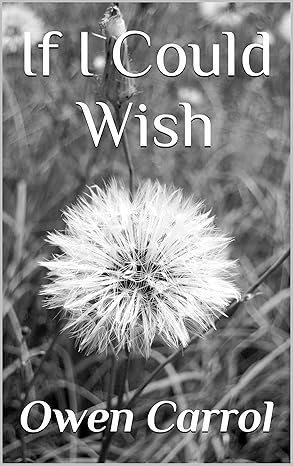
In If I Could Wish, by Owen Carrol, the narrative unfolds through the poignant format of a final suicide letter penned by a teenager. The letter offers an intimate glimpse into the narrator’s journey through immense personal struggles, including the early loss of a father, estrangement from their mother and stepfather, and the pains of teenage homelessness. Central to this narrative is the bond with Laura, the narrator’s sole friend, whose own battle with mental health challenges culminates in her suicide.
Carrol’s writing sensitively captures the complexities of mental health, as seen through the narrator’s perspective and Laura’s experiences, although she remains a secondary yet significant character. The story navigates heavy themes such as questioning faith and feeling of abandonment by a higher power, reflecting the narrator’s disillusionment and loss of hope. It serves, in a way, as both a heart-wrenching recount of despair and a subtle, perhaps final, plea for understanding or intervention. The narrative is undeniably poetic and raw, touching on subjects like religion and existential despair with a candidness that might be intense for some readers. Particularly for those grappling with mental health issues or suicidal thoughts, the content could be profoundly affecting. The story concludes with an implication of the narrator’s suicide, underscoring the gravity of its subject matter.
Owen Carrol demonstrates remarkable skill in this short story format, effectively conveying a deep sense of loss and disconnection in just a few pages. If I Could Wish is a testament to Carrol’s ability to create profound narrative experiences, though its themes necessitate a word of caution for sensitive readers. As a reviewer eager to explore more of Carrol’s work, I keenly anticipate future publications, appreciating the depth and authenticity he brings to challenging topics.
Pages: 9 | ASIN : B0C1HTR3GG

Conversations of Windows: A Conversation I Gather

In Conversations of Windows, Dr. Durga Madiraju combines insightful material on the art of conversation with vivid metaphors and a distinctive personal narrative. This collection of fifty-four succinct essays delves into often overlooked elements crucial to structuring relevant and coherent dialogues. Madiraju reflects on the myriad factors influencing conversational choices, such as the participant’s demographics, duration, setting, atmosphere, and purpose of the interaction.
The author explores conversation in a metaphorical sense, presenting unique perspectives like deriving conversational inspiration from a list of items for a Hindu pooja ritual, the evocative power of petals caught in a breeze, or the hues encountered in daily life. Madiraju poignantly observes that days devoid of memorable conversations are mere task-oriented existences, urging readers to pause and engage more deeply with life. Madiraju’s narratives are deeply rooted in the cultural significance of festivals, prayers, and rituals, set against the backdrop of changing seasons and the natural world. The text is rich in sensory details—spices, kumkum, floral aromas, jasmine, and sandalwood—lending a tangible quality to the abstract and philosophical nature of the essays.
Conversations of Windows is a unique blend, part practical guide to effective conversation, part creative writing exploration, and part poetic and philosophical reflection. It offers an accessible reading experience. Students seeking to refine their conversational skills will find value in the literary language and the exploration of conversation’s various dimensions, extending beyond the scope of more traditional instructional texts in the field.
Pages: 104 | ASIN : B0CQJ4FRMY
The Wonder of Our World

SOAR: A Soul’s Quest follows a young eagle on a quest for self-discovery and spiritual enlightenment. What inspired the setup of your story?
Soar’s journey acts as a metaphor for all human existence and builds on the themes of our international award-winning first book: The Legendary Quest: For Professionals Seeking Inner and Outer Excellence and Authentic Fulfilment.
In working together, we envisioned creating a body of work that reflects our views and collective philosophy on life, which we believe is rarely reflected in the prevailing media and cultural messages that people tend to receive.
I truly believe that there’s a Soar in some capacity in all of us. All of us are capable of living the best possible lives we can and becoming the best versions of ourselves. So, the idea of Soar came from the verb soar. We evaluated hundreds of words, but that kind of stuck in the end as we could find none better.
There’s a lot of literature in the modern world about how eagles are really special. They live in communities. They can fly enormous distances without moving a wing and they are among the highest-flying birds. It gave us a great fabric for the story because we practically wanted the reader to soar on the wings of the eagle and experience the wonder of our world.
Is there anything about Soar that came from yourself or your life experiences?
Yes, many parts of Soar were inspired by our journeys. It embeds real life experiences all through the story. So many of our readers have also found the same.
The story of Soar is, we believe, broadly applicable to human experience across the globe, regardless of all demographic and social factors. This story is for everyone, regardless of age, race, gender, or any other identifier. The story is equally applicable for, and to, any preferred pronoun.
What were some themes that were important for you to explore in this book?
Soar highlights several critical issues and conflicts we collectively face! Soar experiences challenges with authority, hierarchy, cognitive rigidity, and lack of growth as well as xenophobia in his community. Soar’s journey highlights many conflicts (within and outside us) that we face and then provides an approach to resolve them. Soar’s journey highlights the importance of growth mindset, openness, willingness to accept alternative perspectives, and seek wide and vivid life experiences to enrich oneself. Further, the journey highlights the importance of grit, resilience, continuous growth, acceptance, gratitude, and forgiveness. The journey challenges the reader to reflect and assess their own cognitive biases and presumptions!
What is one thing you hope readers take away from your book?
We truly hope that readers embark on their own authentic journeys of life and recognize that the journey is at least as important as the destination.
Author Links: GoodReads | Facebook | Website | Amazon
SOAR: A Soul’s Quest, is the stirring story of a young eagle who sets out in quest of self-discovery and spiritual enlightenment. So come and sail on Soar’s wings! Like most fables, the narrative unfolds as a series of encounters with inspirational creatures who teach Soar critical life lessons. Ultimately Soar learns, as psychologist Dr. Jillian Rigert puts it in her testimonial-“what it means to live a life true to himself and teach others to do the same.” Soar comes to learn the importance of self-discipline, intuition, altruism, trust, and interdependence.
The Importance of Our Self-Discovery

The Philosopher and The Theologian, Through Asceticism, Seekers of God provides readers with an in-depth look at asceticism, its resurgence, and the relevance of its practices. Why was this an important book for you to write?
As a man passionate about philosophy and religion, I was somehow irritated by the way the philosopher was viewed by the theologian, and the theologian by the philosopher.
I realized that in fact, the differences are not that big even if, superficially, the positions seem to be irreconcilable. The ascetic aspect of life has always intrigued me, especially through the character of “self-imposed sacrifice,” and I wondered what intimate springs make certain people seek to desire such a way of life. Studying the lives of the ascetics from early Christianity (Egyptian Patericul, Sinait Patericul, Mount Athos Patericul) as well as the asceticism performed by the Buddhist masters from the East, I realized that the differences are not so great. In fact, I noticed that the similarities are much more numerous. But in fact, the biggest surprise was to find that both the philosophers (starting with those from Greco-Roman antiquity) and the believers sought through asceticism to reach a deep knowledge of their own person.
Through this book, I tried to show and try to demonstrate the importance of an ascetic life (somehow adapted) even today in the somewhat impossible conditions of contemporary society. The existence of contemporary social currents that stimulate an ascetic life correlated with the protection of the environment and a life lived with moderation proves that such a book is necessary not so much by the application today of the ascetic practices of 1500 years ago but by the mental preparation of the members of society for another way of life much more responsible towards nature and towards us.
Today, people feel like they have lost their compass; they can’t find themselves, and they can’t be happy anymore. However, being happy does not necessarily mean having a mountain of money. Being happy means finding yourself, getting to know yourself, and loving yourself and those around you. Man is born with a purpose in life. Man gives meaning to his life as he “becomes” a person.
The common element found in Christian and Oriental asceticism, as well as in atheistic philosophers, was man’s obsessive desire to know himself. There is the key to the discovery of happiness and immortality: self-knowledge, the discovery of the God within us, deep within our Self. And asceticism can help us achieve this.
Can you share a little about the research process involved in putting this book together?
Writing the book involved a huge amount of research. In addition to the normal documentation activity that involved the research of philosophical currents starting from Greco-Roman antiquity to contemporary currents, an important role was also played by the study of the lives of the Ascetic Fathers from the beginning of Christianity. I tried to extract the common element of these thousands of Christians who dedicated their whole lives to an ascetic way of living in order to unite with their God. Studying Pateric was essential. Also, to realize the parallelism with the asceticism practiced by Buddhist monastics, I studied Buddhist asceticism. To properly understand the ascetic essences of Buddhism, I sought to go to the source, and the visit to Japan to the great Buddhist and Shinto Temples in Tokyo, Kyoto, and Osaka was of great help to me.
What is one thing you hope readers can take away from The Philosopher and The Theologian?
I hope that by reading my book, the readers will understand only one thing: the importance of knowledge and self-discovery. This book is not about religion; it neither supports nor criticizes religion. It is an attempt to emphasize the importance of our self-discovery. We live in delicate times in which people have lost hope and resort more and more to different external stimuli in an attempt to “feel good about themselves.” This book wants to tell people that there is no need for anything external to be satisfied with yourself. Through the examples I gave, starting with those from antiquity, I wanted to show that man has always been preoccupied with discovering himself. We don’t need external stimuli not to be depressed. We will find – inside us – everything we need to be happy and discover our path in life.
Can readers look forward to more from you in the near future? What are you currently working on?
I want to start writing as soon as possible on my future book in which I want to treat the problem of “time.” However, I will have to finish the analysis and research phase of the “time” phenomenon. I’m not interested in “physical time,” but especially in the philosophical interpretation of time and how societies relate to “time.” I am interested in the transcendental aspect of “time.” I will start with a brief history of how philosophers have interpreted “time.” Then, I will present my vision of “time” in detail. I will also deal with the transcendental aspect, so there will be theological interpretations of “time and eternity.” I will try to discover if there is a connection between society, religion, and time. For that, I will have to deepen my analysis.
Author Links: GoodReads | Facebook | Website | Amazon
Man has always sought to discover himself and his soul’s “depth” and understand how to relate to divinity.
Man has been looking for methods and means to “improve” himself since ancient times. Asceticism, as a way of life, has existed in secular or religious forms since the beginning of human existence, depending on the areas of manifestation.
In this book, I showed that ascetic practices were not specific only to Christian monks or Buddhist ascetics. It was also practiced by ordinary people through which they tried to get closer to their inner self and God. Asceticism was practiced both by theologians and philosophers who, being atheists, were not looking for God but were looking for “the depth of themselves.” We could name this “deep within us” as God or otherwise; it does not matter.
In this book, I tried to deal with two themes.
The first was that asceticism, in different degrees, can be practiced by both the faithful and the less faithful. Both seek the same thing that they call different. I dealt with the subject of the Holy Fathers of the Desert from the Egyptian Pateric. I have tried to present the variety of ways of manifesting asceticism, from a “harsh” form made by these hermits of the desert to a more “diluted” form that manifests itself today.
The second theme that I tried to discuss was the “attempt to revitalize” the asceticism that can be seen in Western society today dressed in an environmental form.
In this book, I explained how I see the issue of asceticism and the connection with God without turning the content into a religious one. The book is a philosophical book that deals with religious themes, a combination of philosophy and theology in approaching doctrinal themes related to asceticism.
I hope that the reader will discover in the pages of this book an unsuspected universe, a man’s search for the discovery of his own person. Each of us must find himself so that we become responsible individuals in front of history and ourselves.
Each of us was born with a purpose. Let us be an active part in building our destiny to fulfill that purpose.
Thoughts & Musings: Life, Love, and the Human Condition

Thoughts and Musings, a poetry collection by P.K. Rankin, presents a nuanced exploration of life’s multifaceted experiences through varied poetic forms. This anthology encompasses a range from concise prose poetry to rhythmically pleasing, song-like verses. Rankin skillfully navigates the complexities of existence, the nuances of love, and the multifarious human condition in three distinct sections. The book is enriched with thoughtful illustrations and subtle nods to spirituality, each piece reflecting the poet’s emotional odyssey through different life stages. These poems’ vivid imagery and sincere expression invite readers to deeply contemplate the breadth of human emotions.
This compilation offers a captivating excursion through themes of love, life, and the human essence, meticulously organized into three parts. The segment on love particularly stands out, featuring well-crafted poems that engage and resonate. The appealing title is further complemented by beautiful illustrations and diverse artwork that capture the collection’s spirit. Each poem’s thoughtful titling contributes significantly to the personal and emotive reading experience, fostering a deeper connection between reader and poet. Rankin employs various poetic techniques, ranging from rhyming stanzas to succinct prose, all crafted with a blend of simplicity and depth. Rankin’s style is deeply personal and reflective, capturing his life’s collected thoughts and musings. He has the ability to turn introspective observations into poetry, offering them not as a doctrine but as points of contemplation for the reader. His writing encourages readers to engage with his thoughts, meld them with their own, and reflect on life, love, and the human condition from their perspectives. This approach underlines our shared humanity and the universal nature of the themes he explores.
Thoughts & Musings presents a poignant and thoughtful collection, inviting readers into a world of introspection, emotion, and philosophical exploration. Rankin’s work resonates with a sense of earnestness and genuineness, making it a compelling read for those interested in poetry that delves into the depths of human experience.
Pages: 104 | ASIN : B0CN9NQN2H
The Philosopher and The Theologian, Through Asceticism, Seekers of God

Vasile Ghiuta’s work, The Philosopher and the Theologian, Through Asceticism, Seekers of God, offers an in-depth and scholarly exploration of asceticism, examining its presence and significance across various philosophical and religious traditions. The book ambitiously sets out to demonstrate the relevance of ascetic practices to both those pursuing spiritual enlightenment and philosophers. It also touches upon the contemporary resurgence of asceticism, particularly in the context of environmental concerns.
Structured in three distinct parts, the book first delves into the Egyptian Pateric, shedding light on the ascetic aspects within philosophy. It extends its scope to include ascetic traditions in Judaism, Islam, and early Christianity. The second section offers a unique perspective on Jesus as an ascetic figure, while also discussing the intersections of philosophical and religious truths and the role of contemplative thought in the pursuit of immortality. The final section draws parallels between the philosopher and the believer, culminating in Ghiuta’s insightful conclusions.
Ghiuta’s narrative is enriched with historical references, highlighting influential figures like Origen, John Chrysostom, and St. Augustine, who left indelible marks on Christian philosophy in Late Antiquity. The book’s comprehensive historical survey extends beyond Christianity, encompassing a diverse array of philosophies and religions. The reader is invited to explore various cultural and historical aspects of asceticism, including lesser-known practices like the Jainist monastic tradition. These explorations offer fresh perspectives on living harmoniously with nature, drawing inspiration from various conservative cultures. Ghiuta skillfully highlights the commonalities across different religious and philosophical traditions, linking them all to asceticism. From biblical figures to Greek philosophers like Aristotle and Socrates, the book weaves a rich tapestry of spiritual and intellectual themes.
The Philosopher and the Theologian, Through Asceticism, Seekers of God is more than just a historical account; it’s a journey that sparks curiosity about asceticism and its relevance in today’s world. The book is a commendable effort to bridge the gap between ancient practices and modern perspectives, making it a valuable read for anyone interested in the evolution of human thought and the sustainable future of our planet.
Before Dropping Dead!

Philosophical Tidbits is an engaging collection of musings, observations, and reflections with a philosophical point of view covering real life and real-world issues. Why was this an important book for you to write?
Thank you for your probing question!
I honestly feel that Philosophical Tidbits can help people cope with the vagaries that are always connected to everyday living. Not to say that Philosophical Tidbits is “important”, thank you, but I feel the book can provide a “life can and is extremely challenging but through it all, all will eventually turn out well” optimism for anyone looking forward to a possibly brighter day. I also wanted, via the book, to make people think about (question?) long-held beliefs and traditions (i.e. “is this belief/tradition a valid belief/tradition and, if so, why is it a valid belief/tradition?”) I also wanted people to understand, via the book, that the world is not necessarily a Pollyanna world but balance that somewhat dark view by demonstrating that optimism has the ability to offset pessimism.
How much research did you undertake for this book, and how much time did it take to put it all together?
Research was born and forged via real-life experiences and observations. The real world, in my opinion, is the best teacher someone could ever hope to have. I’ve been working on Philosophical Tidbits since junior high school (I’m considerably beyond my junior high school years!). I finally, in 2016, put the musings on paper and copyrighted the work. It was in 2022 that I decided to have the book published. Even though I’ve spent considerable time shaping the work, as I had presented it to Literary Titan, it seemed no time at all to me.
What were some goals you set for yourself as a writer in this book?
To finish the book before dropping dead! Seriously, however, my goal was to give readers an opportunity to reflect on their lives, good and/or not so good, by using Philosophical Tidbits as a template. By this I mean that I’m certain everyone has a nascent Philosophical Tidbits within them so I hope my book will spur others to write their version of Philosophical Tidbits for the reading world to enjoy, experience, and to inspire themselves and inspire others toward higher aims and positive achievements.
What is one thing that you hope readers take away from Philosophical Tidbits?
That Philosophical Tidbits was a fun read and provided a measure of comfort, humor, and optimism in a world that could use more humor and more optimism within it.
Author Links: Amazon | GoodReads
Philosophical Tidbits contains nearly 950 original, fuel-for-thought aphorisms-proverbs that will move the reader with its poignant messages and tickle the reader with its humorous bent. Aspects of life, death, marriage, sex, hope, fulfillment, society, kids, friendship, tragedy, God, the world, and other real-life, real-world issues and concerns, are touched-upon within the pages of Philosophical Tidbits. There is something interesting, new, and fun for everyone within the pages of Philosophical Tidbits!
Philosophical Tidbits is “Dedicated to philosophers of all kinds and all faiths…past, present, and future…”


 LITERARY TITAN