Blog Archives
My Personal History of Philosophy to it’s External Things


Kenneth Guimond’s memoir, My Personal History of Philosophy to its External Things, offers a poignant and reflective journey through the life of a Native American man. Guimond recounts his experiences as he navigates various challenges, from familial turmoil and financial hardships to personal health issues. His narrative interweaves the themes of love, loss, and confronting societal biases while finding solace in ancestral spirituality and the significance of numerology.
The book delves deeply into the intricacies of fatherhood, particularly through Guimond’s candid recounting of his son’s severe burn accident. This incident, which left his son with significant injuries, showcases Guimond’s vulnerability and the universal struggle of parental helplessness, resonating with readers who have faced similar situations.
Interestingly, Guimond’s engagement with symbols and numbers provides a unique lens through which he views his life, sparking curiosity in these topics for the reader. His personal story related to the number 27 and his experiences with spiritual entities in his home is particularly intriguing and thought-provoking. Spanning from his high school years to his role as a grandfather and the loss of a grandchild, Guimond’s memoir touches on various stages of his life.
While the narrative moves at a lively pace, transitioning swiftly between topics, this approach adds a dynamic rhythm to the memoir, although it may leave some readers wishing for further exploration of certain aspects. Guimond’s biography is an invitation to explore his journey, filled with trials and triumphs, and gain insight from his spiritual and philosophical perspectives. It serves as a reminder of the importance of empathy and understanding towards others, as we often remain unaware of the hidden struggles behind outward appearances.
My Personal History of Philosophy to its External Things is a compelling read, particularly for parents and those who have navigated the complex dynamics of family relationships.
Pages: 53 | ASIN : B0CB7ZGDPD

Philosophical Tidbits


Philosophical Tidbits is an engaging collection of musings, observations, and reflections with a philosophical bent. The author, Michael Tate, delves into an array of life’s facets, blending serious contemplation with humor. This mix offers readers a distinctive view of life’s varied aspects. The book serves as a thought-provoking journey, inviting readers to explore the complexities of human experience. Tate’s knack for combining wit and wisdom allows for an exploration of diverse topics, ranging from introspective thoughts to societal commentary.
Tate’s writing style is both engaging and contemplative, encouraging readers to reflect on life’s intricacies through a narrative that is imaginative yet grounded in adult experiences. He skillfully juxtaposes lighter topics with profound philosophical queries, adding depth to his musings. The reflections, covering everything from personal relationships to societal issues, resonate due to their relatable nature and the author’s insightful observations on humanity’s imperfections. Tate’s use of humor is a key aspect of his work, providing a counterbalance to the more serious philosophical themes. His quips, such as “He that can see the future shall rule the world” and “If a child asks, answer. If a man asks, wonder,” inject a playful element into the narrative.
Moreover, the book bravely tackles often-shunned subjects like politics, justice, and belief systems, sparking vital discussions about societal perceptions. While the book offers insightful perspectives, it also presents a level of cynicism and skepticism, particularly regarding societal constructs and belief systems. Tate’s views on truth, ignorance, and justice showcase a critical, questioning mindset, which I feel might challenge some readers. The book’s more pointed critiques of established beliefs might not appeal to everyone, but I believe those who look beyond will find the work enriching.
Philosophical Tidbits is a stimulating read for enthusiasts of philosophical discourse, especially those who appreciate a blend of humor and skepticism. Tate’s ability to convey mature experiences with childlike imagination adds a novel dimension to the philosophical discussions. The book stands out not only for its broad range of topics but also for its forthright approach to expressing thoughts that many might harbor but seldom voice. It serves as an intriguing catalyst for deeper conversations and encourages a departure from conventional social norms in pursuit of honest dialogue.
Pages: 89 | ISBN : 0578269473
A Catharsis
Dialogues with the Wise Woman follows a lonely man in search of answers as he connects with a psychologist who guides him toward better and more philosophically-based life choices. What was the inspiration for the setup of your story?
George Sistern is my alter ego. I was scammed by a con artist, and like George, I also have a lot of trouble “letting go.”…which is highly destructive. Like I explain in the book, we can take every precaution to make sure we never get into a situation like this. But other than learning from it, we cannot undo what has already happened. By constantly obsessing and reliving the situation, we hurt ourselves more than our perpetrators did…and by doing so, we grant them enormous power over us.
I decided to write this book as a catharsis. I’m sure that others have experienced the same feelings of shame and guilt, and subjected themselves to massive self-flagellation…even if they were too embarrassed to admit it to anyone.
There was clearly a lot of time spent crafting the character traits in this novel. What was the most important factor for you to get right in your characters?
I wanted my readers to feel George’s pain – especially if they have experienced similar situations. I also wanted to let them know that they are not alone – even if it might seem that way at the time. I invented Mildred as the ideal therapist that I would like to see – if one like this existed. She had a PhD in psychology and philosophy, so she could address raw, overpowering emotions, but at the same time, incorporate iron-clad logic and offer practical and tangible solutions. She was loving, compassionate, understanding, and someone who you could comfortably share anything with without worrying about being judged. But at the same time, she was no-nonsense and solution-based. Visiting her Mercer St. office would not only represent a physical pilgrimage, but a psychological and philosophical one.
What were some themes that were important for you to explore in this book?
Even in the most dire circumstances, there are some things that even our most wicked oppressors cannot take from us. Victor Frankl proved this in Man’s Search for Meaning. People like Natan Sharansky have also proved this. No matter what physical and psychological abuse an oppressor can subject us to, they can’t take away our self-esteem and our attitude. Just like the term implies, it comes from the self. I also wanted to convey that if we’ve done something wrong, are truly sorry for it, try to make restitution, and vow never to do it again, then these incidents don’t define us. The reason people who have done things which were wrong feel so bad is because they have a conscience. That is what separates us from evil people. Evil people not only enjoy inflicting pain and suffering, but they seek out opportunities to do so. Good people will make mistakes. That is the price all of us pay for being human. But good people do not violate their moral code.
George’s story has all the makings of an engaging series. Can we expect to see more from you?
I’m flattered if some people would like to read a series, but I honestly hadn’t thought about it. I do know that I definitely have more books in me. I think it is great if an author can express ideas, provide food for thought (with maybe a new way of looking at things), and make his readers think about and contemplate important issues…even if they don’t agree with everything he writes. If I can provide help and inspiration at the same time, and really “make a difference,” that would make me very happy. But right now, I’m going to take a little respite. This has been an enormous undertaking, especially for an obsessive-compulsive guy like me.
Dialogues with the Wise Woman
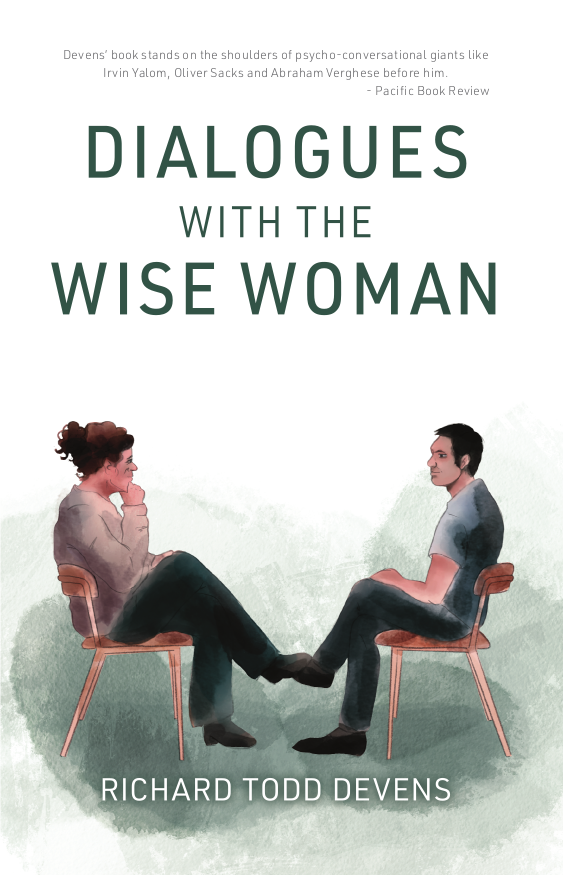
Dialogues with the Wise Woman, by Richard Todd Devens, is an enlightening exploration of human psychology and the quest for meaning. Devens weaves a captivating narrative through engaging dialogues and profound insights, guiding readers on a thought-provoking journey alongside the troubled character, George Sistern.
George, a middle-aged man, is trapped in a world of romantic solitude. George’s unique proposition to potential partners sets the stage for an intriguing encounter with the strange Poker Queen. Per the terms of their agreement, the Poker Queen wins him some money and eventually cons him out of $500. This loss triggers a downward spiral, forcing George to confront his intelligence, self-awareness, self-worth, and other existential questions.
In his pursuit of healing, George seeks solace in the company of psychotherapist, Mildred Markowitz. Their dialogues touch on issues of self-esteem, violent crime, and the philosophy of self-improvement, offering readers a profound reflection on their own lives and choices.
What stands out in this book is Devens’ ability to weave a story around the myriad of issues raised. Devens’ narrative brims with wisdom, inviting readers to explore the complexities of life, morals, and ethics. Although I feel the book lacks a clear central theme as the characters seek to practically address the big questions of life bordering on morals and ethics, its unique storytelling style infuses the journey with a distinctive flavor. At first glance, the transition from conversations on loss and self-chastisement to a full-blown debate on violent crime may seem smooth, but I believe it may distract readers somewhat from the troubles of the central character.
Dialogues with the Wise Woman delivers refreshing and insightful perspectives that resonate with a variety of readers. For those who might find philosophy and therapy daunting, this book illuminates pathways toward inner conviction and liberation. Richard Todd Devens has crafted a compelling narrative that encourages introspection and self-discovery, making it a valuable addition to the genre of psychological and philosophical literature.
Pages: 238 | ISBN: 1662933215

Humour, Irony, and Sarcasm
The Ghost of Highgate follows an IT Engineer in London who, while walking in a cemetery, meets the ghost of Karl Marx, who is trying to correct history about his philosophies. When you first sat down to write this story, did you know where you were going, or did the twists come as you were writing?
In my time, well I have to say since I shall soon be sixty, politics began in adolescence. At 13, I was convinced that capitalism didn’t work. However, I was also not convinced by the way in which the socialist alternative was proposed. They seemed like two sides of the same coin to me. When, at 18, I started reading Marx and not his followers, I began to realise that very little of his thought had remained in the practice of the so-called communist countries. At university, I had the opportunity to delve deeper into these aspects; the study of the philosophy of law opened up new perspectives for me. Marx was definitely different from how he was proposed by the doctrine of the socialist and communist parties. So, of course, I knew where I was going right from the start. I certainly don’t claim to update Marx’s thought. I have tried to highlight the salient points of his thought which, in my opinion, have been misunderstood. I did it with sarcasm and irony, because taking yourself seriously sounds presumptuous and because I like it. Nothing remains immutable, the gaze of historical flow is a great teaching of Marx. The concept of fixed and certain entities is a childish illusion and delusion, as all phenomena are inherently dynamic events subject to interpretation.
Human beings acquire their humanity through the social process. This is due to the inherent nature of humans as political and technical creatures. The primary means by which our humanity is expressed is through the use of our sophisticated language, which serves as our initial exosomatic tool.
Your story sets the stage for some humorous and entertaining scenes between Nob and Chucky. What was your favorite scene in this story?
Bringing a smile on someone’s face is serious business. In the end, we find humour in our own grotesque aspects. In my case, the joke is on me. I aimed to bring attention to the grotesque aspects of human interactions and subjectivity.
There is so much humour, irony, and sarcasm sprinkled throughout the entire story that I can’t possibly choose a favourite passage. With any luck, I was able to demonstrate how humour, like every other facet of culture, develops throughout time.
Basically, the funny situations and even the grotesque ones help highlight the contradictions and weaknesses of our society but also the light-hearted side. If you can’t laugh at yourself and take some criticism, you can’t see your own limits. And if you don’t know your limits you’re headed for disaster — the Greeks taught us that but we’ve gone and forgotten it dead quick.
What is the next book you are working on, and when will it be available?
Just saying, let’s see how this one fares first. I started writing poems and short stories when I was 14. I’ve always felt comfortable with that sort of writing. I don’t think I’m much of a novelist, to be honest. My previous attempt at a novel with a co-author was a complete shambles, and I felt utterly helpless compared to with this book.
Actually, I’m nearing the end of a tale about a bunch of crazy people who wander across space and time with no real direction. Maybe I’ll just devote myself to writing full time; I honestly haven’t got a clue.
Author Links: Goodreads | Website | Twitter | Amazon
When London IT Engineer Nob takes a Sunday stroll through Highgate Cemetery, he gets more than just fresh air and exercise. A chance encounter with the talkative spirit of a long-dead philosopher sets Nob off on a rollicking paranormal adventure.
Turns out that the supernatural philosopher is none other than Karl Marx himself, back to Earth as his life’s work was gravely misunderstood, and he aims to finally set the record straight. All he had been trying to show, he says, was a path for the liberation of everybody and not the hell that communist dictatorships turned out to be.
Though initially sceptical of his cemetery pal’s true identity, Nob warms to the academic challenge of helping translate complex ideas into everyday language.
Thus begins a comically bizarre partnership as Marx, nicknamed “Chucky” by the bewildered Nob, and his contemporary companion set off on a rollercoaster of uproarious escapades. From navigating the complexities of modern society to meeting the most typical characters of our time.
As the tale unfolds, Chucky takes it upon himself to clarify his vision of the world, using sharp wit, satire, humour, and self criticism to dissect our contemporary anxieties. In a crescendo of hilarity, the novel delves into pressing social themes of our time, all while inviting readers to join in the laughter.
Together, the pair just might make progress on their unorthodox quest – and remind society that wisdom often comes from the most peculiar places.
Zarathustra’s Journey
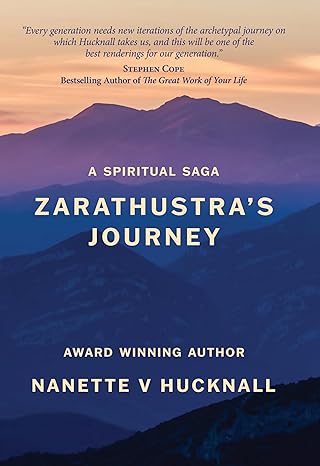
Nanette V. Hucknall’s Zarathustra’s Journey is based on Eastern yogic tradition. It explores the spiritual quests of two advocates, as well as their connections with other worlds, spiritual guides, and deadly forces. The book is comprised of two major sections. The first deals with Anton’s mission, while the second centers on Zarathustra’s teachings. Anton Bauer, 32, holds a Ph.D. and has written a book on European philosophy. While he meets with enigmatic otherworldly people, he is ostracized by his old world and devout family in Switzerland when he accepts a call to write a book on Eastern philosophy; it’s a book about Zarathustra, who preaches what he calls Higher Self Yoga.
The characters in the novel are outstanding and well-developed, including Anton’s wife, who works with the Secret Service and is on a mission involving an illegal trafficking company with links to the Far East, Al-Qaeda, the Taliban, and possibly ISIS.
Zarathustra’s Journey weaves together various themes, including relationship troubles, religion, other realms, reincarnation, karma, manipulation, premonition, spiritual battles, espionage, marriage, and more. The plot contains several suspenseful developments, such as Anton’s relationship with a wife who must fight the control of an evil, powerful mother.
My favorite aspect of the book is how it depicts the real challenges that come with seeking enlightenment. Anton’s transformation is resisted by his parents and siblings, who fear that his controversial book would strain their social bonds. I also liked Zarathustra’s practical advice and realistic anecdotes, which are beneficial for enlightenment and meditation.
Zarathustra’s Journey is filled with important messages about connecting with your heart chakra. It’s a fiction story but carries more impactful, wise lessons than many philosophical books I’ve read. Readers who love philosophy, psychology, and lessons about meditation will enjoy this book. You will be captivated by its magical personalities and missions, transformed by its practical exercises, and hypnotized by its beautiful language.
Pages: 741 | ASIN : B0C5YF15B5
Cuentan mis Estrellas
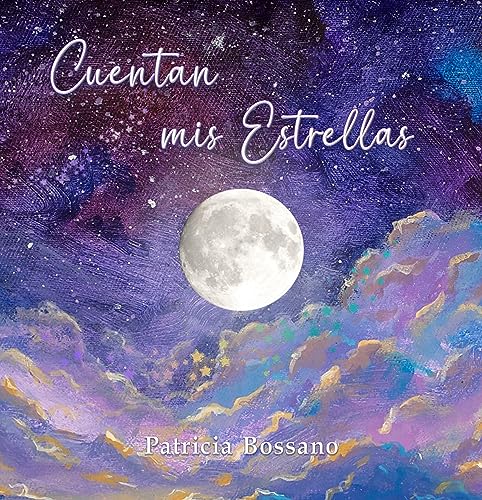
Cuentan Mis Estrellas es una historia extraordinaria y cautivadora que transporta a los jóvenes lectores en un viaje celestial que abarca el cosmos. Esta narrativa magistralmente elaborada revela la profunda influencia de las constelaciones en nuestros destinos, una exploración que se despliega a través de la revelación de nuestros propios “rasgos estelares” distintivos. Frente a un telón de fondo de imágenes vibrantes y resplandecientes, los lectores son introducidos a los diversos signos celestiales, cada uno intrincadamente entrelazado con atributos de personalidad acompañantes.
La autora Patricia Bossano exhibe una ingeniosidad notable en su enfoque para introducir a los jóvenes lectores en el reino de la astrología, invocando el esplendor de las estrellas y la vasta extensión del cielo. Entre estas páginas, se despliega un tapiz de conocimiento, entrelazando signos del zodíaco, planetas regentes, afiliaciones elementales y matices coincidentes con la fecha de nacimiento; un mosaico que es a la vez fascinante y placentero de explorar.
La narrativa se desarrolla con una prosa evocadora que pinta un retrato vívido del firmamento nocturno, convirtiendo las estrellas fugaces y los cometas en emisarios de revelaciones profundas. La afirmación del libro de que nuestros rasgos están impregnados en las estrellas mucho antes de nuestra llegada resuena como una declaración empoderadora, avivando un sentido de agencia en cada lector. La enumeración de atributos, que van desde la independencia y el cariño hasta la curiosidad y la valentía, conforma una hoja de ruta para el crecimiento personal, un faro luminoso para navegar por las incertidumbres de nuestro mundo.
Mediante la maestría del lenguaje y el concepto, la autora Bossano fomenta la maravilla y la curiosidad, invitando a los lectores a elevar su mirada más allá de lo común y desentrañar los hilos cósmicos tejidos en la trama de la existencia. Cuentan Mis Estrellas se erige como una fusión armónica de prosa elocuente e ilustraciones cautivadoras, una auténtica obra maestra que alienta a los lectores a dirigir su mirada hacia el cielo con una nueva perspicacia. Este libro sirve como una luz guía para navegar por el firmamento del autodescubrimiento y el asombro cósmico, un regalo que resonará en los lectores mucho después de que se gire la última página.
Pages: 33 | ASIN : B0CC3SLK8R
From the Earth to Mars: The Surprising History of the Rocket Pioneers Who Launched Humanity Into Space

In his remarkable chronicle From the Earth to Mars, Jeffrey Manber delves into the captivating early annals of rocketry and cosmic exploration, shedding light on an era dominated by the inquisitive minds of engineers, scientists, and entrepreneurs rather than government entities.
Manber commences this exploration by revisiting Jules Verne’s renowned 1865 novel, From the Earth to the Moon, illuminating its profound influence on the pioneering figures of space exploration such as Herman Oberth, a mentor to Wernher von Braun, and the Russian engineer Valentin Glushko. The novel did not merely fuel their curiosity with thrilling narratives of space exploration; it anchored their inspirations in scientifically credible concepts, as Verne was meticulous in maintaining plausibility throughout his novel.
Evidently, early 20th-century luminaries such as the Russian scholar Konstantin Tsiolkovsky faced the arduous task of advocating the feasibility of space travel. Convincing their contemporaries that this was not just a distant possibility but rather an imminent reality was a challenge that demanded significant effort.
However, where some authors may have turned such a history into a dry academic treatise, Manber skillfully steers clear of this pitfall. Instead of immersing the reader in the complex technicalities of the science, he adeptly presents it in a manner that is accessible to the layperson yet avoids any trace of condescension. The narrative primarily weaves the captivating stories of the personalities involved, all while maintaining the primary focus of the book. The infectious enthusiasm Manber exhibits for his subject resonates strongly, sparking curiosity even in readers previously indifferent to space exploration.
Visually, the book further engages the reader with an array of comic-style pages and substantial illustrations, serving to vividly depict the personalities and machines within the narrative and to enhance the visual appeal. The book itself is an aesthetic triumph, with an eye-catching cover design, carefully curated illustrations, and exquisite typesetting contributing to its physical allure.
All in all, From the Earth to Mars is a commendable offering that extends beyond the interests of space enthusiasts to a wider audience. This engrossing read comes with a high recommendation, sure to captivate and enlighten anyone who delves into its pages.
Pages: 104 | ASIN : B0BV9PZP5Q


 LITERARY TITAN