Blog Archives
Family: In Search of Genuine Belonging


Family: In Search of Genuine Belonging, by Paul Dunion, EdD, is a thought-provoking exploration into the myriad ways children relate to their families, offering a profound look at family dynamics. This book delves into the psychological and spiritual aspects of maturing into adulthood, focusing on the transformative journey and underscoring the importance of personal development in positively impacting society.
Dr. Dunion begins the book with a set of intriguing questions related to security, belonging, and love. These are designed to be reflective touchpoints for readers as they delve deeper into the text, encouraging a thoughtful examination of how family relationships shape one’s interaction with the world. The text navigates various family structures and dynamics, such as “The Enmeshed Family” or “Too Much Family,” “An Estranged Family” or “Not Enough Family,” “The Looking Good Family,” and “The Shame-Based Family.” This exploration offers a comprehensive understanding of key family aspects like communication, problem-solving, decision-making, and boundary-setting. It also touches on the more nuanced themes of affection, learning, and authority within family units.
Echoing the sentiments of Virginia Satir, Dr. Dunion posits the family as a microcosm of society. He argues that global change is rooted in the transformation of familial relationships and structures. By examining elements such as power dynamics, intimacy, autonomy, trust, and communication, the book extends its relevance beyond family to include societal interactions. For readers with an interest in psychology and spirituality, this non-fiction work stands out for its clarity and accessibility. Dr. Dunion’s rigorous research and structured approach, combined with thoughtful quotations and compelling metaphors, enrich the reading experience.
Family: In Search of Genuine Belonging not only engages and enlightens but also offers pragmatic tools for personal development and healing. It is a recommended read for those grappling with family dynamics or seeking deeper insights into the intricacies of life.
Pages: 228 | ASIN : B0CW6H1JYW

Start Communicating Again

In If I Could Wish, a teenager’s final suicide letter reveals the personal struggles and immense anguish leading up to their suicide. Why was this an important story for you to share with readers?
I would say it’s always important to discuss how us humans handle and react to situations and or chains of them. However, it is far more important to me to discuss suicide as it is a very prominent issue in our world. I feel like this topic can be seen as taboo or unacceptable to talk about where it really mustn’t be: these are human lives we’re talking about, mental states, families. How can we just sit back and turn a blind eye to the issue all because it can be seen as too gloomy or depressing? I say we should take these dark & depressing subjects and create an open dialogue about them so we can make progress and help each other instead of becoming more isolated with the world. Many of my teenage peers are falling victim to mental health issues due to an abundance of reasons, I am Scottish, and we are very lucky to have our own national health service which covers mental health too, but the way the UK is being run is leaving our NHS with no adequate funding and therefore, we have a crippled NHS. So if we can’t fund services, if we can’t afford services, then we should at least change our international or national mindsets on the matter and start communicating again. Not through our phones, but through our humanity.
What is one thing that you hope readers take away from If I Could Wish?
I personally hope that readers are able to take away the fact that stories like these aren’t too far off from reality and we need to start being communal again rather than plainly individualistic. We really do need to speak up on this matter and speak to people who may be struggling, even people who we don’t think are struggling very well could be. We ought to look out for one another more often, we really never know how far that goes.
What is a common misconception you feel people have about mental health, especially as it relates to teenagers?
I think that the common misconception about teenagers’ mental health issues is that it’s ALL due to social media. It’s really not. Today’s teenagers are in a predicament of the likes our species has never seen before. Personally, I even say that we have progressed too fast without thinking about the effects. However, although some of the issues stem from social media and digital use, the other issues stem from social situations, economic situations, and national attitudes towards teenagers. I’ll break them down a bit more. Social situations meaning a workplace or school, friends even. Sometimes we’re not always in the healthiest relationships with our schools or workplaces or friends. Economical situations meaning the state of the country’s economy: if the nation isn’t financially strong then how will one seek the help one deserves? How will one get the job one needs? How will one see the light? And national attitude meaning how other age groups view teenagers, most of the time in UK media recently: it’s not great. There needs to be realisation that these issues of the digital world are unprecedented, and the real world affects everything. 2 worlds conflicting, 1 mind trying to manage both.
Can readers look forward to more stories from you soon? What are you currently working on?
Oh absolutely! More stories with variety are on their way. At the moment I believe I have 5 currently being fully conceptualized. However, I am a third of the way through working on a new short story I’ve named: Burning Memory. I won’t get too much into it but just know it is another philosophical perspective on life. I plan to write short stories for a while, I’m not entirely sure how I would handle a full novel but I have 2 ideas for them which I will eventually finish: but as for the moment, short philosophy will be my niche.
Author Links: Goodreads | Amazon
Peer into the downfalls of the human condition and the gloom that follows you. Ponder the bigger picture, ask the questions of purpose, learn from the life of despair. But most importantly: how will you help your fellow humans?
If I Could Wish
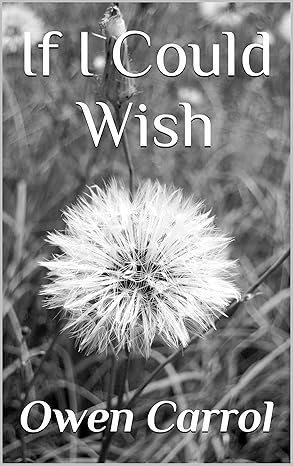
In If I Could Wish, by Owen Carrol, the narrative unfolds through the poignant format of a final suicide letter penned by a teenager. The letter offers an intimate glimpse into the narrator’s journey through immense personal struggles, including the early loss of a father, estrangement from their mother and stepfather, and the pains of teenage homelessness. Central to this narrative is the bond with Laura, the narrator’s sole friend, whose own battle with mental health challenges culminates in her suicide.
Carrol’s writing sensitively captures the complexities of mental health, as seen through the narrator’s perspective and Laura’s experiences, although she remains a secondary yet significant character. The story navigates heavy themes such as questioning faith and feeling of abandonment by a higher power, reflecting the narrator’s disillusionment and loss of hope. It serves, in a way, as both a heart-wrenching recount of despair and a subtle, perhaps final, plea for understanding or intervention. The narrative is undeniably poetic and raw, touching on subjects like religion and existential despair with a candidness that might be intense for some readers. Particularly for those grappling with mental health issues or suicidal thoughts, the content could be profoundly affecting. The story concludes with an implication of the narrator’s suicide, underscoring the gravity of its subject matter.
Owen Carrol demonstrates remarkable skill in this short story format, effectively conveying a deep sense of loss and disconnection in just a few pages. If I Could Wish is a testament to Carrol’s ability to create profound narrative experiences, though its themes necessitate a word of caution for sensitive readers. As a reviewer eager to explore more of Carrol’s work, I keenly anticipate future publications, appreciating the depth and authenticity he brings to challenging topics.
Pages: 9 | ASIN : B0C1HTR3GG
See Listen Play

See Listen Play by Anna Kuk offers a thoughtful and engaging exploration into the intricate connections between music and everyday life. Kuk’s book presents a unique perspective on how music mirrors and influences the complexities of personal and professional interactions.
Kuk’s narrative is both philosophical and introspective, inviting readers to consider the symphonic qualities inherent in their daily lives. She adeptly uses metaphors and analogies to draw parallels between the harmony of musical notes in an orchestra and the dynamics of human relationships. This approach allows Kuk to delve deeply into the concept of individuals as both participants and creators in the vast symphony of existence. Her writing is characterized by eloquent prose and insightful analysis, illuminating the metaphorical relationship between life’s rhythms and orchestral music. Kuk’s vivid descriptions and poignant anecdotes provide a deeply emotional and resonant experience for the reader, making complex ideas accessible and relatable.
See Listen Play is more than just an informative guide; it is an invitation to a deeply expressive and emotive journey. Kuk encourages self-awareness and introspection, urging readers to consider their actions’ impact in the various roles they play in life. This book is an excellent resource for anyone interested in exploring the depths of their relationship with music and its profound influence on life’s journey.
Pages: 180 | ASIN : B0CPMP7MJZ
I Love How

Dr. Isaiah Varisano’s I Love How skillfully integrates the psychological concept of Growth Mindset Praise, developed by Dr. Carol Dweck, into a practical guide for nurturing children. The book emphasizes the benefits of positive reinforcement and encouragement, advocating for a focus on character traits such as curiosity, kindness, compassion, and perseverance. Rather than measuring success by tangible outcomes, Varisano encourages celebrating the process and effort, fostering a sense of fulfillment in children regardless of the results.
I Love How employs photographs instead of traditional illustrations, showcasing a diverse array of children engaging in various activities. This approach not only adds realism but also allows young readers to see themselves and their peers reflected in the narrative, enhancing the connection between the reader and the content.
Beyond being a mere storybook, I Love How extends its value to parents with a section dedicated to practical tips on implementing the Growth Mindset Praise concept in everyday parenting. These tips range from simple language changes to more comprehensive attitude adjustments, offering parents versatile tools to positively influence their children’s development. Varisano’s work stands out for its effective blend of psychological theory and practical application, making it a valuable resource for both children and parents in nurturing positive character development.
Pages: 29 | ASIN : B0CLK1CMQW
The Gift of Sensitivity: The extraordinary power of emotional engagement in life and work

In The Gift of Sensitivity, Elena V. Amber offers a thought-provoking exploration of the world of highly sensitive persons (HSPs), delving into the positive aspects and strengths of emotional sensitivity. This self-help book stands out as an insightful guide that encourages embracing one’s innate sensitivity, highlighting its potential as a powerful tool in both personal and professional realms.
Amber articulates the concept that heightened emotional awareness can streamline life experiences by minimizing unproductive resistance and fostering adaptability. The book navigates the intricacies of human emotion, positioning itself as an eye-opening beacon for those who identify as sensitives. Amber skillfully intertwines personal stories and scientific concepts, making the book an engaging and informative read. Distinct from typical self-help literature, The Gift of Sensitivity offers a fresh perspective on the benefits of being finely attuned to one’s emotions.
Amber’s personal narratives resonate deeply, providing a relatable journey of self-discovery for readers, particularly for those unaware of their status as HSPs. This book serves not only as a mirror for reflection but also as a transformative guide for those who might view their emotional depth as a hindrance. Amber’s writing is both eloquent and accessible, striking a harmonious balance between theoretical exploration and practical application. The book challenges societal norms that often mislabel sensitivity as a weakness, instead framing it as a valuable trait. One of the key strengths of this book is its pragmatic approach; Amber does not merely extol the virtues of sensitivity but also equips readers with practical strategies to leverage their emotional acuity for personal growth and well-being.
The Gift of Sensitivity is a compelling and empowering read. It invites readers to reconsider their perceptions of emotions and sensitivity, encouraging them to embrace and harness this attribute as a powerful asset in their daily lives. Amber’s book is a testament to the transformative potential of understanding and valuing one’s emotional depth.
Pages: 186 | ASIN : B0CGDWYHND
A Catharsis
Dialogues with the Wise Woman follows a lonely man in search of answers as he connects with a psychologist who guides him toward better and more philosophically-based life choices. What was the inspiration for the setup of your story?
George Sistern is my alter ego. I was scammed by a con artist, and like George, I also have a lot of trouble “letting go.”…which is highly destructive. Like I explain in the book, we can take every precaution to make sure we never get into a situation like this. But other than learning from it, we cannot undo what has already happened. By constantly obsessing and reliving the situation, we hurt ourselves more than our perpetrators did…and by doing so, we grant them enormous power over us.
I decided to write this book as a catharsis. I’m sure that others have experienced the same feelings of shame and guilt, and subjected themselves to massive self-flagellation…even if they were too embarrassed to admit it to anyone.
There was clearly a lot of time spent crafting the character traits in this novel. What was the most important factor for you to get right in your characters?
I wanted my readers to feel George’s pain – especially if they have experienced similar situations. I also wanted to let them know that they are not alone – even if it might seem that way at the time. I invented Mildred as the ideal therapist that I would like to see – if one like this existed. She had a PhD in psychology and philosophy, so she could address raw, overpowering emotions, but at the same time, incorporate iron-clad logic and offer practical and tangible solutions. She was loving, compassionate, understanding, and someone who you could comfortably share anything with without worrying about being judged. But at the same time, she was no-nonsense and solution-based. Visiting her Mercer St. office would not only represent a physical pilgrimage, but a psychological and philosophical one.
What were some themes that were important for you to explore in this book?
Even in the most dire circumstances, there are some things that even our most wicked oppressors cannot take from us. Victor Frankl proved this in Man’s Search for Meaning. People like Natan Sharansky have also proved this. No matter what physical and psychological abuse an oppressor can subject us to, they can’t take away our self-esteem and our attitude. Just like the term implies, it comes from the self. I also wanted to convey that if we’ve done something wrong, are truly sorry for it, try to make restitution, and vow never to do it again, then these incidents don’t define us. The reason people who have done things which were wrong feel so bad is because they have a conscience. That is what separates us from evil people. Evil people not only enjoy inflicting pain and suffering, but they seek out opportunities to do so. Good people will make mistakes. That is the price all of us pay for being human. But good people do not violate their moral code.
George’s story has all the makings of an engaging series. Can we expect to see more from you?
I’m flattered if some people would like to read a series, but I honestly hadn’t thought about it. I do know that I definitely have more books in me. I think it is great if an author can express ideas, provide food for thought (with maybe a new way of looking at things), and make his readers think about and contemplate important issues…even if they don’t agree with everything he writes. If I can provide help and inspiration at the same time, and really “make a difference,” that would make me very happy. But right now, I’m going to take a little respite. This has been an enormous undertaking, especially for an obsessive-compulsive guy like me.
Dialogues with the Wise Woman
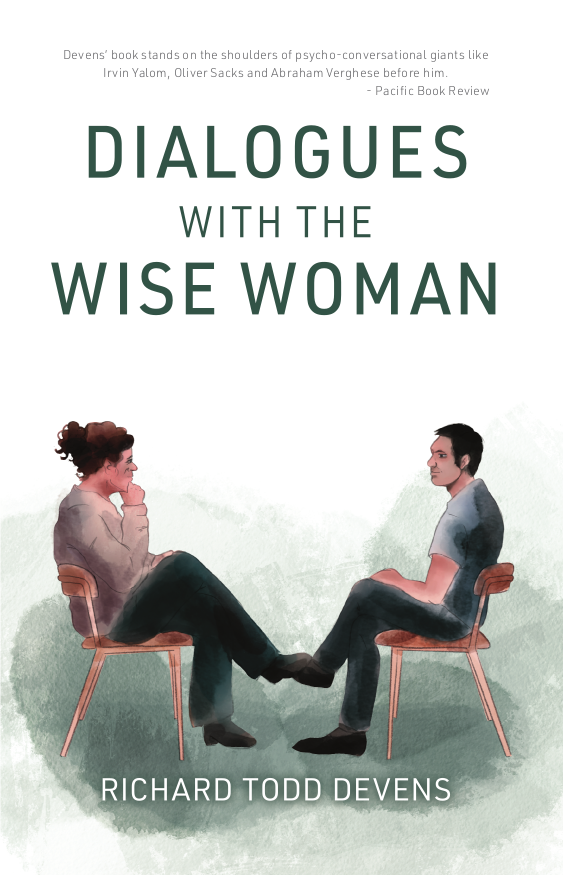
Dialogues with the Wise Woman, by Richard Todd Devens, is an enlightening exploration of human psychology and the quest for meaning. Devens weaves a captivating narrative through engaging dialogues and profound insights, guiding readers on a thought-provoking journey alongside the troubled character, George Sistern.
George, a middle-aged man, is trapped in a world of romantic solitude. George’s unique proposition to potential partners sets the stage for an intriguing encounter with the strange Poker Queen. Per the terms of their agreement, the Poker Queen wins him some money and eventually cons him out of $500. This loss triggers a downward spiral, forcing George to confront his intelligence, self-awareness, self-worth, and other existential questions.
In his pursuit of healing, George seeks solace in the company of psychotherapist, Mildred Markowitz. Their dialogues touch on issues of self-esteem, violent crime, and the philosophy of self-improvement, offering readers a profound reflection on their own lives and choices.
What stands out in this book is Devens’ ability to weave a story around the myriad of issues raised. Devens’ narrative brims with wisdom, inviting readers to explore the complexities of life, morals, and ethics. Although I feel the book lacks a clear central theme as the characters seek to practically address the big questions of life bordering on morals and ethics, its unique storytelling style infuses the journey with a distinctive flavor. At first glance, the transition from conversations on loss and self-chastisement to a full-blown debate on violent crime may seem smooth, but I believe it may distract readers somewhat from the troubles of the central character.
Dialogues with the Wise Woman delivers refreshing and insightful perspectives that resonate with a variety of readers. For those who might find philosophy and therapy daunting, this book illuminates pathways toward inner conviction and liberation. Richard Todd Devens has crafted a compelling narrative that encourages introspection and self-discovery, making it a valuable addition to the genre of psychological and philosophical literature.
Pages: 238 | ISBN: 1662933215


