Blog Archives
Understanding Psychodynamic Therapy

Aliya, The Girl From Ukraine tells the story of a young girl who escapes Russian expansionist indoctrination and seeks to emigrate to the United States. Why was this an important book for you to write?
Firstly, because it’s something going on nowadays. Unlike historical facts that are of interest to a certain segment of people, what’s going on in Ukraine is something that we all follow daily in the media. Second, because Aliya, the protagonist, is a bright intelligent woman, more mature than average girls her age, which made our sessions to be very interesting.
What were some ideas that were important for you to share in this book?
In each chapter there’s something that can be learned from us. I emphasize “us” because in psychoanalysis, analyst and analysand (the patient) embark together in an exploration journey. By accompanying the patient in his growth, the analyst grows together, and the sessions become richer. There’s something to be learned from both of us.
What were some goals you set for yourself as a writer in this book?
To convey to my readers an accurate portrait of what happens in therapy sessions, thus dissipating misconceptions about psychodynamic therapy.
What is one thing that you hope readers take away from Aliya, The Girl From Ukraine?
I want people to know that psychodynamic therapy is not only to treat something pathological, like debilitating anxiety or depression. Like a gym for your physical health, it keeps your emotional health in check. It helps us to understand and accept our selves, so we become prepared to face life’s challenges with much more peace of mind.
Author Links: Website Book | Website Professional
Determined not to surrender her mind, dreams, and aspirations to the emissaries of Mr. Putin, Aliya makes the life-altering decision to emigrate to the United States. However, the path to self-discovery proves arduous for someone so young, who has yet to truly understand herself.
A serendipitous encounter with Dr. Von Ryan-a renowned psychoanalyst-during her time as a hotel concierge in Poland becomes Aliya’s lifeline. Finally, she can fulfill her long-held dream of becoming his patient as she steps into his New York office.
Within the captivating pages of Aliya, the Girl from Ukraine, author Jaime Grunfeld, LMHC, offers a poignant glimpse into the intricate bond between psychoanalyst and patient, delving into the profound moments that transpire during their sessions. This compelling narrative captivates readers and imparts invaluable wisdom on navigating uncertainties, understanding emotions, and fostering emotional resilience.
Join Aliya on her extraordinary journey of self-discovery and be inspired to confront your own inner turmoil, ultimately forging a path toward a more authentic and fulfilling existence.
NeuroMastery: Retraining Your Brain to Conquer Anxiety, Fear, and Panic Attacks


NeuroMastery: Retraining Your Brain to Conquer Anxiety, Fear, and Panic Attacks by Ugochukwu Uche ingeniously intertwines the realms of neuroscience and psychology, crafting an enlightening resource designed to navigate through the intricate process of reshaping brain responses to anxiety, fear, and panic attacks towards a life of enhanced health and happiness. Uche, with meticulous detail, immerses the reader into an exploration of the brain’s anatomy, illustrating the intricate correlations between its various parts, emotions, and memories while shedding light on the paramount concept of neuroplasticity—our brain’s remarkable capability to adapt and establish specific patterns through time and directed training.
Uche doesn’t merely present theoretical insights but also bestows upon readers practical tools, delineating varied techniques and therapeutic approaches to assist in their self-evolvement journey. Significantly, he elucidates complex concepts by interweaving the compelling story of Lucy, a young woman navigating through the tumultuous waters of panic attacks, particularly while confronting the fears anchored in the simple act of sitting in a car’s front seat.
In an era where discussions pertaining to anxiety, fear, and panic attacks burgeon amidst their increasing prevalence, Uche’s work distinguishes itself by delving into the support of neuroscience and actual brain activities that transpire, providing a distinct perspective that transcends mere surface-level dialogues. His examination of neuroplasticity, a pivotal, albeit not widely recognized phenomenon of our nervous system, is presented with such a friendly tone that the learning experience becomes as comfortable and engaging as absorbing wisdom from a friend over a leisurely coffee.
Speaking from a psychology student’s perspective, this book has not only deepened my understanding of certain concepts encountered in academia. Still, it has also proved immensely valuable on a personal front, aiding in comprehending my stress management strategies. It inspires an active engagement in consciously altering ineffective habits, encouraging the discovery and application of more efficacious techniques to navigate through the everyday stresses of life.
I recommend NeuroMastery primarily to individuals grappling with anxiety, fear, and panic attacks. I am confident that within its pages, you will unearth a technique that resonates and assists you in your journey. Furthermore, professionals within the mental health field will find this to be a substantive and illuminating read. Uche’s book is compelling, leading readers to eagerly anticipate his future contributions to the literary and psychological realms.
Pages: 126 | ASIN : B0CH1JMZC6

Aliya, The Girl From Ukraine

Aliya, The Girl from Ukraine by Jaime Grunfeld, LMHC, presents a compelling narrative of resilience in the face of immense adversity. The story unfolds as Dr. Nicholas Von Ryan encounters a young lady named Aliya, working in a hotel, unaware of the profound impact their meeting will have. With Crimean roots, Aliya’s life in Russia is marked by government-imposed brutality, pushing her to undertake a perilous escape to Poland, much against her mother’s advice. In Poland, she doesn’t just work in a hotel but learns the essence of adapting and envisaging a future that beckons her to the United States for asylum.
Despite the profound tragedies marking Aliya’s journey, Grunfeld portrays her path to healing, acceptance, and embracing the future. The narrative seamlessly integrates Aliya’s experiences in the hotel, illustrating the strength and tenacity that brought her there. Through Dr. Von Ryan’s perspective, readers witness Aliya confronting her deepest fears, navigating through layers of pain, and achieving an emancipating freedom.
The nuanced bond between Dr. Von Ryan and Aliya stands out, demonstrating how unexpected intersections in life can lead to transformative experiences. Grunfeld’s background in psychology adds depth to the exploration of healing and emotional reconstruction, resonating universally even if Aliya’s journey is singularly unique.
In Aliya, The Girl from Ukraine, Grunfeld has shared an emotionally intense yet uplifting story of self-discovery, and it serves as a beacon of inspiration and testament to human courage and tenacity. It is a must-read for those seeking a riveting story and a message of hope in the face of adversity.
Pages: 168 | ISBN : 1639889922
Mess and Magnificence

Living All In: How to Show Up for the Life You Want is an inspiring and motivational book that helps readers transform their lives and develop strong self-confidence skills. Why was this an important book for you to write?
Thank you for that question. My coaching clients were my inspiration for writing Living All In. Watching client transformations and knowing the grit they apply to their growth during our work together, is rewarding for me. It inspired me to write the transformative coaching tools in a book that is available for readers beyond my clients.
What were some ideas that were important for you to share in this book?
It is important for me to share with others that they are not broken and do not need fixing. Our personal development journeys begin from where and who we are right now. We can bring our mess and magnificence to the growth process. I also wanted to share how to create a mindset that serves the reader. We all know it is a good idea to think positive thoughts. I wanted to explain how to do that with practical tools. The tools I’ve laid out in Living All In will help people create narratives, labels, and a focus that serves them, then dump those that don’t.
.
With so much essential information and advice in your book, what is one piece of advice someone gave you that changed your life?
That I get what I focus on, so focus on what I want, not what I don’t want (because if focused on, I’ll get that too)!
What is the next book you are working on, and when will it be available?
I am writing another coaching book. This one focuses on addiction and will be available in 2025.
Author Links: GoodReads | Instagram | Facebook | Website | Amazon
Living All In gives you the tools to tap into your resourcefulness, embrace an empowering mindset, and move to action. Board-certified coach Chris Janssen, MA, BCC, shares what she’s learned, personally and from her clients, then places the keys to a life you love in your hands.
In this transformative guide, you’ll discover:
Strategies to identify and overcome unhelpful narratives you may tell yourself.
Techniques and tools to cultivate a positive mindset.
Inspiring success stories that showcase the healing power of embracing change.
In Living All In, you’ll learn to think thoughts that serve you and dump those that don’t, because you are magnificent—and you deserve the right to decide how you feel, and show up for the life you want!
Chris Janssen is a board-certified life coach with a master’s in counseling psychology who has helped hundreds of clients, successfully and sustainably, move forward with a mindset that serves them. In 2021 and 2023, Brainz Magazine named Chris one of the Global Top 500 Influential Leaders for her accomplishments in mental health and dedication to helping others. For more, visit http://www.chrisjanssencoaching.com
Bundy: A Clinical Discussion of the Perfect Storm


Robert DePaolo’s work, Bundy: A Clinical Discussion of The Perfect Storm, presents an exhaustive exploration of Ted Bundy, one of the most enigmatic and infamous serial killers in American history. The dualistic nature of Bundy, an ostensibly charming and well-adjusted individual who managed to maintain strong relationships yet, behind closed doors, committed more than 30 murders over four years, continues to captivate audiences. This book grapples with the challenging question of how Bundy, who seemingly led a conventional life, descended into the monstrosity unnoticed by those around him. Delving deep into whether his predilection for evil was inborn, pathological, or born of other factors, the book offers a compelling analysis of Bundy’s psyche, motives, and actions.
DePaolo’s approach to understanding Bundy’s behavior is rooted in examining his early life, familial medical history, and distinct narcissistic tendencies while establishing correlations with his manipulative strategies and the psychological methods he employed to control his victims. This book distinguishes itself from other Bundy narratives through DePaolo’s clinical perspective, adept integration of psychological theories with empirical data, and firsthand anecdotes, creating a detailed image of Bundy’s mind.
The chapter, ‘In his own words,’ is a standout section, as it delves into the numerous tests employed to diagnose Bundy and his written correspondences with his doctor and her ensuing inferences. DePaolo makes a noteworthy observation about Bundy’s struggle with his identity:
‘A highly significant aspect of the dialogue is Bundy’s extreme ambivalence about his identity. He appears caught between an urge for others to comprehend his violent actions’ complexity and the risk of admitting guilt…Bundy seemed to regard the murders from an intellectual viewpoint as if he sought acknowledgment for his crimes’ strategic execution, charisma, and physical strength…This speaks to his extreme egocentricity and his emotionally numbing ability to be so fixated on personal achievement that he becomes psychologically oblivious to his actions’ repercussions.’
Bundy: A Clinical Discussion of The Perfect Storm is a profoundly enlightening read which can be completed in a single sitting. It encourages readers to question humanity’s darkest potentialities. It is a commendable choice for those intrigued by true crime, psychology and those studying psychiatry. In addition, it provides a valuable case study for exploring developmental psychology, identity, and self-perception.
Pages: 258 | ASIN : B08MZYWJF3
Understanding The Humanity Of Humans
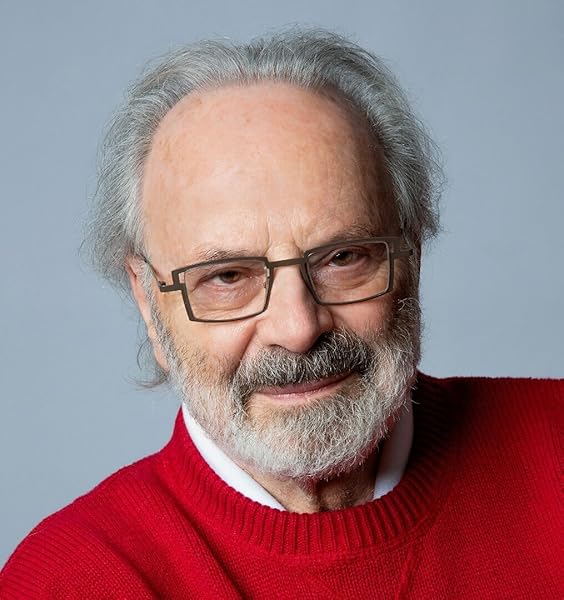
This book helps readers understand the workings of the human body as a series of interdependent physiological relationships. What was the idea, or spark, that first set off the need to write The Embodied Mind?
In 1981, in my book The Secret Life of the Unborn Child, I hypothesized that there were two memory systems. The first was the cortical system in the brain that we are all familiar with. The other functioned on a cellular level and began to operate at conception. At the time of writing The Secret Life of the Unborn Child, the research did not exist to support what was then a binary theory of memory.
In The Embodied Mind I provide an overview of current evidence-based research in many areas of science that, collectively, validates a unified theory of memory.
What sparked my determination to write this book was that I read about a 44-year-old French man who in July 2007 visited a hospital complaining of a mild weakness in his left leg. The resulting scans of his head led scientists to question our long held biological perspective on the nature of consciousness – because, despite living a relatively normal life, this patient was missing 90% of his brain.So, I asked myself – how is this possible?
What were some ideas that were important for you to share in this book?
Scientific emphasis on the brain has been baked into our culture for millennia. The Western world even before the Greek civilization, has been patriarchal, giving rise to a hierarchical social structure. The same vertical system has been unconsciously adopted in medicine. Doctors and scientists think of this system as strictly one way, mostly top-down, rarely bottom up. The latter is usually perceived as negative, as when you have a duodenal ulcer or a heart attack. Add to this the Church’s jaundiced view of the genitalia and you hesitate to spend too much time contemplating your lower chakras.
My book is a journey into the fully embodied nature of mental life, reviewing the cutting-edge science showing how the body responds to and encodes experience into its structure and function; how our feelings, thoughts, and memories are shaped by physiological functions beyond those of our head-encased brain.
It is the existence in our bodies of an interconnected, unified, multilevel, homeostatic, cellular memory system that allows us to be fully functional human beings with an Embodied Mind and not just an enskulled mind.
Materialism and reductionism are science’s Tweedledum and Tweedledee. The Embodied Mind challenges the prevailing concept of reductionism and emphasizes the need for a more holistic and spiritual approach to understanding the humanity of humans.
How much research did you undertake for this book and how much time did it take to put it all together?
I spent 7 years reading and making notes of 5,000 plus bookstand scientific papers.
What were some goals you set for yourself as a writer in this book?
Replacing the enskulled mind with the Embodied Mind and Everything is Connected
We understand the workings of the human body as a series of interdependent physiological relationships: muscle interacts with bone as the heart responds to hormones secreted by the brain, all the way down to the inner workings of every cell. To make an organism function, no one component can work alone. In light of this, why is it that the accepted understanding that the physical phenomenon of the mind is attributed only to the brain?
In The Embodied Mind, internationally renowned psychiatrist Dr. Thomas R. Verny sets out to redefine our concept of the mind and consciousness. He brilliantly compiles new research that points to the mind’s ties to every part of the body.
The Embodied Mind collects disparate findings in physiology, genetics, and quantum physics in order to illustrate the mounting evidence that somatic cells, not just neural cells, store memory, inform genetic coding, and adapt to environmental changes—all behaviors that contribute to the mind and consciousness. Cellular memory, Verny shows, is not just an abstraction, but a well-documented scientific fact that will shift our understanding of memory.
Verny describes single-celled organisms with no brains demonstrating memory, and points to the remarkable case of a French man who, despite having a brain just a fraction of the typical size, leads a normal life with a family and a job. The Embodied Mind shows how intelligence and consciousness—traits traditionally attributed to the brain alone—also permate our entire being. Bodily cells and tissues use the same molecular mechanisms for memory as our brain, making our mind more fluid and adaptable than we could have ever imaged.
Raven and the Hummingbird: A Healing Path to Recovery from Multiple Personality Disorder
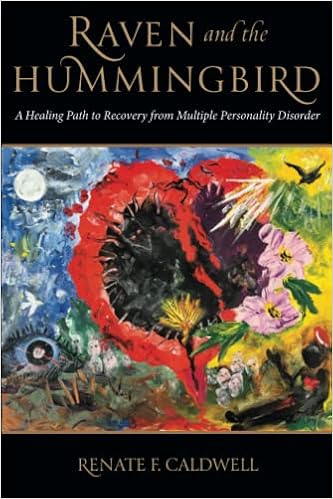
Raven and the Hummingbird: A Healing Path to Recovery from Multiple Personality Disorder by Renate F. Caldwell is an insightful exploration into the complex world of Dissociative Identity Disorder (DID), formerly known as Multiple Personality Disorder (MPD). This book brings to life the experience of Joan, a 44-year-old woman living with 52 distinct personalities, a coping mechanism her mind created in response to the severe sexual abuse she endured as a child.
This story is rooted in a chance encounter in 2003, where Caldwell, serving as a substitute therapist at a church group, met a group of women who were seeking solace by sharing their burdens with one another. Among them was Joan, a silent figure sitting alone, whose tear-stained note led to a transformative five-year recovery journey.
What sets Raven and the Hummingbird apart is its authenticity. This is not a book steeped in theoretical frameworks or rooted in empirical research. Instead, it provides readers an intimate, unfiltered look at a challenging therapeutic journey. It invites readers to step into Caldwell’s shoes and witness the rollercoaster of Joan’s recovery, experiencing every triumph and setback along the way.
As a psychology student, I found the portrayal of Joan’s numerous personalities, particularly Beth, a seven-year-old alter, profoundly touching. Caldwell’s narrative gives readers a vivid, tangible understanding of DID, allowing us to witness the transitions from Joan to Beth and back and observe their unique characteristics and interactions. This stark portrayal of DID, coupled with Joan’s journey to recovery, offers a profound educational opportunity for both students and practitioners in the field of psychology and psychiatry.
In addition to presenting a profoundly human story of resilience and healing, Caldwell accomplishes two significant feats with this work. First, she aids Joan in overcoming her DID through dedication, diligence, and empathy. Second, she masterfully translates their shared experience into a raw, honest, and richly layered narrative. As a result, this book doesn’t merely inform; it changes its readers, offering a deeply empathetic understanding of DID.
However, it is essential to note that certain sections of the book include detailed accounts of child sexual abuse, which may be triggering for some readers. Please consider this before committing to this emotionally intense journey.
Describing the impact of this book is a challenging task. Reading it felt akin to sharing a coffee with a dear friend, intimately privy to their experiences, which is a compelling way to approach such a subject. I extend my heartfelt congratulations to Caldwell and Joan for their success in both the journey to recovery and crafting a book that succeeds in demystifying DID.
I highly recommend Raven and the Hummingbird to students of psychiatry and psychology, who will find invaluable insights not readily available in standard academic literature. Additionally, anyone interested in an intimate exploration of human resilience or seeking to understand DID will find this book both enlightening and profoundly moving.
Pages: 669 | ASIN : B0BHBFS4S1
The Embodied Mind
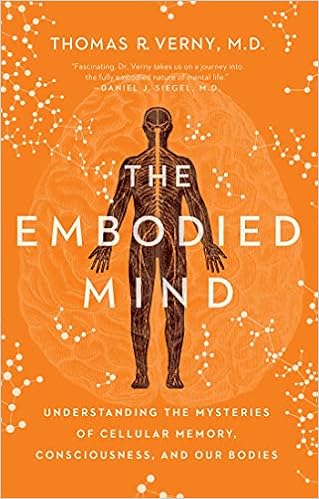
In The Embodied Mind: Understanding the Mysteries of Cellular Memory, Consciousness, and Our Bodies, Dr. Thomas Verny presents a comprehensive exploration of the intricate relationship between the brain, our bodily functions, and the ways our bodies respond to cerebral directives.
Dr. Verny delves into the realms of dreams and consciousness, explaining how our existence is influenced by internal bodily factors and external elements alike. The book is a masterclass in communicating complex ideas, demonstrating how cells utilize consciousness to perform their primary functions.
Aimed not just at medical professionals but at any intellectually curious reader, The Embodied Mind acts as a gateway to understanding the mysteries of the mind, brain, and the human nervous system. The book demystifies how cells maintain behaviors vital to life, leaving the reader with a profound appreciation of the human body’s marvel and the complexities of the brain, often overlooked by the layman.
One of the book’s strengths is its seamless blend of complex discussions and real-life narratives. This is evident from the warm introduction, where Dr. Verny shares his inspiration for writing the book and his fascination with the brain. His account of a young patient highlights individual variations in memory and consciousness and is particularly compelling.
The first chapter— a thought-provoking discussion on the significance of genes and an insightful dive into epigenetics— stands out as a highlight. This informative book covers various complex topics, including the mechanisms behind memory, the workings of the immune system, and the enigmatic nature of human cells.
Dr. Verny’s exploration of how the body retains memory while the brain forgets is a standout section. It resonates due to its relevance to everyday experiences and is presented in a manner accessible to all readers, regardless of their scientific background.
The book is a testament to Dr. Verny’s extensive research, incorporating a wealth of scientific material and revealing fresh insights throughout its ten informative and enlightening chapters. Beyond its educational discussions and engaging narratives, it challenges established scientific concepts and provides clear explanations, making it a valuable resource for anyone seeking comprehensive information on memory, genetics, the human brain, and the body.
Dr. Verny’s insightful understanding of human memory’s nature is impressive, and his ability to explain complex ideas lucidly is commendable. “The Embodied Mind” is a compelling, powerfully engaging read. However, this book isn’t just a testament to Dr. Verny’s expertise—it is a riveting journey into the mysteries of our bodies and minds.
Pages: 238 | ASIN : B08WM42Y2P


