Blog Archives
System Upon Systems in the Bible


System Upon Systems in the Bible, by William OuYang, offers a reflective and detailed examination of how the Bible connects various aspects of Christian life and thought through interconnected “systems.” The book spans multiple areas, from analyzing human rights in light of biblical teachings to exploring complex theological issues such as the shift in worship practices from the Old Testament to the New. Through scripture references, personal anecdotes, and practical applications, the author unpacks the systems that, according to him, shape both the divine and human experience. It is written in two parts, each exploring distinct biblical themes, with questions and outlines provided for group discussions, making it suitable for educational or study settings.
The writing presents a heartfelt exploration of various topics, though it covers a wide range of themes within each chapter. For instance, in Chapter 1, OuYang discusses Philippians 2 and reflects on how Jesus relinquished His divine rights out of love for humanity. This theme is significant, but the inclusion of a list of 39 human rights may seem broad compared to the central biblical text. Examples such as animal rights and capital punishment are introduced alongside the main theme, creating a diverse range of topics within the chapter.
The chapter on contentment stood out to me as one of the book’s strongest. OuYang contrasts contentment with the materialism and dissatisfaction that plague modern life, using vivid examples of famous individuals who, despite their wealth, lived discontented lives. I resonated with his mention of Amy Winehouse and other celebrities who tragically ended their lives despite apparent success. His blend of scripture and contemporary examples effectively communicated the timeless lesson that joy cannot be bought.
The concept of “systems” itself was a fascinating framework throughout the book. I often felt that the connections were implied rather than explicitly developed. The questions for reflection at the end of each chapter are helpful and guide the reader toward applying these insights in real life, which I found very effective.
Chapter 8 was intellectually engaging for me, as it explores the shift in God’s presence from the Old Testament to the New Testament in a way that felt both thought-provoking and insightful. OuYang’s explanation of how God’s relationship with humanity evolved was presented with clarity and depth. I enjoyed how the chapter traced these changes through scripture. It made me reflect on the continuity of God’s plan throughout the Bible. The blend of theology and practical application in this chapter was both enlightening and relatable.
I recommend System Upon Systems in the Bible to those looking for a contemplative study guide that weaves together theology, personal reflection, and practical lessons. I think it’s especially suitable for small groups or church study classes, where the open-ended discussions could make the abstract connections clearer. Overall, it’s a passionate work that presents biblical principles in a way that invites both introspection and discussion.
Working to Create Balance

Touch of Light: Opening to the Love That Is You and All Creation is a tale of personal evolution and an invitation to readers to explore their own spiritual pathways and connections. Why was this an important book for you to write?
My dad encouraged me to write the story of my life years ago. I couldn’t imagine why this would be helpful for people! Then a few years ago I felt an inner urging to do just that. I followed the urging of Source and only wrote when I could feel the inner impulse. I felt the energy of Light helping me in this process. Writing this book helped me reflect more deeply on my life. I integrated my past more fully. I felt the emotions I had experienced at the times I discussed. The book opened me more fully to myself and my connection with Source.
My sense of writing this book was also to encourage others to do life their way. We are all unique and that is our gift to the world.
I wanted to support people to listen to their inner voice and learn to trust it as the energy of Source Light giving them a nudge in a certain direction.
People often follow the crowd because it feels difficult to be different. And Source Light can support and be with them all the way, whatever they are drawn to.
What were some ideas that were important for you to share in this book?
That you are unique and that is amazing; you are a gift.
That listening to your inner voice and learning to discern when it is coming from Source Light makes your life a lot easier.
That life can be an adventure full of joy, peace, and love.
That working to create balance physically, mentally, emotionally, and spiritually also makes our lives easier.
That you can live daily in connection with Source.
That finding ways to release mental, emotional, spiritual, physical blocks to being your true self leads to clarity, peace, and loving yourself.
How would you describe the Source to readers that are considering reading your book?
Source to me is that creative Pure Love energy from which we all emerged. Which created the universe(s). We could also call it Universal Light. When we exist as Pure Love, we emanate Light and affect those around us.
What do you hope is one thing readers take away from your book?
To pursue their passion. What makes their hearts sing? To do life their way by tuning into their inner song and uncover who they really are – a loving spark of Creation.
Author Links: GoodReads | X (Twitter) | Facebook | Website | Amazon
Develop a Deep Connection to the Love that is You!
Outwardly, Ann Naimark had it all: a loving family, house in the suburbs, and a college education. But Ann wasn’t fulfilled or happy. She struggled with loneliness, emotional pain, feeling not good enough, and not fitting in with the crowd.
Following her independent nature and determined to find more peace, love, joy, and security, she embarked on a spiritual and emotional journey that changed the trajectory of her life. You’ll be inspired by Ann’s story as she points the way to love of self and all of creation—the way to a whole new you.
In A Touch of Light, you’ll discover how to:
- Live in day-to-day awareness of Source
- Release non-helpful mental and emotional patterns
- Learn to trust your inner instincts
- Discern when Source is leading you closer to your dreams
- Love your sensitive nature and accept it as a gift
- Experience your life as an adventure
- Move toward balance in all areas of your life
You’ll uncover who you really are—a loving, joyful, vibrant, spark of Creation!
Literary Titan Gold Book Award: Nonfiction

The Literary Titan Book Award recognizes outstanding nonfiction books that demonstrate exceptional quality in writing, research, and presentation. This award is dedicated to authors who excel in creating informative, enlightening, and engaging works that offer valuable insights. Recipients of this award are commended for their ability to transform complex topics into accessible and compelling narratives that captivate readers and enhance our understanding.
Award Recipients



















World War III by Kenneth Hamer-Hodges
We All want to be Happy by Ann Mullen-Martin
It’s TIME TO GROW: How Focusing On Spiritual Growth Can Transform Your Life and Relationships
Visit the Literary Titan Book Awards page to see award information.
The Search for God

In Death of a Blue Jay, a man is forced to face his inner demons as he learns to embrace life’s nuances and rediscovers his own faith. What was the inspiration for the setup of your story?
The inspiration for my story was based on a trip to Bar Harbor, Maine. My friend and I were not cognizant of the time on one hike and we found ourselves trying to hike back after sunset in the darkness. This experience helped me understand how life is hard and we all have a “dark path” to follow to reconcile past traumas or mistakes. The issue is it is hard to face this reality so most people tend to mask their obligations and distract themselves with comfort. Along the process, there is humility involved and a reliance on a higher power above ourselves.
Did you plan the tone and direction of the novel before writing, or did it come out organically as you were writing?
I planned the very beginning and ending of the novel before writing and also established the main themes throughout the novel. I started writing the book with the scene from the very middle of the novel and organically the tone and direction developed as I was writing from the beginning to the end.
What were some themes that were important for you to explore in this book?
Some themes that were important for me to explore in this book were mortality, morality, and the search for God.
What is one thing you hope readers take away from Jeremy’s story?
Charity is an essential call for all of us in life and we must be realistic with our mental health and reconcile any past traumas before giving joy to others because otherwise we are left confused, stuck, and selfish!
Author Links: GoodReads | Facebook | Amazon
This book has received recognition from:
International Impact Book Awards (May 2024) under Christian Fantasy.
2nd Quarter 2024 Firebird Book Award Winner- Christian Fiction (1st Place) and Religious Fiction (2nd place)
In D’Souza’s “Death of a Blue Jay“, Jeremy Martin goes through a supernatural experience of ups and downs and understands that there is value even when we fall because there will be new lessons gained for future use of wisdom.
In the fictional world of ROB-RAH-RATS, Jeremy is forced to face his unconscious mind, where his deepest secrets are revealed; and where he must face his inner demons and build virtue to ultimately return to the real world and fulfill a final act of charity. D’Souza shares contemplation and the allegory of certain objects to give the reader a new perspective on the value of living by eyes of faith rather than simply by eyes of sight.
Living With No Regrets

Mt. ؟!…shing: A Journey to Reconstructing Life and Its Meaning drawing inspiration from Martin Seligman’s Flourish theory and Eastern transcendental teachings, leading readers on a symbolic ascent up the mountain of life exploring psychological theories blending with spiritual teachings. What were some ideas that were important for you to share in this book?
The ultimate desire for every individual is to live in such a manner that at the end, they will have no regrets. Many times, people try very hard and do a lot, but still don’t get what they want. Dr. Martin Seligman, a former president of the American Psychological Association (APA), explored and defined five pillars of flourishing. Unfortunately, his work is hard to understand, not only for non-English speakers but also for native English speakers. I’ve taken it upon myself to present his theories in a manner that is more accessible. Populist ideas, usually spread by some authoritative personalities, form one of the major threats in the modern world. Similarly, popular psychologists have not always been so effective at getting their research across to an ordinary audience. To do this, I try to make these more complex psychological theories, such as those concerning Dr. Seligman’s work on flourishing, understandable to ordinary people.
How much research did you undertake for this book and how much time did it take to put it all together?
This book took me over three years to complete, involving vigorous research into theories of flourishing and well-being, many of which were shared with me by Dr. Seligman himself or referenced in his works. I collaborated with the R&D team to fully explore and distill these ideas. Initially, the book had seven chapters, but it was overwhelming. To this end, I decided to condense it, yet every chapter still stands alone as a comprehensive piece on the subject. That’s why I often say that by reading this book, you’re essentially reading six books in one. This project, I honestly believe, is one of the most important contributions to psychology today—at least for myself. It represents the culmination of my best work.
What do you hope is one thing readers take away from your book?
I hope readers walk away with a better understanding of the theory of flourishing. It is deceptively simple on the surface, but becomes more complex when explored in depth. I would also like people to recognize that many principles of today’s psychology were already touched upon by Eastern thinkers hundreds of years ago, proving that the lessons in flourishing aren’t just modern ideas but have stood the test of time. We should appreciate the wisdom of those ancient scholars who grasped ideas still being explored today. Ultimately, I want readers to understand how important flourishing theory is—its relevance has endured for over a century, and it remains a powerful tool for well-being.
Author Links: Website | Twitter | Instagram | Book Review

Universal Salvation and Personal Enlightenment
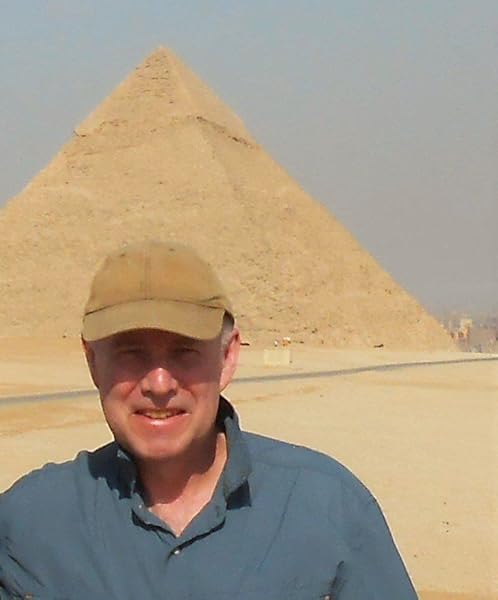
The Secret Religion is a compelling and educational exploration of the evolution of religion in Western societies, focusing on the enigmatic esoteric tradition of Christianity known as Gnosticism. Why was this an important book for you to write?
In my first book, The Obelisk and the Cross, I asked three existential questions; where did we come from? Why are we here? What happens when we die? Unfortunately, I found no clear answers evidenced in any of the western spiritual traditions. But I did discover an underlying theme that permeated (and still permeates) beneath all faith traditions – the choice between universal salvation and personal enlightenment.
How much research did you undertake for this book and how much time did it take to put it all together?
The book is the culmination of over 15 years of theoretic and field research.
What is one thing that you hope readers take away from The Secret Religion?
What we believe and how we act on those beliefs are two of the most important and personal choices each of us makes in the journey of our lived existence. If we strip away the supernatural aspects of the Christ myth and disregard the institutional constructions that arose after him, all that remains is a story of someone born in poverty and raised in obscurity, who dedicated his life to being a voice for the oppressed and abused. His works and words give people the hope of something better, something more than mere servitude and survival. Jesus rebelled against organised religious sects and political structures and gave hope to the hopeless so that the struggles of life are not in vain. This is the tangible legacy given to us by the ‘Jesus of history’. If seen through this perspective, the story of the human Jesus is part of a greater narrative that puts the individual at the centre of all things.
Author Links: GoodReads | Amazon
The Gnostics were brutally persecuted and their ideas were suppressed. But their teachings were powerful enough to linger on in the collective unconscious of succeeding generations and to re-emerge in the most unexpected places. From symbols on the American one-dollar bill to the ideals of the 1960s counterculture, from heavy metal music to 21st-century technological innovations, various facets of Gnostic thought continue to offer us a way to interpret the meaning of our lives. As Sunderland traces the battle between the orthodox and heretical traditions of Christianity, his thorough research and ability to make counterintuitive connections reveal to us a struggle that continues to rage beneath the surface of contemporary life.
“You Got Me All Wrong”

The Magnificence of the 3 is an intriguing exploration of the intersections between science and faith, with a particular focus on the concept of the atom as a divine creation. Why was this an important book for you to write?
The original plan was to find ten scientific facts that were easier for the average person to analyze and come to conclude that there was a Creator and that Creator was the God the Hebrews brought to us.
The idea came to me while stuck in prison serving a life sentence. I was housed in Level IVs for twenty-one years but I was not afraid of prisoners housed there even though the majority were convicted of murders and violent crimes. But when I landed in the lower-level institutions where the majority of inmates were not killers yet but just gang members, I became very fearful for society. I overheard their conversations, and the majority of plans were rooted in violence. I couldn’t imagine a society living in constant fear where one member has to keep guard while the family rests.
I decided then that to secure society, we needed to confirm as fact that there was a Creator and scholars might have missed something. Furthermore, evolution had been planting the idea in all our brains that man came from monkeys. These children, the Christians and religious people in general including myself, have all succumbed in one form or another to this theory, by behaving like animals. We are witnessing a genocide today committed in the name of God by the Hebrews and Christians where children are indiscriminately murdered as an example.
As children can easily separate hypocrisy from facts, I decided to look to science for that evidence. It was also for my benefit as even though I grew up in the church, I had a lot of questions that leaders could not answer. I was very confident however that if God the Hebrews brought to us was real, He planted the evidence somewhere in the record. With the nature of the environment itself on its own, I concluded even as a child that God had to be a Scientist first and foremost. In that case, the truth about God had to be hidden somewhere in science and not in the church.
Furthermore, since children look to science as factual, it will be much easier for them to come to God compared to the Church which promotes God as loving, forgiving, and merciful while encouraging the murder of babies as we are currently witnessing with the genocide of Palestinians. Kids aren’t stupid or evil why they discard God when they grow up. The Christians had been accepting violence as a Biblical standard and children had also been watching from the sideline. Some of these children may be the future of the church and will continue upholding this standard while calling themselves Christians.
Research indicates more churches close every year than open and I am not surprised considering the ongoing violent wars of the last twenty years between the Zionists and Christians against the Muslims. These three groups follow the same God, unfortunately.
The only counter for our children’s future and to secure world peace hopefully is for us today to find proof that there was a God and with the pieces of scientific evidence provided by this book, I can now confirm that it was the One the Hebrews brought to us. We need to find some rest from anxieties of religious wars and violence. This was the original plan and its roots began inside a prison.
What were some ideas that were important for you to share in this book?
I am thankful to the Christians who reviewed the book and honored it with awards. I appreciate it much more as I am fully aware of habits by common Christians of calling anyone names for any observation of the scriptures outside what they had been taught. The majority of my claims have not been presented before and the awards indicate that the Christian reviewers accepted them. Here are a few examples.
The most important claim is that the Torah and Bible were parabolic stories about brain development while living on earth. This is why the Tree of Knowledge, Tree of Life, and Garden of Eden with its rivers were all recorded in the second chapter of Genesis.
The second most important claim is that the interpretation of the incident in the Garden of Eden when Eve chose to go for knowledge as the “Fall-of-Man”, was bad. To claim that man was created perfect, and then followed the devil immediately after creation and on their first challenge, meant that there was a flaw in God’s design. It amounted to calling God’s name in vain. God’s design was perfect.
It was during this incident that God revealed the elements of brain development. That of the Tree of Knowledge (brain neuron that looks like a tree), the Garden of Eden (brain full of neuron trees), and the Tree of Life (Ten Commandments representing societal laws).
The conversation between Eve and the snake revealed what our scientists recently confirmed: that knowledge is rooted in the development of emotions. I came to this conclusion when God planted the very first emotion during this conversation. This emotion was “desire” (I found that this word had been removed from some Bibles). Since every human behavior is motivated by an emotion according to our scientists, then the presence of “desire” in the conversation was the first incident where emotion and human behavior came together. This was what God meant to convey in the conversation between the Mother of mankind and the snake.
God designed the brain neuron to look like a tree and called it the Tree of Knowledge. As it turns out, it is the neuron that looks like a tree of earth that stores our memories and it is these memories that help us survive in our daily struggles by choosing what we tried and worked in the past while discarding what didn’t.
A biblical legend turned out to be a scientific fact. This was the kind of fact I suspected was hidden in parables. The Tree of Knowledge is no longer a myth to make fun of but a scientific fact.
The third most important one confronts claims by evolution that emotions were learned from the environment. It is my claim that emotions were fundamental elements of the design. In that case, they had to be in a relationship of THREE as fundamental elements of creation were designed after the Atom’s blueprint.
Since emotions have only been divided into classes of positive and negative, it is incomplete. If emotions were designed after the Atom (it has three particles), it has to have its own version of a neutron.
It is my claim that God included “desire” in the conversation between Eve and the snake to preserve the record of the identity of the neutron God designed for Emotions, or as I refer to it, the Mother of Emotions. God linked together the mother of mankind (Eve) to the mother of Emotion (desire) in deciding whether mankind was going to remain a beast or evolve into the Image and Likeness of God.
Since emotions were designed after the Atom, they were therefore fundamental elements of the design. In that case, they were hardwired into the human body in contradiction to claims by evolution that emotions were learned from the environment.
The so-called Fall-of-Man incident was therefore a scientific parable about the design of the brain involving the Tree of Knowledge (neuron) and Emotions. The design had been confirmed by science as a fact.
The fourth important claim involves the identity of the Tree of Life. It is my claim that God presented the Ten Commandments as this tree and left clues of where to find it and I did.
The Atom has many laws for its operation, and the most fascinating one is the Electron Capture. It is fascinating because of its spiritual and religious parallels. The Atom’s laws define the relationship of its particles that enable the Atom to survive immortally. If man was created in the Image and Likeness of the Atom, man had to have laws similar to the Atom’s to maintain human survival.
This was why God referred to the Ten Commandments as the Tree of Life. Man would need laws for the brain to be developed. I hear people accusing government laws as a means to control. But by understanding how man separated himself from beasts of the field through brain expansion, I now understand why God referred to the Ten Commandments as the Tree of Life.
The Commandments appear simple, but they were meant to be as they were not meant for entering heaven but for social living on earth. They were meant as tools for social interaction and developing a society. According to the social brain hypothesis, our ancestors separated themselves neurologically from animals when tribes began expanding and getting bigger. The bigger the tribe got, the more complicated social conditions became, requiring the human brain to adjust. In this process, the human brain expanded and we slowly separated ourselves from beasts of the field. The bigger the tribe, the bigger the brain.
Would you prefer to be part of a tribe that treats you with love or a tribe that condones stealing and murdering each other? If you prefer the former, then you understand what God meant to do with the “loving-thy-neighbor-like-loving-oneself” command. The bigger the tribe, the bigger the brain and the Tree of Life provided an example of tools designed for this purpose.
I’ll end this with my claim regarding my unsolved question as to the Image and Likeness of God. The discovery of the Atom in the record is crucial today. It not only confirms the truth about God of the Torah and Bible since the Atom was a recent discovery by science, but it solves my question as to the meaning of the Image and Likeness of a God who knew “good and evil”.
The Atom as I claim was God’s firstborn. It is my claim that the “Image and Likenesses” that God said He was going to use in creating Adam as recorded in Genesis 1: 26, was a reference to the Atom. God designed the Atom in His Image and Likeness and then used the Atom in designing mankind.
The snake came later and revealed this image and likeness parabolically, and this image was of a God who knew “good and evil”. The “good and evil” characteristics of God coincidentally, are the same classification our experts gave to the particles of the Atom. In modern language, “good” by word association means “positive”, whereas “evil” by word association means “negative”.
But when God created Adam, however, He had to redesign the atom’s particles Adam. The “good and evil” reference was the classification God gave these specially designed human particles. Our experts came later and identified these human particles as Emotions, but coincidentally, our experts assigned them into two groups: positive and negative emotions. Their purposes according to our experts including evolutionists, were to assist us in our survival pursuits. The atom’s immortal survival by the way, depends on the interactions between its own positive (good) and negative (evil) particles.
All I needed to find was a piece of evidence to prove that the “neutral neutron” of the Atom represented God. There are a lot of pieces of evidence submitted in book but one fell out of the Bible and landed here on Earth. This one is easy to understand through my claim that the Ark of the Covenant was also designed after the Atom.
When God walked with Israel in the desert carrying the Ark of the Testimony/Covenant in the Old Testament, He appeared as a magnificence of the three: cloud during the day, fire, and light at night.
When the Jews created the atomic bomb for the Americans, they used the Atom’s “neutral neutron” particle. When these bombs exploded on the Japanese, witnesses saw three things: a mushroom cloud, fire, and a bright light. These were the manifestations of God while walking with Israel carrying the Ark in the Old Testament. These manifestations provided us with a direct piece of evidence supporting the claim that God presented the neutral neutron as His particle.
Since all ordinary matters in the universe are made of Atoms including our bodies, and the “neutron” of the Atom is God’s particle, it clarifies two parables for us: (1) the meaning of God’s Omnipresence since He is the “neutron”, and (2), the meaning of Jesus’s declaration that the kingdom of God is in you. Luke 17: 20-21. God lives in us because He is the “neutron”.
Since all ordinary matters in the universe are made of the Atom, including the human mind and heart, this is why God has Omnipresence and lives in you. You were created from His Image and Likeness, and this Image and Likeness was first planted in the Atom.
These are some claims but there are plenty more including the meaning of Eve as the helper, why Eve was created in the Second Chapter of Genesis and not the first, why Cain was more than a murderer, why kicking Israel off the land did not violate the covenant between God and Abraham, why the Son Jesus was the opposite of the Father, the indisputable scientific evidence of the crucifixion, and the scientific meaning of many parables in the Torah and Bible including the one below.
With the looming election, it is time for our intellectuals to review one claim that the land once promised to Abraham, was replaced with a land of gentiles with God’s blessings. This land came to be known as the American lands. The evidence is overwhelming.
How much research did you undertake for this book, and how much time did it take to put it all together?
It took me ten years to get the project done once I was released in 2013. I planned on focusing on the project in full but then my family kept asking me questions like “still no job?” LoL. I spent all these years in prison and by appearance, it might have looked like I did not plan on getting a job. Writing a book was a bit foreign to them and not a job for sure. LoL.
So I had to get a job, and it slowed the project down. I didn’t know where to start either as I didn’t want to read books about God and science as they might influence my thoughts. I can say this however, thank God for the internet as without it, this project would have been impossible as I needed to understand scientific discoveries and theories to include as supporting evidence.
It was a lot of research as science was and still is foreign to me. For example, I was aware of the Atom, but not of anything else, not even the name of the particles. I had to study the basics of the Big Bang, evolution, social brain hypothesis, the triune brain theory, the biological and neurological structure of the human anatomy, including the latest discoveries such as the field of epigenetics and the wood wide web amongst other scientific matters.
I was five years into the project when the Atom hopped along on my screen. I immediately saw the similarity of its design to the Image and Likeness of God, once I renamed the “positive proton” as “good” and “negative electron” as “evil”.
The challenge then was to find proof in the scriptures that the “neutral neutron” was God’s representative in the Atom as it completed the image of God the snake revealed, that of One who knew good (positive) and evil (negative). Our experts inadvertently provided the evidence to substantiate this claim with the Atomic bomb.
It took another five years to finish the current published version. It took over a year for the first edit as God started dropping information on my lap and I pretty much almost changed the whole draft that I submitted to the publisher. So many additions to the draft that I ended up paying the Publisher more money to get the book published. I did not like this but I needed to get the information out to the community. LoL.
It took ten years to get it out as I had to work full-time and write. God revealed a lot to me and I originally thought of doing two or three books. But then I became fearful of what would happen to the information if I walked out of the house and got run over. So I decided to compact the information into one book and let better people come in and expand on them down the line.
What is one thing that people point out after reading your book that surprises you?
So far, I have not received any reviews yet. The people who are reading it are friends and they are shocked. Their comments are all supportive but shocked however with the claims. The comment I liked the most however was how simple I presented the claims for the average person to understand.
This was the goal initially. As science is foreign to a lot of people, I had to make it easier for the average person to understand as a result of my fear of the youths in prison. I wanted the average high school child to hopefully understand the biblical parables related to the design of the human anatomy that may influence behavior as grown adults.
I now feel bad however as I assumed unjustifiably that uneducated gang members pose the most serious menace to society. But then the October 7 incident involving the Zionists and Palestinians came about. Then grown Christians and Zionists with Bachelor’s and Master’s Degrees appeared on the news including a Christian Congressman promoting the idea that murdering Palestinians and their babies would bring them blessings from God.
I am unsure where these people found such an idea in the Ten Commandments or the Sermon on the Mount! Best-selling Author Neale Donald Walsch said God once told him, “You got me all wrong”. I owe our young thugs an apology.
Author Links: Facebook | Instagram | Website | LinkTr
There are three main characters in book:
God, the invisible Designer
God’s First-born, the invisible Atom
God’s Helpers, the invisible Emotions.
I ran across God’s treasures accidentally while following the tracts of the ATOM that God left in the biblical record parabolically. God was fully aware of the atom when He declared in Genesis 1: 1 that “He created the heavens and earth.”
The “THE MAGNIFICENCE OF THE 3” title was deducted from a quote attributed to Nikola Tesla, a mechanical and electrical genius of an engineer who said:
“If you only knew the magnificence of the 3, 6, and 9, then you would have the key to the universe”.
I am claiming that I found Tesla’s magnificence of the 3, and it was a reference to the ATOM and its three particles: (1) positive proton (Good), (2) negative electron (Evil), and (3), neutral neutron (God).
When I began researching for project, I was not looking for these biblical icons. Then one day, the ATOM popped up on my news feed and while admiring its mechanics, I immediately saw the parallel of its scientific structure, to the spiritual structure of the relationship God urged us to have with Him.
Then I searched for the Atom in Biblical record and found it. This was unexpected but the claims are presented for your review. Once I saw the parallel, God’s parabolic stories opened up for me. For example, how could Eve talk to a reptile? How could the devil turn the perfect humans against their Master on the first try? Why are innocent children born in sin if man was created perfect? Why were Abraham’s descendants designated to be enslaved before Abraham had a son? If man was born to be immortal in the flesh, why was there a Tree of Life in the Garden? Who was Cain’s wife and what was the mark God gave him? Was there a scientific meaning to the changes in diet after the flood? What were the meanings of the curse and blessing given by Noah to his three sons? Why would a loving, forgiving, and merciful God punish up to three and four generations of innocent children for the sins of the fathers? Who were the sons of gods and daughters of men? If the crucifixion was the truth, why isn’t there any record of it except the New Testament?
These are my personal questions that are dealt with in this book and many others. Book is compact with foundational information that better people will come along and expand upon for your benefit. Examples of scientific subjects involved are the atom, emotions, the Big Bang theory, the social brain hypothesis, the triune brain, neurons, evolution, and new scientific subjects such as the wood wide web, and epigenetics.
In case you wonder about God’s Omnipresence. Wonder no more as the secret is in the ATOM. Equip yourself properly as a Priest beginning with this book.
Mt. ؟!…shing: A Journey to Reconstructing Life and Its Meaning

Mt. ؟!…shing: A Journey to Reconstructing Life and Its Meaning delves deeply into the realms of personal growth, self-discovery, and the philosophy of flourishing. Ali Mirsadeghi, drawing inspiration from Martin Seligman’s Flourish theory and Eastern transcendental teachings, leads readers on a symbolic ascent up the mountain of life. This narrative seamlessly blends storytelling with philosophical inquiry, posing profound questions about existence and delivering transformative insights along the way.
Mirsadeghi’s writing captivates and stimulates thought, though its complexity may challenge some readers. His distinctive style is characterized by fluctuating tones and intricate language, inviting readers to engage thoroughly with the text. The book opens with an enigmatic introduction featuring characters like Mrs. Meaning and Mr. Hope embarking on their journey up Mt. Shing. The initial storyline, referred to as “story zero,” effectively immerses readers in a world where the ideas of flourishing and decline are not merely abstract concepts but actionable paths one can navigate in life. A standout aspect of “Mt. Shing” is its innovative integration of Eastern philosophies with modern positive psychology. Mirsadeghi excels in weaving these diverse teachings into a cohesive narrative, demonstrating his ability to harmonize seemingly disparate ideas. The intricate nature of the concepts presented might be overwhelming, especially for those unfamiliar with Seligman’s work or Eastern thought. The use of allegorical characters to convey psychological principles, while creative, may require multiple readings to fully appreciate their depth.
Mt. ؟!…shing: A Journey to Reconstructing Life and Its Meaning is an essential read for those interested in personal development, philosophical exploration, and the fusion of psychological theories with spiritual teachings. This book is particularly suited for individuals familiar with or curious about positive psychology and Eastern philosophies and those ready to embark on a journey of self-discovery.
Pages: 340


 LITERARY TITAN