Blog Archives
Cascadia’s Call
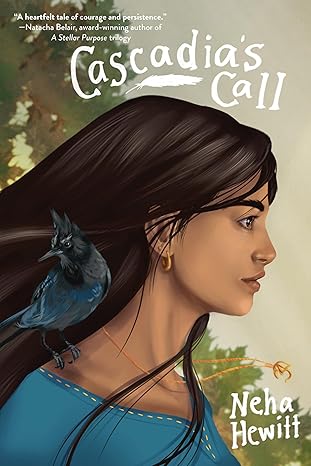

Neha Hewitt’s Cascadia’s Call is a heartfelt coming-of-age story about Ari, a fourteen-year-old girl uprooted from Boston after her father’s death and sent to live with relatives in Portland while her mother pursues a demanding journalism career. The novel moves through Ari’s grief, her rocky adjustment to a new city, and her clashes with cultural expectations, all while weaving in mysterious symbols tied to her family’s heritage, most notably a necklace that seems to carry an uncanny power. It is both a portrait of adolescence and a meditation on family, loss, and belonging.
I found myself drawn into Ari’s raw anger and aching loneliness. Hewitt captures the turbulence of being a teenager so vividly that I often felt like I was back in my own messy adolescence, stumbling through identity and yearning for control. The writing is crisp and accessible, yet it carries real weight, especially in the quieter scenes where Ari longs for her father or struggles with the heavy silences between herself and her mother. At times, the dialogue made me laugh in recognition, and at other times it brought a lump to my throat.
I’ll admit there were moments when Ari’s stubbornness grated on me, and I caught myself wanting to shake her into patience. But that’s part of why the story works. She feels like a real teenager, with sharp edges and contradictions that make her alive on the page. I also admired the way Hewitt didn’t shy away from difficult conversations about culture, tradition, and feminism. Those scenes felt risky, sometimes messy, but honest. The supernatural hints with the birds and the necklace added just enough mystery to keep me guessing without overwhelming the emotional heart of the story.
This book would be a strong recommendation for teens navigating change, parents trying to understand their children, and anyone who appreciates stories that blend culture, grief, and a dash of the mystical. Cascadia’s Call is the kind of novel that keeps you thinking, not because it resolves everything neatly, but because it captures how uncertain and yet hopeful growing up can be.
Pages: 242 | ASIN : B0FJF5VC19

When Life Knocks You Off Your Happy: Facing Challenges for the First Time: Providing Practical Tools for Building Resilience, Self-Awareness, and Empathy

D. A. Mintaka’s When Life Knocks You Off Your Happy is a compassionate, twelve-chapter journey through the emotional and social trials faced by tweens and early teens. Told through the eyes of various young characters, the book explores big issues like perfectionism, bullying, self-worth, emotional burnout, and peer pressure, with simplicity and warmth. Each chapter features a different protagonist navigating their “first time” through a major emotional experience. What makes this book shine is how it gently folds life lessons into compelling, relatable narratives without ever feeling preachy.
I found myself genuinely moved by how Mintaka writes children’s emotional lives. The writing is clean and clear, full of sensory detail and believable dialogue. The author has a gift for showing how kids think, their logic, their fears, their hopes, and doesn’t write down to them. What stood out most for me was the emotional layering. Each story starts with a small moment, a science fair project, a school play, a treehouse, and slowly unpacks something much bigger about trust, identity, or self-compassion. I was especially struck by the story of Evelyn and the hummingbirds. Her anxiety and need for control felt so real and raw, and her small decision to let go and live a little was quietly powerful.
There were moments where I wished the book let readers sit a bit longer with the tension before spelling out the moral. And while the language is geared toward younger readers, I craved just a touch more complexity in some of the emotional resolutions. That said, I reminded myself this book is written for kids who are in the thick of figuring things out for the first time. And in that regard, it does a beautiful job of meeting them exactly where they are.
I’d recommend When Life Knocks You Off Your Happy to kids ages 9 to 13, especially those who are navigating new or tough experiences like first disappointments, social friction, or growing pains at home. It’s also a great read for parents, teachers, or counselors who want to understand what kids might be feeling but don’t yet have words for. This isn’t just a book to read, it’s one to talk about.
Pages: 204 | ISBN : 1732342601

Walk a Mile in My Shoes: Surviving Life’s Challenges


Paul Bradford’s Walk a Mile in My Shoes delves into the life of a man scarred by childhood trauma, exposing a harrowing journey from victim to perpetrator. Bradford recounts his life with unflinching honesty, refusing to excuse his actions as an adult while tracing their origins to the extreme hardships he endured as a child. The narrative begins with Bradford’s recollections of an abusive, alcoholic father whom he blames for his mother’s death. A pivotal moment in his life unfolds during a hitchhiking trip to his grandparents’ home, where he endured molestation, a secret he reveals for the first time in this book. The story continues through his unstable upbringing, bouncing between foster families, and the damaging influences that shaped his understanding of sexuality. Both the church and manipulative older boys contributed to a distorted, exploitative perception of intimacy and boundaries. Bradford’s use of vivid, colloquial language, what he describes as “hillbilly” expressions, paints a raw, authentic picture of his early years. His descriptions evoke the atmosphere of a bygone rural society, adding texture to the narrative.
As a piece of writing, the book is well-crafted. Bradford’s grammar is precise, and his articulation is engaging. Despite the deeply unsettling themes of abuse, violence, and exploitation, the narrative holds the reader’s attention through its clarity and flow. However, the focus of the book tilts heavily toward the darker chapters of his life. Positive memories, though present, sometimes feel rushed and underdeveloped. These moments, when they appear, offer glimpses of light but I feel lack the depth and exploration given to his tragedies. A more balanced portrayal, with a fuller depiction of happier times, could enrich the narrative and serve as a reminder that not all of his childhood was consumed by pain.
While the book is well-written, the content may not appeal to everyone. Bradford’s candid acknowledgment of his past wrongdoings and his struggle with trauma elicits some sympathy, but it does not mitigate the gravity of his actions as an adult. His experiences underscore how a lack of education and societal attitudes like “boys will be boys” can perpetuate cycles of harm. Yet, as someone who endured similar trauma, Bradford’s choices remain difficult to reconcile. Walk a Mile in My Shoes is a raw, unsettling account of a life shaped by adversity and mistakes. While it may resonate with readers drawn to unfiltered stories of human frailty and resilience, the graphic and disturbing subject matter makes it a challenging read.
A Community Shaping the Future Together

Human Extinction presents an overview of the myriad of ways humanity is responsible for its own downfall, highlighting the progress and destruction that define our history. What inspired you to write this book?
Actually, it was only because of a statement by Greta Thunberg that “The Germans are the number 1 climate sinners” that I got the idea to look into this topic more intensively. I then looked into the topic more intensively and you quickly realized that this statement has no basis and that there are not only the problems of the climate, but many others, all of which are intertwined in some way.
Can you share with us a little about the research required to put your book together?
I looked at a lot of reports, statistics and documentation and put things into context. The basic principle is actually an inspiration and a lot of thinking about what effects this has on other areas of life. At the moment we are actually living in a very exciting time, because things that could help us are only now being developed or published. I’ll try to show this with an example: Everyone knows Photovaltak systems, they’re on everyone’s lips. As we all know, however, these only work during the day, but a German company (rawlemon.com) has linked this technology to “a magnifying glass” and this system even works at night, I think further development will not be long in coming . The fact that this is also available as a color or foil is very new and sounds exciting
What is your background and experience in writing, and how did it help you write Human Extinction?
It was information with a lot of inspiration. It is a mental process of connecting things together to see what effects one has on the other.
What is one thing you hope readers are able to take away from your book?
There is always a lot to hope for. I would like more people to think about how we can shape the future of our children without doing more damage to our planet. It doesn’t help to just believe everything that prominent people say, we should think about what is being said and what impact it might have. We are not everyone in this world. We should all be a community that shapes the future together.
Author Links: Facebook | Website
But all is not yet lost. A look into the past shows that numerous technological solutions are already on the table, we just have to make them usable for the future and be prepared to bring about change where the biggest obstructors are: in power, money and influence.
Human Extinction – The extinction of mankind or how we are destroying ourselves
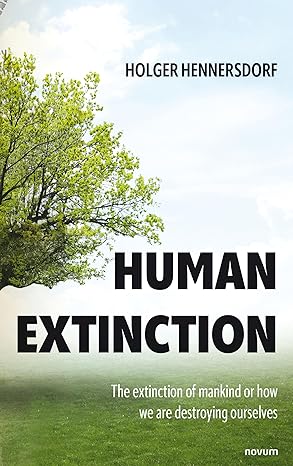

Human Extinction is a thought-provoking examination of the myriad ways humanity is contributing to its own potential downfall. The author presents a sweeping overview of historical, environmental, and societal issues, intertwining them to illustrate how interconnected and fragile our existence truly is. From ancient civilizations to modern technological advances, the book highlights the patterns of progress and destruction that define human history.
The writing is passionate and earnest, reflecting the author’s deep concern for the future of our planet and species. The book is peppered with historical references, personal anecdotes, and speculative ideas, making it both informative and engaging. For instance, the comparison between ancient advanced civilizations like the Egyptians and modern society provides a compelling framework for understanding how past mistakes are being repeated on a grander scale today. I think the section discussing the fall of these civilizations due to environmental changes and societal collapse resonates with current global challenges.
While the book’s organization may pose some challenges, its core message is clear and urgent. I felt that the digressions into conspiracy theories and speculative history, while interesting, can sometimes detract from the more solid arguments presented.
The author’s ability to inspire critical thinking is undeniable. The chapter on modern technology and its implications for resource depletion and environmental degradation is particularly poignant. The author effectively highlights the paradox of technological advancement; while it brings numerous benefits, it also accelerates resource consumption and environmental harm. The call for a global rethink and collective action is a powerful reminder of our shared responsibility.
Human Extinction: The Extinction of Mankind or How We Are Destroying Ourselves is a compelling read for any person interested in environmental science, history, and societal issues. I would recommend this book to readers who are passionate about understanding the broader context of humanity’s impact on the planet and are looking for a catalyst to inspire change.
Pages: 134 | ASIN : B0D47DRKK8
Flaming Moderate: A Riveting Journey and Quest to Save Democracy

In Flaming Moderate, Bo Roberts offers a compelling examination of politics, social issues, and the current state of affairs in the USA. He delves into the preservation of core American values, contrasting historical practices with contemporary trends. Roberts addresses recent developments and the threat of violence associated with Trump supporters within the Republican Party and explores various topics specific to Tennessee. These include proposed changes to Tennessee’s constitution regarding the transfer of powers in the case of an inactive governor and the pursuit of quality post-secondary education for the state’s students.
The book is enriched with Roberts’ personal stories and his insights on significant political moments, such as his encounter with the KKK and their violent actions against Sevier County’s education leaders. Through these narratives, Roberts emerges as a passionate advocate for fairness and ethical leadership. He tackles sensitive subjects head-on, speaking candidly about pressing issues in the US. His profound messages, like the observation that education “has been suffering from a lack of preferential treatment for decades,” inspire readers to consider the need for change.
Roberts’ skillful integration of historical and contemporary events provides valuable context, helping readers understand the urgent need for effective leadership. One striking revelation in the book is that the number of COVID-19 deaths in the US surpasses the total number of deaths in the US Navy, Marines, and Coast Guard during World War II. Adding a playful, artistic layer to the serious topics, Roberts references songs and musicians such as Tim Nichols and Tony Arata, as well as various song lyrics. He also highlights remarkable individuals, including Bob Corker, a Republican US Senator from Tennessee, described as “a fiercely independent, plain-spoken leader.”
Flaming Moderate is ideal for those seeking logical political discourse and readers who can objectively evaluate both familiar and opposing viewpoints. With an engaging tone and a commitment to speaking his truth, Roberts presents a book filled with intelligently articulated problems and actionable solutions. Whether sharing personal experiences or discussing notable political figures, his perspectives resonate with advocates for the advancement and prosperity of the USA.
Pages: 171 | ASIN : B0CP8D9JT9
Scholar of the Arts and Inhumanities

Rebecca Dietrich’s Scholar of the Arts and Inhumanities is a riveting debut collection that dives deep into the human condition through the lens of personal trauma and resilience. With an unflinching gaze, Dietrich explores themes of love, loss, and reclamation of self, delivering each poem with a potent blend of vulnerability and defiance. This collection is not merely a series of poetic reflections but a call to action, urging readers to confront their sorrows and emerge stronger.
Dietrich’s writing is visceral and raw, often unearthing the darkest corners of human experience. Poems like “Trauma Bond” and “Chokehold” reflect a harrowing struggle with toxic relationships and personal demons. Her use of stark, evocative imagery captures the complex reality of trauma, compelling readers to empathize deeply with her plight. This stark honesty permeates the collection, making it a cathartic read for anyone who has grappled with similar issues. One of the most striking aspects of Dietrich’s work is her ability to transform pain into a powerful narrative of survival and empowerment.
Dietrich’s poems serve as a testament to the strength and resilience required to confront and transcend adversity. Her words are not just poetic but are imbued with a sense of urgency that resonates on a deeply personal level. Dietrich also excels in blending the personal with the political. These poems critique societal norms and injustices, from the desensitization to school shootings to the ongoing struggle for gender equality.
Scholar of the Arts and Inhumanities is a compelling read that I would highly recommend to anyone interested in contemporary poetry that does not shy away from the harsh realities of life. Dietrich’s work is particularly resonant for readers who appreciate poetry that confronts personal and societal traumas with unyielding honesty. Her poetic voice is both haunting and hopeful, making this collection a poignant addition to the world of modern poetry.
Pages: 32 | ASIN : B0CP2VNVHX
An Element of Tragedy

Birth Management Water follows a couple as they navigate the denial of their right to parenthood in an oppressive regime, embarking on a quest for autonomy amidst a society that tightly regulates birth. What was the inspiration for the setup of your story?
With the whole debacle of abortion rights in the US in recent times, I thought to myself, “What might the opposite of banning abortion or the right to choose abortion look like?” I came up with “banning birth or the right to choose to give birth,” which is what we find is the situation in BMW. I also feel very strongly about the squeeze put on the middle class in recent years (in the US but also elsewhere in the West), and I found that these issues fit together well, so we have leading characters who are educated and articulate but who are middling earners saddled with debt for something that’s not really paying off the way it should.
Jane and Jacob are intriguing and well-developed characters. What were some driving ideals behind your character’s development?
Jane and Jacob have different economic origins, and they meet in the middle. They meet in school, which is a great equalizer – an intended provider of opportunity – and their relationship grows from there, but they are never able to reconcile their foundational differences but not because it is inherently impossible. Rather, it is because society makes it impossible for them. Opportunity isn’t enough. Their economic and family situation is made untenable by political policy. Further, Jane’s father, Huy, who largely guides Jane’s mother’s views as well, never accepts Jacob although no one in the text can understand poverty and the struggle for social mobility quite like Huy. Instead, in Huy’s eyes, Jacob thumbs his nose at what he should do to provide for Jane – seek money first and everything else second. Huy sees Jacob as irresponsible. Jacob’s and Huy’s contrasting ideals – despite them being of similarly humble origins – drive an immovable wedge between these two men who would otherwise likely have the strongest shared understanding of struggle of any two characters in the novel. They are also the two people who care about Jane the most, so she has to manage both sides of their conflict, which becomes a burden she is, perhaps, justified to shed. To his last breath, Jacob never stops fighting for Jane even though by the end it becomes clear that it is probably no longer the right thing to do. They share ideals, but Jane and Jacob never quite share circumstances except for the denial of their right to have children.
Jane was brought up to do the “right thing,” but what is right is too individual to determine for another – this also speaks to the law that denies Jane and Jacob the right to have a child. Huy is never able to accept that the “right thing” might not be exactly what he thinks it is, and so he is never able to support Jane, so I would say there is an element of tragedy in that the disintegration of Jane and Jacob’s relationship is foretold by Huy’s rigid concept of the pursuit of success, which he only even begins to realize at the very end of the last chapter. Moreover, it happens that Huy’s views are largely supported by the legislation that blocks unsanctioned births. Although we don’t directly see that this is the case, he probably loves that Jane and Jacob can’t have a baby. Ultimately, “good girl” Jane can only find relief in a relationship entirely separate from anything in her past life – one that must help her forget her disappointment and also satisfy her physical needs because physicality with Jacob becomes analogous to pointlessness, to absurdity. Therefore, the only way for her to find relief for herself is to betray pretty much everything to which she had ever devoted herself, and she almost has no choice.
What were some themes that were important for you to explore in this book?
Early on, I realized I was speaking to the question “what is right?” or “what is the right thing to do?” in this novel. The answer, I think, is that there is often not a clear right path. That isn’t to say there is never a clear path – I think there sometimes is. However, when too many people are too rigid concerning too many things, especially enormously important things such as child-bearing, things are unlikely to go well.
Obviously, in conjunction with the childbirth motif, I wanted to explore choice. Who gets to choose? Why? Why can’t everyone have the same power of choice? Choice becomes a class conflict in BMW, which, as I mentioned earlier, squeezes the middle class, which, in my opinion, is the wrong direction for any country, fictional or real. I mean – what do we really think is going to happen if people such as teachers and social workers are made to inhabit a de facto economic underclass?
When and where will Birth Management Water be available?
I wish I had a good answer for this one. I am a new author – this is my first extended piece of fiction. BMW is not yet published (although it is copyrighted), but I hope that won’t be the case a year from now. If I’m not swept off my feet by an eager publisher or agent (ha!) at some point in 2024 while I’m entering every contest I can that accepts unpublished manuscripts, I suppose I might self-publish – perhaps using Amazon – but I really don’t know right now. As soon as I do, I’ll let the world know!


