Blog Archives
Take My Hand
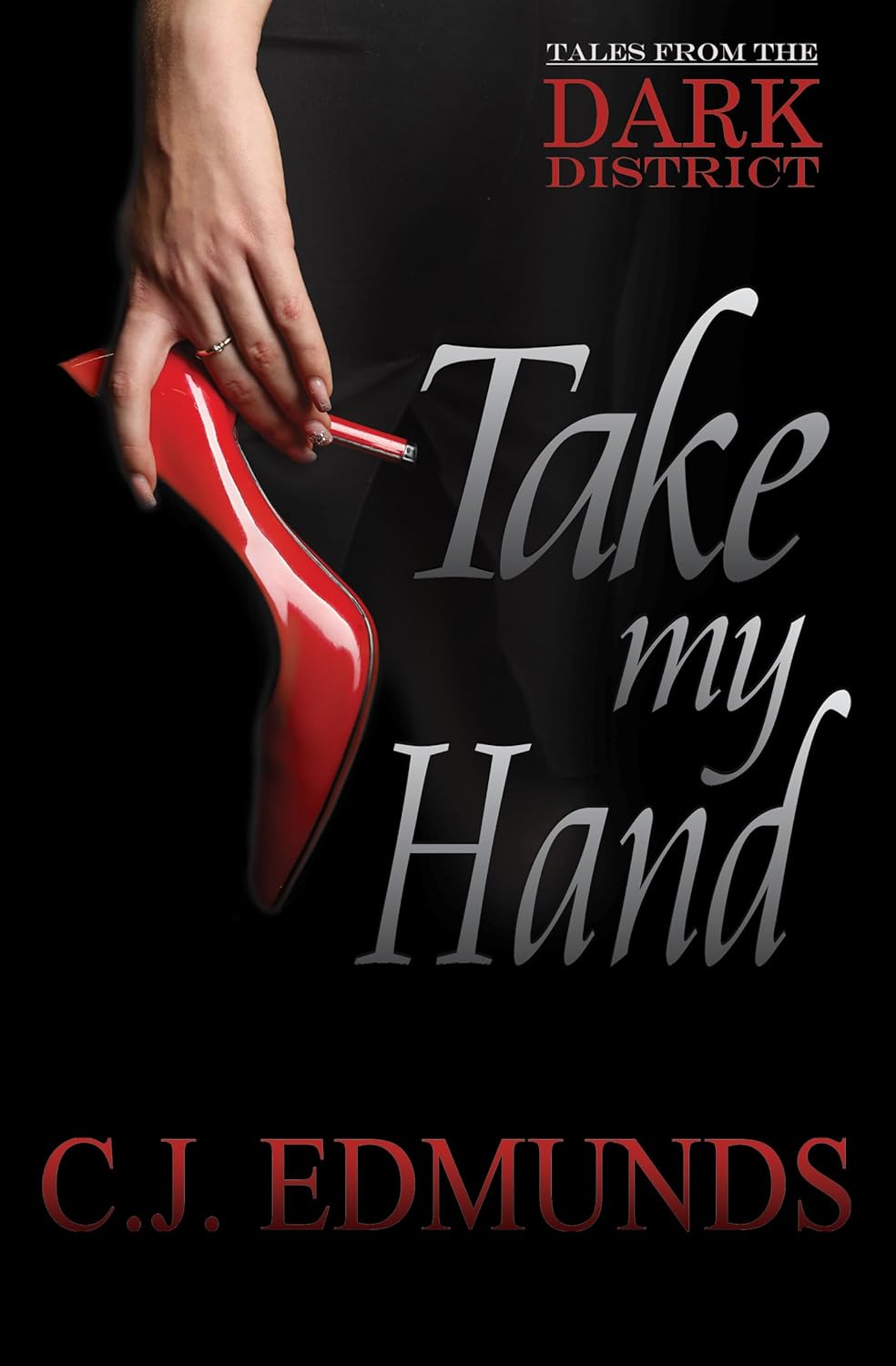

Take My Hand follows Trina, a guidance counselor in the magical and queer-rich Dark District, as she navigates danger, desire, identity, and the messy, tender work of becoming who she is. The story swings between an attack at a local bar, her growing attraction to a new teacher named Robert, and the deeper, rawer layers of her identity as Timothy. The book blends urban fantasy, queer longing, Filipino culture, and personal history into something that feels both intimate and loud. It’s a story about wanting connection. It’s a story about fear. It’s a story about what happens when desire and truth keep bumping into each other until something finally gives.
The writing feels hungry. Emotional. A little chaotic in the best way. The scenes in the school had me smiling. The quiet moments in Trina’s office hit me harder than I thought they would. And the flashbacks to the orphanage knocked the wind out of me. I felt the ache in her voice. I felt the weight of all those years she kept her real self tucked away. The book swings from funny to sensual to heartbreaking with this almost reckless energy. I loved that the author just lets the story breathe and swell without trying to make everything neat.
There were moments that made me squirm because they felt too real. The longing for Robert. The guilt. The shame. The humor she hides behind. All of it felt familiar. The writing is loose and bold. Sometimes messy. Sometimes sharp. And the queer representation, especially around desire and gender and the body, felt honest in a way that isn’t common. I liked how the magic sits in the background. Never overwhelming. Just shaping the world the way emotions shape a person from the inside.
By the end, I felt protective of Trina. I wanted her to win. I wanted her to love someone who actually sees her. I wanted her to stop tearing herself apart just to fit into a skin she didn’t choose. The book made me feel a lot, and I liked that. I didn’t want it to be safe. I wanted it to stay exactly as wild and vulnerable as it is.
If you enjoy queer urban fantasy with plenty of heat, heart, and personal struggle, this book will hit the spot. If you like stories that mix magic with Manila vibes and real emotional weight, you’ll feel at home here. And if you want a character who is flawed, yearning, dramatic, funny, and painfully human, Trina is a character you’ll remember.
Although Take My Hand works perfectly well as a stand-alone story, it’s actually the second book in an ongoing series set in the Dark District. Readers who want the full experience can follow the chronology starting with Take Me Now, and even go further back with its prequel Sojourn. Both earlier works were previously compiled as a duology in the Dark District Primer, so new readers can choose to jump in here or enjoy the series in order for a richer sense of the world.
Pages: 400 | ASIN : B0DJ7JTG4S

The Interchange
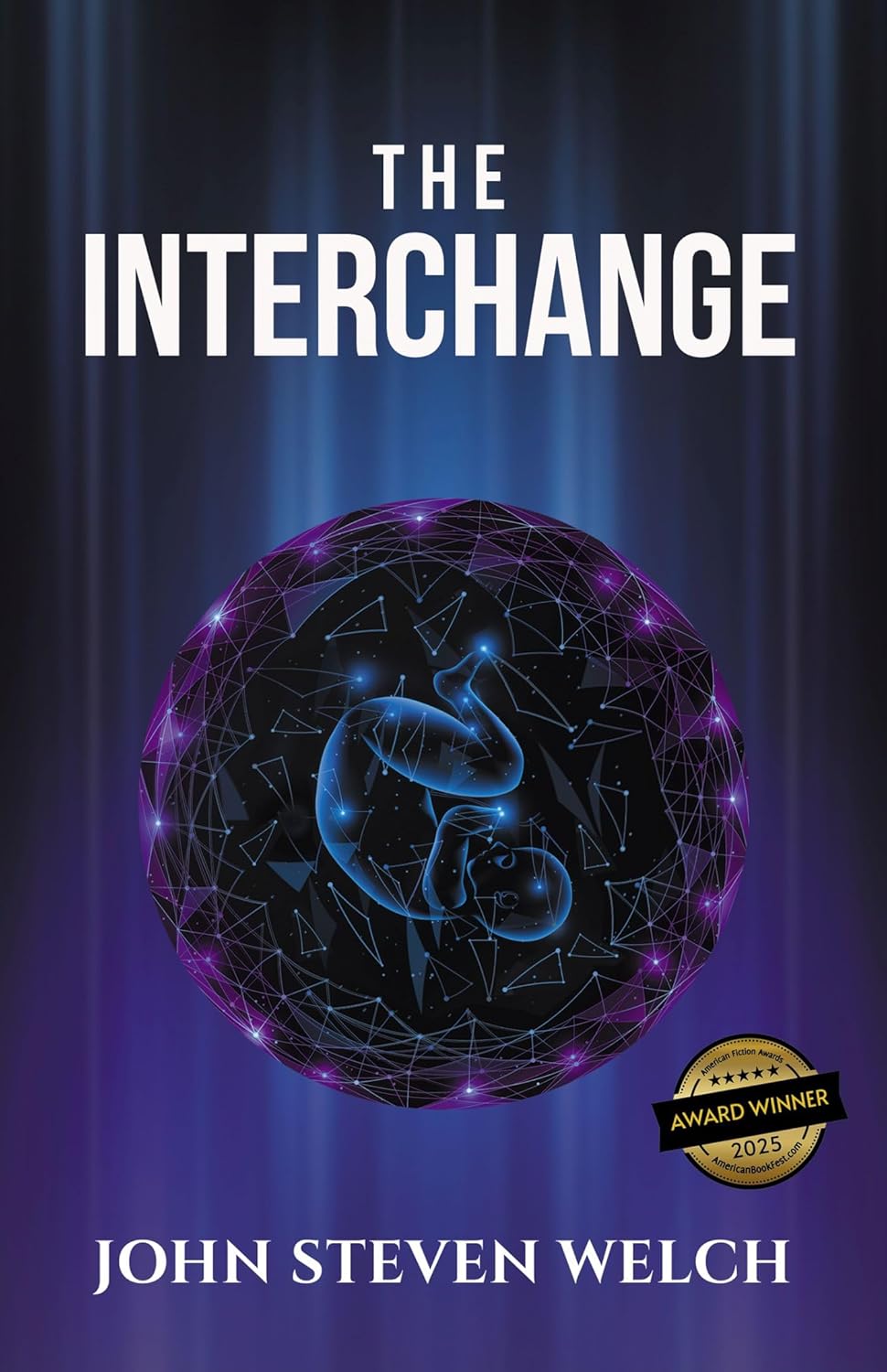

The Interchange imagines a future where identity, family, and power collide in a society rebuilt from catastrophe. It follows Manx Aureole Agnor, a formidable warrior and state leader, as she wrestles with her role in a rigid social order defined by “The Interchange,” a system that categorizes people not by sex but by inherent nature. Against the backdrop of political rituals, national pride, and underground resistance movements, Aureole finds herself torn between her public duty and private doubts, especially as she confronts forbidden desires for motherhood in the “Old Ways.” The story weaves battles both physical and emotional, building a world that is at once grand in scale and deeply personal.
The writing is bold, vivid, and often unflinching, painting scenes of spectacle and violence with almost cinematic flair. Yet the real tension lives in the quieter spaces, where Aureole questions her bond with her son or feels jealousy toward her brother’s easy grace. Those moments struck me harder than the boxing matches or military intrigues. At times, the prose leaned into exposition, explaining the rules and history of New America in detail, but I found myself forgiving it because the ideas were fascinating. The balance between action and introspection kept me engaged, even when I felt the narrative tugging me in too many directions at once.
Emotionally, I went back and forth. Sometimes I admired Aureole’s strength, her drive, her pride. Other times, I felt an ache for her vulnerability, her longing for something she could never fully claim. That push and pull made the book feel alive to me. The ideas here about gender, control, science, and rebellion aren’t just intellectual exercises. They play out in flesh-and-blood relationships, in a mother’s coldness, a grandmother’s pride, a child’s distance. I’ll admit, I got frustrated with the world’s rigidity, and at times even with Aureole herself, but maybe that’s the point. The book isn’t about offering comfort. It’s about showing what happens when systems try to define the deepest parts of who we are.
I’d recommend The Interchange to readers who enjoy dystopian or speculative fiction that asks hard questions rather than giving easy answers. The Interchange reminded me of the sharp social critique in The Handmaid’s Tale and the futuristic ambition of Brave New World, though it carries its own distinctive blend of raw emotion and political spectacle. If you’re drawn to stories of power, family, and identity, and you don’t mind sitting with some discomfort, this book has plenty to offer.
Pages: 238 | ASIN : B0DTZJ3SLP

Compassion and Vulnerability
Dark District Primer: Duology on the Lore and Lure of the Dark District combines two novellas, Sojourn and Take Me Now, weaving personal identity with fantasy, Filipino folklore with urban life, and spiritual questions with surreal encounters. What was the inspiration for these stories?
For Sojourn, I wrote it in a time of grief when my father passed away. And so most of the things that I wanted to say and wanted to do were all poured into that novella as well as the emotions involved in such a given circumstance. Writing it was both an affirmation for me in being the son that I am and the son that he wanted. He was the first one to acknowledge my writing growing up. Perhaps he already knew something even before I knew who I was.
For Take Me Now, I wanted to incorporate the world that I have established and expound on it and give it more spice and relationship-driven. While Sojourn was written first, it was Take Me Now that was first published and I had to go back and tweak Sojourn in order that it would mirror the world that I wanted to establish.
What are some things that you find interesting about the human condition that you think make for great fiction?
I love it when we show our humanity both through compassion and vulnerability. Compassion when we are able to put ourselves in the shoes of others to either feel their weakness in order to give them a little bit of our strength so that we help sustain them and what they need to do and vulnerability when it is our time to be on the receiving end of the help and empathy we give to others.
What were some themes that were important for you to explore in this book?
As my father’s passing was the catalyst for me to be more introspective and re-examine my writing, it was both my feelings of grief, honesty and self-identity that I wanted to explore more in Sojourn while framing it within a created universe that has touchpoints in Philippine Folklore. In any relationship, being true and comfortable with oneself is one of the pillars in making it work. Lose that or postpone that form of self-affirmation then the foundation to establishing a relationship with another falls apart.
What is the next book that you are working on, and when can your fans expect it to be out?
My next book is the next installment of the Tales from the Dark District series, entitled Take My Heart, and is being targeted for a FALL 2026 release. Along with that I shall also resume work on my New Adult series, which will also be set within the Dark District Universe.
Author Links: GoodReads | X | Instagram | Facebook | Website
By C.J. Edmunds
Welcome to the Dark District. A place where magic hides in plain sight, and desire leads you deeper into the unknown.
In this atmospheric duology by C.J. Edmunds, two queer protagonists are drawn into the same hidden world—but under very different circumstances.
🌀 In Sojourn, David Lansing, a half-Filipino call center trainer, suddenly begins seeing visions and a mysterious spirit guide. Haunted by creatures from Philippine folklore—Tikbalang, Aswang, and the White Lady of Balete Drive—he embarks on a magical and existential journey that becomes one of purpose, ancestry, and an invitation to a place where people like him finally belong.
✅ Recommended for ages 16+ due to complex parental and identity themes and supernatural tension.
🔥 In Take Me Now, Alvin is tired of the wrong men, wrong choices, and wrong timing. Until the Dark District opens its doors and gives him more than he bargained for. Steamy encounters, eerie magic, and dark truths collide in this sensual tale of love and self-worth.
⚠️ Recommended for ages 17+ for sensual scenes and mature emotional content.
Whether you crave introspection or intensity, Dark District Primer invites you to step through the veil—and explore what’s waiting on the other side.
This lush and haunting collection explores:
Filipino urban legends reimagined
Queer identity and transformation
Steamy encounters and emotional awakenings
A universe where fantasy, myth, and reality blur
Welcome to the Dark District. You might not want to leave.
Perfect for fans of Neil Gaiman’s The Sandman, Philippine mythology, and magical realism with queer narratives.
📘 Includes the complete novellas “Sojourn” and “Take Me Now.”
Time Lines
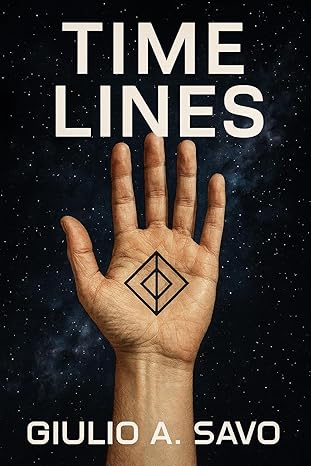
The book Time Lines by Giulio A. Savo is a sweeping and intricate story about memory, survival, and the fragile threads that connect our lives across timelines. It doesn’t just tell a straight tale. Instead, it bends and folds, presenting fractured futures, failed worlds, and the human struggle to get it right just once. Through characters like Samantha, Elly, Max, Sunita, Renée, and Andori, we move between the Nazca desert, space stations, collapsed civilizations, and alternate ages of humanity. At its core, it’s a meditation on memory, how it defines us, betrays us, and sometimes saves us. The science-fiction framework of neural resonance, timelines, and echoes is really just a way to explore grief, hope, and the longing for continuity in a fractured universe.
Reading this book felt like getting pulled into a dream. The writing is bold, lyrical at times, and not afraid to get messy. I loved how the narrative leaned into confusion rather than fighting it. Memory isn’t clean, and this story doesn’t pretend it is. I felt unsettled, even frustrated at points, but that seemed intentional. The voices of the characters lingered with me. Some chapters felt sharp and fast, almost brutal, while others slowed down into reflection, like drifting through echoes of lives I half-remembered myself. It reminded me of that strange sensation of déjà vu; familiar but haunting, like something just out of reach.
At the same time, I’ll admit there were moments where the complexity threatened to overwhelm me. The constant shifting between timelines and the weight of so many interlaced fates made it hard to follow at times. Yet, even in that chaos, I felt a strange intimacy with the story. The ideas about time as a thief and memory as both a curse and a gift hit me hard. There’s a raw humanity underneath all the science and cosmic scale, and that’s what kept me turning the pages. The book made me think about my own life, about the memories I cling to and the ones I’ve lost, and it left me feeling a little haunted in the best way.
Time Lines is a powerful and ambitious book that blends science fiction with philosophy and heart. It’s not for someone looking for a simple space adventure. It’s for readers who enjoy being challenged, who want a story that asks them to sit with uncertainty and lean into wonder. If you like novels that blur the line between speculative fiction and poetry, or if you’ve ever felt the pull of memory you can’t explain, this book will resonate deeply with you.
Pages: 399 | ASIN : B0FHHSYDDQ
They Tried Their Best
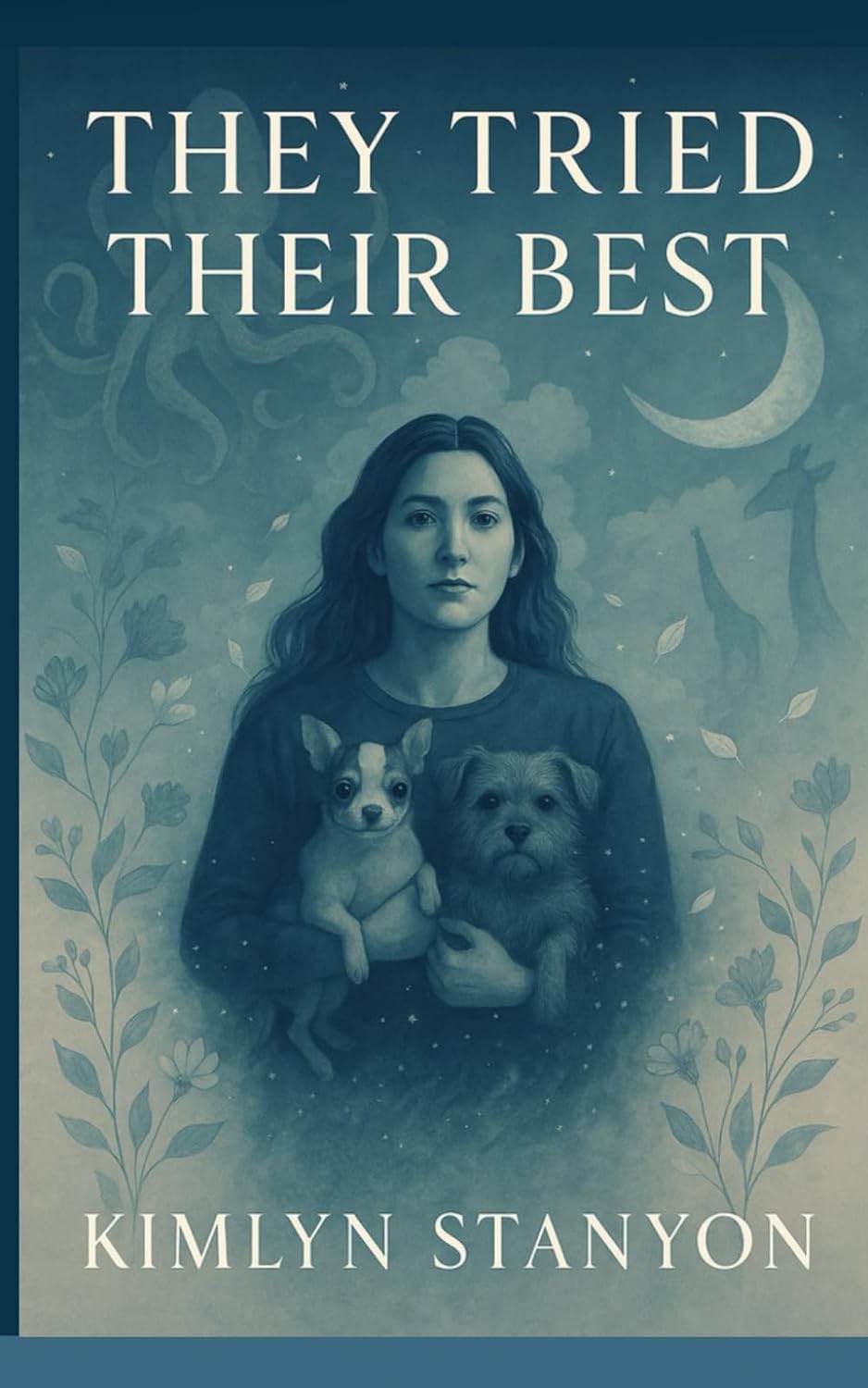
The book follows the inner life of a woman navigating modern loneliness, love, and survival. It begins with quiet domestic scenes that show the strange mix of comfort and despair in everyday routines, then tumbles into awkward dates, toxic men, obsessive scrolling, and a world tilting into chaos. Her dog, Honey, is her anchor, and later, a new puppy joins the mix. As personal heartbreak runs alongside collapsing politics and rising paranoia, she turns toward building a bunker—half symbol of safety, half desperate project. The story blends personal confessions with dark humor, showing both the numbness of screen-soaked nights and the ache of wanting to be loved.
I found the writing raw and often uncomfortable, but that felt intentional. It reads like opening a diary, one full of shame and yearning and sharp observations. The author captures the rhythms of loneliness so well, like the endless scrolling, the forced laughs, the hollow comfort of TV and apps that pretend to connect. At times, I felt impatient with the narrator, but then I realized that was the point. She is flawed, and the honesty of those flaws is what makes her compelling. The style is jagged, almost chaotic, but that messiness mirrors the world she lives in.
Emotionally, the book hit me in waves. Sometimes I laughed at the biting asides, other times I felt a knot in my chest from the self-doubt, the grasping at crumbs of affection. There’s a scene after a disastrous date that made me want to throw the book down in anger at men like that, but then the vulnerability after, the quiet moment of self-love, pulled me back in. The bunker storyline in particular moved me. It’s absurd and practical at the same time, a metaphor for needing safety when the world feels hostile. The writing is simple, sometimes stark, yet it holds these emotional punches that sneak up on you.
I think this book would be powerful for anyone who has felt let down by people and yet still holds onto hope. It’s not for readers who want neat plots or tidy resolutions. It’s messy, alive, and sometimes exhausting, but in a way that feels real. I’d recommend it to those who like character-driven stories, people who aren’t afraid to sit with discomfort, and anyone who has ever curled up with their pet while the world outside seemed to spin out of control.
Pages: 184 | ASIN : B0FC83DT39
Nothing Is Ever Black And White

A Game of Masquerade follows a time-traveling professor who goes back in time to London in 1888, where he ends up working with Scotland Yard to find a serial killer, all while avoiding any alterations to history. What was the inspiration for the setup of your story?
I have always had a huge interest in stories involving time travel. There’s something fascinating about someone experiencing history firsthand – being brought face to face with the people who are living it as present day. It’s quite a different scenario than simply picking up a book and reading about the past. Suddenly these people are real and no longer a footnote in history. But stepping into history means there is a risk of altering established events – if you change one thing then what happens to the future you expect to happen?
Another enduring fascination of mine is the mystery surrounding Jack the Ripper. Even if his identity had been discovered, the brutality of his crimes would still engender interest, but the fact that he was never caught, maintains the mystery which invites endless speculation and gives a writer the chance to think outside the box.
What intrigues you about this time period enough to write such a thrilling period piece?
The East End of London in the 19th century is a rich character all its own! The hardships – how people survived such a tenuous existence, the opportunists preying on the vulnerable, the attitudes of the time – there is so much detail that the story takes on a life of its own. Introducing Jack the Ripper into this already volatile setting is like striking a match in a powder keg igniting fear, intolerances and anger in an already-turbulent sphere. It is both a shocking and fascinating study.
What are some things that you find interesting about the human condition that you think make for great fiction?
I believe that, more often that not, nothing is ever black and white. In the case of my novel, Jack the Ripper has his reasons for killing which can never be condoned, yet these reasons have left damaging psychological scars. But it is his choices, made of his own free will, which creates the monster. It’s an interesting element to explore and makes for great storytelling.
Is this the first book in the series? If so, when is the next book coming out, and what can your fans expect in the next story?
The novel is a stand-alone piece however the protagonist, Professor Orlando Delbrotman’s story, has not finished and I have some ideas as to his fate! I have sketched out some thoughts and will take the Professor to another time in history long before the 19th century. It will take time to write, but it will be time well spent so please stay tuned!
Author Links: GoodReads | TikTok
But what if there is more to this mystery than meets the eye? What if the identity of the murderer is more than
human? A fugitive from another world who joins forces with Scotland Yard is soon to discover that past and future
events have created a monster, which ignites fear and outrage on the streets of the East End.
To stop the murderous rampage in 1888, Professor Orlando Delbrotman must solve one of the most brutal mysteries of the 19th century…without changing history…
A Game of Masquerade
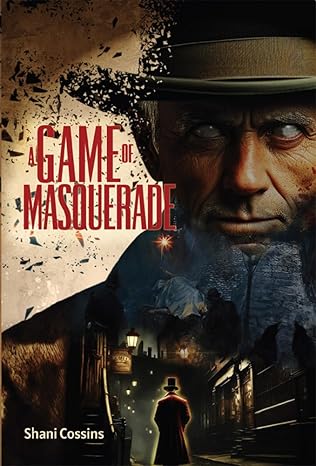
A Game of Masquerade blends historical crime with speculative fiction, pulling Jack the Ripper out of the fog and into a stranger and darker light. The story follows Professor Orlando Delbrotman, a time-traveling outsider who stumbles into the grimy alleys of 1888 London. His mission is unclear even to himself at first, but soon he becomes entangled in the investigation of the Ripper murders alongside Scotland Yard. What begins as an observational trip turns into a dangerous game of survival, trust, and pursuit, with the Professor moving between the dim-lit taverns, cold morgues, and filthy streets of Whitechapel. The setting is thick with atmosphere, and the narrative swings between gritty human suffering and the strange detachment of an alien mind learning the limits of morality.
The writing carries the weight of the setting with vivid detail, but it also knows when to lean on humor or eccentricity. I liked how the author didn’t shy away from the brutal realities of the time. The women in the story aren’t romanticized; their hardship is tangible, and their conversations are raw. The Professor, in contrast, is formal, almost awkward, and I found that gap between his precise, alien perspective and the chaos around him strangely compelling. The pacing can be a slow burn in places, but that gave me time to sit with the tension rather than rush through it.
Some parts felt theatrical, almost like a stage play with its sharp entrances and dramatic exchanges. Sometimes it worked, adding color and energy, and other times it brought me out of the scene. Still, I admired how the book balanced historical authenticity with a speculative twist without letting one overwhelm the other. The Ripper mystery has been told in countless ways, yet this take felt fresh, partly because of the outsider’s-eye view and partly because of the relatable moments that broke through the gloom.
I’d recommend A Game of Masquerade to readers who enjoy historical mysteries with a speculative slant, particularly those who like their stories gritty yet occasionally whimsical. If you’re curious about what happens when history’s shadows meet something not quite of this Earth, you’ll find plenty to chew on here.
Pages: 333 | ASIN : B0DW69W3S1
The Dark District Primer: Duology on the Lore and Lure of the Dark District

C.J. Edmunds’ Dark District Primer is a strange, soulful, and genre-bending exploration of myth, memory, and magic rooted in the Philippines. It combines two novellas, Sojourn and Take Me Now, weaving personal identity with fantasy, Filipino folklore with urban life, and spiritual questions with surreal encounters. The main narrator, David Lansing, acts as our curious guide, relaying his disorienting journey through magical encounters, visions of cultural archetypes, and confrontations with hidden truths. These experiences are framed through a personal, at times confessional, lens as he is summoned by a supernatural Council to explain his strange awakening in the Dark District.
Reading this felt like peeling through layers of memory, myth, and grief. The writing style is introspective and poetic at times, with bursts of long, flowing paragraphs that spill over with emotion and insight. Edmunds has a real knack for setting scenes that feel alive. The haunting streets of Manila, the hidden halls of the Council, even the surreal blankness of the otherworldly realms. At its heart, though, what struck me most was how much Dark District Primer is about identity, especially queer identity, cultural identity, and spiritual reckoning. I could feel the author writing through pain and purpose, and while some parts meandered or repeated themselves, the raw honesty kept me hooked. The lore is fascinating, especially the blending of Filipino myths like the Tikbalang and Manananggal with modern, urban queer life.
The ending of Take Me Now leaves just enough unanswered that I found myself eager to dive into the next chapter of the story. That brings me to Take My Hand, the upcoming installment teased at the end of the book. The preview promises bigger stakes and deeper dives into the lore. Take My Hand promises to have more world-building and capitalize on the lore in the introspective tone that I enjoyed.
There were times when whole pages spiraled into inner monologue, and the pacing slowed in the second half of Sojourn, where narrative momentum gave way to philosophical reflection. Edmunds isn’t just telling a story, he’s sharing something personal and vulnerable. You can feel the care and love he has for the lore, the community, and the craft.
I’d recommend this book to readers who want something different. If you like urban fantasy with depth, or if you’re curious about queer stories grounded in Southeast Asian myth, this will hit home. It’s not a quick read, but it rewards with a haunting and heartfelt experience. Especially for queer readers, Filipino readers, or anyone feeling caught between two worlds.
Pages: 298 | ASIN : B0FDGS86JT



 LITERARY TITAN