Blog Archives
Real Connection

Munyori and Johannes In 72 Hours follows a Black scholar and a Greek American who fall in love over one intense weekend and spend a lifetime discovering whether love born in a moment can survive. What drew you to the idea of a love story that unfolds almost entirely over 72 hours?
I am not a believer in love at first sight, not really. Although I do believe that a person can feel an instant, extreme, and ultimately long-lasting romantic attraction if they get to know each other by just talking – having direct and sincere conversations about anything and everything. That is why the dialogue may have felt long and intense. Real conversations were happening between two people who would not normally touch on the issues discussed. And once shared values are realized, the relationship and ultimately the love intensifies. I wanted to convey that a spiritual connection can embody the physical relationship between the two lovers. I’m hopeful the 72 hours show just that! Sissy/El, younger sister of Johannes, is intuitive. And she knew they were right for each other. When Munyori and Johannes met by chance, Sissy’s/El’s intuitiveness was correct. I wanted to convey that you don’t have to be attracted to your own culture or your own tribe. I wanted to show, in the famous words of Maya Angelou, “we are more alike than we are unalike.”
Yori is ambitious, sexual, intellectual, and emotionally open, while Johannes’s past loss hangs over the entire story. Their experiences have led them to have different views on love and security—what does that contrast reveal?
I’m not sure if your question is accurate here regarding their different views. If you noticed, Munyori learned a lot from Johannes about being sexual and sensual. The different views on love and security were demonstrated between Munyori and her best friend, Jalsa. In the very beginning, Johannes supported Munyori’s future career choices, was in awe of her academic achievement, and ultimately felt she may be too good for him, until he realized how down-to-earth she was and their shared values. Munyori saved Johannes emotionally. She got him to open up and express his feelings without pressure. That was the beginning of their connection beyond the physical.
What were some themes that were important for you to explore in this book?
I believe the novel is a work of contemporary women’s fiction that weaves together romance, suspense, cultural insight, and fast-moving, character-centered events. I wanted to blend meaningful talks between characters, their inner thoughts, and observations about the world around them. I hope to tackle themes like race, colorism, and identity, and make them feel real – put the reader in the conversation. I wanted to show how Yori’s journey stands out, revealing how ambition, friendship, and self-awareness come together in the face of societal pressures. With Johannes, I wanted to show how balancing responsibility, vulnerability, and his need for a real connection – even though he was driven by taking care of his sister, growing his construction business – all the while ignoring his own needs.
What does Munyori and Johannes In 72 Hours ultimately say about love over time?
Love can come from the most unlikely places if you give it a chance. Some people can know each other for a lifetime and really don’t know each other at all. The lead characters, after the undeniable initial physical attraction, shared meaningful conversations that shifted into understanding, trust, direction, and shared mindsets. They almost immediately went beyond small talk and created moments where the other person feels genuinely heard and supported. In this love story, I wanted to reveal that you can know someone in a few days and fall in love. Again, I refer to the famous words of the African American poet, memoirist, and civil rights activist, Maya Angelou, when she says, “we are more alike than we are unalike.”
Author Links: GoodReads | Amazon
Blank Checks


In Blank Checks, author Genevieve Marshall drops a clean, addictive “what-if” into the modern world: an app that lets anyone enter, then, once a month, chooses one person to receive a literal blank check and write any amount, “tax-free,” for whatever dream they dare to price. The book moves in a kind of braided mosaic: we watch different lives in different places tilt on the hinge of possibility, while a quiet thread of investigation runs underneath, who built this thing, how it knows so much, and what the game is really doing to the people it touches.
What I liked most was the book’s globe-trotting energy. The scenes keep changing temperature, from silvery San Francisco fog to glossy Singapore opulence to European glamour, so the story never settles into a single neighborhood’s problems. Even when the premise flirts with pure wish-fulfillment, the author keeps tugging it back toward character; the money isn’t a magic wand so much as a spotlight. I found myself enjoying how the book treats “Dream BIG” as both an invitation and a test, because the most revealing moments aren’t the winners’ numbers, but their private logic for choosing them.
I also appreciated the author’s willingness to let the game misfire in ways that feel almost mythic. The standout example for me was the Düsseldorf model, who swings for an absurd amount and gets smacked by the bluntest message imaginable, “Insufficient Funds,” a little morality play delivered by touchscreen. That beat sharpens the whole book: it sets a boundary around the fantasy, and it hints that the “mastermind” isn’t just tossing money like confetti; there’s intention, constraint, maybe even a philosophy hiding behind the theatrics. When the curtain starts to lift on the tech (identity verification, location checks, the dart-at-a-spinning-globe randomness), the story shifts into a more conspiratorial key without losing its travelogue gloss.
I think Blank Checks is for readers who like mystery, suspense, techno-thriller intrigue, and contemporary adventure with a strong travelogue sheen, plus anyone who can’t resist a premise that asks, “What would you write, and what would it reveal about you?” The unraveling of the game’s machinery gave me a faint Dan Brown flavor, jet-setting secrets and engineered revelations, though Marshall’s tone is warmer, more interested in lives rerouted than puzzles solved. Blank Checks gives readers a glossy dream, a hidden hand, and the delicious question beneath it: what does your number say about you?
Pages: 480 | ASIN : B0G9B99VTY

Trail of Buried Evidence
In The Mourning Locket, an empath confronts the owner of a unique agency comprised of sentient heirlooms capable of remembering their owners and seeks to uncover its long-buried secrets. Where did the idea for this novel come from?
The idea started with my own family heirlooms. I grew up around old photographs, jewelry, keepsakes — things that didn’t look like much from the outside but held entire histories inside them. I always wondered what they’d “say” if they could talk.
When I started writing The Mourning Locket, it was my way of honoring those stories that get lost between generations. I wanted to capture that feeling of holding something that once meant everything to someone who isn’t here anymore. The book grew out of that love for family history and the questions we never get to ask the people we miss.
How did you go about capturing the thoughts of the heirlooms?
To write the heirlooms, I imagined them the way we imagine the stories behind things we inherit. When you hold something that belonged to someone you loved, you automatically think about what it meant to them.
That’s the energy I wrote from. Their thoughts come through impressions, not sentences — a heaviness, a chill, a warmth, a pull. The emotional tone of the object shows up long before the mystery does. It made them feel alive without ever stepping outside of realism.
Were you able to relate to your characters while writing them?
Absolutely. I related to my characters in different ways, sometimes in ways I didn’t even expect. Rowan’s determination, Piper’s anxious overthinking, Cassian’s quiet intensity — those all come from real emotions I understand. And then there’s Sable, whose sarcasm and perfectly timed humor felt like the pressure valve everyone needed.
I relate to her a lot — that instinct to lighten a tense moment, or to say the thing everyone else is only thinking. Writing her was almost like letting the honest, unfiltered side of myself onto the page.
Each character carries something human and familiar, and that connection made writing them feel less like creating fictional people and more like spending time with versions of myself and the people I love.
Can you give us a glimpse inside Book 2 of The Inheritance Bureau series? Where will it take readers?
Book 2, The Music Box from Ashford, drags the Bureau into its darkest investigation yet. What begins as a simple heirloom assessment turns into a trail of buried evidence, altered records, and a past that someone worked very hard to erase.
The music box at the center of it all isn’t just an antique — it’s a trigger. And once it resurfaces, everything the Bureau thought it understood about its own origins is shaken.
This book pulls readers deeper into the hidden corners of the Bureau: the cases that never made it into the official files, the mistakes no one was supposed to uncover, and the people who paid the price for trying. Rowan gets pulled into the heart of it, Piper and Sable uncover secrets that were never meant to see daylight, and Arden is forced to confront what leadership really costs.
The investigation reaches back more than a century, and the past refuses to stay quiet this time.
Without giving too much away — Book 2 opens a door the Bureau can’t close, and what waits on the other side changes everything heading into Book 3.
Author Links: GoodReads | Facebook | Amazon
Empathic appraiser Dr. Cassian Vale can feel a person’s final emotions through touch—an ability that makes him invaluable, and dangerous. Investigating an 1860s mourning locket, Cassian relives a woman’s death and uncovers a conspiracy linking grief, immortality, and bloodline control.
As the echoes grow louder, the team must decide whether to silence the past—or listen before it consumes them.
The Kirkwood Killer


Justin Foster’s The Kirkwood Killer is a brutal, fast-moving horror-crime novel that follows Brandon Walls, a man shaped by violence from childhood and unleashed into a quiet golf-club community where his killing spirals into something almost mythic. The story moves from one shocking act to the next, weaving in twisted alliances, bizarre loyalty, and a growing sense that no one in this place realizes the monster living among them. It’s a grisly, relentless ride, and it never pretends to be anything else.
The writing is blunt and unfiltered, almost like someone telling you a wild story they shouldn’t be telling. At first, I wondered if the simplicity was intentional, but the more I read, the more it felt like the right fit for this kind of horror. The murders are vivid and disturbing, not in an artistic way but in an uncomfortably direct way, which honestly makes them land harder. The book doesn’t linger on psychological depth; instead, it barrels forward with raw energy, like the narrative is sprinting to keep up with Brandon’s impulses. It’s not graceful, but it is gripping in that “I shouldn’t look, but I can’t look away” kind of way.
What surprised me most was how strange and darkly fascinating the world around Brandon becomes. This isn’t just one man doing horrible things. The people around him, especially the cart-girl twins and later even the chef, get pulled into his orbit in ways that are unsettling and weirdly believable in the logic of this book. There’s a twisted humor to some scenes, the kind that makes you question whether you should be laughing. And while the plot is outrageous, it’s paced in a way that kept me turning the pages because I truly didn’t know what boundary the story would cross next. Sometimes it felt like watching a late-night slasher film with a friend where you keep elbowing each other with “Are you seeing this?” energy.
The Kirkwood Killer is not subtle. It’s pure horror with a crime-thriller backbone, told in a voice that’s bold enough to commit fully to its own chaos. If you’re someone who loves slasher stories, extreme horror, or villains who are monsters without apology, you’ll probably have a wild time with this. It’s definitely for fans of gritty, bloody, over-the-top horror.
Pages: 130 | ASIN : B0F9ZZCZ4K
Born on Monday

Born on Monday tells the story of Billy Stevens and Jessica Michaud, two people tethered by shared history and unfinished feelings in the small town of Augusta, Maine. It’s a story about trauma, redemption, and how the past has a way of catching up even when we think we’ve buried it. The novel opens with a reunion that feels innocent at first, a meeting in a bar between ex-lovers, but it quickly widens into something much darker. Their lives, already scarred by heartbreak and regret, begin to tangle again through loss, addiction, and violence. Becker’s writing threads together memory and immediacy with quiet dread, pulling the reader through a story that feels both intimate and cinematic.
I couldn’t help but feel pulled under by Becker’s prose. It’s sharp but unpretentious. The way he writes about small towns feels dead-on, that claustrophobic mix of nostalgia and rot. His characters are flawed, all cracked open in ways that feel real, not performative. Billy’s grief feels worn and honest, and Jessica’s shame and self-doubt are haunting. I liked how Becker avoids grand speeches or easy answers. Every conversation carries an undercurrent, like everyone is speaking through layers of history. The pacing is deliberate, but it gives space for emotion to breathe. I found myself pausing often, not because the plot slowed, but because I needed to sit with the weight of what had just happened.
There’s something raw about the ideas Becker plays with, survival, masculinity, and cycles of trauma. Some scenes hit harder than I expected. The quiet domestic pain, the strange kindness between people who are barely holding on, the way memories echo through time. Becker writes people who keep trying, even when they shouldn’t. The story feels true in a way that most “redemption arcs” don’t.
By the end, I wasn’t sure if I felt heartbroken or hopeful. Maybe both. Born on Monday isn’t for readers who want neat resolutions or tidy morals. It’s for those who don’t mind sitting in the mess, who understand that healing isn’t about closure, it’s about survival. I’d recommend it to anyone who likes character-driven fiction that deals with real scars, not storybook wounds. Fans of small-town dramas like Sharp Objects or Winter’s Bone will find something familiar here, but Becker’s voice is his own.
Pages: 352 | ASIN : B0FSSN8XXZ
The Nickel Choir
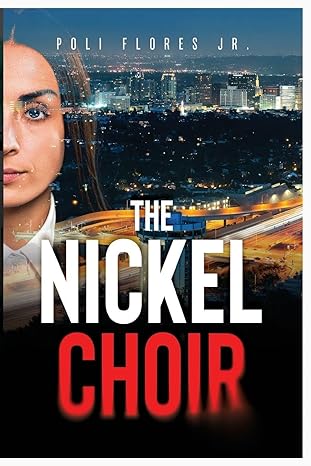
The Nickel Choir, by Poli Flores Jr., is a dark, deeply human courtroom drama that pulls no punches. The story follows Linda Sanchez, a seasoned Los Angeles prosecutor whose work in death penalty cases earns her a place in the exclusive “Nickel Choir,” a grim club of attorneys with five death penalty convictions. The book takes readers into the heart of legal battles, the raw aftermath of violent crimes, and the private toll borne by those who prosecute them. It blends gritty trial scenes, personal tragedy, and moral questions in a way that feels both brutally honest and heartbreakingly intimate.
The writing grabbed me from the start. Flores’s background as a judge and lawyer bleeds through every page, giving the legal scenes an authenticity that feels impossible to fake. The courtroom dialogue crackles with tension, and the way jurors, lawyers, and victims’ families are portrayed feels painfully real. But what struck me most was Linda’s voice. It’s confessional, self-deprecating, tough as nails, but also fragile. She compares herself to a donkey, plain on the outside but stubborn, resilient, and more capable than people expect. That metaphor resonated with me. I found myself rooting for her, not just in court but in life, through the unbearable loss of her family, her battles with addiction, and her complicated sense of justice.
The death penalty is a subject that’s hard to read about, let alone process, and Flores doesn’t soften it. He brings readers face-to-face with the cruelty of crimes and the cold mechanics of punishment. Some passages made me angry, others left me hollow, and a few had me questioning my own beliefs. That kind of discomfort isn’t easy, but it’s also the mark of writing that dares to go somewhere raw. I think that’s where the book shines most: it doesn’t tell you what to think, it makes you sit with the mess of choices and flaws.
The Nickel Choir isn’t just a courtroom thriller; it’s a meditation on justice, morality, and survival in a world where answers are never clean. I’d recommend it to readers who like legal dramas with emotional grit, who don’t mind being challenged, and who are drawn to stories that mix professional triumph with personal pain.
Pages: 250 | ISBN : 978-1804680964
Our Ability to Judge

GRQ is a dark, fast-talking spiral into the absurd world of crypto schemes and capitalist delusion, told through the unraveling life of a man who’s equal parts hustler and fool. What was the inspiration for the setup of your story?
Well, because I live and work in the motion picture world, there is this proximity of art and commerce. That seems innocuous enough, but invariably, the commerce has a pernicious effect on the art, and maybe commerce has a pernicious effect on virtually everything else that we do as well. Whether that’s true or not, it’s still something that I ruminate on. I have seen many people in my world compromise their vision or themselves in the service of short-term financial reward. The thinking is, I will compromise now, but later I will make things right with the world, the family, or God, or whoever one must make things right with to get absolution. I am fascinated by this process. “For what will it profit a man if he gains the whole world and forfeits his soul?” (Matthew) Fair enough. But maybe this gaining the world buys a person time until they can figure things out, while we search for real meaning. In the meantime, we get to eat.
Marlon is such a compelling character. Was he based on anyone you’ve known or read about?
I know a lot of people like Marlon. When directing actors, I often have to say to them that they are the hero of the story, no matter who their character is, because most of us believe that we are either heroes or victims in the grand narrative of our lives, and characters should reflect that. Rarely does anyone think of themselves as genuinely culpable for anything that befalls them. So I think “Marlon type” behavior should be seen as something that is done in degrees by everyone. Some rationalize better than others, some disguise their actions more effectively, some are pathologically unaware that they are doing it, and others do it reluctantly out of necessity. But rare is the person who is not only pure in intention and in behavior. They might even admit this, but then want a moment just to explain.
I tried very hard not to pass judgment on Marlon, and although we can objectively be critical of him, I wonder how differently anyone behaves in a crisis? How many of us actually reject the precept of slightly corrupt means justifying a virtuous end? We probably should, but we probably don’t.
What were some themes that were important for you to explore in this book?
I work in the fictive world, and I recognize that fiction and narrative provide us with solace by suggesting order in a chaotic world. It doesn’t mean that the perception of narrative order is correct, but it is essential. Each of my characters creates their own moral universe, in which their behaviors make perfect sense to them, if not to other characters or the reader. The term unreliable narrator is introduced early in the novel, and it is essential to the understanding of the themes that I’m examining. Everyone is an unreliable narrator because none of us experiences the objective world objectively. Our ability to judge others is compromised, as is our ability to judge ourselves. The nature of this faux ordering is at the very heart of the book, as is the world’s essential chaos. It is the struggle between these two elements that is the space where we live, hoping to make sense of everything, and when that is impossible, accepting pretty much anything. Money? Love? Religion? Conspiracies? Metaphysics? Anything.
Nobody in GRQ really gets a neat ending. Was that a commentary on redemption in late-stage capitalism?
The short answer is yes. Although I would add this addendum, it extends beyond capitalism. I think most people’s efforts to build satisfying and rewarding lives are ultimately futile, and that little they do will ultimately provide them with spiritual succor, a resonant foundation, or give them a sense of genuine purpose and meaning. It’s a huge risk to build one’s life on bigger philosophic understandings that don’t offer immediate or palatable rewards, but building our lives on material accumulation has certainly revealed itself to be a form of madness. To me, my characters are essentially comic because it is the human comedy; the repetition of the same actions to which we are predisposed, with the same tragic/hilarious outcomes. If our lives were screenplays, we fail to do the necessary rewriting. Instead, we recast, thinking that’s going to change the outcome. I can tell you from making a lot of films, casting doesn’t change our story or our ending.
Author Links: GoodReads | Facebook | Amazon
Unfolding over a single tension-filled day, Marlon must confront not only his financial ruin, but the dark secrets haunting his family.
A pulse-pounding descent into the dangers of unchecked ambition and the real-world costs of chasing the dream.
Betrayal of a Sudden Death

Last of the Autumn Rain follows a woman who witnesses the death of her best friend in a tragic nightclub accident, causing her to spiral into a psychological journey that touches on abuse, betrayal, obsession, and revenge. What was the inspiration for the setup of your story?
My best friend committed suicide, and my ex-boyfriend tried to murder me. I wanted to take those external events to explore the raw aftermath of sudden trauma.
What are some things that you find interesting about the human condition that you think make for great psychological fiction?
The fact that humans are often their own worst enemies and have a skewed perception of reality is a goldmine for psychological fiction. A character’s memories can be distorted by trauma, guilt, or self-deception, which creates suspense and forces the reader to question everything they’re being told.
What were some themes that were important for you to explore in this book?
(1) Betrayal: It’s not just the betrayal of a sudden death, but the suspicion of deeper betrayals that drive the plot. (2) The Unreliable Self: The protagonist isn’t just an unreliable narrator for the audience; she’s unreliable to herself. Her memories are suspect, her perceptions are skewed by trauma, and she struggles to differentiate between paranoia and genuine threats, and a search for justice. (3) Search for Justice: Can earthly justice truly be served when the motive is fueled by obsession and a distorted sense of reality?
Will there be a follow-up novel to this story? If so, what aspects of the story will the next book cover?
Last of the Autumn Rain: The Storm Within is Book 1 of a trilogy called the Broken Reflections Series. Book 2 of the series is titled A Twisted Crucible: The Riddle of the Ruined Soul, and Book 3 is titled Game of Souls: The Reckoning. A Twisted Crucible is a chilling tale of what turns out to be a serial killer’s descent into darkness and a father’s agonizing choice. Game of Souls is a poignant exploration of grief, guilt, and the human capacity for redemption through the eyes of a father. It probes the depths of the human psyche, examining the power of ancient rituals and the transformative potential of psychedelic experiences to seek healing and enlightenment.
Author Links: GoodReads | Facebook | Diane Webb | Diane Louise Webb | Amazon
Her life ignobly snuffed out at the young age of 32, Candice exemplified a fun-loving lifestyle and a warm kindred spirit—possessing all the requisite traits for a promising future. She never entertained a trace of ill will toward anyone. How could something so grisly happen to such a compassionate, enchanting human being?
Julie struggles to make sense of it all, reminiscing as she travels back to her hometown of Trenton, New Jersey. The two had met in Milwaukee and worked as underwriters for The Walden Company. But something went horribly wrong. Julie’s journey is one filled with elation and fear, jealousy and regret, happiness and indignation, and a horrifying act of disloyalty.
An unforgettable, tumultuous ride, Last of the Autumn Rain delivers an introspective and jaw-clenching tale, which not only rocks one’s moral compass, but invites a chilling question: in a world where the ground can literally fall out from under you, what else might be lurking beneath the surface?


