The Dragon Moonstone follows a young man who discovers he’s inherited wizard blood and must learn to control his unstable magic before it consumes him. What was the inspiration for the setup of your story?
I write primarily to inspire my grandsons to discover the joy of reading. We’re all flawed—that’s what makes us human—and I wanted them to see Noah, a young man who discovers his inherited wizard blood, grappling with unstable magic just like any beginner. Even the greatest wizards start somewhere, and I hope Noah’s journey shows them that mastering your gifts is a process worth celebrating.
I find the world you created in this novel brimming with possibilities. Where did the inspiration for the setting come from, and how did it change as you were writing?
My stories tend to unfold organically as I write—I never start with a rigid plan, and it often feels like Noah himself is in the driver’s seat, steering the adventure. The inspiration for the brimming world of The Dragon Moonstone came from my love of classic fantasy realms, blended with everyday wonders I share with my grandsons.
Courage, perseverance, and the drive to make things right were essential themes I wanted to weave throughout The Dragon Moonstone. These aren’t just plot devices—they’re the story’s true heartbeat, lessons I hope to impart to my young readers. Noah embodies this when life hurls challenges his way: unstable magic, self-doubt, and unexpected losses. Through it all, he learns to step up, push through, and emerge stronger, reminding us that true power comes from facing our flaws head-on.
Can you tell us more about what’s in store for Noah and the direction of the next book?
Grief has threaded through Noah’s journey so far, and the next book dives deeper into it as he learns to process his sadness and confront his challenges head-on. Along the way, he’ll discover that kindness isn’t a weakness—it’s a quiet strength—and that being the underdog comes with its own fierce advantages. Above all, Noah will embrace the power of paying it forward, turning his losses into legacies that inspire those around him. Expect more magic, more heart, and even higher stakes when you dive into The Griffin Moonstone.
The Dragon Moonstone: Book Two of The Moonstone Legacy Series
Noah never asked to be a wizard—too bad magic doesn’t take requests. Patience? Not exactly his strong suit. With messy, unpredictable powers that have a mind of their own, Noah puts his friends at risk. So, his great-aunt Shirley pulls some strings and sends him and his friends to Castle Dragon, where they’re in for a bumpy ride convincing the legendary sorcerer to come out of retirement and train them.
As Noah’s emotions tangle with his chaotic magic, a seemingly harmless shortcut spirals into disaster. To fix his blunder, he must find rare dragonroot, the only cure for his magical mishap. But fate throws him another curveball: the Dragon Moonstone has gone missing, and the realm’s balance hangs by a thread. Without it, chaos could reign, endangering everyone he cares about.
With a vengeful witch, a devious bounty hunter, and nearly every Fae in the Otherlands pursuing their own agendas, Noah knows he can’t do this alone. His quirky and brave friends offer their support, but in a world rife with deception and treachery, trust is a dangerous gamble.
When tragedy strikes, Noah confronts a haunting question: does the reluctant hero have what it takes to save the realm, or is he destined to be the guy who always ruins everything?
Join Noah and his friends on a fast-paced fantasy adventure filled with magic, humor, and action. Tailored for teens and adults who enjoy action-packed contemporary fantasy with a mystery to solve.
Color Me Skye follows twelve-year-old Skye as she navigates the aftermath of a terrifying car accident that leaves her mother in a coma. Stuck with her emotionally distant stepfather, Dim Tim, Skye battles fear, loneliness, guilt, and grief all while slowly learning to open her heart again. Through days spent at a hospital daycare called the “Fun-ny Bone,” she meets Star, a larger-than-life friend who helps Skye rediscover joy, hope, and strength in unexpected ways.
The writing is lyrical but raw. Adams paints Skye’s emotions with texture and depth, layering them like strokes on a canvas. It doesn’t pull punches. The pacing is fast, the chapters short and sharp, often written in free verse that mirrors the chaos and swirl of grief. Skye’s voice is crystal clear, funny, moody, honest, and incredibly relatable. There were pages that made me laugh and others that cracked my heart wide open. What moved me most, though, was how the story treated pain not as something to run from but something to live through. And how beautifully it shows that healing doesn’t always look like you think it will.
I also really appreciated how the book handles relationships. Skye and Dim Tim’s dynamic is awkward and strained at first, which feels true. He’s no superhero. But he tries. That matters. Watching them slowly fumble toward understanding was as satisfying as it was believable. And Star? What a sparkplug. She bursts into the story like a firework and stays lit the whole time. I wanted to bottle her energy. Their friendship gave the story warmth and color just when it needed it most.
If you’ve ever lost someone or felt like your world was tilting sideways and couldn’t seem to right itself, this book will feel like a soft place to land. It’s ideal for middle-grade readers and anyone who’s dealt with grief, change, or feeling like the odd one out. I’d recommend it to parents, teachers, and counselors, too. It’s the kind of story that starts conversations.
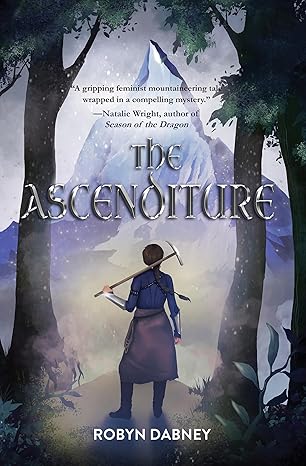
The Ascenditure is one of those books that grabs you and doesn’t let go. Set in a gritty, rain-soaked world where climbing mountains isn’t just sport—it’s survival—this story follows Klarke Ascher, a determined young woman fighting tooth and nail for a spot on the kingdom’s elite climbing team. But climbing, as it turns out, is the least of her battles. The real summit is freedom—from a system that sees women as nothing more than property, from a king who silences dissent with gallows, and from a future that promises marriage to a stranger if she fails. There’s rebellion, resilience, and a whole lot of heart.
I couldn’t put this one down. The writing is so visceral. From the opening chapter where Klarke scales a cliff in a soaking rainstorm—mud on her boots, blood on her fingers—you feel everything. “The only place I truly feel free is pressed against granite,” she says. The climb isn’t just physical; it’s symbolic, and Robyn Dabney writes those moments with so much tension and grace.
What hit me hardest, though, wasn’t just the injustice Klarke faces—it was how real it all felt. The sexism, the corruption, the constant need to prove herself twice as capable just to be considered. There’s this scene after she crushes the climbing trial, and yet she still gets passed over for a spot on the team. The moment Russet Kamber is named instead, you can feel her heartbreak, and it’s not just personal—it’s political. The city erupts in protest. People die. And Klarke doesn’t crumble. She runs straight into the chaos. That moment when the crowd starts chanting her name gave me chills.
Klarke’s relationship with Kiel is layered. When he proposes to her—not out of romance but out of desperation to keep her from being married off—you feel how trapped they both are. And when she tells him she’s going to flee to Kobo, where women are free, I wanted to jump into the book and help her pack. But then the city rises, the people rally behind her, and Klarke changes course—not to run, but to fight. That shift is powerful.
I’d recommend The Ascenditure to fans of The Hunger Games, The Handmaid’s Tale, or anything with strong feminist vibes and high-stakes rebellion. It’s perfect for readers who love flawed but fierce female leads, rich world-building, and stories that blend action with soul.
Who is Living in Apartment 203?, by Cheryl Johnson, is an engaging teen fiction novel that masterfully intertwines themes of adolescence, mystery, and friendship. The story follows Richard, a bright yet impulsive high school student, as he navigates the turbulent waters of teenage life, dealing with peer pressure, the pangs of first love, and the complexities of personal loss. Alongside his loyal best friend Josh and Josh’s perceptive cousin Kelly, Richard embarks on a captivating adventure to solve the enigma surrounding their new neighbor in Apartment 203.
Richard’s character is a genuine and relatable depiction of a modern teenager grappling with the challenges of growing up. His impulsive nature and occasional recklessness add authenticity to the narrative, illustrating his struggle with the conflicting demands of peer pressure, love, and personal loss. As he delves deeper into the mystery of the enigmatic neighbor, his determination and resilience shine through, adding excitement and depth to the story. While his impetuous actions sometimes lead to trouble and disrupt the narrative flow, they also humanize him, making his journey all the more compelling.
Josh and Kelly serve as strong supporting characters, each bringing their unique strengths to the story. Josh’s unwavering friendship provides Richard with a stabilizing force amidst his chaotic teenage experiences, while Kelly’s keen insights offer a refreshing and thoughtful perspective. Their interactions with Richard enhance the narrative, highlighting the crucial role of a supportive network in overcoming life’s challenges and reinforcing the theme of friendship. The mysterious neighbor adds well-crafted intrigue and suspense to keep the plot moving forward. Her enigmatic presence and the unfolding revelations about her true identity captivate the reader, maintaining a steady level of engagement throughout the book.
Who is Living in Apartment 203? is a compelling read that skillfully balances the trials of adolescence with an intriguing mystery. Cheryl Johnson’s ability to create relatable characters and an engaging plot makes this book a worthwhile read for teens and anyone who enjoys a well-told coming-of-age story infused with mystery.
Helipads in Heaven follows a successful author who is given the opportunity to become a test subject for time travel and travel back in time to her childhood. What inspired the setup of your story?
Helipads in Heaven was heavily inspired by myself and my own experiences. As such, the story came from a question I would often ask myself: “If you could travel back in time and see your younger self again, what would you say and what would she think about you?” From there, I began to develop a short story based on this question, which soon became the groundwork for Helipads in Heaven.
When traveling back in time, Goose discovers that she has forgotten some memories of trauma from her childhood and must weigh the cost of helping her 10-year-old self and jeopardizing her future life. What were some driving ideals behind your character’s development?
All of the driving ideals behind the development of Goose/Dillon were based on myself. I knew I wanted to create a character that was heavily inspired by who I was at ten years old, from her short, curly hair to the bomber jacket she would wear even when the weather was too warm. With that being said, Goose is, in many ways, not like myself. She’s much bolder than I was at ten years old, and she’s much braver. In many ways, I made both Goose and Dillon (Goose twenty years in the future, going by her real name) better versions of myself, but of course, they still had flaws and vast room for development throughout the story.
What were some themes that were important for you to explore in this book?
When writing Helipads in Heaven, I knew that, at the surface, I needed to explore themes of bullying and trauma and, more specifically, how this affects both characters and people on a larger scale. For example, Dillon is thirty years old and reliving trauma she experienced when she was ten. On a deeper level, I wanted to explore childhood dreams. Every child is asked what they want to be when they grow up, but how many of them keep that dream all the way to adulthood? There are so many children with huge dreams, such as Goose, who are told they can’t achieve them, and this, in turn, negatively impacts them. I was a child who was told that my dreams were too big, and while I ended up proving those who said this to me wrong, I knew it was something that was important to cover in this story.
What is the next book that you are working on and when can your fans expect it to be out?
My next book is called Neverfar, the third book in the Neverdying series. It will be released on June 30, 2024!
World-renowned author Dillon Hershkop has everything she wants in life, but getting there hasn’t been easy. Now thirty years old, she has achieved almost everything she dreamed of as a young girl: A dazzling career, a devoted fan base, and a picture-perfect family—but despite all of this, she is also painstakingly bored. That is why, when Dillon receives the opportunity to become the test subject for a time-traveling experiment hosted by JPL’s brand new Center for Experimental Science, she seizes the opportunity to explore La Cañada—and the places she grew up around—without any immediate reservations. In exchange, she can write a brand new memoir both about time travel and the nearly forgotten experiences that shaped her into the talented woman she is today. That is, if she returns. Dillon is soon thrown head-first as an adult spectator into the complicated world of her ten-year-old self—fondly nicknamed Goose—from her love of helicopters, writing, and all things Elton John, to her unreceptive fourth-grade teacher, Ms. Vincent, her sourly judgemental classmates, and the missed opportunities of a fourth-grade writer with a smothered voice. As she observes the childhood she does not entirely remember, she begins to realize that there are reasons for the holes in her memories—things she must not remember, because if she does, it may become impossible to stand back and watch the oil of her bottled-up trauma be poured into a fire from a distance. And if she goes against the direct orders of the laboratory, the effects of tampering with a nearly unknown science may permanently disrupt the fabrics of time, space, and Dillon’s existence.
From the teenage author of You Won’t Know Her Name, Helipads in Heaven is a deep and heartwarming adventure of time travel, childhood ambitions, and at the core, a love letter to unique children and those who dare to dream.
Gumshoe Goes to a Quinceañera spins an intriguing yarn around an unexpected protagonist, a reincarnated detective turned Siamese cat, Gumshoe, who assists his teenage witch companion, Mia. The story begins with a mysterious murder at a quinceañera, and Gumshoe, in his feline form, leverages his past life’s detective instincts to untangle the case. Set in a small town rife with secrets and imbued with the mystical, author Laura Hawks weaves a narrative that is as much a coming-of-age tale for Mia as it is a murder mystery.
Hawks’ writing style in Gumshoe Goes to a Quinceañera is not only engaging but also accessible, making it a perfect choice for a light and enjoyable read. The first-person perspective of Gumshoe adds a unique and humorous touch to the mystery.
The character of Gumshoe is a delightful surprise. Hawks skillfully brings to life a character type that I have never seen in mystery novels: a detective trapped in a cat’s body. This whimsical concept adds a layer of fun and unpredictability to the story.
Gumshoe Goes to a Quinceañera is an entertaining and lighthearted young adult mystery novel that stands out for its creative premise and the charm of its feline detective. I feel this book will particularly appeal to readers who enjoy cozy mysteries with a paranormal twist and younger audiences looking for a blend of magic and mystery.
bacon grief follows a pair of young men whose online meeting ignites a journey of self-discovery and acceptance amidst the challenges of reconciling their identities with their faith and societal expectations. What was the inspiration for the setup of your story?
I like to say the story is forty percent true. In other words, my now husband and I met online and went through some of the journeys that Tim and Charlie go through in the book. Fictionalized memoir in that way, I suppose.
Charlie and Tim are intriguing and well-developed characters. What were some driving ideals behind your character’s development?
To my knowledge, bacon grief is one of the only works of fiction for teens and tweens to celebrate and affirm both faith and sexuality. In most of the works for this age group and, honestly, for adults as well, faith is a common thread that LGBTQIA+ people tend to walk away from. Which is totally fine, it’s part of their story. But it isn’t my experience, and I knew there were others. Gratefully, the affirming faith community seems to be trending upward and so queer people that want faith can more easily find it. I think that’s Tim and Charlie’s experience also.
What were some themes that were important for you to explore in this book?
I think I’m mostly trying to put a humorous book out into the universe that is geared towards reluctant readers that will hopefully allow queer teens and tweens of faith to find themselves. I tried not to be overly didactic, but I did long for readers to feel accepted by the book and, hopefully, by a community of believers outside of it.
What is the next book that you are working on and when will it be available?
My picture book debut, Silas on Sundays, arrives June 4 from Wildling Press. It is a return to these themes but from a younger perspective. Silas is a gender nonconforming child with accepting parents and, ultimately, they find an affirming faith community. It’s dedicated to Nex Benedict.
Charlie, a musical-theatre nerd with deep appreciation for sprinkle-topped ice creams and other snack foods, is active in his church and comes from a family who loves and appreciates him for exactly who he is, purple pants and all.Tim, a lover of crinkle-cut pickles, black olives and other forgivably-disgusting crudités, belongs to a conservative Christian pastor and devout mother who move to the rural town to staff a small church that, predictably, holds little place for Tim.
After meeting online and given the green light to attend a youth group at another church, Tim and Charlie become fast friends with more and more in common. When they consider more than friendship, Tim is faced with his reality and the choice to reconcile faith and sexuality or walk away from it all.
Do You Believe in Magic? follows a bullied 13-year-old boy who discovers a magical waterfall and embarks on an epic adventure as a wizard. What was the inspiration for the setup of your story?
I grew up on the shores of western Florida and spent much of my childhood swimming in shark-infested waters long before the movie Jaws put a scare into everyone. At the time, I was too skinny to attract a shark’s attention. About ten other boys my age lived on my same street, and we hung out morning, noon, and night playing the usual sports that young boys love — football, baseball, “kill the carrier,” etc. — but as a group, we also played fantastical games that contained magic, monsters, and superheroes. It was in this setting that my imagination as a writer of magical fantasy was born and nurtured.
I moved from Florida to Upstate South Carolina about twenty years ago and drove from Tampa-St. Pete to the Clemson area on Interstate 75 many times. It’s about a 10-hour drive, which is quite wearisome. And the traffic around Atlanta can be horrendous. I’ve always found the rest stops to be a bit spooky, especially at night. My MC Charlie Magus also found them to be spooky. If you read Do You Believe in Magic?, you’ll get the picture.
The world you created in this novel is brimming with possibilities. Where did the inspiration for the setting come from, and how did it change as you wrote?
My first home in SC was on forty wooded acres that included a creek that wound through a forest to a waterfall. It wasn’t as magnificent as described in the book 😀, but it did serve as the inspiration for the story.
Plus, I am the author of The Death Wizard Chronicles, a six-book epic fantasy for mature audiences. I did a ton of hands-on research and world-building for that series, which came in handy for this one.
Finally, I am at home in the mountains. It’s where I now live, and I do long hikes at least three days per week. Characters in fantasy novels tend to wander around a lot in the wilderness, so I feel comfortable writing about natural surroundings.
What were some themes that were important for you to explore in this book?
I have written Dark Circles with young teens in mind. I tell potential readers that it is appropriate for 13 and older, though readers as young as 10 and as old as 80 have enjoyed it. When I say appropriate, I mean that there are no sex scenes and only very limited profanity. But like most epic fantasies, the series has its violent moments — sort of like the later Harry Potter books.
But just because a series is appropriate for young teens doesn’t mean that it has to be sophomoric. To the contrary, Dark Circles is a sophisticated work with a lot going on between the lines in terms of themes, allegorical elements, symbolism, foreshadowing, literary tropes, etc. My newsletter (Jim Melvin’s Realms of Fantasy) goes into extensive depth about this.
Some of the themes in my series are obvious: bullying, good vs. evil, coming of age, heroism. But in the end, the most important theme of all is the idea that only the best among us are willing to sacrifice themselves for the greater good — the literary equivalent of a soldier throwing himself on a hand grenade.
All this said, if you only read books for pure pleasure and don’t really care about the literary stuff, my series still fits the bill. It’s a lot of fun!
When will book two be available? Can you give us an idea of where that book will take readers?
Book Two (Do You Believe in Monsters?) debuted in late October 2023. Your excellent review of Book One mentioned that the early portions of Do You Believe in Magic? contain some deliberately slow pacing, and that was well said. In contrast, the pacing of Book Two is deliberately faster. To describe the second book as action-packed would be accurate, IMO.
The third book of the trilogy (Do You Believe in Miracles?) will debut on April 22, 2024. This concludes the series.
From the author of The Death Wizard Chronicles comes a new adventure suitable for teens and adults. Do You Believe in Magic? is book 1 of Dark Circles, a teen adventure fantasy trilogy for readers 13 and older. This is a fascinating coming of age series for fans of J.K. Rowling, Neil Gaiman, and Brandon Sanderson.
Book 1: Do You Believe in Magic? (May 25, 2023) Book 2: Do You Believe in Monsters? (Oct. 30, 2023) Book 3: Do You Believe in Miracles? (April 2024)
Book 1 synopsis: After discovering a magical waterfall deep in the forest, a boy and his dog embark on an epic adventure in a fantastical world filled with monsters and magic. In the real world, Charlie is a 13-year-old nerd picked on by bullies. But in the fantasy world, he becomes a wizard wielding formidable powers. Standing in his way is a vile monster bent on destruction. Only those with a hero’s heart will have the courage to stand at Charlie’s side when the war begins.






 LITERARY TITAN