Blog Archives
Leftwich Blues/Elfwitch Rules
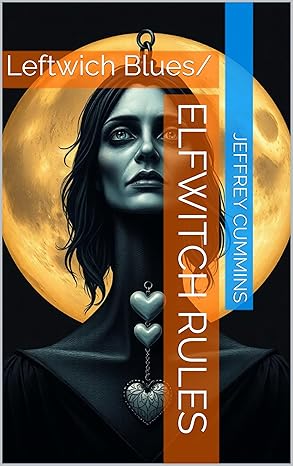

Leftwich Blues/Elfwitch Rules is a sweeping fantasy tale woven into the struggles of a fractured family. It starts in myth, with vows made under the moon and curses that shake kingdoms. Then it jolts into the present, landing in the Ozarks with two twins caught in the fallout of their parents’ broken marriage. From there, the story keeps folding back and forth between a mystical Realm of hunters, owls, and ancient metals, and the harsher modern reality of courtrooms, social workers, and family strife. The twin narratives eventually bleed together, blurring what is real, what is allegory, and what is memory.
The writing bounces between old-world fantasy language and down-to-earth small-town chatter. That clash can be jarring, but it also gives the book a unique energy. One minute I was caught up in quicksilver necklaces glowing under a full moon, the next I was listening to kids argue about video games and crackheads. Sometimes I found myself laughing at the dialogue, other times I felt weighed down by how bleak it could get. The swings were sharp, but they kept me reading.
What hit me hardest wasn’t the magic or the battles. It was the raw mess of family life. The fights between Mom and Dad felt too familiar, too close to real arguments I’ve overheard in my own life. The kids’ tug-of-war over which parent to trust felt honest, painful, and sad. The fantasy parts worked like a mirror, twisting those personal struggles into epic stakes. When the twins lost their footing in the “real” world, it was like the Realm itself was cracking apart. That connection between worlds gave the story its punch.
The sudden shifts might throw some readers. But for people who like fantasy mixed with real grit, who don’t mind faith and scripture tucked into the corners, and who can handle a story that cuts close to the bone about family, it’s worth the ride. I’d recommend it to readers who like their myths messy, their heroes flawed, and their stories willing to sit in both wonder and heartbreak.
Pages: 435 | ASIN : B09CD1D958

Resiliency and Strength

All She Knew follows a twelve-year-old girl who loses her mother suddenly, leaving her with chaos, confusion, and grief as she tries to navigate a new world in a new place she has no connection to. What was the inspiration for the setup of your story?
The inspiration for the story is my own. I lost my mother at a young age, and All She Knew is loosely based on my story. I didn’t have the opportunity to connect with other kids who had experienced a loss at that time. I wanted to provide a story that other children and those young at heart can relate to; to connect with the challenges the character goes through; to know they are not alone and can be ok through their journey.
What were some ideas that were important for you to personify in your characters?
I wanted to show the range of emotions Charity goes through and the different experiences she has. I wanted to show that it’s ok to laugh, cry, feel uncomfortable, angry and unsure as you go through grief. Grief isn’t linear, it has ups, downs, and sideways turns. I wanted to normalize this for children experiencing loss and different ways of navigating through it.
What were some themes that were important for you to explore in this book?
It was important for me to highlight the loneliness, sadness and confusion Charity goes through. When anyone loses a loved one, they can feel isolated and alone. For a child, those feelings are more confusing, hard to understand and work through. I wanted to connect and explore the different dynamics and struggles Charity goes through. The various ranges of her grief journey and trying to understand her new reality, who she is and will need to become after her loss. It was important for me to show all the different angles to her. I wanted the reader to connect with the character; to see themselves in what Charity is experiencing.
What is one thing that you hope readers take away from All She Knew?
I hope readers take away that they aren’t alone in their grief and they can get through it. I want readers to know, as is written in the synopsis of the book, “while tragedy can feel like a pit of turbulent emotions, resiliency and strength are always within us.”
Author Links: GoodReads
Charity’s life becomes a roller coaster. She’s lonely. She has to go through a grieving process she doesn’t understand. And in all of this she has to leave her home and move to a place she doesn’t feel connected to. It’s overwhelming. How is a young girl supposed to get through this?
In this powerful story, All She Knew looks at the human spirit to remind us of this important truth; while tragedy can feel like a pit of turbulent emotions, resiliency and strength are always within us.
A Finalist in American Book Fest 2025 American Fiction Awards which honors literary excellence.
The Raven Moonstone

When I think back on The Raven Moonstone, the first thing that comes to mind is the mix of everyday teenage struggles colliding with sudden tragedy and then spiraling into strange, magical chaos. The story follows Noah Farmer, a lanky high schooler who loses his parents in a bizarre accident and stumbles into a world where ravens seem to watch his every move and dusty old books hold actual spells. Goats, clowns, bullies, and oddball townsfolk all swirl together as Noah tries to deal with grief, responsibility, and this creeping sense that his life is turning into something both terrifying and extraordinary. It’s a coming-of-age tale wrapped in fantasy, but grounded in small-town life and the pain of loss.
Some of the early chapters felt slow, almost like the story was meandering around Noah’s world. But then, the weirdness started seeping in, and I couldn’t look away. The librarian turning into a goat had me laughing, and the recurring image of ravens circling overhead gave me chills. What really hit me, though, was how raw Noah’s grief felt. The anger, the guilt, the numbness, they all rang true to me. I’ve read plenty of fantasy where characters lose people and move on in a page or two, but here the pain lingers. It weighs down the story, and that made me care about Noah in a way I didn’t expect.
Some passages soared, pulling me straight into Noah’s mind, and others dived into description or dialogue. Still, I kept turning pages. There’s a quirky charm in the way goats keep showing up as both comic relief and accidental victims of Noah’s magic. The book has that mix of dark and light that reminds me of small-town ghost stories told around a campfire. You know it’s a little ridiculous, but you’re hooked anyway. And the author isn’t afraid to let things get messy, whether it’s family tension, awkward friendships, or magic that never quite works the way Noah hopes.
The Raven Moonstone is entertaining. It’s full of heart, strangeness, and some genuine emotional punches. I’d recommend it to readers who enjoy young fantasy that doesn’t shy away from grief or from being a little weird. If you like stories where magic collides with everyday life, where humor and sadness sit side by side, this book will be right up your alley.
Pages: 291 | ASIN : B0BMZD2S2M

A Fresh Start For Humanity

Tim Rees’ Original Earth: Book One follows the last survivors of humanity who have, for generations, drifted through space and now, after their ship is sabotaged, are forced to land on what they now call Earth 2. What was the inspiration for the setup of your story?
What a great question! Thank you for asking it.
I live very near a beach in Wales called Freshwater West. It’s a beautiful beach and I walk on it pretty much every day. Whilst walking on this one beach in Wales, I will see the debris of humankind. Our rubbish. Manmade items that have no place in the natural world. I am constantly being shocked by what I see in this very small corner of the world and this is just one beach. I’m sure you could walk on every beach in the world and experience shock and horror at what we’ve done. And what I see is of little consequence to the bigger picture. What is the rubbish made of and where do we get the materials to make the rubbish in the first place, that’s the bigger picture. And, of course, I’m only scratching the surface here… So, to keep this short, I find myself gasping on the same question every day: imagine how beautiful this planet would be without humans?
I’m a novelist and my tools are words, so the story evolved upon the question: imagine if we were offered a new, uncontaminated planet and a fresh start, how would I, as an author, wish to see humanity move forward…?
And I wanted the main character to be an individual in perfect harmony with the natural world, so through that character I could play with scenarios and ideas about what it must feel like to be truly in harmony with nature and with all my fellow natural beings.
One of the things that stands out in your novel is the complex relationships of the survivors as they try to rebuild a life on this new planet. What aspects of the human condition do you find particularly interesting that could make for great fiction?
I like your use of the term ‘human condition’, because we live in societies where we are conditioned to live in particular patterns and aspire to particular goals. I could go on, but let’s keep this simple. On the spaceship, everyone was forced to live together in a sterile, confined space. They knew no different, so it wasn’t really a problem, that is, until they were exposed to the hope or the opportunity to explore their own dreams and aspirations. They land on a planet without any experience of how to live in the ‘real’ world. They are completely innocent, except for information and data they have with regard Original Earth. So I asked myself the question: where do these people begin to build a community into a free-thinking society? To begin to answer that question, I reflected on a passage in a previous novel I’d written called Delphian. In the novel there is this relevant passage:
For some reason his thoughts always ended up at the same questions: society and establishment; two words describing the maze of structure created to protect and enable the vast variety of people to live in apparent harmony. His mother had put it perfectly when she’d said: ‘People are different shades of colour, darling, and too often the colours clash.’ She was so right. Different shades of colour. Beautiful. Different shades of personality in a rainbow of dreams, aspirations, hopes and desires… It is we, collectively, who accept terms like human resources, for instance. It is we who put up fences labelled ideology and either stand on one side or the other and proclaim this is right and that wrong…
As an author, I’m hugely excited to explore this landscape. No spoilers, but in books two and three you see those colours naturally coming together and blending, whilst other colours clash and pull apart. I leave that very much to the characters to play out. I’m in discussion with a film producer at the moment, not for Original Earth, but another story, but he complimented me on the fact my scenes breathe. I know what he means, but I don’t create that, the characters do.
What themes were particularly important for you to explore in this book?
That’s an easy question. The damage we have done to planet Earth. The damage we have and are continuing to do to ourselves, because, whilst we poison the planet, we also poison ourselves. And the damage we have done and continue to do to the planet and all other life forms with whom we share this space has to stop, because we only have this one planet. I write fiction so can imagine exploring different worlds, but will humanity survive our collective suicide in order to really explore other worlds?
Where does the story go in the next book, and where do you see it going in the future?
Anu grows closer to Sonri and together they will explore the universe. You already see that in books two and three and in all the planets Anu visits you’ll see a reflection of humans on Earth. For instance, in book three Anu visits a planet run by a humanoid species governed by a repressive, authoritarian ideology similar to Afghanistan and the Taliban – Anu, of course, liberates the women in that society. In book four, the novel I’m currently writing, Anu returns to Original Earth about 150 years in our future. Planet Earth is unrecognisable.
I think in the back of my mind, I always had the idea I’d like Original Earth to evolve in a similar way the stories of Star Trek must have for Gene Roddenberry.
Author Links: Facebook | Instagram | Threads | TikTok
Now, armed with some knowledge of the complex relationships that exist between both fauna and flora – all life with whom we share this incredible planet – what lessons have we learned?
This is a story about a new beginning…
Anu has a gift: her personal vibration is in perfect harmony with the natural world.
Vision Storm
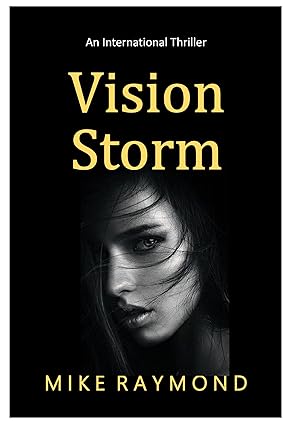

Vision Storm is a globe-spanning thriller that blends personal tragedy, supernatural overtones, and international intrigue into one fast-paced narrative. The story follows young Dannilee, a girl haunted by dreams that seem to bleed into reality, her troubled mother Janelle whose clairvoyant abilities blur the line between madness and foresight, and Marshall Dennison, a diving coach reluctantly pulled into a conspiracy that reaches far beyond what any of them imagined. From the icy cliffs of New York to shadowy power struggles involving the mysterious “Dark Agent,” the book layers suspense, betrayal, and an almost mystical sense of inevitability.
I found myself caught off guard by how quickly the story establishes tension. The opening chapter with Maggie is devastating and sets a tone of dread that lingers. The writing has a cinematic quality, sharp and quick, with scenes snapping together like film cuts. At times, the story is very descriptive, and I found the pace slowed a little as a result. Still, when the action hit, it hit hard, and I could feel my pulse jump with the characters’ fear and desperation. I cared about Aubrey and Dannilee, and I found myself rooting for Marshall in spite of his flaws.
What really struck me was the mix of realism and the uncanny. The idea of inherited clairvoyance could have slipped into cliché, but here it felt eerie and believable, almost natural in its strangeness. While a few bits of dialogue came across a little formal, the heart of the story, this battle between ordinary people and a larger, darker force, rang true. I could sense the author wanted me to feel the unease of not knowing who to trust, and it worked. I also appreciated that the villain, Pierre Dubois, was not just a cardboard cutout but a figure both terrifying and charismatic. That complexity made the threat land harder.
The book took risks with its plot, and while not every gamble paid off, I never felt bored. I’d recommend Vision Storm to readers who enjoy thrillers that flirt with the supernatural but keep a foot planted in real human struggles. If you like stories where family bonds and hidden powers collide with forces far bigger than any one person, this one will keep you turning pages late into the night.
Pages: 411 | ASIN : B0F8P5W9BB
Case Files from the Nightfall Detective Agency: Fury of the Vampire
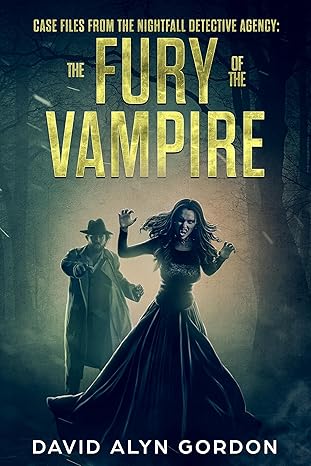
David Alyn Gordon’s Fury of the Vampire is a sweeping supernatural thriller that jumps across centuries, from ancient Jerusalem to 1920s Arizona, weaving together myth, history, and horror. The story follows vampires, werewolves, jinn, and humans caught in webs of betrayal, love, and ambition. At its heart is the eternal struggle between Lilith, Abram, and a cast of characters tied to mystical objects like the Ring of Solomon. Intertwined with this are political conspiracies, mob dealings, and the simmering tension of racial injustice in early 20th-century America. It’s a bold mix of folklore, pulp action, and noir detective work.
I enjoyed how daringly the author blends myth with history. Seeing Lilith spar with Abram in one chapter and then finding myself in the smoke-filled dance halls of Prohibition-era Tucson in the next kept me hooked. The pacing is brisk, and the action scenes pop with energy. I found myself leaning in whenever vampires clashed with werewolves or when political schemers whispered in dark corners. The dialogue can be blunt, sometimes even melodramatic, but it fits the pulpy, high-stakes feel of the book. It reminded me of flipping through an old serialized adventure, where the thrill matters more than polish.
Some passages carry raw emotional weight, like Malia grieving for her cousin, while other scenes are exaggerated. That didn’t ruin the ride for me, though. If anything, it made the book feel unpredictable. I enjoyed how unapologetically it leaned into its own wildness. It’s not a quiet or subtle novel; it’s brash, bloody, and loud. And I have to admit, I had fun with that. Sometimes I rolled my eyes, other times I grinned, and a few moments genuinely made me pause and think, especially the parts dealing with cultural memory and injustice.
I’d say Fury of the Vampire is best for readers who love fast-moving supernatural adventures, who don’t mind a little chaos in their fiction, and who want something that feels both familiar and refreshingly strange. If you’re into folklore reimagined as a gritty pulp detective saga, this is your book. It’s messy, it’s fierce, and it absolutely has bite.
Pages: 164 | ASIN : B0FLTB1L71
Everyone Is Valuable

Santa’s Last Ride follows the Claus family after Santa throws out his back feeding the reindeer and decides it is time for his twelve-year-old son to take over; however, he does not want the job, but his sister does. What was the inspiration for the setup of your story?
The story originated with James. Getting tired of Christmas songs on the hours long trip to Iowa for Christmas, he began to tell this story to his kids to pass the time. He has two children – an older son and younger daughter also aged two years apart. They were his greatest inspiration.
I loved the interactions between Christopher and Kristy; they were believable and entertaining, with heartwarming moments as well. What was your approach to writing the interactions between characters?
James and I are siblings. There were five more of us growing up. We are stuffed full of sibling interactions, mostly of a humorous nature. We grew up in a rambunctious and laughter filled environment.
What were some themes that were important for you to explore in this book?
Most important is the idea that everyone is valuable in their own way and not even a disability or a perceived disability changes that. In fact, I got involved in this book when James sent me an email of a very bare bones version of the story and asked me to put it in legible form. James has dyslexia, which was why he asked for my help. After much internet interact, we added to and filled out the story until it became ‘our’ book.
Will there be a follow-up novel to this story? If so, what aspects of the story will the next book cover?
We have had feedback from a number of fans asking what comes next. Some want to know when the movie is coming out. There are a number of issues we see that could be addressed in future. Considering their new positions in the Claus family how do Chris and Kristy, still quite young, handle the adults in the world they will have to interact with? From the North Pole how do you go to school, college, or date? With the planet warming up what will the family do about a shrinking North Pole? There’s no ground under the North Pole ice. What’s next for Mr. and Mrs. Claus?
Author Links: GoodReads | Website
While Santa’s mind is fixed on training Christopher, Mrs. Claus, daughter, Kristy, and Christopher are determined to find a way to tell Santa the obvious – which he seems to be stubbornly ignoring – that Christopher is unsuitable for the job. The family is keeping Christopher’s secret and it will only be sprung on Santa on Christmas Eve. Meanwhile Kristy, just ten years old, feels she is up to the task of taking Santa’s place.
Christmas Eve finds Santa and his trainee taking off for high flying adventures around the world, including natural disasters – angry dogs, cracking ice – and some disasters not so natural – smoking chimneys, frightening encounters with jets. When Santa discovers his family has tricked him, he nearly turns the sleigh around, to end the flight. Christopher and Kristy have to impress their father with their talents. Kristy especially has to believe in herself enough to convince Santa that, working together, they just might be able to save Christmas.
Tim Rees’ Original Earth: Book One
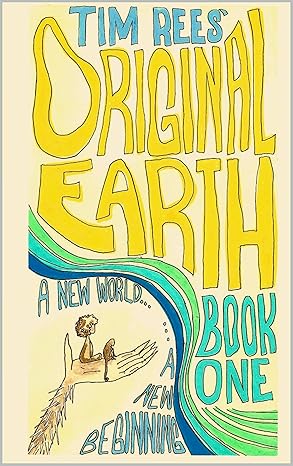
When I opened Tim Rees’ Original Earth: Book One, I expected a familiar survival tale. Instead, I found an emotional journey that runs from the claustrophobic passages of a crippled starship to the harsh beauty of an alien planet. Humanity’s last thousand survivors drift in space for generations before sabotage forces an emergency landing on a world they call Earth 2. Tim Rees explores not just survival, but whether people can truly change when given a second chance. At the heart of it all is Anu, an eight-year-old girl whose honesty and quiet courage cut deeper than the words of most adults.
The opening chapters carried a warmth that drew me in. Anu’s algae-block “strawberry” breakfast was both sweet and heartbreaking, and it showed me how well Rees balances innocence with underlying loss. That sense of comfort didn’t last. The sabotage of the algae vats shattered it in an instant. The frantic scramble to abandon ship, paired with Juno’s ruthless grab for power, made me feel just how fragile their world had always been.
The landing on Earth 2 was one of the most striking sections for me. Rees describes grass beneath bare feet, birds overhead, and the shock of real air with such vividness that I felt the settlers’ exhilaration. Yet he cuts that wonder short with the sudden appearance of a dinosaur-like creature, a jarring reminder that this new world is as dangerous as it is beautiful. Survival becomes grueling, and the endless cycle of hunting, gathering, and securing water presses heavily on every page. Rees captures that grind with a stark honesty that left me uneasy but deeply invested.
For me, Juno’s tightening grip was one of the most unsettling parts of the book. His obsession with water control felt alarmingly real, and it made me think about how fragile any society can be when power rests on basic needs. At the same time, I found myself drawn to Emrys and Onua’s struggle to hold their family together, even as Onua’s injuries dragged them down. What struck me most was Anu’s quiet strength in these chapters. Watching her comfort her brother with a maturity far beyond her years was both moving and painful.
The latter portion of the narrative resonated with me. The pages carried betrayals, losses, and a sliver of hope that felt almost too fragile to hold. Anu’s reflection near the end on what survival truly costs stunned me. It wasn’t neat, and it wasn’t reassuring. Rees doesn’t hand out easy answers. Instead, he leaves us with the harsh truth that humanity has to keep trying, even when the odds feel impossible.
Tender and tense, Tim Rees’ Original Earth: Book One blends discovery, danger, and humanity’s flaws with remarkable honesty. For readers who love survival stories with heart and grit, this book delivers.
Pages: 338 | ASIN : B0DLPGDKQF



 LITERARY TITAN