Blog Archives
I And the Village: Daughter of the Kibbutz


I and the Village: Daughter of the Kibbutz traces Estee Cohen Laub’s life from her early childhood in Kibbutz Kfar Masaryk to her family’s tangled past in Europe, shaped by war, migration, and loss. The memoir blends daily kibbutz life with the weight of inherited trauma. It moves between her own coming of age and the stories of her parents and grandparents who survived upheaval, exile, and the Holocaust. Laub paints a vivid picture of communal childhood, the rules that shaped it, and the emotional undercurrents that ran beneath a system built on ideals of equality and collective identity.
Laub’s writing is simple on the surface, yet it carries flashes of raw honesty that hit without warning. I found myself smiling at the small scenes of childhood, the games, the kids’ arguments, the curiosity, all of it wrapped in that strange mix of innocence and structure. Other times, the mood dropped fast as the family history unfurled. I kept thinking about how she held those two worlds together, the bright kibbutz sun and the long shadow of Europe, and how much strength it must have taken to look back without flinching. Her voice feels steady, even when the memories shake.
What stayed with me most was Laub’s openness. She lets the reader sit with her confusion, her longing for affection, her complicated relationship with her parents, and her deep pull toward dance. The prose wanders at times, but I didn’t mind. It felt true to the way memory behaves. Some scenes are so detailed that I saw them as clearly as if I were standing there, and other parts drift past like half-remembered dreams. I appreciated that looseness. It gave the story a human rhythm. I felt a quiet ache through much of the book, mostly because Laub writes about loss not with drama, but with this soft and steady truthfulness that lingers.
I And the Village is a good fit for anyone who loves personal histories, stories of survival, and reflections on what it means to grow up inside a system bigger than yourself. Laub’s memoir will also appeal to readers drawn to cultural history, communal living, or family stories shaped by war. I closed the book feeling moved and grateful for the glimpse into a life both ordinary and extraordinary in its own way.
Pages: 224 | ISBN : 978-1837944620

Believe in Exceptions

In Wooden Dolls Game, readers follow a woman through a lifetime of dysfunction and chaos as she tries to undo past traumas via a set of curious wooden dolls. Where did the idea for this novel come from?
The main idea came from the extraordinary concept of rewinding time in order to fix mistakes from the past. I then combined that idea with several personal inspirations. One of them was meeting two little sisters during an acting course. I also worked at a company where I met a man who was my trainer at that time, and I was fascinated by how optimistic he was about life. The curious thing is that everything seemed to work exactly as he predicted. He became my inspiration for the character of Jhonatan. Finally, the story was also influenced by one of my favorite movies, The Butterfly Effect. During the pandemic, I had the time to work on this story daily, blending all of these elements together.
How did you navigate crafting the tumultuous relationship between Mary Jane and her sister?
When I was a girl, I had the chance to grow up with my stepsister. She was more intrepid, even though we were close in age. As a teenager, she was often getting into trouble, while I was the one who stayed at home. She was my main inspiration for the character of Antonia.
Is there any moral or idea that you hope readers take away from the story?
My premise is that people do not change the behavior they are naturally born with. What people carry deep in their hearts is what it truly is. That said, I do believe in exceptions and even in miracles.
Can we look forward to more work from you soon? What are you currently working on?
I am not sure how soon, but my next goal is to write a five-book series. The series is called Allies of the Stars. I am just starting this project, and while I already have the general ideas for all five books and their stories, I am still developing each one. As with all my stories, it will be a quotidian story with a touch of fantasy.
Author Links: GoodReads | Facebook | Website | Amazon
In a moment that shapes their lives forever, five-year-old twin sisters Mary Jane and Antonia find themselves embroiled in a rivalry over the simple act of choosing a bedroom in their new home. From that one event, their sisterly bond is broken. As MJ forges a life-long kinship with Olivia, the girl next door, Antonia’s jealousy continues to fester.
Amidst the twists and turns of fate, Mary Jane is presented with a peculiar gift from a local fair—a set of mysterious wooden dolls imbued with magical powers. But as MJ discovers the dolls’ ability to transport her through time, fear leads her to hide them away, burying the magic they hold.
As the years pass and the sisters drift further apart, Antonia’s jealously for Mary Jane deepens. And, as her hatred intensifies for her sister, it sparks a life-changing tragedy, forcing Mary Jane to confront her past and the dormant magic of the forgotten dolls.
But as she seeks to use the power held within the curious toys, can Mary Jane mend the shattered pieces of the past to reshape the future? Or are some destinies bound by forces beyond her control?
Wooden Dolls Game

Wooden Dolls Game, written by Ivonne Hoyos, follows Mary Jane Crowell through a life shaped by family tension, a volatile sister, and a strange set of wooden dolls that lets her rewind time. The story begins with two little girls picking paint colors for their new bedrooms and unfolds into a tale about resentment, trauma, fate, and the high cost of trying to fix what cannot stay fixed. What starts as a simple childhood conflict grows into a sweeping journey through teenhood and adulthood, where Mary Jane desperately tries to undo tragic events using the dolls, and where every attempt triggers new ripples of chaos. It is a story about family wounds that never quite heal and the limits of love when time itself becomes a battleground.
The writing is direct and emotional in a way that sneaks up on you, and I found myself caring a lot about what happened. Scenes between the sisters made my chest tighten. Some moments felt painfully real, like the time Antonia destroys Mary Jane’s room in a wild burst of envy or the school fight that spirals into tragedy. The author captures the feeling of walking on eggshells around someone you love yet fear. I felt myself bracing every time Antonia entered a scene. The pacing moves fast, and sometimes the dialogue feels raw, but honestly, that worked for me because the characters live in a constant state of imbalance. Their world is never calm.
As the story leaned more into the supernatural element of rewinding time, I felt a mix of fascination and frustration, which I think is exactly what the book wanted me to feel. Every attempt to rewrite the past leads Mary Jane deeper into emotional exhaustion. I kept rooting for her and kept dreading what might go wrong next. The idea that fixing one tragedy only opens the door to another stayed with me. It made me think about how people carry their pain and how trying to rearrange life into something perfect can end up breaking everything. Even when the plot went dark, I stayed hooked because the emotional truth behind the events felt honest.
Wooden Dolls Game is a story for readers who enjoy family drama with sharp edges and for anyone who can handle a bit of heartbreak mixed with hope. If you like stories about sisters, trauma, time loops, and choices that echo forever, you’ll enjoy this book. For readers who enjoy a tense and emotional journey, Wooden Dolls Game is more than worth your time.
Pages: 353 | ASIN : B0CDJ8T2NX
Losing Mom
Losing Mom, by Peggy Ottman, is a memoir about a daughter walking with her mother through the last stretch of her life. The story moves through medical crises, small moments of grace, old family rhythms, and the shifting power dynamic between parent and child. It opens with years of near misses, each one convincing Ottman that maybe her mother would never actually die, and then follows the final days with an honesty that feels both intimate and strangely universal. At its heart, it is about love, caretaking, and the long letting go that comes when a parent fades.
The writing is simple, direct, sometimes almost breathless in the way it tumbles forward. That works for this kind of memoir. The scenes of crisis feel sharp because they are told the way we remember trauma, in fragments and quick flashes. I appreciated how she didn’t try to polish herself into some perfect caretaker. She shows the guilt, the second-guessing, the resentment, the deep tenderness. Her relationship with her sisters adds texture, too. They each carry different responsibilities, and you can feel the family history in every conversation.
What struck me most was the author’s honesty about fear. The fear of losing her mom, yes, but also the fear of doing the wrong thing, of missing a sign, of not being strong enough. Those moments felt very emotional. Some scenes hit hard, like when she speaks nonsense during what might be a stroke. Other moments are quiet, almost gentle, like the nurse patiently washing her mother’s hair. The memoir doesn’t try to turn grief into something tidy. It lets it stay messy and human, which makes it more powerful.
By the end, Losing Mom feels like a long exhale. It doesn’t offer big lessons. Instead, it gives you the feeling of having walked alongside someone through something real. I’d recommend Peggy Ottman‘s story to anyone who gravitates toward memoirs that deal with caregiving, aging parents, and the complicated love that sits underneath family stories. Readers who value emotional honesty over dramatic storytelling will appreciate it most. This is a memoir that keeps you thinking, especially if you’ve ever watched someone you love slowly slip away.
Pages: 300
Grow, Evolve, and Blossom

Garden Quartz and Paper Flowers is a collection of stories and poems centered around a girl navigating the trauma of abuse and the healing process. Why was this an important book for you to write?
It was important for me to write, Garden Quartz and Paper Flowers as a way to finally close a chapter of my own life. I’ve been writing for as long as I can remember: poetry, music, and short stories but I lost all my original works in a very traumatic incident. That use to haunt me, endlessly.
I don’t know of many stories that tell the tale of resilience, that transcends through time with authentic but healthy coping mechanisms. In this story, the main character Calla recognizes that self-work was required to set her free. For you never have to be your childhood or adulthood circumstances. Those moments will shape you but you should not allow them to break you.
My fondness for precious gemstones and flowers with inspirational meaning were the metaphorical tools necessary to breathe life into this piece. Stones are shaped by their environment. Flowers can weather the storm. Both survive under tough pressure.
What was the biggest challenge you faced in putting together this collection?
My biggest challenge was simply starting. For years, I dwelled on it subconsciously, should I pick up my pen again and recreate what was destroyed. Eventually, I got to a place where I said this is going to be therapeutic for you and it’s time to get it done. My second challenge was struggling with remembering much of what I originally wrote, but once I started to complete the individual pieces one by one, I was able to weave them together into one fluid story. You can delay the inevitable but it’s still has to get done, even when it’s overdue. I also needed to live a little bit longer, to complete this work of art in full circle.
Have you received any feedback from readers that surprised or moved you?
I’ve received a lot of positive feedback on this piece of art. I’m honestly VERY surprised. I didn’t think it would move so many people to connect with it so deeply, especially since it’s a fiction. I know Art imitates life, and I know that some of the things I wrote could align as a lived experience rather than a collection of different occurrences. I just didn’t know it would resonate with some many people.
“Not for the faint of heart,” was the common themed remark. Which to me, shows I planted a seed and I hope it grows. Uncomfort as it relates to knowledge, has always been a sign that I’m headed in the proper direction. I remind myself every day, learn something new, try something different and feel something real.
What is one thing you hope readers take away from Garden Quartz and Paper Flowers?
I want readers to know that it’s okay to feel every emotion in the moment—but it’s not okay to live in the negative ones. We have to find the strength to rise, overcome pain, and to keep pushing forward. It’s not easy, but NOTHING in life is simple. After the all hard work, aches and pains, I promise greatness is waiting on the other side, ready to greet you.
You’re not your past. You’re not even your present. And you’re not even alone. Continue to actively grow, evolve, and blossom into who you’re meant to be. It’s time to do your due diligence. It’s time to rediscover your resilience. It’s time to heal. Let’s do this!
Pain has Transformed me. . .
Step into this immersive garden of ruin and bloom— a memoir told in fragments of memory, poetry, and survival.
This is the story of a girl named Calla, rooted in silence, shaped by shadow, and determined to rise.
Because not all wounds bleed. Not all truths are spoken.
And you never have to become what tried to break you.
Garden Quartz and Paper Flowers
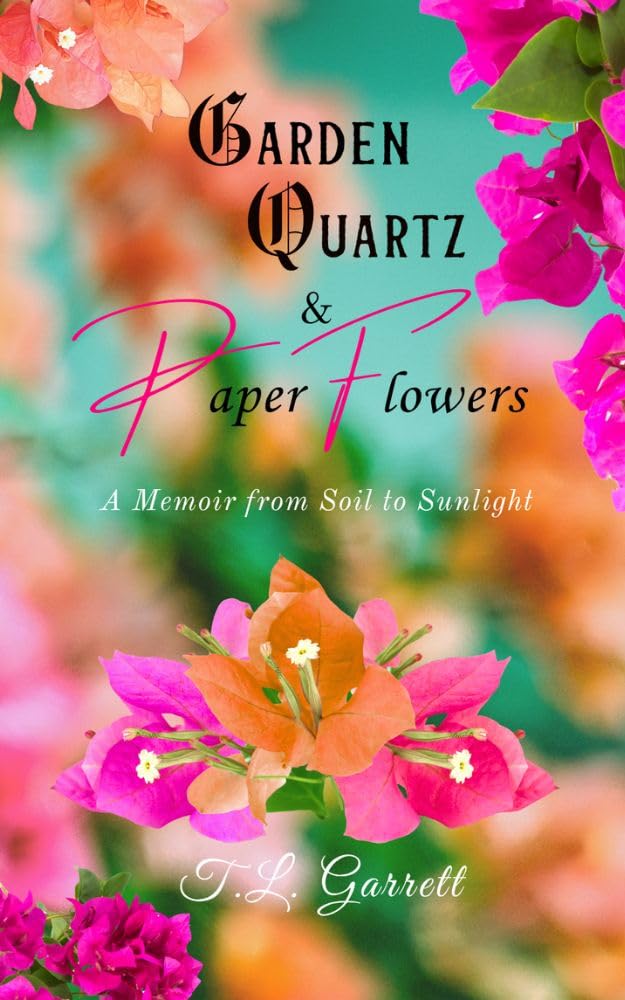
T.L. Garrett’s Garden Quartz & Paper Flowers is a raw and unflinching collection of stories and poems that trace the life of Calla, a girl navigating the deep scars of trauma, abuse, and healing. The book reads like a patchwork of memory. Each chapter a petal torn from her past, revealing a life marked by generational pain, silence, and survival. Garrett writes in a style that blends memoir and fiction, pulling readers into scenes that feel heartbreakingly real. The imagery of flowers, roots, and stones threads through the work, symbolizing growth from ruin and the fragile beauty that comes from endurance.
The writing is heavy with emotion, but there’s a strange softness to it too. A tenderness that lingers even in the ugliest moments. Garrett doesn’t hold back, and it shows. The prose feels like a scream written into poetry. I found myself pausing often, sometimes just to process. There’s a rhythm in her storytelling that’s both jarring and intimate. Her voice feels lived-in, like someone telling a truth they carried for too long. Some passages are uncomfortable to read, not because of how they’re written, but because of how real they are. You can feel the child’s confusion, the teenager’s anger, and the adult’s reckoning all colliding in one soul. It’s unsettling. It’s human.
What struck me most was Garrett’s way of turning pain into purpose. She doesn’t ask for pity. She asks for understanding. The book dives into spiritual themes like healing, intuition, and forgiveness, but never in a way that feels forced. Her honesty feels sacred. I loved how she wove resilience through the narrative like a vine wrapping around broken glass. It’s not a perfect book in a technical sense, but that’s exactly what makes it so powerful. Her writing feels like it’s bleeding onto the page, and yet, there’s beauty in every wound.
Garden Quartz & Paper Flowers isn’t for the faint of heart. It’s for readers who have lived through darkness and clawed their way toward light, or for those who want to understand what that fight looks like. It’s for anyone who believes survival itself is an art form. If you want something real, something that cracks you open and reminds you what it means to be alive, this book is worth every page.
Pages: 258 | ASIN : B0FJ4XM2JL
Hope of Recovery
In Being Broken, you share the traumas of your childhood, heartbreaking losses, and how you were able to face the damage that shaped your life. Why was this an important book for you to write?
I had to understand how things could have gone so terribly wrong that my sister had to pay the ultimate price, with her life. I’m not a spiritual person, so I needed to believe that this was preventable; that there was a rational and reasonable explanation for this tragedy. Not only that, I needed to better understand my part and be able to forgive myself for either my inability to act in time, or if I had become apathetic to her plight from years of dealing with it. But the journey allowed me to view my own life from a better perspective. It allowed me to dig deep into the traumas of my past and move forward with forgiveness of myself and the fact that I was not responsible for what happened to either of us.
I appreciated the honesty and raw emotion throughout your memoir. What was the hardest thing for you to write about?
Top of that list is my sister’s death. I was so overcome with shame and guilt about not being able to save her, the only way to deal with it was to write about it. I was having a hard time articulating what I was going through, and to write it all out was relieving since the rumination during grief can be very overwhelming. However, equal to how difficult her death was, learning and writing about my sister’s rape was extremely difficult. As I wrote in the book, our parents downplayed my sister’s rape to the point where they were trying to convince me it didn’t happen. Because of their manipulation, I believed them, and the guilt and shame I felt when I read about it in her journals was heartbreaking. Knowing that I wasn’t there for her like I should have been while she was dealing with that trauma, alone, made me feel absolutely horrible. Understanding now it is not my fault, but the fault of my parents’ manipulation of me, that I wasn’t there for her during the most difficult time of her life allowed me to forgive myself.
What is one misconception you believe many people have about growing up in abusive homes?
That children, and even adults, can see and understand that they are being abused, and that escaping the situation is obvious. Many people in abusive relationships are unaware that they are experiencing abuse. I didn’t understand that my sister and I were being abused by our parents until after her death. The narcissistic front of family perfection that our parents projected out into the world made it very difficult for anyone to believe us when we talked about what was going on in that house. Further, the nature of the abuse caused us to live in fear of talking about it. To even consider sharing what was going on with us, we knew the consequences would be severe. And lastly, the amount of control my parents had over my sister’s life precluded any ability for her to escape. They had full control over everything in her life: her car, her lease/rental properties, her phone, money, even her son when she was deemed incapable of caring for him – and they constantly threatened to take it all away if she didn’t behave as they wanted. Truly understanding what was happening to us took a lot of study on my part; years of work through my sobriety, and then grief. By then, it was too late for her, but it continues to help me heal.
What is one thing you hope readers take away from your experiences?
That if you are experiencing the same type of abuse, or have in your past, that you are not alone and there is hope of recovery. The common statistic is that 1 in 4 children experiences a form of abuse. It doesn’t have to be physical or sexual abuse, the most horrific types; it could be any type of mental or emotional abuse. Everyone experiences trauma, even the same trauma, differently based on their formative childhood years. Studies show that a child who experiences repeated forms of abuse has a very altered brain than one who does not. However, through neuroplasticity, therapy, and work, we can manage the challenges of Complex Post-Traumatic Stress Disorder to rewire our brains to live healthy, improved lives and still accept and integrate what we faced as children.
Author Links: GoodReads | Bluesky | Facebook | Website | Amazon
The son, brother, stepson is the only one left to pick up the pieces. He begins a journey of the self and finds out the truth of his family. After going over letters, notes, emails, videos, and text messages, he uncovers a disturbing picture of the abuse his sister suffered at the hands of their parents. He also begins to better understand his own struggles with mental health and substance addiction because of the trauma and abuse he also suffered from their parents.
Follow the son as he looks through his family history to discover the generational abuse that trickled down through the years. Learn about how parents who suffer from narcissistic personality disorder emotionally abuse and manipulate their children. See how the abuse and trauma becomes mental illness in the abused, and how they fall into vicious traps of addiction, eating disorders, self-harm, and complex post-traumatic stress disorder. Witness the transformational change of the son as he works on the recovery of his inner child and tries to become the man he was meant to be.
MENtal Health: Take It “Like a Man”
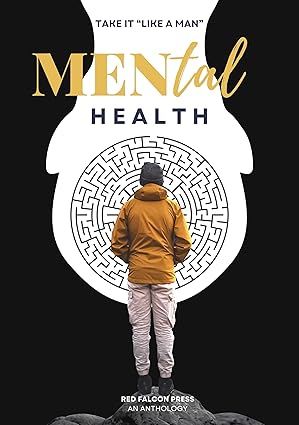

MENtal Health: Take It “Like a Man,” brings together a wide range of voices, social workers, therapists, coaches, veterans, writers, and everyday men who share deeply personal accounts of their struggles with masculinity, silence, trauma, and healing. The book is less about solutions and more about testimony. Each chapter feels like a window into a different man’s life, revealing how cultural expectations, family systems, addiction, sexuality, grief, and love shape the ways men understand themselves. The foreword frames the project as a bold act of truth-telling, and the stories that follow hold nothing back. They are raw, painful, and at times surprisingly tender.
What struck me most while reading was the honesty. These stories feel unfiltered, which made me lean in closer. I found myself pausing often because the emotions resonated with me. The book reminded me of late-night conversations that don’t come easy but stick with you long after. Some chapters were almost too heavy to read, yet that heaviness was part of the point. It made me think about how much men keep hidden and how damaging that silence can be.
Contributors offered beautifully crafted narratives that flowed like memoirs. Men’s mental health isn’t neat or orderly. It’s complicated, jagged, and layered. The diversity of voices actually reinforces that truth. Chapter 6, “You Are Not Alone,” was one of my favorites because of the way it spoke directly to the reader with warmth and reassurance. I liked how the chapter cut through the stigma and reminded men that isolation is not the answer, even when shame or fear makes it feel that way.
By the time I finished, I felt moved and hopeful. MENtal Health is not an easy book, and it isn’t meant to be. I would recommend it to anyone who wants to understand the invisible burdens men carry. It’s especially powerful for those who work with men in counseling, education, or leadership, as well as partners, siblings, or friends who want to listen better. What you’ll find is an open invitation to break the silence and begin healing.
Pages: 226 | ASIN : B0FNKMTFKF



 LITERARY TITAN