Blog Archives
My Legacy

From Cab Driver to Carnegie Hall is a captivating journey through a life filled with dramatic contrasts, remarkable resilience, and a passion for music. Why was this an important book for you to write?
In the beginning, I wrote From Cab Driver to Carnegie Hall for my family as a legacy to keep after I am gone. Later, it evolved as a kind of therapeutic release recalling my life, especially once I graduated from my college, The Curtis Institute of Music. Can you imagine going to college to learn how to master the clarinet to make a living?! It’s not the most sensible way to go.
Along with the funny stories and occasional glamorous, glorious moments performing with the greatest musicians all over the world it seems when I think about it now, I went from one challenge to another: child abuse, having little money, driving a cab, selling welding supplies, having my life threatened more than a few times. I suppose, after keeping my life a secret from friends and colleagues after all these years, I also wanted people to know some of what I went through to survive.
What were some ideas that were important for you to share in this book?
My life was about hard work, setting goals, overcoming obstacles. I realize now that those small steps I made each day toward both the short and long – time goals I set for myself, really paid off. I didn’t like selling welding products – getting up at 4AM each morning to be at the shipyards when the welders were arriving for work and getting them to try my welding products was no picnic. Sometimes the welders would set their welder at the wrong polarity and ask me to weld something. Of course, I got a terrible shock when the welding rod touched the metal. That game is called “Lighting up the Welding Rod Salesman” and it never fails to end in uproarious laughter, at least for the welders. For me it was life and death. I had to make money for my daughter and me to eat and pay the rent.
I read a book called “What Color is Your Parachute” and discovered that my passions are music and children. I got the idea to create a program called “Music Magic”, sold it to many schools, including my daughter’s pre – school in Seattle and never looked back to those shipyards. Implementing “Music Magic” in the early childhood schools in Seattle and later in NYC enabled my daughter and me to move back East and where I could restart my performing career.
What was the most challenging part of writing your memoir, and what was the most rewarding?
A challenging thought, even before I began was the idea (which began as a notion) that I could write a book; it seemed far- fetched, as my last class in English and/or writing was when I was a Junior in high school.
How has writing your memoir impacted or changed your life?
It continues to be a great learning experience.
I now have more appreciation for my wife, Barb, who is so very supportive and a great partner in this project. I consider my wife to be a large part of my targeted audience – someone who loves music, especially classical music, and is NOT a professional musician.
I am also so very grateful to be living close to my daughter, Laura and her partner, Deryn, both of whom work with me in promoting our book, From Cab Driver to Carnegie Hall.
Author Links: GoodReads | Facebook-Personal | Facebook-Business | Website
From Cab Driver to Carnegie Hall is more than a musician’s story; it’s an inspiring narrative that resonates with anyone who has faced life’s challenges head-on. An ode to the power of never giving up and giving oneself every chance to succeed. This book will not only entertain but also encourage and inspire, making it a must-read for anyone looking for a story of triumph, perseverance, and the transformative power of music.
Severed Sacredness: The Miraculous Journey of Jessie Boone
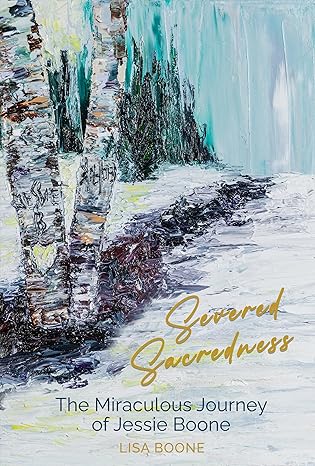

Some books touch your heart. Others grip it so tightly you feel like you’re living inside their pages. Severed Sacredness is the second kind. This is Lisa Boone’s raw, heart-wrenching, and faith-driven account of her daughter Jessie’s near-fatal skiing accident and the long, grueling journey through survival and recovery. Told through the lens of a mother’s unshakable love and relentless determination, the book walks us through Jessie’s trauma, the desperate prayers, the countless medical interventions, and the hope that stubbornly refused to die. Lisa lays bare the terror, the grief, the anger, and the tiny glimmers of grace that kept her moving forward. It’s not just a medical journey; it’s a spiritual one, an emotional one, and a testament to the power of faith and community.
Lisa’s writing is something special. It’s not polished in a way that feels distant—it’s raw, honest, and deeply personal. As a mom myself, I felt her pain in my bones. The moment she gets that phone call—“Mom, there’s been an accident. It’s Jessie. She’s hurt. She’s hurt real bad.”—it’s every mother’s nightmare coming to life. The way she describes the chaotic rush to get to her daughter, the helplessness of watching Jessie’s broken body in the ICU, and the sheer will it took to keep breathing through it all—it’s gut-wrenching. Lisa lets us sit in the darkest moments with her, but she also leads us toward the light, reminding us that even in the worst pain, there is hope.
One of the most powerful themes in the book is Lisa’s unwavering advocacy for Jessie. There’s a moment when a young neurosurgeon insists on an emergency craniectomy, and Lisa and her husband are forced to make a life-or-death decision within minutes. The older doctor had dismissed the nurse’s concerns, but this new doctor listened, pushed forward, and ultimately saved Jessie’s life. Lisa shows what it means to be a mother in the trenches, fighting for her child when no one else seems to see the full picture. It made me think about how important it is to trust our instincts when it comes to our kids.
Another part of the book that really stayed with me was the recurring imagery of trees. Lisa ties Jessie’s accident to the tree she hit, then expands on that symbolism throughout the book. Each tree marking a stage in Jessie’s recovery and Lisa’s own transformation. I loved this thread of nature woven into the story, the idea that life, even when it’s cut down to a stump, can grow back in unexpected ways. It reminded me that healing isn’t always linear. Sometimes it looks like a broken branch growing in a new direction, and that’s okay.
Severed Sacredness is a book about hope, faith, and resilience. It’s for any parent who has ever prayed over their child’s hospital bed, for anyone who has walked through trauma and wondered if they’d ever come out on the other side. It’s a heavy read, no doubt. There were parts that made me cry, parts that made me angry, and parts that filled me with gratitude for the strength of a mother’s love. If you’ve ever faced an impossible situation and needed a reminder that miracles do happen, this book is for you.
Pages:492 | ASIN : B0D41LWLGG

We Simply Are

Good Boy Bad Boy is a heartfelt exploration of self-acceptance and the battle within ourselves between societal expectations and personal authenticity. Why was this an important book for you to write?
Thank you for your kind words!
The last time I wrote a book, I was so burnt out that I vowed never to write again. Yet, less than a year later, I found myself back at the keyboard at 5:30 AM, eager to write again.
Writing can be a cathartic experience, and I had been contemplating “Good Boy Bad Boy” for quite some time. I had also written numerous blog posts centered around its themes. The turning point came when I discovered we were expecting our third daughter. This news motivated me to properly explore my struggles with self-worth as a man and my feelings of inadequacy as a father. I hoped that by sharing my journey, I could help my children navigate their own inner critics and, selfishly, one day understand where I had fallen short.
I appreciated the candid nature with which you told your story. What was the hardest thing for you to write about?
The hardest part for me to write about was my relationship and healing journey with my mother. It was challenging not only because it was deeply personal, but also because I was concerned about portraying her in a negative light (which would not have been representative of what I was attempting to convey). She graciously supported my efforts to share our journey, which I believe will resonate with many parents and their children.
What were some ideas that were important for you to share in this book?
In this book, I aimed to convey a few key ideas that I found particularly important. First and foremost, we are neither inherently good nor bad; we simply are. While are the moral standards of right and wrong, to often we give meaning to experiences that result in unneeded and unwarranted feelings of guilt and shame. By embracing our shadow selves—the parts of ourselves that we often deem “not good enough”—we can liberate ourselves to live more fully and purposefully.
I also wanted to highlight the destructive impact that the structures and influences of modern society can have on us, both intentionally and unintentionally. These influences play a significant role in shaping our actions and our perceptions of what is good and bad within ourselves. I hope that by raising awareness of these often harmful influences, we can find greater freedom from them.
What do you hope is one thing readers take away from Good Boy Bad Boy?
What I hope readers take away from “Good Boy, Bad Boy” is that the forgiveness of our feelings of guilt and shame stemming from past experiences is a gift we can give ourselves. This gift is available to us at any moment.
Author Links: GoodReads | YouTube | Website | Instagram | Substack
Author Joel Primus grew up believing he needed to “do good” and “be good” to earn his parents’ love and society’s acceptance, but no matter what he accomplished, he never felt good enough. This underlying feeling of “badness,” which he tried desperately to ignore, permeated much of his life.
Psychiatrist Carl Jung calls the unsavory aspect of our personality the “shadow self,” and the more we distance ourselves from it, the more anxiety, shame, and unworthiness grows. From the media, society, religion, our parents, and other external voices, we learn to condemn the bad in others and push it away in ourselves. But what if good and bad aren’t actually opposites?
That’s what author Joel Primus explores in this book. Combining research and parables with his
own experiences as a long-distance runner, entrepreneur, traveler, and father, Primus asks us to challenge our perception of good and bad. When we embrace the idea that our shadow is not the antithesis of our light, but rather a vital piece of our whole, we free ourselves from self-imposed constraints and give our children permission to do the same. By healing ourselves he believes we can “heal the line” and redefine what it means to live a good life.
BORN TO LIVE GREEN -Awakening My Heart’s Wisdom to the Path of Eco-Intelligent Living, Learning, Healing & Mentoring
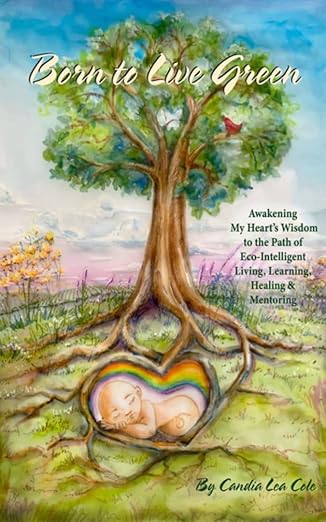

Candia Lea Cole’s Born to Live Green is part memoir, part manifesto, and part eco-education handbook. Through her personal journey of battling environmental illness, she uncovers a deeper calling to live in harmony with the Earth and to mentor others in eco-intelligent living. The book follows her transformation from a teenager struggling with unexplained health issues to an advocate for sustainable living. She intertwines her own experiences with a broader message: our personal well-being is directly connected to the well-being of the planet. It’s a deeply personal and, at times, a poetic call to action for those ready to embrace a greener, more mindful way of life.
Cole doesn’t sugarcoat her experiences with chronic fatigue, fibromyalgia, and chemical sensitivities. Instead, she lays them bare, allowing readers to step into her shoes. Her description of missing her high school graduation due to illness was heartbreaking. It wasn’t just about missing a party; it was about losing a rite of passage, a moment of celebration that every teenager looks forward to. That level of personal storytelling makes her journey compelling. She connects the dots between her health issues and environmental toxins, arguing that our modern world is making us sick. And frankly, it’s hard to disagree with her. The way she describes factory-farmed meat, chemical-laden foods, and the toxic household products we use daily makes you rethink your choices immediately. Her excitement about visiting a local food co-op for the first time was charming, it felt like a child discovering a hidden treasure. And the time she spent living off the land in a rural township was amusing, if not a testament to her hardiness in the face of hardships. I appreciated that Cole doesn’t just preach; she walks the walk. Her detailed descriptions of learning to detoxify her lifestyle, adopting whole foods, and engaging in sustainable practices are inspiring.
The book’s second half shifts from memoir to mentorship. It invites her readers to witness her process of becoming an Eco-Mentor. She uses birthing metaphors to describe this process, such as “conception”, “labor”, “birth” and “postpartum blues.” Conception describes the spark of life she felt when she realized her new “life calling” –the calling to educate young people about eco-intelligent living. “Labor” describes the path that she paved to create an eco-leadership event for teens and young adults. “Birth” describes the eco-lifestyle curriculum that evolved from her work with young people, and it introduces the six principles of eco-intelligent living that a spiritual vision revealed to her. “Postpartum Blues” describes Candia’s “dark night of the soul”, an experience resulting from exhaustion, that found her disabled. Her disability, we learn, forced her to retreat from the “upper world” and descend into the “lower world”, a place that she describes as “the womb” of Mother Earth. In this womb, she finds herself “holding space” for the birth of a new earth and discovers the role that endurance plays in shaping a healer and feminine leader.
What truly stood out for me was her belief that healing the planet starts with healing ourselves. She ties personal wellness to planetary wellness in a way that feels intuitive and urgent. At times, her passion borders on overwhelming (because personal and planetary healing can be an intensive process), but in a world where environmental activism often feels clinical and data-driven, her deeply personal approach is refreshing.
Born to Live Green is an intimate, heartfelt book that blends personal narrative with a powerful environmental message. She presents a hopeful vision of a world where people reconnect with nature and make conscious, sustainable choices. Her view of alternative education and self-directed learning is especially thought-provoking, it invites you to question how traditional education often stifles eco-awareness rather than nurtures it. The book is best suited for readers who are drawn to holistic wellness, eco-conscious living, and personal transformation. If you want a story that weaves together environmental awareness, self-healing, and a call to action, it’s a meaningful and inspiring read. Cole’s voice is passionate, urgent, and deeply personal, making this book a thought-provoking journey rather than just another guide to green living.
Pages: 257 | ASIN : B0BHQBPK5S
CONVOLUTED: The 1972 Durham Family Triple Homicide

Terry L. Harmon’s Convoluted takes a deep dive into one of North Carolina’s most baffling cold cases the 1972 triple homicide of Bryce, Virginia, and Bobby Durham in Boone, NC. The book is as much an investigative journey as it is a historical recounting, spanning fifty years of theories, suspects, and tangled clues. It follows the twists and turns of the case, the relentless pursuit of justice, and the frustrating dead ends that kept this brutal crime unsolved for decades. Harmon’s meticulous research shines through, presenting a labyrinth of evidence, speculation, and personal stories, all leading to the ultimate closure of the case in 2022.
Harmon’s writing is incredibly detailed, bringing the case to life with a level of depth that true crime enthusiasts will appreciate. His thorough research ensures that no stone is left unturned, immersing the reader in the investigation’s many layers. While the book covers an extensive historical backdrop and a wide cast of characters, each element adds richness to the story, making it a truly comprehensive account. The opening chapters are particularly gripping, vividly setting the scene of the crime without resorting to sensationalism. The image of the Durham family in their final moments is haunting yet powerfully written, immediately drawing the reader into the gravity of the case. Harmon’s ability to balance stark reality with respectful storytelling is one of the book’s greatest strengths.
One of the book’s strongest elements is its exploration of the investigation itself the sheer frustration of law enforcement, the wild theories (some credible, some downright absurd), and the eerie involvement of psychics, informants, and supposed hitmen. Chapter 9, Every Theory Known to Mankind, is particularly fascinating. It lays out the many possible explanations, from organized crime connections to local disputes that have gone terribly wrong. Harmon doesn’t just present these theories; he dismantles them piece by piece, showing which hold weight and which are nothing more than desperate grasps at the truth.
Harmon personalizes the victims, especially Bobby Durham. The book’s preface describes how Harmon, after looking at post-mortem photos of Bobby, felt a deep connection to the young man who seemed to have been caught in a nightmare he never saw coming. This personal touch makes the book more than just a recounting of a crime, it becomes a plea for justice, a tribute to lives lost, and a reflection on the chilling reality that some crimes take lifetimes to solve.
Convoluted is the perfect read for true crime lovers who appreciate meticulous research and aren’t afraid to get deep into the weeds of an investigation. It’s a rich and immersive read, filled with valuable information that brings the case to life. For those who enjoy diving deep into the details, it offers a fascinating and rewarding exploration of a crime that profoundly impacted a community. If you enjoy books that challenge you to think critically, question every lead, and wrestle with the frustration of an unsolved mystery, this one’s for you.
Pages: 1007 | ASIN : B0DLLK9RQY
From Cab Driver to Carnegie Hall

David Singer’s memoir, From Cab Driver to Carnegie Hall, is a captivating journey through a life filled with dramatic contrasts, remarkable resilience, and a passion for music. The story begins with Singer’s strikingly surreal day of performing at the White House before returning to drive a taxi on the gritty streets of New York. The book seamlessly weaves together the grandeur of international concert halls with the harsh realities of survival, creating an inspiring story of a life lived in extremes. His story also ventures deeply into family history, exploring themes of trauma, perseverance, and the transformative power of art.
What makes this memoir truly shine is Singer’s ability to bring to life the dichotomy of his experiences. He vividly describes performing with the Vienna Philharmonic while still grappling with the scars of a tumultuous upbringing. One of the most compelling sections recounts his relationship with Rudolf Jettel, a mentor who helped shape his artistic journey while also standing as a hero who saved lives during the Holocaust. These stories add layers of depth and humanity to the story. His accounts of working odd jobs, like selling welding supplies at dawn, make the glamour of Carnegie Hall feel earned.
Singer’s writing is raw and unflinching when delving into his personal struggles. His reflections on a childhood filled with parental abuse and the long shadow it cast over his life are both heartbreaking and hopeful. The honesty in these moments feels brave, especially when he revisits painful family dynamics. However, he also balances this with humor and warmth, particularly when recounting his adventures as a young clarinetist or his mischievous childhood escapades, like sneaking his dog DeeDee into his room at night.
The book’s pacing is engaging, though at times the transitions between major events in Singer’s life feel abrupt. While this approach mirrors the chaos and unpredictability of his journey, it occasionally left some anecdotes feeling underexplored to me. Despite this, Singer’s voice remains earnest and compelling, drawing the reader into his world with vivid imagery and heartfelt emotion.
I recommend From Cab Driver to Carnegie Hall to anyone who loves music, tales of perseverance, or stories of triumph over adversity. It’s a particularly enriching read for musicians or anyone navigating a challenging creative path. Singer’s life is a testament to the power of grit and artistry, offering inspiration to those daring enough to dream big, no matter the odds.
Pages: 320 | ASIN : B0D6TH9XG6
Quell the Cringe with Curiosity
Rosemary, Now and Then is a heartfelt memoir that chronicles a paramedic daughter’s care for her mother, Rosemary, through the labyrinth of strokes and dementia and lessons learned about life along the way. Why was this an important book for you to write?
In addition to honoring my inimitable mother, Rosemary, Now and Then tells a story of quality living with dementia, end-of-life surprises, and afterlife intrigue based on near-death experiences. These topics–too often ignored–can be uplifting experiences for all of us, as mortal human beings.
What were some ideas that were important for you to share in this book?
Asked what I wrote about, if I were to simply say, “dementia and dying,” people would naturally cringe. So familiar we are with associated misery, but less acquainted with the amazing phenomena of these transformative experiences. Rosemary, Now and Then aims to quell the cringe with curiosity.
What was the most challenging part of writing your memoir, and what was the most rewarding?
An author, not a marketing strategist, the post-launch world requires a PR hat not in my wardrobe. But connecting with writing groups and other authors has proven invaluable.
It is most gratifying to share with readers the wonderful person I had the privilege of calling “Mom.” Beyond a daughter’s devotion, when readers relate to the broader message–virtually redefining dementia, dying, and death–we join together in a paradigm shift; an understanding of mortality as a gift of lifelong opportunities and death as immortal reacquaintance with the infinite, loving Beyond.
Fine threads of brilliance weave intricate Irish-veil thoughts through her filigree mind. Her three-year-old self emerges, radiant and quizzical. Grappling with the nature of existence, Rosemary laughs her way to the grave. Devoted daughter Christina devises caregiving innovations and connects dots of amazing coincidences. Paradoxes of mortality balance gravity with hilarity, pain with joy, absurdity with wisdom, practicality with mysticism.
The “Now and Then” format depicts leaps in time, place, and person that challenge reality, in league with Rosemary’s mind.
A journey of wit, wisdom, and sheer determination, Rosemary’s story concludes with her signature cinnamon bun recipe for readers to bake and share with loved ones . . . as Rosemary would do.
Mighty Joe Mui – The Untold Underdog Story At Cornell
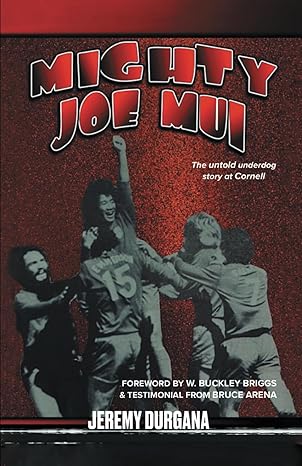
Some stories stick with you because they’re about more than just one person. Mighty Joe Mui is one of those books. It’s a memoir that follows the life of Joe Mui, a five-foot-three Chinese-Canadian soccer player who defied expectations at every turn. From his humble beginnings in China to making a name for himself in NCAA soccer at Cornell and beyond, Joe’s story is an underdog tale in the truest sense. But this book isn’t just about sports. It’s about grit, resilience, and breaking barriers—often without even realizing it. The book takes us through his journey, from playing “crab soccer” in Hong Kong to facing off against the legendary Pelé, all while navigating life as an immigrant, an athlete, and eventually, a successful entrepreneur.
One of the things I loved about Mighty Joe Mui is the way it captures Joe’s relentless drive. The guy simply did not know how to quit. Even when he faced obstacles, like language barriers, financial struggles, and people telling him he was too small to compete, he found ways to push through. The book is filled with moments that showcase this, like when he first arrived in Canada and had to sharpen a pencil in class. That may sound small, but the teacher forced him to ask for it in English, something he barely spoke. It was sink or swim, and Joe chose to swim. Later, when he played for Cornell, he didn’t just compete, he dominated, earning All-American honors and leading his team to success despite being smaller than most of his opponents. The storytelling in these moments makes you root for Joe, even if you don’t know a thing about soccer.
The writing shines when it explores Joe’s life off the field. He was an immigrant kid figuring out a new world, a student navigating Ivy League academics, and later, a businessman making his mark in real estate. The book highlights how his discipline in sports translated into other areas of life. One part that stuck with me was when Joe, despite his busy schedule, still found time to mentor young athletes, passing down what he had learned. He never lost sight of where he came from, and that humility makes his story even more compelling.
While I enjoyed the book, I felt it sometimes jumps around a bit, especially when it mixes past and present moments. One second, we’re with young Joe in Hong Kong, the next, we’re with older Joe reflecting on meeting Ted Turner. It’s an interesting approach, but at times, I wished it stuck to a more linear timeline. But it’s a minor issue in an otherwise engaging read. The writing is conversational, which makes it easy to follow, and there are plenty of funny, heartwarming, and even frustrating moments that make you feel like you’re right there with Joe through it all.
Mighty Joe Mui is perfect for sports fans, but even if you don’t care about soccer, there’s a lot to take away from Joe’s story. If you love underdog tales, immigrant success stories, or just reading about people who refuse to let circumstances define them, this book is worth your time. It’s about perseverance, adapting to change, and proving people wrong.
Pages: 238 | ISBN : 1738328406



 LITERARY TITAN