Blog Archives
Love in a Hurry – A quirky romantic comedy
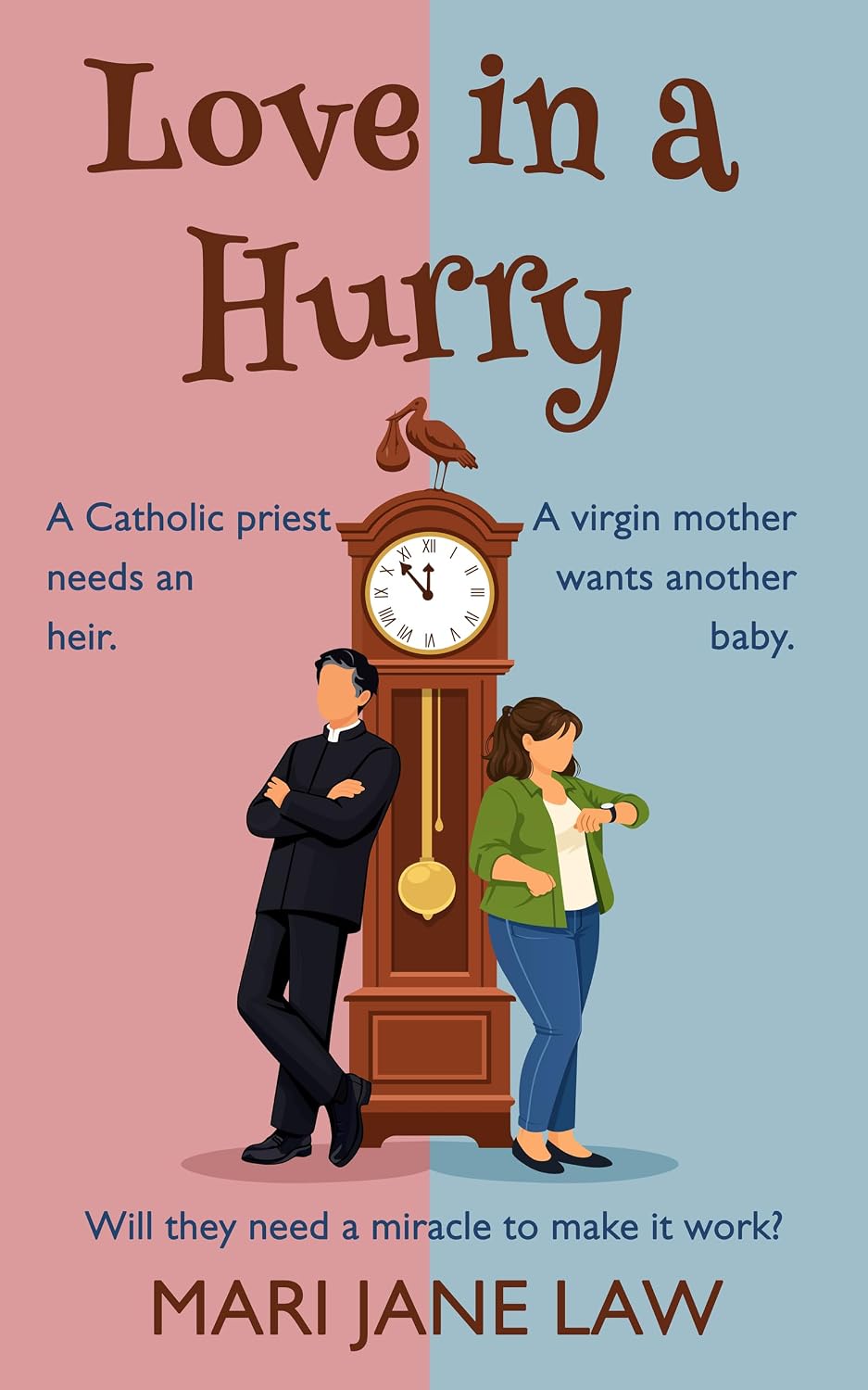

Mari Jane Law’s Love in a Hurry follows two people trying to build a new life while time feels painfully short. Miranda Morton is thirty-nine, raising her son Oscar with his two dads, and hoping for a partner and another baby when a perimenopause diagnosis adds urgency to her plans. Father Kieran Quinn is questioning a priesthood shaped by his mother’s expectations and longing for a family of his own. Their meeting through a support group for disaffected priests starts a romance full of attraction, awkward conversations, and inventive attempts to get closer. It’s an unusual setup, and Law makes good use of the practical complications: finding work, arranging childcare, and negotiating a household where everyone has an opinion.
Miranda is easy to care about because her longing for love comes with such specific fears. Her childhood in care has left her anxious about food, shelter, and being abandoned, so even an exciting relationship can feel like a threat to the security she’s worked hard to find. Law gives that anxiety everyday expressions, from hidden sweets to Miranda’s reluctance to leave her live-in job. The food details are especially effective, connecting baking with care and eating with comfort. I also enjoyed watching photography offer Miranda a way to recognize her own abilities. Kieran’s tenderness has appeal, too, particularly when he listens to her history and takes her concerns seriously. Their relationship grows through ordinary acts of attention as well as physical attraction, which makes their enthusiasm for each other feel convincing.
Judith, Miranda’s sharp-tongued employer, gives the book some of its most affecting material. Flashbacks to her younger years reveal an interfaith marriage, devastating bereavements, and the gradual accumulation of loneliness and resentment. Those sections change how we understand her possessiveness and make her present-day behavior more complicated. Law also shows how easily family members can hurt one another while insisting they know what’s best. The shifts between this painful history and the broad comedy are pronounced, especially around the cupboard escapade and Kieran’s prostate troubles. Sometimes the repeated misunderstandings and elaborate descriptions of bodily reactions slow the story down. A few horse jokes about Miranda’s appearance also wore thin for me, given the lasting damage of her childhood bullying. Still, the characters’ need to feel wanted gives the various storylines a strong connection.
The book reminded me of Helen Fielding’s Bridget Jones’s Diary in its self-conscious heroine, anxieties about appearance, and ability to turn romantic embarrassment into comedy. Miranda’s busy inner commentary has that familiar mix of hope, panic, and quick comic associations. Law brings her own interests to this territory through religious expectations, later-life fertility, and a family made up of people choosing to care for one another. Luke and Gavin’s involvement adds affection and friction, particularly as they adjust to Miranda having a relationship of her own. I found that expanding circle of attachments the book’s most satisfying feature. Love in a Hurry is a warm and sometimes unruly romantic comedy whose appeal lies in watching people learn to give each other room, reassurance, and a place to belong.
Pages: 432 | ASIN : B0HFNNM6LH

Dragons Could be Fallen Angels

The Boy Beneath the Burning Sky follows 12yr-old Corin into a struggle involving family, religious orders, and fallen angels turned dragons, where protection can threaten the freedom of those being saved. What was the inspiration for the setup of your story?
The starting point was the idea that dragons could be fallen angels who still remembered what they had been. I was interested in what that fall would do to them—their loyalties, their anger, their understanding of themselves—and what kind of world people would build around the consequences. Once kingdoms and religious orders began shaping the history of that conflict to suit their own purposes, the story had its larger framework.
Corin gave me a way to make all of that personal. He is twelve. He has a family, an inconvenient curiosity, and questions that the people around him would rather he stopped asking. He encounters this enormous struggle through people he loves and authorities he has been taught to trust.
That brought me to the question running through the book: how much of someone’s freedom are we willing to take away to keep them safe? I wanted that question to matter within a family as much as it mattered within a kingdom.
How did you develop Miren’s fierce protectiveness toward Corin, particularly the moments when her desire to keep him safe compromises his autonomy?
I built Miren through the ordinary details of being Corin’s older sister. She knows his habits, recognizes his excuses, and can threaten him and look after him in the same breath. Their humor mattered because I wanted readers to feel the relationship they had before understanding everything threatening it.
Miren is only fifteen herself. She takes on a responsibility that would overwhelm many adults, and she responds by trying to anticipate every danger. Keeping information from Corin can feel, to her, like carrying something painful so he does not have to carry it.
Her willingness to sacrifice herself grows out of that same instinct. She believes she has the right to decide what happens to her, but she does not always recognize how deeply her decision determines what happens to him.
I wanted readers to understand her fear and still feel Corin’s frustration. Her love is real, and the harm caused by some of her choices is real too. Part of her struggle is learning to trust the person she is so determined to protect.
What possibilities did magic involving stolen memories and names open for exploring consent, especially when rescue itself can endanger a person’s identity?
Memory made the cost of magic intensely personal. A character might survive an encounter and lose the memory of someone they love, or the experience that gave a promise its meaning. That leaves consequences a healed wound cannot resolve.
The possibility of surrendering a memory to save someone particularly interested me. What does that choice mean if the price could erase the relationship that made you willing to pay it? And how freely can anyone agree when they are frightened, threatened, or being told only part of the truth?
Names add another dimension because they connect identity with the claims other people make upon us. Someone who can reach you through your name may also believe they have the authority to decide what you should become.
That allowed rescue itself to become morally complicated. A rescuer can be sincere and still overstep. I wanted the magic to make characters confront the limits of their permission: what was actually agreed to, what was understood, and whether the person receiving help can ask for it to stop. Good intentions leave those questions very much alive.
Why was it important to give burial, food distribution, and children’s futures sustained attention after the story’s larger conflicts and ordeals?
Because those responsibilities are part of what the characters have been fighting for. People still need to eat after the danger passes. Families need to find their dead. Children need somewhere to sleep and some reason to believe tomorrow will be different.
Burial also carries particular weight in a story concerned with names and memory. Recording a name correctly, listening when a family corrects an official account, and making time for someone’s grief are meaningful acts in a world where powerful people have repeatedly controlled what gets remembered.
Food distribution makes authority practical. Someone has to decide who receives help, who gets heard, and whether the promises made during the crisis will survive scarcity and exhaustion.
The children’s futures mattered because they are the ones who will inherit whatever the survivors build. I wanted to spend time with that responsibility. A person who was brave in battle still has to learn how to listen, share resources, and keep showing up when the work becomes tiring and ordinary. That is where readers can see whether anything has truly changed.
Author Website: stevenecook.com
Saying the Hard Parts Out Loud: Backbones, Boardrooms, and Graceful Exits
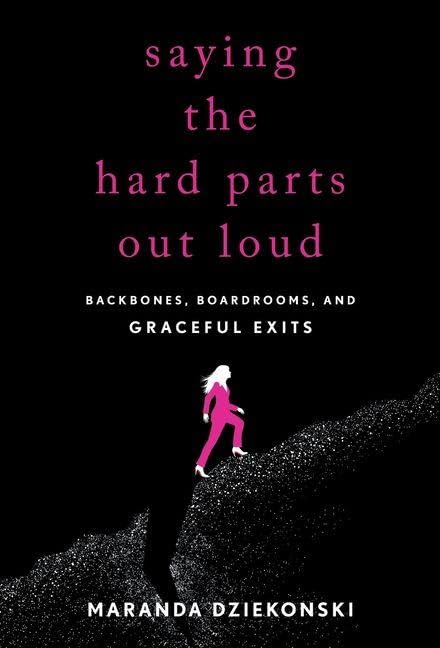

Maranda Dziekonski’s Saying the Hard Parts Out Loud is a business memoir about how the experiences we carry into work shape the people we become there. Her story begins in rural Michigan, where childhood poverty, an unstable home, and responsibility for her younger brother taught her to read people and respond quickly to trouble. The opening scene, with two hungry children eating frozen strawberries while watching cartoons, gives her later discussions of leadership a very concrete starting point. From factory work and single motherhood to executive roles in the San Francisco Bay Area, Dziekonski follows the connection between survival, ambition, and belonging. Readers who enjoy leadership memoirs and personal development nonfiction will find plenty to connect with in her candid, conversational voice.
I think the book’s strongest quality is Dziekonski’s willingness to examine how her own behavior affected other people. She describes the discipline that helped her build teams and improve operations, then looks closely at the emotional cost of leading with so much force. Her account of firing an employee after receiving an insulting message is especially revealing. Years later, she’s still thinking about the dignity she could’ve preserved during his departure. That kind of reflection gives the leadership development material credibility. Another memorable episode involves a costly ordering mistake at a manufacturing company, where management trusted her to help repair the process. Because she was a single mother who’d recently gained financial stability, you understand exactly what that trust meant. Accountability becomes something you can see happening between people, with livelihoods and relationships attached.
The family chapters deepen the book’s treatment of boundaries, forgiveness, and emotional resilience. Dziekonski writes about her mother’s limitations, her stepfather’s cruelty, and the lasting influence of her grandmother with a frankness that can be uncomfortable to sit with. Her relationship with her son, Lucas, adds another perspective, especially when he tells her he wishes she’d spent more time playing with him as a child. She gives that admission room to matter alongside the work she did to support them. The white teddy bear he gives her, replacing one she lost in a childhood fire, is a particularly tender detail. These scenes make the book’s interest in compassionate leadership feel personal and earned. The practical suggestions that follow, including listening carefully in one-on-ones, sharing credit, and helping colleagues grow, connect naturally to those experiences.
Dziekonski organizes the book around belonging, becoming, and leading forward, returning often to the image of a room and the question of how people feel inside it. That recurring image holds the personal and professional stories together, although repeated explanations of belonging, self-doubt, and values occasionally slow the pace. A little tightening would give the later chapters more momentum. Still, her humor, affection for the people who’ve helped her, and openness about unfinished emotional work keep the voice engaging. The closing encounter with her stepfather gives the discussion of healing a small, believable moment of movement. For readers interested in women in leadership, career growth, and the human side of management, Saying the Hard Parts Out Loud offers an intimate look at learning to lead with clarity, care, and enough self-trust to make difficult choices.
Pages: 220 | ASIN : B0H5T7FV1H
Deep, Dark Concept

Smiling Faceless Woman follows a linguistics student whose carefully planned life unravels when terrifying paranormal experiences lead him into a group investigating the mysterious forces behind hauntings. What was the inspiration for the setup of your story?
In a way, I have been thinking about this story all my life. I was always interested in the supernatural and the paranormal, and devoured whatever content was playing on TV, and borrowed whatever books from the library on the subject. I used to go ghost hunting with my little brother. I have had many experiences I can’t explain. So, I guess this book was my way of making sense of spirits and hauntings and the afterlife. But the genesis of this specific idea was a very difficult semester I had in college. Like in the novel, I was overworked and stressed and burnt out, and found myself balancing everything on the line from grades to relationships to a few mysterious encounters. I would say the other inspiration was just being a healthcare worker, surrounded by the sick and the hurt and the dying. I have worked in many various historic facilities, and with each strange thing seen or heard or heard about, a kind of deep, dark concept brewed that much more.
How did you decide how much of the story should focus on everyday life versus supernatural events?
There were a few sentiments I had going in. I always appreciated college and that time in my life, being a mall rat. I started to feel like modern rock is kind of dead, so I wanted to relive that a little. And I missed the early internet days when memes were still new and fresh and just starting to blossom. My first drafts were actually a little too heavy on the day-to-day stuff so I had to pull back. Although it was fun to dip into nostalgia and coming-of-age territory, of course, this is first and foremost a horror suspense thriller. I consider the structure of the book in three acts. First is mostly romance and some paranormal. Second and third is some romance and mostly paranormal. The relationship starts as a foundation but becomes a kind of frame narrative because the action and mystery builds up then takes over. I think this approach worked because you really care for the main character first before every terrifying otherworldly threat.
What inspired the creation of SPIRAL?
During the preparation of this novel, I felt compelled to do research on a level I hadn’t done before. I always do some, but not to this extent. I talked to a paranormal investigator, a preacher and also a local expert. I actually went to reportedly haunted locations by myself at night with nothing but a flashlight. So, a lot is inspired from these conversations and these experiences. I got a lot of different perspectives and ideas. As for the group itself, the name was something I thought of a long time ago. I knew the story would begin with a protagonist and a love interest but expand to this whole other route where I needed a cast of characters. The initial concept was kind of like your typical crew from those paranormal investigation reality series before. But I decided to use each character to represent a new layer of depth. In doing so, I made each character very unique from one another, and there was a nice ongoing contrast which was so pleasant to capture.
What do you hope readers take away from Alex and April’s reflections on their past?
First and foremost, my goal was to make the reader fall in love with these characters, and to fall in love with these characters being together. My intention was for audiences to get a slice of their lives and personality, a taste of the chemistry and attraction between them, and feel how they go so perfectly together in a lot of different ways. But I wanted there to be flaws and imperfection and incompatibility to some extent that could be examined with a magnifying glass. I thought it would be interesting to see a whole relationship timeline, from the crush stage to the courting stage, getting comfortable and then getting complicated. My aim is to have introspective lingering questions about what defines love and romance, and what makes a relationship work or not work, plus timing, plus fate.
Author Links: Amazon | Goodreads | Instagram | Facebook | X | Website
SMILING FACELESS WOMAN is a multiple award winning textured, nostalgic, cerebral thriller that dissects college life versus the so-called real world, crosses blurry lines between just friends or more than friends, transports readers back to the age of Sony Ericsson and the Motorola Razr and early internet culture, and explores the possibility of an afterlife through a scientific, supernatural and spiritual lens.
Staring at a Blank Page: 30 Days of Poetry and other Musings

Nadine K. Thompson’s 30 Days of Poetry and Other Musings brings together poems, personal reflections, and invitations to journal, all growing from a writing challenge she set herself in September 2023. Balancing writing with her work as an ESL teacher, Thompson committed to producing a poem and a wisdom thought each day. That commitment gives the collection its shape and its welcoming spirit: everyday experience becomes material worth thinking about, writing down, and sharing. Her subjects range from moving apartments and eating with friends to forgiveness, aging, and the pressure to succeed. There’s an appealing openness to that mix. Thompson treats creative practice as something that belongs inside a busy life, and the book makes her enthusiasm for that practice easy to understand.
In “Foot Massage,” a discounted treatment comes with awkward questions about her Jamaican background, giving the poem humor and a glimpse of life across cultures. “Teacher’s Day” captures the vulnerability behind wanting to be appreciated, then finds satisfaction in handmade gifts and sincere words. “Failure,” which follows students struggling to build catapults, makes perseverance feel tangible through a teacher’s decision about when to help. I especially liked “News from home,” where a missed call sparks anxiety before conversation restores the pleasure of connection. These moments give the book personality. They show how much can be happening emotionally during an ordinary appointment, school day, or phone call, and they make Thompson’s broader reflections feel earned.
Thompson’s writing is direct, energetic, and comfortable addressing the reader. Repetition, capital letters, and short commands give many poems the rhythm of spoken encouragement. She also experiments with presentation: “Pruning” arranges words about pain and growth across the page, while “Mindful Present” places past and present attitudes in parallel columns. The wisdom passages make the book’s teaching impulse explicit, often turning an experience into a question readers can explore themselves. At times, familiar motivational language and repeated advice about growth and letting go soften the individuality of the writing. Some explanations also spell out meanings the poems have already conveyed. The more detailed pieces carry greater force, including the bonus poem “Laundry Days,” which develops a sustained comparison between washing clothes and shaping a piece of writing. “A Dark Night” and the older poem “Hope” bring fear and distress into the collection’s generally buoyant mood.
I’d recommend this book to people who enjoy reflective journaling, spiritually inclined readers, and writers trying to establish or recover a regular creative habit. Teachers may also appreciate how naturally Thompson draws meaning from classroom experiences, while readers living far from family will recognize the emotional importance of calls home. Her spiritual outlook draws on faith, prayer, meditation, and ideas about energy, giving the reflections a broad range of influences. Reading one entry at a time would suit the book well, especially with a notebook nearby and a few minutes to answer its questions. Its chief appeal is Thompson’s willingness to share both the experiences and the effort behind her writing. That generosity makes picking up a pen feel like an achievable next step.
Pages: 66 | ASIN : B0HM64JQN7
Memory Is Identity

The Many Lives of Adam Capello follows a sixteen-year-old boy who can remember lives spanning centuries, but as his past identities reveal unexpected abilities and a mysterious connection between lifetimes, his search for answers becomes a struggle to remain himself. What central question did you most want to explore through Adam’s journey?
To be honest, I started writing about Adam Capello in opposition about my father’s beliefs in Scientology. I wanted to show what a world would look like where Past Life regression was truly possible through a proven science that didn’t hide its techniques and results from their own followers. But as I followed Adam’s adventures through his past and listened to his thoughts and descriptions of the modern world he lives in, I realized he was leading us through a history of mankind, the universe, and everyone’s place in this construct that we call life. As his consciousness expanded, so did the reader’s viewpoint, to make us all question what we see, do, and contribute. I realize that’s quite a big concept, especially when you throw in quantum mechanics, dimensional space, and philosophy for good measure. Overall, I just wanted to stimulate ideas and discussion. It’s too big a subject to have any real answers. Funny enough, I’ve heard a couple of reviews from Scientologists since, and they love it!
How did you develop Adam’s personality and voice, and how did his understanding of himself change as he encounters increasingly different versions of who he once was?
That was probably the easiest part – He’s just a younger, smarter version of me. The front cover is my son, and lately I’ve just managed to make an AI book trailer to bring that cover to life, showing Adam changing into a lot of his different personalities. Writing the story was like watching a very long film, where I’d have moments of watching him in my mind, deal with the challenges he was presented with. As he rapidly grew and matured during Awakening, I was able to go on that journey with him, using ‘our’ voice to tell the story.
How does the possibility of practical immortality complicate ideas about freedom, responsibility, and the value of a single lifetime?
Wow, that’s a deep question. The biggest part was that you cannot escape your past just because you change your face. As quickly described with the young Jewish girl finding out she’d once been Adolph Hitler. No more can evil dictators die in their sleep and escape justice as if it were the Mexican border. And, with the final challenge presented to Adam and Martin Kale, the whole world is going to have to learn to be more responsible and help each other.
What does the novel suggest about the relationship between memory and identity?
Memory is identity. We only have to see the devastating effects of Alzheimer’s or dementia to see how people have their identities slowly robbed off them over time. It’s horrific. The novel highlights that we are not just our own memory, but that we are everyone else’s memory. We live on in the minds of our loved ones… or people who despise us. That’s why so many powerful leaders are so worried about their legacy. To them, it is their immortality: to live on in all our minds after they have died. Winston Churchill is incorrectly attributed with writing, ‘History will treat me well, for I intend to write it.’ Says it all really.
Author Links: GoodReads | Facebook | Website | YouTube
Searching for Full: How GLP-1s Changed My Eating Disordered Life

Paige Gordon’s Searching for Full examines the reach of bulimia across decades of relationships, work, family life, and medical treatment. Beginning with a residential program she enters at thirty-one, Gordon then traces the childhood neglect, physical illness, and persistent hunger that preceded her eating disorder. The opening establishes the frustration that drives the book: seeking help while struggling to communicate what’s happening inside her body. Across thirty chapters, she builds a detailed account of the effort required to maintain an outwardly successful life while bingeing and purging in private. The memoir’s central achievement is making that hidden effort visible, including its effects on decisions that initially seem far removed from food.
Gordon gives considerable space to her romantic history, showing how fear of abandonment and the logistics of secrecy become entangled. Her long connection with Antonio carries particular weight because affection and trust coexist with the limits she places on intimacy. Later accounts of coercion and domestic violence show how thoroughly she’s learned to question her own perceptions. She also examines the harm she causes through deception, infidelity, and attempts to manage other people’s responses. These admissions give the narrative credibility and emotional complexity. Her inherited wealth adds another significant dimension: it supports education, repeated moves, property purchases, and surrogacy, even as she experiences it as a source of shame. The book gains depth from her recognition that financial security and emotional deprivation can occupy the same life.
The prose is conversational, sarcastic, and densely figurative, with reconstructed dialogue and sharply observed domestic details giving scenes their texture. Gordon’s training in interior design informs her descriptions of homes, which become expressions of hope, control, and retreat. Her humor is especially effective when it exposes the discrepancy between professional competence and private illness: “I never missed a deadline. I never missed a purge.” That compressed pairing conveys more than several longer explanations. Elsewhere, recurring metaphors of performance, broken structures, and financial transactions, followed by extensive self-analysis, can slow the narrative and restate insights the scenes have already established. Her acknowledgment that memories have been reconstructed and timelines adjusted provides useful context for the book’s highly shaped storytelling.
The final chapters describe the relief Gordon attributes to semaglutide and the emotional possibilities that follow. “Recovery gave me the courage, not the other way around,” she writes, identifying the change that allows her to disclose her illness fully to her partner. Her account of quieter meals, greater patience with her children, and reduced vigilance makes recovery concrete. The narrative then opens into correspondence with researchers, investigation of a rare receptor variant, and her decision to fund scientific work. The foreword supplies a measured discussion of the evidence and questions surrounding GLP-1 medications and eating disorders, while Gordon records the uncertainty surrounding her genetic findings. This developing inquiry gives the ending purpose. Searching for Full offers an absorbing account of how bodily distress, shame, and belonging shape one another, and how personal relief can grow into a sustained demand for better understanding.
Pages: 256 | ASIN: B0H58HNHJV
Holding On To One’s Self

The Runaway Girl follows an Australian expat journalist who is investigating a criminal network in Lagos while a fourteen-year-old girl fights to survive it. Did Jade and Yinka’s storylines develop together from the beginning, or did one lead you toward the other?
I first wrote Yinka’s story as a stage show called Batonga that was produced in Lagos multiple times.
The Runaway Girl began with only Jade’s story. An editor suggested using a second point of view from one of the girls’ perspectives, so I used the opportunity to combine the two stories.
Why is reclaiming her identity as a journalist so important to Jade at this point in her life?
Before Jade moved to Lagos, her identity was largely wrapped up in her career. The move meant she had to relinquish her job in Australia, and she struggles to redefine who she is without it. She loves being a mother and a wife, but needs something of her own to hold onto her sense of self and to keep her brain active.
How did your experience as an Australian living in Nigeria shape the way you wrote Jade’s perspective as an expatriate?
When I left Australia, I gave up a job I loved as a career counselor, so Jade’s loss of identity came from personal experience. I began writing to fill this gap and have been writing ever since.
I also started salsa dancing in Lagos, so much of Jade’s experiences of dance, particularly her performance at the salsa party is drawn from life. I attended many events as the only white person in the room, and on several occasions, a comedian made jokes about me that I couldn’t understand. Fortunately, I always felt goodwill, never threatened, and it gave me great material for fiction.
The expat community was one of the best parts of expat life for me, but I didn’t really explore that in depth in The Runaway Girl because, for story purposes, I wanted Jade to feel more isolated. In the next book, The Desert Thief, that side of expat life is given more room to breathe.
Can you tell us more about what’s in store for Jade Riley and the direction of the next book?
In book five, The Desert Thief, which is the last in the series (for now), Jade and her family have moved to the Middle East.
How far would you go to protect your family?
Jade never set out to become a thief, especially not in the Middle East, but breaking into her husband Brett’s office is the only way to get information about a missing miner.
After the miner turns up dead at the copper mine where Brett works, a letter leaked to the press implicates him in the crime.
In search of the truth, Jade uncovers a web of infidelity, industrial espionage, and royal intrigue. But can she keep her husband out of jail and save him from the death penalty?
Author Links: GoodReads | X | Facebook | Website
In Lagos, Nigeria, journalist Jade Riley investigates three girls’ disappearance and uncovers a shadowy underworld of money, power and exploitation.
Far from the city, young Yinka flees a life of hardship, seeking a new start.
Their paths converge as Jade and Yinka are drawn into the same web of danger. Can they unmask the criminal mastermind at the centre of it and bring him to justice?
A gripping mystery set in Africa, THE RUNAWAY GIRL is the fourth book in the Jade Riley series by Andrea Barton.


