Blog Archives
A Single Tapestry

Transcendence is a sweeping exploration of how the mind bridges science and spirit, revealing the brain as an oracle that connects intuition, dreams, and divine dialogue. What inspired you to weave neuroscience and mysticism together?
I’ve always felt that science and spirit aren’t rivals — they’re different languages describing the same mystery. Neuroscience gives us the wiring, but mysticism gives us the meaning. The inspiration came from realizing that breakthroughs in brain research — about memory, dreams, or intuition — echo things mystics have said for centuries. Writing this book was my way of drawing those threads together into a single tapestry. Since I was a child, I came to realize that in a way, people in the world around me appear in my dream world. Some people call it the astral realm or the ethers. It’s usually not for the better. I have had to learn boundaries, because they have tried to bring me down, or steal from me. Electromagnetic field (EMF) theories of mind/brain integration have been proposed to explain brain function for over seventy years. Interest in this theory continues to this day because it explains mind-brain integration and it offers a simple solution to the “binding problem” of our unified conscious experience.
Were there particular case studies or personal experiences that most convinced you of the brain’s “oracle” potential?
Yes. There are clinical cases where patients, in altered states of consciousness, reported insights or visions that later proved astonishingly accurate — like dreams predicting events or intuitions guiding survival decisions. But just as important were my own moments of deep meditation and dream recall, where the brain seemed to act less like a machine and more like a messenger. It convinced me that the brain isn’t just processing data — it’s participating in a dialogue larger than itself. From my own personal experience? In the past 15 years, I have had dreams of events that have happened. The dreams do not easily portray each future in a straightforward way. Sometimes, I might view an event from a completely different point of view, but when the event takes place, I am like, “Oh that is what that was.” So I had to study this to understand the “why” I get such visions.
The sections on dreams and prophecy are especially powerful. How do you personally practice dreamwork, and what have you learned from it?
I keep a dream journal. Writing first thing in the morning allows the symbols and emotions to stay vivid before they fade. Over time, patterns emerge — recurring images, motifs, even warnings. What I’ve learned is that dreams aren’t random static. They are coded messages from the deeper self, and sometimes from something beyond the self. They’ve taught me patience, humility, and a willingness to listen to what reason alone might dismiss.
Looking ahead, how do you imagine transhumanism and artificial intelligence reshaping our capacity for transcendence?
We’re entering an era where technology will blur the line between the natural and the artificial. AI might expand our access to knowledge, while neural interfaces could deepen our ability to map consciousness itself. But the real challenge will be ensuring that these tools don’t reduce us to data points, but rather help us reach further into the mystery of being human. My hope is that transhumanism doesn’t strip transcendence away but amplifies it — giving us new ways to experience awe, connection, and meaning.
Author Links: GoodReads
Bridging modern neurotheology with ancient wisdom traditions, Transcendence examines how prophetic dreams, intuitive cognition, and spiritual sensitivity are not anomalies but core features of the evolved human mind. Each chapter peels back layers of illusion to reveal how time, identity, memory, and perception are intertwined with sacred geometry, the aura, the gut-brain axis, and quantum possibility.
From the teachings of mystics and prophets to cutting-edge insights into magnetoreception, biofields, and heart-brain coherence, this book maps a path forward for the spiritual seeker in a digital age. It investigates technospirituality, lucid dreaming, neurodivergent sensitivity, and the destiny of the awakened soul in a rapidly shifting world.
Transcendence is not just a book—it is an invocation to reclaim your inner oracle. You will discover practices, questions, and revelations that align intuition with divine will, empowering you to walk your highest timeline with confidence and clarity.
Perfect for readers of Joe Dispenza, Carl Jung, Gregg Braden, or Michael Harner, this book is a must-read for mystics, visionaries, spiritual empaths, and anyone drawn to the sacred intelligence of the cosmos.
A Parody Turned Novel

The Eye of Osiris follows a Mexican American woman working at a law firm whose boss turns up dead, and her being accused of murder, while an ancient Egyptian curse is the real cause. What was the inspiration for the setup of your story?
As regaled in my introduction to this book series, it was a way of survival while working in a toxic environment. I’m a workaholic and I need to be busy. I had run out of work while my creepy, abusive boss was out of town. So my fingers started moving vigorously typing a story about how he got murdered! Yes, it was like a parody that turned into a novel. That is definitely a happy ending to a bad job. (No, he did not die – only in my mind.) And, it still makes me giggle.
I found Moriah Maizon to be an intriguing character. What was your inspiration for this character?
This was my first book; inspired by my circumstances of that time in my life. In many ways, Moriah is a reflection of me. Although Moriah is in many ways much more serious than I ever hope to be. However, I did go through some life changing events reflected in Moriah’s story, such as losing a brother. I have a great deal of passion about life and through this character, I was able to express it.
There is one huge difference, I was born in El Paso, Texas where almost every Mexican American speaks both English and Spanish. I was very surprised at how little many Mexican Americans in Northern California didn’t speak Spanish and how little they knew about our wonderful culture. Of course, as time went by I realized how much racism there was against us and why many did not want to open that can of worms.
Speaking of worms, I am very lucky to be living in Mexico today where I can speak any language I wish without fear of unlawful detainment by the American Nazi-like Gestapo now known as Ice Agents. Why, you might ask, would I compare these armed soldiers to worms? Because they are people who oppress by means of unfair opposition (gangs) and threats of violence. In the end, they will crawl away, just like a worm, in shame.
Can you tell us where the book goes and where we’ll see the characters in the next book?
In the next book, Osiris the Second Coming, Moriah is married to Luis Mendoza who is now an attorney. They have a son, Thomas and their life is perfect. Then, the evil cult starts up all over again in San Francisco. The city is under siege and the Osiris cult is on a new mission to get to her and her family. Through Luis’s family who has an extensive library and knowledge of all things ancient, they search for the key. When the Heliacal rising of Sirius arrives, Moriah is ready for the trip into an unknown world and another dimension.
In Osiris 333, she returns to San Francisco along with her son and best friend Veronica; while Luis and family continue with their research. Still, the cult is in hot pursuit and on the trail of Moriah, their long, lost, reincarnated princess. They take refuge in Florida. A major clue is found by a couple in San Francisco after purchasing a home in the Sunset District. Their find is a unique Mayan Codex written in three languages. From that, they travel to Chichen Itza.
The Osiris Trilogy Mystery series is an adventure about cultural history, challenges, family, friendship, and the glue that holds it all together, love.
Author Links: GoodReads | X | Facebook | Instagram | Website Books | Website Author | Scrib Intel
Disturbing the dead is never a good idea. Stealing from the dead is even worse. Importing ill-gotten goods from the sands of Egypt; that is definitely the road to hell. Unsuspecting beneficiaries of a sacred Egyptian papyrus had no idea this gift was the result of an unholy theft.The curse started with donor, Jim Patton, partner at a law firm located in the Pyramid Building in San Francisco. When news of the sacred papyrus gets out, the Eye of Osiris cutl emerges on a mission.
Moriah Maizon, his legal assistant, was next. She suddenly finds herself in jail for Jim Patton’s gruesome murder. And that, was just the beginning.
The Osiris Mystery Trilogy Series is about a Mexican American family on a mission to stop an Egyptian curse.
The Dangers of Time Travel

Furniture Sliders follows a former intelligence officer who is pulled back in to discover what has happened to a classified project and the people working on it, which controls time, memory, and identity, and is now missing. What was the inspiration for the setup of your story?
I have always been a fan of both film noir and espionage novels plus I have a tech background and a fascination with quantum mechanics. I wanted to write a story that felt like a 1940s Cold War spy thriller written in noir style—then break it wide open with the addition of speculative science fiction. I had a question: what if you take the characteristics of quantum mechanics such as superposition and entanglement and instead of applying them to atomic particles, you applied them to human beings? To spies? Can you be in two places at once or two timelines at the same time? Firstly, apply the ability to manipulate space and time and then take it even further by playing in panpsychism – the concept that every inanimate object can be sentient. Of course, you would have to have some form of technology to do all of this – the Mirror is exactly that inspired by the one in my hall at home. The title literally came from a box of plastic furniture sliders that were on the table at home with the box looking like a paperback book – Furniture Sliders on the spine! Sliders was a perfect description for agents moving through space and time and their organization is called the Bureau, along with the Mirror, giving the initial tongue-in-cheek furniture connection.
I found Max Calder to be an intriguing character. What was your inspiration for this character?
Max Calder is the kind of character I love; deeply broken but still pushing forward through the fog. It isn’t about a single character or character flaw but about weaving influences together. I guess Max carries echoes of Raymond Chandler’s Philip Marlowe and Graham Greene’s morally ambiguous operatives. He isn’t polished like Bond, but weary, suspicious, and prone to moral compromise – a man affected by the machine he serves. I tried to deliberately write against cliché by grounding him in history and psychology. His gaps, duplications, and doubts reflect not only the dangers of espionage but the fragility of identity itself. Unlike many spy archetypes, Calder isn’t defined by conquest or success, but by survival, mistrust, and fear of irrelevance — hopefully making him come across as human, flawed, and complex. In many espionage novels, agents and spies are unaffected by what they do and are amazing at executing their role. In the case of Max, I wanted him to be very affected. Remorse, regret, and inner demons.
What themes were particularly important for you to explore in this book?
Primarily the consequences of messing with time and how doing so can also mess with you physically, potentially drive you insane and affect your memory while creating echoes or even doppelgangers as time threads overlap. All caused by, or underpinned by, the human-applied characteristics of quantum mechanics. It was important to explore relationships especially between protagonists and antagonists and between espionage agents and technology pitching various spy agencies against each other – even if they are supposed to have great relationships. I also wanted to introduce fictionalized real-life characters to the storyline which in this book includes Alan Turing, Hugh Sinclair and William Stephenson.
Where does the story go in the next book, and where do you see it going in the future?
There are two more books coming in the series. Angus Sliders and Cuban Sliders. Angus Sliders is planned to publish on the 15th December. One of the challenges with quantum-based technology like the Mirror is that many want to get their hands on it in many cases for various nefarious reasons. In Furniture Sliders it was the Russians and ex Nazis. In Angus Sliders, Max Calder discovers that some major occurrences in Furniture Sliders didn’t really happen and that MI6 is very involved. Even a fictionalized Kim Philby is involved as is Charles Fraser-Smith who was the inspiration for James Bond’s Q. Max Calder is more and more affected by what the Mirror can do to you. In Cuban Sliders the Russians are back in the game and so is the CIA. Through all of this the Mirror becomes even more difficult to control or destroy. The big question is – can it be destroyed at all or even stopped and who gets to control it? Are there more storylines past the initial trilogy? Yes indeed!
Author Links: Facebook | Blog | Website | Amazon | Barnes & Noble
The Bureau is chasing a secret called the Mirror—a project so classified that even its architects have vanished or been silenced. It’s said to control time, memory, even identity itself. As Calder tracks the Mirror’s echoes across empty safehouses and wartime graveyards, the lines between hunter and hunted begin to blur.
Artemis may be an ally. Or she may be a weapon. And Calder? He may not even be who he thinks he is.
As bodies pile up and truths unravel, Calder must navigate a world where nothing stays still—where every room slides just a few inches sideways when you’re not looking. In the end, he’ll face one impossible choice:
Burn the truth… or become it.
Meaningful Improvement

One Percent 365 lays out a simple but powerful idea: small daily efforts, as little as one percent, can add up to huge changes over time without feeling overwhelming. Why was this an important book for you to write?
To share what I have found to be useful in improving outcomes and personal perspectives in my life. TO break it down to be manageable, no matter the stress endured, real or perceived.
What were some ideas that were important for you to share in this book?
To show the possibilities and value of applying this to many aspects of our day-to-day living.
What is one thing that people point out after reading your book that surprises you?
That I have revoiced a known one percept concept and shown how applicable it can be to many aspects of our lives besides weight loss and work metrics. Kindness and forgiveness, as applied, appear to impact my readers.
What is one thing that you hope readers take away from One Percent 365?
This concept can be tailored to each of us in a way that is palatable and shows a meaningful improvement over time.
Author Links: GoodReads | Facebook | Website
The author takes the reader on a journey to illustrate the possibilities of change that we can examine, address, and begin to make progress one percent at a time, each day. The simplest truth will become evident that each of us can tackle any aspect of our lives and work toward a desired goal with small incremental efforts while making steady, daily gains.
Teaching Respect For Wildlife

Clover follows a curious bunny as he guides children through his daily life, teaching readers how rabbits live, where they find shelter, what they like to eat, and the natural challenges they face. What was the inspiration for your story?
Wildlife in our backyard, especially squirrels and cottontail bunny rabbits. Their antics are fun to watch and baby bunnies are cute just like baby squirrels. We provide nuts for the squirrels and apple chunks and grapes for the squirrels and bunnies. My husband allows for one small clover patch to remain in place just for the bunnies. Truly inspiring.
What were some educational aspects that were important for you to include in this children’s book?
It’s important for children to know about wildlife that run through their own yards. Knowing what they nibble on and how they interact keeps children from trying to catch them, or chasing them. Watching them is fine. Nature is always a good thing. Children need to respect these furry animals.
How does your writing process for children’s books differ from writing your romance novels, as far as getting in the right mindset and how you work?
The wildlife in our area inspires me and I always look at my past career as a registered nurse. I choose a critter and a current topic that children need to read and learn about. I used mice in a book about bullies and how to overcome being bullied. I know the start and the end, so I create a story for the middle part of the galley.
Is this the first book in the series? If so, when is the next book coming out, and what can your fans expect in the next story?
Clover is a standalone book and I’ve released four books this year. I plan to have my next one completed in 2026.
Author Links: Goodreads | X | Facebook | Website
Everyone Is Valuable

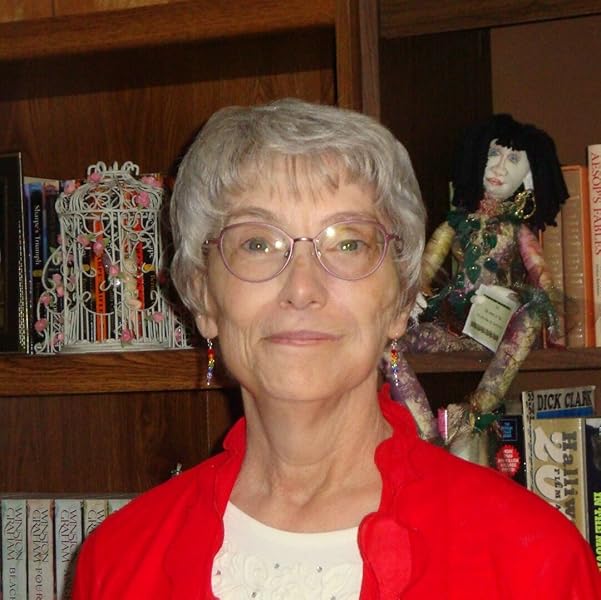
Santa’s Last Ride follows the Claus family after Santa throws out his back feeding the reindeer and decides it is time for his twelve-year-old son to take over; however, he does not want the job, but his sister does. What was the inspiration for the setup of your story?
The story originated with James. Getting tired of Christmas songs on the hours long trip to Iowa for Christmas, he began to tell this story to his kids to pass the time. He has two children – an older son and younger daughter also aged two years apart. They were his greatest inspiration.
I loved the interactions between Christopher and Kristy; they were believable and entertaining, with heartwarming moments as well. What was your approach to writing the interactions between characters?
James and I are siblings. There were five more of us growing up. We are stuffed full of sibling interactions, mostly of a humorous nature. We grew up in a rambunctious and laughter filled environment.
What were some themes that were important for you to explore in this book?
Most important is the idea that everyone is valuable in their own way and not even a disability or a perceived disability changes that. In fact, I got involved in this book when James sent me an email of a very bare bones version of the story and asked me to put it in legible form. James has dyslexia, which was why he asked for my help. After much internet interact, we added to and filled out the story until it became ‘our’ book.
Will there be a follow-up novel to this story? If so, what aspects of the story will the next book cover?
We have had feedback from a number of fans asking what comes next. Some want to know when the movie is coming out. There are a number of issues we see that could be addressed in future. Considering their new positions in the Claus family how do Chris and Kristy, still quite young, handle the adults in the world they will have to interact with? From the North Pole how do you go to school, college, or date? With the planet warming up what will the family do about a shrinking North Pole? There’s no ground under the North Pole ice. What’s next for Mr. and Mrs. Claus?
Author Links: GoodReads | Website
While Santa’s mind is fixed on training Christopher, Mrs. Claus, daughter, Kristy, and Christopher are determined to find a way to tell Santa the obvious – which he seems to be stubbornly ignoring – that Christopher is unsuitable for the job. The family is keeping Christopher’s secret and it will only be sprung on Santa on Christmas Eve. Meanwhile Kristy, just ten years old, feels she is up to the task of taking Santa’s place.
Christmas Eve finds Santa and his trainee taking off for high flying adventures around the world, including natural disasters – angry dogs, cracking ice – and some disasters not so natural – smoking chimneys, frightening encounters with jets. When Santa discovers his family has tricked him, he nearly turns the sleigh around, to end the flight. Christopher and Kristy have to impress their father with their talents. Kristy especially has to believe in herself enough to convince Santa that, working together, they just might be able to save Christmas.
An Age-Old Dilemma

Emergence: The Orbit Stone Saga follows a young man recruited into an ancient order of protectors who must learn how to navigate a world of ancient magic, political intrigue, and try to prevent a genocide. What was the inspiration for the setup of your story?
Ottix’ arc was mostly inspired by my own journey into law enforcement. Much as I did, Ottix has a desire to help others, protect the innocent, and make Orbis a better place. His story is not a rags-to-riches tale though. Other characters like Glacea and Armin follow this classic trope. Ottix however, was born into a good family that cared about him and gave him opportunities. I wanted to emphasize that bad situations or upbringings do not always create good characters. Ottix came from an upper-middle class situation and through hard work, ascended further beyond that station. The elements surrounding Ottix such as magic, politics, and genocide were inspired by classic fantasy stories and real history.
I find the world you created in this novel brimming with possibilities. Where did the inspiration for the setting come from, and how did it change as you were writing?
My settings were inspired by a variety of things and places, as Orbis is a large world. I’ll start with Palagr, since it was the first region I developed. Palagr is based on my home, the southeast U.S. I wanted to share the beauty of this area with my readers. The towering pine forests and bountiful marshes are a sight few get to see and one I thought was worth sharing. Next came Mwantamba. At the time I began writing Emergence, my sister was traveling to Africa to study elephants for a college project. I researched the country’s wildlife, cultures, and history. Mwantamba is home to many fantasy creatures based on real ones. The Watu were inspired by Zulu, Maasai, and Swahili. Next came the icy homeland of the Visoibri, Vorigheim. This nation was developed with Iceland in mind. Many ancient Visoibri words are based on old Norse, such as Vorigheim which means “origin home.” I imagine the structures of Towerton to be norse inspired, though the culture relies more on magic than sea raiding as the vikings did. Every story needs a villain, and Emergence’s live in Metusol. The central land of the Azeri has a varied climate. On the west it is arid but has access to the ocean and plenty of trade routes. On the east side it is more temperate with most of the country’s agriculture. I wanted to reflect the Azeri’s split ideologies with this difference. Many of the people in Metusol just want to live a fair and happy life. But the rulers use the citizens for their own gains. My next creation was the Jah’kuls of The Paw. As I created the map, I ended up drawing an island in the southeast that kind of looked like a paw. Later on, I added an entire race, the Jah’kul, to the island. This race was inspired by the Khajit from the Elder Scrolls series. I figured if there are cat-people, why not make dog-people! Next came my favorite group of characters, the Marinites. These creatures were inspired by many things including the Zora from Zelda, Kitt Fisto from Star Wars, and Abe Sapien from Hellboy. I wanted Orbis to be connected by a large ocean, and the Marinites helped complete that goal. The other thing that connects the world is of course, the Orbit Stone ring. The magic ring of stones is the source of all magic on Orbis.
What were some themes that were important for you to explore in this book?
Throughout history there have been many examples of religion or politics creating opposing groups that are pitted against one another. I wanted to incorporate this age-old dilemma into Emergence. I also wanted to explore the themes of duty and loyalty. Characters are often torn between their loyalties to their family or nation and the greater good. I also wanted to explore how magic could be used other than in the traditional sense. The prevalence of magic and Azeri technology makes for a unique setting in which ancient magic and modern technology collide. Finally, I wanted to write about war and peace. Emergence delves into the fragility of peace and the brutal consequences of war, contrasting the ideals of unity and cooperation with the destructive nature of hatred and ambition.
Where does the story go in the next book, and where do you see it going in the future?
The second book, Convergence, will continue the story, focusing more on Razi as the new leader of the paladins. An ancient secret is revealed which changes everything. The truth about what happened to the ancient Visoibri comes to light. And the war against the Azeri rages on and eventually concludes. The second book dives deeper into the relationships between characters and even some romances. The third book, Transcendence, will take place 15 orbits after Convergence, and will focus on the paladin’s new mission after the war.
Author Links: GoodReads | Facebook | Website
The Paladins, an ancient order of protectors, rise up to counter the Azeri threat. Among them is Ottix, a young man recruited into their ranks, determined to fight for his world’s survival. As war erupts across Orbis, the Paladins lose their greatest weapon, and the future of the Republic hangs in the balance.
In the face of impending chaos, the heroes of Orbis must navigate a world of shifting allegiances, ancient magic, and political intrigue. With the stakes higher than ever, it’s unclear who will emerge victorious—and who will be lost forever.
The Orbit Stone Saga 1: Emergence is a high-stakes adult fantasy filled with complex characters, dangerous magic, and a world on the brink of war. Will Ottix rise to the challenge, or will Orbis fall into ruin?
Acceptance
The Wild Shepherdess follows a girl born under mysterious circumstances during a storm, and marked by the blessing of a dragon, who, despite growing up tormented, discovers moments of wonder while embarking on an unforgettable quest of self-discovery. What was the inspiration for the setup of your story?
It all started when I was doing an online class about fantasy novel writing when the pandemic struck. So, I was writing out what creatures to involve in the story, the character, and it just evolved.
You took your time in building Clara’s character and the story to great emotional effect. How did you manage the pacing of the story while keeping readers engaged?
I had to think about how much time I needed to put into Clara’s character, where it felt realistic but not over the top or corny. I also had to keep in mind that this was a world of danger, and Clara is not entirely safe from it.
What were some themes that were important for you to explore in this book?
It mostly focuses on the theme of acceptance. I feel that it’s important to surround yourself with people who truly value you as a person and the gifts you have.
Is this the first book in the series? If so, when is the next book coming out and what can your fans expect in the next story?
Yes. The Wild Shepherdess is the first book in the series, and I’m currently working on the sequel. I can’t give a precise date yet, but I can say there will be more human characters Clara interacts with, and the inclusion of Selkies to boot.
Author Links: GoodReads | Facebook | Website



 LITERARY TITAN