Blog Archives
We Can Do This Better

The Adoption Paradox weaves together your story, historical records, and interviews with nearly a hundred people from across the “adoption constellation” into an unflinching look at the industry’s ethical and emotional complexities. Why was this an important book for you to write?
I started out wanting to write a deep exploration of adoption’s emotional complexities from all sides. I’m very new to this internal awakening in my life’s journey. As an adoptee from a standard closed adoption from 1965, I had an overall good experience. As my parent’s only child, I felt loved and accepted for the most part within my family and our larger culture.
Then in 2020 with both of my adopted parents gone, I finally started to search for my birth family, which fueled the emotional curiosity that led to this work. I read books written by adoptees about their search. Then others about the birth mothers who relinquished us back in the era I was born in. What I learned shocked and saddened me. I felt this deep inner shift, and started questioning the typical storyline I’d always been fed. It was one thing to know that in ’65 my mother didn’t have the same choices I did growing up in the 1980s. It was another thing to come face to face with how badly many of these young women were treated.
There was more to tell in all of this I was sure, but I didn’t see any other books out there that had the voices and the deep research and thru lines for everyone in the adoption triad: adoptees, along with birth and adoptive parents. So, I decided to audaciously tackle that niche myself. That’s what started it all. This book is for me, in part, but my hope is that in reconciling the stories within, others find it helpful too.
What were some ideas that were important for you to share in this book?
There is no one adoption story. Ever. There are many sides, and all have this vastly diverse lived experience, even within one family. You can have an adoptee who feels completely seen and understood by the people who raise them, and another who feels isolated, lost and alone and their parents have no idea they are struggling. That’s heartbreaking. Adoption always begins with a loss, and our society completely forgets that narrative in popular culture. It’s just assumed we are lucky as adoptees, and that our families are fantastic! The truth is it’s often a mix.
There are misconceptions and oversimplifications about adoption and foster care among the general public. Adoption can heal, save lives and fulfill its potential to create a loving home for a child who needs one. But in modern times that is not generally what’s driving a relinquishment. Infant adoptions usually occur due to a lack of resources experienced by the natural parent(s). Then, understand we have allowed commercialism and an unchecked profit motive to proliferate within an industry that is responsible for the placement of children into homes. How can that possibly be beneficial for those affected or our society at large? Most people are complexly unaware of these realities. What gets lost in the shuffle of that are the needs of the adopted person. Not just as a youngster, but for their entire lives.
When we make assumptions about people, we flatten out their stories and miss the depth and nuances that are part of each and every family. I can have a good adoption story, and there is always some sadness behind it. We need to live in places of truth, both fiercely and gently with each other, and how we build or defend our families.
What was the most challenging part of writing your book, and what was the most rewarding?
Definitely stories of abuse were the hardest to hear, and it was also I think essential for those folks to feel seen and heard. Listening and sitting with them through their pain was validating for both them and me. Receiving the trust from all of those interviewed was by far the most rewarding experience.
The other bonuses have come from adoptees, adoptive parents and birth parents who unknown to me have already shared how the book has helped them feel affirmed, taught them something, or caused a shift in their mindset. They are the reason – because we can do this better.
What is one thing that you hope readers take away from The Adoption Paradox?
If parents are more informed before they adopt, their kids do better and are less likely to struggle. If natural parents and treated with dignity and fairness by our statutes then their rights are protected, because they deserve nothing less than that. My hope is the general public will understand our laws need revising and modernizing beyond the way we currently practice adoption.
In most states, we still overwrite adoptees birth certificates as part of this legal process and seal them away – inaccessible without a court order. Why can’t we create a “certificate of parentage” that doesn’t overwrite a person’s truth of who they are, where they came from, and deny them access to their medical history? Everyone in this story deserves better than these archaic systems we currently have.
I am not anti-adoption, but I am interested in our culture evolving to embrace a better future for how we practice adoption and answer the real needs of families interacting with the child welfare system. The most important thing is that we talk honestly with each other and listen. I hope my book begins and stirs that conversation. Thank you!
Author Links: GoodReads | Facebook | Website
Adoption impacts countless families worldwide, yet the voices of those directly involved—especially adoptees, the central focus of the process—are rarely highlighted. In The Adoption Paradox, nearly one hundred individuals are interviewed, from domestic, international, and transracial adoptions, as well as foster care, along with adoptive and birth parents, therapists, experts, and allies. These narratives reveal both the love and the emotional costs borne by everyone affected, exposing adoption as a complex and challenging experience. Healing is possible with the right support, but addressing adoption’s hidden issues requires activism to confront unethical practices that lack oversight. These moving stories shed light on unaddressed pain and systemic flaws, calling for a more transparent and compassionate approach to adoption.
Real Life is the Inspiration
Rough Diamond, Rough Justice follows a former professional photographer turned MI5 surveillance agent who winds up in the diamond trade, where killing is not optional; it is the only way to survive. What was the inspiration for the setup of your story?
Real life experiences was the inspiration. As it says at the beginning of Rough Diamond, Rough Justice: This book is a work of fiction, inspired by several real-life events and real people. Names, characters, incidents, and places are the product of the author’s imagination. Any resemblance to actual events, locales, or persons, living or dead, is coincidental.
There was a lot of time spent crafting the character traits in this novel. What was the most important factor for you to get right in your characters?
Reality was the most important factor. As it says in Rough Diamond, Rough Justice when Cain was talking to his best friend:
‘We will have to write that book when we retire,’ Cain suggested.
‘All those secrets,’ said Detective Sergeant Jerry Davis (a member of The Royal Protection Team). ‘Perhaps we will.’
In real life, my best friend unexpectedly died, so I wrote our book alone.
I felt that the action scenes were expertly crafted. I find that this is an area that can be overdone in novels. How did you approach this subject to make sure it flowed evenly?
In real life action can only go so far. Seeing too much in movies, TV series – and having a karate black belt – plus a couple of personal experiences helped me craft the action.
Is this the first book in the series? If so, when is the next book coming out and what can your fans expect in the next story?
This is my first book. I have written an initial 40,000 words of a sequel about Cain, set in South Africa & England. Will I finish it? Time will tell.
Recovering from injuries sustained protecting the Royal Family, Cain embraces a new life and romance in sun-drenched Australia, leaving his past life behind.
But when tragedy strikes, he is on the move again. This time to a new career in the world of diamond dealings in Florida.
Curiosity takes Cain to the diamond world in South Africa, where his past finally catches up with him, the criminal world allies against him and he becomes a killer again.
In Cain’s action-packed escapades, a spectacular betrayal takes him into the rigours of a Chinese prison where the truth about his past begins to unravel.
Aided by a loyal band of friends from the shadowy world of intelligence, he delivers his own particular brand of rough justice.
However, with enemies closing in on all sides, will Cain prevail?
Fairness Is Not Charity
Seeking Fairness at Work is a sharp, compassionate, and thoughtful exploration of what fairness really means in today’s workplace and provides leaders a five-part strategy to embed fairness deeply into workplace culture. Why was this an important book for you to write?
As a business strategist and attorney, frustrated employees have shared their feelings of helplessness and anger with me many times over the years. They were upset about the organization’s willful blindness to management behaviors that torched their dignity, confidence, and psychological safety.
When raising a serious issue about the behavior of a senior vice president with the head of human resources at a large manufacturing company, for example, an employee was essentially shooed away. “It’s worse in other departments,” they were told. In desperation, they consulted a lawyer.
That is but one example of misguided leadership behaviors I’ve witnessed over the years that damage trust and result in unintended negative consequences. No, they didn’t always trigger lawsuits. Although, many could have. But they were always costly in terms of diminished employee engagement, retention, and definitely satisfaction.
We embrace new jobs with excitement about fresh opportunities, but our enthusiasm wanes when it’s met by a workplace climate that raises our defenses instead of our game.
It’s a standoff that won’t improve until managers understand why employees respond negatively to their workplace culture and appreciate how low employee engagement, satisfaction, and retention are symptoms of a suboptimal culture, one that management controls, influences, and can change.
As a result, I wanted to write a book that challenged employer “truths” by examining those unwritten workplace norms – the invisible lines that when crossed, create organizational dysfunction.
This new perspective on employee engagement explains employees’ legitimate frustration and offers management a roadmap to previously missed opportunities that can improve their workplace culture.
How much research did you undertake for this book, and how much time did it take to put it all together?
Seeking Fairness at Work relies on evidence-based science, academic research, interviews, and real-life stories that took five years to assemble and more than forty years of living it.
What were some ideas that were important for you to share in this book?
Too often people think of fairness as a soft, lofty ideal, that can be an Alice in Wonderland whatever someone wants it to be – an entitlement. The fact that fairness is commonly thought of as “unfair” speaks volumes about how positional power is regularly misused in relationships. And that’s the point of Seeking Fairness at Work.
Relationships are implied social contracts where fairness is reflected by acting in good faith and with fair dealing. Seeking Fairness at Work takes a granular look at those objective standards, what they mean for the employees and employers, and how certain unwritten workplace norms betray those expectations, contributing to low employee engagement, retention, and satisfaction.
What is one thing that you hope readers take away from Seeking Fairness at Work?
I’d like employees to know their expectations of fairness at work are reasonable and for managers to appreciate how fairness is not charity, it’s smart business.
Author Links: GoodReads | X | Website
WINNER: 2025 Book Excellence Award (Business)
WINNER: 2025 Axiom Business Book Gold Medal Book Award (Digital Media)
WINNER: 2024 Independent Press Book Award (Distinguished Favorite)
3x WINNER: 2024 Dan Poyner’s Global eBook Awards (Business, Communications, Leadership)
2x WINNER: 2024 Goody Business Book Awards (Business – Management, Leadership – Think Differently)
WINNER: 2024 NYC Big Book Award (Distinguished Favorite)
Seeking Fairness at Work challenges employer “truths” by examining unwritten workplace norms – the invisible lines that when crossed, create organizational dysfunction. This new perspective on employee engagement explains employees’ legitimate frustration and identifies missed management opportunities to improve workplace culture.
Recognized business strategist and Journal of Business Ethics Education editorial board member Hanna Hasl-Kelchner, MBA, JD identifies the five most common workplace norms that betray fairness, leaving employees feeling dispirited, disengaged, and headed for the door by examining the social psychology of how our basic human motivations intersect with the implied workplace social contract.
Clarion Foreward Reviews calls her recent book Seeking Fairness at Work: Cracking the New Code of Greater Employee Engagement, Retention & Satisfaction “pithy and persuasive,” while BookLife Review compares it to Kim Scott’s Radical Respect and Kim Dabb’s You Belong Here.
Using evidence-based science, academic research, interviews, and real-life stories, Hasl-Kelchner merges organizational psychology with the practical aspects of workplace dynamics to offer ethical leadership an actionable five-part framework filled with practical tips to empower more employee engagement and retention, including chapters on how to:Rebuild Trust with More Self-Awareness
Improve Relationship Chemistry with More Empathy
Make Genuine Accountability a Cornerstone
Maintain a Cultural Safety Net
Mend the Structural Safety Net
Seeking Fairness at Work is ideal for executives, managers, and entrepreneurs who want to raise their employees’ game instead of their defenses; the human resource professionals, consultants, and employment attorneys who advise them; and employees wanting a reality check of their own workplace experiences.
Still Waters Run Deep
PEOPLE PERSONnel follows a burnt-out HR manager trudging through her final year at a shrinking charity while juggling caregiving for her declining mother and quietly plotting a radical act of mercy. What was the inspiration for the setup of your story?
I have worked in HR in the not-for-profit sector for over 30 years and I live in Whitstable (UK). I have written before (historical) but thinking of the old adage, ‘write what you know’ I decided to do just that. I wrote something where character and location were key. You’ll notice it is not set in a particular time because I didn’t want it to date. I hope it will be picked up and televised one day so that my antihero can reach a wider audience and I can retire, like Janice.
I found Janice to be a very well-written and in-depth character. What was your inspiration for her and her emotional turmoil throughout the story?
Thank you. No spoilers but I wanted her to be a very ordinary person who ends up in the position of doing extraordinary things. She flies under the radar. She is invisible and for what happens in the story the fact that she is so overlooked gives her a very significant advantage.
What were some themes that were important for you to explore in this book?
Still waters run deep. It’s the quiet ones you want to watch out for. Again, no spoilers, but most fictional killers are larger than life as are the characters who catch them. To me it’s far more disturbing if the killer turns out to be someone just like you. I put, ‘But she always seemed so nice…’ on the back cover because that’s what people always say when their crimes come to light. Janice is a person who keeps herself to herself.
What is the next book that you are working on, and when can your fans expect it to be out?
I wrote this book 8 years ago and only very recently revisited it and got it published. I do have ideas for another book about Janice, perhaps a prequel, and hopefully that will be out in the next 6-12 months rather than in another 8 years.
Author BlueSky
She commutes every day from her home in Whitstable, Kent to London and is soon to retire from her standalone role for a not-for-profit sector organisation, that is facing very difficult financial decisions. She is innocuous, dull, easily overlooked and cut an inconsequential, loveless path through, what appears to have been, a largely non-eventful life.
Everyone knows she wouldn’t lift a finger. Everyone knows she wouldn’t swat a fly. Everyone knows she’ll just sit there and be quiet. No one would think twice about her, but Janice Mead’s savage way of exiting those who are now surplus to her requirements may change all that. See what kind of a person Janice Mead really is.
A Novel Readers Can Return To

The Unaccompanied Soul follows a reclusive older woman who opens her door to a mysterious stranger, unaware that she’s inviting darkness itself into her home. What was the inspiration for the setup of your story?
Honestly, about 95% of my books come through divine inspiration. I was doing some house cleaning one day when the entire first chapter of this book suddenly came to me—vivid and complete. That was around 2015. Having only written one novel before (a coming-of-age story), I wasn’t sure what to do with this unexpected gift. So the chapter sat dormant for years until friends encouraged me to see where the story would lead and finish what had been started.
What are some things that you find interesting about the human condition that you think make for great fiction?
As a society, we expect everyone to achieve some version of ‘success’—get educated, contribute positively to humanity, become accomplished. However, I’m always intrigued by this expectation when applied to people like Sam, who never had parents who loved her unconditionally and was brainwashed to believe violence wasn’t just acceptable but expected. She was never formally educated—so how was Sam, or anyone like her, ever supposed to achieve any semblance of normalcy? I think great fiction is made from telling the stories of greatly flawed people.
How do you balance story development with shocking plot twists? Or can they be the same thing?
When I write, I let my characters guide me—their voices leading me toward the lives they demand to live on paper. This being my first thriller, I’m still learning the art of shocking plot twists, but I’ve discovered that the best ones grow organically from my characters’ flaws and choices rather than being dropped in randomly for shock value.
Whenever I try to force a story in a direction my characters resist, that’s when I hit major writer’s block. But when I let character development create the surprises—when Sam’s buried trauma suddenly surfaces in an unexpected way—it becomes both character revelation and plot twist simultaneously. For me, they often are the same thing.
When the writing flows, the story plays out like a movie in my head, scene by vivid scene. Rather than planning shocking moments separately, I’ve learned to trust that authentic character growth will naturally create those jaw-dropping turns. My goal is to take readers on an extraordinary journey with people they’ll develop feelings for—even if that feeling is disdain—where every twist feels both surprising and inevitable.
I want to create a novel that readers can return to again and again, discovering new layers each time, seeing how the seeds of each revelation were planted in the character’s very foundation. If I can achieve that depth, where plot surprises emerge from the soul of the story itself, then I’ve successfully balanced both story development and shocking twists.
What is the next book that you are working on, and when can your fans expect it to be out?
My next book is actually a re-release of Some Price to Pay, a coming-of-age story I first published in 2004. Early 2026 will bring a follow-up novel to The Unaccompanied Soul, with Zayden taking center stage as the main antagonist. It’s another psychological thriller that delves deep into his psyche—that’s shattered, twisted or perhaps both.
Then, in fall 2026, I’m releasing something that’s currently scaring the bejesus out of me: The Other Side of Right, a psychological thriller that’s pushing me into uncharted territory as a writer.
One day I hope to write a great love story, but for now, it seems my niche has found me. There’s something about the dark corners of the human mind that keeps calling me back, demanding to be explored through psychological thrillers.
Author Website
But Sam carries secrets deeper than the Mississippi soil. Taught by a man she calls “Father” to view the world through a distorted lens of violence, she drifts from town to town, leaving a trail of sorrow in her wake. When her carefully constructed façade begins to crack, those closest to Clara race to uncover the truth before it’s too late.
The story weaves a tale of twisted devotion, fractured identities, and the terrible price of redemption. As buried truths rise to the surface like strange fruit, Clara must confront not only the monster behind her red door but also the fears that have kept her prisoner for so long.
Some souls are born of love. Others are carved from darkness. And in the fertile Mississippi earth, every secret eventually finds its season to bloom.
Helping Others to Thrive

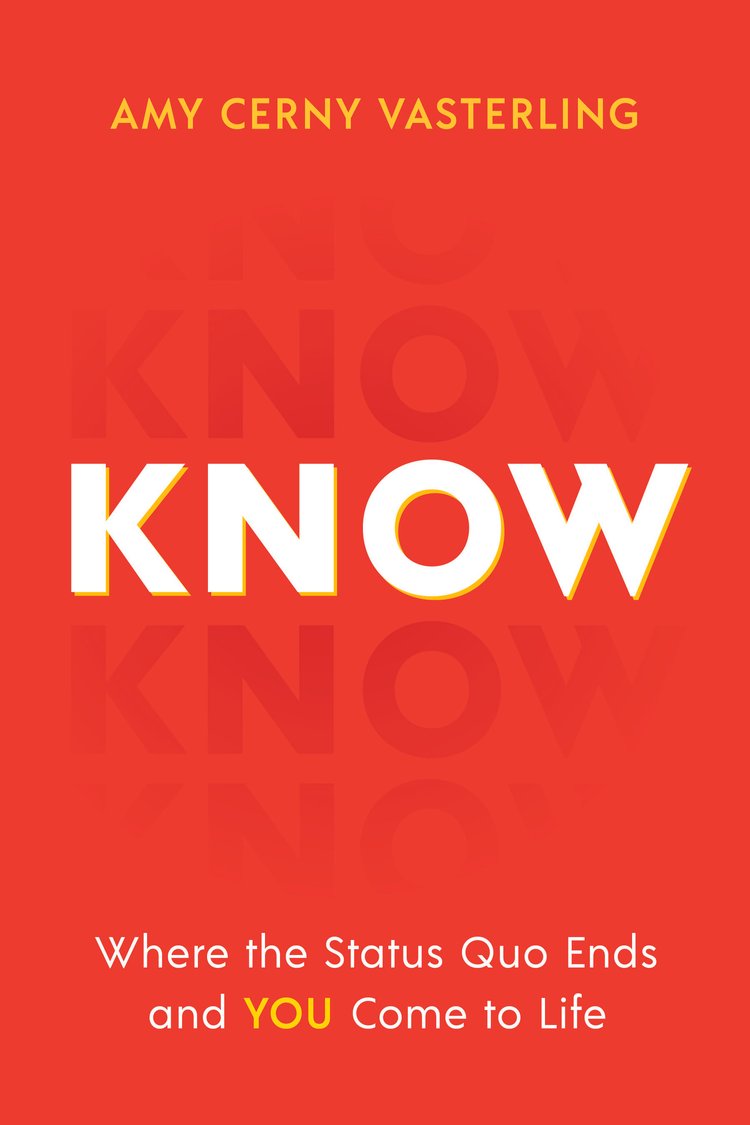
Know: Where the Status Quo Ends and You Come to Life is a Self-Help book that explores how we lose connection with our inner voice, how to regain it, and what life looks like when we do. Why was this an important book for you to write?
My aim to see all people thrive was at the heart of why I wrote the book. Observing how our world “works” felt off to me as a child and it was something I couldn’t shake. Eventually deeper levels of what holds us all stuck arrived and I continued to build on that pattern for twenty-two years sharing the beginning of what I learned in this current book. I have other books in the works to take this concept further for my reader. I knew articulating what is going on and why was most important in this book before I share how we each fully change it. My work takes repetition, it’s like learning a new language!
I appreciated the candid nature with which you told your story. What was the hardest thing for you to write about?
The hardest thing to write about were the personal examples I shared. I wanted to be honest and fair in each situation when some of them were highly emotional for me. However, I feel I achieved my goal. Writing about these hard things I feel also made me a stronger writer.
What were some ideas that were important for you to share in this book?
The evolution of what’s holding us back to what’s possible through memorable story examples. As well as narcissism is collapsible and might not be what we’ve believed it was and that natural equality is the outcome of collapsing narcissism.
What do you hope is one thing readers take away from your story?
The one thing I want for the reader to take away from the book is to feel understood. This is the first tenant in healing oneself from what I term “The Model” or the control we assert to scrap for a shred of “perceived” love (cathexis) or a place in the hierarchy. What we’ve been silently living is agreed upon “dominance”. That’s over and now we’re headed toward expansion which in my work is us free of pain points because natural equality leads, which means we’re emotionally mature and in a powerful neutral within. Put another way emotion will be perceived quite differently in the future and beyond The Model.
Author Links: GoodReads | Facebook | Website
Hit Hard and Educate

Repo Madness is a no-holds-barred journey through the secretive world of shadow banking and repurchase agreements, exposing a dangerously opaque financial system built to confuse and exploit the public. Why was this an important book for you to write?
I wrote this book because I didn’t think there was another like it and because I think it is desperately needed. Having read many books about the crisis and finance, I concluded that while underscoring the dysfunction they did not grab the reader by the throat. What was needed was a book not only pointing out problems but also definitively showing once and for all that the system is insane and every day robs us of assets that instead of improving our lives, empower and line the pockets of those who propagate it. The density of this book is deliberate. The goal is to hit hard and educate. I hope my book makes people sit up, pay attention and further educate themselves about this destructive, evil financial system.
What first pulled you down the rabbit hole of repurchase agreements and shadow banking?
In 2006 I was hired as a writer for iMoneyNet. The division of Informa, was tasked with providing money market mutual fund data for the financial industry. My job was to write about trends, etc. Repurchase agreements play a huge role in MMFs. The funds hold them and provide the financial institutions with a platform to trade them. We’re talking trillions of dollars. They were the epicenter of the crisis because they are “hot” money. In other words, they can be liquidated immediately and in turn, are vulnerable to runs. When I saw the opacity and the risky collateral used in them, I questioned the entire market and in turn became obsessed with learning as much as I could about repurchase agreements and other products. I had to disabuse myself of any thoughts that there was anything beneficial about the system. And that I did.
How did you balance being informative without overwhelming readers with technical jargon?
Because I am a literary person, I shared the most compelling quotes and observations I gathered over 15 years of research. I know there is jargon in the book but the fact that it emanates from a clearly put forth idea or observation, I hope, elicits the reader’s understanding of its context.
Were there any moments during your research that made you question whether the system can even be fixed?
This system cannot be fixed. It is too big, too interconnected. President Obama came the closest in 2008.He had a blueprint from Sweden that would have ended the shadow banking system and provided Americans with democratic and inclusive markets. As written in the book, proposals were put forth post-crisis that also could have changed our course. But they were ignored. Now, so many years later, its tentacles are so entrenched that no one can rein them in. Furthermore, not only is the public ignorant about what really goes on but so too, lawmakers who are captured by financial institutions and choose to remain ignorant. No homework, lots of lettuce!
There’s no fat on the bones of this book. Richly sourced, every page is pared down to the most powerful observations by Fed officials, economists, journalists and academicians. It also examines how the media is complicit in keeping the status quo by ignoring real reforms and censoring academics who speak out against the system.
Repo Madness traces the evolution of the repo market, the largest in the world, yet no one knows about it. Fueled by debt, the multi-trillion-dollar short-term repo market is the engine that drives the entire global economy. The book explains the structure of repo including collateral backing it and how it is re-used for multiple transactions, difficult to track and subject to confiscation by financial institutions during the next financial meltdown. That’s right investor assets used as collateral are no longer the property of those very investors. It is dark and it is real and nowhere else will you read about regulations in place for decades that obfuscate trading activities using investor assets without their permission. It’s codified in black and white.
Best of all, is the quality of those sourced in this book. Their clarity of thought is deeply rooted in common-sense solutions and most important a moral imperative that demands the establishment of an inclusive, democratic financial system for all Americans.
One Big Lie
The Enigma of Vitamin B12: Nature’s Only Mistake? shares your thesis on the B12 deficiency narrative by blending historical information, research, and exploring the fearmongering, marketing and outdated science that has led to the propagation of this myth. What inspired you to write this important book?
It became increasingly odd to me how heavily Vitamin B12 was being pushed to vegans, and how there seemed to be some sort of underlying motive to malign the plant-based diet as inadequate. I felt there was something substantial being covered up that no one was talking about or even questioning. And so I began digging around to get to the bottom of all the deception to uncover the truth and the agenda behind it all.
How much research did you undertake for this book, and how much time did it take to put it all together?
I became aware of all the conflicting and confusing information being spread about B12 in 2017, then started seriously researching it in 2018. After accumulating quite a bit of alternative opinions online that disputed the official narrative, I began writing the book in Autumn of 2022 and finished it by the Spring of 2025; so about two-and-a-half years from inception to finished product, with about five years of dedicated research prior to that.
What were some ideas that were important for you to share in this book?
I wanted readers to see how absurd the whole notion of this “bacteria/vitamin” being so essential to vegans was, how nothing that was being told about it made sense or added up. I wanted to expose its hidden origin and history, which was steeped in animal agriculture and cruel lab experiments; reveal that these “healthy vitamins” were actually being created and manufactured by pharmaceutical companies with some very toxic ingredients; and show how the non-stop fearmongering of “deficiency” was actually being used deliberately as a marketing tool simply for profit.
What is one thing that you hope readers take away from The Enigma of Vitamin B12?
I hope readers will come to realize that everything being officially told about Vitamin B12 is just another huge lie being spread by animal agriculture and the pharmaceutical companies who patent and sell the supplements.
Author Website
Fast-Paced…. Shocking and Informative…. Extensive Research”
EXPLOSIVE NEW BOOK REVEALS HOW VITAMIN B12 WAS DELIBERATELY ENGINEERED TO BECOME THE ACHILLES’ HEEL OF VEGANISM.
* Why is B12 the ONLY vitamin in the B-Complex group that’s not found in any plant source?
* Why is B12 the ONLY beneficial bacteria no longer available in the soil or accessible in the human body?
* Why is B12 allegedly so crucial to health, yet available ONLY in food derived from animals or in lab-created synthetic supplements?
* Why would an “alternative health product” marketed as a “vitamin” be patented by a pharmaceutical company?
* Why are there now 100 symptoms of Vitamin B12 Deficiency?
* Why is there so much confusion, controversy, and conflicting information surrounding B12?
Could it possibly be because Vitamin B12 never existed anywhere except in a drug lab, that it’s nothing more than a fearmongering campaign based on lies and deception, all to peddle a lucrative and toxic SNAKE OIL to those on plant-based diets?
“THE ENIGMA OF VITAMIN B12: NATURE’S ONLY MISTAKE?”will change the way you think about all synthetic supplements!



 LITERARY TITAN