Blog Archives
Pentagon Pirate Gang & The Poisoned Apple


Pentagon Pirate Gang & The Poisoned Apple, by J W Nelson, is a middle-grade/YA fantasy adventure that returns readers to the School of Fruit Teaching, where Aime, Oro, Semia, Gramon, and Violer find themselves caught in a dangerous mystery involving poisoned students, hidden notebooks, secret orchards, and adults who may not be as trustworthy as they seem. The story begins with alarm and urgency, as Aime and Oro’s parents sense that something terrible has happened to their children, and from there the book unfolds into a school-based adventure full of games, clues, rival houses, strange powers, and a deeper conspiracy tied to Mrs Blackfruit, Mr Thornby, and the mysterious red notebooks.
I enjoyed the way Nelson leans fully into the oddness of his world. SOFT isn’t just a school with a fantasy twist. It has its own rules, sports, rivalries, food-based language, and hidden dangers tucked behind everyday routines. That made the setting feel lively and a little eccentric, like a place where a normal breakfast can suddenly become part of a bigger mystery. The writing is busy, but there is charm in that energy. I could feel the author’s affection for the students, especially in the way the members of the Pentagon Pirate Gang look out for one another even when they are frightened, confused, or keeping secrets they do not fully understand.
I also found myself thinking about the author’s choice to make the adults so central to the danger and the protection in the story. Mrs Blackfruit and Mr Thornby bring real menace to the book, while Mrs Peaches, Mr Figgin, and Mr Tumbleweed give the children just enough support to keep going without taking the adventure away from them. That balance matters in a fantasy adventure for younger readers. The kids still have to be brave. They still have to make choices. They still have to face the emotional cost of secrets, especially near the end when the arrival of the governing body opens old wounds for Gramon and Semia. That final turn surprised me because it shifts the book from mystery and action into something more personal. Suddenly, the adventure is not only about maps and poison. It’s about family, trust, and what children are not told until the truth is standing right in front of them.
I would recommend Pentagon Pirate Gang & The Poisoned Apple to readers who enjoy middle-grade and young YA fantasy adventure with school rivalries, secret societies, hidden maps, strange magic, and a strong team of young heroes at the center. It will especially appeal to readers who like stories that mix playful worldbuilding with danger and who don’t mind a plot that leaves some threads open for the next stage of the journey. It’s imaginative, sincere, and full of movement, with a sense that the orchard still has plenty of secrets left to give.
Pages: 219 | ISBN : 978-1037120787

A Mystical Time

Indigo, The Deep follows a group of people united by the strange magic that gathers around Dipitous Beach during the autumn equinox. What draws you to write for teen and young adult readers?
Coming-of-age stories are where I’ve found joy and consolation throughout my life. Teen stories are the great connectors of the generations. If we’re young, we’re living it; if we’re older, we’ve passed through it, hopefully with a few helpful lessons learned. I love writing about the sparkling energy of teens, reminding all of us to stay curious and embrace new perspectives. After all, life is a bold adventure, laced with grief and pain, but ripe with wonder-filled mysteries and happy surprises, too.
What drew you to setting the story around the autumn equinox and its sense of transformation?
Ah, the changing of the seasons is a mystical time. The shift in light, weather, and tides alters human rhythms, calling us to what we cannot comprehend. Nature smiles, taps us on the shoulder, and whispers in the wind… everything, you know, is always changing. The tide folds, the light blends, shrinking the long light-infused days of summer into the golden days of autumn. During the equinox, the scene is brilliantly set for mystery. The turning of the seasons is when the magic happens!
What did you enjoy most about writing the bond between Condi and Firth?
Condi and Firth are thrown together in an unlikely set of circumstances. When they resist their uncomfortable living situation and see one another as only annoying, a palpable tension arises. I love writing about tension and how it often leads to growth! When Triponica, the wise leader of the Beachlings, points out that Condi and Firth are very much the same, the story begins to change. Firth, fearless and reckless, dives into the deepest of the sea caverns, determined to push his limits. Condi, hoping to mend a broken heart, takes unnecessary risks with her surfing. As the story unwinds, we come to know that Triponica was right. Their bond is unmistakable.
What is the next book you are working on, and when will it be available?
The next book in the series takes us back in time. What the Surf Master Knows explores life in Dipitous Beach in the seventies. Triponica, mysterious leader of the Beachlings, is a young healer. Andy Marshall, the enigmatic surf master, and Grand Ella, Condi’s insightful yoga teacher grandmother, are teens. Once again, they are swept into strange adventures, encountering the ocean’s wild and mercurial magic.
The prospective release date is the summer of 2027.
Author Links: GoodReads | X (Twitter) | Facebook | Instagram | Website | Amazon
Fifteen-year-old Condi Bloom knows the magic will happen again. The autumn equinox is looming. Strange currents are sweeping through her coastal town. Tides are turning wild, and a mercurial mist cloaks the lonely rock tower known as Windy Hollow, long believed to be haunted.
When a silent threat glides into the cove, altering the fragile ecosystem and drawing sharks close to shore, Condi ignores the danger. A fierce surfer, she insists on pushing her skills to the limit, hoping to heal a broken heart. Meanwhile, seventeen-year-old Firth Cristo, a bold free diver, is tormented by a past he cannot reveal. Guided by the Beachlings, the mystical women who teach the secrets of the deep, he dares to explore remote underwater sea caverns, navigating the pulsing tides of a shimmering enchantment.
Inspired by the certainty of wonder and the uncertain nature of time, Condi and Firth dive into their rawest places, discovering that healing-of nature, of others, and of themselves-is found in the bounty of a limitless sea.
How the Winterlilies Grow
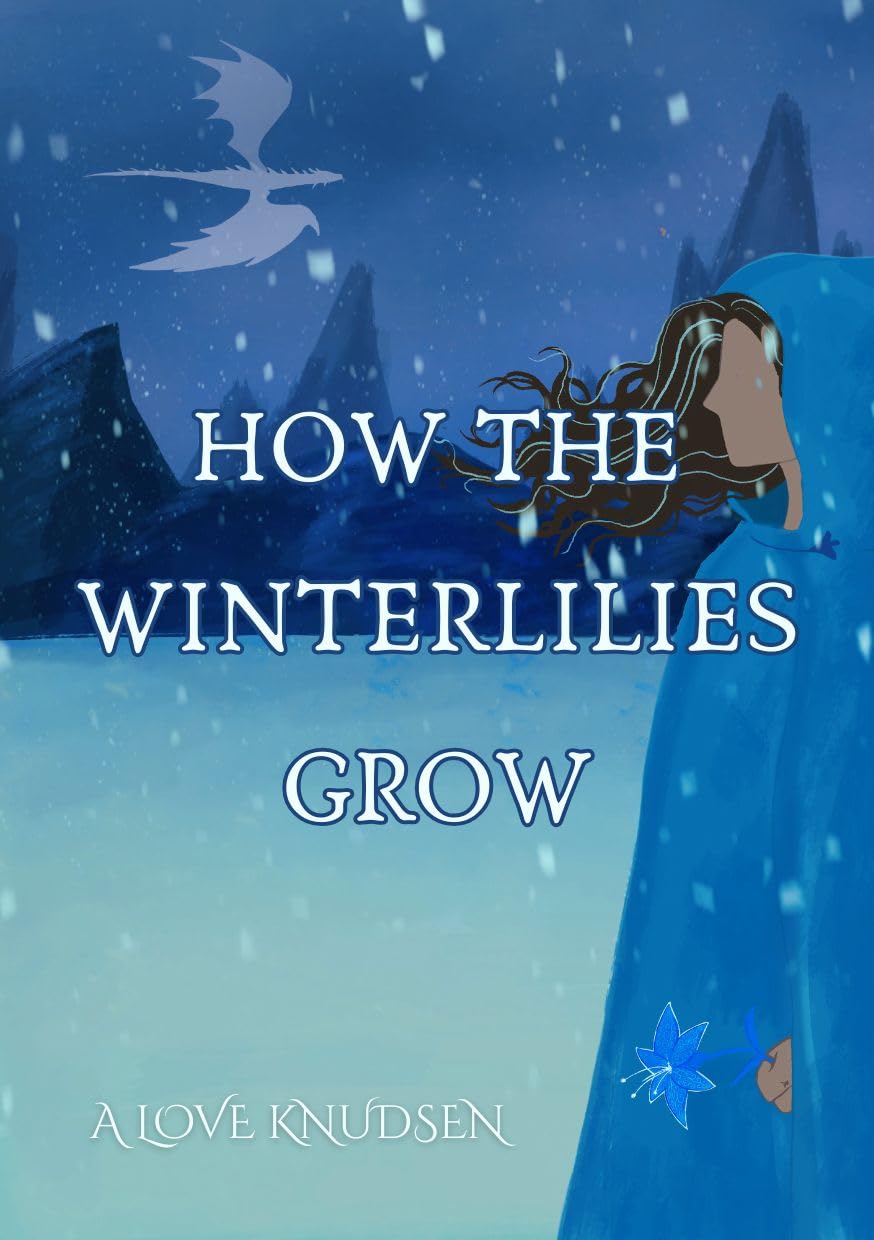
How the Winterlilies Grow follows Aradella, a young woman desperate to save her mother from the deadly Aurora Veins, as she is pulled from her ordinary life of candles and marketplace worries into a kingdom-shaking quest for the legendary winterlily. What begins as a search for a healing flower widens into a journey through dwarven bargains, goblin negotiations, sea voyages, hidden gardens, spiritual testing, and open rebellion against King Draven’s cruel rule.
I was most drawn to the way the book treats courage as something trembling rather than polished. Aradella is not a fearless heroine carved from marble; she is anxious, stubborn, tender, and often overwhelmed. That makes her growth feel earned. Her search for the winterlily becomes more than a plot device. It becomes a crucible where grief, faith, control, and surrender all meet. The story’s Christian elements are direct and unmistakable, but they work best when woven into Aradella’s fear of losing her mother and her slow realization that she cannot carry the whole world by herself.
The novel also has an appealing classic fantasy feel. There are dwarves, goblins, sirens, magical weapons, winter-bound towns, royal decrees, secret histories, and a climactic ball that turns into something far more dangerous than ceremony. The story’s abundance makes the pacing feel crowded, and some scenes pause to explain feelings that the action already suggests. Still, I found the sincerity of the book hard to dismiss. Its best moments have a lantern-lit quality: warm, earnest, and bright against snow.
I think this book is best suited for readers who enjoy Christian fantasy, young adult fantasy, adventure, fairy-tale quests, and faith-based coming-of-age stories. Fans of C. S. Lewis’s moral clarity and Gail Carson Levine’s enchanted-kingdom sensibility may find familiar pleasures here, though this story leans more openly into devotional reflection. How the Winterlilies Grow is a snowy quest about healing, but its deeper bloom is trust. A tender fantasy where faith flowers in the coldest places.
Pages: 338 | ASIN : B0GX2Y96BD
Born of Empire

Born of Empire, by S.A. Melia, is a science fiction thriller about power, inheritance, loyalty, and survival inside a richly imagined empire. The story follows Guy Erma, an unregistered Domeside orphan desperate to join the Dome Militant, and Prince Teodor, the young heir whose life is wrapped in politics, danger, and expectation. Around them are fashion houses, alien diplomacy, cyborg soldiers, royal secrets, and a growing sense that the empire’s polished surface is hiding something much darker.
What struck me first was the sheer density of the world. Melia throws the reader into a society that feels strange but lived-in, where military ritual sits beside high fashion, and royal ceremony can turn into a trap before anyone has time to breathe. I liked how the book doesn’t treat its young characters as simple symbols. Guy is proud, hungry, reckless, and easy to root for, even when he makes bad choices. Teodor, meanwhile, carries privilege, fear, grief, and duty in a way that makes him more than just “the prince.” I think that contrast gives the story a solid emotional spine.
I also found myself thinking a lot about the author’s choices. The sci-fi thriller elements work best when the danger feels personal, not just political. The Battle Borgs, the Dome, the kidnapped prince, and the shadowy deals all add tension, but the moments that stayed with me were quieter ones, like Guy holding Teodor’s shoes and realizing what he has seen, or Marline facing the brutal limits of her own future. Those scenes give the book its bite. At times, the worldbuilding is a lot to take in, and I occasionally wanted more room to sit with one thread before another arrived. Still, there is an energy here that kept pulling me forward.
I would recommend Born of Empire to readers who enjoy science fiction thrillers with royal intrigue, political danger, young heroes under pressure, and a world that feels big enough to keep unfolding after the final page. Fans of space opera, dystopian power struggles, and stories about outsiders trying to claim a place in a rigged system will likely find a lot to enjoy here. It is ambitious, fast-moving, and full of sharp edges.
Pages: 259 | ASIN : B0BY7QBQJF
The Kikiloa Chronicles


The Kikiloa Chronicles: Book One, by Erik D. Larson, is a young adult science fiction/fantasy adventure about Hazel, an ordinary San Francisco teen whose strange friend Kiki turns out to be anything but ordinary. Kiki is ancient, playful, wounded, and tangled in time, and she pulls Hazel, Lee, Peter, and others into a story that stretches from the present day to deep prehistory, Hawaiʻi, possible futures, and branching versions of reality. This is a genre-blending book about friendship, justice, choice, and whether love can still be love when it tries too hard to control the outcome.
What stood out to me first was the energy of the writing. Larson gives the book a quick, bright pulse. One moment, it feels like a teen adventure with jokes, awkward crushes, and friends trying to make sense of the impossible. The next, it opens wide into something much older and stranger, with scenes that move across oceans, extinction, violence, grief, and human history. Kiki’s voice is especially interesting because she can be funny and reckless on the surface, but underneath that spark is someone carrying an almost unbearable amount of memory. She’s charming, but she’s not simple. That made me keep watching her closely.
I also found myself thinking about the author’s choices around power and responsibility. The time travel and multiverse elements are fun, but the book isn’t only interested in clever mechanics. It keeps circling back to moral questions. What does it mean to help someone? When does protection become manipulation? Can you claim to be acting out of love while taking away another person’s choice? Those ideas gave the story weight. The book takes big swings, moving from playful banter to deep reflection very quickly. For me, that ambition was part of the appeal. The story feels restless in a good way, like it’s always reaching for a larger pattern.
I would recommend The Kikiloa Chronicles: Book One to readers who enjoy young adult speculative fiction with time travel, found family, philosophical questions, and a strong emotional core. It’ll especially appeal to people who like science fiction and fantasy that mixes humor with heavier themes and doesn’t mind a story that asks them to think while the adventure is unfolding. It’s imaginative, sincere, and bigger on the inside than it first appears.
Pages: 401 | ASIN : B0GX314D3J
Indigo, The Deep
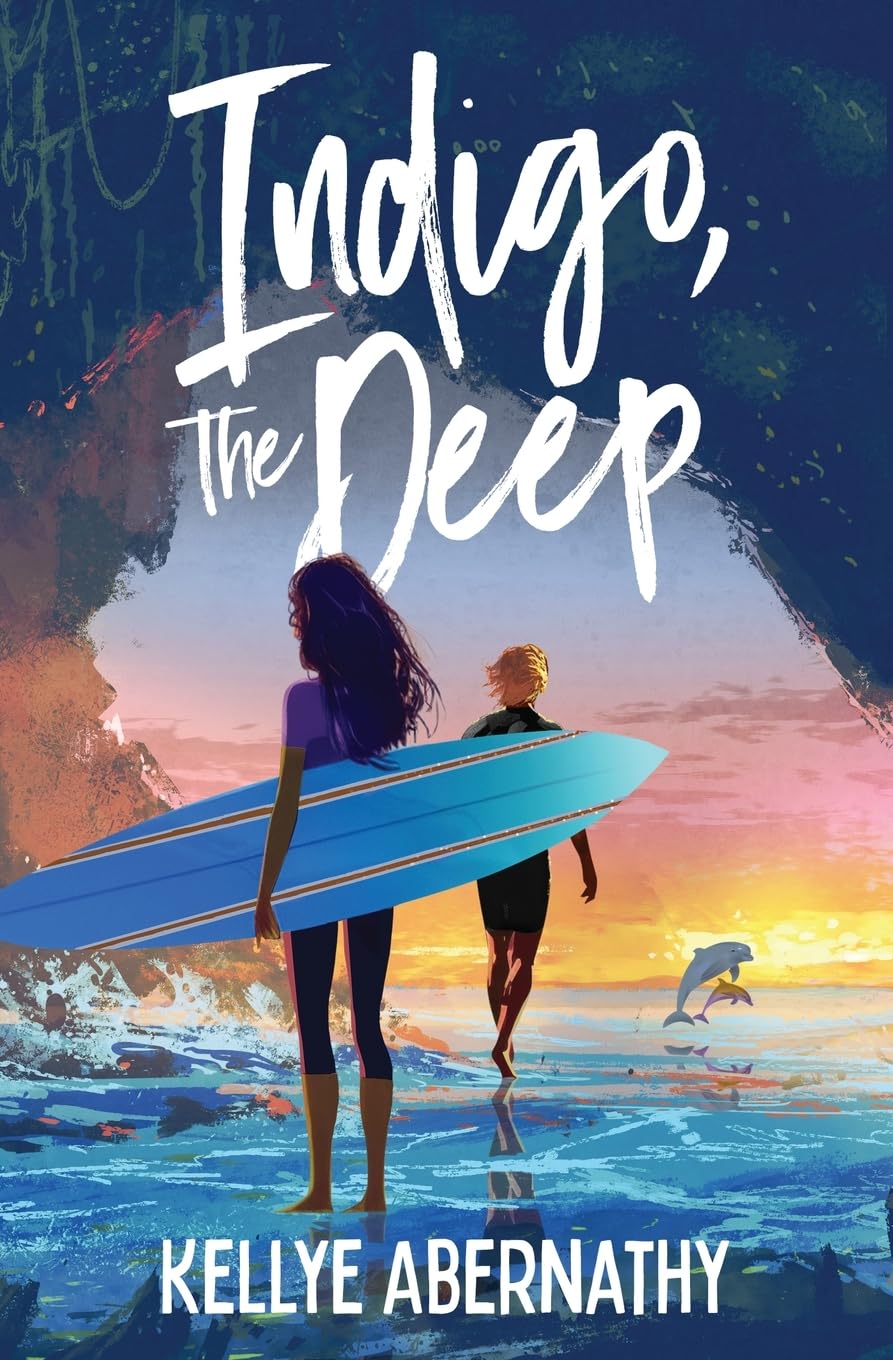
Indigo, the Deep is a coastal fantasy about young people, old healers, marine life, grief, courage, and the strange magic that gathers around Dipitous Beach during the autumn equinox. Kellye Abernathy builds the story around the ocean as both a setting and a living force. The cove has dolphins, tide pools, sea caves, a research sanctuary, surfboards with mysterious marks, and a looming biomedical ship that threatens the balance of the water. At the center are Condi, Firth, Marley, Isaac, Tad, Lorelei, Kait, and the Beachlings, each tied to the sea in a different way.
The book has a dreamy, sensory style that fits its world well. The ocean is never just scenery. It teaches, warns, hides, reveals, and heals. One of the simplest lines captures the book’s whole rhythm: “The sea will do what the sea will do.” That idea runs through the story as characters learn that control is limited, but attention, trust, and bravery still matter. Abernathy’s descriptions are lush without feeling detached from the plot, especially when the story moves through caverns, reefs, storms, and underwater passages.
Firth and Condi give the book much of its emotional pull. Their bond grows through risk, stubbornness, rescue, and shared wonder, and their different ways of meeting the water make them interesting together. Firth’s free diving and connection to Triponica bring in the book’s healing traditions, while Condi’s surfing and grief connect her to the past and to the people she’s still learning how to love. The supporting characters add warmth too, especially Tad, whose emotional colors give his scenes a tender honesty.
What makes the novel feel distinct is the way it blends environmental danger with personal healing. The threat from the pharmaceutical ship gives the story urgency, but the book is just as invested in quieter battles: letting go, growing up, protecting someone vulnerable, and making peace with loss. The line “The people that we love never leave us” sums up the heart of the novel without flattening it. Love in this book isn’t simple comfort. It’s a current that keeps moving, sometimes pulling characters into hard truths before carrying them forward.
Indigo, the Deep is a warm, mystical, ocean-soaked story with a strong sense of place and a generous heart. It’s the kind of book that invites readers to slow down and listen, not only to the characters but to the tides, animals, dreams, and old stories around them. Abernathy gives Dipitous Beach the feeling of a place where ordinary life and wonder keep brushing against each other, and by the end, that wonder feels earned.
Pages: 298 | ASIN : B0H3M8TGHD
The Depth of Darkness

The Depth of Darkness, by Alisse Lee Goldenberg, is a young adult fantasy novel and the fourth book in The Children of Colonodona series. The story returns to Colonodona after the death of King Navor, where Queen Sitnalta is drowning in grief, Princess Audrina is carrying guilt and the pressure of her future crown, and strange attacks across the kingdom hint at something far more painful than an ordinary monster. What begins as a mystery about a creature in the dark slowly becomes a story about grief, family, identity, and the hard work of choosing love even after terrible loss.
I was impressed with how personal this fantasy feels. Yes, there are trolls, magic, cursed wishes, royal politics, and old secrets, but the heart of the book is quieter than that. It sits with people who are trying to keep going after being broken. Sitnalta’s sorrow feels heavy and lived in, and Audrina’s frustration with the crown gives the story a strong emotional center. I liked that the author doesn’t treat grief as something neat or noble. It’s messy. It makes people withdraw, snap, doubt themselves, and miss what is right in front of them.
I also liked the way Goldenberg uses fantasy not just for spectacle, but for emotional questions. What makes someone a monster? What does it mean to be yourself when magic, duty, and other people’s fear keep trying to define you? Those ideas run through the book without turning it into a lecture. The writing is direct and often very tender, especially in scenes between Audrina, Gertrude, Sitnalta, Lucas, and Najort. The story leans on dialogue and recap, especially for readers who may not remember the earlier books, but I didn’t mind that because the relationships are the real engine here. The book cares deeply about its characters, and you can feel that on the page.
The Depth of Darkness will probably mean the most to readers who enjoy character-driven series with fairy-tale roots, found family, royal drama, and magic tied closely to emotion. I would especially recommend it to readers who have followed The Children of Colonodona from the beginning. It’s not just about fighting the darkness outside the castle. It’s about facing the darkness that grief leaves behind, and finding, slowly and imperfectly, a way back into the light.
Pages: 266 | ASIN : B0H42CLHBZ
Mine-Shift

Mine-Shift, by John Kitchen, is a time-slip adventure about Joel Penberthy, a teenage Cornish miner whose life is split between the brutal reality of the eighteenth century and the strange brightness of the twenty-first. Joel first stumbles into the future through an old mine passage, carrying with him fear, guilt, superstition, and a fierce loyalty to his injured father. His first clear reaction says a lot about the book’s heart: “I don’t belong here.” That feeling of being out of place drives the story, but so does Joel’s growing sense that belonging can change.
The novel is especially strong when it keeps Joel close to the physical world he knows. The mine is hot, dangerous, cramped, and full of old beliefs, while modern Cornwall feels almost magical through his eyes, with cars, phones, medicine, surfing, bright shops, and easy friendship. Kitchen gets a lot of mileage out of that contrast. The future isn’t treated as a joke or a simple rescue. It’s confusing, dazzling, and sometimes frightening, and Joel has to learn it piece by piece.
Joel’s friendships with Cass, Karl, and Ewan give the book much of its warmth. Cass is curious, bold, and kind, and her bond with Joel gives the story a tender pull without taking it away from adventure. Karl and Ewan help widen Joel’s world, while Dr Greaves brings practical hope through medicine. What’s nice is that these modern characters don’t just teach Joel things. They give him room to become more himself, and that makes his transformation feel earned.
At the same time, the story keeps one foot firmly in Joel’s old life. His father’s injury, Hab’s anger, the Pellar’s influence, and the suspicion of “black arts” create real pressure around every trip through the portal. Joel isn’t simply choosing between misery and comfort. He loves people on both sides of time, and that makes the ending land with a quiet sadness as well as relief. By the close, when Joel is described as “a twenty-first-century boy,” the line feels less like escape and more like the final shape of a hard choice.
Mine-Shift is a thoughtful adventure about courage, change, and the shock of seeing your own world from the outside. It blends Cornish mining history, folklore, friendship, and time travel into a story that feels accessible for older children while still carrying some emotional weight. Joel is easy to care about because he’s scared, stubborn, decent, and often overwhelmed, which makes his journey feel personal rather than merely fantastical.
Pages: 225 | ASIN : B0FP4C1DDY


