Author Archives: Literary-Titan
Insane Extremes
Uncommon Sense is a raw, unfiltered, and unapologetic deep dive into the heart of American dysfunction, exploring the problems with both parties, and helping Americans understand how we got to this point and what we can do to correct the course. Why was this an important book for you to write?
We all know the country is more divided than it has ever been, and we all know that it has become the norm to hate those with whom we disagree…simply because we disagree. I just had enough of the shouting and the hate and the noise; I had enough of the lies that are never questioned and the misinformation that is readily accepted as fact. So, I set out to offer context and a tough reality check. Writing this book was the only way I could think of that I could contribute to the solution, to help the country get back to what we were intended to be. My biggest hope is that enough people will read it and be moved by it to wrest the control of society away from the insane extremes on both sides and restore it to the vast majority of voters closer to the middle- where governing and growth can happen.
What is a common misconception you feel people have about how America has drifted so far from its founding principles?
I am not sure I understand what you mean by misconception. America has objectively drifted from its founding principles. I believe mass media and social media are to blame. Too many people accept memes as news and headlines as information. Too many people don’t understand enough about history and the foundation of this country to see that most of what they see is just wrong. If the people shouting the loudest understood the Constitution, for example, they would see there is no reason to shout.
What were some ideas that were important for you to share in this book that can help voters start to heal the division that is dividing the country?
The most significant idea to be found on the pages of this book is that we can disagree and still be friends; that disagreeing doesn’t make us enemies; that supporting conservative ideas does not make one a nazi and supporting liberal ideas does not make one a communist; that the answer to everything that ails us can be found in the middle.
What is one thing that you hope readers take away from Uncommon Sense: For the Voters Who Can Save America From Itself?
Beyond what I have already said, I hope readers take from this book the courage and tenacity to always ask the follow-up questions until they get real answers; to never accept talking points as answers; to hold their elected officials accountable for doing what is right for their constituents, or to vote them out regardless of party affiliation. Mostly, I hope they take away the ability to agree to disagree.
Author Links: GoodReads | Instagram | Facebook | Website | Amazon
The immeasurable abundance of misinformation and outright lies, combined with the unfettered vitriol cloaked in the anonymity of the internet, are feeding the beast of hate faster than anything ever has in our history. If the misinformation and hatred don’t end, America will.
Drawing from American history, the Constitution, and the voices of past leaders, Uncommon Sense makes the case that it’s not politicians who will save America, but informed, engaged, and principled voters who dare to think critically, ask questions, and speak civilly.
This is not a book for the far left or the far right—the extremes on both sides may hate its message. Uncommon Sense is for every American who’s tired of the shouting and the noise and the hate; for every American who is willing to have a real conversation.
Getting there is going to require that we put away our biases and party allegiances; that we take a deep breath and open our minds; that we flush away everything we have been told about governing and politics by network media corporations, social media content creators, and clickbait talking point headlines. We must adopt a position of simple pragmatism and logic—we must all think it through to find the simplest solutions for voters and politicians alike to pursue and tap into the true greatness America has to offer in the twenty-first century and beyond. Getting there is going to require that we ask more questions and listen to more answers . . . and that we normalize talking about it civically.
Fight For What Matters
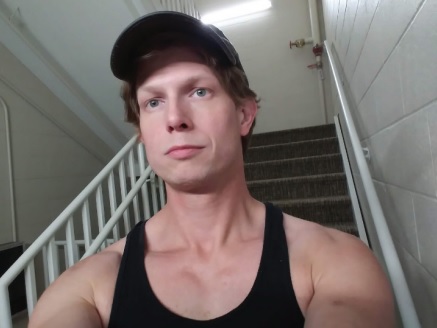
American Entropy is a collection of poetry that swings from political outcry to spiritual yearning, from queer love to existential doubt, and ignites readers’ desire to fight for what matters. What inspired you to write this particular collection of poems?
It was largely just paying attention to the news and seeing how every day, Trump is violating the Constitution, trying to force universities and museums to adopt right-wing propaganda and treat it as fact. Like all fascist authoritarians, Trump hates it when truths that contradict his lies proliferate, so I felt it important to do my part to tell those truths.
Doing it in a way that makes readers want to fight for what matters, rather than just dwelling on the darkness of modern American life, was important to me too, because if you don’t focus on what we still have, it becomes all too easy for people to give up.
The poems about love, metaphysical, spiritual topics, and queer love are all just examples of me writing what I know.
Your poetry tackles deeply emotional and politically volatile topics while also touching on hope for the future. How do you approach writing about deeply personal or emotional topics?
“Power through and write what’s true,” like it says in the poem “It’s Not Too Late.” I just get it out onto the page as accurately as I can before giving myself a chance to question how honest is too honest. I feel like if I’m too reserved in writing my poetry it won’t be as relatable, and the reader will be able to tell I’m holding something back, and it won’t foster empathy as much as I hope my work does by being unflinchingly honest.
How has this poetry book changed you as a writer, or what did you learn about yourself through writing it?
This book really crystalized for me that poetry is an important type of resistance, which is something I think my work has always been when it comes to fighting heteronormativity and homophobia and other bigotries, but this is the first time I’ve dedicated so much of any one poetry collection to raging against one corrupt administration and detailing all the ways it’s trampling our rights and waging war against the American people.
I’ve learned about myself that I really just don’t give up no matter what, and I can help others not give up either.
What is one thing that you hope readers take away from American Entropy?
That this isn’t normal, the way Trump is shredding the Constitution and speaking to our worst natures, and the way Republicans in Congress and conservative Supreme Court justices are complicit in enabling it. That it’s bigoted Nazi fascism, and we don’t have to just roll over and take it.
Author Links: GoodReads | Facebook | Website | Amazon
Through explorations of the metaphysical, religion, and relationships, the poems delve into both darkness and the light born of efforts to expand human consciousness. Despair is given unflinching witness, making the discovery of hope all the more profound. And love—raw, imperfect, and essential—is celebrated as a balm for our plugged-in yet detached modern lives.
If you’re disillusioned with an America sliding toward fascism and the strain it places on relationships, American Entropy may reignite your fire to keep fighting for what matters, keep loving, and hold faith in something greater than ourselves.
Lifelong Learner

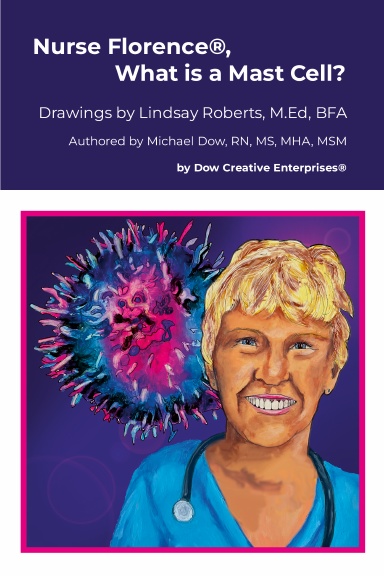
Nurse Florence®, What is a Mast Cell? follows three curious schoolgirls and their approachable school nurse, who discuss mast cells and their role in the immune system. What inspired you to write about this topic?
Nurse Florence® seeks to spark a global movement of health promotion and literacy. We explore how the human body works in each book, as well as discuss disease topics with our numerous disease-related books. We will be publishing around 700 books in the series, and this topic finally came up to the top of the list of books needing to be written.
How did you decide what to include and leave out in your Nurse Florence books?
Writing the Nurse Florence® books is an art since we don’t want to overload kids with too much science information, but we need to bring college-level information down to a fifth grader’s level. Every book is a little complicated to write, and I decide what to include out of inspiration from my illustrator’s drawings. Disney might say they have Disney magic to help produce their movies, while we have DCE magic to produce Nurse Florence® books to help even adults stay engaged with each page of the books.
What was the most challenging part of writing these books, and what was the most rewarding?
The most challenging is to decide what info to include, and the most rewarding is getting feedback that whole families are learning from each book.
What is one thing that people point out after reading your book that surprises you?
Grandparents have even said on GoodReads that they are learning. I was surprised at first since I thought I was writing just for kids. I’m happy to hear that everyone is learning. Being a lifelong learner is so important in the world that we live in.
Author Links: GoodReads | Website | LinkedIn | YouTube | Nurse Florence Project | Amazon

Education and Evangelism
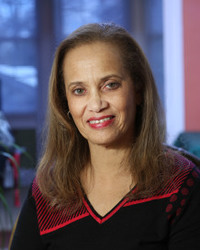
From Hill Town to Strieby explores the life of Reverend Islay Walden, a man born into slavery who overcame blindness and hardship to return home as a minister and educator, and the legacy the Hill and Lassiter families left on the community. Why was this an important book for you to write?
As descendants of the original families that helped found the church and who continue as trustees today, we worried as we watched the last of the generation before us pass away that our history would be lost if we did not make a concerted effort to preserve, share, and uplift it. As the writer in the group, they looked to me to help that happen. In addition, just as other African American community descendants are concerned about erasure, not just benign neglect, we wanted to do all we could to be certain that the history of the church, school, community and its founder, Rev. Islay Walden, would always be an acknowledged and celebrated part of Randolph County, North Carolina history, and be part of the broader American History of African Americans and the rural South. I didn’t want anyone in Randolph County to ever say again as someone once had, “Strieby? Never Heard of It.”
With regards to Islay Walden himself, I had come to realize, as I researched his life, that in his lifetime, he was not an obscure poet, as some had portrayed him. In addition, I realized that none of the biographical essays about him had really understood that his passion was not poetry, regardless of his success. His passion was education and evangelism. No one had reflected on that in writing about him, so I wanted to pay homage to him as a 19th century African American poet, but even more important for me to elucidate was his legacy in education and ministry.
How much research did you undertake for this book, and how much time did it take to put it all together?
At the time that I made the decision to finally write the book, I had been researching the community for over twenty years and had already written a book about the history of one family, the Miles Lassiter family. At the same time as discussions about writing the book, family members were also asking about historical preservation. As part of that, I prepared an extensive, documented history of the church, historic school, and cemetery in application for the county’s Cultural Heritage Site designation, which we received. That application became the first draft. It took two more years of research and writing before the book was completed in 2016.
What were some ideas that were important for you to share in this book?
The level of educational excellence that the school stood for had been praised and celebrated at every turn by the entire community. This was a community with nearly 100% literacy in the early 1900s, when that achievement was rare for any community in the rural South. This community had placed a high premium on education, and members had gone to great lengths to seek additional opportunities, even leaving the community to do so, yet always returning to share love and encouragement with the next generation. In fact, this community had produced at least one young teacher by 1900, and several more soon followed.
What is one thing that you hope readers take away from From Hill Town to Strieby?
I hope readers see that rural communities of color have been seeking the same things that their urban siblings have been seeking — opportunity. They seek educational opportunities, which they hope, like everyone else, will provide them with other opportunities, including economic security, whether they leave the countryside or not.
Author Links: Goodreads | Facebook | LinkedIn | Website | Amazon
Ethical Accountability
The Broken Gavel: A Sneak Peek is part memoir, part manifesto, and part legal dissection, sharing your story of betrayal, both personal and institutional, experiences with a trusted attorney who failed you, and a friend who used your private pain as creative capital. Why was this an important book for you to write?
The Broken Gavel: A Sneak Peek was born out of necessity, both personal and moral. I needed to reclaim my narrative after experiencing betrayal from trusted institutions and individuals who weaponized my vulnerability. Writing this book gave me the power to turn pain into purpose and silence into accountability. It became my way of transforming what was meant to destroy me into a movement for truth, justice, and self-restoration.
What were some ideas that were important for you to share in this book?
I wanted readers to understand that justice is not just a legal term; it’s a human experience. I focused on themes like ethical accountability, truth versus perception, and the emotional toll of fighting systems that have the power to silence victims. The Broken Gavel is a call to action for transparency, courage, and moral responsibility.
What was the hardest thing for you to write about?
The most difficult part was revisiting the emotional betrayal by people I once trusted deeply, particularly a friend who used my story for her own gain. It forced me to relive moments of pain, humiliation, and disbelief. But it also reminded me of the importance of integrity and emotional boundaries. Writing through that discomfort became an act of healing and reclamation.
How has writing your memoir impacted or changed your life?
This book completely redefined my sense of power and purpose. It helped me move from surviving injustice to leading with resilience. Writing The Broken Gavel taught me that storytelling is not just about catharsis, it’s about creating community and inspiring accountability. Since releasing it, I’ve connected with readers, educators, and advocates who see themselves in my story, which reinforces why I wrote it in the first place.
Author Links: GoodReads | Website | Amazon
Before the full memoir arrives in 2026, The Broken Gavel: A Sneak Peek pulls back the curtain on betrayal, power, and the fight for justice in a way you’ve never read before.
Dashawn Mayweather trusted the system and the people inside it, only to discover her divorce finalized without her knowledge and her most intimate secrets repackaged in a “friend’s” book. What begins as a private legal battle explodes into a story of survival, resilience, and the courage to speak when silence is no longer an option.
Blending raw memoir with sharp legal insight, this preview doesn’t just tell a story, it challenges readers to ask: What happens when the very institutions built to protect us become the ones that try to break us?
Part testimony. Part case study. 100% unforgettable.
This is not the whole book, it’s the spark. The fire is coming in 2026.
When the gavel breaks, the illusion of untouchable power shatters. And from those cracks, a movement begins.
Inner Peace
Healing by His Spirit is a raw, deeply personal journey through pain, endurance, and redemption, as well as an emotional story of faith, trust, and the miracles God performed in your life. Why was this an important book for you to write?
Healing by His Spirit was important to write because it not only released the burden of shame and guilt I carried, but it also allowed me to inspire others to try and overcome their hardships through spiritual healing.
What were some ideas that were important for you to share in this book?
My travels across the globe helped me to find the inner peace I so desperately sought. It helped me to focus on who I truly am.
I appreciated the candid nature with which you told your story. What was the hardest thing for you to write about?
The hardest part for me to write about was the rape scene. Because a child was conceived from it, I had to try and make the best decision about her future, and I decided it had to be me. It took two weeks to write one paragraph, because of the flashbacks I experienced.
What do you hope is one thing readers take away from your story?
The one thing I hope readers will take away is God’s healing power. It saved my life.
Author Links: GoodReads | Amazon
Mirrors of Humanity
Terra Secundus follows a war-weary journalist sent to Titan, where humanity’s quest for discovery collides with its oldest flaws: ambition, control, and the fragile meaning of being human. What inspired you to set Terra Secundus on Titan rather than another world or moon?
In my exploration of the world of science fiction, I often encountered situations where many famous writers with multiple awards and nominations set their novels on many planets of the solar system and seldom on any satellites of the gas giants such as Jupiter, Saturn, Uranus, and Neptune. Before I decided to place my protagonist in a new world, I carefully studied the science literature about the possibilities of colonizing moons and planetoids orbiting the gas giants. Saturn’s moon Titan was a very strong contender for such an endeavour, and after studying everything I could about that unique moon, I decided to send my protagonist there, since Titan is considered a good candidate for a colony. Many scientists believe it could become a smaller version of Earth, since Titan has a thick atmosphere composed of nitrogen and other gases. Add oxygen to it, and humans could theoretically breathe its air.
The novel’s tone feels both futuristic and nostalgic. Was that a conscious stylistic choice to evoke classic science fiction?
I love classic science fiction novels and my exploration into this literary genre started with many memorable books by Ben Bova, Issac Asimov, Ray Bradbury, Arthur C. Clarke, Frank Herbert, Allen Steele, and Robert Heinlein. When writing about a future removed from our time more than 1,200 years, I tried to imagine a future society of the 32nd century to develop amazing new technologies and modify its social and religious beliefs. In this novel, I tried to use a classic style of storytelling, because for most readers it is much easier to understand. I believe that every society must learn from the past experience and try to avoid repeating tragic mistakes that led to the fall of ancient civilizations and magnificent extinct cultures. The roots of the future are in the present, and I hoped to tell this story in such a way as to entertain and educate my readers about the fascinating distant worlds, new technologies that border on magic and what it means to be human.
How did you approach writing the Artborn androids like Erika, as characters, machines, or mirrors of = humanity?
Interesting question. I like robots. Even as a kid, living in a different society during the Cold War, I liked all science fiction movies that featured cyborgs and robots. Since those days, robotics and and cybernetics both made giant strides forward, and now we see many cybernetic models starting to imitate humans. We are also witnessing the radical advances in Artificial Intelligence and autonomous systems that help us to explore other places and other planets. My approach to such characters as Artborn Erika was both scientific and philosophical. In my story, Artborns are advanced synthetic humanoids that were created to assist humanity, working in most dangerous places in space and underwater. They are essential mirrors of humanity and in some ways are better than us when it comes to programmed mission parameters and sense of duty. In my novel, androids like Erka are employed as explorers, personal servants and bodyguards but they can certainly do much more than that.
If Paul Rexton were alive today, what story would he report on Earth in 2025?
If my protagonist, Paul Rexton were alive today, I believe that he would be deeply fascinated, intrigued and disturbed by the Earth in 2025. His world is certainly very different from ours in many respects, but he would be able to understand our world and form his own unbiased opinion about it. He would no doubt be pleased about the technological progress and human rights, Very concerned about environmental pollution and deeply affected by the fact that there are still powerful evil forces exist on the planet, making life difficult for their neighbors and many other countries. He would no doubt be fascinated by our means of mass entertainment and our taditionsl and electronic libraries of vast human knowledge that contain many centuries of wisdom. I would imagine Paul Rexton standing on a hotel balcony in a quiet and beautiful Japanese village, visiting the beautiful museums of Europe or enjoying a good book at home with a glass of old, smooth, wellaged brandy.
Author Links: GoodReads | Amazon
Hope of Recovery
In Being Broken, you share the traumas of your childhood, heartbreaking losses, and how you were able to face the damage that shaped your life. Why was this an important book for you to write?
I had to understand how things could have gone so terribly wrong that my sister had to pay the ultimate price, with her life. I’m not a spiritual person, so I needed to believe that this was preventable; that there was a rational and reasonable explanation for this tragedy. Not only that, I needed to better understand my part and be able to forgive myself for either my inability to act in time, or if I had become apathetic to her plight from years of dealing with it. But the journey allowed me to view my own life from a better perspective. It allowed me to dig deep into the traumas of my past and move forward with forgiveness of myself and the fact that I was not responsible for what happened to either of us.
I appreciated the honesty and raw emotion throughout your memoir. What was the hardest thing for you to write about?
Top of that list is my sister’s death. I was so overcome with shame and guilt about not being able to save her, the only way to deal with it was to write about it. I was having a hard time articulating what I was going through, and to write it all out was relieving since the rumination during grief can be very overwhelming. However, equal to how difficult her death was, learning and writing about my sister’s rape was extremely difficult. As I wrote in the book, our parents downplayed my sister’s rape to the point where they were trying to convince me it didn’t happen. Because of their manipulation, I believed them, and the guilt and shame I felt when I read about it in her journals was heartbreaking. Knowing that I wasn’t there for her like I should have been while she was dealing with that trauma, alone, made me feel absolutely horrible. Understanding now it is not my fault, but the fault of my parents’ manipulation of me, that I wasn’t there for her during the most difficult time of her life allowed me to forgive myself.
What is one misconception you believe many people have about growing up in abusive homes?
That children, and even adults, can see and understand that they are being abused, and that escaping the situation is obvious. Many people in abusive relationships are unaware that they are experiencing abuse. I didn’t understand that my sister and I were being abused by our parents until after her death. The narcissistic front of family perfection that our parents projected out into the world made it very difficult for anyone to believe us when we talked about what was going on in that house. Further, the nature of the abuse caused us to live in fear of talking about it. To even consider sharing what was going on with us, we knew the consequences would be severe. And lastly, the amount of control my parents had over my sister’s life precluded any ability for her to escape. They had full control over everything in her life: her car, her lease/rental properties, her phone, money, even her son when she was deemed incapable of caring for him – and they constantly threatened to take it all away if she didn’t behave as they wanted. Truly understanding what was happening to us took a lot of study on my part; years of work through my sobriety, and then grief. By then, it was too late for her, but it continues to help me heal.
What is one thing you hope readers take away from your experiences?
That if you are experiencing the same type of abuse, or have in your past, that you are not alone and there is hope of recovery. The common statistic is that 1 in 4 children experiences a form of abuse. It doesn’t have to be physical or sexual abuse, the most horrific types; it could be any type of mental or emotional abuse. Everyone experiences trauma, even the same trauma, differently based on their formative childhood years. Studies show that a child who experiences repeated forms of abuse has a very altered brain than one who does not. However, through neuroplasticity, therapy, and work, we can manage the challenges of Complex Post-Traumatic Stress Disorder to rewire our brains to live healthy, improved lives and still accept and integrate what we faced as children.
Author Links: GoodReads | Bluesky | Facebook | Website | Amazon
The son, brother, stepson is the only one left to pick up the pieces. He begins a journey of the self and finds out the truth of his family. After going over letters, notes, emails, videos, and text messages, he uncovers a disturbing picture of the abuse his sister suffered at the hands of their parents. He also begins to better understand his own struggles with mental health and substance addiction because of the trauma and abuse he also suffered from their parents.
Follow the son as he looks through his family history to discover the generational abuse that trickled down through the years. Learn about how parents who suffer from narcissistic personality disorder emotionally abuse and manipulate their children. See how the abuse and trauma becomes mental illness in the abused, and how they fall into vicious traps of addiction, eating disorders, self-harm, and complex post-traumatic stress disorder. Witness the transformational change of the son as he works on the recovery of his inner child and tries to become the man he was meant to be.


 LITERARY TITAN