The Walking Wounded


The Walking Wounded is a crime novel with strong police procedural and romantic drama threads, but what it is really about is damage, loyalty, and the long afterlife of abuse. It opens with Phil Dobson and Li Zhang meeting as children, then follows them into police work as they become central to a murder investigation tied to missing boys, institutional corruption, and child abuse, while the book also tracks Noah and Levi, two brothers caught in that system, and the deep bond between Phil and Li that keeps growing underneath everything else. By the end, the book is less about solving one case than about what it takes to survive, protect other people, and keep living with what cannot be neatly fixed.
The writing does not circle pain politely. It walks straight at it. Sometimes that bluntness works very well because it gives the book an unfiltered emotional charge, especially in scenes involving Noah and Levi, or in the way Phil’s buried trauma slowly rises back to the surface. I also liked that the book is willing to be messy. The dialogue can be rough, funny, tender, and awkward in the same breath, which made the characters feel more lived-in than polished. At the same time, I did feel the novel occasionally leans so hard into intensity that subtlety gets crowded out. There were moments where I wanted the story to trust its strongest scenes a little more and explain a little less. Still, I never had trouble understanding what the book cared about. It cares about wounded people. It cares about children who are failed by adults. It cares about the difference one loyal person can make.
I was especially interested in the author’s choice to braid genres together instead of staying in one lane. On one level, this is a police story with detectives, interviews, raids, corrupt figures, and an expanding case. On another, it is a queer love story that takes its time, almost to the point of frustration, with Phil and Li circling each other for years before finally moving toward honesty. And under both of those is a trauma novel, one that keeps asking whether justice is ever enough when the damage began in childhood. I found that mix compelling because the ambition is real. The book wants to expose systems, hold onto tenderness, and still leave room for recovery, new family, and love. That is a lot to carry, and not every part lands with the same force, but I respected how fully it committed to that emotional and moral scale.
I’d recommend The Walking Wounded most to readers who can handle dark material and who like fiction that mixes crime, trauma, and character-driven relationships without sanding off the rough edges. I would especially point it toward readers who enjoy police procedurals that are less about procedural neatness and more about the people carrying the case home with them, as well as readers who want a romance shaped by history, grief, and trust rather than easy chemistry alone.
Pages: 881 | ASIN : B0GJTVHHS4

The Diaries of a Teenage Pilgrim: The Early Journey
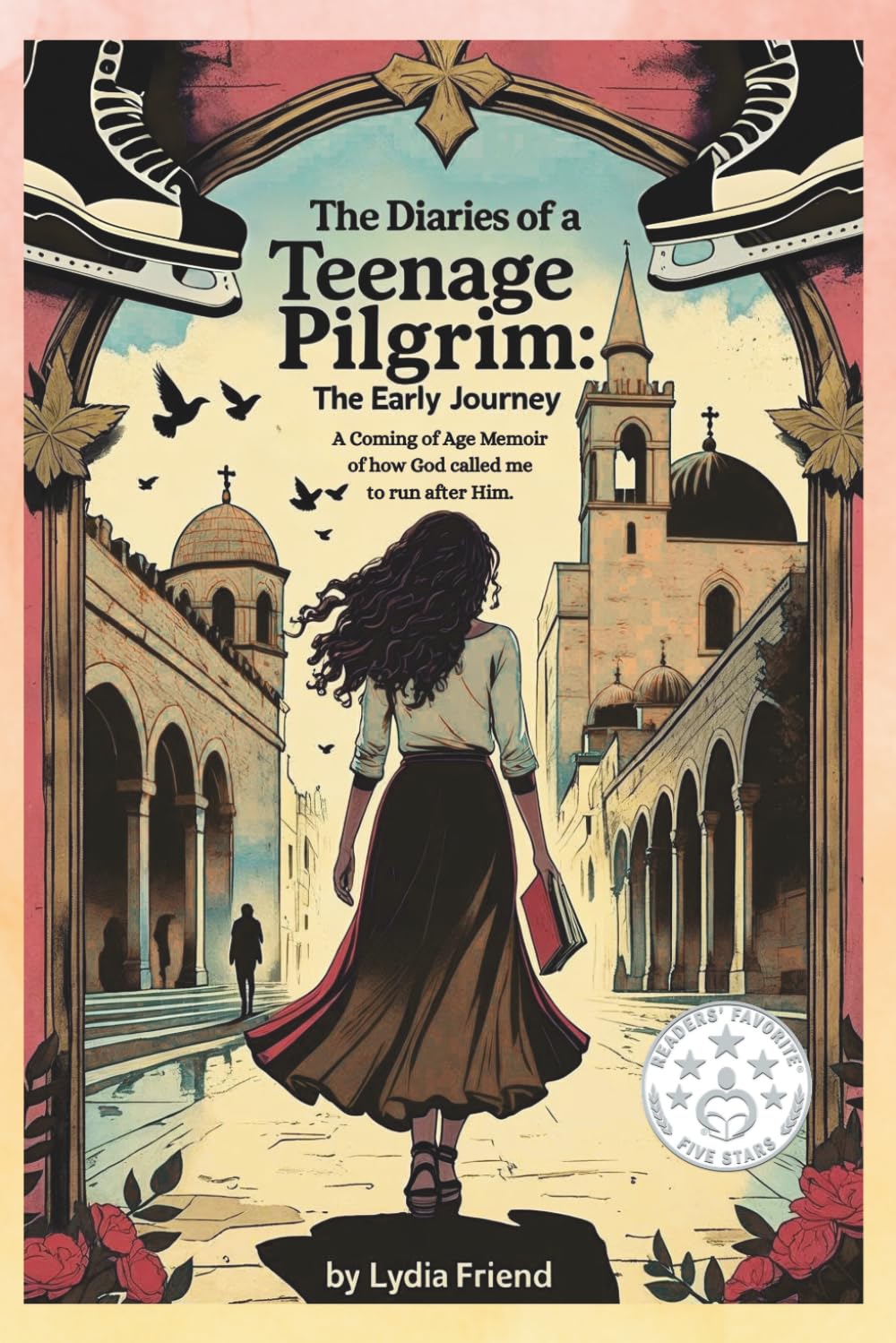
I found The Diaries of a Teenage Pilgrim: The Early Journey to be, at heart, a coming-of-age memoir about spiritual identity under pressure. Lydia Friend begins in the warm, enclosed world of Spooner, Wisconsin, then is swept into a family move to Israel that feels at once providential and deeply destabilizing. What follows is not a tidy overseas faith ministry narrative but a long, uneven apprenticeship in exile: Jerusalem and Metulla, homesickness and fervor, poetry and loneliness, the ache of being pulled between the Ozarks and the Galilee, and finally a devastating car accident that becomes a hinge point rather than a climax. The book keeps returning to one question in different forms: what does it mean to belong when every earthly home feels provisional, and when faith asks not for certainty but for surrender?
I liked the book’s emotional candor. Friend has a gift for rendering memory through texture and atmosphere, so that a white cat in an airport carrier, a farewell quilt from a small church, or a frantic run through Atlanta with a harp on her back can carry real emotional voltage instead of merely serving as anecdote. I admired the way she lets adolescent intensity remain intense. She doesn’t flatten her younger self into someone wiser or more ironic than she was. That gives the memoir a rawness I found moving, especially in the sections where she feels caught between two worlds and can’t tell whether she’s being formed or simply undone. The prose has a luminous, devotional quality. It lingers over rain, cedar, songs, hospital fear, and the strange tenderness of being cared for after catastrophe. There were moments when the language tipped toward repetition or overstatement for me, but even then I felt the pressure of a real inner life behind it.
I also found the book’s ideas both compelling and specific. Friend’s central vision of pilgrimage, displacement, and what she calls being “Stranger Lovely” gives the memoir its theological spine. She reads exclusion, longing, and even creative repression as part of a larger divine romance, and whether or not a reader shares every article of that belief, it’s hard not to feel the force of how fully she has lived inside it. I was especially struck by the way the accident and recovery chapters reframe suffering not as abstract lesson material, but as something bodily, terrifying, and humiliating before it becomes meaningful. That sequence gave the book real gravity.
The Diaries of a Teenage Pilgrim is a sincere memoir, and sincerity here is not a small thing. What I valued most was its refusal to separate spiritual formation from embarrassment, adolescence, longing, family history, art, or pain. Friend writes like someone trying to recover her own song while she’s still hearing its echoes, and that gives the book an intimacy I found affecting. I’d recommend it especially to readers who are drawn to faith memoirs, overseas faith ministry childhood narratives, and stories of displacement that are as inward as they are geographical. It will likely speak most powerfully to readers who have felt out of place in the world and have tried to make meaning of that estrangement without denying its cost.
Pages: 322 | ISBN : B0FP31B2LW

Floo Flocky Doo to the Rescue

Floo Flocky Doo to the Rescue is a buoyant and rhyme-driven picture book about a spirited little girl, Floo, who follows her hummingbird friend Peanut to a baby squirrel, rescues him, names him Lucky Lou, and then discovers that loving a creature doesn’t always mean bringing him everywhere. The story moves from cozy domestic play to mild chaos at the grocery store, where one sneeze sends Lou flying into Miss Nellie Faye’s hair and turns a simple errand into a comic chase through produce, jam, and aisles full of alarm. It’s a small adventure, but it has that enlarged picture-book feeling where every mishap becomes momentous, funny, and just a little breathless.
What I liked most was the book’s wholeheartedness. Floo’s voice is earnest and excited, and the writing understands the peculiar intensity of a child’s logic, especially that wonderful conviction that affection and improvisation can solve almost anything. I found the repeated “What should I do?” and “Hootie Hoo” refrains genuinely effective. They create a chant-like rhythm that feels made for reading aloud, and they give the story a playful musical spine. At the same time, the book’s emotional center is sweeter than it first appears. Under all the commotion, it’s really about care, attachment, and the moment a child realizes that good intentions aren’t always enough. That note of dawning responsibility gives the silliness a little weight.
I also think the illustrations deliver a great deal of the book’s charm. They have a soft watercolor brightness that suits the story’s gentle mischief, and they know when to lean into absurdity. The image of Lou tangled up with Miss Nellie Faye’s wig is the sort of visual joke that children will instantly seize on, but I was equally taken with the quieter scenes, like the baby squirrel tucked into a floppy shoe or Lou smugly sticky with blueberry jelly. Those details keep the book feeling fun.
Floo Flocky Doo to the Rescue is endearing and relatable. It’s funny, warm, slightly chaotic, and rooted in a real fondness for family lore, which gives it more heart than many breezier picture books manage. It believes in imagination, in little messes, in love that learns as it goes. I’d recommend it especially for children who like animals, repetition, and read-aloud stories with a lot of motion, and for adults who don’t mind a picture book being a little rambunctious as long as it has tenderness to spare. This is a lively and affectionate children’s book that shows its heart right on the page.
Pages: 38 | ASIN : B0GPPGLK1V
The Typical Battle Between Good and Evil

Gloria: A Love Story follows Captain Augustine ‘Gus’ Tadlock, who is hurled centuries into a depraved future to help a rebel leader save what’s left of goodness, until the slave girl he frees betrays him and turns love into a weapon. What were some themes that were important for you to explore in this book?
In that broken future, there are two factions: the majority is the wicked, who loot, pillage, rape, and murder, contrasted by the smaller number of good people who want to live in peace while raising families—the typical battle between good and evil. Augustine is a hardened commando but a good man who, out of the kindness of his heart, frees the 16-year-old Gloria, who was forced into slavery at a young age. She’s beautiful, witty, and a headstrong teenager, but has hidden deep-rooted trauma. The wicked had apparently murdered her family and kept her alive to serve as a sex slave. Augustine becomes her protector, and she becomes attached to him as they grow together. Gloria loves Augustine and never betrays. It’s much more mystical than that, and happens later in the book in chapter 10, and is fully explained in chapter 11, and is quite a surprise. Again, the book is based on that never-ending theme: the typical battle between good and evil.
What drew you to framing “goodness” as something measurable and fragile enough that a government would try to “save” it with time displacement?
The preservation of goodness is not so much defined by a word but as a concept of protection, and is apparent in every civilization. One must imagine a world where those who loot, pillage, rape, and murder are free to roam the streets of the town or city where you live. Augustine (Gus) helps Manhig build an army to protect his ‘followers’ from the wicked who want to hurt them.
Gloria’s betrayal seems both intimate and ideological. What was the hardest part of writing her “mask drop” without flattening her into a simple villain?
Again, Gloria never really betrayed anyone. That’s the surprise learned in chapter 11; giving it away would ruin that surprise for the reader. They have to read the book to understand that complexity. Gus is a soldier dropped into a world where morality is theatrical and public. What did you want his revulsion and adaptation to reveal about him?
Augustine, or Gus as he is nicknamed, was chosen by the U.S. Command for that mission because he was a moral and just man. The earlier chapters explain why he was selected from the information in their file on him. They also pose questions during their interview with him.
Author Links: GoodReads | X | Facebook | Website
A U.S. Commando is sent to a fallen, dystopian future to help a man known as Manhig—Leader of the righteous. Finding himself in an extremely wicked place, he comes upon and frees a teenage slave girl, Gloria. After helping her recover from the trauma of slavery, they set out together to find the Manhig, and their adventure begins.
Gloria is a beautiful romance novel that contrasts a broken world with customs completely different from ours today. The book is a unique love story set in both 2026 and over 200 years in the future, in a broken, devastated setting. This is the story of a young woman struggling to become a doctor in that broken and challenging time and place.
For over two hundred years, the world has lacked social structure, governments, law enforcement, or any form of civilized stability. In that place, two centuries in the future, only two factions remain: mostly the wicked, who thrive on depravity and debauchery, and a much smaller number of the good, who follow a man called Manhig—meaning Leader in Biblical Hebrew.
A sister-and-brother team of scientists inherited an instrument capable of viewing the past. Together, they had worked on it for years until, by 2026 AD, they could also see images of the future. What they observed so startled them that they allowed the U.S. Government to access it. Without help, the leader of the righteous, Manhig, is about to fall to the wicked, leaving no balance between good and evil. Wickedness is about to control the future.
The United States Army sends its best-qualified commando, Captain Augustine ‘Gus’ Tadlock, over two hundred years into that ravaged future. His mission is to find the Manhig and evaluate him to determine whether he is a good man and leader, as they believe he is. If so, Augustine can begin helping him with full support from the U.S. military of 2026 AD.
A problem arises, and Augustine is mistakenly placed far from the Manhig. Instead, he finds himself near a wicked place and must search for the Leader. While gathering information about the Manhig’s whereabouts, Augustine has his first glimpse of the future, a brutal place. The wicked lead unbridled, licentious lifestyles. Among other unholy things, human slavery exists—people are bought and sold like animals. While in that wicked place, Augustine, an honorable man, learns that the Manhig is about ten miles north of where he is. However, the good-hearted Augustine comes upon and frees a teenage slave girl, Gloria. Not knowing what to do with the young girl, he brings her back to his campsite. There, he attempts to heal her repressed trauma of slavery before they can set out to find the Manhig. Then the adventure of a lifetime begins, and their lives take shape.
There are touching depictions of Gloria and Augustine bonding after they meet. Then come many stirring, warming moments as Augustine and Gloria develop a deep friendship. They eventually meet up with Manhig and forge a lifelong friendship with him.
Suspenseful battles for survival add action. A love triangle develops, and steamy romances unfold, some ending in heartbreak. A bit of humor also appears in the least expected places. A reader might find himself or herself keyed up one moment, then crying the next, in this outstanding emotional read.
A little more than halfway through the book, a totally unexpected and shocking crude event occurs, sending the storyline into a dark period of licentiousness.
The novel Gloria offers well-developed characters and plenty of twists and turns. It has an exquisitely creative and beguiling literary plot for mature readers.
From The Author:
Gloria is one of the most rewarding experiences I have had as an author. Bringing these passionate characters to life was challenging enough, but crafting the core of the storyline’s sentimentality drew on my own emotions as much as it will on the reader’s.
The Sage and the General

The Sage and the General is a thought-provoking spiritual fable. Author B. A. Agha builds the book around a Himalayan village torn apart by violent swarms of bees, then uses that conflict to tell a larger story about fear, power, revenge, and the hard work of choosing peace. At the center are two opposing figures: the Sage, who believes compassion and understanding can break cycles of harm, and the General, who answers danger with force and control. What follows is less a literal battle story than a moral and philosophical one, where the village becomes a testing ground for how communities think, panic, divide, and either harden or heal.
I enjoyed how direct the writing is. Agha doesn’t hide the book’s intentions behind irony or fancy prose. The story is clean, simple, and deliberate, which fits the fable form. I felt that clearly in the way the bees, the village, and the two leaders are set up, almost like living ideas, but still given enough human tension to keep the book moving. The dialogue can feel more symbolic. This book is not really chasing realism in the ordinary novelistic sense. It’s trying to make moral conflict visible. It wants the reader to stop and consider how quickly self-defense turns into identity, and how easily leadership can start feeding on fear.
I was especially interested in the author’s decision to make the General more than a simple villain. The book could have settled for an easy contrast between wisdom and aggression, but it pushes further and shows how conflict can become its own system, with followers, rewards, habits, and a logic that keeps reproducing itself. The sections where force only creates a tougher enemy felt pointed and uncomfortably familiar, and the later movement toward transformation gives the novel its real weight. When the villagers begin to see that victory might mean something other than domination, the book opens up. It stops feeling like an argument and starts feeling like an invitation. That shift worked for me. It stopped feeling so rigid and gave the story more room for reflection and possibility, and it made the ending feel earned rather than merely hopeful.
I would recommend The Sage and the General most strongly to readers who enjoy spiritual fiction, allegorical novels, and reflective moral tales that are more interested in ideas than plot twists. It will speak most to people who like books about peacebuilding, inner change, and the psychology of conflict, especially if they appreciate fiction that reads almost like a parable. For readers open to a clear-eyed, sincere, and thoughtful spiritual fable, this book has something real to offer. It feels like a conversation about how people lose themselves in conflict, and how they might still find a way back.
Pages: 146 | ASIN : B0CW19TSDM
Come Dance With Me


Come Dance With Me opens as a late-career detective, Butch Jacs, is called out to what should be a routine suicide involving a businessman tied to the mayor; instead, one small object at the scene, an old business card reading “Come Dance With Me,” pulls him into a strange chain of deaths, vanished records, political rot, and a dread-soaked mystery that seems to be stalking him across decades. The novel begins like a police procedural and gradually lets a spectral chill seep through the seams, using Jacs’s forced retirement, frayed solitude, and distrust of the modern world as part of the plot’s pressure system.
I liked this book most when it lingered in Jacs’s head. He is not a glamorous detective; he is tired, mildly crabby, perceptive in an unshowy way, and haunted less by melodrama than by attrition. That gives the novel a worn texture I found persuasive. The author has a real affection for municipal spaces, bad fluorescent light, empty offices, old neighborhoods, and the spiritual bleakness of public institutions after midnight. Even when the prose grows a little shaggy, it often lands on an image that sticks, something rusted, wind-buffeted, or quietly funereal. I also appreciated the book’s refusal to rush its unease. It doesn’t sprint toward horror; it sidles there, which is harder to do and, here, more effective.
What I really liked was the book’s mood rather than its neatness. The mystery matters, but the stronger current is existential: Jacs is investigating not just a pattern of deaths, but his own obsolescence. The novel understands how retirement, bureaucracy, loneliness, and memory can make a person porous to dread. I did feel the pacing sometimes wanders and the repetition can accumulate, yet even that repetitiousness started to feel oddly thematic, as if Jacs were walking the same mental corridor over and over while the lights flicker. In that sense, the book’s rough edges are part of its atmosphere; it feels less polished than weathered, and weathered suits it.
I’d recommend Come Dance With Me to readers who like supernatural mystery, detective fiction, occult suspense, and small-city noir with a melancholic bend. Readers who enjoy Stephen King when he turns toward aging, memory, and ordinary American dread, or fans of John Connolly’s more haunted detective work, will likely find familiar pleasures here, though Bates is scruffier and more Midwestern in temperament. Come Dance With Me is an intriguing detective novel that knows the scariest thing in the room may be time itself.
Pages: 352 | ASIN : B097NMBL25
Tom’s True Colors
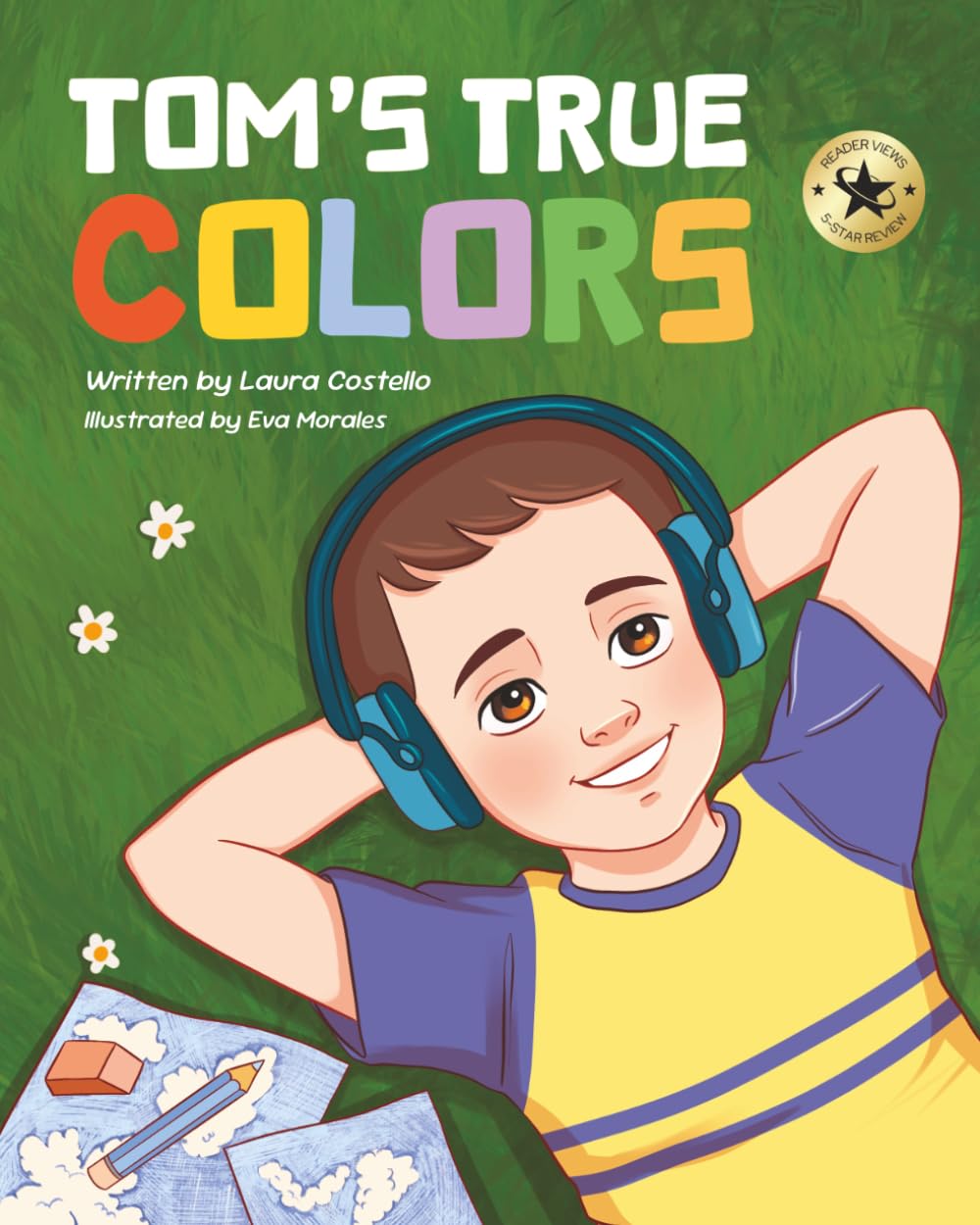
Tom’s True Colors is a children’s book about perception, dignity, and the slow, necessary work of helping a child be truly seen. The book follows Ellie and her autistic brother Tom through an ordinary trip to the park, where small details like Tom’s headphones, his hand-flapping, and the wary attention of other children quietly establish the social world he has to move through. When Ellie later begins to understand what her mother means by Tom’s “true colors,” the story turns toward Tom’s art, which becomes the language through which other children finally meet him with curiosity instead of judgment. By the time the school art contest arrives, the emotional arc feels clear and satisfying: not a transformation of Tom into someone more acceptable, but a change in how others learn to look at him.
What I liked most was the book’s tenderness. It has a soft heart, and it earns that softness. I was especially moved by the early park scenes, where Tom’s joy is rendered with such ease, and by the later moment when Ellie lies awake thinking about how hard it’s been for him to connect with other kids. That passage gives the book a little ache, which I appreciated. It doesn’t pretend that misunderstanding is harmless. I also found the cloud game and the breakfast drawing particularly effective, because they reveal Tom indirectly. We don’t just get told that he’s imaginative, loving, and deeply expressive. We watch those qualities surface in the shapes he sees in the sky and in the red heart he draws for his family. That’s where the book felt most alive to me, less like a lesson and more like a child’s inner world gently opening.
I also admired the book’s central idea. The phrase “true colors” is a clear and child-friendly metaphor, and the book uses it with sincerity rather than cleverness, which suits the age level. I liked that Ellie’s mother draws a distinction between what people notice on the outside and who someone really is on the inside, and I liked even more that Tom’s artwork becomes the bridge between those two things. The story avoids turning Tom into a symbol. He remains a child with preferences, nerves, humor, talent, and shyness, and that grounding is great. The writing itself is direct and purposeful, with enough warmth to keep the message from hardening into instruction.
I found Tom’s True Colors kind, emotional, and refreshingly intent on building empathy without stripping away personality. It understands that inclusion starts with attention, with learning how to read another person more generously, and that’s a meaningful idea to place in front of young readers. I’d recommend this picture book especially for elementary-age children, families talking about autism, and classrooms trying to open conversations about difference in a way that feels approachable but still emotionally real.
Pages: 36 | ASIN : B0GTMRPQ2Y
The Star Thrower: A Novel

The Star Thrower is a contemporary coming-of-age novel that blends personal reinvention with environmental activism. It starts with Ava Wainwright at graduation, caught between her father’s expectation that she pursue law and her own quieter pull toward art, storytelling, and wildlife. From there, the book opens outward through a trip to Bali, where Ava and her friends Sam and Leo begin to see their lives with fresh eyes and, just as importantly, begin to imagine futures that actually belong to them.
I liked that the novel knows exactly what kind of story it wants to be. It’s earnest, idealistic, and driven by purpose. Bali isn’t just a scenic backdrop. It becomes the place where the three friends start naming what matters to them, and the title image of the star thrower gives the whole book its moral center. When the old man on the beach says, “It matters to this one,” the novel makes its argument plainly and effectively: individual acts may be small, but they still count.
The book also works because it gives each member of the trio a distinct path. Ava moves toward writing and illustration, Leo toward forensic science and evidence-based advocacy, and Sam toward community action and ocean-centered leadership. That structure gives the novel a nice forward motion, because each character’s growth feeds the larger plot about pollution, corporate misconduct, and public pressure. I also appreciated that the book keeps returning to the question of purpose.
In style, the novel is direct, sincere, and easy to read. It wears its heart on its sleeve, and I think that openness is part of its appeal. The dialogue is often used to clarify where each character stands emotionally, and the scenic descriptions of beaches, forests, and wildlife give the story a steady sense of atmosphere. The courtroom and activism sections shift the novel into a more issue-driven register, but they still connect back to the characters’ search for meaning, which keeps the book grounded in human stakes rather than abstract causes.
The Star Thrower is a hopeful novel about choosing a life that feels true, then learning how to defend it. It’s about friendship, grief, vocation, environmental responsibility, and the way conviction grows from small moments of attention. More than anything, it’s a book that believes people can change course and that communities can change too. That belief is what gives the novel its warmth. By the end, it feels less like a story about grand destiny and more like a story about finding your bearings and moving toward them, one choice at a time.
Pages: 136 | ASIN : B0GQL5NMGG


