Blog Archives
The End: Omicron
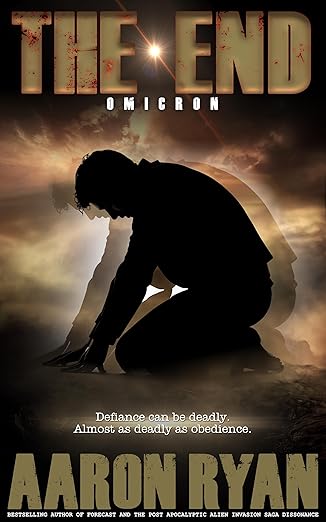

Aaron Ryan’s The End: Omicron is a breathless and gut-wrenching continuation of a harrowing dystopian saga. Picking up in a devastated future where a tyrannical leader named Nero hunts down Christians marked by a branded scar, the story follows young Sage Maddox and a ragtag group of survivors struggling against a monstrous regime of mechanoids and propaganda. Meanwhile, former High Vassal Maximillian—reborn as Darius Antone Forrester—defects and seeks redemption, setting the stage for spiritual warfare, betrayal, personal transformation, and rebellion. The world is brutal, the stakes are high, and the faith of every character is tested in fire.
Reading this book was like being pulled behind a speeding train. The pacing is relentless, the emotion runs raw, and the characters are utterly drenched in pain, doubt, and hope. Ryan’s writing is often visceral and unfiltered—sometimes jarringly so—but it’s always from the gut. You feel Sage’s grief claw at your chest. You feel Maximillian’s shame and longing for a second chance. It’s not polished in a traditional literary sense, but that’s exactly what makes it powerful. It’s not trying to be subtle or slick—it’s just honest. And in that honesty, it punches hard. Some of the dialogue feels intentionally unrefined, like real people speaking in the worst moments of their lives. I respected that.
On the flip side, the writing leans heavily into its message. Ryan is unapologetically Christian in theme and tone—this is not a book that hides its worldview. That might throw off some readers looking for a more ambiguous or secular apocalypse. But if you go in knowing that, it delivers with sincerity. I found myself torn between frustration and admiration at times—the moral dilemmas, the extreme stakes, the black-and-white battle between faith and evil. It’s not subtle storytelling, but it is bold. And sometimes bold is exactly what a story needs to break through the noise.
If you’re a fan of Christian dystopian fiction, if you like stories about persecution, faith, rebellion, and endurance under fire, this one’s for you. I’d recommend it for readers who want more soul in their sci-fi, and more fire in their faith. If I had to put The End: Omicron on a shelf with other books, it would sit somewhere between the Left Behind series and The Hunger Games, with a dash of 1984 and This Present Darkness. It’s got that same blend of high-stakes rebellion, faith under fire, and a world cracking under tyranny.
Pages: 263 | ASIN : B0F6VWDM2H

With Great Innovation Comes the Threat of Misuse

A Fistful of Feathers follows a 13-year-old boy with a strange lump on his neck who realizes he is in danger from the doctors at the clinic and makes an escape from there while forming new friendships. What was the inspiration for the setup of your story?
With great innovation comes the threat of misuse. The original inspiration for the story came from an image and a scientific breakthrough that first appeared in the press in 1997. It featured a mouse with an ear-shaped cartilage growth on its back, which was both weird and unsettling – yet the potential for growing human organs was becoming a reality. The image stayed with me over the years, but it was only when I watched the original Jurassic Park film with my teenage son that the basis of the story began to form…
There was a lot of time spent crafting the character traits in this novel. What was the most important factor for you to get right in your characters?
I wanted the characters to feel real, not superhuman. There might be extraordinary things happening to Jo, but underneath the physical changes was a normal teenage boy, who was desperate to be normal, to be accepted. It was as important to keep the reaction of his friends as natural as possible – although I’m still wondering how I’d react if a friend suddenly sprouted wings!
What were some themes that were important for you to explore in this book?
The key themes at the heart of the book are simple – Friendship, facing up to change and fear.
When will book two be available? Can you give us an idea of where that book will take readers?
Books two and three in the series are already available. Book two, Flight and Fight, and book three, Freedom Rising, follow Jo and his friends as he struggles to deal with the incredible changes to his body and his life…
Author Links: Flight and Fight | Freedom Rising | GoodReads | Facebook | Website
All thirteen-year-old Jo has ever wanted, is to be the same as everyone else. To go to school.
To look in a mirror and not see a ‘freak’ staring back. But there’s the clinic and the evil Doctor Bowden to contend with.
When the lump on Jo’s neck begins to move and change – he knows there is only one thing for it…RUN!
Bowden is not going to make this easy. With his men hot on Jo’s heels, it’s a race to stay one step ahead.
Can he discover the truth about what’s happened to him before he’s caught? Soon, it isn’t only Jo who is in danger.
If he doesn’t tell his new friends everything, the chances are they’ll be hurt – and he’ll be dragged back to that clinic.
But – if he exposes his secret, Jo risks alienating the only real friends he has ever known…
A Fistful of Feathers is book one in an intriguing adventure series. With a twist of fantasy and science fiction that will keep the reader guessing – A great read whatever your age!
The Tribune


The Tribune by Paul E. Roberts is an ambitious and vividly detailed historical adventure that straddles the line between modern mystery and ancient warfare. The novel begins in the present day, following David Thompson, a struggling American PhD candidate in Roman history, who is whisked away to Romania by a mysterious phone call from an old friend. This call triggers a journey into the Carpathian wilderness in search of a long-lost Roman eagle standard—an artifact tied to one of history’s forgotten battles. The narrative then plunges into the past, weaving in the gripping tale of Septimus Flavius Patrionus, a young Roman tribune caught in the chaos of a doomed military campaign. What unfolds is a tense and haunting exploration of war, identity, ambition, and historical truth.
I admired the realism and the research, and how Roberts doesn’t pull punches when it comes to the grit and grime of soldiering, ancient or modern. The Roman scenes are brutal, rich, and immersive. I found myself far more emotionally invested than I expected, especially in Septimus’s transformation from uncertain young officer to man grappling with the brutal reality of leadership. The writing walks a fine line between clarity and rawness—straightforward and punchy one moment, introspective the next. The pacing isn’t perfect, it meanders at times, but I didn’t mind. It gave me space to breathe and soak in the mood.
Where the book really gripped me was in the blend of timelines and the emotional weight that ties the characters together across centuries. David’s desperation, his doubts, and his academic hunger mirror Septimus’s fears and hopes in a surprisingly touching way. The discovery of the eagle becomes more than just a plot device, it’s a symbol of lost causes, pride, and the weight of legacy. I love that the book isn’t afraid to be dark, mysterious, or even a little weird. The dialogue is modern and clean, and the humor feels lived-in, not forced, but rising naturally from the characters’ bond and exhaustion.
The Tribune hit me harder than I expected. It’s not just about history, it’s about how history lives in us, haunts us, and sometimes gives us purpose. This is a book for anyone who loves historical fiction with grit, academic thrillers with heart, or stories that make you question where fact ends and myth begins. If you’re drawn to the dark corners of the past or have ever stood in front of an ancient ruin and felt the weight of time press on your chest, then this one’s for you.
Pages: 233 | ASIN : B0F5GM6QQJ
The Last Defense: The Fight for Epsilon
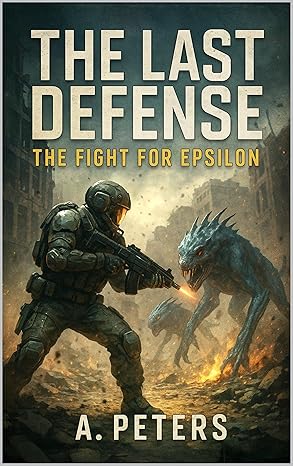
The Last Defense drops us straight into a brutal, crumbling world where Earth’s last hope rests in the hands of worn-out soldiers trying to fend off an overwhelming alien invasion. Major Jonas Cross, our gritty and deeply human lead, fights not just for survival but for family, memory, and something that feels a lot like hope. The story unfolds across the wreckage of Epsilon City, blending desperate last stands, gut-wrenching rescues, and shaky alliances into a tense, high-stakes battle for humanity’s future.
Right from the first chapter, A. Peters pulled me in with raw, vivid imagery. The opening scene where Jonas is crouched behind a slab of concrete, breathing smoke and fear, while Nightfangs hunt the ruins, slammed the urgency into my chest like a hammer. I loved how Peters didn’t waste time with long setups; you’re thrown straight into the fire. When Jonas reflects on his late wife Anna while hiding from monsters, it doesn’t feel forced or preachy. It feels real, like the kind of memory that guts you when you least need it. Peters has a knack for giving action scenes an emotional spine, and that’s a rare trick.
There were moments, though, where the pacing buckled a little under all the world-building. For instance, the section in the starport had so much tactical briefing that it almost felt like I was reading mission notes instead of a novel. I wanted to get back to Jonas, Ethan, and Selina fighting their way through the city ruins. That said, when the story veers into darker territory, like the prisoner experiments Jonas stumbles upon in the factories, it hits like a punch to the throat. That part genuinely made my skin crawl, and that’s a good thing.
What really stuck with me was the relationship between Jonas and Ethan. Their bond isn’t syrupy or melodramatic; it’s stubborn and bruised and heartbreakingly real. When Jonas risks everything to find his captured brother, dragging himself and a whole squad through hell, it made every firefight and every narrow escape count for more. And the moment Jonas finally finds Ethan, broken but alive, was pure gold. Peters writes brotherhood the way it feels: messy, guilt-ridden, and absolutely necessary.
The Last Defense is a grim, relentless ride, but it’s also filled with tiny flickers of hope that feel all the more precious because they’re so hard-won. I’d recommend it to anyone who loves gritty sci-fi war stories that don’t skimp on heart. Readers who appreciate the intense, character-driven science fiction of The Expanse or Halo: Fall of Reach will find much to admire here. Prepare for a gripping experience that demands both attention and emotional investment until the very last page.
Pages: 169 | ASIN : B0DY386H36

Daughter of Starlight
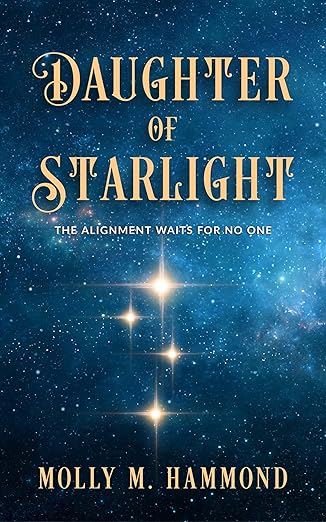
Daughter of Starlight follows Luma, a fierce, guarded young woman aging out of foster care, who stumbles across a hidden cave in the Colorado mountains and ends up transported to the magical world of Edira. There, she learns she’s no ordinary girl; she’s the one marked by the stars, the key to healing the ancient Sacred Stones and stopping a dark tide of invading wizards. With a mix of gritty real-world struggles and rich fantasy adventure, Molly M. Hammond spins a story that feels both deeply personal and sweepingly epic.
Hammond’s writing made a profound impact on me from the very first chapter. She sets up Luma’s pain, the blood on her knuckles, the loneliness, the worn kindness of her social worker Frank, with such realness that I was immediately hooked. That opening scene, where Luma picks at the scars on her palms while waiting to be lectured, felt so heartbreakingly tangible. Hammond doesn’t waste words but paints her world with quick, sharp brushstrokes that sink in deep. Even later, when Luma first hears her name whispered in the mountains during the storm, I could feel the same eerie pull she did. It’s hard to find YA fantasy that captures both grounded reality and wonder so seamlessly, but this book pulls it off.
While the middle of the book took a slightly more deliberate pace, I appreciated the deeper look into Luma’s early interactions with Corr, the gruff yet oddly endearing elf guide. Their spirited exchanges added texture to their relationship and highlighted Hammond’s talent for character dynamics. Moments like Luma’s stumbles and Corr’s teasing remarks provided a playful contrast to the story’s more intense scenes. And when the raptera attack burst onto the page, chaotic, brutal, and utterly thrilling, the story’s momentum surged, and I found myself completely engrossed once again. Hammond’s prose truly shines during these breathtaking moments of magic and mystery.
The themes explored in the novel, particularly those concerning destiny, loneliness, and belonging, resonated with me more deeply than I had anticipated. Luma’s reluctance to embrace the role of a hero and her belief that she is not inherently special felt especially poignant, reflecting sentiments with which I could personally identify.That deep reluctance, that aching disbelief in her own worth, felt incredibly real. When she finally unleashes her starlight powers to save Corr from the monstrous bird (and then immediately pukes afterward, because of course she would), I found myself grinning like an idiot. Hammond doesn’t write magic as something clean or effortless; it’s messy, painful, and exhausting. That choice made Luma’s journey feel earned instead of just fated.
I came away from Daughter of Starlight deeply moved by its heart and emotional resonance. It is a beautifully crafted fantasy that offers real emotional depth, a stubborn and relatable heroine, and a story that intertwines everyday struggles with dazzling magic. It is the kind of book that keeps you reading late into the night and leaves you sitting quietly afterward, feeling both a little wrung out and a little more hopeful as you linger over the final page.
Pages: 289 | ASIN : B0DHWBV71Q
Creating My Own Fantasy World
The Tydareus Kingdom, Alliance of Nations follows twin princes in a tale of epic proportions as they navigate the wreckage of a long lineage of family secrets and power struggles. What was the inspiration for the setup of your story?
The Inspiration for the story was the ending of the Game of Thrones TV Series. I have always loved the fantasy world of Kings and Queens and decided to create my own fantasy world. As I sat down to write the Alliance of Nations, the plot seemed to drive itself from one kingdom to the next.
What intrigues you about this time period enough to write such a thrilling period piece?
As I stated, I love the fantasy world of royalty with Kings and Queens and wizardry. From King Author and Sir Lancelot to Game of Thrones and the many different kings portrayed in the books, I think the fantasy worlds offer a break from reality with dragons, stonemen, etc. Although, I chose not to add mythical creatures and other type animalistic avatars, I do find them interesting. However, I sometimes have a more difficult time relating to books with such characters, which is why I chose to maintain humanlike characters with emotional conflicts on a more personal level relatable to common people. Also, I’m not such a big fan of The House of Dragon Prequel. I haven’t read the books, but I think the series feels rushed and lacks the time development of the plot and characters. That is why I took the time to create realistic plots and focus on character development so that readers could relate to the characters on a more personal level and connect with their personalities whether good, bad or indifferent. It was important to maintain in-depth situations that followed each character’s persona. Of course that made for a much longer read, but I hope that the intrigue and thrill of both plot and characters made the book feel less cumbersome in length.
Were you able to achieve everything you wanted with the characters in the novel?
Yes, as each character came to life, so to speak, each person’s persona felt natural and unforced. From Stavros and his twin to the different kings, it was important that their persona was relatable and realistic. Although I didn’t particularly like each character’s persona, I think it made for a more intriguing plot with relatable twists and emotional conflict. It was important that readers form an emotional attachment to the characters as the story progressed, whether perceived as an antagonistic protagonist, a villain, or a heartfelt protagonist that drives the story forward while overcoming challenges.
Can we look forward to seeing the follow-up to this novel? What are you currently working on?
Yes, the follow-up sequel is The Tydareus Kingdom, A Nation of Slaves which delves more into the lives of the slaves as these 3 kingdoms continue on the path to war. The final book is entitled The Tydareus Kingdom, A War of Three Nations, which of course will follow the lives of the kings as they progress through the war. I’m currently working on the sequel to The Women’s Meeting entitled, Saga of My Scars, The Aftermath of Life’s Wounds which follows Dr. Angela Morrison through her quest for answers to her life as presented by the 3 different personalities. The Women’s Meeting revealed her Renee Lindsey personality to Dr. Morrison forcing her to confront the truths of her childhood, adoption, abuse, etc. Unknown by Dr. Morrison, she finds herself entangled in conflict with a newly emerging personality, Erin Philips. Unlike Renee, Erin has her own ideas about taking over Dr. Angela Morrison’s life—determined to eliminate all other personas and assert herself entirely. Erin is determined to avenge the people responsible for the abuse and degradation of Angela, Renee and herself even if that means destroying Angela in the process.
Author Website
The imminent invasion by Kadir, the brother exiled to the Western Island, forces Arius and Acuitius to seek an alliance with the Eastern Shore Kings—Matteo, Obasi, and Basili—to safeguard their western borders and train their soldiers in an Army that has not experienced combat in centuries. However, these three Eastern Shore Kings, notorious tyrants of their lands, harbor their own ambitions and agenda. They aim to overthrow the Tydareus Kingdom, destroy the brothers, and seize control, regardless of the cost.
Ultimately, this may escalate into a war between the three nations. “Alliance of Nations” delves into the lives of these six kings as they navigate the complexities of forming alliances through marriages and conflicts that threaten to derail their strategies for a successful union.
The Forsaken Planet
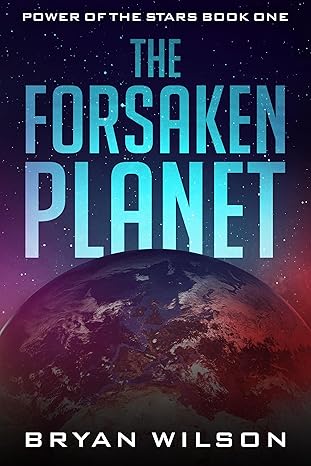
The Forsaken Planet is a sprawling science fiction epic that kicks off the Power of the Stars series. It tells the story of Colton Samson, an ordinary young man from suburban New England whose world is shattered when alien ships invade Earth. After the sudden destruction of his home and the death of his best friend during the attack, Colton discovers that he is connected to a larger cosmic struggle. The book unfolds across multiple planets and explores themes of vengeance, power, friendship, and identity. As Colton grapples with loss and truth, he finds himself drawn into a war that threatens not just Earth but the entire known universe.
I was hooked from the first page. Bryan Wilson knows how to build tension. The slow burn of normal life being ripped apart by cosmic forces gave me real chills. His characters, especially Colton, feel like people you could know: awkward, impulsive, loyal to a fault. The dialogue is natural and sharp, and Wilson has a real knack for blending big sci-fi concepts with relatable emotions. Spoiler alert: When TJ dies, it hurt. Not just because of the loss, but because of how raw and real that moment felt. I also loved how Wilson keeps the pacing tight, even with a lot of world-building. He doesn’t get bogged down in exposition dumps. He lets the mystery unfold at just the right pace.
One of my favorite parts was the mythology. It’s this rich, layered history of prophets, lost power, and a cosmic kingdom that once united all human-inhabited worlds—including Earth. I loved how Earth is portrayed not just as a distant, disconnected planet but as something sacred that was cut off, “forsaken,” like a fallen temple in the stars. It reminded me a lot of Star Wars with its ancient orders and mysterious forces, but also had touches of Dune and even The Silmarillion—that same sense of deep, mythic pasts shaping the present.
The writing is energetic and full of heart. Bryan Wilson has a clear love for the story he’s telling, and it shows in the vivid scenes and emotional moments. His style is easy to follow, with natural dialogue and strong pacing, though sometimes it leans a little dramatic. Still, the emotion behind the words pulls you in, and when it hits, it hits hard.
The Forsaken Planet is a heartfelt and wild ride through space and emotion. It’s for anyone who likes their science fiction with a bit of old-school flair, big stakes, and bigger feelings. If you’re into stories about underdogs becoming heroes, hidden powers, and interstellar drama, then this one’s for you.
Pages: 599 | ASIN : B0C3RVGK9R
The Outlander
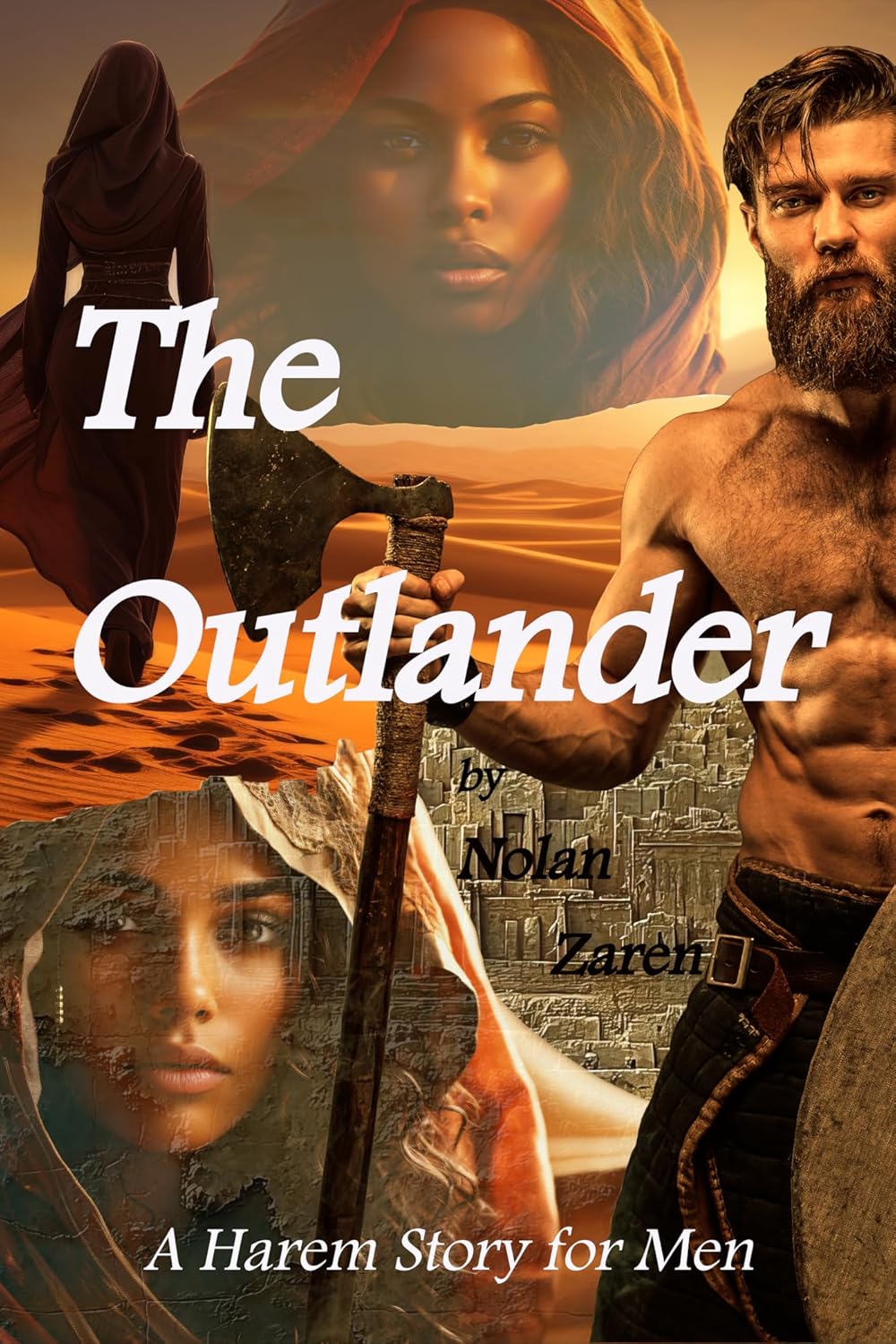
The Outlander is a wild mashup of fantasy, survival, masculinity, and spiritual reckoning. It follows Raylan, a disillusioned, recently divorced man who literally walks away from modern society and into a portal that dumps him into a savage new world. Think Stargate meets Mad Max with a dash of Conan the Barbarian. There, he begins a testosterone-charged journey of physical empowerment, personal redemption, and building a life on his own terms—complete with monsters, magic gems, and the promise of a harem, all while trying to honor his faith and sense of self.
This book came out swinging hard. The opening chapter had me raising my eyebrows more than once. Raylan’s monologue about the “System” (aka modern life, courts, child support, and societal expectations) is equal parts bitter rant and heartfelt vulnerability. It’s raw. The guy is angry, but the emotion behind it feels real. There’s this line where he says, “Slaves only have masters, and then there are those like me, who growl in the darkness but bear the weight of the chain by day”—and it hit hard. Whether or not you agree with his worldview, Zaren definitely makes you feel where Raylan is coming from. I didn’t expect to feel empathy for a character who talks like a grizzled forum poster, but I did.
Then the book jumps into another gear. Once Raylan enters this other world, things go full-on pulp fantasy. He’s suddenly stronger, more capable, and swinging axes at mutant apes. This part was ridiculously entertaining. He watches these nightmare apes take down a massive cow beast in a brutal scene. It didn’t feel like gore for gore’s sake. It was a brutal world, and Raylan reacts like someone who wants to clean it up, not just survive. That internal code keeps the character from becoming just another antihero caricature.
The writing is unfiltered. Sometimes it meanders, sometimes it slaps you with five ideas in one sentence. But there’s something refreshing about a book that isn’t afraid to ditch polish and just be honest. Zaren writes like someone who has a lot to say and doesn’t care if he ruffles feathers. That’s a double-edged sword—it can come off preachy or even uncomfortable in places (especially with gender themes and power dynamics), but it’s never boring. And when Raylan is just quietly mining crystals or sharing a moment with the wolves, it gets unexpectedly tender. You don’t expect emotional depth in a book that calls itself “A Harem Story for Men,” but it’s there in flashes.
The Outlander isn’t for everyone, and that’s kind of the point. It’s for readers who like old-school pulp fantasy mixed with raw, unfiltered masculinity and a splash of spiritual introspection. It reads like someone’s soul spilled out into fantasy form. If you’re open to something weird, rough, passionate, and often deeply personal—even if you don’t agree with everything—it’s worth the ride.
Pages: 488 | ASIN: B0DWKLBVQQ



 LITERARY TITAN