Blog Archives
Fixing Broken Magic
The Witch Whisperer follows a young witch with glitchy magic who seeks the assistance of a reclusive magic fixer to help her fix her magic before it is too late. What was the inspiration for the setup of your story?
The title came to me before anything else from re-watching The Horse Whisperer. I had started writing paranormal stories, witches in particular, and I did a “what if.” What if there was a witch who specializes in fixing broken magic? He has become legendary. From there, I developed the character of Willow, the perfectionist witch with broken magic. Aside from needing her magic fixed for personal reasons, she wants to avoid incarceration in her secret witch society’s dreaded Haven.
Willow and Ravenwood want nothing to do with each other from the start but realize they need each other. What was the inspiration for the relationship that developed between the characters?
The inspiration came from my love of stories where the seeming opposite main characters must work at having a romantic relationship (even as they deny they want one) and work together to resolve the issue at hand. Nothing can come easily.
What were some themes that were important for you to explore in this book?
Willow’s issue is her driving need to be perfect at all costs. She feels like a failure, and when her magic becomes glitchy, deeply flawed. The theme of accepting yourself for who you are and accepting that you are loved for who you are, runs throughout the book.
Never Ravenwood, the reclusive Witch Whisperer, prefers his solitary life, needing no one, so he thinks. He carries a guilt so heavy that living without love seems an apt penance. Working through a crippling guilt to achieve a normal life is also a running theme in the book. Sacrifices are made by both characters.
Can you tell us more about where the story and characters go after book one?
Book two, The Keeper’s Code, picks up a secondary character from The Witch Whisperer—Ash Hunter. He’s a Keeper with the Bureau of Witchery charged with keeping the world-wide society of witches a secret, an ever-more difficult task in this modern world of cameras everywhere and social media. That secret is the over-arching conflict in the planned three-book series, although each book can stand alone. The Keeper’s Code begins a year and a half after the end of The Witch Whisperer and finds Ash paired with a beautiful investigative journalist (a Reg, or a person with no magic—think Muggle). She is determined to find proof of people with supernatural abilities and win the Pulitzer with her story. Ash is out to stop her, but so is a killer witch. The Keeper’s Code is very much a work in progress.
Author Links: Facebook | Twitter | Amazon | Binge Books | GoodReads
Reclusive Never Ravenwood, aka The Witch Whisperer, hates relationships. Content to live out his lengthy sentence for past misdeeds alone on a secluded estate, he doesn’t welcome the distracting intrusion of beautiful Willow. Finding a cure for Willow’s broken magic takes them on extraordinary journeys through a portal to another realm full of danger, friends and foe. What will they sacrifice for life and love?
Reimagining of Human Experience

Self-Actualization in the Age of Crisis offers a transformative perspective on reality and humanity by combining cosmology, physics, and spiritual wisdom to provide a roadmap for systemic reformation and individual transcendence. Why was this an important book for you to write?
The human species is surrounded by crises and the institutions guiding local and global societies only serve to further our descent. At the same time we’re witnessing a renaissance of coordination mechanisms designed to support more regenerative communities, economies, and ecologies. This reimagining of human experience is occurring in a variety of directions, but lacks a foundation from which to build upon and will ultimately struggle to take form if forced to grow within the confines of hierarchical meaning and value structures. Cosmology and physics have revealed a nature-rooted authority that binds human beings around a single truth, a shared commonality that supports the spiritual renaissance necessary to empower systemic reformation. Self-Actualization in the Age of Crisis was an important book to write because it conveys a message that has not been said and does so in a practical framing of spirituality that more fully encompasses human divinity in the moment.
In your opinion, what are the biggest challenges that humanity faces in achieving transcendence?
Humanity’s biggest challenge is not a specific set of problems, but rather that the vehicles of change available to us resist it by design. This is especially true for the spiritual technologies (religions) that guide our available frameworks of meaning and value. For example, the very notion of ascension into heaven is hierarchical, and spiritual hierarchies pave the wave for mortal hierarchies as evidenced by history and the present. These spiritual philosophies have guided the development of human behavior and systems for millennia, and now the vast majority are left powerless within arrangements that prioritize the few over the majority. They have brought the crises to our doorstep but offer no alternatives. Human transcendence is rooted in our confrontation of dogmas of a past we had no say in choosing, the biggest challenge is if we possess the individual and collective courage to do what must be done.
What were some key ideas that were important for you to share in this book?
Change is the single truth – this is evidenced by our most advanced cosmology and physics, which tells us that we inhabit a reality of continuous (infinite) universes. Nothing has ever not been changing, solidifying the ultimate reality of existence as momentary totalities. All human knowledge, imagination, and system is bound to the single truth. The material nature of the universe exists in perpetual change.
We inhabit a relational universe. All exists in relation to all else within the moment. The human experience is that of the fractional observer within an informational universe. Observers and information are a single happening within the moment.
There are two observable infinities within the universe. The universe itself and human imagination. The alignment of these two represents human divinity within the moment.
We redefine the self to more accurately represent the relationship between the individual and their circumstances within a given moment. Self-actualization refers to the combination of individual and systemic actualization. Individual actualization is the development of the self. “I” Systemic actualization is the development of the collective. “We”
What do you hope is one thing readers take away from your book?
It is my hope that readers will take away a profound sense of purpose and urgency towards transforming the human condition. We are more than our circumstances allow us to be, but a greater vision of humanity is both possible and desirable if we are willing to choose. Self-Actualization in the Age of Crisis is a public work designed to evolve alongside its community of practitioners. SpiritDAO serves as our non-profit community organization, if the message within the next or this interview resonates with you please visit https://spiritdao.org to learn more.
Author Links: GoodReads | Twitter | Website
Cosmology and physics have revealed the single truth. It changes everything we think we know about the universe, and demands a reimagination of how we organize our relationships with ourselves and others. Self-Actualization in the Age of Crisis binds spiritual renaissance to systemic reformation, which author Ron Rivers argues is necessary for human transcendence.
In Self-Actualization in the Age of Crisis, you’ll discover:
What cosmology and physics reveals about the nature of reality and what it means for humanity.
A detailed analysis of the multiple crises humanity struggles to overcome and what we must do to transcend them.
The changing nature of time, single truth, relational universe, and observable infinities.
A redefinition of self as it relates to individual and systemic actualization, including new core values to guide our everyday lives.
The Eight Dignities: A new set of systemic individual rights that align with our personal divinity and further the development of our collective capacity.
Frameworks of philosophy and practice you can embrace immediately to better align yourself with the nature of the universe as we understand it.
If you’ve been searching for an alternative to what is then it’s no surprise you have found yourself here. This text connects the dots between individual, system, and spirit in a way that has never been done before. Providing readers with an expansive vision of what being human can be should we choose to imagine more and the practical steps to begin now.
Self–Actualization in the Age of Crisis is a living document intended to evolve alongside its community of practitioners.
Margaret Anne Is An Amazing Woman
Margaret Anne is a multi-perspective journey through society, spirituality, and history, following the life of a powerful and determined woman during the American Civil War and her quest for redemption and unity. What inspired you to write this story?
My writing has strong spiritual undertones that come from my faith in God. In today’s society, many stories are created with this notion of things being black and white in terms of deciphering right from wrong. While that is ultimately true, understanding the circumstances that influence a person’s intentions is never that easy. To keep things brief, I would say that there were three primary reasons why I wrote Margaret Anne in the way that I did: The first is simply that the story and its messages were in my head and bursting to be told; the second is that I hoped to use the story to convey the hidden prevalence of our Divine Creator in the world around us; and the third is that I was always fascinated by the societal underpinnings that surrounded the Civil War and the political motives behind that trying time in American history.
Margaret Anne’s life is set against the backdrop of the American Civil War. What were some challenges you felt were important to developing her character?
Margaret Anne is an amazing woman. I hope that I will come across another like her when the time comes to write my next novel. In modern terms, the closest description I can provide for her essence is that she was “touched.” For much of her life, she could see things beyond the scope of our customary human senses. She could also heal people and read their emotions. While I found it to be an exciting challenge to convey the behavior of a spiritual being of a slightly higher order, it was often difficult to keep her in the realms where the darkness is pitted against the light and away from making her plight strictly the result of her skin color and the taboo nature of her existence at that time in our country’s past.
What were some themes that were important for you to explore in this book?
The biggest theme for me was coming to terms with the fact that racial and ethnic division is generally something that belongs to the seedier realms of humanity and beyond. People are never born to hate or exclude, so the question for me has always been: where did those traits that defined the colonial age come from, and how were they nurtured so successfully? As an American born in the post-Nixon Shock Era, I was always fascinated by those cultures that esteemed the ability of selfless leaders to provide for their people before themselves. While I thank God every day for what remains of my freedom and my ability to write stories of this nature, the amount of idolatry and indifference to the importance of community and our fellow man that has been programmed into the American psyche is almost beyond belief. Self-reliance has become a thing of the past in the era of big government, big banks, and big corporations. That is why I like to revisit and write about simpler times and see where those traditions began to evolve because you are able to incorporate a romantic angle that fits with the historic pageantry, chivalry, and proper decorum of the pre-industrialized world.
What is the next book that you are working on and when will it be available?
I wrote a series of books called Redemption prior to writing Margaret Anne. Those books are a continuation of Margaret Anne’s story. The writings cover the history of the Basseterre family and the final resolution of things left undone by Margaret Anne’s predicament. The original manuscripts are available presently, but I will be publishing the revised and edited versions over the coming year. I published those volumes early for my mother, who passed away while helping me organize and revise the story from the onset. The first book in the Redemption series is titled Angel Ascending and will be available sometime this spring. The other three books are titled Convergence, Reckoning, and Watchword. They will not be too far behind.
Author Links: GoodReads | Twitter | Website
As the illegitimate daughter of a wealthy plantation owner and a colored Haitian woman in a time of slavery and great upheaval, Margaret Anne Basseterre’s life is anything but easy. From the moment of her birth, she has been coveted by the same dark forces pushing the country toward war. For every moment of despair, an unsuspecting lost soul is given the chance for redemption by helping her to safety.
Through divine will, Margaret Anne and some of those ordained to protect her end up residing on the majestic estate of her father.
As the ethereal girl grows up on the Calhoun plantation and the country farm of her natural mother, the lives of those around her are tested by deep family secrets and the will of wickedness. She is set to prove that her unification of this dangerously illicit and blended family during the societal unrest surrounding the Civil War was ordained from on high. She is their guiding light in this most turbulent storm of the American age.
When it comes time for her to confront the devil who has tainted her family, she’ll discover just how powerful the light within her truly is.
Margaret Anne is a bold walk through the many societal and spiritual battles raging during the years that America fought to establish both its identity as a nation and its identity under God.
A deep and poetic read, Margaret Anne is a multi-perspective view that leads into the Redemption Series.
A Questing Universe
Quest for the Emerald Crystal follows the Seekers on a quest to uncover the ruins of Atlantis and defeat the dangerous Diana Daggert in a thrilling spiritual journey filled with philosophical discussions. What was the inspiration for the setup of your story?
Past readings of a spiritual nature preceded my writings. Notably, these were the writings of Betty and Stewart Edward White and specifically the book “The Unobstructed Universe.” Adding to that, the stories told by Jane Roberts and specifically the book “Seth Speaks” established my organized spiritual thoughts, more or less permanently.
For the first seventy-five years of my life, I read many books. Most of the fictional novels were science fiction, and many of my favorites had to do with various “Universes” created by authors such as Frank Herbert, who created the “Dune Universe.
As I jumped into my eighties, I wanted to create a fictional Universe before leaving for my scheduled one. A Questing Universe formed in my mind, and the Quest For The Emerald Crystal books and my website came into being.
What were some driving ideals behind your character’s development?
All of my characters came into being within my imagination. The characters are creations based on personalities I would like to see in the storyline’s specific roles. I love my protagonists and antagonists equally in my books but tend to root for the nice guys and gals, even though I am often attracted to the not-so-nice ones. But remember, The Questing Universe had been created to serve the highest Spiritual goal, so I am restricted from offering too much favoritism to my naughty but nice characters.
What were some themes that were important for you to explore in this book?
I tried to introduce many contrasting spiritual themes that humans must get involved with. But essentially, my compositions are central to those factors that are popular in most fictional books. As in all thrillers, we must have greed, sexual interests, friendship, adversarial relationships, spiritual evolution, battles, love affairs, etc. There are a few ordinary folks like us, but most of my characters are extremely beautiful, handsome, and well-built. Why would we create anything else when the author is the creator and has that opportunity?
What can readers expect in book 2, Spiritual Warriors In Belize?
Like everyone who has been to Belize, any reader will get immersed into the beauty and uniqueness of that tropical country. Our protagonists are there to attempt to thwart the intentions of the antagonists to take over the economy of the world from that and other locations. But what a fantastic place to do this in. I have been to Belize many times and fell in love with it the first time there. So now, just as readers in Book#1 learn a lot about what the Bahamas is like, they will join this venture into Belize and, at the same time, follow the major conflicts that the Spiritual Warriors on both sides of the competition will be involved in.
Author Links: Website | Amazon
Evolutionary advancements in these animals are created by superior spiritual beings called Zenithians. They are responsible for creating the evolution of all aspects of living beings within the Earthly Realm.
The following chapters of this spiritual thriller novel continues with the adventures of modern-day individuals, eventually called The Seekers. They continue with their evolutionary journey of spiritual exploration, experience, and growth for themselves and each other. Subsequent chapters of this story transport the reader to contemporary times and establish the novel’s plot.
The primary antagonist is a spiritually powerful and wealthy woman named Diana Daggert, who provides the nucleus that pulls all of the primary characters together in a quest to discover the ruins of Atlantis, suspected to be somewhere in the Bahamas. She has a very dangerous hidden agenda that will serve as the conflict between all characters in the novel. Many of our novel’s characters acquire heightened spiritual powers by reading the Akashic Record, traveling within the Spiritual Timeline, and traveling in Out of the Body experiences. The story describes these powers and more in detail.
The storyline takes the reader along on a ride that moves at a moderate pace during the first chapters while new characters are being introduced. The story begins to speed up when friction between the protagonists and antagonists occurs. The novel becomes a thriller towards the end, as an open conflict between Diana and her followers attempts to destroy The Seekers.
This novel is an inspirational thriller for mature readers as it contains relatively complex philosophical discussions on the origin and evolutionary progress of individual souls. There are instances of great violence and disturbing activities. The storyline also describes many of the primary character’s actions, including those of a sexual and social nature.
This novel introduces Quest for the Emerald Crystal-Book #1/Spiritual Warriors in the Bahamas, but plans for a sequel to this novel to occur without leaving the reader to feel that the story was incomplete. The characters remain intact and some are damaged, whereas others are enhanced.
It Always Ends In Tears of Joy And Love
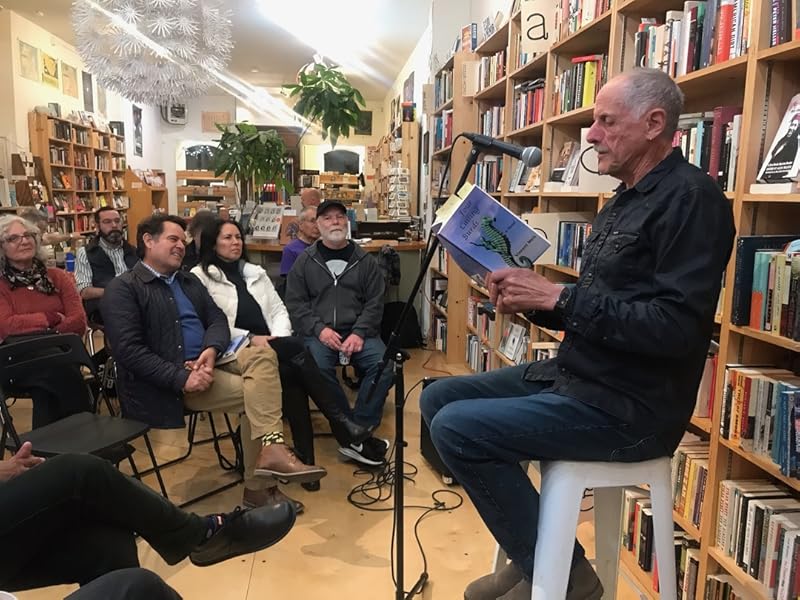
Colton’s Terrible Wonderful Year follows a black teen on a quest to meet his surrogate mom where he falls in love, almost loses one of his dads, confronts a racist cousin, and learns about love. What were some sources that informed the development of this novel?
I like to center my novels in a historic time with all the surrounding sociological issues. This story is set during the first year of the Covid-19 pandemic. But a number of other events were happening in 2020, including the rise of Black Lives Matter awareness which affects the main character, Colton, in a very personal way. It was also a time of political upheaval due to the upcoming election, issues that tore apart various members of Colton’s family. And then, like in many of my books, a nod to foreign travel with the family trip to Thailand confirms my belief that travel broadens one’s mind.
Colton’s character felt authentic. Was there anything about his character that you pulled from your own life?
As a part-time stepdad to a young man of mixed race, I drew from that experience. My real-life situation is much different from the one in the book, but being married to a Black man has made me imagine what it would be like if we had had a son through a surrogate mom and raised together. Some people have questioned how an older white cisgender gay male can write the story of a young Black apparently straight male. As writers we are observers, and I have had the great fortune of being surrounded by African-American family members, the two women of color who are the moms of my stepson, as well as a diverse community of different ethnicities and people on the LGBTQIA+ spectrum.
What scene in the book was the most emotionally impactful to you?
In the latter part of Chapter Fourteen, Colton’s dad, Augie, is saying goodnight, and Colton begs to hear the story of his birth one more time, how Colton was taken from his birth mother’s arms and placed in the arms of his two dads. It is an emotional scene with both humor and tenderness, a bonding story that Colton never tires of hearing and Augie never tire of telling. And it always ends in tears of joy and love.
What is the next book that you are working on and when will it be available?
I’m almost finished with a sequel to my novel, The Mayor of Oak Street. The main part of the story takes place about 40 years after the end of that novel, but there are flashbacks throughout the book that pick up with the budding relationship between Nathan and Nick when Nathen is in his early twenties. It recounts the stories of love and traumatic loss in Nathan’s life and his surviving the AIDS pandemic. At sixty, it seems he is given one last chance at love that he’s sure he doesn’t deserve. Will he take it? The working title is Memories: Love Lurks and Pounces.
Author Links: GoodReads | Facebook | Website
Colton’s dads reluctantly introduce him to his birth mother, but she doesn’t turn out to be person he hoped for. On his journey of falling in love, nearly losing one of his dads, and confronting a racist cousin, he learns about love, non-traditional families, community, and what is important in life. The biggest challenge of all is something he discovers about his birth, causing friction with his dads. But like every difficulty in his life, the love of his dads ultimately carries him along and lifts him up.
Break Free From Convention

“A Guide for Aging Heroes” takes readers on a transformative journey of self-discovery and provides an actionable roadmap to help readers take control of their life, overcome fears and challenges, and live a life of purpose. Why was this an important book for you to write?
The short answer is to make the world a little better place.
“A Guide for Aging Heroes” targets three groups. The status quo for modern life is rooted in flawed messages that leave people feeling hollow and unfulfilled. By living the Aging Heroes lifestyle, Erica and I have cultivated a richer more satisfying way of being. We are not unique. The first target group has found the same path we have but don’t have a name for it. For them, “A Guide for Aging Heroes” provides clarification and a sense of community.
The second group is people who realize something is fundamentally wrong in contemporary life, but they can’t put their fingers on what it is. For them, the book shines a bright light on the problem and provides direction toward finding the answers they seek.
The third group is people who are doing everything our culture tells them should result in happy a happy life, but they still feel empty. For this group, “A Guide for Aging Heroes” offers a chance to break free from convention and recognize the many options that had been hidden from them.
What is the most important aspect of owning the second half of life and how can readers develop the courage to live a fulfilling life?
The main requirement for owning the second half of life is a willingness to defy societal expectations. The number one regret of the dying is that they did not live lives true to themselves but instead tried to conform to what others expected of them. Stepping outside the roles society has placed on you requires mad courage. Doing so means risking rejection by people you love. That courage must come from a deep understanding that life is a time-limited offer. Each of us has the opportunity to live exactly one human life. Will that life be spent doing as you are told, or will it be a unique journey of discovery? Unfortunately, most people choose the prior by default. Aging Heroes have the mettle to embrace the latter.
What message do you hope readers will take away from your book?
Aging is not a disease. It is not a relentless march toward decrepitude. It is a privilege denied to many. Cast off the cliches that aging is a bad thing. Embrace the myriad of amazing experiences available to you as the years pass. Growing older is an opportunity for growth, renewal, and adventure.
What is the next book you are working on, and when will it be available?
Erica and I are currently working on a companion journal for “A Guide for Aging Heroes.” We anticipate completion by the end of 2023. For years, it was believed that learning was a passive process. The metaphor was that learners were empty vessels into which teachers poured knowledge. Nothing could be further from the truth. Learning requires active engagement. Journaling is a dynamic way to move disordered ideas from the chaotic space of the mind to the organized and digestible area of the written page.
Author Links: GoodReads | Twitter | Facebook | Instagram | Website
Life Ages Us
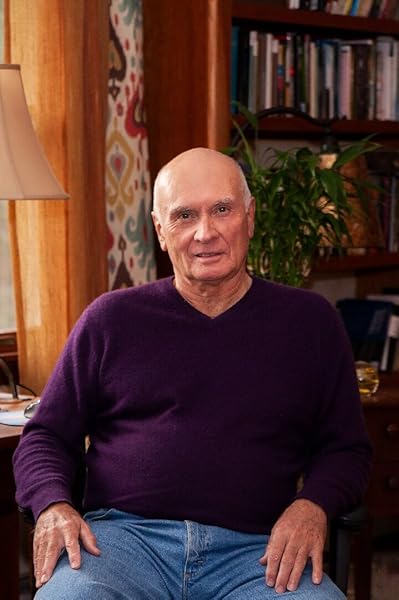
My Days With Emma is beautifully written and addresses a subject that is rarely discussed. Why did you want to write about the process of aging and being mentored into elderhood?
I wanted to write about the process of aging because I was aging, and I knew I was a long way from making peace with it. Writing enabled me to explore where I am with my relationship with aging and what aging may be asking of me. Being mentored into elderhood made a great deal of sense to me. I have been closely mentored since I was 29 and it became apparent to me that Emma was more than capable of offering me the kind of guidance that worked so well in the past.
I appreciated the candid nature with which you shared your views and emotions around aging. What was the hardest thing for you to write about?
I think the most difficult thing for me to write about was unconditional self-love. I had devotionally lived into conditional self-love, committed to getting up each morning prepared to demonstrate that I was good enough. The readiness to prove my worth over and over again was losing its appeal and I wasn’t sure what would take its place. I deeply appreciate James Hollis collaborating with me to unpack what unconditional self-love might look like.
What were some ideas about aging that were important for you to share in this book?
The first idea is that we don’t do the aging, life ages us. Also, that aging isn’t simply about a list of physical and cognitive losses and it’s not too late to be mentored into a more mature experience of aging. Especially important was that accumulating years might suggest that we have a greater capacity to serve and to remain curious about how we might optimize such a service.
What do you hope is one thing readers take away from your book?
My hope is that readers will be able to make some small measure of peace with aging, allowing the losses to open them to the simplicity of being where there’s no need to prove anything. When proving drops away we can experience gratitude for the generous moment, where a deeper sense of presence begins to define who we are.
Author Links: GoodReads | Twitter | Facebook | Website
This text offers a touching and edifying portrayal of the author being mentored into elderhood. He is introduced to elderhood with its appropriate trials and ordeals. The Power of Being becomes a new way to see himself and life, releasing him from the need to prove something.
My Days with Emma – A Soulful Path to Elderhood offers readers a blueprint for being a valued resource while aging. Find out how your maturity can be a worthy way to serve in the winter of your life, yielding a rich legacy.
Sharing Rose’s Story
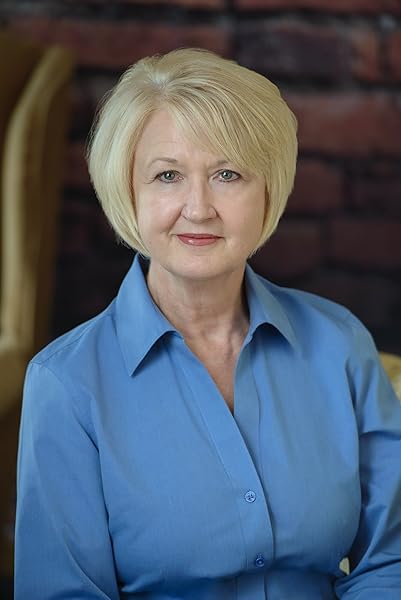
The Rose of Washington Square follows the life of an aspiring woman and artist who fought to make a name for herself in a man’s world. Where did the idea for this novel come from?
I love writing biographical historical fiction. The protagonist of my debut novel, I am Mrs. Jesse James, had ties to my home state of Missouri, and I wanted to shine a spotlight on another woman from the Midwest. When I searched for possible candidates, I ran across Rose O’Neill. I found her to be an extremely accomplished woman, one who doesn’t get nearly enough credit for what she did. For example, she worked tirelessly to help women get the vote. She advocated for women wearing comfortable clothing instead of binding themselves in corsets. She was generous to creatives who had no other support, and she wasn’t afraid to advocate for herself and for others. I think of Rose O’Neill as a true Renaissance woman.
What kind of research did you do for this novel to ensure you captured the essence of the story’s theme?
I spent more than a year in initial research, and another year with additional research while I wrote the book. I dipped into family correspondence, read books and articles, studied newspaper accounts, and spent a day at Rose’s beloved home in Walnut Shade, Missouri. The more I learned, the more excited I became about sharing Rose’s story.
What were some themes that were important for you to explore in this book?
Although Rose produced a prodigious body of work, my intent was not to bring up every detail of her artistic and literary endeavors. Rather, I wanted to explore her relationships with other people, places, and events; using that as a springboard to show how these elements helped to shape her life’s path: her personality, opinions, and decisions. How she evolved from a nineteen-year-old girl to a determined woman of world fame who remained tempered by compassion.
What is the next book that you are working on and when will it be available?
I haven’t started researching in earnest yet, but I’ve identified a potential subject for my next historical novel. I can’t disclose anything more now, but I can say she’s a woman who made waves in the world of medicine.
Author Links: Website | Facebook | Twitter | Instagram | GoodReads
Self-taught artist Rose O’Neill leaves the Midwest for New York in 1893, determined to become an illustrator in a field dominated by males. Mindful of her duty to the impoverished family she left behind, Rose’s obligations require her to yield to the men who hold the reins of her career; as well as the men she grows to love.
Yet despite every obstacle facing her, she excels at her craft, eventually designing a new character, the Kewpie. Her creation explodes into a phenomenon, but Rose’s disenchantment with the status quo fosters new ambitions. She must decide whether to remain within the boundaries dictated for her, or risk everything she’s gained to pursue the creative and personal passions that ignite her soul.
With grit and tenacity, Rose O’Neill blazed an unforgettable path during the tumultuous times of the early 20th century.



 LITERARY TITAN