Blog Archives
Colin The Crab Is A Special Character
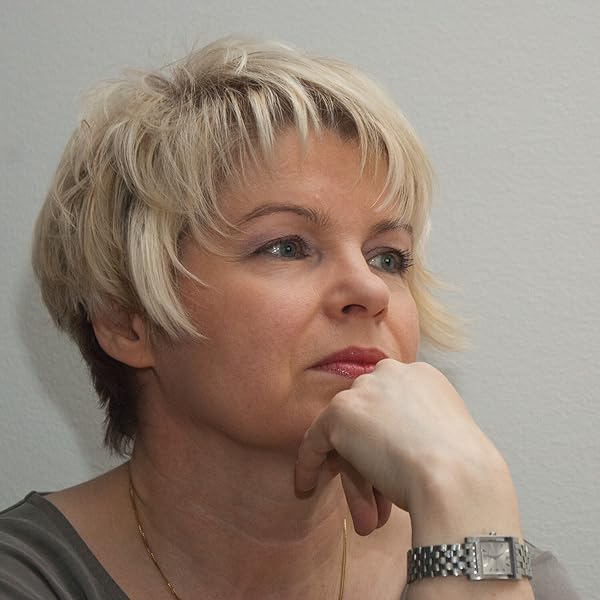
Colin the Crab Gets Married follows two crabs who want to get married and start a frenzy among their friends who try to help. What was the inspiration for the setup to your story?
Colin the Crab and his friends form a kind of village community. The life of Colin and other underwater and riverside residents is, in many ways, very human and resembles the events of real life. Of course, the stream and its banks contribute to the adventures of the characters in these books.
My children’s books about Colin the Crab reflect observations of how various human communities function. Life in a small country village, the experiences of working life, and the interaction of people in a large family create an endless treasure chest of ideas. Specific settings and action patterns are often repeated, even when the scene changes.
If I think about the inspiration for this particular book in the Colin the Crab Series, it started from the experiences of many acquaintances. Fortunately, my husband and I were able to organize a wedding that looked like ours and suited us, but I’ve heard about other kinds of experiences as well.
What was your favorite scene in the book to create?
In this book about Colin and Clara’s wedding, I was able to use the situations faced by many of my acquaintances. Large family celebrations are typically occasions where opinions and expectations collide.
When arranging weddings, the previous generation often relives their personal memories, while the young couple’s perception of their dream wedding can be completely different. Will the result be a modest ceremony in the family circle or a big event full of exciting programs in richly decorated ballrooms?
I had a lot of fun writing the various conflicts related to wedding preparations. Old Mrs. Monkfish’s well-intentioned attempt to arrange a big orchestra to play outstanding music almost leads to complete disaster. The wedding couple preferred the delicate singing of the little fish’s choir, but Mrs. Monkfish arranged a big orchestra to entertain the guests. The wishes of the lizard family were to turn the party environment almost into a children’s amusement park, even though Colin and Clara wanted a peaceful party.
One scene that made me smile was the wedding dress conflict. In it, friend Stella the Starfish pressures the bride about the wedding dress. However, the gorgeous outfit from the luxury boutique turns out to be Stella’s own dream dress, not that of the modest bride.
It was fun to imagine a scene with two very different female characters. Of these, Stella often represents extreme vanity and selfishness. Sometimes I’m angry with her, but in this episode, I smile because Stella fails to subdue the bride’s will. The shy crab girl keeps her head and wears her mother’s old dress as planned. Ultimately, the fine costume ends up on Stella the Starfish herself, for whose many arms and legs the gorgeous outfit fits perfectly.
Do you provide educational resources for parents on how to integrate your books into a lesson plan?
I have written many books that could be considered educational or related to parenting and family life.
When I write these books, I don’t really think about making other people act on the teachings of my books. I just let the story fly! Books born from my experiences and honest thinking just bring some practically tested behavior for the readers to consider. Of course, I wish the stories make an impact, maybe even influence people’s judgment. However, only when they believe it is valuable and essential.
I have met teachers and parents who have come across my books and noticed how they could use them as educational aids. Then they usually act just as I would recommend, i.e., read together and discuss the topics. Colin and his friends have also inspired drama groups, where it is possible through role-playing to learn how to interact with others.
I consider it important that parents and educators read together with children even after the little ones have already learned to read. Then it is possible to discuss the story and its lessons with the child. An adult can immediately notice which elements are interesting, challenging, or maybe too scary for the young ones. Even for an older child, talking with an adult about the topics they read can be helpful.
I also write articles and give interviews and presentations about the ideas behind my books. This way, I can also tell adults about the backgrounds of my stories, and they will pass the message on to improve children’s reading experience. So, my influence takes place on two levels – in children and the adults around them.
In any case, my ultimate goal is that important messages are conveyed and that they help change the lives of families for the better.
Do you have more books planned that feature Colin the Crab?
Colin the Crab is a special character for me. I have already written four illustrated children’s books about him with longer stories: The Caring Crab, Colin the Crab Finds a Treasure, Colin the Crab Falls in Love, and Colin the Grab Gets Married.
In addition, I have two shorter stories with simpler illustrations aimed at younger children in the Mini-Crab Series. All these books have become popular among readers – teachers and parents, too!
Colin the Crab Series consists of independent stories which can be read separately. In the series’s background is the “big story,” the common thread of Colin’s life, progressing from one phase to another.
In this fourth book, Colin has finally found a spouse to live in his cozy house at the river. Living together naturally has its challenges. Personalities must get used to each other and adjust their habits, which gives me ideas for more books with fun adventures.
Soon, we can probably be excited about whether Colin and Clara will have offspring. Everything is not always straightforward, and life’s challenges are solved with the help of friends. But I can promise that neither Colin nor his spouse will give up their own dreams and wishes, even if others try to meddle in their lives with good intentions.
I want Colin to represent the idea that every creature has the right to defend their way of life and act in a way that suits them and respects others – no matter how slow, thoughtful, or old-fashioned that might be.
Author Links: Facebook | Website
But soon Colin’s friends get so carried away with the wedding plans, they forget to involve the bride and groom. What happens when the party turns out to be completely different from Colin and Clara’s own plans?
A Little Fright And A Little Fun
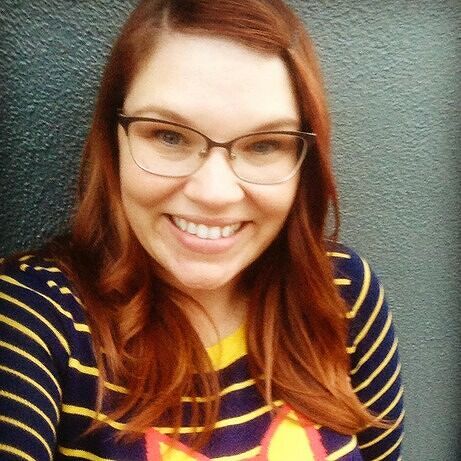
Halloweenie follows a magical pumpkin who is brought to life, encounters scary situations, and makes unlikely friends. What was the inspiration for your story?
I’ve always loved Halloween and the Fall season, so writing a story about this magical time of year was definitely at the top of my list. The story itself was inspired by classic Disney animated shorts, like “Trick or Treat” that I loved as a kid. A little fright and a little fun mixed in! I also wanted to tell the tale of sticking up for others and standing up to bullies.
The art in this book is fantastic. What was the art collaboration process like with illustrator Simone Föhl?
Thank you! Simone is an immensely gifted artist, and I’m beyond lucky to have had her as a partner in making Halloweenie. Her instincts for character designs and acting are top notch, and these characters practically jump right off the page. Also, she really used her color design to amplify the emotions of the story. The story starts out light and warm, and gets a little dark as the story gets a little scary, then returns to softer tones for the finale. Pure genius! Simi, as I affectionately call her, is also such a joy to work with! So collaborative and easy-going! We really were aligned on the vision, and had a tremendous partnership. She is the best and of the best, and I’m very grateful to her for her outstanding work on Halloweenie.
What were some educational aspects that were important for you to include in this children’s book?
I think it’s important to teach kids about standing up to bullies and taking action against harmful behaviours. Using their voice for good and speaking up when they see something wrong happening. Also, my book is very inclusive, with all leads being female characters and representing different cultures and backgrounds. The Geena Davis Institute on Gender in Media has a wonderful motto, which is, “If she can see it, she can be it.” For too long there hasn’t been enough female representation in stories, and especially in children’s content, so it’s our responsibility as storytellers to implement these changes one book, cartoon, or movie at a time. Universally, it’s so important for every child to see themselves represented in stories across all media. It is fundamental for children’s self esteem to be and feel seen, and is incredibly crucial for healthy development for them and humanity overall.
What is the next book that you are working on and when will it be available?
Right now I am actually working on making Halloweenie into an animated short, which is very exciting! I first envisioned the concept as an animated short, but pivoted and decided to start with the children’s book. Animation is a passion of mine, and I’ve been very fortunate to have had a career in the industry for over a decade. I can’t wait to see this story come to life on the screen, and to reach even more audiences!
Author Links: GoodReads | Instagram | Facebook | Website
I Had To Do Her Justice
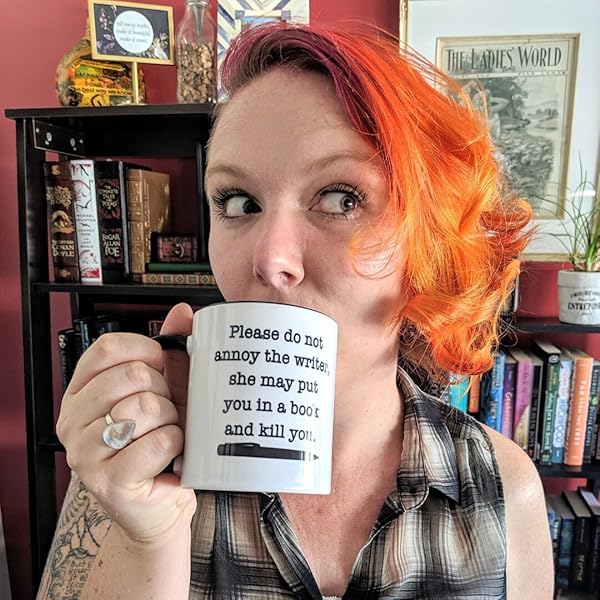
Symbiotech is the third book in your exciting Ellinor series. What were some things you knew you had to wrap up in order to satisfy longtime fans?
There were three things I knew had to be wrapped up for the readers that have been with me from the very start, two of which all revolve around Ellinor. Firstly: completing Ellinor’s arc of grief and mourning to accepting that she is worthy of happiness despite her anger and depression, and Jelani had a big part in that journey so paying off that relationship became really crucial. And secondly: Ellinor needed to really figure out who she was again when you stripped everything away. She was always trying to figure out who she was without Misho but resisting because it felt like too big of a betrayal, but when so much is taken (often violently) from her, she really had to buckle down and reevaluate her life and what she wanted from it. Writing her arc was one of my favorite things to do, Ellinor has come so far since “Resistor” and I knew I had to do her justice in this third book. I also needed to address all the forces that were vying for Fiss so that, if/when Ellinor and her crew return for a new adventure, it wouldn’t feel rehashed due to the same obstacles reappearing. That way readers get a satisfying conclusion, but won’t feel like there is no story left to tell in the next iteration of these characters.
What were some challenges you set for yourself as a writer with this book?
I didn’t want this book to feel easy for the characters so even though, with how things ended in “Deadlock”, it wasn’t a surprise in terms of what needed to happen in “Symbiotech” with Cosmin, the challenge I set was to still have that conflict be really daunting and not something that the reader knew the outcome of. I have read so many trilogies where the show down with the big bad guy just didn’t feel as ominous as it did in the previous books that, that became the challenge I set most for myself. That and tying up loose ends but that was something I knew my critique partners would help me with the most, but crafting that tension between Ellinor and Cosmin was my personal biggest challenge that I set for myself as a writer. Cosmin fashions himself to be a god after all, so nothing could be easy.
Was there anything about Ellinor’s character that developed organically while writing and surprised you?
Her “momma hen” tendencies actually! Ellinor is such a brash, foul mouthed, “let’s punch them” type of character that when these moments of tenderness come up between her and Fiss, or her and Oihana, or even Ellinor and Kai where she puts them and their needs first and takes care of them really surprised me, especially with how natural of a progression it became. I loved having this character show me just how multifaceted she was and teach me that just because Ellinor isn’t classically maternal doesn’t mean she is devoid of those tendencies. So being able to bring more of those moments to the forefront in “Symbiotech” was really special because it was just so organic and natural for her despite all the trauma she went through.
What is the next book that you are working on and when will it be available?
I’m working on a crime and mystery sci-fi duology that actually features some of the characters from “Symbiotech” and the Ellinor series. This will be a completely separate series even though it does feature some familiar faces you won’t have to read the Ellinor series to enjoy these books. I just love the universe that the Ellinor series takes place in too much to say good-bye to it just yet. These two books are also a bit of an homage to my interest in true crime, so it’s a little bit of a departure from what I’ve done before but I think it gives a much deeper look at the city of Euria and the kinds of people that inhabit it. I’m hoping to have both of those books released in 2023, ideally 5-6 months apart (aiming for the first to be released in Summer) but we’ll see. I am expecting my first child early in the year so my launch schedule may move around a little to say the least!
Author Links: GoodReads | Facebook | Website
Cosmin has made it violently clear that wherever Ellinor and Kai go, he will find them. And, he will gladly make their families suffer until Ellinor returns what she stole from him. But Ellinor cannot, and will not relinquish Fiss; not to those who would bind and shackle him to serve their greedy agenda, not to anyone.
Even with her magic returned, and with Fiss, Kai, and Jelani to help, they are still no match for Cosmin, a point made agonizingly clear when Ellinor and her friends tangle with an old foe. Without more power, Ellinor has little hope of saving her family before there is nothing left to save. The power is there, but learning how to harness her upgraded magic is complicated, and time has run out. Then there are other distractions, in the guise of feelings Ellinor would never have thought possible for her again, if it weren’t for the charming Jelani and her growing attachment to him.
Allies are in short supply, and any help will come with a price, but that won’t stop Ellinor from returning to Euria. She will face Cosmin von Brandt and save her family, or die trying.
She Learns To Wield The Magic
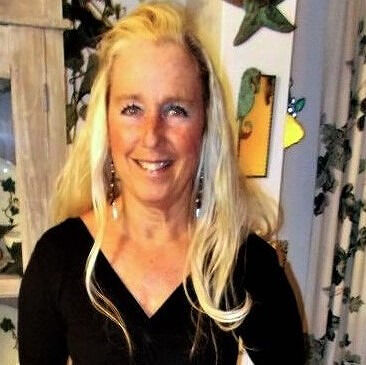
The Wild Rose and the Sea Raven is a genre-crossing novel with elements of fantasy, fairytale, and romance as well. Did you start writing with this in mind, or did this happen organically as you were writing?
I adapted the medieval French legend of Tristan et Yseult, which is heavily interwoven with Arthurian myth. I knew I wanted to write a paranormal fantasy version of this medieval romance, complete with Druids, forest fairies, dark magic, Avalon, and Elves, so I researched a lot of dark tales from the enchanted Forest of Brocéliande, birthplace of Merlin, Lancelot, and the Lady of the Lake Viviane. My paranormal romance dark fantasy trilogy incorporates many of those mystical tales of Arthurian myth into the original medieval French legend of Tristan et Yseult.
In your novel, I picked up some inspiration from other fantasy novels that I thought played well in the story. What were some of your sources of inspiration for this book?
Marion Zimmer Bradley’s classic, “The Mists of Avalon” was a big inspiration for me, as were many legends associated with King Arthur–especially the forging of Excalibur in dragonfire on the island of Avalon by an Elf descended from the Gods. I knew I wanted to have Avalon and the Elves play a huge role in my trilogy. And when I discovered that Tristan (my male protagonist) was a Knight of the Round Table with Sir Lancelot, who was trained in Avalon by the Elves, I knew that would be essential to my plot.
What were some themes that were important for you to explore in this book?
I did a lot of research into herbal medicine and healing crystals, since my female protagonist Issylte is a healer. I created an elemental “verdant magic” for her to wield as she discovers her latent gift as a forest fairy who heals with natural herbs. I developed the plot so that Fate would lead Issylte to Avalon–where she learns to wield the magic of all three sacred elements of the Goddess (forest, water, and stone). In my novel, Lancelot brings the grievously injured Tristan to Avalon, the Island of Healing, where Tristan meets his fated mate, Issylte– the only one skilled enough to heal him.
What is the next book that you are working on and when will it be available?
“The Lady of the Mirrored Lake”, book 2 of “The Wild Rose and the Sea Raven” trilogy, will be released January 23. It continues the paranormal fantasy medieval romance of Tristan and Issylte as the fated mates discover a transcendent passion, wield their Druidic magic, and join forces with shapeshifting allies to defend their Celtic kingdoms from the wicked Black Widow Queen.
Author Links: Website | Twitter | Facebook | Instagram
Tristan of Lyonesse is a Knight of the Round Table who must overcome the horrors of his past and defend his king or lose everything. When he becomes a warrior of the Tribe of Dana, a gift of Druidic magic might hold the key he seeks.
Haunted and hunted. Entwined by fate. Can their passion and power prevail?
Authors Do Make Stuff Up

The Queering follows a seventy-year-old woman who shares her life story about being a lesbian through her writing and the prejudice she endures for it. What was the inspiration for the setup of your story?
I’m a pantser, so when I start to write a book, I’m not entirely sure where the story will lead. And not entirely sure where the germ of a story originates. My last book (The Moonstone Girls) portrayed a beautiful, loving relationship between a brother and sister. In The Queering, I wanted to explore the opposite. In this case, Taylor’s brother, rather than being gay, struggles with his own loathing for gays. In other words, struggles with his own homosexual inclinations. Taylor and her best friend graduate with theatre degrees and hope to continue to live together, not as lovers, but as friends. However, her brother’s murder of a drag queen and insistence on accompanying the girls as they drive across the West forces Taylor and Brooke to worry that they will lose each other before they can express their true feelings. The idea of a post-college trip in a VW van with two girls and a man would seem full of fun and laughter. So twisting this trope into a harrowing, intensely dangerous event was key to the book.
Additionally, the book’s first line came to me in a flash: NO ONE in the world is actually named Brooke Skipstone. What fun? Adding my own name to the mix intensified the intrigue. What if a young woman lost her girlfriend and because of the times felt she couldn’t pursue another lesbian relationship? How many women have married and had children because they were afraid to face their true identity? Taylor did the same but found herself lonely and purposeless late in life until she decided to write lesbian romances. At least her secret life could be significant even as her real life with a cheating, possessive husband devolved into lonely indifference. But when her brother is released from prison, seeking revenge, Taylor must make a choice whether to fight back and expose herself or hide until she is killed.
Are there any emotions or memories from your own life that you put into your character’s life?
Yes, there are, but I am wary of questions like these. Too often readers jump to conclusions, especially family members who try to find themselves in my characters. Authors do make stuff up. They do not write secret codes about their personal lives.
That being said, I did major in theatre and played harpsichord while my girlfriend played Viola in 12th Night. Many individuals in the theatre department (as well as music and dance) were gay and were often thought of as other by the straight group. There wasn’t blatant discrimination, but there wasn’t total acceptance either. And outside these departments, members of the LGBTQ+ community had to be very cautious.
I did travel through the West after college (though alone) and currently struggle with my family’s acceptance of my books, so I am thoroughly familiar with Taylor’s conflicts.
What were some themes that were important for you to explore in this book?
The overwhelming dominance of the patriarchy in our lives, even today. Living as your true self, no matter the cost. Love is possible even late in life. Alaska girls kick ass, literally. Trauma early in life affects everything afterward, but sometimes we find a way to cope. Young lesbians rock when they’re free to be themselves. And like my epigraph says: Those who hate queers are a threat to everyone.
What is the next book that you are working on and when will it be available?
I honestly do not know. I am waiting for an idea to hit me so hard I can not live without writing about it. I imagine I will have something ready by late summer.
Author Links: GoodReads | Website | Instagram
5 Star Clarion Reviews: A riveting novel . . . about love, courage, and solidarity
Trapped between a homicidal brother and a homophobic podcaster eager to reveal her lesbian romance novels, a seventy-year-old grandmother seeks help in Clear, Alaska.
Suffocating in a loveless marriage and lonely existence, Taylor MacKenzie lives only through her writing, using the pen name Brooke Skipstone, her best friend in college and lover before her death in 1974.
Afraid of being murdered before anyone in her family or community knows her life story, Taylor writes an autobiography about her time with Brooke and shares it with those closest to her, hoping for understanding and acceptance.
Accused of promoting the queering and debasement of America by a local podcaster, Taylor embroils the conservative community in controversy but fights back with the help of a new, surprising friend.
Can she endure the attacks from haters and gaslighters? Can she champion the queering she represents?
And will she survive?
Is This Moral Or Not?
ReInception follows a twenty-year-old unmodified college student who lives in a world of modified humans that are losing their free will and altering the course of humanity. What was the inspiration for the setup to your story?
I was inspired to write ReInception while reading Charles Duhigg’s book, “The Power of Habit,” at the same time that I saw an article about the use of Transcranial Magnetic Stimulation (TMS) in habit modification. TMS is a promising procedure, especially in the treatment of depression, but it served as a launching point for me to explore how humans abuse technology and how a brain altering technology might impact society. It was important to me that the main character, Leandrea, be a college student. It’s a pivotal time in our lives when we are grappling with new-found autonomy and our power in the world. The book is set in New York City one hundred years in the future, where I could imagine what the city will look like after it succumbs to climate change and particularly flooding.
What were the morals you were trying to capture while creating your characters?
Morality is an elusive concept in this book– what is moral to one character is amoral to another. What I sought to capture was how different people might approach or interpret the same thing. For example, parents can modify children–everything from overeating or study habits to sexual preference. The main character’s parents believe that modifying children is amoral– that individuals should decide about modification at the age of majority. Other parents think that refusing to modify a child denies them advantages. Of course, some uses of ReInception are clearly amoral, such as for attempting to change someone’s identity or beliefs. Other uses are harder to pin down, such as for reprogramming pedophiles so they are safe for release back into society. Is this moral or not? What if pedophiles volunteer for the procedure, does that change your mind? My main goal was to get people to think about right and wrong rather than imposing my values.
What were some themes that were important for you to explore in this book?
I explore themes of privacy, autonomy and personal power (or lack thereof), social stratification, class, and others. For example, I’ve made race a non-factor because, in 2126, we can change our skin color to suite our preference or trends. Wealthy people can be multicolored and have patterns on their skin. You would never know their skin color at birth. However, there is a caste system. My sad conclusion was that humans will always find a way to divide ourselves and, in this society, its along the lines of people who were on opposite sides of a civil war that took place in the US around 2050. I never say who won.
What is the next book that you are working on and when will it be available?
In addition to books 2 & 3 of the ReInceptin trilogy, I’m working on a YA alien invasion novel and an adult thriller! I’m hoping that book 2 of ReInception will be out in a year.
Author Links: GoodReads | Twitter | Facebook | Website
A corporation’s immensely popular technology can rewire your brain to rid you of any bad habits or unwanted impulses in 2126 New York City. The government is using ReInception in a supposed attempt to rid society of criminal behavior one brain at a time. But when a college student and a government-labeled terrorist discover the truth behind what’s happening in people’s head, they are ready to risk their lives to preserve their free will and the future of society.
Constantly Overcoming Obstacles

Running Dreams is an inspirational memoir detailing your life and the challenges you faced to find a life of purpose and meaning. Why was this an important book for you to write?
It was important for me to write this book because many people face obstacles and have a hard time overcoming them. There are also many people who overcome struggles but don’t write their experiences, especially after going through so many difficulties and setbacks. For me, my dreams of becoming a detective were blown up with an explosion. In addition to becoming blind and losing my right hand, immigrating to the U.S. makes my story unique. I want readers to learn about Peru, immigration, blindness, and most of all hope. Life is about constantly overcoming obstacles. When we have setbacks, we have two options: do nothing and complain or get back up and fight to defeat them.
I appreciated the candid nature with which you told your story. What was the hardest thing for you to write about?
It was the moment of and after the explosion. I left that chapter until the end to write. Even after over 30 years, I didn’t want to write about it, to let people know what I went through during those minutes of desperation. Expressing my feelings right after the explosion was very hard. It even brought tears to my eyes when I remember my mother and my siblings and how they must have felt when the accident happened. It was a tough time for our family as the explosion happened shortly after another family tragedy. So remembering their pain is never easy. Now that I have written it in Running Dreams, I feel much better. It is like finally turning that chapter over and moving on. Many times we feel like we have to keep some things to ourselves. They’re private, just for oneself. However, I felt that the memoir was lacking something if I did not include those details: my feelings during the most difficult times.
What were some ideas that were important for you to share in this book?
I want people to learn about my childhood and my parents’ influence on me as a young person; how I learned to be determined to achieve my goals (like getting admitted into the Officer School of the Peruvian Investigation of Peru). I think it’s important to show the impact my parents had on me at a young age and how that helped me overcome adversity throughout life, and certainly after the explosion. At the same time, I want readers to know about some history of Peru; the situation for people with disabilities in Peru; my immigration experience as a blind person with a missing right hand; and how we are not alone facing our most difficult moments in life.
What do you hope is one thing readers take away from your story?
To never give up, and to always have hope. We all face ups and downs. However, it is easy to give up when one falls. But, the problems do not go away. We tend to think, when a problem is big, that we will not be able to change the situation. I think that always having hope and faith, that gives us strength from the deepest of our being. With hope, we become innovative. In the most difficult of moments, hope can give you energy and spark imagination.
Author Links: GoodReads | Amazon
Running Dreams is a memoir of a man raised in a humble, hard-working family, outside Lima, Peru, at a time of great national political, economic, and social instability. Readers glimpse into the author’s formative years to discover the values and life lessons impressed on him by his family. In an instant, a grenade explosion severs his right hand and blinds him. With scant prospects, he leaves his family and true love to immigrate to the United States, facing a future alone. Beating the odds, he acquires the blindness skills, new culture, and new language necessary to pursue a college education, find a meaningful career, and build a purposeful life
We join Carlos in a treacherous, exhilarating journey to the United States, where he experiences continuous setbacks, but unexpected open hearts and hands restore him. He single-handedly battles hunger, poverty, homelessness, loneliness, prejudice, betrayal, language barriers, and immigration pitfalls.
In Running Dreams we experience the creation of an exceptional life of purpose and meaning. Those who cherish happy endings will not be disappointed.
A Polar Bear’s Point Of View
The Last Polar Bear follows an Inuit scientist who develops a shamanic gift to communicate with the last polar bear on earth. What was the inspiration for the setup of your story?
My initial inspiration was to write a story that hits people in the gut about climate change. Too many grim statistics can be demotivating, but stories inspire people! I thought writing from a polar bear’s point of view would be compelling and informative while also being interesting and entertaining.
When I realized I needed human characters too, I researched the indigenous people of northern Alaska (the Inupiaq culture) and made a few of the characters Inupiaq- a vanishing culture, like the polar bear. I made the main character a feisty female Inuit wildlife biologist because I identify with an independent, powerful female hero. Her shamanic abilities add a touch of magical realism to the book.
Nuli is an interesting and well-developed character. What were some driving ideals behind your character’s development?
I liked the concept that the two main female characters- Nuili and Anuk the polar bear- had many similarities. They are mirror characters; both young females seeking mates, struggling with their vanishing world. I wanted to make Nuli’s character reflect Anuk’s physical power. Nuli is a young female minority, but is educated and powerful and unafraid to stand up to injustice.
What were some themes that were important for you to explore in this book?
Mainly, I wanted to express in the form of a story why something as distant as melting ice caps and polar bear extinction should be of concern to people- how the snowball effect of climate change and loss of bio-diversity is the canary in the coal mine. Another theme often ignored in the narrative about climate change is the loss of indigenous cultures and the land they rely on for food.
What is the next book that you are working on and when will it be available?
I have completed another novel on a different topic and genre titled One Extraordinary Thing. It is a historical novel with two mirrored female characters: a young half-Chinese immigrant woman who arrives in San Francisco during the 1850s Gold Rush and her great, great, great grandaughter- a half-Mexican woman living in the Napa Valley in 2005. The novel follows the similar struggles facing the two women and how they find a way to reach through time and help each other.
When will it be available? I might wait a year until I’m done promoting The Last Polar Bear!
Author Links: GoodReads | Website | Facebook



 LITERARY TITAN