Blog Archives
Comfortable With Our Vulnerability

When the Light Goes Out is a personal look at how trauma and loss impact people differently based on your personal and professional experiences. Why was this an important book for you to write?
I was passionate about removing the shame and stigma that surrounds mental ill-health. By sharing my story, I was able to challenge the notion that mental health professionals are somehow immune to adversity. Having the knowledge of my profession and years of therapy gave me the necessary tools and insight to navigate my trauma and loss. I knew that not everyone had this privilege and it was important that I share my expertise and experience with others in order to provide help to many people who suffer with mental health disorders, tragedy, trauma and daily challenges. As a psychiatrist, I can assist those people that I see in my consulting room every day but, a book was a way to disseminate my knowledge to a wider audience. It makes me happy to know that more people can be reached and uplifted, as poor mental health causes immense pain to those afflicted and their families too.
I appreciated the candid nature with which you told your story. What was the hardest thing for you to write about?
It was hard to write about family members. I needed to be extremely thoughtful about this process and took my time to churn through many conflicting thoughts and emotions, so as not to project my hurt and shame onto others.
What were some ideas that were important for you to share in this book?
Creating a narrative of our trauma can be very healing. Writing allowed me to process my experience and my pain. It provided the opportunity to self-reflect and to find my peace and acceptance.
Shame can be overcome. I had lived with shame for years, but I was able to let go by allowing myself to be authentic and learning to accept that I was an entire being with both strengths and weaknesses. I did not have to be defined by any of these characteristics and it was important to practice self-kindness and let go of the fear of judgement from other people.
Trauma underlies many diverse mental health presentations. Processing and integrating the trauma is fundamental to creating change and facilitating healing. As mental health professionals, we should always be considering the presence and biological and psychologically consequences of trauma in our clients.
Grief is a forever journey.
It can be torturous to live without answers and each person has to find their personal closure in order to move beyond the loss and grief.
Life is a journey that is not easy, but by accepting the pain we can begin to recognise and appreciate the wonders in the normalcy of our every day.
What do you hope is one thing readers take away from your story?
There is always hope. No one is perfect and we all have to face struggles of various kinds every day. We can always grow through adversity and we are shaped by both good and bad experiences in our lives. Our greatest strength is to be comfortable with our vulnerability.
Author Links: Facebook | Website
In this deeply intimate narrative, Lisa takes us on an illuminating journey through her own life-changing loss. She reflects on her upbringing, relationships and roles which shaped her ability to cope and come to terms with her tragedy.
This courageous memoir reveals how emotional and psychological suffering show up for everyone in different ways and encourages us to seek help when the light goes out. As an impassioned advocate for mental health, Lisa neutralises the shame and stigma by sharing her personal and professional insights for moving through trauma.
Incredible Outcomes
The Dog Who Wanted to be a Bird follows the incredibly tragic life of Dog, who desperately wanted to be free to experience life. What was the inspiration for this fable?
In all walks of life, there is a tremendous drive to have unlimited choices in which direction one may choose. Humankind and the animal kingdom all strive for this freedom of choice to direct their own respective lives. The character of ‘Dog’ was a simple choice due to the fact that man and their canine companions are presently carrying on with thousands of years of evolution together; a symbiosis. Canines -evolved from wolves- have been able to develop a deep understanding of human behavior through millennia of observations and trained behavior. Likewise humankind has utilized this relationship as a form of protection and companionship that has proven beneficial mutually.
The Corvids (Crow, Jay & Magpie); having a higher intelligence than canines, coupled with tool making capability are far less understood due to the lack of symbiosis that canines experience. Ornithologists and the science community are researching these brainy-box birds presently, with rather incredible outcomes.
What were the morals you were trying to capture while creating your characters?
The barter system is an antiquated method of the past. The conundrum facing Dog and her feathered friends was the concept of small rectangular pieces of paper ($money) that humankind uses to purchase objects such as automobiles, food and all types of material wealth. This puzzle (Capitalism) was finally solved by Crow as he explains to Dog-
“We see that these small papers are just a symbol of power. More paper equals more power. Men seek other likeminded men who also possess lots of paper. These become men of power. These men of power make the rules for the nation of their kind. The people with fewer or no pieces of paper are much more numerous by far, and they suffer as a consequence.”
ASPCA (American Society for the Prevention of Cruelty to Animals), PETA (People for the Ethical Treatment of Animals.) These are a couple of the multitude of organizations that protect animal rights. Many abuses exist worldwide that are too horrible to list here. On the other hand, as many of us have observed, there are pets who receive preferential treatment from doting owners who lavish top veterinary care, premium food and living conditions that surpasses at times that of many of their human companions. This is a reality.
The Corvids insight into how the original occupiers in North America, who moved into their pristine wilderness were much more respectful of their precious water, land and resources. Especially their reverence to all animal life. The new European usurpers who traveled across the great sea were witnessed exhausting the land of its wealth and wildlife. This sad truth exists to this day.
What were some themes that were important for you to explore in this book?
For some satire may be a hard concept to grasp. The themes to this novelette include friendship, religion, racism and faith expressed through the art of storytelling.
What is the next book that you are working on and when will it be available?
GEEZERVILLE- What Do I Do Now?
This novel (Dramatic Comedy), displays the life of a curmudgeonly ol’ geezer residing in a trailer park, who is not exactly who he seems to be…?
Dog’s new life is spent in isolation in a remote area. Dog’s only interaction in her bitter, lonely existence is with three members of the Corvid family; Crow, Jay and Magpie whom she befriends. Through oral history the birds educate Dog on mankind’s advent into the New World, describing how the indigenous occupiers were eventually usurped by the invasion of another, new, two legged species from across the great sea. Dog eventually becomes enlightened to the political intrigue, rivalry and jealousies that exist between her feathered friends who are related to one another.
Dog and her friends of flight weave a story of their insights and observations into the species human, on co-existence, faith and the essence of life.
A Cool Motivation For A Serial Killer
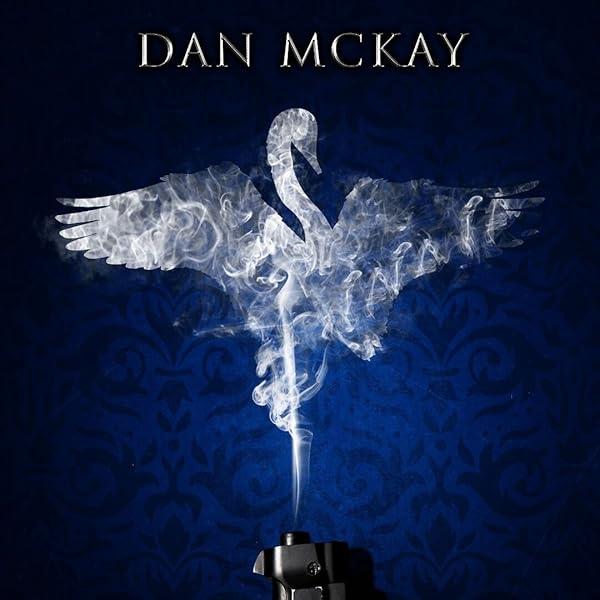
The Black Swan Killer follows a philosophical detective who is hired by the police to consult on a serial killer trying to prove humanity is selfish and thus deserves to die. What was the inspiration for the setup to your story?
The Black Swan Killer was my attempt at writing what I know. I’ve done some fantasy books before but I thought I’d have a go at something I have some more expertise in and I’m a philosopher for my day job, so it seemed like a natural fit. Then it was just about making a story that was fun. I had been marking essays on psychological egoism (the idea that everyone is ultimately self-interested) and the idea of falsification at the time and together they seemed like a cool motivation for a serial killer.
John Consequent is a unique detective unlike any I have read about before. What were some driving ideals behind your character’s development?
To hear my friends (and wife whose name is Sophia) tell it, I just put myself in the book. That isn’t true, but it isn’t entirely untrue either. I feel like I took elements of my personality and magnified them in order to make John, though I’m borrowing a little from House and a few other similar characters.
What were some themes that were important for you to explore in this book?
I mean there’s a few obvious ones with self-interest, the meaning of life, and arrogance being chief among them. But the value of the impractical (or, maybe the non-instrumental) and what people are entitled to in a relationship and in the breakdown of a relationship come up too.
What is the next book in the series that you are working on, and when will it be available?
The second book “The Heavens Fall” just came out a few days ago. It has John trying to defend two people for murder charges amongst other legal shennanigans. I’ve started the third book, but that could be a way off at this point.
Author Links: GoodReads | Facebook | Website
So, when the police hire him to consult on a serial killer that’s trying to prove that humanity is ultimately selfish, it’s not his usual sort of case. To make matters worse, a group of nihilists are out to kill him for explaining the meaning of life to one of their buddies.
John’s going to need more than a clever argument and a comfy armchair to get out of this one.
The Original Myths And Legends
Minotaur’s Lair, and the entire Servant of the God’s series, are intriguing fantasy novels. Why was it important for you to write this book series?
Great question. Firstly, I love ancient history and mythology, and studied ancient history for years and still consider myself a student. There is a lot to still learn about ancient cultures, and I consider these ancient civilisations much more clever and far more innovative than we are today. This is one of the reasons why I wrote Servant of the Gods, to hopefully inspire my audience to read the original myths and legends and the various ancient civilisations from which they came from. I don’t advocate going back in time, like Evan was forced to, and in particular the terrible way women and slaves were treated. I like to create stories where readers can immerse themselves and vicariously experience the highs and lows felt by the characters, and in the process make ancient history a vibrant and interesting subject to learn through storytelling.
As this book wraps up the series, were you able to achieve everything you wanted with the characters in the novel?
Yes and no. The series changed a lot from its initial conception and even when I was writing Minotaur’s Lair, there were elements in the story that deviated from what I had planned. The characters deemed the flow of the narrative and I had no choice but to let them dictate. Afterall, it is their story. What I wanted to discuss through the story was what if we had an alternative religion, so very different to one’s today and not one mandated by a patriarchal system. And would it change the way we view life, work and gender inequality in all its forms?
What was your favorite character to write for and why? Was there a scene you felt captured the character’s essence?
Hmmm… I had a few favourites, but if I had to choose, it would be Dexion, the young Sicilian boy and seer. Despite his street smarts and behaved somewhat more maturely than that of a twelve-year prepubescent teenager, Dexion was still a young boy who wanted the love of a parent.
There was the scene where Dexion tries to reach out to Evan and gives clues to help him remember why Zeus sent him from the Twenty-first Century to the Seventh century B.C.E. It shows his maturity but also that he’s alone and yearns for the fatherly connection he and Evan had created in Books 1 and 2.
The Servant of the God’s series took readers on an exciting quest to stop the Dark Master. What will your next novel be about, and what will the whole series encompass?
I am currently working on a thriller/suspense/timeslip series titled Coin of Time and it’s about two coins infused with magical powers first owned by Herakles, and passed down from generation to generation of a family who once were the bodyguards of Helen of Sparta and her family. One coin disappears during crusades and Nik’s predecessors, the Zosimos’ were the guardians of the coins, try to find the missing one.
The story is set in the present, Nik and his grandfather go looking for the sister coin in France, where a neo-Nazi group led by Konrad Resnik, are also seeking the coin. Book 1, The Guardian’s Legacy is published and has received multiple nominations for awards, and Book 2 is drafted and almost ready for beta readers to evaluate. If anyone is interested in being a beta reader, email me! authorluciana@outlook.com
I am also working on a historical fiction based on the life of Hypatia, the astrophysicist and mathematician who lived in ancient Alexandria and was killed by religious fanatics.
Author Links: GoodReads | Twitter | Facebook | Website
Evan and his companions are entrapped by the Amazon Queen Antioche and her warriors. Memories and allegiances are tested. The Dark Master’s victorious revenge over the gods is almost complete. The plight of the High Priestess is precarious, her health ailing, and unable to rescue her brother and fellow Atlanteans.
The last sacred relic, secreted in the lair of the Minotaur, must be recovered or the Dark Master’s succession plans of a new god are complete. The mystical lands of Krete, the final stage of Evan’s journey, are within his grasp. He must succeed so his father, Zeus, fulfills his promise. Then there is Queen Antioche, and the precious gifts she presents him.
Will Evan return home, and what will become of his future?
Minotaur’s Lair is the third and final book in the action-packed Servant of the Gods historical fiction series. If you enjoy well-researched landscapes, historic characters, excitement, mythical creatures and unique settings, then you’ll love Luciana Cavallaro’s heroic odyssey.
A War Of Light And Shadow

The Third Way of My God follows a leader as he tries to bring the people in his kingdom to a new homeland safe from war. What was the initial idea behind this story and how did that transform as you were writing the novel?
As an author, so much of what I do with my stories is to make life harder for my characters, and this is really a case in point: after two books of Rosteval confronting the Ketaryat armies of his grandfather, I needed to really make good on the threat of invasion.
But I couldn’t just give Rosteval that challenge, because I wanted to make things more interesting. That’s where the Gontuganti came in: a quasi-vampiric dark-elf-like race of warrior-sorcerers and their armies of reincarnated human thralls.
The Gontuganti are fun for a lot of reasons, but I wanted to use them to examine the pursuit of power and domination for its own sake, untethered to any greater telos or end.
Add to that an unstable goddess of light who styles herself the Mother of Exiles, and I figured I had my own spin on the classic fantasy trope of a war of light and shadow!
With the Mother of Exiles, I wanted to examine the whole concept of inclusion for its own sake, again unaccountable to anything else, anything greater, anything that can hold it in check.
There’s also the rather mysterious and spooky figure on the cover, who connects to an important person in Rosteval’s and Ghaitta’s pasts.
Of course, that leads me to the core of the book, the idea of a third way. I think a major theme in these books is that Rosteval has to find his own way, and that means rejecting the narratives of various power players who want to defeat or suborn him.
When you’re facing a terrible darkness, and the self-appointed champions of the light are bent on wreaking havoc of their own, what else is there to do but find a third way?
Were you able to achieve everything you wanted with the characters in the novel?
I think of this story as an adventure story wrapped around a quest story.
On the one hand, there’s the adventure story: Rosteval and Ghaitta have to lead their people into exile even as a massive war between gods and armies of light and shadow breaks out all around them.
On the other hand, there’s a new character who enters Rosteval’s life bearing a mysterious power that appears to be vital to the situation they all find themselves in. At the same time, she finds that the power comes with hidden dangers of its own, dangers that force her to make difficult choices.
There’s also the recurrent theme of Rosteval and Ghaitta needing to work with enemies, people they have every reason to hate but still have to work with. I don’t want to say too much because spoilers, but I had so much fun with this aspect of the story!
So, on the whole, yes, I think I achieved everything I wanted to with these characters. As to how well I succeeded, that is for the reader to judge.
What were some goals you set for yourself as a writer in this book?
For one thing, I really wanted to explore the concept of a third way. In the context of this book, that means a people, their priests, their king—and their god, who serves as a kind of collective archetypal representation or “oversoul.”
I juxtaposed this third way against a force of darkness, the Gontuganti, bent only on power and domination, but also against the power of a goddess of light who styles herself the Mother of Exiles.
It’s easy to see what’s wrong with power and domination for its own sake, but modern society is full of far too many people who are far, far too misled about the whole concept of inclusion and who have a great deal of unjustified and extremely naïve moral certainty on this point.
The problem is treating inclusion as a telos, an end in itself, or—put another way—as a prior.
To draw on the work of the philosopher Jack Donovan for a moment, inclusion is a good virtue within a perimeter, a shared and defended boundary.
Within a family, a neighborhood, a tribe, a nation, a religion, etc., inclusion is generally a good thing provided it does not encroach on more immediate obligations.
But the problem with the Mother of Exiles is that, by her nature, she cannot make these distinctions. She represents belonging without boundaries or standards—and without boundaries or standards, there can be no growth, no ascension, no excellence.
As Jack Donovan says in Becoming a Barbarian: “The Mother of Exiles offers the warm freedom of the womb.”
Now, you might say that I’m going on about tribes and deities and what-not, and the problem is that we don’t live in that world anymore.
My answer to that is to refer you to the ~300,000 years that our species has been on this planet. What that history tells me is that human beings are tribal and coalitional (a tribe, after all, is a coalition), and tribes and coalitions will always tend to fight for scarce resources and power.
This is what we are. Embrace it, I say, and use it to inspire you both to personal excellence, and to do great things for your in-group (family, neighborhood, people, etc.).
With The Third Way of My God, again, I wanted to explore all of these themes and point to what I believe to be a better and more desirable formulation than either the Gontuganti or the Mother of Exiles: a people who understand themselves in terms of a shared identity, mediated by a priesthood and ruled by a king, a ruler, anointed by a god who represents their Oversoul, their collective archetypal excellence.
What will your next novel be about, and what will the whole series encompass?
My next novel will follow the stories of four different men and women living in a future world ruled by a vampire elite who control the levers of power and manipulate public opinion.
It’s a bizarre and perverse world where law-abiding people are terrorized by vampire street criminals, mortal humans are unable to defend their own interests, and dissidents are subjected to severe financial and career consequences.
You might say it’s urban fantasy with a side of dystopian science fiction.
As for The Rosteval Saga, I’ve also broken ground on the fourth book! I don’t want to say too much, but I will be working on both of these books at the same time.
My thinking at present is that there will be two more Rosteval Saga books for a total of five. I have big plans for the future, and I will look forward to sharing more of them through Literary Titan!
Author Links: GoodReads | Twitter | Facebook | Website
Light is their enemy…
Is there a third way?
Rosteval faces twin disasters when an enemy army comes for his kingdom, even as a terrible new menace arises from the darkness to threaten his entire world.
Forced to flee, Rosteval and Ghaitta lead their people into exile… but they are running out of time.
Outmatched in a war between gods and armies of light and shadow, can Rosteval and Ghaitta find a third way to save their people, their kingdom, and themselves?
Gods of light and shadow, clashing armies, legendary weapons, myths, mysteries, and perilous adventure abound in The Third Way of My God, sequel to The Spiral of My Destiny. Get it now.
A Reluctant Guardian
Cherokee Steel follows Amelia as she tries to find a family member who’s worthy to carry the special family heirloom on to the next generation. What were some new ideas you wanted to introduce in this book that was different from book one and two?
In book 1, Amelia was very young and knew nothing about the special stone. In book 2, she is surprised that she is chosen to inherit the stone and becomes a reluctant guardian. By book 3, she has matured and has freed herself of much of the emotional baggage she has carried throughout her life. Now that she has become truly worthy of the stone, it is time to turn it over to someone else.
Amelia is a compelling character that I enjoyed watching evolve. What were some driving ideals behind your character’s development?
I wanted to show how emotional trauma experienced by a young person will not only affect that person but will affect the generations to come. Conversely, I wanted to show that even a badly damaged individual can find redemption. I also wanted to give readers a glimpse into how Amelia’s Cherokee history and culture continued to impact her life even when she seemed to forget it.
What were some themes that were important for you to explore in this book?
Effects from the past, family abuse, family violence, alcohol abuse, infidelity, tragedy of war, feelings of inadequacy, rebellion, dealing with death, persistence of love, the touch of the supernatural, the influence of culture, realization of dreams, discrimination, bullying, and redemption.
What is the next book that you are working on and when will it be available?
Before We Were a State, 2023.
Author Links: Twitter | Facebook | Website
In the final chapter of Bluebird and Grey Wolf’s Cherokee descendants, the story of Amelia Clay Stone, their great granddaughter, will continue to evolve. Not only the sad legacy of the Trail of Tears, but Amelia’s abusive experiences at the Cherokee Girls’ Mission will take their psychological toll on her children, grandchildren, and great grandchildren.
Meanwhile, young Bonita McKindle, the love interest of Amelia’s sons, Clay and Ross, struggles to overcome the damage brought upon her by tragedy, poverty, and neglect. Forced to quit school to care for her critically ill, alcoholic father, Bonita desperately yearns to escape and make a better life for herself, only to encounter more heartache. When she gives birth to her daughter Miranda, Bonita experiences new hope, but Miranda and her children will soon find their own demons to battle.
All the while, the fate of a special family heirloom—the stone Bluebird carried on the Trail of Tears from Georgia so long ago—rests in Amelia’s hands. It has been passed down through the generations to Bluebird’s descendants. Will the aging Amelia find any family member who is worthy to carry it on to the next generation? Or will the traditional Cherokee beliefs the stone represents be lost forever?
A Strategy For Personal Awakening

Holy Parrot follows three people who form an unlikely friendship and bond while struggling with their own beliefs and dark secrets. What was the inspiration for the setup to your story?
The disparity of personalities creates a multi-perspective insight into a challenging set of events. The value is to show that, for any given moment, the viewer is part of the event in a way that is specific to their personal circumstance. Maria is a teen who says she is to be the mother of the new Christ. Leo is a science student who has unilateral faith in reductionist logic. Robin is a mythologist who looks for the value of collective belief in any given circumstance. Everyone is a master of their own perspective. We expand our potential for wisdom as we explore to understand events from multiple perspectives.
What were the morals you were trying to capture while creating your characters?
The morals are actually stated in the novel (spoiler alert). Love, light and life are stated to be a foundation of existence as expressed through conscious attention to the behaviours of compassion, creativity and connection. The narrative offers a strategy for personal awakening through precise moral behaviour conducted with authentic sincerity.
What were some themes that were important for you to explore in this book?
There are a number of layers integrated into the story. Perhaps one to mention is that the main characters are all seeking to transcend or deal with unique personal suffering in their own way. Their support of each other is a key to the effective resolution of the challenges faced.
What is the next book that you are working on and when will it be available?
The next book is called Bring Me To Life. I like to think of it as a Gothic Romance. It is a graphic novel about a (kind of) ghost who becomes inexplicably enamoured with a special woman. So much so that he seeks to return to life for her. The story is complete and the illustrations are in the process of development. I’m not sure how long that will take. Sorry…
Author Links: GoodReads | Facebook | Website | Twitter | Facebook
Was Maria lying to hide a despicable secret? Or was she birthing the leader of the new millennium? Phenomenal events unfolded as millions united, chanting one phrase – ‘Loro Santo’: Holy Parrot.
The America I Grew Up In
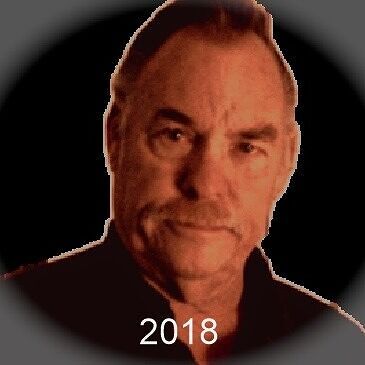
The Rise and Fall of the American Republic give readers a look at how the US government was originally structured vs. how it is structured today. Why was this an important book for you to write?
I love my country but I felt it dying in my lifetime. I wanted to know why. I felt the need to share what I found to bring awareness to those who never knew the America I grew up in. .Without knowing what the disease is, you can’t treat it in order to survive. The people are the vital organs of the country- without sufficient recovery the country can’t survive. I hoped the book would enlighten enough people to encourage, not force, a turnaround, a movement towards a healthy lifestyle that will return each American to a thriving, strong and prosperous existence.
How much research did you undertake for this book and how much time did it take to put it all together?
It took over 6 months to research and write this book, I started with religion in the United States. Why has the message changed since I was a teenager? Originally, eternal life was the result of the lack of sin. Today saying you accept Christ as your Lord and Savior is sufficient to be saved from eternal death without the need to desire to imitate Christ. As a result, continuing to live a sinful life doesn’t matter. The change from “Revealed Religion” to a “Social Religion” led me to additional research on how the absence of the religious principles our country was founded on, allowed the progression of other ideologies into every aspect of our lives like the spread of a disease.
What were some ideas that were important for you to share in this book?
Self-reliance is critical to living a good life. When you stumble, you get up. Practice make perfect. It gives you self-respect, pride in your character, and it gives others someone to look up to, respect for you, and trust in you as a role model. It encourages others to be like yourself-reliant. You will cultivate appreciation, true friends and companions. Someday, when you can no longer care for yourself, others, who followed your lead, will be there for you. You reap what you sow. Should that spread across the nation, there will be no need for dependence on government, no ability for government to control every aspect of your life, because you have, with good reason, self-respect.
What do you hope is one thing readers take away from your book?
The book was written to bring awareness, without being judgmental, that you have a choice: Live the way Americans lived before the 1950’s, or after the alliance of the Democratic Party with the Communist Party in 1953. It is since 1953 that the agenda towards government control began to infiltrate and degrade the education system, and never ending social programs proliferated to replace self-reliance, and guarantee votes from the poorly educated and the unmotivated. I believe without a return to Godly principles and the 2-parent family, a 3 R’s education system and a standard of self-reliance, the next best option will be, for those who do, to prepare to move to a country (like Costa Rica) whose monetary system is not dependent or linked to the U.S. Dollar. Because it seems inevitable that our policies will result in a total collapse of our government and it’s currency, bringing us all down into poverty and under the thumb of a new government that will control all industry, telling you where to live, to work, and paying you what they can afford (a form of Universal Income). We will be equally poor.
Author Links: GoodReads | Facebook
By promoting discontent where there was none, they have divided our nation by socioeconomics, race, ethnicity, religion, and politics. There are exaggerated issues of racism, the rich and the poor, business vs. the working class, climate change, entitlements vs. hard work, Socialism vs. Capitalism, and Conservatism vs. Liberalism. All these deceitful distractions are productive tools of our enemy that divert our attention from the master plan to fully install a new form of government that gives full control of our lives to the government.
Most Americans, as well as most politicians, are too distracted by the minutiae mentioned above to see the big picture that this book details. There are no longer enough people who understand or are willing to defend the Constitution that enabled US to become the greatest nation in history while it was strictly interpreted. I fear it is too late to reverse the process now.
URGENT UPDATE- email christiansoldiersofamerica@gmail.com for a free Bonus Chapter.



 LITERARY TITAN