Blog Archives
Paranormal Gifts
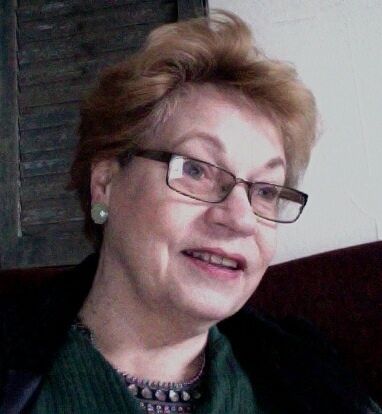
Utcan’s Talisman follows a woman helping her friend escape a manipulative ruler trying to exploit his healing abilities who winds up in a small fishing village where they rekindle past connections and make new allies. What was your inspiration for the wild journey you take readers on in this novel?
I’m glad that you see Bybiis the scholar as the protagonist. She’s the narrator of two sections of the book (with five sections). Bybiis had no tutor or role model for how to develop her paranormal gifts. Trial and error can be painful and doesn’t expand her potential, plus she’s resentful that others are indifferent to her need to serve her growing powers.
This theme resonates with isolated gifted persons — like artists or athletes — who are not in step with siblings or school friends, and who must leave the family situation to explore a higher calling. The struggle is extra difficult for a woman with no family and discounted by the powers that be.
One inspiration was from Gene Wolfe’s Executioner series where the protagonist was an executioner! The reader saw him as a whole person with flaws and hopes and setbacks and betraying his friends even.
The twist I added is that Bybiis is female and not able to trade on her looks. Male readers often read past the story action for the women, waiting for a hero to make his entrance. Only Bybiis can save Bybiis.
What are some things that you find interesting about the human condition that you think makes for great fiction?
Wow, the human condition. A broad question. I can give a broad answer, I suppose. Science fiction stories are often about a hero who solves a problem that sets a specific situation right and protects the innocent. He wins the day!
My worldview was more about a community of people who need the skills of the group to succeed. People of the same tradition may not like each other, but over the decades, they discover the rewards of working together into progress for the nation or city-state, or duchy. Leaders are often just men or women who are thrust into positions that demand character and integrity – like Zelensky in Ukraine. Those who lack the needed moral fiber find other routes to political rewards.
What advice would you give to a writer working on their first book?
Count the cost. It’s about the story, not about being famous. I teach young writers in online courses. I’m always amazed when they talk about a publishing career and what celebrity will play the book’s hero in the movie.
Writing has many stages, and the first few can seem overwhelming for how time-consuming and reiterative is the process. Can you devote the hours to developing a distinctive writer’s style and a plot that’s fresh and compelling?
I’ve seen many writers with talent drop out. Even though they may have control of language and a strong narrative voice, they may not have found a life-long theme to pursue. What do you want the world to know? Not about you the writer, but about the human condition, that’s so compelling that you devote your life to exploring the dynamics of the struggle?
For me, it was presenting multi-dimensional female characters. What is your essential need to write?
I hope the series continues in other books. If so, where will the story take readers?
You ask good questions. Book 6 is titled THE MATRIX OPAL and may come out in 2025. The writer’s style takes a turn in that narrators are multiple and not restricted to one section. I figure that if the reader has made it to Book 6, then she knows the characters. So we can mix it up for character voices and POV.
Bybiis is joined by more young gifted characters. A powerful enemy emerges with child kidnappings and assassinations. The demands to grow paranormal powers are more than how to live well. The gifted group must put their skills into service for strengthening group defenses.
Author Links: GoodReads | X (Twitter) | BookBub | Website | Amazon
Bybiis el Putuki and her friend Opin the healer must navigate the demands of the khalif in Utica who would turn Opin’s gift to serve him. Jesse Hartley and Hershel Henry find each other, but each is very changed from recent events. Can they reawaken the currents of feeling between them?
When Bybiis is able to force a release from the khalif’s control, she and Opin land at a small fishing village from where Mrs. Shaw is exploring the ruins of a lost city. Jesse Hartley joins them, but the conflicts that grew in Utica get more intense. Jesse is distracted when Hershel Henry invites her to rejoin her father the Consortium General at the rainbow bridge construction site.
The Spy Prince Of Basadesh


The Spy Prince of Bashadesh, by H.M. Heath, is a captivating fantasy romance that follows Arjun, a prince on a covert mission to save his homeland from the ruthless forces of Zorvyaka. As his country faces the brink of destruction, Arjun infiltrates the enemy’s stronghold, assuming the guise of a servant with the intention of crippling Zorvyaka from within. His mission takes an unexpected twist when he is assigned to serve the high wizard, Eldrin Glaser, the very man responsible for his nation’s suffering. As Arjun navigates the perilous world of espionage, he finds himself wrestling with conflicting loyalties. On the one hand, his duty to Bashadesh drives him forward, but on the other, he’s drawn to Eldrin, a man far more complicated than he initially believed. Their undeniable chemistry slowly shifts the dynamic between them, with Eldrin, too, feeling the pull of attraction despite their opposing roles in the brutal war. Secrets begin to unravel, and as passions ignite, both men are forced to confront the delicate balance between loyalty and the powerful connection growing between them.
What immediately hooked me about The Spy Prince of Bashadesh is its intriguing blend of spy thriller and romance. Arjun’s undercover mission creates an ongoing tension that propels the plot forward, and his evolving relationship with Eldrin keeps you eagerly turning pages. The enemies-to-lovers arc is compelling, though I did wish for a bit more sophistication in the espionage aspects. Nonetheless, the undeniable chemistry between Arjun and Eldrin stands out as one of the novel’s strengths. Their romance develops quickly but given the book’s lighter tone I think it works well within the narrative’s framework.
At its core, I think this is a YA/NA fantasy, and while the stakes are high, the prose remains accessible and easy to digest, making the book an enjoyable and brisk read. A standout element of the story is the depth of Eldrin’s character. As a wizard thrust into a position of authority because of his magical abilities, Eldrin finds himself politically sidelined. This adds a nuanced layer to the story. He and Arjun grapple with the limitations imposed on them by the war and the complex power dynamics they’re entangled in, which enriches their individual arcs.
The Spy Prince of Bashadesh excels in delivering a gripping, tension-filled romance set against a backdrop of political intrigue. Fans of LGBT fantasy will find much to enjoy, especially with the well-crafted emotional depth and the evolving relationship at the heart of the story. It’s a promising start to what could become a great series, and I’ll definitely be eager to pick up the next installment.
Page: 286 : ASIN : B0D1VN2P3V

We All Want To Be Happy

We All Want to Be Happy is a heartfelt exploration of life’s simple truths. The story is told through a collection of reflective essays and personal stories. The author draws from her own experiences over eighty years. She shares her journey toward finding happiness and contentment. Each chapter touches on different aspects of life like love, loss, resilience, and the pursuit of joy. Each chapter offers readers both wisdom and comfort.
Anne Mullen-Martin’s writing feels like a warm conversation with a friend. Ann’s voice is clear, inviting, and tinged with nostalgia. She shares a childhood memory of her mother teaching her to focus on what makes her happy. A simple notebook that is used to jot down joyful thoughts becomes a powerful tool for shifting her mindset. This story, like many others in the book, serves as a gentle reminder that the most straightforward practices can have deep effects on our well-being. Ann’s willingness to share her vulnerabilities touched me. She openly discusses the emotional impact of turning sixty-five. The reality of aging hits hard. I found her honesty about facing these feelings refreshing and relatable. There’s no sugarcoating, it is just a real and raw reflection on what it means to grow older. Her eventual acceptance offers readers a comforting perspective on this inevitable part of life.
The book is also filled with practical wisdom. Ann emphasizes the importance of appreciating the present. I think she suggests that we often fail to recognize that we’re already living the dreams we once had. It’s a simple yet powerful reminder to take stock of where we are and find joy in the moment. This advice encouraged me to pause and see the value in my life.
We All Want to Be Happy is an engaging read for those who enjoy reflective and personal narratives. Ann Mullen-Martin shares her life lessons with warmth and sincerity, offering inspiration and comfort. This book is perfect for anyone who needs a gentle nudge to appreciate the small joys in life and to find happiness in the here and now.
Strength and Resiliency
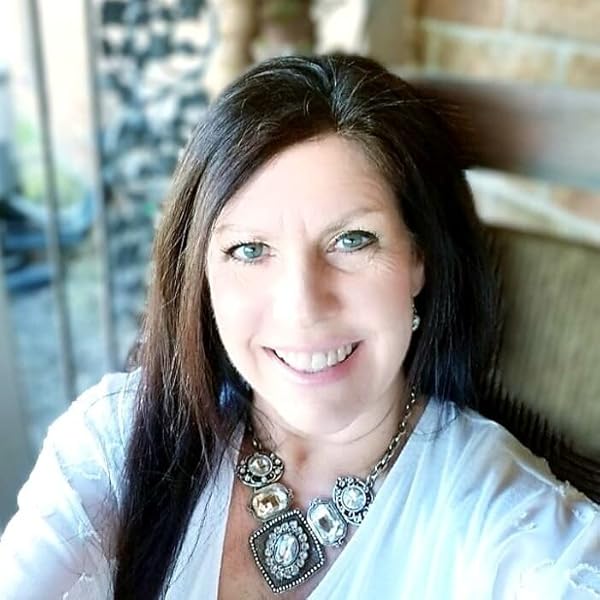
Immortal Wounds follows a woman with magical abilities who travels back in time after witnessing her mother and husband’s death by a vampire claiming to be her father. What was the inspiration for the setup of your story?
Well, I have to confess that Immortal Wounds began because I got a bad case of FOMO (fear of missing out!). One evening during my night writer’s group many of the authors had started new stories, all of them about vampires. I was currently writing a crime thriller but thought “Hey! I LOVE vampires too!” I am definitely a “Twihard”, a loyal follower of Anne Rice, and who doesn’t love Dracula! At the time, I was also hugely obsessed with the series, Outlander, which was my definite inspiration for time travel. I immediately filed the thriller away and began a new story.
History intrigues me, particularly the times of the witch trials in both Europe and America and the suppression of women. I also find fascinating the idea of supernatural abilities, and how fear can force a (logical) belief when there is no viable explanation. I immersed myself in books like The Discovery of Witches, Practical Magic, and Hester, along with several other fiction books that contained excerpts of real diary entries from women who were accused of witchcraft. Then having no idea what I was doing I took a deep breath and started writing a story that entangled bloodline witches with my most favorite supernatural creature, the vampire.
How long did it take you to imagine, draft, and write the world your characters live in?
Once I got started on Immortal Wounds I would say it took about two years from the first rough draft to publication. My imagination went crazy with my story idea, but it was actually a 75,000-word manuscript I wrote two years prior, under a different title, and whose plot points came to me in a dream that brought the world of Immortal Wounds to life. When I finished writing that earlier manuscript I realized that the story had ended, but yet the whole story had not been told. Being a new writer it took me a few weeks to figure out that what I needed to do was write was the beginning, Immortal Wounds.
What were some themes that were important for you to explore in this book?
Family, individual strength and resiliency, naivety, and fate were the most important themes I hoped to portray. I strongly believe that these themes impact real life and our response to situations within each of them is what makes us who we are.
What is the next book that you are working on and when can your fans expect it to be out?
Luckily for fans, there is no wait! A Prophecy Awakened, book two in the Immortal Wounds trilogy, was released June 13, 2024. And while it does pick up where Immortal Wounds left off, there are also some new (amazing) characters that take the reader through the middle part of the story.
Author Links: GoodReads | Facebook | Website | BookBub | Amazon
After witnessing the brutal deaths of her mother and husband, Isobel overhears a confession from one of the murderers, a ruthless vampire who claims to be her father. For fear that she and her unborn daughter’s death could come next, Isobel uses the only magic she possesses and summons a portal to take her two hundred years into the past to revisit an ancestor in Scotland who she believes may know the truth of her parentage. However, in her haste, Isobel lands in the wrong century. Before she realizes her mistake, she stumbles upon a family: a ferocious Highland warrior and his two sisters, one of whom is a witch with secrets of her own who instantly draws Isobel in.
Isobel could not have prepared herself for what she discovers during her stay: the vampire who claimed to be her father, alive three hundred years in the past! With the help of Meg, the youngest sibling, and Mariam, both women’s ancestor, Isobel finds herself belonging in a world she never dreamed of—one entangled with vampires and webbed with revenge, curses, and a prophecy that has dictated all of their lives for the last four hundred years. Did Isobel make an error in landing in the wrong time, or was it part of her destiny?
Town and Country: Voices from the Mid-Ohio Valley
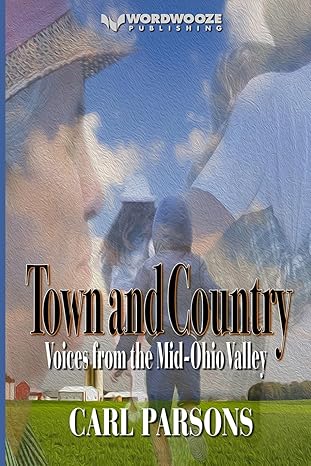
Town and Country: Voices from the Mid-Ohio Valley, by Carl Parsons, is a collection of short stories divided into two parts, each offering a glimpse into the lives of small-town and rural characters. The book delves into the experiences, regrets, and sometimes peculiar situations that define life in the Mid-Ohio Valley. Parsons brings to life a world filled with nostalgia, longing, and an ever-present connection to place, capturing the essence of this region through a cast of vividly drawn characters.
Right away, Parsons’ knack for setting the scene stands out. The details pull you in. The first story, “Regrets,” hits hard with a wave of melancholy. The main character returns to his hometown, and the changes he sees stir up deep emotions. The descriptions and streets once familiar have now been altered by time—strike a chord. They spark a bittersweet sense of longing. His journey through old memories are heartbreaking and real. Small moments, like feeding his cats or driving past old spots, anchor the story in a way that feels personal and true. At times, the writing takes its time, allowing the reader to fully immerse in the scene. In “Hot Date,” the banter between the poker buddies is a perfect example. The dialogue is realistic, capturing the easy flow of conversation among friends. While the exchanges linger, they effectively portray the laid-back pace of small-town life. Parsons skillfully uses these moments to create a vivid sense of place, grounding the reader in the leisurely rhythm of everyday life. Themes of love, regret, loss, and time are timeless but Parsons gives them fresh life. “Judith and Phillip” is a standout. The story explores young love and its inevitable heartbreak. The innocence of their relationship shines through. Their separation feels gut-wrenching. Parsons doesn’t sugarcoat reality. Things fall apart, and the pain lingers. This story, like others in the collection, taps into emotions we all recognize. But it does so with a voice that feels distinctly Mid-Ohio Valley.
Town and Country is a reflective, thoughtful collection. It resonates with anyone who feels a deep connection to a place, whether with love or a sense of being stuck. This book is for those who enjoy literary fiction. It’s for readers who appreciate character-driven stories and settings that come alive. If you’re drawn to tales of small-town America, full of complexity and heart, Carl Parsons’ work is well worth exploring.
Pages: 181 | ASIN : B0DBH3RZDT
Storm on the Horizon
Vitalerium: Descent into the Void follows a rogue criminal living in the golden age of space exploration who winds up at the center of a conspiracy of a government faction looking to implement a Machiavellian vision of utopia. What was the inspiration for the setup of your story?
The inspiration for Vitalerium – Descent into the Void, though stemming from numerous influences, is first and foremost a result of my life-long love of science fiction. I have always admired the ability of sci-fi writers to extrapolate a vision of the future (and how that vision could go terribly awry) through the lens of their own knowledge and experience. The restorative property of escaping to worlds filled with technological marvels, glorious triumphs in space combat, and endless possibilities of the future is something I cherish. I also find the dystopian elements so commonly captured to be humbling in a way; reminding us that we are still human, and thus prone to err no matter how advanced the world around us becomes. There’s value in identifying potential pitfalls and unexpected difficulties that lay in wait for humanity in the uncharted waters ahead. Although progress is inevitable, we could just as easily progress into a burning building as we could greener pastures. I pull from many authors’ examples that came before me, including some of the greats in classic sci-fi writing, cinema, and video games. I even went so far as to leave small easter eggs within the first book that highlight some of my influences. That part was a lot of fun for me, and I hope the readers will enjoy finding them, too.
Other sources of inspiration came from within. “Write what you know” was a phrase I never fully understood until I started hitting the keyboard at regular intervals. I tend to pull from real-life experiences to craft narratives throughout the book. Vitalerium documents the rediscovery of purpose and the growth of numerous characters throughout their trials and tribulations. Although the stakes are certainly higher in Vitalerium than in my own experiences, the lessons learned are undoubtedly transferable. A number of the major characters in the book are based on people I know or have met that made a lasting imprint. I feel this breathes life and sincerity into their personalities. Even the dream sequences that emerge are altered versions of some of the most vivid dreams I’ve ever had. Sleep paralysis is something I experience on a regular basis. For those of you who understand the feeling associated with the phenomenon, I’m sure you understand how impactful the experience can be. Ultimately, I find that if I’m focusing on the right things, I can find inspiration anywhere, and everywhere.
Current events also provide plenty of fuel for the fire. Today’s world presents no shortage of inspiration for the potential emergence of a dystopian world. All one has to do is turn on the TV or open their preferred news app. To watch the way narratives are portrayed and subsequently spun by both sides of the aisle is like watching two different planets reporting on entirely different stories. The dichotomy of left and right today is portrayed as a vast chasm, where only the extremes are highlighted by each respective camp. The resulting weight of interpreted division is one that we carry into our daily lives, whether we realize it or not. Nuance is a thing lost to the binary world of left or right, right or wrong, win or lose, omitting the infinite shades of gray existing between them. Although this manufactured portrayal of the world is far from reality, where people have more in common than they are told to realize, its effects endure.
In Vitalerium – Descent into the Void, I forecast a world where this vision is carried forward—one where obedience means surviving, and disagreement means suffering (for those who remember their high school English curriculum, this is undoubtedly Orwellian-reminiscent). For when perceived division accelerates and is pitted against itself, and the populations lose all sense of the common ground on which they walk, the only option left is for one side to emerge victorious; and that is when all of society loses.
While it incorporates the ethical dilemmas and cutthroat politics of an advanced civilization, Vitalerium remains non-partisan. The thematic focus is on philosophical exploration, and the often-blurred lines of morality the human condition exposes us to…and yes, it’s got lots of action! So, for those of you who are sick of being preached to in every book, movie, play, or fading sticker you happen to read on a bathroom stall seeking to teach you the error of your personal leanings, don’t worry. It’s my belief that adults can make their own decisions, and I wouldn’t bore you with that horseshit.
I find the world you created in this novel brimming with possibilities. Where did the inspiration for the setting come from, and how did it change as you were writing?
I have always been fascinated with space travel. Although my professional career took me down a different path, I still maintain that childlike curiosity when it comes to new cosmological discoveries, breakthroughs in modern physics, or anything else that falls into the realm of exploring the great void. Perhaps in an attempt to fulfill my own desires to explore the cosmos, I created the element Vitalerium: the gravity-bending catalyst to accomplish such a monumental feat. However, the ability to traverse any space poses an important question: to where, then, do we go? Although the exact number is not known, it is calculated that anywhere between 200 billion and 2 trillion galaxies exist in the observable universe. Zoom in a little closer, and you’ll find there are anywhere between 100 and 400 billion stars in the Milky Way alone—each with their own potential for harboring orbital exoplanets: each with the promise of life in some form. So, why couldn’t we assume that given our current limitations in measuring such things, that a planet similar to our own exists somewhere in the celestial neighborhood (so to speak)?
For planet Deorum, where the majority of the first book takes place, I wanted to create similar conditions to Earth as I began to expound on this fabricated universe: one where a futuristic take on modern life was possible, yet even the smallest differences in conditions could lead to massive disparities in flora, fauna, and the course of evolution on its surface. A planet so close to the source of vitalerium, the book’s strange new addition to the periodic table, is bound to provoke some very interesting wildlife. As the series progresses, I plan to incorporate more planets with even stranger conditions and cultural traditions. Perhaps one planet was optimally positioned but required terraforming to be inhabited, resulting in a strange uniformity of flora, and a subsequently stark uniformity in its society. Conceivably, one planet’s surface could be covered entirely by water, creating a business hub for water and sea life commodities. Maybe I’ll create a planet where tectonic plate activity is much more extreme compared with Earth’s. To find out, you’ll simply have to read on, friends.
Another source of my perpetual curiosity lies in mythology, and the ruins of past civilizations. Understanding the roots of our species and the emergence of civilization fascinates me to no end: an unremitting cascade of inspiration. This was especially helpful in crafting the ruins readers will discover on planet Deorum. In the book, the Coalition’s perceived lack of desire to explore the remnants of this dead civilization mimics our own dearth of answers in regard to our predecessors.
The story has changed drastically since my initial mapping, and its future remains flexible to this day. Although there are major events that I plan for, I base how we get there off the characters, for whom I attempt to give a mind of their own. Currently, I’m about 150 pages into the second book, which promises to be even more exciting than the first. So, for the potential readers out there, I’ll leave you with a friendly forewarning: the first book was created with the entire series in mind, and thus some of the themes in the overarching narrative are left unrequited…for now. There is, however, no need to fret. Each new release in the series promises to provide new characters, new planets, new concepts, and technologies, and yes…closure for narrative cliffhangers, while potentially opening new ones.
What were some themes that were important for you to explore in this book? Will there be a follow-up novel to this story? If so, what aspects of the story will the next book cover?
Descent into the Void, though a gripping tale of its own, is only the beginning of what’s to come. It is a thrilling yet heartbreaking glance into spacefaring civilization in a technologically advanced, dystopian universe. In the first book, the reader is dropped into the story just prior to its tipping point. This starting line serves to shed light on how the immense external pressures of a hybrid authoritarian society form our protagonist, Roman Matthews, as well as other threads in this multinarrative odyssey. The horrific life experiences Roman endures shape the man we follow throughout the majority of the book. Readers will get a front-row view of his bitter evolution from a clean-cut boy with a bright future, to an aimless lost soul whose circumstances have forged a hardened roughneck; and then, his transformation into something else entirely.
Starting from this vantage point also allowed me breadth to illustrate how the Coalition for Prosperity—the government on planet Deorum—operates. Their centralized shift from governing to ruling creates a society where authority is the only currency that carries weight. The result is a stark transition from keeping its people safe, to keeping its citizens in line. When powerful “public servants” begin to serve themselves and their perceived greater causes rather than the populace they no longer feel obligated to, a ripple effect radiates outward from leadership with dire consequences. The resulting conditions create a harsh world where no freedom, or person, is safe. Together, these concepts provide only a glimpse of the storm on the horizon, one of blind ambitions, and a lack of understanding of the larger forces at play.
Although we dive into ethical dilemmas, political factions, and some hard-hitting action, the book also sets the stage for a much greater theme: That in the scope of the universe, humans are but a few atoms of a bacterium on a speck of dust floating through a never-ending black field. Humanity, in all its glory of exploration and colonization, when examined on the grand stage that is our plane of existence is magnificently miniscule, yet important none-the-less to the harmony of order and chaos. The universe, as we will discover, has a narrative of its own that it intends to see to fruition; ever balancing the forces of equilibrium on a scale that our consciousness may not fathom due to the physical limitations of our organic vessels.
Descent into the Void is only the first of seven books I have planned in the Vitalerium series, and that number could be a low estimate. When I first mapped out the universe and started writing, I realized the book I had storyboarded for was far too long to be a single novel. The reality hit me when I was starting chapter 15 on a flight to Boston and noticed the number at the bottom of the page: 229. Most of my writing is done on a plane due to the incessant travel requirements of my job in medical device sales. The majority of the first book was written at 36,000 feet. Whether it was the opportunity to disconnect from the internet and other distractions in life, or the fact that I was just a hair closer to the void of space itself, I’m not entirely sure. Whatever the case, I found it to be the perfect writing office for Vitalerium. Writing this series has been my proverbial construction of an interstellar spacecraft to explore and enjoy that which I can only dream of. It is my only hope that you all board, and enjoy the ride…
Author Links: GoodReads | X (Twitter) | Facebook | Website | Amazon
Nearly six centuries have passed since humanity’s discovery of vitalerium, which ushered in a golden age of space exploration and colonization. Planet Deorum’s society is centered around this illustrious, gravity-bending blue crystal. The year is 2701.
Following a near-fatal disaster, roughneck freelancer Roman Matthews becomes unwittingly trapped at the center of a harrowing conspiracy. Hunted by Deorum’s government, the Coalition for Prosperity, Roman must use his deadly skillset to survive against all odds.
Roman and his band of unlikely allies will discover that the Coalition’s indiscretions threaten the delicate balance of advanced civilization. As a sect of the Coalition prepares to implement their Machiavellian vision of utopia, the proverbial pendulum begins to swing toward chaos…
Making Choices
The Righteous Place In Light and Shadow is a collection of short stories rooted in both science fiction and horror. Where did the idea for this collection come from, and how did it develop over time?
As an introvert, confrontations are especially hard for me. So, this book is about my struggle to get out of difficult situations. I mostly write about trauma and express myself with fantastic metaphors of what happened to me and some people that I know. I am from Brazil, and it took me a couple of years to translate to English and to revise my writing until I was satisfied with the result.
Is there one story that stands out to you? One that was particularly enjoyable to write?
I enjoy sci-fi a lot, but after Asimov, the virtual bar is incredibly high. So, my favorite story is “This handwriting is not mine,” as I am awfully forgetful, which causes me a lot of trouble, especially in school and work. I’m terrified of Alzheimer’s and tiny Greys that walk funny and don’t need a spacesuit.
What were some themes that were important for you to explore throughout your stories?
Being a man means being pushed to your limits every day. If you are not in pain (either physical or emotional), you are not evolving. These stories are mostly for boys and about becoming men; that’s why there is the label “Big Boys” on the book cover. “Jacobs Games” is an example of making choices and facing their terrible consequences while surviving a terrible situation presented to you (growing up means controlling your inner beast). Most of the time, we cannot avoid the horror of losing someone or moving on to “dangerous places” to solve an impossible problem.
What is the next book you are working on, and when will it be available?
I will take a break and reflect, but I intend to release another three books in this exact format — the next one is The odd place next to Coincidence and Fate, (about 20% complete) which will continue to be a mix of sci-fi and Horror. I hope my readers saw this, but some stories are interconnected, and the lore of this universe will be expanded. I also don’t want to write completely solo anymore, and for the next book, I will hire a pro editor to help me out in the dark corners of my mind with a better flashlight.
Author Links: GoodReads | Amazon
THE RIGHTEOUS PLACE IN LIGHT AND SHADOW is the first release in a trilogy of short stories that explores the theme of confrontations and close, deadly encounters. Those dangerous places are in for power and dominance — and the reader’s mind is the battlefield where all those forces will collide and see which one gains the upper hand.
Event [1]
In the aftermath of an unprecedented nuclear event that wipes out several blocks of the city, the following story shows the perspectives of many individuals caught in the mysterious and unexplained event. THE LOST ARE ALWAYS BURNING presents horror, violence, mystery, and spirituality through an intricate story told from different points of view.
Event [2]
After receiving a book order in the mail that Mark Wenbley does not remember, the biology professor sees his own hand coming to life and making a different signature. This odd incident triggers Mark to pay more attention to what is happening.
THIS HANDWRITING IS NOT MINE is an accelerationism science fiction story about the collapse of the frail human society, with the ongoing silent war in everyone’s heads as the cities are slowly becoming deserted without anyone even aware of it.
Event [3]
After a small plane crashes into the dark waters of Greenwood Lake, a strange metal box is retrieved and stored in the Finn family Lakehouse. In this story, we will follow the family drama of the Jersey Fire brigade officers Joel Finn and his father. THE UNDEAD OF GREENWOOD is a dark fantasy and horror story about addiction and the bad decisions people make instead of confronting the real terrors inside their minds: the absolute fear of change and facing the consequences of their choices.
Event [4]
We will follow the life of Chris Miller, a survivor of WWII who finds himself inside a string of crimes that unfortunately hide a more sinister and out-of-this-world hidden truth.As the head of security for an elite industrial group, Miller gets involved directly with the inexplicable death of one young son from a privileged family. After being fired and accused of failing miserably, this event pushes Chris to the edge in search of answers, including his own inexplicable past in rural Louisiana.
THE JENNTU ARTIFACT is a science fiction story with elements of horror, mystery, alien technology, and shadow government.
Event [5]
n the pioneering years of electronic games, graphics were not the cutting edge of technology.
Back in the eighties, when tech resources were scarce, the first light in interactivity was creating an entire virtual world by combining text and the player’s imagination.
JACOBS GAMES is set in a very dangerous Compton of 1993, following a young boy passionate about his text adventures found on a computer sold by a friendly VCR repairman. Spending his nights immersed in other realities, Jacob enjoys intricate puzzles and fantasy narratives to escape his private hell of school violence and a runaway mother.
Unfortunately for the young boy, he enters a real game of survival when he meets a demonic entity called Lucius — a vicious and treacherous adversary. To survive, Jacob must win the challenge from the “simulacrum” created by the game master from the mighty Umbra, the dark legion of hell.
Students Have a Voice

Transforming Into a Powerful Third, Fourth, or Fifth Grade Navigator of School Success is a practical guide for young students filled with over 100 strategies, tips, and exercises designed to help kids build strong habits and navigate upper elementary school. Why was this an important book for you to write?
It was an important book for me to write because I wanted students to be able to take charge of their education. School is a full-time job for students. They need strategies to help them to be responsible, well-prepared, and informed for school.
What were some ideas that were important for you to share in this book?
The ideas that were important for me to share were school success can be hard to navigate, preparation begins at home, and students have a voice. Becoming a successful third, fourth, or fifth-grade student does not come with step-by-step instructions.
What from your experience in education helped you write this book, and why did you want to focus on this age level?
I spent significant time visiting classrooms and providing positive and constructive feedback. I spoke to students. I observed that many of the strategies found in my book were not at the forefront of student educational success. I chose this age level to focus on because those students can be better at taking charge of their education, rather than when they were enrolled in kindergarten to second grade. The students in this age group are also getting closer to beginning middle school.
What is one thing that you hope readers take away from Transforming Into a Powerful Third, Fourth, or Fifth Grade Navigator of School Success?
If students are provided with strategies for school success including a purposeful rationale for each one, they can take charge of their education and achieve. Students can feel motivated, successful, and joyful.
Author Links: GoodReads | X (Twitter) | Facebook | Amazon
Would you like to transform into a Powerful Navigator of School Success? If your answer is Yes, you are ready to begin this exciting journey. You will meet your two friendly guides, Powerful Pencil, and Successful Stapler, who are also best friends and classmates. This handbook is packed with 100 easy-to-follow strategies. It will fully support you with what you can do at home and how to perform in the classroom.
Investigate how to:
Be prepared and organized.
Develop positive relationships with your teachers.
Be responsible and helpful.
Learn successfully.
Enjoy school.
By following Dr. Feltman’s strategies included in this book, you should become a successful student. Now is the time to begin reading and transforming into a Powerful Navigator of School Success! Have fun!



 LITERARY TITAN