Blog Archives
Chaos from the Cosmos


Chaos from the Cosmos is a sweeping, cinematic novel that weaves space technology, politics, and human ambition into a fast-moving geopolitical thriller. The story begins with Jackie Jill, a firebrand from rural California who rockets from small-town scandal to the U.S. vice presidency, and follows her alongside the cold genius President Bradford, the haunted astronaut Kiril, and the global powers manipulating events from behind the scenes. As nations battle over control of satellites, quantum computing, and the invisible systems that run our world, the book explores how space, a realm we often view with awe, has become the new front line of human conflict. It’s both speculative and alarmingly real, painting a future that feels close enough to touch.
The author writes with a crisp, cinematic eye for detail, making every scene, from backroom deals in Washington to drone swarms over Taiwan, pulse with tension. His prose is tight but not cold, and he has a knack for slipping big ideas into everyday moments without turning the story into a lecture. I liked that he doesn’t shy away from politics or human messiness. Jackie Jill, in particular, felt alive, loud, funny, damaged, and unapologetically herself. I found myself rooting for her even when she made questionable choices. Bradford, on the other hand, unnerved me. He’s brilliant but hollow, a mirror of our own age of clever leaders who mistake intellect for wisdom. The book never lets you relax. Every comfort in technology feels like a ticking bomb.
What struck me most was how human the book remains despite its cosmic scale. The tech and strategy are grounded in real science, but the real story is about people. Loneliness, pride, fear, ambition. I could feel the tension between progress and control, wonder and destruction. There’s a dark humor running through it, too, especially in how people justify madness as “innovation.” Sometimes I laughed, sometimes I felt sick, and sometimes I had to pause and just sit with what it said about us. The writing has a rhythm that keeps you hooked, shifting from sharp political dialogue to lyrical descriptions of space and silence. It’s smart without being pretentious, and heavy without being hopeless.
Chaos from the Cosmos hit me as both thrilling fiction and a warning. I’d recommend it to anyone who likes their science fiction tangled up with politics and human drama, or to readers who enjoy the sharp realism of Tom Clancy but crave more emotional depth. It’s not just for sci-fi fans, it’s for anyone curious about where our dependence on satellites, AI, and global systems might really lead. This book doesn’t just show chaos from the cosmos; it shows the chaos inside us, reflected right back from the stars.
Pages: 228 | ASIN : B0FCSM42MT

Wondering At Big Things

The Last Ghost follows a man raised by his grandparents after his parents’ tragic death, who has a passion for technology and an understanding of business, leading him to live a successful but solitary life. What was the inspiration for the setup of your story?
That’s an interesting question. When I was a boy, my brother and I were sometimes left for extended periods with my paternal grandparents. The life they led was not all like the lives of our parents – they had different values and very different ways of viewing the world.
I loved being part of their world for even a short while – it was like stepping back in time and living a slower life. In its pace there was time for savouring small things and wondering at big things.
After my grandparents died that world was closed to me, but I never forgot its lessons. But what if I had? Worse, what if I had never been lucky enough to learn them in the first place? The realities of contemporary life – virtual connections in particular – can erode a sense of community, of belonging, of the responsibility to be considerate.
The idea of a full life as a true measure of a successful life appealed to me. I guess that was the inspiration for The Last Ghost.
Were you able to achieve everything you wanted with the character of Joshua Stewart in the novel?
What I wanted was to give the reader a picture of how Joshua developed and changed over nearly three decades of living. What I tried to do was to suggest the reasons for his actions – his ways of thinking, of applying both reason and desire to his actions.
My work is just the start, though. The reader’s imagination puts the real flesh on the bones. For sure, you need to give readers enough to go on, but its important to leave them room to think, to imagine, and to draw conclusions. If you fill in all the blanks, you preclude that from happening. Readers are like the audience of a play – indispensable to the story-telling.
What were some themes that were important for you to explore in this book?
First and foremost, our disconnected world. What happens to a person when the value and importance of the next person is lost through lack of human contact?
How does that disconnectedness wear away our ethics? How easy does it become to commit a small evil when you can’t begin to understand the human consequences?
How does one small evil lead to larger ones? And what is the cost to a person’s being?
What is the next book that you are working on, and when can your fans expect it to be out?
I am working on the fourth book in The Scandalous Memoirs of General John Torrance series of historical fiction adventures. The working title is Jack and Will and I’m hoping that it will be published in late December.
Author Links: GoodReads | Facebook | Website
Josh’s family dwindles away and his real friends become his employees. His social life becomes nocturnal and empty of real meaning. He an otherwise solitary life, making more money than he needs, and facilitated by every modern convenience.
But there comes an unexpected occurrence, one that radically changes Josh’s needs and purpose.
The Tralls of Nosa

The Tralls of Nosa continues Gayle Torrens’ enchanting fantasy series with a story full of heart, courage, and imagination. Set in an Australian-inspired world of “tralldoms,” the book follows Mia, Asha, and their friends as they face strange creatures, a mysterious invading plant, and the ever-present threat of the Chameleons. Torrens blends adventure, friendship, and the environment into a tale that feels both whimsical and wise. The world she builds is lush and detailed, yet grounded by the emotional struggles of her young heroes. Beneath the fantasy beats a very human story about responsibility, loss, and the will to survive when everything familiar starts to fade.
The author’s writing is full of charm, her voice tender and precise, yet she doesn’t shy away from danger or sadness. At times, the prose feels almost old-fashioned in its innocence, which suits the theme of discovery and childhood bravery. I loved how Torrens writes her landscapes, alive, humming, filled with gum trees, birds, and the strange pulse of Australian wilderness. There’s a quiet message about caring for nature that never feels heavy-handed. Some scenes stretch long, and I caught myself rereading to remember which trall or kinship belonged where. Even so, the emotional rhythm kept me reading. I wanted to see Mia win, to see light return to her world.
What lingered with me after finishing wasn’t just the fantasy or the battles. It was the ache of change, the way Torrens shows how growing up means losing certain kinds of magic, but gaining something deeper in return. The ending gave me that warm, slow satisfaction you get from watching a storm finally clear. The friendships feel real, the stakes personal, and the hope well earned. I could sense the author’s love for her characters in every chapter. This is a story that believes in goodness, even when the world feels broken.
I’d recommend The Tralls of Nosa to anyone who still remembers the thrill of getting lost in a story as a child. It’s perfect for middle-grade readers who love fantasy, but also for adults who want to feel that spark again. If you enjoy books where magic and nature twist together, and where bravery doesn’t always look like strength.
Pages: 306 | ASIN : B0BW358F6C
This Fight Inspired Me

Full Circle follows a counterterrorist organization that becomes the target of someone they thought was dead, who now has to find and eliminate the threat. What was the inspiration for the setup of your story?
I spent 22 years in the CIA, primarily in the field of counterterrorism. I spent considerable time in the Philippines where we had to take on the New People’s Army (NPA) which was the armed wing of the Communist Party of the Philippines. This fight inspired me to write this book.
How did you come up with the idea for the antagonist in this story, and how did it change as you wrote?
I wanted the antagonist to be an opponent that had not been seen before in novels. Having an NPA Sparrow (assassination) unit gunman as the killer felt to me to be a novel and different idea for a bad guy. It changed as I wrote as I decided to have a back story explaining how he ended up in the NPA when he started off as a good kid. He was still bad and had to be stopped by my protagonist, Jack Trench and his team, but I wanted to make the bad guy more than a one-dimensional character.
How did you balance the action scenes with the story elements and still keep a fast pace in the story?
I wanted the action scenes to grab the reader from the first chapter. But having too many action scenes makes a book too cartoonish. So, I made sure the story carried the day while the action sequences provided the necessary support to the story. I also made sure the action sequences were realistic based on my background in the CIA and as a police officer in Oakland, CA.
Where do you see your characters after the book ends?
I have written two more books in the Jack Trench series and in each one, the characters are drawn back into the world of covert action. But you also see more information revealed about them as the books progress. I want the readers to really feel like they know the characters and what makes them tick.
Author Links: Website | X | Facebook | GoodReads
Or, so he thought.
A phone call brings Jack back into the spy game. Someone is coming after his old team, critically wounding one and landing him in the ICU. Now Jack is out for revenge. And as the clues start emerging as to who might be behind the brutal assault, the team must reunite one more time to take on a lethal foe. A foe they thought no longer existed.
They were wrong. Once again, it’s kill or be killed.
Jack Trench is about to find out, in life, things can go full circle.
Medusa: Or, Men Entombed in Winter

This book hit me in ways I didn’t expect. Medusa follows Peter and his daughters as they flee from something dark and unspoken, snow chasing them the whole way. At first, it feels like a family story. A man on the run, a diner breakfast, a reunion with a father he barely knows. But then it starts flipping back in time, and suddenly we’re deep in the cold heart of academia, with radical college students, cult-like movements, and ideas about truth, power, and rebellion that start out philosophical but turn dangerous. It’s part thriller, part tragedy, and part fever dream about how ideas can twist people up until they can’t tell the difference between salvation and destruction.
I’ve gotta say, I didn’t expect the writing to be this sharp. Farnworth’s style feels cinematic, like you can see every snowflake, every cracked diner mug, every shiver of guilt and paranoia. He writes winter so well that I swear I felt cold reading it. The dialogue’s raw and real, especially between Peter and his kids. It’s tender and sad and kind of haunting. But the college sections? Those got under my skin. The way Meddy talks, so sure of herself, so magnetic, it reminded me of that one person in college who could talk you into anything. I loved how the book didn’t tell me exactly what to think about her or Peter; it just dropped me into their choices and let me sit in the mess with them.
Honestly, there were times it made me mad. I wanted to shake the characters, tell them to stop before they burned it all down. But that’s what made it work for me. It’s messy and uncomfortable and feels real, even when it’s surreal. I liked how it asked big questions without pretending to have big answers. It’s about belief, guilt, the weird ways people chase meaning, and how sometimes we destroy what we love trying to make sense of it all.
Reading Medusa felt a lot like diving into Donna Tartt’s The Secret History, that same haunting mix of intellect, obsession, and the slow, beautiful unraveling of people who think they’re smarter than their own downfall. If you like stories that start small and snowball into something much bigger, something that rings in both your heart and your head, this book’s worth your time. It’s for readers who like dark winter tales and flawed, complicated people.
The Practice of Immortality
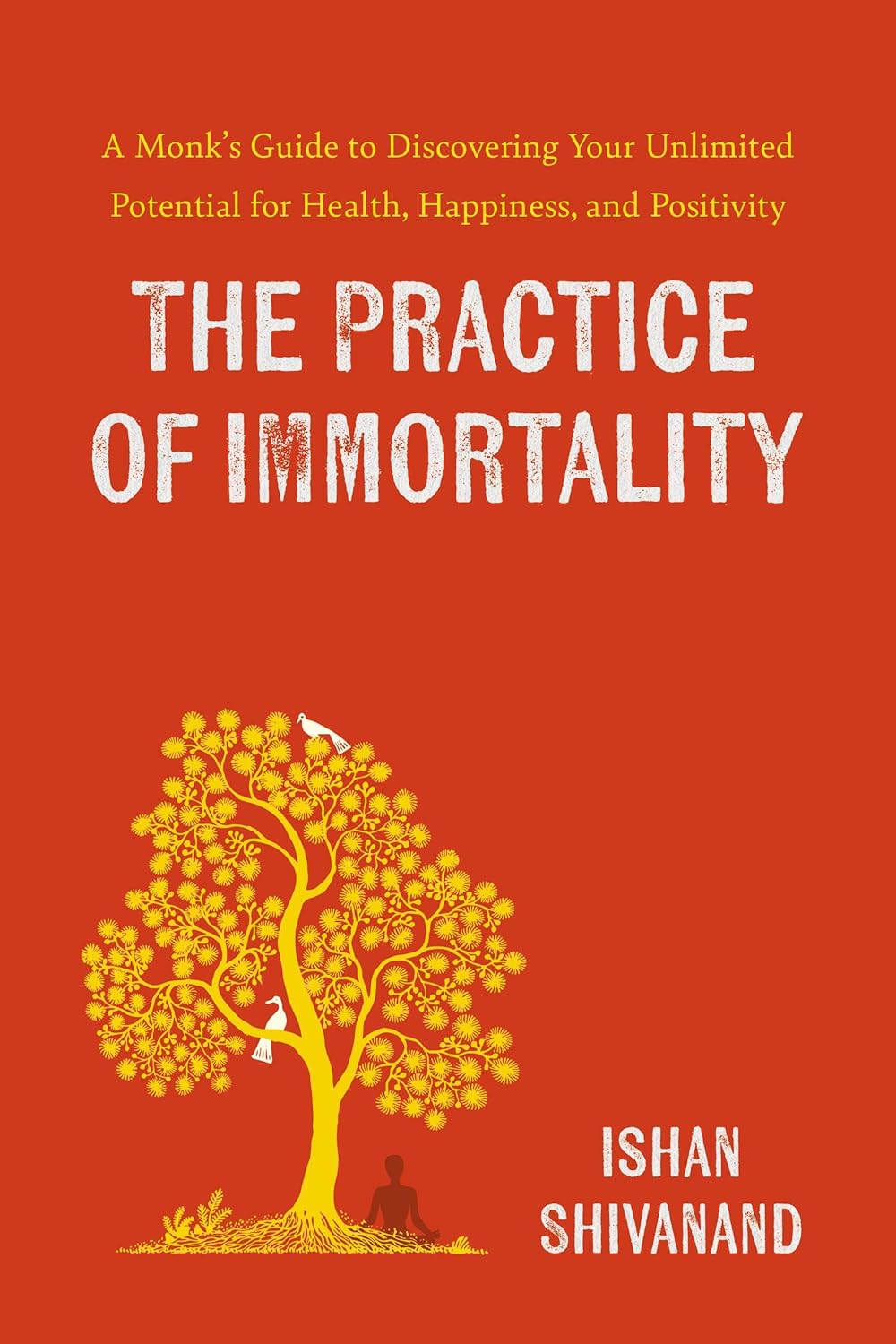
Ishan Shivanand’s The Practice of Immortality is a deeply personal account of his journey from the quiet discipline of a monastery to a life of teaching and guiding others across the world. The book blends memoir with instruction, weaving together stories from his childhood, lessons from his gurus, and modern applications of ancient yogic wisdom. The book argues that immortality is not about living forever in the body but about changing our relationship with time, shedding illusions, and learning to live in the present moment. Shivanand introduces practices of breathwork, meditation, and reflection, offering not just philosophy but tools that readers can try for themselves.
I enjoyed the storytelling in this book. The writing is simple, yet it carries weight. He doesn’t drown the reader in technical language. Instead, he paints vivid scenes of life in the monastery, of starlit skies and desert sands, of lessons handed down by his father. These stories are balanced with real-world encounters, like meeting seekers from abroad who came chasing legends of mystical herbs. That mix of sacred tradition and modern longing for meaning makes the book relatable, even when the ideas are lofty. At times, I felt swept away by the rhythm of his words. Other times, I had to pause because the thought itself demanded reflection.
Shivanand circles back to the same themes: time, illusions, the immortal self, and each return felt like another layer being added. Rather than skimming past big ideas, he makes sure they sink in. The rhythm is steady and deliberate, almost meditative in itself, which mirrors the practices he describes. His sincerity shines through on every page. There’s no sense of showmanship, no jargon to hide behind. Instead, it feels like sitting with someone who has lived these lessons and is sharing them with quiet honesty. That tone drew me in and made me more receptive.
I think this book is best suited for readers who are searching for something deeper than self-help hacks or quick fixes. It’s for those who are willing to sit with a story, to think about what it means, and maybe even to try the practices woven into each chapter. If you’re curious about the intersection of ancient wisdom and modern life, or if you’ve ever felt the pressure of time and wished for a way to step outside it, this book has something to offer. I walked away with a sense of calm, a reminder that the immortal self is not something to find far away, but something already inside me, waiting for attention.
Pages: 262 | ASIN : B0D7VKRT8Z
Drenched in Midnight: Three Days of Night
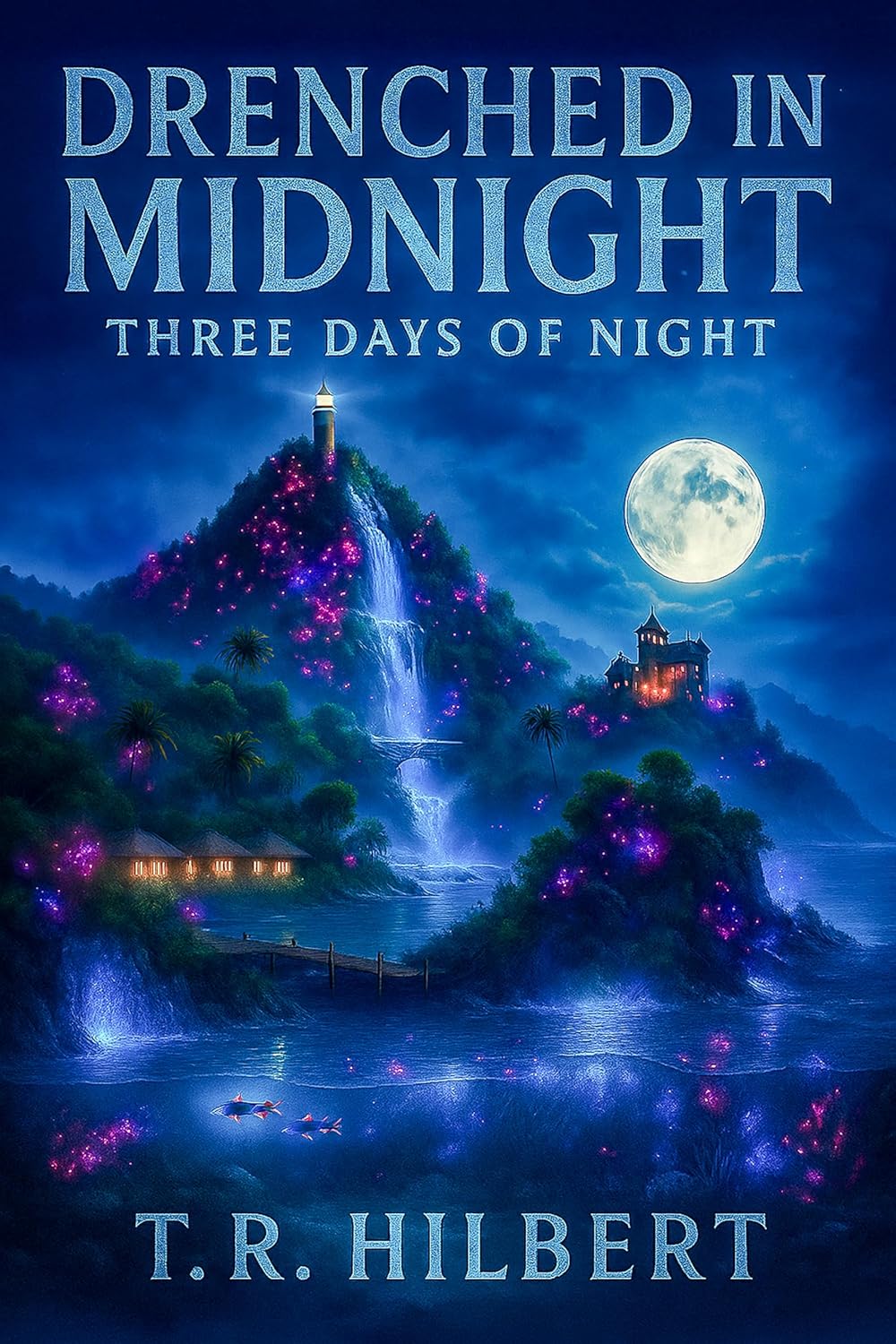
Drenched in Midnight is a haunting, dreamlike novella that drifts between love story, myth, and psychological unraveling. The book follows James and Laura, a couple who accept an invitation to a mysterious island resort called Embra. Their stay begins as an idyllic digital detox but quickly turns into a surreal exploration of memory, identity, and transformation. Guided or maybe manipulated by their enigmatic host, Byron, they find themselves entwined with an island that seems alive, pulsing with strange bioluminescent flowers and whispers of their own family histories.
The writing has that cinematic quality where you can almost smell the salt air and feel the humid stillness of the jungle. When the seaplane lands and the couple is greeted by linen-clad hosts whispering, “Welcome to the Isle of Embra,” I felt the tension coil right there. The author doesn’t rush. Every description of the glimmering tide pools, the glowing flowers, the hushed castle, is deliberate, seductive. It’s a slow burn that rewards patience. My favorite early moment was when James and Laura touch the glowing sand on the beach and realize it’s alive somehow.
What I loved most about this book is how it blurs reality. The alternating chapters between Byron, James, and Laura make you question who’s really telling the truth or if truth even matters here. Byron’s chapters, especially “The Host” and “The Keeper’s Secret,” have this eerie calm, like a cult leader convincing himself he’s benevolent. There is a quiet but unsettling intensity in the way he speaks of “guiding” his guests toward transcendence, and his fixation on the bloom, a luminous, sentient flower that draws life from human emotion, evokes both fascination and dread. But the emotional anchor is really Laura. Her realization that her family’s history is entwined with the island carries profound emotional weight. It’s that classic gothic moment, bloodlines tangled with curses, but reimagined with a sci-fi shimmer.
There are scenes that stuck with me long after I closed the book. When James and Laura find the Night Garden, for instance, the glowing petals, their bodies literally lighting up as they make love under the bioluminescent canopy, it’s both erotic and terrifying. The writing there is electric, unapologetically sensual without being gratuitous. You can feel the island consuming them, memory and identity merging until you’re not sure if they’re still themselves or just vessels for something ancient. Then there’s Byron watching them from the shadows, whispering, “The flower remembers.” That line still echoes in my head. It’s creepy, beautiful, and sad all at once.
Drenched in Midnight lingers long after its final page, not because of shock or spectacle, but because of the quiet reverence it builds for mystery itself. Hilbert crafts a world where memory, desire, and the natural world intertwine in unsettling harmony, leaving the reader both captivated and unsettled.
Pages: 136 | ASIN : B0FP9L8K3G




 LITERARY TITAN