Blog Archives
Walk With Me
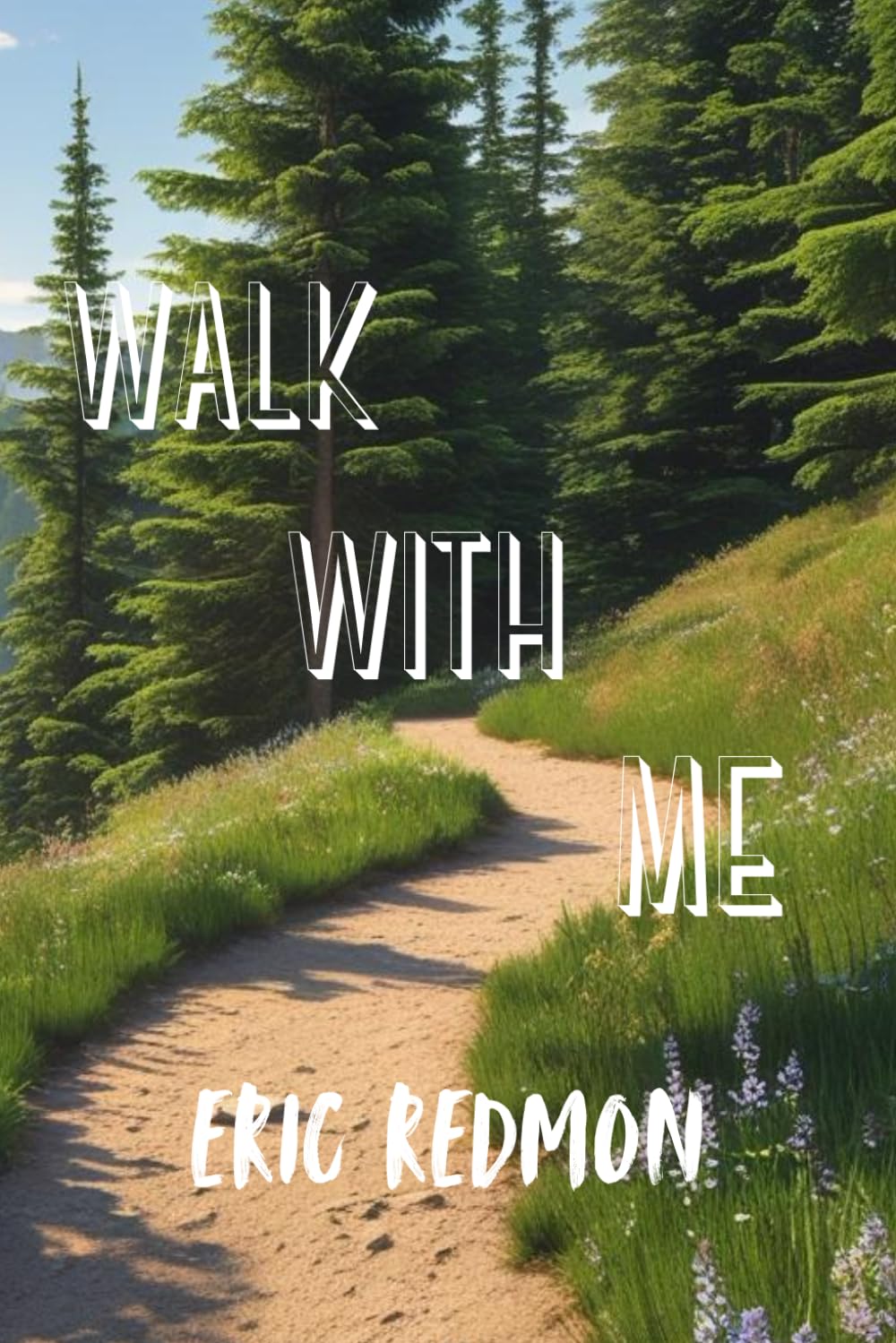

Walk With Me follows the story of Nelson “Pappy” Thompson, a former park ranger, and his grandson Skyler, as they build a bond through hikes, camping trips, and the shared magic of the outdoors. At its heart, it’s a generational tale about passing down knowledge, love, and courage, framed by vivid memories of trails, rivers, and mountain skies. Their adventures are often simple on the surface, pitching a tent, cooking over a fire, naming stars, but they carry deep lessons about trust, resilience, and the ties that hold families together.
Reading it, I found myself smiling one moment and swallowing hard the next. It feels like someone sitting across the table, telling you about their family. Sometimes the dialogue made me laugh, especially when Skyler misunderstood his Pappy’s phrases, and sometimes I felt a sting in my chest, especially when the bond between the old man and boy shone through. I’ll admit, there were spots where the pacing slowed and the descriptions got a bit detailed, but even then, I didn’t mind. It just felt like Pappy lingering on the trail, not in a rush to get home.
What struck me most was the emotion packed into the quiet moments. The way Pappy teaches through stories instead of lectures reminded me of my own grandparents. It’s gentle wisdom, not forced. The author manages to make simple scenes, like finding sea glass on the beach or learning to ration water, carry weight. I also enjoyed the occasional sketch-like illustrations scattered through the book. They were simple yet charming, and they breathed life into certain scenes.
I’d recommend Walk With Me to readers who value heart and who enjoy stories about family, the outdoors, and the lessons we hand down through generations. It’s perfect for parents, grandparents, or anyone who has ever wanted to hold on to a memory of time spent together in nature. It’s a book that made me laugh, sigh, and think.
Pages: 195 | ASIN : B0FP2S5LRP

Americans and Ex-Nazis Working Together
A Cry for Vengeance follows a professor and writer investigating war criminals who learns of ex-Nazis living in hiding who were recruited as Cold War spies, and now he faces a moral dilemma with deadly consequences. What was the inspiration for your story?
I was inspired to write my novel after reading a non-fiction book titled, The Spy Next door. The author provided detailed accounts of ex-Nazis living in this country under the protection of the U.S. Government. For years I had believed that most ex-Nazis had fled to South America, and so I was shocked to learn that many had come to the United States under a secret government program that allowed them to live and work as free men. The unbelievable story of Americans and ex-Nazis working together intrigued me, and so I decided to write a fictional account based on facts and revelations that have come to light since the end of the Cold War.
What kind of research did you do for this novel to ensure you captured the essence of the story’s theme?
Over a period of months I read numerous accounts, not only about the recruitment of ex-Nazis, but also about their victims, living and deceased. Much of what I wrote, especially about the Holocaust survivors is based on true stories published in various books and journals.
I find that authors sometimes ask themselves questions and let their characters answer them. Do you think this is true for your characters?
This is true. The protagonist in my novel is faced with a moral dilemma that blurs the line between good and evil, causing him to ask if he should seek justice or revenge. The question will nag him throughout the entire story, leaving me to wonder what I would do if I were in his shoes.
What is the next book that you are working on and when can your fans expect it to be out?
I’ve just completed another thriller titled A Rush to Judgment. The plot centers around two women: an exotic dancer who had been unjustly charged with a crime and sent to prison where she died from Covid. The other, a Native American woman, serving in the Army in Afghanistan, where she was brutally raped by her fellow soldiers. Shortly after her return to the U.S., she committed suicide. The two women did not know each other but they had something in common that is revealed halfway into the story. The novel will be published sometime next year.
Author Links: GoodReads | Amazon
Moments before his death, Karl Muller, a terminally ill patient, makes a chilling confession to nurse Helen Darby: he’s a former Nazi guard responsible for thousands of deaths at Treblinka concentration camp. Shocked but determind, Helen enlists the help of Bryan De Luca, a professor experienced in investigating war criminals.
Their search leads to disturbing revelations–Muller, along with numerous ex-Nazis, was secretly recruited by American intelligence as Cold War spies. Soon, De Luca finds himself trapped between ruthless contractors protecting Nazis and the militant group Jews for Justice, seeking vengeance. When violence erupts, and De Luca is thrust into mortal danger, he faces an impossible choice: protect killers or unleash vengeance.
A powerful tale of secrets, betrayal, and moral reckoning. Buy now to uncover the hidden truths of a chilling conspiracy and its deadly consequences.
Searching for Bowlby

Searching for Bowlby is a sweeping and deeply personal exploration of the life and legacy of John Bowlby, the father of attachment theory. Told through vivid scenes and finely tuned historical detail. It’s an enthralling biography tracing Bowlby’s journey from his lonely Edwardian childhood to his groundbreaking work on human connection. Wooster weaves history, psychology, and his own story of loss and self-discovery into a narrative that feels as intimate as it is ambitious. The writing flows with a quiet rhythm, carrying readers from the fog-laden streets of London to the bomb-scarred fields of wartime Europe, always returning to one haunting question: what happens to a child who grows up unseen, and how can love heal what neglect has broken?
What struck me most was the warmth beneath the scholarship. Wooster doesn’t write like an academic standing at a distance; he writes like a man sitting across from you, sharing something that still aches. His prose has a softness to it, but it’s also sharp where it needs to be. He paints Bowlby not as a saint of science but as a flawed human being, brilliant, haunted, sometimes difficult. I enjoyed the emotional honesty in the writing. I could feel Wooster’s own grief bleeding through the page, his search for Bowlby folding into a search for meaning after personal loss. There’s something raw and redemptive about that honesty.
The historical passages are beautifully written. I caught myself wishing Wooster would linger less on the scenery and more on the man. But then, just as I was about to lose patience, he’d pull me back with a line so clean and true it stopped me cold. That’s the magic of this book. It breathes, it pauses, it meanders, and then it finds you again. Reading it felt like talking to an old friend about things that matter.
Searching for Bowlby isn’t just about psychology or history; it’s about the quiet revolution of being seen and loved after a lifetime of distance. It’s about the way we carry our parents’ ghosts into adulthood and how we learn, if we’re lucky, to forgive them. I’d recommend this book to readers who love reflective biographies, to anyone fascinated by the inner lives of thinkers, or to those who have ever felt the pull of childhood wounds into their grown-up hearts. It’s a thoughtful book, not just of one man, but of the fragile, beautiful thread that ties all of us together.
Pages: 369 | ASIN : B0DZ1DC8F3
A Dark, Morally Ambiguous Story
The Grotesque follows three people, each broken in their own ways, who are haunted by childhood trauma and seeking to escape it and control their own futures. What was the inspiration for the setup of your story?
My original concept was to tell a story about three people who each saw the world in very different ways due to their individual experiences. I envisioned a scene of three people sitting together in a café that sat across from a park. In the park would be a father, yelling corrections out to his young son as they tossed a football back and forth. One of the three in the café might perceive a wonderful father-son moment, something they never had as a child. The second might feel disgusted or angered by the sight of a father berating his son for not being good enough. And the third might feel heartbroken by the sight of the young boy, nearly in tears, trying and failing to please his dad, too afraid to tell his father that he clearly doesn’t enjoy football. The exact same sight, but three different perspectives based solely on individual experience.
Of course, this would be a boring scene to write at length, let alone read. But I loved the idea behind it. And the most interesting aspect, to me, was the exploration of how three such people might have very similar backgrounds but react in extremely different ways due to slight differences in their original perspectives. And trauma seemed a fitting place to start since it would create such a larger, more intricate reaction across their entire lives.
I felt that your book delivers the drama so well that it flirts with the grimdark genre. Was it your intention to give the story a darker tone?
I love the grimdark comparison! Yes – absolutely, my intent was always for this to be a dark, morally ambiguous story. The first image I had for this story was the little boy hiding beneath the bed, which became a recurring theme throughout the story. Things were never going to lighten up much from there.
My characters were affected by childhood trauma—physical and/or emotional. So, while what happened to each of them was definitively wrong, their responses to it would always be much less black and white. They’re each responding to the darkness that shaped them, all while living in a society that never stepped up to help them when they needed it most, so they’re naturally going to be skeptical of the world. While they’re dependent on their own survival instincts, they also feel a responsibility to save others from suffering their same fates, but lack the role models to guide them. So it’s fitting that the story would involve characters who do seemingly horrible things, but for reasons they believe are morally good. And some of their decisions will accordingly go very wrong.
What were some themes that were important for you to explore in this book?
There are several themes that I hope will emerge from The Grotesque. Family is a big one, both actual and found. Within that, there’s also the theme of self-reliance and how it may be in conflict with our connection to the world, specifically in seeking help when we need it most. These also impact the ideas of perceived guilt and assumed responsibility.
The biggest theme, though, to me, is the question of how we see ourselves in the world. The person we feel we could be versus the person we think we actually are in everyday life versus the person others see. This gets played out a lot in the Frankenstein comparisons within the novel. And it encompasses the entire story as a question of perspective itself and how it shapes the ways we might interpret the world, ourselves, and each other.
What were some goals you set for yourself as a writer in this book?
There were several variations of this story. In converting the original screenplay version into a novel, I wanted two things: to get it on paper, and to explore all the tiny details of every scene – details that you don’t add to a screenplay. That first novel version was a tad boring and overwritten. It was also light on emotion, which was the point of telling the story in the first place.
For the rewrite, I wanted to find a way to dig deeper into the minds of my characters and to really see the world through their eyes. In other words, I wanted to learn to become a much better writer than I’d previously been. I also wanted to ‘find my voice as a writer.’ You hear that phrase a lot when reading books on writing, and I’d never fully understood it before, until I really started to narrow down what it was that I loved about certain other writers.
I also wanted to free myself from caring how my writing might sit with a general crowd. Of course, I want people to like, even love my book, but it doesn’t need to be everyone. I know my writing style won’t be for everyone. And that’s okay. I needed to do what was right for me and for the story I had to tell.
Author Links: GoodReads | BlueSky | Facebook | Website | Amazon
It was their house. He had no right. No right at all. But that man took what he wanted, just to cap off that sad little boy’s already unspeakable childhood. And for the next thirteen years, that pathetic useless child would cower and hide, hallucinate and obsess. Thirteen years. Until the past started circling back.
This Halloween, one way or another, things are going to change.
Because the focus of that boy’s obsession—that desperate, failing dancer—has an agenda of her own: to escape his watchful eye and rid herself of the volatile boyfriend who takes anything he wants. To live the dream she’s worked so hard to achieve.
For Katrina, Jared, and Michael, every dream for the future is forever chained to the traumas of their childhoods. But it all ends when they become integral parts of a deadly masquerade to absolve the guilt-ridden secrets of the past.
No more living in the shadows. It’s time to spotlight the ugly truth. In a world where the innocent are broken, beaten, and betrayed, everything is a dance. Everyone is the audience.
It’s time to make it or break it all.
A Father’s Presence
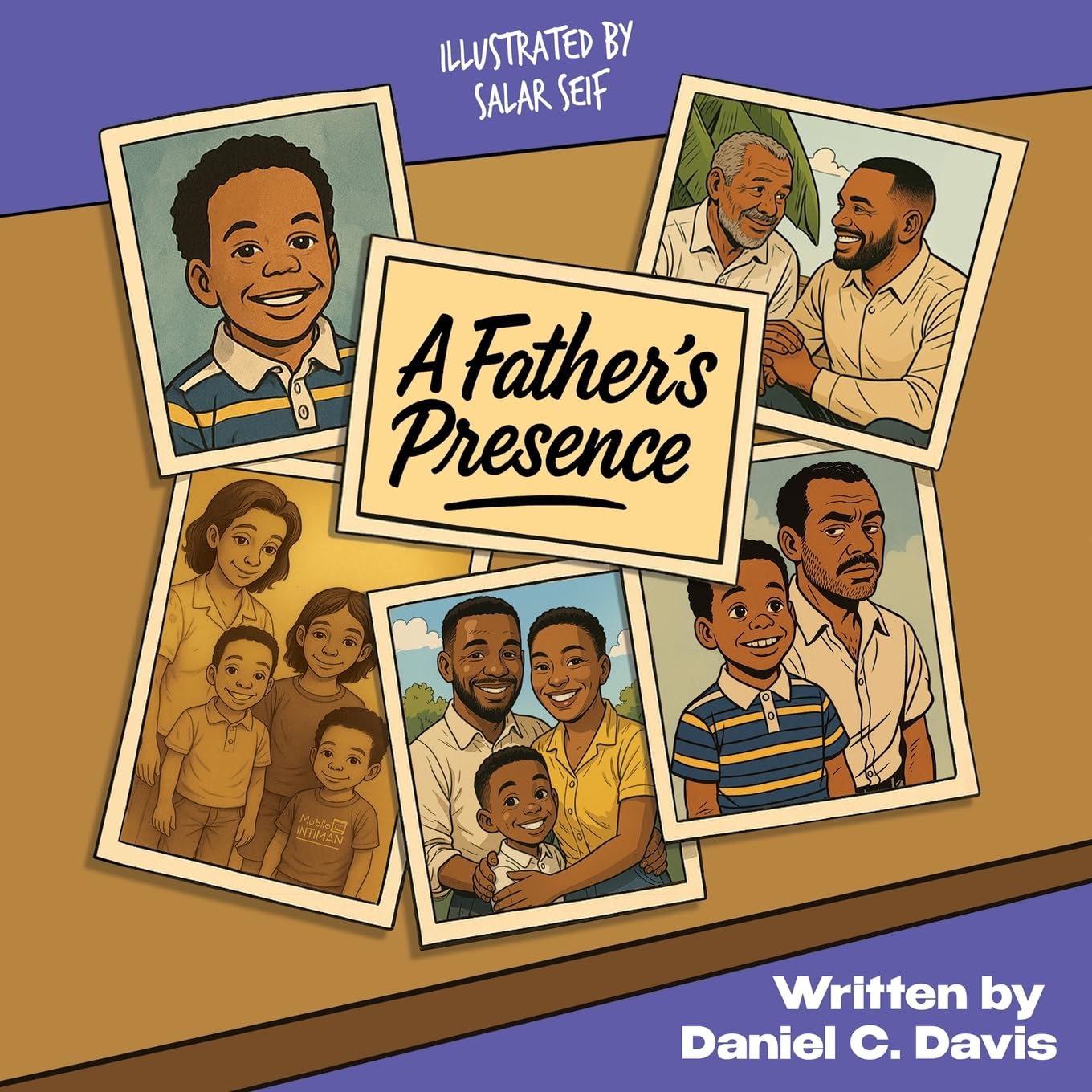
A Father’s Presence tells the story of Curtis and his father, tracing the ripples of absence that echo through generations of men learning what it truly means to “be there.” It begins with a boy whose father, though physically present, feels distant, carrying the quiet ache of growing up without his own dad. Through small, tender moments and the wisdom of mentors like a patient coach, Curtis learns how listening and empathy can heal old wounds. The story blooms into a celebration of connection, showing how one family breaks free from the heavy weight of inherited silence to build something whole and loving.
Reading this children’s book stirred something deep in me. The writing feels honest and simple, yet it cuts right to the heart. Each page carries warmth and quiet power through its words and its illustrations. The author doesn’t hide behind fancy words or big speeches. Instead, he shows us the small gestures like a pat on the head, an empty chair, a son’s whispered promise, that build and break a life. The pacing is gentle, but the emotions sneak up on you. By the end, I wasn’t just reading about Curtis and his father. I was thinking about my own family, about the times I could have listened more or spoken less. There’s something raw and comforting about that.
I loved how the book balances pain and hope. The illustrations by Salar Seif add another layer of heart, soft and sincere, helping the story feel alive. The scene where Curtis and his dad finally spoke, not as man and boy, but as two souls trying to understand each other, that scene hit me hardest. It reminded me that presence isn’t about showing up, it’s about seeing, hearing, and feeling with someone.
I’d recommend A Father’s Presence to anyone who’s ever wished for a deeper connection with their parents, their children, or themselves. It’s a picture book for fathers trying to unlearn the quiet, for sons who crave more than words, and for anyone brave enough to break old cycles. This children’s book doesn’t just tell a story. It gives you a reason to sit down, listen, and start again.
Pages: 20 | ASIN : B0FRQ28YTJ
One of the Greatest Acts of Love

In MENtal Health: Take It “Like a Man,” you share stories from men from all walks of life who reveal their experiences with masculinity, trauma, and healing. Why was this an important book for you to publish?
From the moment this project began, I knew it mattered deeply. Writing has always been, to me, one of the greatest acts of love and faith. Love, because authors return to some of their hardest truths in order to share them with others — and faith, because we trust those stories will find the people who need them most.
As a publisher, I’ve worked with hundreds of women telling their stories. But over time, I kept hearing from men who were struggling to find a place where their stories of vulnerability and healing could be told. There’s still so much silence around men’s emotional lives. This book became a way to hold space for that — to say, your voice matters, too.
When we launched the book and I got to tell the authors they were now international bestsellers — in the U.S., Canada, the U.K., the Netherlands, and Brazil — it wasn’t just about the title. It was about seeing men stand taller in their truth.
Can you share with us a little about your process for selecting contributors for this anthology?
The process was both intentional and intuitive. I wanted a group of men (and a few women) who represented a wide range of backgrounds, professions, and perspectives — but who all shared one thing: a willingness to be honest.
We have psychotherapists, musicians, social workers, coaches, fathers, and sons. Each man came forward with a story that felt necessary. As I often say, I don’t chase the writers; I listen for the stories that want to be told.
Many of these authors had never written before. Some were terrified to speak about what they’d been through. But they showed up. They wrote about depression, abuse, sexuality, loss, and the courage it takes to heal.
As one author, Coach Zeke, said:
“I wanted to shine a light in dark places — to make visible the conversations men rarely have about love, connection, and vulnerability.”
That’s exactly what this anthology does.
Did you learn anything surprising about the assumptions surrounding men’s mental health while putting this book together?
Absolutely. What struck me most was how deeply ingrained silence is.
As Dr. Vince Johnson Jr. shared during our call,
“We walk through life saying we’re fine — but are we really? We’re bleeding out, and we just raise our hand and say, ‘I’m okay.’”
That line has stayed with me. It reflects the pressure men still feel to appear strong even when they’re in pain.
I also learned how universal this struggle is — across cultures, professions, and generations. Whether it was Jason Schneider talking about middle-age reflection, Eric Campos sharing his work with LGBTQ youth, or Natalie Goodfellow reflecting on the grief and silence in her small Canadian town — the themes of love, loss, and healing are the same.
We tend to think of men’s mental health as a “niche” issue. It isn’t. It’s a human issue.
What is one thing you hope readers take away from MENtal Health?
I hope readers — men and women alike — walk away knowing that strength and vulnerability are not opposites.
As Dr. Stacey Kevin Frick said so beautifully,
“True strength is trusting yourself enough to be soft, to be courageous, and to live with grace.”
This book is an invitation to talk about things we’ve been told to hide. To understand that healing doesn’t happen in isolation — it happens in community, in shared truth.
If even one reader feels less alone after reading these stories, then the book has done its job.
Author Links: Amazon | Goodreads | Facebook | LinkedIn | Website
**The mental health conversation men desperately need—15 powerful stories that prove healing is possible.
In MENtal Health: Take it “Like a Man”, fifteen authors from diverse backgrounds share their raw, unfiltered journeys through depression, anxiety, PTSD, addiction, and personal transformation. These aren’t just survival stories—they’re blueprints for male mental health recovery and proof that seeking help is the ultimate act of courage.
BREAK THE “MAN UP” MENTALITY
For generations, men have been told to suppress emotions, avoid therapy, and suffer in silence. This groundbreaking men’s mental health book shatters those toxic expectations. Entrepreneurs, fathers, veterans, athletes, and everyday heroes reveal their darkest moments and the breakthroughs that saved their lives.
WHAT YOU’LL DISCOVER:
✅ Real stories from real men confronting depression, anxiety, and trauma
✅ Practical mental health tools and coping strategies that actually work
✅ Permission to be vulnerable without losing your masculinity
✅ Hope and brotherhood from men who’ve survived and thrived
✅ Cultural insights on supporting men’s emotional wellness in families and workplaces
PERFECT FOR:
• Men struggling with depression, anxiety, or mental health challenges
• Partners, family members, and friends seeking to understand male mental health
• Mental health advocates and professionals
• Anyone passionate about breaking mental health stigma
FEATURING CONTRIBUTIONS FROM:
Eric Campos, Bestselling author Dr. Stacey Kevin Frick, Roje Khalique, Alan James Duro, Federico Soto, Juan Camilo Posada Arenas, Marc Longwith, Jonathan Dubrulle, Jason Schnieder, Steven A Schechter, Joshua Engle, Dr. Vince Johnson Jr, Coach Zeke (Azuka Tuke), Natalie Goodfellow, and Christen E. Bryce.
These stories will challenge everything you thought you knew about strength, vulnerability, and what it truly means to be a man in today’s world.
Get Your Copy Today before the price goes up.
Cancer Chronicles: Veilwalker Volume 2
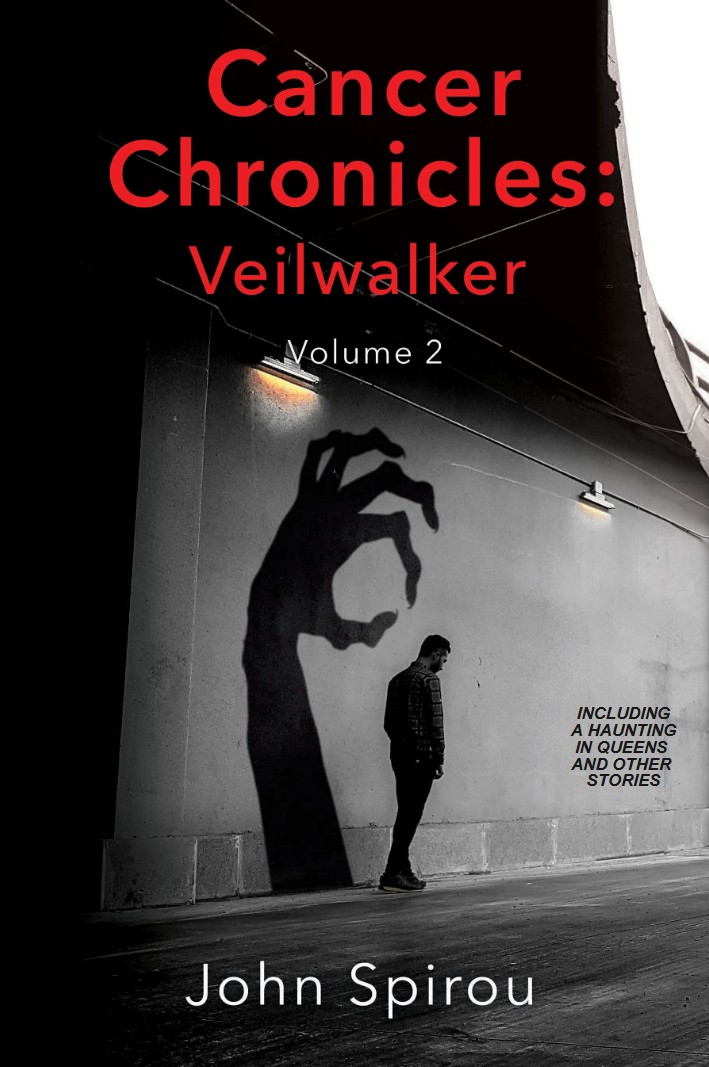

Cancer Chronicles: Veilwalker is a haunting and deeply personal tapestry of suffering, endurance, and faith. The book weaves together memoir and allegory, faith and despair, hope and the supernatural. It begins as the story of a man’s grueling double life, working endless shifts and ignoring the quiet signals of collapse, before spiraling into a battle with cancer, loss, and spiritual rebirth. What makes it remarkable is not just the detailed recounting of treatment or trauma but the unflinching honesty with which it faces death, fear, and redemption. The writing slips easily between the physical and the spiritual, between gritty realism and ethereal reflection, until the two blur completely.
Reading this book hit me in ways I didn’t expect. The rawness of it, the exhaustion, the hospital lights, the cracked fingertips, the taste of blood, made me feel like I was sitting in that sterile room beside the author. There’s a rhythm to his storytelling, almost like breathing through pain, where sentences stumble, pause, then push forward again. The voice is weary but stubborn, defiant even. I admired that. Sometimes, the narrative drifts, repeating memories like waves that refuse to settle, but that feels honest too. Recovery, after all, is rarely tidy. What stayed with me most was not the sickness itself but the deep tenderness in his relationships. The way his wife and children orbit his struggle feels achingly human. The love there isn’t dressed up, it’s messy, awkward, and real.
I also found myself torn between awe and heaviness. The spiritual elements like the visions, the moments of surrender, and the sense of divine purpose, are written with sincerity and conviction. Whether or not one shares the author’s faith, there’s something deeply moving about the way he turns agony into revelation. At times, it leans into religious metaphor. Yet that very fervor gives the story its pulse. It’s not polished in the traditional sense, but it’s alive, pulsing with heart and hurt.
By the time I reached the end, I felt like I’d walked through fire with him. This isn’t a book for someone looking for neat resolutions or easy inspiration. It’s for readers who want to feel everything, the fear, the faith, the fatigue, and still believe there’s light somewhere in it all. I’d recommend Cancer Chronicles: Veilwalker to anyone standing at the edge of something hard, anyone who’s lost faith and wants to find it again in a voice that refuses to quit.
Pages: 380 | ISBN-13: 979-8-86852-165-2
I Lived This Journey

Seven Blank Pages shares your story of how, after divorcing your husband, you set out to rediscover yourself by embracing change and trusting your instincts while traveling the world on a pilgrimage of spiritual and personal discovery. Why was this an important book for you to write?
I lived this journey never intending to write about it. But when I was pregnant with my first child, I found myself telling stories of a younger me to my baby bump. Then a little voice whispered: write it. If I’ve learned anything from my awakening, it’s to listen.
As the manuscript evolved, so did my clarity and purpose. I realized the story could serve others—that the messages were bigger than me. I wrote it for the person standing on the edge, to remind them that internal freedom comes from trusting the unseen.
In your prologue, you describe the day you and your ex-husband went skydiving together to celebrate your divorce from each other. This instantly pulled me into your story and gave me a new perspective on letting go. What is one piece of advice someone gave you that changed your life?
I was walking with Blake in India, just outside the gates of the Taj Mahal, when she said: “We are just spirits who chose to be human—to experience being human.” That single perspective shifted everything. I was able to step out of judgment and attachments, to reframe fear and sadness with sincerity instead of resistance. It made the present moment sweeter, and decision-making far less heavy.
What was the most challenging part of writing your memoir, and what was the most rewarding?
The most challenging part, quite literally, was time. I wrote this book over three years while also birthing two children. There were months I didn’t touch the manuscript at all, and then long stretches where finding the energy and focus to dive back in was difficult.
The most rewarding thing has been hearing from readers. Knowing that a single line, a scene, or a moment of struggle resonated and inspired people who had never met me—that connection has been the fuel that kept me going.
What do you hope is one thing readers take away from your story?
Embrace the blank page. You are not only capable of handling the unknown—you were designed to thrive in it. It’s in the void where we create, and in the quiet that we remember.
Will it be uncomfortable? Yes.
Will it be worth it? Absolutely.
Author Links: Instagram | Website | Amazon
FIVE Stars, Gold Book Award Winner —Literary Titan
Seven Blank Pages is an inspiring, globe-spanning memoir about losing everything and daring to start over. When author Whitney Joy loses her husband, home, and career in just twenty-four hours, she makes a bold choice: to leave it all behind and embark on a solo, around-the-world journey in search of freedom, healing, and purpose.
From the romantic streets of Paris to the snow-capped Swiss Alps, from the turquoise waters of the Andaman Sea to the sacred temples of India, and finally to the wild coasts of New Zealand, Whitney’s travels become more than a physical adventure—they are a deep, spiritual transformation. Along the way, she faces heartbreak, financial uncertainty, and identity loss, while discovering the power of intuition, the magic of manifestation, and the courage to live authentically.
Part travel memoir, part soulful manifesto, Seven Blank Pages is a captivating story for anyone who’s ever felt broken, stuck, or ready to rewrite their life. With themes of resilience, feminine empowerment, synchronicity, and self-discovery, Whitney invites readers to see that the unknown isn’t something to fear—it’s where your truest life begins.
Readers of Eat, Pray, Love by Elizabeth Gilbert, The Alchemist and The Pilgrimage by Paulo Coelho, Untamed by Glennon Doyle, and The Surrender Experiment by Michael Singer will love this debut memoir, which explores themes of divorce, loss, travel adventure, self-discovery, spiritual enlightenment, manifestation, and the magic of the universe.



 LITERARY TITAN