Blog Archives
Power of Forgiveness
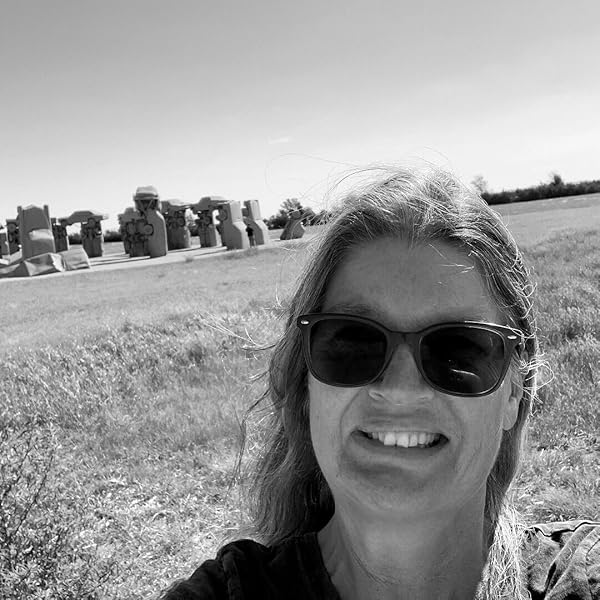
The Raven Moonstone follows an orphaned high schooler who discovers a wizard’s journal and accidentally turns the town librarian into a goat, sending him on an adventure to find an arcane artifact to reverse his spell. I enjoyed the depth of the main character, Noah. What was your process to bring that character to life?
I wrote The Raven Moonstone, sitting cross-legged in the back of our van. It was a time for stepping outside my comfort zone. I walked away from my career in IT and decided it was time to retire. The plan was to drive the backroads of America and explore. Somewhere in Missouri, we had pulled into a free campsite, and sometime during the night, another camper arrived. In the morning, I peeked out the window to catch a glimpse of our neighbor when a young man opened the back of his SUV to let his dog out. But it wasn’t a dog, but a goat. My curiosity sparked, and I grabbed my coffee and walked over to introduce myself. The young man’s name was Noah, and he was traveling cross-country with a pet goat with no name.
My grandson is just learning to read, so I thought I’d write him a story. It had always been on my bucket list to write a book. I’d thought it’d take years, so I targeted it for when he’d be about twelve. My goal was twofold: 1) create a fun story, and hopefully he’d grow to love books as much as I do, and 2) pass on words of wisdom, as a legacy, in a way that he wouldn’t. I was speaking to him. After my character Noah showed up on the page, the book wrote itself.
What themes were particularly important for you to explore in this book?
The Raven Moonstone is a weird, funny, whimsical story of family and secrets and courage, but underneath it all, it’s a story about the undeniable power of forgiveness.
Can you tell us more about what’s in store for Noah and the direction of the second book?
The Dragon Moonstone, book 2 in Noah’s adventures, brings us to Castle Dragon, where Noah is sent to master his gifts. Noah’s magic is out of control, and his powers caught the attention of some unsavory characters. Noah is impulsive and impatient, and decides to take shortcuts during his lessons, which turns out poorly. Determined to right his wrong, he is sent on a quest, but his plans become complicated when the Dragon Moonstone goes missing. He must find it and restore the balance to the realm. Along the way, Noah meets many new characters, all with their own agenda. Typically described as a loner, Noah must rely on his friends and work together and learn to trust if he is going to solve the mystery.
Author Links: GoodReads | X (Twitter) | Facebook | Website | Amazon
Now ominous ravens lurk in the shadows, watching his every move.
Noah is determined to reverse his magical mishaps. To do that, he must find a powerful arcane artifact—the Raven Moonstone. With the help of his friends, Sara and Jesse, he sets out to solve the mystery behind the missing heirloom.
With unexpected magic, an evil witch, and a herd of feisty goats, Noah’s journey is about to spiral wildly out of control.
Book One of The Moonstone Legacy Series
Encouraging Young Minds

Galileo’s Points of Light in the Night Sky follows a pair of curious siblings and Dr. K and her magical time portal, who travel back to Renaissance Italy to meet Galileo and experience firsthand the wonder of his telescope and discoveries. What was the inspiration for the setup of your story?
The inspiration came from my desire to make science and history feel alive for children. Galileo’s discoveries changed how we understand the universe, yet for many young readers, history can feel distant or abstract.
By introducing a magical time portal and pairing the story with two inquisitive siblings, I wanted to create a bridge between today’s readers and the past.
The setup allows children to see history not as dusty facts in a textbook but as living experiences full of curiosity, wonder, and adventure.
I enjoyed your characters, especially Dr. K. What was your favorite character to write for and why?
Dr. K was certainly the most rewarding character to write. She is both a guide and a fellow traveler, modeling how to ask questions, nurture curiosity, and balance seriousness with a sense of wonder. Through her, I was able to weave together elements of science, history, and imagination.
She is not only a mentor to the children in the story but also a representation of my own lifelong passion for encouraging young minds to explore the world around them.
What were some educational aspects that were important for you to include in this children’s book?
I wanted to emphasize both Galileo’s scientific process and the cultural context of his discoveries. Children learn not only that Galileo built a telescope and observed the moons of Jupiter, but also that these observations challenged established beliefs of the time.
The book highlights critical thinking, perseverance, and the courage to question accepted truths.
I also included a “Science Primer” at the back of the book to give readers and educators additional resources, ensuring that the story supports learning in both classrooms and homes.
Can you tell us more about what’s in store for Dr. K and the direction of the second book?
The second book, Marie Curie’s Radiant Quest, transports readers to Paris at the turn of the 20th century.
In this story, Dr. K and the siblings meet Marie Curie and learn about her groundbreaking work with radioactivity.
The narrative continues to blend adventure with science, showing not only Curie’s discoveries but also her perseverance in the face of challenges as a woman in science.
The series as a whole will continue to introduce children to great scientists across time, always with an emphasis on curiosity, resilience, and the wonder of discovery.
Author Links: GoodReads | X (Twitter) | Facebook | Website | Katherine Korkidis | Amazon
In the awarding-winning Galileo’s Points of Light in the Night Sky, the first book of the captivating Dr. K’s Portal Through Time series, Jennifer, a vivacious 10-year-old, and her intellectually curious 8-year-old brother, Daniel, embark on an exceptional voyage through the annals of time. Guided by the enigmatic and brilliant scientist, Dr. K, they are transported to the heyday of Renaissance Italy, straight into the workshop of the iconic astronomer, Galileo Galilei.
As they traverse the time portal, Jennifer and Daniel experience firsthand Galileo’s groundbreaking observations of the celestial expanse through his innovative telescope. They are enlightened about the significance of questioning established norms and the audacity needed to defy the status quo. The siblings witness Galileo’s unveiling of the cosmos’s wonders and his revolutionary proposition that our Earth is not the center of the universe.
Throughout their journey, Jennifer and Daniel support Galileo in chronicling his pioneering discoveries. They confront challenges that enhance their problem-solving abilities and deepen their grasp of the scientific method. Their adventure cultivates an appreciation for the quest for knowledge and the potency of curiosity.
This enthralling tale seamlessly blends history, science, and adventure. It offers young readers a captivating, educational narrative, introducing them to the mesmerizing world of astronomy and the enduring contributions of one of history’s most illustrious scientists. The story of Jennifer and Daniel will inspire the readers to question, explore, and cherish the pursuit of knowledge, just like Galileo did. The book, while being a thrilling read, also helps foster a love for STEM disciplines in young, inquisitive minds, making it a perfect addition to any child’s reading list.
At the end of Book 1 is a QR code for the Science Primer, a comprehensive, free downloadable guide over 100 pages long, written specifically for parents and teachers. It also includes a complete Teacher’s Guide with detailed lesson plans, a glossary of terms, and an extensive list of resources such as books, videos, websites, and other online Resources for teaching about Galileo and his discoveries. The primer is designed to make science education engaging and accessible. Each of the books written for the series will feature its own tailored Science Primer. Book 1 itself also includes a glossary of terms and resources designed specifically for children ages 8-12, complementing the exciting adventures of Jennifer and Daniel.
Quiet Pride
In A Long Cast, you share with readers your experiences with family and friends over five decades of surfcasting on Martha’s Vineyard. Why was this an important book for you to write?
The stories were starting to evaporate as time went on. I could feel them slipping away, and I wanted to capture them so years from now the kids would be able to simply share the book with someone they cared about and say, “It was like this.”
For the last several years, my adult daughter would keep prodding: “You should write these stories down, Dad.” And I kept deflecting it. Then, when I turned 70, I secretly decided to give it a try so I could maybe surprise them in the end. But I stalled. It was just dry, boring details at first. But when I asked my fishing friends if there was anything they would like to share for the book, it became clear that they, too, wanted documentation for their family and friends to have forever. I sensed their quiet pride and an unspoken hope, and this is what gave me the motivation I needed to get it across the finish line. I used the Dedication page to give the rationale for the book.
Is there anything else you now wish you had included in A Long Cast? A memory? An experience?
No. Not at all. But if there was a Prologue, it would contain the reactions after it came out. Everything from the successful construction company owner who said, “Only read one book my entire life. But I read this one in two days.” I gave each of the twenty-five featured fishermen a copy when it came out. One guy, looking at his copy, said to the other, “Geez. Didn’t know he (me) could write.” The other fishermen replied, “Didn’t know you could read.” The wife of a fisherman texted and explained that she always wished him well as he headed out the door for his annual fishing trip, but never figured out why he liked it so much. Now she knew, she said.
Right after the book came out, he got really ill and had to stop fishing. One day, she was reading the book outside his hospital room and started to laugh out loud. He asked her what was so funny. She read him the two paragraphs, and he laughed so hard and long that they had to settle him down. “It’s true.” He kept laughing. “It’s true. That’s Ed.” (The fisherman in the story.)
Different fishermen would reach out and tell me which story they liked best, and everyone has a different one. A younger fisherman said he bought a copy for his dad and told him it was because of the piece on The Partner. Another told me it was Retie. I think mine might be The Car. I still laugh out loud when I read it.
What advice would you give someone who is considering writing their own memoir?
Don’t make it about you. Make it about the encounters and conversations and actions of others that have been illuminating, convincing, affirming, paradoxically true, righteous, courageous, challenging, grace- filled, perplexing. Don’t report facts, and details, and accomplishments. Tell the stories of who and what has enriched the journey.
What is one thing you hope readers take away from your book?
I hope the reader can also find one or two things in the book to be true.
Author Links: GoodReads | Amazon
In 1971, a father and son ventured out of their apartment in New Jersey to the Island of Martha’s Vineyard to try their hand at surfcasting. That trip began a life of Spring trips to the waters’ edge in search of bluefish and striped bass. Fifty years later, Mike Carotta takes readers along for thirty straight nights and days of fishing.
This is not a How To book. It does not contain the secrets to a fantastic fishing career. Rather, hard fishing has a way of revealing lessons from the shore and the people who gather there-binding together strangers in conversations and gestures, failures and successes, new learnings, and, eventually, creating old friends.
Through it all, more than fish are caught-and shared. The result is a thoughtful collection of essays on life with some notes from the trade filtered in. Join Mike on his pilgrimage back to where the distance between heaven and earth gets a little thinner and the real “keepers” of the trip go far beyond the fish on the end of the line.
“I am not a good surf fisherman. There are no helpful fishing hints here. This is a collection of recollection: stories of saltwater characters, occurrences, and conversations. Like stars in the night sky, they are best enjoyed when you get some distance from the lights of other stuff.” – Excerpt from A Long Cast
The Little Things

Oh No, There’s Poo on My Shoe follows a young boy who is upset about having poo on his shoe and his mom, who reminds him in a fun and gentle way that things could be worse. What was the inspiration for your story?
Just to gently remind kids not to get all worked up over the little things, and try to see the bright side of life, as you can always wipe poo off your shoe!
What were some ideas that were important for you to share in this book?
There could be worse things than having poo on your shoe!
What scene in the book did you have the most fun writing?
I enjoyed the scene when the son didn’t trip over his shoelaces, or lose at the sports races, but most importantly, the wind didn’t change when he pulled funny faces!
Is this the first book in the series? If so, when is the next book coming out, and what can your fans expect in the next story?
No, it’s not in a series.
Author Links: GoodReads | X (Twitter) | Facebook | Website | Amazon
All the while his mum keeps reminding him, in a rhyme, that there are other unpleasant things that could happen too and that it’s not that bad because you can always wipe poo off your shoe!
Hidden Meanings

Fists in the Eye that Blinks on a Pin is a collection of poetry that feels both raw and surreal, and moves between moments of tenderness and moments of violence, exploring themes of memory, loss, and fractured identity. What inspired you to write this particular collection of poems?
This collection of poems was actually inspired by a very specific event. I was gearing up to see Billy Corgan perform at the Good Things festival when there was a sudden announcement that he would be performing an intimate acoustic set at a small venue called The Gem. The Gem is a tiny bar in a suburb called Collingwood in Melbourne, Australia. I managed to secure tickets and was huddled in this room of maybe 100 people, watching the legend Billy Corgan perform this unbelievable, stripped-back acoustic set. Truly a dream come true.
He opened up the floor to questions, and I asked how he manages to separate the emotional connection to his songs from the need to view them objectively for release to the world. His answer mesmerised me, as he talked about themes of going back to the freedom of creativity you have in childhood… reminiscing on how we have this creative flare that lets us do anything, we draw rabbits that are red with blue feet, we colour outside the lines; and it’s only once people start telling us that we’re wrong and that our drawing is terrible, that we focus on how we perceive things should be… he advocated for returning to the freedom of creativity before someone told us it was wrong. And so that’s what I tried to do with this book – just write with freedom and creativity, without concern for anything else.
How did you decide on the themes that run throughout your poetry book?
Following on from question one, there really were no preconceived themes or concepts. I didn’t set out to write the book with a particular arc or angle; nor did I know where it was going to go. Everything that was written was just written organically with a kind of spur-of-the-moment enthusiasm for creating something with freedom and enjoyment.
How do you strike a balance between clarity and ambiguity in your poetry?
It’s a good question, but probably not one I can answer. I think each reader would have a different perception of the balance between clarity and ambiguity in the book. For me, I like the idea of poetry that is more on the ambiguous side; that demands a bit of curiosity and a willingness to look for hidden meanings. But I don’t think the wider audiences like to unpack poetry anymore; people don’t want to sit down and read something that doesn’t make sense, and that they have to unravel like a code… but to me that’s what poetry is supposed to be – it’s supposed to be ambiguous, decoded…it’s supposed to challenge the reader to look deeper than merely reading the words. So who knows?
How has this poetry book changed you as a writer, or what did you learn about yourself through writing it?
I enjoyed the freedom of writing for myself first. I think my other poetry works have all been written with somewhat of a plan, a structure, a sense of narrative, and thematic linking points; I had fun writing as a homage to an experience, for the mere outcome of creating something. That was fun.
Author Links: GoodReads | Amazon
This is a rabbit painted red, with colour outside the lines; a blue foot, an orange ear – creative bliss and a child’s mind
Broken: The Founder’s Seed Book 2


When I opened Broken, I was immediately pulled into a world brimming with tension, betrayal, and the complicated weight of carrying other people’s lives inside your own head. Drema Deòraich’s story follows Alira, Galen, and Thrace as they navigate shifting identities, political intrigue, and the brutal cost of survival among human and unammi factions. The author builds a layered tale of power struggles, loyalty, and moral compromise, where every choice feels like a thread tugging at the larger web. The book is about what it means to stay whole when you are forced to fracture yourself for the sake of others.
The writing has a pace that rarely lets up, and the dialogue carries a sharpness that feels lived-in. The shifting perspectives, the sudden bursts of violence, and the moments of quiet reflection all come together to create a rhythm that feels alive. At times, the narrative voices inside Alira’s head became almost overwhelming to read, but I realized that was the point. It mirrored her chaos, her crowded sense of self. I found myself admiring how boldly Deòraich leaned into that confusion, refusing to make it easy for the reader, because life inside a fractured mind is never easy.
Beyond the writing, I was moved by the book’s ideas. Questions about identity, about whether survival justifies the blood on your hands, and about how much of yourself you can give away before there’s nothing left. I was thinking about these ideas for a long time afterwards. I felt both sorrow and admiration for Alira. Her choices often frustrated me, yet I couldn’t help but ache for her struggle. The themes of slavery and exploitation, woven into the politics of the factions, hit me hard. They were ugly and uncomfortable, and that’s exactly why they mattered. Deòraich didn’t flinch from showing cruelty, and in that honesty, the book had teeth.
Reading Broken reminded me of Frank Herbert’s Dune in the way it blends political intrigue with questions of identity and survival, but it feels more intimate and raw, pulling me closer to the characters’ inner battles. I’d recommend Broken to readers who love science fiction that challenges them. If you like tales that balance heart with grit, that mix character-driven drama with political maneuvering, this book is more than worth your time.
Pages: 420 | ASIN : B0DLTLQMQP

If I Had One Wish: I’d Wish That You Were Here


If I Had One Wish: I’d Wish That You Were Here, by August E. Allen, introduces us to Wynter, a snowman whose heart aches with loneliness. One quiet winter’s night, he lifts his gaze to the stars and makes a simple wish, for friends to share the snowy world around him. His wish is answered with gentle magic as a pair of cardinals and a colony of bunnies arrive, filling his days with laughter, warmth, and companionship. Though Wynter delights in this newfound joy, a quiet longing remains. He comes to understand that those he misses are never truly gone; they remain close, tucked deep within his heart, and with friends by his side, he will never be alone again.
Wynter is a character brimming with charm and relatability. His yearning for connection mirrors our own human need for belonging. The story’s closing realization, that love endures across distance and even loss, is both poignant and universal. It speaks to anyone who has felt the absence of a loved one and found comfort in the strength of family and friends.
The illustrations enrich the narrative beautifully. They capture Wynter’s solitude with quiet grace, then burst into joy and warmth as his companions gather around him. The snowy scenes evoke the enchantment of winter nights and the anticipation of the holiday season, adding layers of coziness and wonder to the tale.
If I Had One Wish: I’d Wish That You Were Here is a gentle reminder, cloaked in snowy wonder and touched with starlight. For young readers, it offers a way to understand the complexities of missing someone, whether through loss, distance, or change. For adults, Allen provides a reminder of the healing power of companionship. Heartfelt, tender, and visually delightful, If I Had One Wish is a perfect winter read for families to share.
Pages: 30 | ASIN : B0FNDJ4JQ5
Prepare to Quit

After reading Prepare to Quit: Finding the Keys to a Spirit-Filled Life Beyond Alcohol by Rose Ann Forte, I found myself deeply moved, both as a reader and as someone who values honest, faith-centered transformation. The book is a heartfelt and structured guide for those who are considering breaking free from alcohol dependency. It walks through eight “keys,” each representing a step toward not just sobriety, but a more meaningful, Spirit-filled life. Forte combines personal testimony, Scripture, neuroscience, and actionable exercises to help readers reframe their relationship with alcohol. Rather than jumping straight to quitting, she focuses on preparing to quit mentally, emotionally, and spiritually, which feels more compassionate and more effective.
Reading this book felt like listening to a wise friend who has been through it. Forte doesn’t lecture or shame. She opens up with real vulnerability about her own drinking habits, the way alcohol snuck into every part of her life, and how hard it was to admit it had become a problem. I enjoyed the honesty. And then she ties that into how God led her through recovery, not with force or fear, but with patience and truth. The writing is plainspoken, sometimes even chatty, but always sincere. I liked how she used simple, relatable metaphors like puzzles, paths, keys, and crosses to illustrate big, complex ideas. It helped the book feel grounded and made the process of quitting alcohol feel like a journey you can actually take.
What I appreciated most was how practical the book is without ever being rigid. Forte suggests journaling, support groups, visualization, and self-investment, but never in a “this is the only way” kind of tone. She invites you in. She gives tools and Scripture, then steps aside and lets you wrestle with what works for you. That level of grace and flexibility is rare in self-help books, especially those tackling addiction. I did sometimes wish the writing had more variation in tone, it leans on encouragement and Scripture, which is beautiful, but I think a little more narrative storytelling or emotional contrast might’ve made certain moments land harder.
I’d recommend Prepare to Quit to Christians who feel stuck in a cycle with alcohol or who are just beginning to question their drinking habits. It’s gentle, but not soft. It’s hopeful, but not naïve. And most of all, it’s built on a foundation of faith and renewal, rather than shame. Whether you’re exploring a sober-curious path or seriously considering giving up alcohol for good, this book can help you feel less alone and far more equipped.
Pages: 120 | ASIN : B0F1TMH2D2



 LITERARY TITAN