Blog Archives
Clover
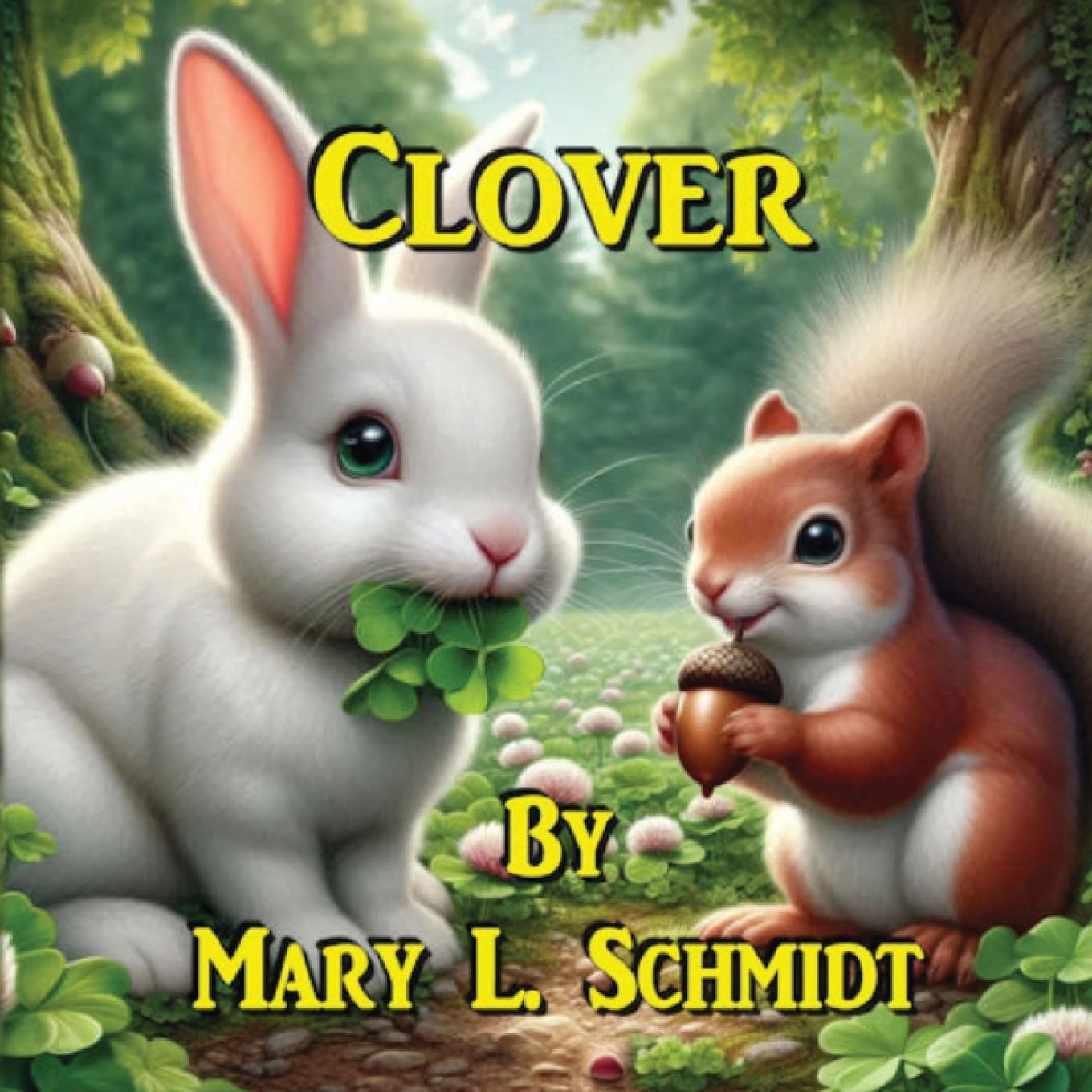

Clover is a charming and educational picture book that gently invites young readers into the world of bunny rabbits. Written in playful rhyme, the story follows a curious bunny named Clover as he guides children through his daily life. Along the way, readers discover how rabbits live, where they find shelter, what they like to eat, and the natural challenges they face.
Blending fun storytelling with fascinating facts, the book strikes a perfect balance between learning and entertainment. Clover becomes both a guide and a friend, sharing through rhythm and rhyme what makes a tasty snack, how rabbits play, and which animals they might meet in backyards or parks. The lyrical flow makes the story delightful to read aloud, while also helping children easily remember the lessons it teaches.
One of the strongest aspects of Clover is how it introduces children to concepts of wildlife and nature in their own environments. Since rabbits and squirrels are common in many neighborhoods, children can quickly relate the story to their own observations outdoors. The book subtly teaches principles of coexistence, showing how wild animals interact with each other and their surroundings. It also offers practical knowledge, such as safe foods children can leave out for rabbits, encouraging compassion and responsibility toward nature at an early age.
Clover goes beyond being a charming story about a rabbit; it encourages young readers to notice and appreciate the wildlife around them. The book gently nurtures curiosity and respect for animals, fostering an early understanding of ecology and empathy. Parents and educators will find it an excellent resource for sparking conversations about caring for animals and protecting the environment, all through a story that feels approachable and fun.
With its combination of rhyming narration, charming subject matter, and educational themes, Clover is a wonderful choice for storytime. It captures the innocence of childhood curiosity while teaching important lessons about wildlife and the natural world. Both children and adults will come away with a greater appreciation for the rabbits that hop quietly through our backyards and parks.
Pages: 28 | ASIN : B0F63VR2X9

The 7th Dimension (The 21 Tattoos Series Book 2)
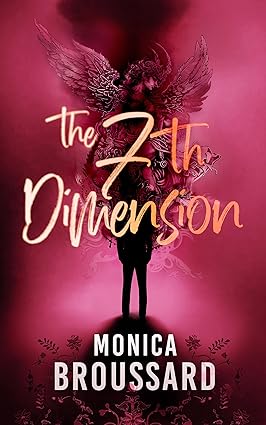
Derek Hollinger, a plastic surgeon, finds himself at a crossroads. Life weighs heavily on him, and when inexplicable tattoos begin to spread across his body, he takes them as a sign of cosmic upheaval. Suddenly, his world feels orchestrated by hidden forces. A teenager’s brutal assault, a cryptic old woman, and a dying gang member capture his attention, each thread tugging at a larger mystery he cannot ignore. Convinced these events intertwine, Derek embarks on a perilous journey to reclaim control of his life. Along the way, he must outwit Spider, a ruthless criminal bent on destruction, and uncover a path toward the divine.
The 7th Dimension by Monica Broussard is a taut thriller, reminiscent of The 9th Gate and infused with echoes of Dan Brown’s bestsellers. Though it is the second installment in a series, Broussard skillfully provides context, allowing new readers to immerse themselves without confusion. The novel is an eclectic fusion of genres, melding the grit of Elmore Leonard’s crime tales, the intrigue of religious thrillers, and the structure of a police procedural.
At the center stands Derek, a layered and compelling protagonist. The tattoos mark more than his skin; they symbolize a reckoning with the very core of his existence. To shed them, Derek must confront his misplaced values and the moral rot threatening his soul. Yet the danger is not solely internal. The malevolent Spider stalks him with equal menace, ensuring that Derek is besieged both from within and without. This dual conflict heightens the suspense, drawing readers deeper into his desperate struggle. The more we discover about Derek, the more his plight elicits pity, and the more we long for his release from the curse he bears.
Broussard demonstrates remarkable control over atmosphere and tension, driving the narrative toward a searing climax in the book’s final act. Her dialogue rings true, her pacing sharp, her tone deliberate and assured. The 7th Dimension delivers a chilling, thought-provoking tale that cements Broussard as an author capable of balancing imaginative concepts with gripping execution.
Pages: 230 | ASIN : B0DC1R9XTV
A Fresh Start For Humanity

Tim Rees’ Original Earth: Book One follows the last survivors of humanity who have, for generations, drifted through space and now, after their ship is sabotaged, are forced to land on what they now call Earth 2. What was the inspiration for the setup of your story?
What a great question! Thank you for asking it.
I live very near a beach in Wales called Freshwater West. It’s a beautiful beach and I walk on it pretty much every day. Whilst walking on this one beach in Wales, I will see the debris of humankind. Our rubbish. Manmade items that have no place in the natural world. I am constantly being shocked by what I see in this very small corner of the world and this is just one beach. I’m sure you could walk on every beach in the world and experience shock and horror at what we’ve done. And what I see is of little consequence to the bigger picture. What is the rubbish made of and where do we get the materials to make the rubbish in the first place, that’s the bigger picture. And, of course, I’m only scratching the surface here… So, to keep this short, I find myself gasping on the same question every day: imagine how beautiful this planet would be without humans?
I’m a novelist and my tools are words, so the story evolved upon the question: imagine if we were offered a new, uncontaminated planet and a fresh start, how would I, as an author, wish to see humanity move forward…?
And I wanted the main character to be an individual in perfect harmony with the natural world, so through that character I could play with scenarios and ideas about what it must feel like to be truly in harmony with nature and with all my fellow natural beings.
One of the things that stands out in your novel is the complex relationships of the survivors as they try to rebuild a life on this new planet. What aspects of the human condition do you find particularly interesting that could make for great fiction?
I like your use of the term ‘human condition’, because we live in societies where we are conditioned to live in particular patterns and aspire to particular goals. I could go on, but let’s keep this simple. On the spaceship, everyone was forced to live together in a sterile, confined space. They knew no different, so it wasn’t really a problem, that is, until they were exposed to the hope or the opportunity to explore their own dreams and aspirations. They land on a planet without any experience of how to live in the ‘real’ world. They are completely innocent, except for information and data they have with regard Original Earth. So I asked myself the question: where do these people begin to build a community into a free-thinking society? To begin to answer that question, I reflected on a passage in a previous novel I’d written called Delphian. In the novel there is this relevant passage:
For some reason his thoughts always ended up at the same questions: society and establishment; two words describing the maze of structure created to protect and enable the vast variety of people to live in apparent harmony. His mother had put it perfectly when she’d said: ‘People are different shades of colour, darling, and too often the colours clash.’ She was so right. Different shades of colour. Beautiful. Different shades of personality in a rainbow of dreams, aspirations, hopes and desires… It is we, collectively, who accept terms like human resources, for instance. It is we who put up fences labelled ideology and either stand on one side or the other and proclaim this is right and that wrong…
As an author, I’m hugely excited to explore this landscape. No spoilers, but in books two and three you see those colours naturally coming together and blending, whilst other colours clash and pull apart. I leave that very much to the characters to play out. I’m in discussion with a film producer at the moment, not for Original Earth, but another story, but he complimented me on the fact my scenes breathe. I know what he means, but I don’t create that, the characters do.
What themes were particularly important for you to explore in this book?
That’s an easy question. The damage we have done to planet Earth. The damage we have and are continuing to do to ourselves, because, whilst we poison the planet, we also poison ourselves. And the damage we have done and continue to do to the planet and all other life forms with whom we share this space has to stop, because we only have this one planet. I write fiction so can imagine exploring different worlds, but will humanity survive our collective suicide in order to really explore other worlds?
Where does the story go in the next book, and where do you see it going in the future?
Anu grows closer to Sonri and together they will explore the universe. You already see that in books two and three and in all the planets Anu visits you’ll see a reflection of humans on Earth. For instance, in book three Anu visits a planet run by a humanoid species governed by a repressive, authoritarian ideology similar to Afghanistan and the Taliban – Anu, of course, liberates the women in that society. In book four, the novel I’m currently writing, Anu returns to Original Earth about 150 years in our future. Planet Earth is unrecognisable.
I think in the back of my mind, I always had the idea I’d like Original Earth to evolve in a similar way the stories of Star Trek must have for Gene Roddenberry.
Author Links: Facebook | Instagram | Threads | TikTok
Now, armed with some knowledge of the complex relationships that exist between both fauna and flora – all life with whom we share this incredible planet – what lessons have we learned?
This is a story about a new beginning…
Anu has a gift: her personal vibration is in perfect harmony with the natural world.
Everyone Has Something To Offer

No Books For Benjamin? introduces young readers to a lovable little worm who lives and works at the Library of Congress and finds himself heartbroken when a mysterious illness forces libraries across the country to close. Where did the idea for this story come from?
I originally did not plan a sequel to Books For Benjamin. However, in visiting schools and talking to kids, many asked if there would be another Benjamin book, as they liked the character. The idea for this second book came during the pandemic, when so many libraries had to close their doors. I remember feeling how strange and sad it was not to have that space open, and I thought about what it would mean for someone who lived and breathed books every day. The book is my nod to librarians who personally witnessed as a teacher come up with creative ways to get real books into the hands of children. They are the real-life heroes! I thought it would be fun to have Benjamin and friends take on this role.
Do you have a favorite scene in this book? One that was especially fun to write?
It’s actually not one scene, but starts with Ginger, the ant, offering to help deliver books by flexing her muscles and declaring how strong ants are. This is followed by scenes of Whizby, the dragonfly delivering books by air, as dragonflies are super-fast fliers, and Dotty, the ladybug, contributing by landing up and down on a spray disinfectant can. I imagined writing funny scenes where there are a few hiccups with this (For example, the ant group falls like dominoes when one ant ignores “halt” because he is reading a book, one dragonfly accidentally drops his parachute of books on a dog’s head). But ultimately, the plan works. The message I hoped to impart to kids is that everyone has something to offer, no matter how small.
The artwork in your book is wonderful. Can you share with us a little about your collaboration with illustrator Uliana Barabash?
Uliana was incredible to work with. From the very beginning, she just got Benjamin—his warmth, his curiosity, and that spark of determination. We talked through ideas, but honestly, she always surprised me with details that made the illustrations feel alive. Seeing her bring Benjamin’s world to life was one of the most rewarding parts of this whole process. I just get a big smile every time I look at this purple worm she illustrated with his crazy hair and funny expressions. Kids have often thanked me for writing a story about a not-so-often-loved character, but I really know it is Uliana’s magical illustration and choice to make him purple that turned this character into a lovable one.
Can you give us a glimpse inside the next book in the Benjamin and Friends series?
Yes! In the next book, Benjamin ventures outside the library and starts to discover that stories aren’t only found in books—they’re in people, places, and even in the adventures we have. He meets some new friends who help him see the world in new ways. It’s really about friendship, resilience, and finding stories everywhere you look. I am also trying to imagine a story where Benjamin helps reluctant readers find the magic in books!
Author Links: GoodReads | X | Facebook | Website
Benjamin the worm loves his job at his favorite library – reading, organizing, and receiving letters from kids who share their favorite books. Yet, everything changes when a strange illness sweeps across the world. Schools close. Libraries shut their doors. And suddenly … no more books!
With the help of his clever and determined friends, Benjamin sets out on a mission to bring books back into children’s hands.
Because stories matter. And heroes come in all shapes … even squiggly ones.
Just a Little Witch, Mostly a Mom
The book tells the story of grief, memory, and the odd ways magic seeps into everyday life. Author Diana Jonas writes about her mother’s death, her own role as a mother, and the weight of family history. She stitches together stories of her Cuban refugee mother, her painter father, her mischievous brother, and the life she built on Centre Island. The narrative shifts between the sharp pain of loss and the shimmering texture of ordinary moments, with hints of magical realism that make the past feel alive. It is a memoir that reads like a spell, part mourning and part celebration of the ties that shape us.
Reading it, I felt pulled in two directions. On one hand, the writing is raw. She does not hide the ugliest moments, like hospital chaos, family fights, and financial collapse, and that honesty can sting. On the other hand, the prose often sings. Her images of the bay, her parents’ love and rage, the dogs, the music, the childhood friends, they glow with life. I found myself laughing in one moment and aching in the next. It reminded me of sitting with an old friend who refuses to sugarcoat but still makes you feel safe.
The ideas in the book struck me hardest when she leaned into the quiet magic of family. I loved the way she wrote about ordinary dinners and car rides like they were part of some greater ritual. She does not romanticize, not really, but she shows how beauty hides in the mess. The small spells are the ones you don’t notice until later. That theme ran through the whole book, and I kept nodding along. Sometimes I wished she had held back on a detail here or there, since the sheer weight of memory can be overwhelming, but maybe that is the point. Grief is overwhelming, and she lets us feel it without guardrails.
Just a Little Witch, Mostly a Mom is tender and fierce, funny and tragic, messy and beautiful. I would recommend it to readers who like memoirs that feel alive with both pain and humor, especially those who have lost someone close or who believe in the strange magic of ordinary life.
Pages: 295
Pandemic Hacker 2


Pandemic Hacker 2 picks up with Martha recovering in a secretive clinic in Mexico City, her body rebuilt after brutal surgeries that make her unrecognizable. What begins as a personal transformation quickly escalates into a battle with an extortion group exploiting patients who change their identities. At her side is Zoe, the AI she created, who takes on human personas like Aunt Tilly, Angela, and Andy to shield its true nature while navigating the human world. Together, they weave through deception, hacking, and survival. The book blends the gritty details of Martha’s physical recovery with the tension of digital warfare and the looming threat of being hunted, creating a fast-paced thriller that never lets up.
The descriptions of Martha’s surgeries and recovery were raw and vivid. I could feel her pain, her frustration, and her determination bleeding through the page. The way the author wrote her interactions with Zoe was fascinating. The AI was curious, literal, and sometimes naïve, and that contrast made their conversations both touching and eerie. The hacking sequences and background-building explanations were interesting, but occasionally slowed the momentum with heavy detail.
What worked for me the most was Martha herself. She is flawed, stubborn, and relatable, yet her resilience made me root for her even when she pushed people away. I liked the dynamic with Merisel, the nurse who reluctantly became part of Martha’s world. Their relationship brought in much-needed warmth and humor. It often felt like I was catching my breath only to be thrown headfirst into the next storm. That rhythm created suspense, but it also left me wanting a deeper pause to connect with Martha beyond her mission.
Pandemic Hacker 2 is a gripping and tense continuation of the series. It’s not light reading, but it’s engaging and thought-provoking. I’d recommend it to readers who enjoy cyber-thrillers, stories of reinvention, or tales that merge high-tech intrigue with raw human grit. If you like protagonists who refuse to give up no matter how much the odds stack against them, this book will hit the mark.
Pages: 284 | ASIN : B0FNRWGBRZ
My Life Fell Apart
Operation Cast Lead weaves together a soap opera storyline, the Israeli–Palestinian conflict, and your own lived experience that argues that this event was not just a war, but also part of a carefully designed narrative that played out both on TV and in real life. Why was this an important book for you to write?
My life fell apart early January of 2009, when I had my first nervous breakdown after gaining insight that there was an alternate reality behind the story on General Hospital and the romance between Sonny and Kate. Weeks later, I made the connection between the story and the war; a war codenamed “Operation Cast Lead”. It took me close to a decade to confess to my own motives and tendencies in that encounter. The tendency of having humiliating thoughts about myself and channeling those thoughts on the female character at the climax of the story and the war.
I finally confessed the truth, first to myself, and then to others, but a personal confession in a seemingly private setting did not create change or healing. My next choice was to write a memoir. It was a struggle for me to make that choice having to do with my fears of the consequences that may arise. After reconsidering once, I finally published the memoir on Substack, in 2023. But then again, war broke out in Gaza on October 7, 2023, and the situation deteriorated. It’s been the story of the universe that when a truth is about to be revealed, a crisis emerges.
A “confession” on my part, private or public, did not lead to fundamental change.
Change will emerge when accountability is pursued about this story on the soap opera and its connection to the war. The story must be investigated for its structure, theme, and dialogue and the true connection between Cast Lead and the story should be finally revealed. True change and freedom will come about when this incident in history enters the realm of public discourse.
This was the motivation for writing The Case. To call for an investigation of the story and to determine the international legal framework within which The Case may be investigated and prosecuted. The memoir was a confession, and The Case is more about accountability.
I appreciated the candid nature with which you told your story. What was the hardest thing for you to write about?
My own darkness. My interpretations of the story twisted it. So did my insincerity in relation to the female character on the soap. Confessing that to myself and to others was most difficult but then that’s the path towards freedom. Both personal freedom and freedom of others. The systems we live within imprison us with guilt, shame, and fear. The experience of writing this book was that of overcoming these feelings. It was difficult to describe the soap opera plot and my interpretations of it and there was always this concern, on my mind and during the writing of the book, to clearly explain the journey as scenes played out on General Hospital and as the story evolved. The many details in theme, dialogue, and story structure were influential in interpretation and the outcome. It was difficult to write these out as this is an incident and a case with no known precedent.
What were some ideas that were important for you to share in this book?
My journey has been the realization that we are not here to live a routine life. That our lives have an ending and that our presence at this historical juncture is a testimony to the truth of the universe. We are here to receive the truth and to proclaim it. History has evolved in the loop and limbo of a cycle but if we live this life as a “testimony” we can escape that cycle and repetition. This is the context within which Operation Cast Lead unfolded and the peculiarity that arises in reading the book is a result of the mindset that has been ingrained on the human mind. The mindset being that “this is impossible to be true”. This mindset is the default because we don’t realize we are witnesses on this part of history. That we are capable, and even responsible for, creating a breakthrough. This is one main idea behind Operation Cast Lead and its connection to the soap story and it’s one idea I was hoping to offer to the reader. Equally important is the question of the historical narrative. When the truth of Cast Lead is revealed, the path unfolds to understand the truth of other historical events and their true alternative narratives. The Israeli-Palestinian conflict is one such arena.
What is one thing that you hope readers take away from Operation Cast Lead?
Freedom is what humanity aspires to achieve but it’s elusive as personal responsibility is not always realized at important historical junctures. That’s why humanity’s fate has been a story of repetition. My hope is that the reader will realize their responsibility to ask questions about Operation Cast Lead and the “story” around it.
Daughters of Havah: Matriarchs of the Messiah Vol. 1
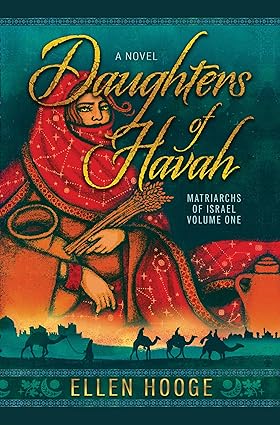
From the very first chapter, Daughters of Havah pulled me into the lives of women who have long stood in the shadows of biblical stories. Author Ellen Hooge gives voice to Sarah, Rivkah, Le’ah, and Tamar, letting them speak in their own tones, with their own desires, doubts, and fierce hopes. What might have been footnotes in scripture become flesh-and-blood portraits. These women are no longer silent; they are complicated, flawed, and yearning, moving through dusty tents, sacred groves, and perilous journeys. It is history, imagination, and scripture braided together, and it reads both like an epic novel and a meditation.
I found myself surprised by how personal the writing felt. The prose is vivid and full of sensory detail, and there’s a rhythm to it that sometimes feels almost like oral storytelling. At moments, I was swept up by the beauty, almond blossoms, desert winds, the hush of a Presence in the night. Other times, I bristled at the starkness of choices made by men, the bitterness of barrenness, the violence and betrayal. Yet that tension is exactly what made it powerful for me. It didn’t smooth over the rough edges; it sat with them. I appreciated how the book never tried to modernize these women but instead let them breathe within their own world.
What also struck me was the emotional honesty. The women rage. They question God. They long for love and for children. They despair, and they laugh again. I could feel my chest tighten when Sarai spoke of being bartered away in Egypt, and then I could feel warmth when she walked with Avram under the almond trees. These aren’t distant holy figures; they are painfully human, and in that humanity, I felt something deeply sacred. Hooge’s style makes you stop and think about your own life, about pride and faith, and how we tell our own stories. At times, the language is almost poetic, at times blunt, but it always rings with truth.
This isn’t light reading, but it is rewarding. I would recommend it especially to readers who love historical fiction that dares to wrestle with faith, culture, and the inner lives of characters too often left voiceless. If you enjoy novels that make you feel as much as they make you think, and if you like stories that root themselves in history yet speak into the present, then you’ll enjoy Daughters of Havah.
Pages: 302 | ASIN : B0DPVSQZBQ



 LITERARY TITAN