The Last Dungeon Crawler follows a morally gray explorer into a deadly underwater quest for a mythical artifact, where collapsing tunnels, political machinations, and ancient magic threaten to destroy them both. What was the inspiration for the setup of your story?
Fahlgrim/Frank started out as a Dungeons and Dragons character that I played in Dungeon Crawls with my friends. Over time, I was thinking about writing a comic book about a hero who was an immortal dwarf cleric in New York City. I ultimately decided that the stakes had to be bigger than just fighting street-level crime. That inspired me to create Fahlgrim’s world and his entire tragic backstory.
Frank Barbarossa walks a fine line between hero and antihero. How did you shape his moral ambiguity?
Frank/Fahlgrim is what you would call “Chaotic good,” bordering closely to “Chaotic neutral.” He is less concerned about rules and the feelings of others and is focused on his 6,000-year-old mission: protecting mankind by destroying all remnants of the world’s secret supernatural past. He will stop at nothing to succeed, and sees everyone as either a tool to achieve that end or an obstacle in his way.
The book hints at the supernatural. Was that a deliberate creative choice or something you plan to expand in future stories?
Deliberate. The Last Dungeon Crawler is first and foremost a Fantasy novel. Steeped in the lore of magic and supernatural beings. In our reality, Tolkien’s works were a huge inspiration for my writing. In Frank/Fahlgrim’s reality, his world and his exploits spawned the legends and myths that ultimately inspired Tolkien to create his literary universe.
This is book one in The Fahlgrim Firebeard Saga. What can readers expect in book two?
Book two, which I am currently writing, will explore the supernatural in more detail and reveal more about the various lives Fahlgrim has led over the course of 6000 years. The working title is Tears of the Dragon, and I am targeting a June 2026 release.
AN IMMORTAL WARRIOR. A HIDDEN WAR. A CITY THAT NEVER SLEEPS.
By day, Franklin Barbarossa is an eccentric NYU professor. But behind the books and lectures stands Fahlgrim Firebeard—battle-worn dwarf, last cleric of a forgotten god, and the final guardian in a war that has faded into myth and legend. And now, the darkness he once bled to stop is rising again. When a relic of unspeakable power resurfaces in New York City, the barrier between myth and reality begins to crack. Shadows stir in the alleys. Old enemies gather strength. And an ancient evil, thought buried forever, is awakening.
To stop it, Fahlgrim must face the ghosts of his past, forge unlikely alliances, and fight battles no mortal could endure. The stakes are nothing less than the survival of a world that no longer believes in heroes. Some evils never die, but some heroes never yield.
Perfect for fans of modern fantasy with ancient magic, relentless action, and battle-scarred heroes who refuse to surrender—The Last Dungeon Crawler is your next epic read.
A Shroud of Sorcery centers around a mystic and his companions, simultaneously navigating tribal politics and the emergence of a ritualistic killer. What was the inspiration for the setup of your story?
I visited a hillfort in Shropshire called Bury Ditches about a year before I started writing. Whilst there, I imagined what it would be like at the pivotal point in ancient British history when these Iron age tribes with their pagan beliefs and mysticism came up against the technologically advanced but brutal Roman Empire as they took over Britain. Other sites, such as the great stone circles at Avebury, inspire me to think of what spiritual and magical beliefs led the builders and successive generations to build and use these monuments. What if they were not just meeting places or locations to celebrate the dead, but, instead, they were used by tribal mystics, mages, and seers? In this book, I wanted to use these ancient sites more dramatically to weave a fantastical, yet believable tale, and still within a real historical framework.
A Shroud of Sorcery continues to explore the tensions within the Cornovii. Big characters such as Toryn remain loud and full of bluster, and just when you think he and Alba are getting along, it can change in an instant. These interactions are forced into cooperation both by the ritualistic killings and the ongoing Roman threat. It was important to me that the characters should be believable, yet colourful enough for the reader to understand their loyalties, emotions, and personal circumstances to explain how they interact. Even lesser characters like Duro had to have a personality that, whilst unpleasant, fits within a culture of its time. In this book, I explore more of Favius’s background – what made him the cold killer he became with a look at his initial history of assassinations within the Organisation. He also represents the opposite of the likes of Toryn, who airs his views and emotions (and anger) openly, whilst Favius connives and plots in secret. Both are strong, both are very different.
A Shroud of Sorcery has several moments where the darkness of the sorcerer’s actions or the threat of the Roman legions are balanced by introducing moments of humanity, and sometimes these prevail, others they do not. This was an exploration of character, and I wanted to illustrate how light and dark, good and evil are not absolutes; there are positions in between these two polar opposites, such is real life. For example, the sorcerer occasionally makes a decision not to kill, but I want the reader to understand why that is, and hopefully that comes through in the book. Favius can be brutal, but he always acts from his own reasoning or logic, dispassionate though it is. Of all the characters, he is the most absolute for there is no compassion in a void.
The sorcerer was conceived to be a complex character, not just someone who kills with barbarity. The story weaves a tale around their origin, which explains where they came from, but deliberately sets up the reader to realize that environment is not always the explainer for evil actions. Yet, there are times when a sliver of compassion hovers intriguingly about their decision to let someone live, but would you rely on it – probably not!
How did you handle balancing the power and use of magic in the story?
I wanted the use of magic to be menacing and dark, but at the same time grounded and believable. The contrast between the sorcerer (dark) and Alba (light) exemplifies how, like our own modern technology, there is no good or bad magic or technology; rather, it comes down to the people who use it for good or ill. As such, magic in the story is a tool, used to project good or evil, but it is still a tool. Because I use it in this way, it becomes an aspect of the characters, who are the real power. In contrast, Favius, who (as far as we know) is not skilled in the dark arts, uses his power to steer the Roman Empire to the will of the Organisation. He does not need tools such as magic and instead uses assets like the sorcerer or his legionary commanders to achieve his aims.
The use of magic in this book is what delivers the main threat. Even Alba, when emotionally compromised, can use it for ill, and at one point we see that when he and Toryn have one of their disagreements. It is the threat of magic and its use for evil that first brings Toryn to Alba, for even a seasoned warrior such as Toryn knows his limitations when faced with such a force.
What do you think were some of the defining moments in Alba’s development?
As a character, Alba had to be first and foremost a man who believed in the old ways – someone who viewed his culture and history as something worth protecting in the face of a powerful conquering empire that regarded him and his kind as nothing more than barbarians and subhumans.
I have set him at a time when the Cornovii’s entire way of life is under threat, including their beliefs in their own gods. Set amongst this, he is one of the last remaining warrior mystics, capable of fighting with sword or bow as well as skilled in ways of magic.
In AShroud of Sorcery, Alba is also defined by loss. The love of his life is gone, lost to a sickness which would of course have been a constant threat two thousand years ago. Grief often leaves a hole, and for Alba, that is an exploitable weakness as we see the sorcerer take advantage of (and for other reasons!). Alba worries about his tribe becoming redundant and subsumed within the Roman empire, but there is also the doubt he has over his own skills becoming redundant. This is not merely because his is a declining art but also that his knowledge and his own skills in magic have become stale and stuck. In contrast, the sorcerer has knowledge that he does not have, and this plays out in his mind as a character flaw.
Alba’s balance is often Argyll, who, with friendship and humour, keeps him centred. I originally conceived Alba as more of a loner, potentially with just a horse or dog as a companion, but I wrote Argyll as someone who could provide a deeper interplay – someone who can hold his own in a fight, who backs up Alba in a fight, and who keeps him focused on his own abilities in the face of whatever threat faces them.
Can fans look forward to seeing Book 3 of the Alba Mysteries released soon? Where will it take readers?
Planning for Book 3 is underway, and I aim to start writing in October. I have outlined the overall plotline and visited some of the locations that will feature in it.
I have also started writing a side novel, focused on Favius and the Organisation he works for. Set in multiple locations, it explores his younger years when he was climbing the ranks of the Organisation and becoming one of their top assassins. I have not yet decided whether to release this before or after the third book – we will see!
“In all the legends the child is taken and trained in the magickal arts. Seldom do they return.” Attempting to subvert the native Cornovii to Imperial rule, the Romans are increasing their presence in one last effort to turn the barbarian to Roman rule. Legionary commanders want all-out war; an opportunity to defeat Cornovii resistance once and for all which will send a powerful message to other British tribes who resist.
The Organisation, the hidden overlords of Imperial rule, deploy a new asset to encourage the barbarian Cornovii tribe to turn to Rome for their protection. A series of brutal murders follow where victims bear witness to ritual magick and sorcery.
Cornovii warrior mage Alba must uncover an adversary who has deep knowledge of the dark arts, perhaps exceeding his own. Their identity is a mystery reaching into the most ancient myths of the craft. The killer uses illusion to subjugate their victims and soon Alba finds himself battling elemental entities, hexes and even traps laid in the dreamworld.
Chieftains, tribal elders, spies and assassins inhabitant the turbulent and often violent world of Roman Britain, where the old ways of magick and tribal allegiance slam into Empire and Imperial domination. Set in the mysterious landscape of ancient Britain amongst stone circles, hillforts and rock caves, A Shroud of Sorcery takes the reader on a journey into the mists of another time where magick, conflict and a secret organisation will determine the future of an entire tribe. A Shroud of Sorcery is the second book in the Alba Mysteries. Where history meets fantasy; where magick meets reality.
David Givot, a former paramedic turned EMS Defense lawyer, presents an engaging, informative, and irreverent guide for EMS providers at any stage of their career. Sirens, Lights, and Lawyers demystifies the law, lawyers, and risks affecting emergency medical services, equipping you with the knowledge and understanding to navigate the legal and personal challenges that arise in your day-to-day work.
This easy-to-understand, far-from-boring guide tackles both basic and complex legal concepts, with real-life examples and practical advice on how to manage or avoid legal pitfalls. Beyond the law, David also explores topics such as leadership, mental health, interacting with lawyers and courtrooms, and other vital aspects of the EMS profession.
Sirens, Lights, and Lawyers is written for those EMS providers who aspire to excel in their field, continually improve their practice, and lead the next generation in delivering exceptional service to the patients and communities who rely on them. Discover how to protect yourself, better serve your patients, and confidently navigate the ever-evolving legal landscape of EMS with this indispensable resource.
The Haunted Purse follows a teenage girl who stumbles upon an old denim purse in a thrift store that quickly reveals its supernatural abilities with things vanishing and reappearing, adding unplanned complications to her already messy life. What was the inspiration for the setup of your story?
Believe it or not, The Haunted Purse was inspired by a true incident. When my son was a high school junior mulling over college options, we visited an auto technology school three hours from home. After the tour, I couldn’t find my car keys. I searched my purse multiple times, but the keys were nowhere to be seen.
Our tour guide assembled a search team. A dozen students combed the campus for half an hour, but the keys never turned up. The tour guide offered to call a car dealership to see if they could provide a new set of keys. While he was on the phone, I checked my purse one last time…and found the keys. Oh, the mortification! I apologized profusely, and my son and I beat a hasty retreat out of there.
I couldn’t stop thinking about those keys as I drove home. How could I have missed them during my repeated searches? Was I really that dimwitted? Or could there be another explanation? My brain chewed on that question, and by the time I pulled into our driveway, it had come up with an answer: something supernatural was going on. Some mischievous other-worldly being had infiltrated my purse and hidden my keys. I wasn’t an idiot after all—just the victim of some supernatural pranking. Oh, how I wanted to believe that!
And then I thought, A haunted purse. What a great premise for a novel…
In many contemporary coming-of-age fiction novels, authors often add their own life experiences to the story. Are there any bits of you in this story?
An angsty teen still lives inside me, so I was able to channel that spirit while writing the novel. Like Libby, I grew up in a low-income household, so I know what it’s like to want things you can’t have. And Libby’s crush on a classmate is based loosely on my early experiences with crushes and heartbreak. But that’s about it. Most of the stuff in the story is totally made up.
What were some themes that were important for you to explore in this book?
I wanted to explore adolescent friendship in all its intensity, all its messiness. Feminine beauty was also a prominent theme: as Libby discovered, it can be both a blessing and a curse. And I threw in multiple references to Cinderella to reflect Libby’s transformation over the course of the story.
I find a problem in well-written stories, in that I always want there to be another book to keep the story going. Is there a second book planned?
No, this one has a very conclusive ending, so I feel no need to continue Libby’s story.
That old denim purse Libby Dawson bought at the thrift store is no ordinary teenage tote. It’s a bag of secrets, imbued with supernatural powers. Strange items keep turning up inside, clues to a decades-old mystery only Libby can solve.
Filled with apprehension and yet intrigued by the mounting pile of evidence, Libby digs for the truth. And eventually finds it. But the story of the purse is darker than she imagined—and its next horrific chapter is going to be all about her.
Class Action: What You Don’t Know CAN Hurt You follows a third-year law student who is unexpectedly drawn into a cheating scheme, where it threatens to derail her entire academic career while trying to balance her personal life. What was the inspiration for the setup of your story?
I’ve always been intrigued by the idea that true character is exhibited when you take the high road even when there’s nobody watching. Behaving in an ethical manner and doing the right thing isn’t always convenient or expedient, but Lennon’s moral compass is unwavering. I love that about her.
What do you think were some of the defining moments in Lennon’s development?
When I first introduced 18-year-old Lennon Gallagher to readers in the 3rd book in the Miranda Quinn Legal Twist series: Miranda Fights, she was a lonely young woman with trust issues. She had been in and out of foster homes and it wasn’t until she met Attorney Miranda Quinn that she developed the confidence to pursue an education and live a life of purpose. Other defining moments were turning down an opportunity for an ‘easy A’, discovering the truth about her father and meeting restaurant mogul Nick Russo.
How do you balance story development with shocking plot twists? Or can they be the same thing?
I like to present obstacles and challenges to my characters, i.e. plot twists, to show how they respond, grow and develop over the course of the story. For Lennon, character wins out over convenience every time.
Where do you see your characters after the book ends?
Great question! The sequel to CLASS ACTION: What You Don’t Know CAN Hurt You is CLASS REUNION: Keep Your Friends CLOSER. Watch for it 10/1/26. Here’s a hint; Lennon’s up for partner at a top law firm and is planning her wedding. Everything is going great… until it’s not!
R U in? Need $ now Third year law student Lennon Gallagher’s life turns from complicated to overwhelming when she receives a message meant for someone else. The text offers an advance copy of a final exam—a guaranteed “A”—but accepting it will violate the honors code she refuses to break. When Lennon declines, the collaborators behind the cheating scheme demand her silence or they will ensure she takes the fall if necessary. Fighting for her future while balancing an internship, exams, studying for the bar, a boyfriend who no longer seems to understand her, and a mother who needs help rebuilding her life after prison, Lennon tries to handle everything alone. But when she discovers the lead plaintiff in her firm’s class action lawsuit might be the father she’s never known, it’s the final straw. She needs help.
Dying to Live takes readers on an intimate and eye-opening journey, revealing how making peace with mortality can unlock a richer, more meaningful life. Why was this an important book for you to write?
For most of my life, death has been a silent companion, something that shaped my choices more than I realized. From losing my mother when I was young to the many moments since where mortality came close, I’ve learned that it isn’t something to fear as much as it is something to learn from. Writing this book was a way of bringing those lessons forward, not only for myself but for anyone who has ever felt the weight of impermanence and wondered how to live more fully because of it.
What were some ideas that were important for you to share in this book?
I wanted to show that death is not just an end but also a mirror. It reflects back the stories we’ve been telling ourselves, the identities we cling to, and the fears we avoid. One idea that mattered to me was the practice of “dying to live,” which is about shedding old roles, patterns, and emotional baggage so that we can step into a freer, more authentic life. I also wanted to share that this work isn’t abstract philosophy. It is lived, messy, human. My stories are meant to open space for readers to look at their own lives with gentleness and courage.
How has writing Dying to Live impacted or changed your life?
The writing process forced me to sit with truths I might have preferred to leave buried. It slowed me down, made me listen more deeply to myself, and invited me to face the places I still resisted. In doing that, I found more ease, more gratitude in the everyday. By leaning into death I became more alive, more playful even. It reminded me that life is fragile, fleeting, and far too precious to postpone.
What do you hope is one thing readers take away from your story?
That it is possible to turn toward death without being consumed by it. My hope is that readers will feel less alone in their fears and more connected to the beauty of simply being here. If even one person puts the book down and feels a little lighter, a little freer to live with love and presence, then it has done its job.
What if embracing death is the key to truly living? We spend our lives avoiding the thought of death-yet its presence shapes everything we do. In Dying to Live, Andy Chaleff takes readers on an intimate and eye-opening journey, revealing how making peace with mortality can unlock a richer, more meaningful life. Blending memoir, philosophy, and deeply personal reflections, Chaleff invites us to step beyond society’s distractions and face death with curiosity rather than fear. Through poignant stories and thought-provoking questions, he helps us see that dying isn’t the end of life’s meaning-it’s where we finally begin to understand it.
The book unfolds as a mythic tale woven through time, place, and spirit. It follows Samuel Alexander and his descendants as they become entangled with Glastonbury’s mysteries, sacred symbols, and the haunting legacy of a ring unearthed at Bride’s Well. The story moves between dream and waking life, myth and history, layering Celtic lore, Druidic traditions, and Arthurian echoes into a generational saga. Characters are guided by visions, by voices from the otherworld, and by trees themselves, whose spirits carry wisdom and warning. The narrative blends myth with personal struggle, and family with fate, to create a tapestry that is both mystical and relatable.
What struck me most was the style of the writing. It has a rhythm that feels almost incantatory. The sentences often unfold like chants, looping and layering symbols until I found myself immersed in the cadence rather than just the plot. At times, I’ll admit, I felt adrift, as if the story cared less about holding my hand and more about pulling me into its current. Yet I also liked that sense of surrender. It mirrored the characters’ own confusion when faced with forces larger than themselves. Some passages soared with imagery that felt cinematic. Others slowed down, but always with a sense that something sacred was just out of reach.
On a more emotional level, I found myself unexpectedly moved by the family thread running through the myth. Samuel’s death and the passing of his journal and ring to Eleni and Sophie gave the narrative a raw anchor in grief and legacy. The mystical voices, priestesses, and mythic archetypes would have been too abstract for me without those human losses at the center. That’s where the book hit hardest. It made me think about how much we inherit without knowing, and how myths are not just stories but shadows we live under. Still, I sometimes wished for a bit more grounding in the everyday. The dreamlike prose was beautiful, but it could also feel heavy.
I think this book is best for readers who enjoy being swept up in myth and who don’t mind when the line between story and symbol blurs. If you like Joseph Campbell or Marion Zimmer Bradley, you’ll probably find yourself right at home. For me, it was enchanting. I’d recommend it to anyone willing to slow down, sink into layered imagery, and let the wisdom of wood whisper its way through their imagination.
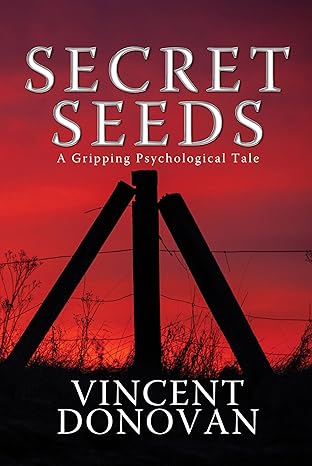
The story follows Olivia, a young girl trapped in an abusive home, and her mother Gabrielle as they try to break free from the cruel grip of Papa Dale. What begins with the vivid image of a turquoise Pontiac Catalina soon unfolds into a tale of survival, fear, and hope. Olivia’s journey takes her from the suffocating confines of her stepfather’s “ghost ship” of a house into the uncertain world of strangers who promise safety but hint at danger of a different kind. Layered with family secrets, cult-like communities, and the constant threat of violence, the book dives into how trauma shapes identity and resilience.
I found myself pulled in by the writing style. It’s raw and conversational, sometimes almost like listening in on someone’s thoughts. That made it easy to connect with Olivia’s fear, frustration, and flashes of defiance. Some passages struck me hard, especially the descriptions of the trunk punishments and Gabrielle’s quiet, desperate planning. At times, though, the prose felt heavy, almost overcrowded with metaphors and similes. It worked to show the chaos in Olivia’s head, but occasionally I wished for a cleaner line so the power of the moment could breathe.
The story doesn’t flinch from showing how abuse warps everyday life, how escape is messy and uncertain, and how hope is often a fragile thread. I felt angry at Gabrielle for sending Olivia away with a stranger, yet I also understood the impossible bind she was in. That conflict left me unsettled, but that’s what makes the story stick. It’s not neat or easy, and that felt real. I also appreciated how Donovan balanced darkness with small glimpses of beauty, like the hawk overhead or the fleeting memory of a father’s smile.
I’d recommend Secret Seeds to readers who are drawn to psychological dramas with a strong emotional punch. If you’re interested in stories about survival, family trauma, or the fine line between trust and betrayal, this book will keep you turning pages. It’s not a light read, but it is a gripping one.











 LITERARY TITAN