Blog Archives
SECRET SEEDS
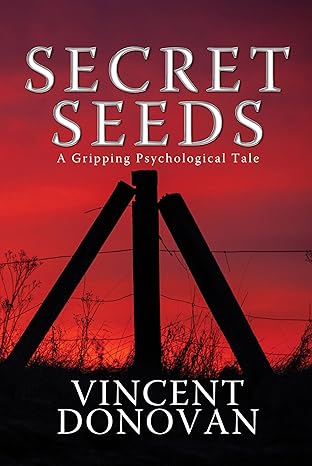

The story follows Olivia, a young girl trapped in an abusive home, and her mother Gabrielle as they try to break free from the cruel grip of Papa Dale. What begins with the vivid image of a turquoise Pontiac Catalina soon unfolds into a tale of survival, fear, and hope. Olivia’s journey takes her from the suffocating confines of her stepfather’s “ghost ship” of a house into the uncertain world of strangers who promise safety but hint at danger of a different kind. Layered with family secrets, cult-like communities, and the constant threat of violence, the book dives into how trauma shapes identity and resilience.
I found myself pulled in by the writing style. It’s raw and conversational, sometimes almost like listening in on someone’s thoughts. That made it easy to connect with Olivia’s fear, frustration, and flashes of defiance. Some passages struck me hard, especially the descriptions of the trunk punishments and Gabrielle’s quiet, desperate planning. At times, though, the prose felt heavy, almost overcrowded with metaphors and similes. It worked to show the chaos in Olivia’s head, but occasionally I wished for a cleaner line so the power of the moment could breathe.
The story doesn’t flinch from showing how abuse warps everyday life, how escape is messy and uncertain, and how hope is often a fragile thread. I felt angry at Gabrielle for sending Olivia away with a stranger, yet I also understood the impossible bind she was in. That conflict left me unsettled, but that’s what makes the story stick. It’s not neat or easy, and that felt real. I also appreciated how Donovan balanced darkness with small glimpses of beauty, like the hawk overhead or the fleeting memory of a father’s smile.
I’d recommend Secret Seeds to readers who are drawn to psychological dramas with a strong emotional punch. If you’re interested in stories about survival, family trauma, or the fine line between trust and betrayal, this book will keep you turning pages. It’s not a light read, but it is a gripping one.
Pages: 297 | ASIN : B0DYWRR98D

Infernal Wonderland


When I first cracked open Infernal Wonderland, I wasn’t sure what to expect. What I found was a sprawling, neon-drenched fever dream of a story. It follows Jadecan, an akiko, who stumbles into the submerged Amber City, a broken metropolis that feels alive and dead all at once. From the very first chapter, the world is suffocating, strange, and brimming with danger. Automatons sell people for parts, reptilian gangs lurk in the shadows, and a drug called Ichor twists minds and bodies. The book unfolds in five parts, each one pushing Jadecan deeper into madness, violence, and strange alliances, while the PA system keeps whispering about revolution like a ghost that refuses to die.
This is a unique book. Sometimes thrilling, sometimes disorienting, and often unsettling. Killam has this way of painting a scene that engages your senses. There were moments where I wanted the story to breathe, to let the horror and beauty of Amber City sit with me instead of racing ahead to the next grotesque fight or cryptic exchange. Still, the book’s voice stuck with me. It’s sarcastic, it’s grim, and it doesn’t let you forget that the world is cruel. I found myself both grinning at the dark humor and wincing at the relentless blood and guts.
What really hooked me, though, was the mix of philosophy and pulp. Amidst all the gore and chaos, characters stop to talk about the meaning of life, about want versus need, about existing without actually wanting to exist. Those conversations gave the book an odd tenderness that surprised me. I could feel the author reaching for something bigger.
Infernal Wonderland is haunting and oddly beautiful. It’s not a book for someone looking for a straightforward plot or a clean arc. It’s for readers who want to sink into a unique atmosphere, who don’t mind being jarred, and who can handle equal parts gore and poetry. If you’ve ever loved stories like Bioshock or Blade Runner but wished they were darker and stranger, this book will feel like home.
Pages: 421 | ISBN: 978-1-957195-18-6
Shaking the Trees

Shaking the Trees is a raw and compelling novel about moral courage, inner turmoil, and the weight of trying to save a dying planet. It follows Jake, an environmental activist, who is pushed to sabotage a coal rail line in a desperate act of protest. The story unfolds through Jake’s psychological descent, torn between love and revolution, and is narrated alongside the perspective of his dead great uncle, whose memories of war echo Jake’s own struggle. The book dives into themes of fear, hopelessness, resistance, and love that is deeply personal and political at the same time.
I was floored by the emotional honesty of this book. It’s not clean or easy or heroic in the usual way. The writing grabs you by the collar and pulls you through Jake’s mess of thoughts. His anger, his guilt, his love for Julie, and his bone-deep exhaustion with the state of the world. The style feels like a quiet storm. Sharp, poetic, broken in all the right places. Sometimes the language is jagged. Sometimes it flows like music. There are no simple answers here, and the writing makes you sit with the discomfort. I admired how brave it was.
The ideas in this thing are brutal. It’s about climate catastrophe, sure, but more than that, it’s about how humans lie to themselves to stay comfortable. It made me angry in a way I didn’t expect. Not righteous rage, but this cold, rattling kind of grief. I could feel Jake’s frustration. The protests that don’t work, the submissions no one reads, the same battles fought over and over. And the people around him, well-meaning and stuck. It hit hard. The author doesn’t romanticize activism. He shows what it costs you. How it tears up your insides. And still, you keep going. Or you don’t. That’s the ache at the heart of it.
This book is for anyone who’s ever felt helpless about the state of the world. It’s for activists. It’s for idealists who are starting to crack. It’s also for people who love someone who’s drowning in purpose. The story is haunting, personal, and painfully relevant. If you’ve got a soft spot for stories about inner conflict and quiet rebellion, read this. But be warned: it doesn’t let you off easy. It makes you feel everything. And it’s worth it.
Pages: 380 | ASIN : B0FJVR3V7L
I Bet I Can Make You Yawn

This cute children’s book is all about a playful challenge. The narrator talks directly to the reader, daring them not to yawn while they say the word over and over again, stretching arms and legs, and even bringing in a sleepy sloth at the end. The whole thing builds like a little game, with the text teasing and testing whether the reader can resist yawning until, of course, it’s almost impossible not to give in.
I had a lot of fun with this picture book. The writing feels light and cheeky, almost like a friend poking your side just to see if you’ll laugh. It’s repetitive in the best way, because that’s what makes the joke land. I caught myself smiling at how simple the trick was, yet it actually worked. The author clearly knew what she was doing by leaning into the contagious nature of yawns, and I think kids would get a kick out of feeling like they’re “losing” the game.
What I liked most was the pacing. Each page adds a little more, like stretching one arm, then both arms, then legs too, until finally you’re right there with the sloth, half-asleep yourself. It’s clever without being complicated. It just leaned into silliness, and that makes it work. The artwork is super sweet. The sloth shows up in different little poses, each one cuter than the last, and it adds a playful charm to every page. The colors are warm and inviting, making the whole book feel cozy. The illustrations are just as fun as the story.
I’d recommend this children’s book to parents looking for a funny bedtime read that actually helps settle kids down. It would also be fun for teachers who want a quick laugh with a group of kids. If you enjoy books that invite the reader to play along and don’t mind yawning a lot while reading, this one’s perfect.
Pages: 28 | ASIN : B0F1C7LZXJ
Case Files from the Nightfall Detective Agency: Fury of the Vampire
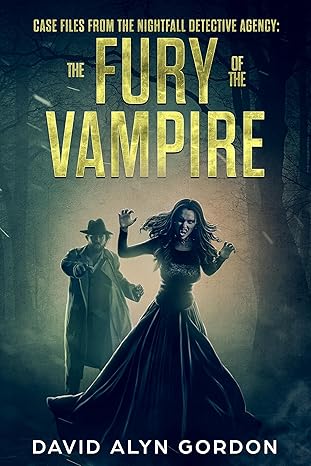
David Alyn Gordon’s Fury of the Vampire is a sweeping supernatural thriller that jumps across centuries, from ancient Jerusalem to 1920s Arizona, weaving together myth, history, and horror. The story follows vampires, werewolves, jinn, and humans caught in webs of betrayal, love, and ambition. At its heart is the eternal struggle between Lilith, Abram, and a cast of characters tied to mystical objects like the Ring of Solomon. Intertwined with this are political conspiracies, mob dealings, and the simmering tension of racial injustice in early 20th-century America. It’s a bold mix of folklore, pulp action, and noir detective work.
I enjoyed how daringly the author blends myth with history. Seeing Lilith spar with Abram in one chapter and then finding myself in the smoke-filled dance halls of Prohibition-era Tucson in the next kept me hooked. The pacing is brisk, and the action scenes pop with energy. I found myself leaning in whenever vampires clashed with werewolves or when political schemers whispered in dark corners. The dialogue can be blunt, sometimes even melodramatic, but it fits the pulpy, high-stakes feel of the book. It reminded me of flipping through an old serialized adventure, where the thrill matters more than polish.
Some passages carry raw emotional weight, like Malia grieving for her cousin, while other scenes are exaggerated. That didn’t ruin the ride for me, though. If anything, it made the book feel unpredictable. I enjoyed how unapologetically it leaned into its own wildness. It’s not a quiet or subtle novel; it’s brash, bloody, and loud. And I have to admit, I had fun with that. Sometimes I rolled my eyes, other times I grinned, and a few moments genuinely made me pause and think, especially the parts dealing with cultural memory and injustice.
I’d say Fury of the Vampire is best for readers who love fast-moving supernatural adventures, who don’t mind a little chaos in their fiction, and who want something that feels both familiar and refreshingly strange. If you’re into folklore reimagined as a gritty pulp detective saga, this is your book. It’s messy, it’s fierce, and it absolutely has bite.
Pages: 164 | ASIN : B0FLTB1L71
Down to Earth: Demystify Intuition to Upgrade Your Life
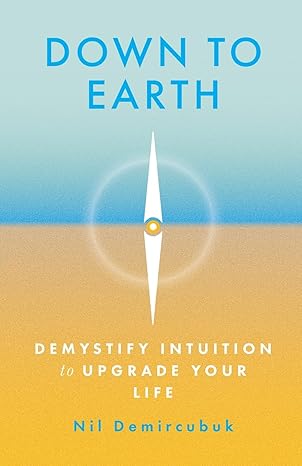
Down to Earth: Demystify Intuition to Upgrade Your Life is a thoughtful blend of personal stories, practical exercises, and scientific studies. Author Nil Demircubuk lays out intuition not as a mystical talent but as an everyday skill, one that we all carry yet often forget to use. The book moves step by step, first explaining what intuition is and how it shows up in daily life, then offering exercises to tune into it more deliberately. She mixes neuroscience and psychology research with approachable examples and even playful assignments, which makes the book read less like a lecture and more like a conversation with a wise friend.
Reading this book, I felt both reassured and challenged. I liked the way Demircubuk stripped intuition of its usual mysticism and treated it as something practical. Her writing has warmth, and the personal stories sprinkled throughout made the concepts come alive. I found myself nodding when she talked about ignoring gut feelings and regretting it later, because who hasn’t done that? At times, the research examples slowed me down, yet I appreciated that she backed up her claims with evidence rather than relying only on personal testimony. The mix of science and storytelling struck a nice balance, though occasionally I wished she had leaned harder into her own experiences, which were some of the most compelling parts.
What really surprised me was how usable the exercises were. I tried a couple of her journaling prompts, and to my surprise, they worked. I caught small flashes of intuition that I usually dismiss. The tone of the book is encouraging without being pushy, and it never once felt like she was talking down to me. The book reiterates the idea that intuition is accessible to everyone. The honesty of her voice and her clear care for the reader softened the delivery. It felt less like she was preaching and more like she was reminding me of something I already knew but had buried.
I’d recommend Down to Earth to anyone who feels stuck in overthinking or who second-guesses every decision. It’s especially suited for people who like a mix of science and spirituality but don’t want anything too airy. If you’re curious about intuition yet skeptical of mysticism, this book bridges the gap with warmth, practicality, and an open mind. It’s not a book to skim. It’s one to sit with, dog-ear, and revisit when you need a nudge back to yourself.
Pages: 205 | ASIN : B0FHX85T4J
Everyone Is Valuable

Santa’s Last Ride follows the Claus family after Santa throws out his back feeding the reindeer and decides it is time for his twelve-year-old son to take over; however, he does not want the job, but his sister does. What was the inspiration for the setup of your story?
The story originated with James. Getting tired of Christmas songs on the hours long trip to Iowa for Christmas, he began to tell this story to his kids to pass the time. He has two children – an older son and younger daughter also aged two years apart. They were his greatest inspiration.
I loved the interactions between Christopher and Kristy; they were believable and entertaining, with heartwarming moments as well. What was your approach to writing the interactions between characters?
James and I are siblings. There were five more of us growing up. We are stuffed full of sibling interactions, mostly of a humorous nature. We grew up in a rambunctious and laughter filled environment.
What were some themes that were important for you to explore in this book?
Most important is the idea that everyone is valuable in their own way and not even a disability or a perceived disability changes that. In fact, I got involved in this book when James sent me an email of a very bare bones version of the story and asked me to put it in legible form. James has dyslexia, which was why he asked for my help. After much internet interact, we added to and filled out the story until it became ‘our’ book.
Will there be a follow-up novel to this story? If so, what aspects of the story will the next book cover?
We have had feedback from a number of fans asking what comes next. Some want to know when the movie is coming out. There are a number of issues we see that could be addressed in future. Considering their new positions in the Claus family how do Chris and Kristy, still quite young, handle the adults in the world they will have to interact with? From the North Pole how do you go to school, college, or date? With the planet warming up what will the family do about a shrinking North Pole? There’s no ground under the North Pole ice. What’s next for Mr. and Mrs. Claus?
Author Links: GoodReads | Website
While Santa’s mind is fixed on training Christopher, Mrs. Claus, daughter, Kristy, and Christopher are determined to find a way to tell Santa the obvious – which he seems to be stubbornly ignoring – that Christopher is unsuitable for the job. The family is keeping Christopher’s secret and it will only be sprung on Santa on Christmas Eve. Meanwhile Kristy, just ten years old, feels she is up to the task of taking Santa’s place.
Christmas Eve finds Santa and his trainee taking off for high flying adventures around the world, including natural disasters – angry dogs, cracking ice – and some disasters not so natural – smoking chimneys, frightening encounters with jets. When Santa discovers his family has tricked him, he nearly turns the sleigh around, to end the flight. Christopher and Kristy have to impress their father with their talents. Kristy especially has to believe in herself enough to convince Santa that, working together, they just might be able to save Christmas.
We Choose Our Own Destinies

The Children of the Children follows a young man searching for answers and belonging, who found hope in an apocalyptic religious cult, one that his children would later try to escape. What was the initial idea behind this story, and how did that transform as you were writing the novel?
I got the idea for this story not long after the Cold War ended. Freedom seemed to be breaking out everywhere. What a difference a few decades have made. Authoritarianism is on the advance all over the world. So the novel became darker. Early in the story, Father Joseph says, “You give people a choice – freedom for themselves but also for their enemies, or subjugation for their enemies but also for themselves – and they’ll choose subjugation.” But it doesn’t have to be this way. I believe we choose our own destinies, both as an individual and as a society.
What kind of research did you do for this novel to ensure you captured the essence of the story’s theme?
My main research was as an observer of human behavior. I’ve watched as family and friends have joined religions and left religions, trying to understand the evolution of their views and my own. I also re-read parts of the Bible, familiar to me for years, with a more open mind, asking myself not how the words could be used to comfort or inspire, but to control. Telling people that the Bible is infallible is like putting a gun in their hands. Who knows what they’ll do with it. In fact, Father Joseph’s Letters to his followers were the easiest part of this novel to write, because there were so many verses that, read the right way (or perhaps I should say the wrong way), could be used to back up what he was saying.
What were some themes that were important for you to explore in this book?
The main theme I tried to explore was the religious theme. Religion gets to the core of who we are as human beings, offering answers to where we come from, how to live our lives, and where we go after we die. But religion can be used against us. Abuse in extremist religion isn’t just possible, it’s practically inevitable. If a religious leader’s followers believe the Bible is infallible, then that leader can use nearly anything from the Bible to justify his actions.
A second theme in the novel is how national and even international events can shape decisions that people make about their personal lives, in ways they may not realize. Danny drops out of U.S. society at the height of the Vietnam War; years later, his son tries to escape a cult as East Europeans are escaping communism. The Children of the Children is set against a backdrop of world events. This was deliberate.
Were you able to achieve everything you wanted with the characters in the novel?
I think there’s a mistaken idea that people join cults because they’re “messed up,” or had a bad childhood, or are on drugs. By telling ourselves that, we insulate ourselves from the disturbing truth: Anyone can become susceptible to cults or to cult-like thinking. I showed where Danny, Deborah, and other characters were in their lives before they joined the Fishermen, and where they ended up at the end of the novel. Yes, I achieved what I wanted to.
Author Links: GoodReads | Facebook | Website
Danny Calvert thinks part of American society is about to crash and burn. Capitalism, if he’s lucky. But when a college friend dies in jail, he joins an apocalyptic religious cult and begins printing the increasingly dark writings of its charismatic leader. Father Joseph says “unless you become like children, you will never enter the Kingdom of Heaven.”
But “become like children” means just that. Father Joseph moves his followers to Europe to avoid scrutiny, and controls them such that Danny isn’t allowed to marry Deborah, the woman he loves, but is forced to marry someone else. He has children by both women, and they’re as determined to escape the world they grew up in as Danny was to escape his own world years ago.
Set during the last years of the Cold War, and inspired by real events, The Children of the Children explores the price that people pay for following a leader who demands unquestioning belief, and the price their children pay to break free.



 LITERARY TITAN