Blog Archives
The World Persists

Ghost of Nostalgia follows a woman living in an impoverished village who is taught to suppress all emotions or risk death at the hands of mysterious, ethereal beings drawn to human emotions. What was the inspiration for the setup of your story?
As cliché as it sounds, I had a dream. In this dream, there was a magnificent city floating in the sky surrounded by a spherical energy barrier. The land around the city was a complete wasteland, and underneath the city was a pile of battered cylindrical tubes. Suddenly, a hatch along the bottom of the city opened, and a silver tube dropped and landed on the pile. Something happened next, but for the sake of spoilers, I’ll have to keep the rest to myself.
The dream stayed with me for a long time, until I finally decided to take it to the page. The feeling of it was so bleak. The isolation is absolute. I realized the reason I remembered the dream so perfectly was because of how it made me feel. I sought to capture those emotions by making emotions the center of my world. I wanted them to be something that could set you free or lead you to death. But as I find with all my writing, it doesn’t come out quite the same as the inspiration. The dream was definitely more hardcore science fiction, but as I’m quite a romantic at heart, the result ended up softer with a heavy dose of romance. Even with those changes, I sought to have Gavril’s world be one that stirred the heart in many ways.
I find the world you created in this novel brimming with possibilities. Where did the inspiration for the setting come from, and how did it change as you were writing?
I’m glad you think so! Steampunk played a heavy role in inspiring the setting, but as much as I love it, I wanted to branch out into something that had a similar feeling but with its own flavor. This is one reason I decided to go with an electric-based power system rather than a steam-based one. As for the cultural inspiration, Victorian England was out, so I did a bit of research and landed on pre-revolutionary France. It had everything I was looking for: elaborate fashion, notable architecture, and a stark class divide. Gavril’s home, Nostalgie, is a village literally made of scraps. They have nothing but hope. I wanted to show the progression of “moving up” as Gavril travels to different towns, and how, instead of sympathy, the rich feel nothing but contempt for the “lesser.” Since each town is isolated in its own barrier, they feel like different worlds of their own. There is no camaraderie, just hope for the government’s favor. As Gavril learns along her travels, even the most beautiful place can be a cover for ugly behavior.
What were some themes that were important for you to explore in this book?
One of the biggest themes of Ghost of Nostalgia is control. Controlling emotions, controlling citizens, and controlling towns. All of these are accomplished in different ways and play different roles. As the story progresses, it becomes less clear who actually benefits from this behavior, and despite the suffering of some citizens, the world persists as is. Part of this is the class divide, and yet, no one rises to challenge the authority of the land.
Other themes are more personal to Gavril. She’s seen as a burden, and then the town’s fate rests on her shoulders. Self-worth, sacrifice, and being true to yourself are challenges she faces, especially in this patriarchal world, which sees her as only worth what she can birth. Her view of the world is full of despair, but sometimes hope can be found in the unlikeliest of places. Finding one’s truth is central to the story.
What is the next book that you are working on, and when will it be available?
The sequel! The sequel, which is tentatively called Sphere of Ardent, is currently in the editing process at Indigo River Publishing. We do not have a release date yet, but I’m hopeful I’ll be able to make an official announcement by the first half of next year. I’m very excited about it. The world-building really takes off, and the themes blow up in such unexpected ways.
Since I’m a glutton, I’ve already started writing the third book, which will finish out the intended trilogy.
Author Links: GoodReads | X (Twitter) | Facebook | Website | Amazon
Gavril follows the rules. Don’t dream. Don’t imagine a better future. Don’t cross the barrier, and whatever you do, don’t open your heart to emotions-especially the most powerful one: love.
Breaking the rules is deadly. Phases surround Gavril’s rural, impoverished village of Nostalgie. These mysterious ethereal beings, attracted to human emotion, suck passion and soul from anyone they touch-if the victim survives the encounter. Despite the danger, demanding questions linger in Gavril’s heart. What might life be like beyond the electrical barrier keeping the Phases at bay? What happened to her father, a legendary Résonateur gifted with the ability to combat Phases, who vanished several years ago? What does freedom feel like?
When the Solenoid powering the village’s barrier begins to die, Nostalgie’s mayor offers Gavril’s hand in marriage to the son of a nobleman in the distant village of Envie-a woman of a Résonateur bloodline to raise the family’s prominence in exchange for a new Solenoid. Gavril has no choice but to comply. If she refuses, the barrier will fall.
Gavril will do anything to save her mother and fellow villagers-even if it means breaking a few rules.
Led by a heart that suppressed curiosity and compassion for far too long, Gavril befriends a Phase named Morrow. When her actions are discovered, she is deemed a traitor by her future in-laws and sent to the Capital, Éthéré Coeur, for judgement. Commandant Serein, a Résonateur like her father, escorts her to her destiny.
In the whirlwind of French-influenced, retro-futuristic adventure that follows, Gavril’s spirit is freed. She meets wonders of human achievement-from motorized automatrams and flying soulevers to massive electronic libraries holding the world’s secrets.She encounters the rich, vibrant, and sometimes horrifying world beyond Nostalgie . . . and she falls in love.
Once you break the rules, where do you draw the line?
Ghost of Nostalgia will resonate with readers drawn to rich worldbuilding, emotional rebellion, and character-driven dystopian fantasy. For fans of lyrical prose, slow-burn tension, and stories that challenge what it means to feel—this journey lingers long after the final page.
Identity and Loneliness

Allie’s Adventure on the Wonder follows a teenage girl navigating life with Auditory Processing Disorder (APD) and what it feels like to live in a world where words don’t always connect the way they’re supposed to, and how exhausting and isolating that can be. What was the inspiration for the setup of your story?
For those who don’t know, Auditory Processing Disorder (APD) is a neurological condition that affects the way the brain takes in and processes information. I was diagnosed when I was about two years old, as I was not responding to certain sounds or forming words when I should have been. Despite the name, however, I am in no way deaf, nor do I have any kind of physical brain damage. There is currently no medication or cure.
My novel originally began as a college project at UMD (University of Minnesota Duluth) back in 2012. Childhood in Literature and Culture was a course in which I studied the depiction of young people in various media from different cultures, eras, and demographics (i.e., The Cat in the Hat, Children of the Corn, and The Bad Seed, among many others). For my final project, I wrote an original short story based on a studied text of my choice—Alice’s Adventures in Wonderland—with an explanatory 5-page essay attached. This was the first draft of Allie’s Adventure on the Wonder. (For those interested, this draft is available to view on my website, elatales.com.) As I was working out the plot, I realized that much of the faulty logic Alice displays in Lewis Carroll’s story (her tender age of seven years notwithstanding) mirrors many of the symptoms of APD. Like me, she can be easily distracted, doesn’t always think things through before acting on them, overthinks pointless details, and makes inappropriate or inapplicable comments in a given conversation.
Are there any emotions or memories from your own life that you put into your character’s life?
Several. Many side characters are based on real people in my life, with given or only slightly altered names. (I’d rather not reveal these for the sake of privacy.) Many incidents mentioned also in fact happened. For example, at the suggestion of my speech therapist at the time, I once entered an art contest in which kids had to draw cartoon characters on posters; only after it was all over—another girl won for drawing the speech-impeded Scooby Doo—did I find out that mine, featuring Winnie the Pooh and Tigger, had been disqualified because it was drawn so well the judges thought I had traced it, which was against the rules. (I feature a picture of it in the “Photos” section toward the end of the book.) And my fifth-grade art teacher really did dismiss my drawing of Rafiki from The Lion King before lecturing me on how real animators don’t use How to Draw guides. It can be the most maddening feeling in the world when doing my best is considered too good as well as not good enough, especially by those whose job it literally is to encourage children’s gifts and potential. Even worse is how, even in college, I’d sometimes misunderstand or mishear school assignments to the point where it feels like the teacher is suddenly mentioning it for the very first time just to mess with me when I know deep down that’s not true. It can feel like a desperate gamble, hoping and praying that my work or understanding will satisfy someone else’s unknown/arbitrary standards juuuust enough for them to leave me in peace, never mind give me praise. And even now, I still have fears of how APD will negatively affect my professional and personal relationships and my ability to do important tasks, like paying bills or doing taxes, during times when I will inevitably have no one (with or without patience) to guide me.
What were some themes that were important for you to explore in this book?
Identity and loneliness. If there is one lesson that living with APD has taught and ingrained in me, it’s the old proverb, “Every story has two sides.” It’s easy to talk about how Alice is the one “normal” person in the “crazy” world of Wonderland. But I think what many miss is that Alice is the one who invades Wonderland and makes trouble for its inhabitants, whether in a relatively minor way like insulting/disturbing the birds and sea creatures by carelessly talking about her violent cat, or in a much more devastating way like nearly destroying the White Rabbit’s house from the inside as a giant after effectively stealing a growing potion. One person’s curiosity can be another person’s carelessness. But is one truly right and the other truly wrong? How, when, and why? Where do such distinctions and meanings come from? Who decides such things? Of course, objective, irrefutable truths do exist, but there are times when one can’t answer such questions, with the results being confusing at best and detrimental at worst. This can lead to even more negative and painful questions regarding one’s right to voice their thoughts and whether they have any worth. All too often, we forget that everyone sees the world in different lights, good and bad, and constantly shifting in meaning, or lack thereof, depending on a limitless number of circumstances. More than anything, though, I really want to reiterate through my story that just because APD isn’t as dangerously debilitating as some other conditions, mental or otherwise, doesn’t mean that those afflicted with it are any less deserving of help, guidance, and patience. Nor should they be labeled “stupid” or “lazy” just because they may be more prone to making obvious but honest mistakes than the average person without the luxury of such conditions as an excuse.
Will there be a follow-up novel to this story? If so, what aspects of the story will the next book cover?
I very much doubt it. While I still research APD for my own personal reasons and well-being, I feel I’ve said my piece on the subject and have little interest in pursuing it as far as writing and publishing are concerned. At the end of the day, like many, if not all, fiction writers, I write to escape real life! Not to mention, as much as I adore the original Alice books, there’s only so much I can add or reinterpret considering all the other Alice re-writings and reimagings floating around out there. Right now, besides my story-highlight radio show, The Tale Collector, I want to focus on a speculative science fiction novel, my first for an adult audience, along with some unfinished fantasy short stories that I’d like to compile into an anthology someday.
But of course, never say never!
Author Links: GoodReads | Facebook | Website | YouTube | Soundcloud | Audioport | Amazon
But one day, during a field trip on a ferry named the Wonder, Allie meets an odd character named Charlie and sees the creative genius and unadulterated joy that madness can bring.
A semi-autobiography of the author’s personal experiences growing up with APD, reimagined through the lens of Lewis Carroll’s timeless nonsensical classic Alice’s Adventures in Wonderland, here is a contemporary fairy tale about learning—and accepting—the methods in one’s madness to navigate the real world.
Literary Titan Book Award: Nonfiction

The Literary Titan Book Award recognizes outstanding nonfiction books that demonstrate exceptional quality in writing, research, and presentation. This award is dedicated to authors who excel in creating informative, enlightening, and engaging works that offer valuable insights. Recipients of this award are commended for their ability to transform complex topics into accessible and compelling narratives that captivate readers and enhance our understanding.
Award Recipients
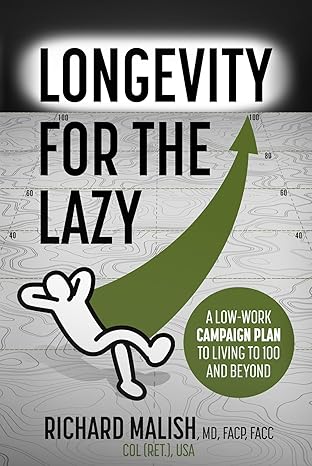
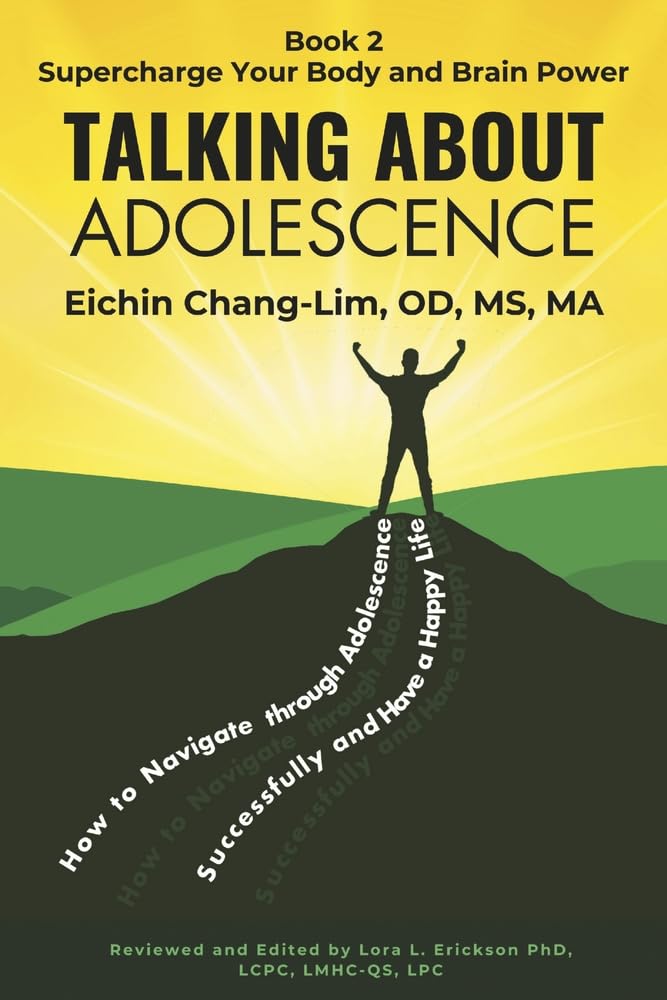
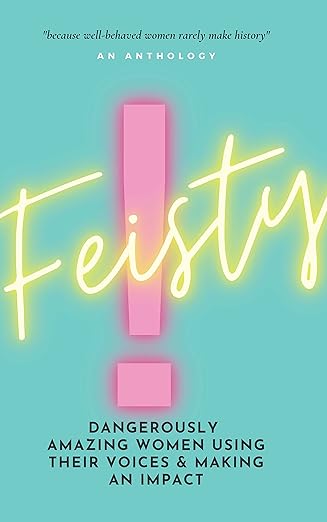


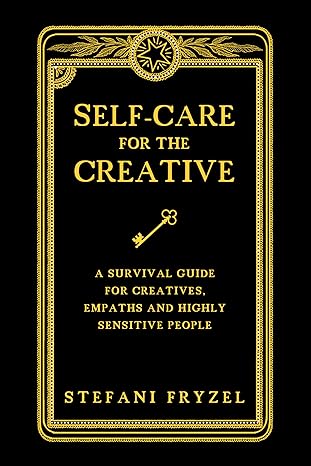













Visit the Literary Titan Book Awards page to see award information.
The Ten Permissions
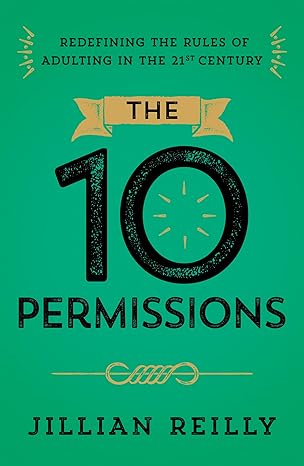

The heart of this book is simple but powerful. Author Jillian Reilly invites readers to tear up the old rulebook for what it means to “be an adult” and instead write our own permission slips. She offers ten guiding principles like “Be Willful,” “Go Astray,” and “Forget about the Future,” each meant to help us navigate a world that feels more uncertain and chaotic than the one our parents knew. Through personal stories, global perspectives, and plenty of gentle nudges, she frames adulthood not as a rigid set of milestones but as a creative and ongoing act of self-authoring.
The writing is warm, conversational, and at times almost conspiratorial, as though she’s leaning in and whispering, “You really don’t have to live that way anymore.” I found myself nodding along, sometimes with relief and sometimes with a pang of recognition. Her insistence that we give ourselves permission to fail, to wander, to feel lost felt both liberating and oddly radical, especially in a culture so obsessed with status and achievement. It made me think about how many of my own choices have been steered by “supposed to” rather than “want to,” and that realization was uncomfortable, but also motivating.
Some of the ideas, while inspiring, felt easier said than done. “Travel light,” for example, sounds freeing until you remember that debt, kids, or aging parents don’t exactly let you toss everything overboard. And yet, even in those moments, I didn’t feel dismissed. Instead, I felt challenged to consider what lightening my own load might look like, even if only in small ways. Her stories, especially those about her sons, gave the ideas a grounding in real life, and I appreciated that she didn’t pretend to have it all figured out.
I found the book energizing. It’s the kind of read that makes you want to scribble in the margins, dog-ear pages, and then hand it to a friend with an urgent, “You need this.” I’d recommend it to anyone feeling stuck, burned out, or caught between old definitions of success and the life they actually want. It’s not a how-to manual, and it doesn’t give you a neat five-step plan. What it gives is something more vital: permission to imagine, to try, to fail, and to keep going. And honestly, that feels like exactly what adulthood in this messy century requires.
Pages: 176 | ISBN : 1963827295

Last Episode


The book tells the story of Mark and Ilona, a married couple drifting apart, wrapped in petty arguments, television addictions, missed connections, and quiet despair. Their life unravels in small humiliations and sharp little moments, where love and bitterness mix until it’s hard to tell them apart. What begins with a spat in a gym escalates into a portrait of two people who can’t quite meet in the middle. The novel is full of irony, awkward humor, and raw sadness, as it peels back the layers of a marriage stuck in stasis.
Reading it, I felt both frustrated and strangely tender toward these characters. Ilona is maddening, with her endless TV watching and excuses, but I could also see myself in her inertia, that feeling of wanting life to change while doing nothing to make it happen. Mark is no better. He’s smug, distracted by work, and so blind to his wife’s pain that it almost hurts to watch him miss the obvious. Yet he still clings to her. He still wants to save something, even as he sabotages it with his own arrogance. I caught myself rooting for them and then, two pages later, wanting to shake them both. The writing makes you sit in that discomfort, and it works.
What struck me most was the bluntness of the prose. The language is plain, sometimes even harsh, and that gives the story its power. There are no grand speeches, just small conversations that sting because they feel true. The humor is dark and awkward, the kind that makes you laugh and then feel guilty for laughing. At times, the dialogue felt almost too on the nose, but maybe that’s the point. The book is unafraid to show people at their pettiest, their most foolish, their most ordinary, and somehow it makes that ordinary mess compelling.
I’d recommend Last Episode to readers who like their fiction sharp, uncomfortable, and painfully honest. It’s not a hopeful love story, and it doesn’t hand you easy lessons. It’s for anyone who has ever sat across the table from someone they loved and felt like strangers, for anyone who has wondered how small habits can hollow out a life. If you’ve ever laughed at the absurdity of your own arguments, this book will hit home.
Pages: 50 | ISBN : 1912831139
These Stories Shaped Me
An Inconvenient Witness recounts your life with vivid details, moving between childhood scenes, brushes with death, family dysfunction, and encounters with cultural and historical moments. Why was this an important book for you to write?
People kept telling me, “You’ve got to write this down.” Then my daughter handed me a book called Dad, Tell Me Your Story—which is basically a polite way of saying, You’re not getting any younger. Writing it was cathartic and allowed me to reflect on the past and perhaps find some meaning. These stories shaped me, whether I wanted them to or not.
What were some ideas that were important for you to share in this book?
That life is messy, sometimes ridiculous and doesn’t care about your plans. It’s best to be adaptable, remain open-minded and recognize subtle guideposts that can take you on a more rewarding journey than you planned. That ordinary moments can be extraordinary if you look hard enough. And that humor doesn’t erase anything, but it makes the truth easier to swallow.
What was the most challenging part of writing your memoir, and what was the most rewarding?
The most challenging aspect is revisiting events and times that I would rather forget. On the other hand, the most rewarding experience is realizing that these events have made me stronger, more confident and more adaptable to various situations.
What do you hope is one thing readers take away from your story?
We all have stories to tell, even in challenging times, there’s room for humor and hope. While we can’t control our past, we can shape the narrative it presents.
Cascadia’s Call
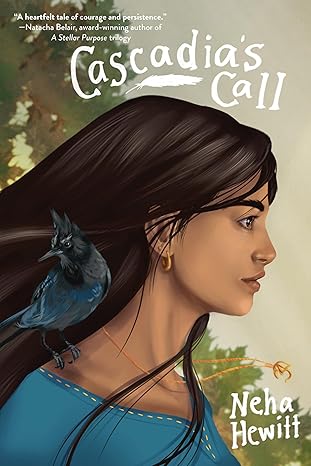
Neha Hewitt’s Cascadia’s Call is a heartfelt coming-of-age story about Ari, a fourteen-year-old girl uprooted from Boston after her father’s death and sent to live with relatives in Portland while her mother pursues a demanding journalism career. The novel moves through Ari’s grief, her rocky adjustment to a new city, and her clashes with cultural expectations, all while weaving in mysterious symbols tied to her family’s heritage, most notably a necklace that seems to carry an uncanny power. It is both a portrait of adolescence and a meditation on family, loss, and belonging.
I found myself drawn into Ari’s raw anger and aching loneliness. Hewitt captures the turbulence of being a teenager so vividly that I often felt like I was back in my own messy adolescence, stumbling through identity and yearning for control. The writing is crisp and accessible, yet it carries real weight, especially in the quieter scenes where Ari longs for her father or struggles with the heavy silences between herself and her mother. At times, the dialogue made me laugh in recognition, and at other times it brought a lump to my throat.
I’ll admit there were moments when Ari’s stubbornness grated on me, and I caught myself wanting to shake her into patience. But that’s part of why the story works. She feels like a real teenager, with sharp edges and contradictions that make her alive on the page. I also admired the way Hewitt didn’t shy away from difficult conversations about culture, tradition, and feminism. Those scenes felt risky, sometimes messy, but honest. The supernatural hints with the birds and the necklace added just enough mystery to keep me guessing without overwhelming the emotional heart of the story.
This book would be a strong recommendation for teens navigating change, parents trying to understand their children, and anyone who appreciates stories that blend culture, grief, and a dash of the mystical. Cascadia’s Call is the kind of novel that keeps you thinking, not because it resolves everything neatly, but because it captures how uncertain and yet hopeful growing up can be.
Pages: 242 | ASIN : B0FJF5VC19
THE LEADER CONNECTION
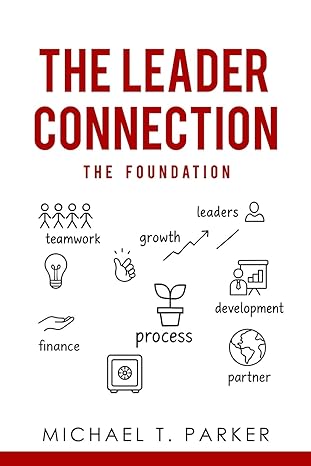
The book dives deep into the human side of leadership. It is part reflection and part manual, weaving together Parker’s personal journey with practical advice. He covers empathy, communication, adaptability, and the nuances of eight distinct leadership styles. The core message is clear. Leadership is not about authority. It is about building trust, connection, and growth within a team. Through stories, frameworks, and exercises, Parker paints a picture of leadership as a living relationship between people rather than a system of control.
Reading this, I felt drawn to Parker’s honesty. He doesn’t pretend to have been a perfect leader, and that humility makes the lessons hit harder. The mix of memoir and guide felt refreshing. Some moments, especially when he shared about his father, his son, or his own missteps, carried a warmth that made me pause. The book sometimes lists traits and challenges like lecture notes. The sincerity behind it kept me engaged, and I found myself reflecting on my own experiences with bosses who inspired connection versus those who drained it.
What stood out most for me was how personal and vulnerable his approach is. I appreciated the balance between theory and story. The chapters on servant leadership and authentic leadership especially struck a chord. They reminded me that good leadership often looks less like grand gestures and more like quiet acts of service. It reads like someone thinking aloud after a long career, eager to pass on everything they’ve learned.
I would recommend The Leader Connection to managers who are tired of dry business texts and want something more human. It’s also a good pick for anyone stepping into leadership for the first time and looking for guidance that feels grounded rather than academic. Parker doesn’t promise easy answers. What he offers instead is a lived-in, heartfelt reminder that leadership is about people, and that connection is what makes the work worthwhile.
Pages: 186 | ASIN : B0FN1VV122



 LITERARY TITAN