Blog Archives
Literary Titan Book Award: Nonfiction

The Literary Titan Book Award recognizes outstanding nonfiction books that demonstrate exceptional quality in writing, research, and presentation. This award is dedicated to authors who excel in creating informative, enlightening, and engaging works that offer valuable insights. Recipients of this award are commended for their ability to transform complex topics into accessible and compelling narratives that captivate readers and enhance our understanding.
Award Recipients


















Visit the Literary Titan Book Awards page to see award information.
Limited Partnership Basics and More!
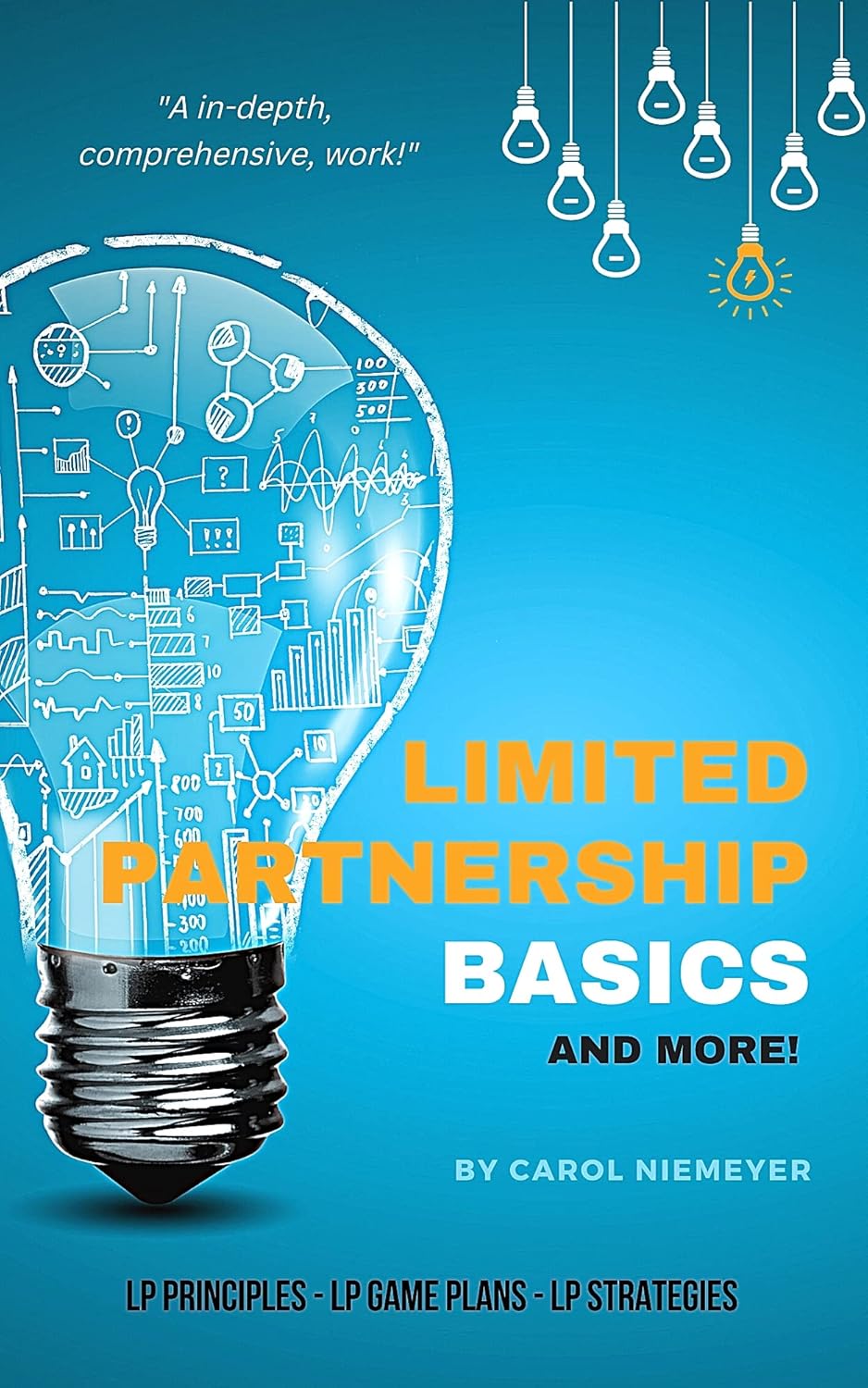

Limited Partnership Basics & More! is a practical, upbeat guide to understanding how limited partnerships work and why they matter. Author Carol Niemeyer breaks the topic down into clear parts: what LPs are, how general and limited partners function, how businesses raise money, how deals are structured, and why LPs can become long-term wealth generators. She mixes explanations with examples of apartments, sport facilities, retail strips, clubs, and even big names like major sports teams. The book sits squarely in the business and entrepreneurship genre, and it aims to show everyday people that investing in or building an LP is possible, even on a modest budget.
I felt like Carol Niemeyer genuinely wants readers to feel empowered. Her tone is enthusiastic, almost cheerleading at times, but that energy makes the material less intimidating. She doesn’t hide her belief that limited partnerships can be “little gold mines,” and she repeats that theme often. I liked how straightforward she made complicated things sound. The writing isn’t heavy. It’s more like someone at a coffee shop leaning in and saying, “Look, this is doable.” Some sections felt dense with numbers, but the charts and simple explanations helped balance things out.
What stood out most was how strongly she emphasizes community and teamwork. The “Friendship Formula,” the examples of friends pooling money, the idea of local athletes or students boosting visibility, it all paints LPs as something built on relationships. I appreciated the reminders about risk and due diligence, even if they’re brief. And while the optimism can feel a bit rosy, her message about people combining resources to build local assets feels grounded. I found myself imagining small towns where these projects really could reshape the local landscape. It made the ideas feel human, not just financial.
By the time I reached the end, I felt like I had been given both a pep talk and a starter toolkit. It’s a motivational, beginner-friendly look at LPs. It’s a book best suited for aspiring entrepreneurs, small-business dreamers, and investors who want a down-to-earth introduction to the structure. If you’re curious about the world of partnerships and want something clear, encouraging, and easy to follow, this book will fit you well.
Pages: 150 | ASIN : B0BS74L4QM

Clip Toenails for a Living: A Unique Path to Success


Clip Toenails for a Living is a blend of memoir, mindset guide, and professional journey that follows Dr. Marcin Vaclaw’s rise from podiatry resident to clinic owner and medical officer. The book lays out a simple idea. Success comes from doing the unglamorous work and doing it well. Dr. Vaclaw uses podiatry, especially the humble act of clipping toenails, as the central image of his philosophy. The book is organized into parts that move from fundamentals to building a personal path to defining success in your own terms. It mixes anecdotes from training, small wins, setbacks, and the slow grind that shaped his career.
I felt pulled in by the author’s plain way of telling stories. Nothing feels sugar-coated. He talks about fungal nails, house calls and residency struggles. That honesty made the bigger ideas easier to trust. I liked how he treated simple work with respect. It made me think about my own habits and how often I overlook basic tasks. Sometimes the writing leaned a little too hard on metaphors about cooking or recipes, but it still kept the tone friendly and down to earth.
I also enjoyed the way the book paced through the lessons. Some chapters focused on grit. Others focused on adjusting your course or finding your niche or learning from discomfort. I felt myself nodding along, especially during the parts describing how success is mostly small steps and small choices that pile up. It felt real. At moments, though, I wanted more detail about his own failures. Even so, the overall effect is motivating. I came away feeling lighter and more willing to take on the boring parts of my own life.
I would recommend this book to people who like personal development stories that feel practical and human. If you are early in your career or trying to rethink your path, it hits the spot. It would also appeal to readers who enjoy memoirs from medical professionals. The lessons are simple, clear, and easy to apply. It left me with the sense that I could do a little better tomorrow.
Pages: 193 | ASIN: B0FT6ZDK3M
Build Your Cloud Career: A Professional’s Guide to Cloud Engineering
Build Your Cloud Career lays out a clear path into cloud engineering. It starts with simple explanations of what the cloud is, then moves into the major providers, the different engineering roles, and the skills needed to build a career in the field. It mixes technical basics with career advice. The writing stays grounded in real situations and aims to give beginners confidence as they enter a fast-growing and sometimes intimidating area of tech.
Reading it felt smooth and surprisingly friendly. I enjoyed how the author kept things practical without stuffing the pages with jargon. The explanations made complicated ideas feel lighter. Sometimes I caught myself nodding along because the examples matched real workplace moments. I also liked the honest tone around certifications and career paths. It never tried to oversell or hype anything. It just told you what works and why.
A few concepts flew by fast, and I found myself wanting more stories or more hands-on guidance. Still, the author’s experience comes through in a warm way. It feels like sitting with someone who actually wants you to succeed. That personal touch gave the book more heart than I expected from a tech guide.
The chapter Cloud Engineering Roles in Depth was particularly relevant to me. It helped me see how each cloud role fits into real projects and why those differences matter. It gave me clarity on which responsibilities align with my strengths and interests, especially when comparing paths like DevOps, security, and architecture. It also made the career landscape feel less confusing since I could finally picture where I might fit and what skills I should focus on next.
All in all, I think this book is great for students, career switchers, and anyone curious about cloud work. If you are feeling lost or overwhelmed by AWS and Azure and all the big words floating around the internet, this book gives you a place to start. It is calm, clear, and encouraging. I would recommend it to anyone who wants to break into cloud engineering without feeling like they are drowning in technical noise.
Pages: 139
Literary Titan Book Award: Nonfiction
The Literary Titan Book Award recognizes outstanding nonfiction books that demonstrate exceptional quality in writing, research, and presentation. This award is dedicated to authors who excel in creating informative, enlightening, and engaging works that offer valuable insights. Recipients of this award are commended for their ability to transform complex topics into accessible and compelling narratives that captivate readers and enhance our understanding.
Award Recipients


























Visit the Literary Titan Book Awards page to see award information.
Reclaiming Their Time, Sanity, and Profits

The Magnet, The Method, and The Machine provides readers with a clear roadmap for custom homebuilders who are ready to scale their company while gaining back their time, sanity, and freedom. How did you come up with the concept and then develop your system of “3 Laws and 9 Levers?”
After coaching hundreds of custom home builders, I started to see repeating patterns — not just in the problems they faced, but in the way high-performing companies overcame them. I realized that every successful builder had three things working in harmony: their marketing and positioning (The Magnet), their team and structure (The Machine), and their systems and execution (The Method). Those became the “3 Laws.” From there, I broke each law down into three actionable “Levers” — the tools a builder can actually pull to create measurable change. It evolved organically from years of real-world experience, not theory. My goal was to give builders a clear, repeatable framework to scale past $20M while reclaiming their time, sanity, and profits.
What were some ideas that were important for you to share in this book?
One of the most important ideas is that scaling a business isn’t just about more revenue — it’s about more freedom. Builders don’t need another spreadsheet or tactic; they need clarity, leadership, and alignment. I wanted to show that the chaos most owners experience isn’t personal failure — it’s structural. When you understand the 3 Laws, you stop reacting to problems and start engineering results. I also wanted to weave in the human side — the burnout, the family sacrifice, the loneliness of leadership — and remind readers that the real goal is to build a business that serves your life, not consumes it.
What is one thing that you hope readers take away from The Magnet, The Method, and The Machine?
That scaling doesn’t have to cost you everything. You can build what you want, where you want, with who you want — if you’re willing to slow down long enough to build it on purpose. My hope is that every reader walks away not just with a playbook for growth, but with permission to lead differently — to lead from clarity instead of chaos.
Author Links: Amazon | GoodReads
They hustle for leads, drown in details, and spend every day putting out fires.
They run an adult daycare instead of a business.
On paper, they look successful — trucks on the road, projects underway, revenue hitting $3M, $6M, even $10M+. But peel back the curtain, and you’ll see the reality:
They haven’t built a business. They’ve built an expensive prison with a fancy logo.
They’re the first one in, the last one out, and the bottleneck in every single decision.
Sound familiar?
It doesn’t have to stay that way.
In The Magnet, The Method, and The Machine, bestselling author and ICF Certified builder’s coach Rodric Lenhart pulls back the curtain on what it really takes to scale a custom homebuilding company to $20M+ while gaining back your time, sanity, and freedom.
This isn’t about hacks, spreadsheets, or another piece of software that sits unused on your team’s laptops.
It’s about building a company that works without you — by applying the 3 Laws and 9 Levers that have transformed builders from Vancouver to Miami.
Inside you’ll learn how to:
Attract premium clients on demand so you never waste time on tire-kickers again.
Build a team you trust to run projects without you so you can finally step out of the day-to-day chaos.
Install systems that drive profit and predictability so growth feels controlled, not overwhelming.
Position yourself as the authority in your market so clients chase you instead of the other way around.
Scale revenue while gaining freedom so your business supports your life – what you wanted when you started this thing in the first place…
These frameworks aren’t theory. They’re battle-tested with real builders who’ve scaled beyond what they thought possible.
War of the Words
Carol Karels’ War of the Words: The Office Revolution That Transformed the Lives of Women and the Men They Worked For is a fascinating mix of family memoir and tech history. Karels tells the story of Microsystems Engineering Corporation (MEC), the small family company her father and uncle founded in the late 1970s that created MASS-11, a powerful word processor that quietly helped shape the modern office. From NASA contracts to the early days of Digital’s VAX computers, she traces how a homegrown business rode and was eventually crushed by the wave of the Information Age.
What grabbed me right away was how personal it felt. Karels doesn’t hide the messiness: her brother’s public one-star review of her first book, her father’s fierce ambition, and the family’s chaotic dynamic all sit side by side with the story of a company at the center of a digital revolution. When she recalls their product being featured at the Paperless Office event at the Watergate Hotel or the excitement of reading Alvin Toffler’s The Third Wave, the scenes feel alive, filled with awe and possibility. Yet underneath, there’s tension, the sense that every success came at a cost.
I loved how Karels mixes technical history with heart. She writes about computers, word processors, and office automation, but always brings it back to people: her father’s restless drive, her brother’s pride, and her own search for purpose. Her prose has a natural rhythm, part storytelling, part confession, and even when she dives into details about the DEC VAX or the shift from typewriters to terminals, it feels human and intimate.
One of the most memorable moments for me was her father’s blunt advice: “Learning MASS-11 might be the best goddamn thing you ever do.” That line sums up the entire book, equal parts tough love and belief in possibility. Karels writes with humor, honesty, and just enough bite to keep you hooked.
War of the Words is perfect for readers who love memoirs that connect personal lives to cultural change. It’s about family, ambition, innovation, and the strange beauty of watching a dream take shape, and then fall apart. Anyone curious about women in tech or the human side of the computer revolution will find this story both moving and unforgettable.
Pages: 332 | ISBN : 978-1953728432
It’s NOT Just About Money

The Leader Connection – The Foundation dives deep into the human side of leadership, covering topics like empathy, communication, adaptability, and the nuances of eight distinct leadership styles, as well as providing actionable strategies for leaders. Why was this an important book for you to write?
Observing the current discussions and insights about labor, staffing shortages, and turnover, I felt compelled to share my journey and passion with a broader audience.
What is a common misconception you feel people have about leadership and employee connection?
It’s only about the money!
What were some ideas that were important for you to share in this book?
1. Understand Your Leadership Style
2. The Importance of Your Role in Building Connections and Enhancing Culture
What is one thing that you hope readers take away from The Leader Connection – The Foundation?
The book serves as a crucial resource for both novice and seasoned leaders, offering valuable insights to help achieve success.
Author Links: Facebook | Website



 LITERARY TITAN