Blog Archives
Depth, Honesty, and Context

Through the Lens of an Ancient Yisra’elite Bible Study walks readers through the history, language, culture, and theology of the ancient Yisra’elites. What inspired you to write this theological guide?
Writing a book was never my original intention. My goal at first was simply to research, gather data, and develop a study I could teach in local churches or through online platforms. Over time, people who attended those studies offered thoughtful feedback and repeatedly encouraged me to publish the material in book form.
What ultimately inspired me was a growing concern that much of modern teaching approaches Scripture through a Western lens that ignores the linguistic, cultural, and historical world of ancient Yisra’el. I saw pastors avoiding difficult topics and doctrines being taught without a solid scriptural foundation, often because that ancient context was missing. The more I studied, the more I realized how much meaning is lost without it.
After prayer and reflection, it became clear that transforming the study into a book was the right choice. My intention is not to argue for novelty, but to help readers engage Scripture as its earliest communities would have understood it—with depth, honesty, and context.
Did you learn anything that surprised you during your research for this book?”
Absolutely. The research process was full of surprises. One of the most eye-opening discoveries for me was realizing how differently ancient Yisra’elites understood concepts we often take for granted—things like covenant, identity, honor and shame, communal responsibility, ritual purity, and even time itself. These ideas do not translate neatly into our modern Western categories, and I was often surprised by how much meaning is lost when we try to fit them into our own frameworks.
I also encountered linguistic surprises. Hebrew names, idioms, and expressions that modern translations flatten—sometimes for readability—carry layers of meaning that change the tone of a passage entirely. For example, understanding terms tied to covenant language, marriage imagery, or the “appointed times” of Yahweh revealed connections I had never been shown in church settings. Even the way ancient Yisra’el measured days and months reshaped familiar timelines, such as the biblical festivals or the crucifixion and resurrection accounts.
Another area that surprised me was how much clarity emerges when we consult non-canonical literature—not as Scripture, but as cultural context. Works like Ḥanok (Enoch), Jubilees, or Jasher reflect the worldview, vocabulary, and assumptions of Second Temple Judaism. These writings don’t replace the Bible, but they help us understand how ancient communities thought about angels, the afterlife, judgment, marriage customs, and cosmic order. When you combine that with linguistic study and the biblical text itself, the result is a fuller and more coherent picture of the ancient world.
All of this taught me how much beauty and continuity live beneath the surface when Scripture is allowed to speak from within its original cultural world. Passages that once seemed disconnected suddenly fit together with remarkable clarity. That realization humbled me and reminded me that the Bible was written within a real historical context, to real people who shared a worldview very different from ours. Honoring that world not only deepens our understanding but also brings us closer to the heart of the text itself.
What is one thing you hope readers take away from your book?
If there is one thing I hope readers take away from this book, it is a deeper appreciation for how transformative Scripture becomes when we honor its original context. The Bible did not emerge in a vacuum, and when we approach it through the language, culture, and worldview of ancient Yisra’el, we begin to see truths that modern traditions often overlook or soften. That awareness can bring both clarity and curiosity—clarity in understanding what the text is actually saying, and curiosity to keep asking hard questions without fear.
At the same time, I hope it renews a sense of awe for the God who reveals Himself within that context. My prayer is that readers walk away not only with stronger historical and linguistic insight, but with a deeper faith—one rooted in truth, not assumption. If this book encourages believers to read with fresh eyes, greater humility, and a sincere hunger for the heart of Scripture, then it has accomplished its purpose.
Author Links: Goodreads | X (Twitter) | Facebook | Website | Amazon
More than a devotional guide and more grounded than a theological essay, this book functions as a lens-cleaner for students of Scripture who want to see the biblical text on its own terms. With clarity and accessibility, it explores how concepts such as honor and shame, communal identity, covenantal relationships, Hebraic idioms, and ancient Near Eastern worldview shaped the original meaning and intent of biblical passages.
Written from within a Hebraic worldview, and with a commitment to both historical integrity and discipleship, the study reframes familiar themes through the eyes of the ancient Yisra’elite community. The result is not speculation or novelty, but restoration—helping modern readers hear the biblical message as its first audience would have understood it.
In this study you will explore:
How the ancient Yisra’elite worldview differs from modern Western assumptions
Why concepts like honor, shame, covenant, kinship, and communal ethics are essential for understanding Scripture
The impact of Hebraic language and idioms on meaning and interpretation
How the Bible communicates through patterns, cycles, and narrative structures rather than abstract doctrines
The difference between covenantal relationships and modern contract-thinking
What happens when Scripture is read within its own cultural soil rather than through later philosophical frameworks
Ideal for readers who:
Want to understand the Bible in its historical and cultural context
Sense a disconnect between ancient Scripture and modern Western interpretation
Teach or lead Bible studies, small groups, or discipleship courses
Are exploring the Hebraic roots of the faith
Desire a deeper, more grounded approach beyond commentary-driven theology
Are curious how honor-shame culture shapes biblical narratives and ethics
Through the Lens of an Ancient Yisra’elite Bible Study


Through the Lens of an Ancient Yisra’elite Bible Study is a deep dive into Scripture that invites the reader to step out of a Western mindset and into the ancient world of the Yisra’elites. The author walks through history, language, culture, and theology to peel back layers of tradition and interpretation that have built up over centuries. From the opening pages, the book frames its goal clearly. It challenges readers to see how personal background, denominational teaching, and cultural habits shape the way the Bible is understood. It also aims to restore a more original, rooted perspective by examining Hebrew concepts, early calendars, festivals, and worldviews.
The author opens the book with the story of his own struggle in academic settings where the teaching felt out of sync with the Jewish foundation of Scripture. There is a real sense of longing in his words. A longing to understand the Bible as its writers meant it, not as later cultures reframed it. I could feel his drive to challenge the status quo, and even though the material gets dense, his sincerity comes through. The book really resonated with me because I’ve wondered about the same tensions, especially when modern teachings don’t quite match what the text seems to say. The book pushed me to slow down, rethink assumptions, and notice how much I bring to the page without even realizing it.
I also had moments of overwhelm. The amount of research is enormous. The book covers linguistics, sociology, astronomy, theology, ancient practices, and more. It is clear that the author spent decades digging into sources, and that commitment shows. There were moments when I hoped for a little more guidance on certain ideas. I admired the depth of the material, but there was much to take in, and that mix made the experience feel fuller and more engaging. I appreciated the effort to take readers past surface-level teaching. The author doesn’t hide difficult topics or soften them. He wants the reader to confront hard truths and reconsider traditions that many people accept without question. That boldness gave the book a refreshing kind of confidence that made me want to keep going.
I think this book is a great fit for readers who enjoy intensive Bible study and who don’t mind digging through challenging material to uncover deeper meaning. It would be especially valuable for people who feel that something is missing from modern interpretations and who want to explore Scripture from a historical and cultural angle. If you like to question, research, and wrestle with big ideas, this book will feel like a rich and rewarding journey. For anyone hungry for a fuller picture of ancient faith and practice, though, I’d absolutely recommend it.
Pages: 893 | ASIN : B0FBRLXSTB

The Prophet and the Warrior: A Fictional History of Moses and Joshua
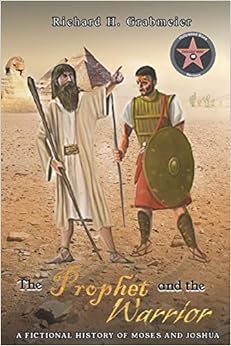

Richard Grabmeier’s The Prophet and the Warrior artfully interweaves the biblical narratives of Moses and Joshua into a compelling piece of historical fiction, drawing largely from the King James Version of the Bible.
Grabmeier transports us through time to accompany Moses from his humble origins as an infant set adrift in a basket to his transformative journey of leading the children of Israel out of Egypt’s suffocating grasp at the behest of God. Similarly, we journey alongside Joshua, the young warrior whose story intriguingly intersects with Moses’, painting a comprehensive tableau of their intertwined destinies.
In this riveting narrative, Grabmeier ingeniously humanizes these larger-than-life biblical figures, unmasking their strengths and weaknesses, their internal battles, and their personal metamorphoses. These heroes are presented as tangible, relatable beings beset by doubts and fears but also basking in moments of triumph and affirmation.
Grabmeier’s exploration of their individual motivations, coupled with the formidable challenges they encounter as leaders, provides readers with a rich vein of connection, making the characters’ trials and triumphs resonate on a deeply personal level. The author’s meticulous attention to detail and immersive descriptive prowess breathes life into the book’s diverse settings, be it the vast, formidable wilderness or the resplendent, promised land.
The authenticity of the dialogue deserves special mention. Grabmeier masterfully replicates the distinctive tone and speech patterns of the era, further enhancing the reader’s immersion in this fascinating period of biblical history.
The Prophet and the Warrior is a creative exploration of biblical narratives. This novel ingeniously draws upon biblical texts, inviting readers to venture into the narrative with a spirit of curiosity. Those seeking an innovative retelling of biblical tales may find the author’s fresh perspective and unique interpretations intriguing. The novel brings a fresh lens to examine events such as Moses’ actions against the Egyptians, showcasing the author’s intent to delve into deeper analysis and inspire thought-provoking discussions about the complexities of divine justice.
Pages: 380 | ISBN : 1643147196
Surviving Freshman Year

In Surviving Freshman Year by Gregory Jones, a group of students forge new connections and make important decisions during their first year of college. The chapters in the book include Bible excerpts, discussion questions, and thought-provoking concepts. The book begins with Brandon having to determine which student clubs to join. In another part of the novel, Daniel, who is stuck in his residence hall due to a snowstorm on Thanksgiving weekend, mulls over his future steps after graduating. Finally, Lauren must decide how she wants to serve in the coming academic year. Surviving Freshman Year offers a variety of circumstances that one can encounter throughout their first year of college.
This engaging book has the feel of a compilation of short stories featuring the same setting and cast of characters. Each chapter takes a new turn and focuses on a different character, providing just enough about their backgrounds and goals to allow the reader to identify with and understand them. For example, Austin, one of the book’s protagonists, is said to go to church on Christmas and Easter but not regularly. He reminds me of a college acquaintance of mine. The cast of characters shows diversity in their engagement with organized religion, but they are still believers. This makes the book accessible to even those that may feel that just because they do not attend services each week, this is not for them, but in reality, this book is for all people.
These captivating stories are well-complimented by the thought-provoking questions that follow them. Together, they provide an imaginative and practical method of comprehending incredibly valuable and beneficial Bible lessons. I particularly liked the chapter on spiritual talents, which offers introspective questions about discovering one’s gifts. The author gently leads the reader to reach their own conclusions by posing probing questions that help them understand various concepts, including generosity, hospitality, stereotypes of Christians, temptations, volunteering, modest clothing, and others.
Surviving Freshman Year will be both enjoyable and educational for young adults and readers entering college. Its lessons are skillfully structured to assist the reader in making informed decisions based on the teachings of the Bible.
Pages: 160 | ISBN : 195735416X
What Is Truth?
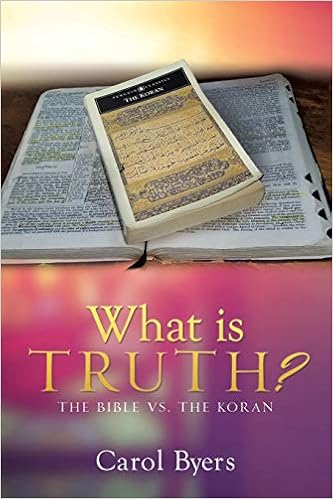
The reader notices the first Carol Byers’s writing is meticulous. While writing, the author writes about even the most minute differences between the two religions. She takes pride in her knowledge of the Bible and makes biblical references on every page. In What is Truth?: The Bible Vs. the Koran, the author draws comparisons between the two religions’ differences observed, analyzing the Bible and the Koran and breaking down the various practices. The author goes above and beyond when explaining every detail. I love Carol Byers’s writing because she is passionate about religion. This is displayed in her in-depth research and how she states her points.
This educational book starts by giving the most essential comparisons between the Bible and the Koran. I like that the author simplified this part of the book for the reader, as it made comprehension easy. Next, the author discusses Prophet Muhammad, examines his character, and shares their beliefs about him. Carol Byers uses the ideal language and phrases when discussing the Muslim deity and also helps the reader get a true reflection of him. The book uses simplified language, a deep and insightful analysis of Christians, Muslims, and other religions, and closing remarks for the questions readers may ask.
Carol Byers’ writing will appeal to fundamental Christians and believers that recognize that the Christian God is supreme. The author uses multiple scripture passages throughout the book. By giving direct bible verses, she gives the reader a better reference point for where she is developing her analysis from. In addition, the author is conversant with the Bible, Christianity, and even Islam. This is evident in how she writes about the history of both religions, the steps Christians have taken over the years, and why religion is crucial in human existence.
Reading What is Truth?: The Bible Vs. the Koran was an enjoyable experience. The book is divided into two parts, with part one mainly discussing the disparity between the Bible and the Koran, while part two focuses on Islamic practices like marriage, faith, war, and peace. Each of the two parts had weighty topics that would motivate Christians, Muslims, and believers of other religions. Some of the most insightful chapters that I read over and again discussed subjects like the Muslim messiah, how Muslims fight for the cause of god in the name of Jihad, and the last day, salvation through Christ, and truth in Islam and Christianity.
As you read on, you realize that despite Christians and Muslims have a few similarities in how they worship, believers of the two religions have diverse ways of practicing religion. I also love that the author touched on Jews and their common beliefs.
What is Truth?: The Bible Vs. the Koran is like a summarized theology class. The author writes in detail and tries to reach her message to both believers and nonbelievers in the gentlest way possible. I rate this practical book a 4 out of 5 stars because the information in this book is clear and provides perspective on the end of times.
Pages: 409 | ASIN : B08CY7ZC9V
Review requested by Pen2Paper Press.


