Blog Archives
I Am My Biggest Stranger


I Am My Biggest Stranger, by Mike Dee, is a personal spiritual journey that uses Dante’s Inferno as a map for self-confrontation, healing, and Christian renewal. Dee begins in his own “dark wood,” shaped by loss, a car accident, broken direction, and the ache of becoming unfamiliar to himself, then moves through the circles of lust, comfort, greed, anger, pride, violence, fraud, and betrayal as mirrors for the modern soul. The book gradually shifts from descent to rebuilding, from naming the giants to mastering the mind, living with integrity, aligning with purpose, and finally inviting the reader to write the unwritten chapter of their own life.
Dee isn’t writing from a polished distance, and that gives the strongest passages their pulse. When he describes hearing Dante’s famous line while watching Patch Adams after the accident, I could feel the strange grace of that moment, the way a single sentence can suddenly give shape to years of confusion. I also found the shelter scene especially affecting. The image of him on his eighteenth birthday with a backpack, a Bible, and fear he doesn’t want to admit has a rawness that lingers. Those moments cut through the more instructional sections and let the book breathe as testimony. I liked Dee best when he trusted story, silence, and image, because his writing has a natural intensity when he lets memory do the talking.
The ideas in the book are earnest, ambitious, and at times genuinely stirring. I appreciated the way Dee reframes inner struggle without softening it: Limbo becomes the slow death of “almost,” lust becomes desire without direction, anger becomes a swamp that traps both the loud and the silent, and treachery becomes a frozen condition of the heart. That structure gives the book a strong spiritual architecture. The language can circle back on itself, especially around purpose, giants, alignment, and victory. Still, that repetition also comes from conviction. Dee clearly believes these truths were hard-won, and there’s something moving about the urgency with which he wants the reader not to waste pain, not to settle, not to drift through life half-awake.
I felt that I Am My Biggest Stranger is less a conventional self-help book than a devotional pilgrimage through the bruised places of the self. Its best qualities are its faith, vulnerability, and insistence that transformation is not cosmetic but costly. The conclusion, with its unwritten final chapter, works because the whole book has been pushing toward that handoff: now the reader has to move. I’d recommend this book to Christian readers who like reflective, spiritually charged personal growth books, especially those wrestling with grief, stagnation, identity, or the uneasy sense that they’ve been living as a stranger to themselves.
Pages: 512 | ASIN : B0GYQYBBF2

Rise in Courage

In Aimed & Ready, you emphasize that the seasons of delay, silence, loss, and backward movement can actually be forms of divine preparation. Why was this an important book for you to write?
I wrote this book to address a need I kept seeing in people’s lives. Many Christians know how to celebrate seasons of success, blessing, and prosperity, but often lack a framework for navigating hardship, uncertainty, delay, and disappointment. Over the past six months, this burden grew strongly in my heart, and I felt compelled to put into words the hope and perspective people need during difficult seasons.
The core message of the book is that when life doesn’t make sense, there is still purpose, hope, and destiny available when we choose to trust God and surrender our struggles to Him. Rather than seeing trials as endings, I want readers to recognize that something beautiful may be forming just beyond the present challenge.
I also wanted to provide prophetic encouragement by exploring the emotions people experience in seasons of stretching, waiting, discomfort, and shaking. The book not only acknowledges those feelings but also offers insight into why we experience them and how we can respond in faith.
One of the key metaphors I use is that of an archer pulling back an arrow. The Archer’s aim is never careless. Although the pressure of being pulled back can feel intense, it is actually preparation for forward movement. In the same way, I believe God often uses seasons of tension to position us for growth, blessing, and His greater purpose.
Ultimately, the book challenges readers to rise in courage, break limiting mindsets, and step confidently into God’s calling. I want people to understand that their trials can transform them and become a powerful testimony of God’s faithfulness.
When did the bow-and-arrow metaphor first come to you, and why did it feel central?
The book really began with one simple thought: your pullback is a setup for your comeback. That idea immediately gave me the picture of an archer with a bow fully drawn back. What feels like strain is often actually alignment, and what looks like a setback may be God positioning you for greater impact.
In a world where many people feel like targets, I wanted to remind readers that God didn’t create them to be victims of circumstance—He crafted them to be the arrow. Sometimes the pullback isn’t the end of the story; it’s the beginning of something greater. That’s why the bow-and-arrow metaphor felt so powerful and fitting for this message.
A major theme in the book is surrender. In God’s Kingdom, surrender is never defeat. In His hands, surrender becomes strength, stability, and precision. It allows your life to go farther than human effort alone ever could. Many people think surrender means losing control or identity, but I believe the opposite is true—it places your life in the hands of Someone who knows you completely and sees further than you can see.
Just as an archer never draws back an arrow without intention, God never allows seasons of waiting, silence, or tension without purpose. He sees the obstacles, opportunities, and timing that we often cannot. Sometimes what feels like delay is really a divine reset to align our trajectory with His greater vision.
Ultimately, the message of the book is that every arrow finds its meaning when it yields to the Archer. When we surrender to God, our lives can move with greater clarity, purpose, and precision toward the calling He has set before us. This book, along with its devotional workbook, is designed to help readers grow stronger in the tension, realign with Heaven’s purpose, and step confidently into their God-given destiny.
How can readers tell the difference between spiritual stillness and spiritual distance?
One of the key messages I wanted to communicate is that trust in God must always be the foundation of faith. There are seasons when God can feel distant, but often that sense of distance comes because something is clouding our perspective, or because the answer we’re looking for is not yet visible. It doesn’t mean God has moved away.
I also talk about stillness, because stillness is not the absence of God. I describe it as a holy hush—an intentional choice to silence the noise around us so we can hear, see, and discern what God is doing in that moment. Rather than being empty, stillness can become a place of deep intimacy with Him.
When people feel distance from God, they often assume He is far away or hard to reach. But that is never His heart. God desires closeness and a relationship with His people. Scripture asks, What can separate us from the love of God? and the answer is clear: nothing.
So any feeling of separation is not a truth we should accept, but often a perception shaped by fear, disappointment, or misunderstanding. The reality is that God remains near, loving, and fully present—even in the quiet seasons. My hope is that readers come to see silence not as abandonment, but as an invitation into deeper trust and intimacy with Him.
How do you respond to readers who feel that their pain has no visible outcome?
One of the important truths I explore in the book is that while difficult seasons can feel confusing and unclear, we must be careful not to let that drift into fatalism or hopelessness. Just because we cannot see the outcome doesn’t mean there is no purpose or direction. Often, it simply means the perspective belongs to Someone greater than us. As I say in the book, the archer sees what the arrow cannot yet perceive.
That perspective changes how we view our battles. What looks like an obstacle may actually be the very thing God uses to launch us into what He has already prepared. Your Goliath may not be there to destroy you—it may be the catapult into your next season of purpose and victory. That’s why I encourage readers not to be afraid, but to trust God completely, because true breakthrough happens when His power is behind what He has placed in your hand.
My prayer is that this book would saturate people with faith and hope, bring their hearts into alignment with God, and strengthen their confidence in His purpose. If someone is in a season of waiting, stretching, or feeling hidden, I believe this message can be a real lifeline. It is designed to help readers rest again, realign with God’s perspective, and trust His heart in a fresh way.
Author Links: GoodReads | X (Twitter) | Facebook | Website | Nico Smit | Amazon
With prophetic insight and pastoral clarity, Nico Smit reframes seasons of tension, delay, and apparent retreat-not as disqualification, but as divine preparation. Drawing from a powerful vision of a bow drawn tight and an arrow held under pressure, ‘Aimed & Ready’ reveals a profound truth: what feels like strain is often alignment, and what looks like setback may be God positioning you for greater impact.
This powerful cutting-edge prophetic book speaks to those who feel buried, forgotten, or off-track, reminding them that God does not waste His arrows. The pullback is not punishment-it is precision. The pressure is not abandonment-it is proof of purpose.
With prophetic revelation, biblical insight, and hope-filled exhortation, these pages restore faith for the waiting, courage for the weary, and vision for those standing between promise and fulfillment.
You are not retreating. You are being aligned, sharpened, and prepared. ‘Aimed & Ready’ will restore your perspective and strengthen your faith.
Will you let God aim you?
If your answer is yes, your comeback has already begun.
FOREWORD by Stacey Campbell
This book also has a Devotional Workbook available on Amazon.
Professional Endorsements by: Gary Heyes, Ryan Laubscher, Chelsea Hagen, Elaine Tavolacci, Joshua Sawiris, Ada Boland and Melvain Donyes
My Search For The God of the Big Book (Hadassahʼs Story)


My Search for the God of the Big Book is part memoir, part spiritual argument, and part ministry manual. Hadassah Roach begins in childhood chaos, moves through alcoholism, AA, and her immersion in Reiki, then builds toward a hard-won conversion experience in which sobriety, for her, is no longer the end of the story but the threshold to Christian salvation. Along the way, she revisits the language of the Big Book, argues that its real destination is the God of the Bible, and closes with a devotional and a twelve-week study guide that turns her testimony into a framework for others in recovery. The result is a book that moves from private wreckage to public mission with absolute conviction.
What stayed with me most was the nakedness of the personal narrative. The early pages have real hurt in them. Her descriptions of growing up in fear, of becoming a mother while still feeling half-feral herself, of trying to care for Kevin through his disabilities while her own inner life was collapsing, carry a bruised immediacy that doesn’t need polishing. The scenes that linger are intimate and oddly quiet: her mother teaching her Reiki hand positions as a form of closeness, the bleak humiliation of being years sober and still wanting to vanish, the small human absurdity of pizza plans turning into a rainy doorway conversation that changes two lives. In those moments, the book feels most alive to me, because the prose becomes less declarative and more inhabited. She is trying to tell the truth as she has come to see it, and that gives the book emotional force.
The author’s central claim, that AA has drifted from explicitly Christian roots and that the steps are incomplete without Jesus, is stated with certainty. At times, I found that bracing, even moving. Her distinction between being sober and being free has real moral and existential weight, especially because she has earned the right to make it through lived anguish. The testimonial sections and study-guide material deepen her sense of mission, but they also shift the book away from literature and toward witness. I admired the book’s fervor more consistently than I admired its subtlety.
I found this book affecting, earnest, and at times surprisingly tender. I don’t think its power comes from stylistic refinement so much as from the intensity of a life reinterpreted through faith, grief, and service. When Roach writes about cutting the rope of bitterness with her father, about the ache that remained after years of outwardly successful recovery, or about building “a place for the unfinished,” I felt the book opening into something larger than argument, something wounded and generous at once. I’d recommend it most strongly to readers in recovery, especially Christians or spiritually restless AA readers who feel unconvinced that sobriety alone has answered the deepest question in them.
Pages: 175 | ASIN : B0GHZM5PDW

Aimed & Ready
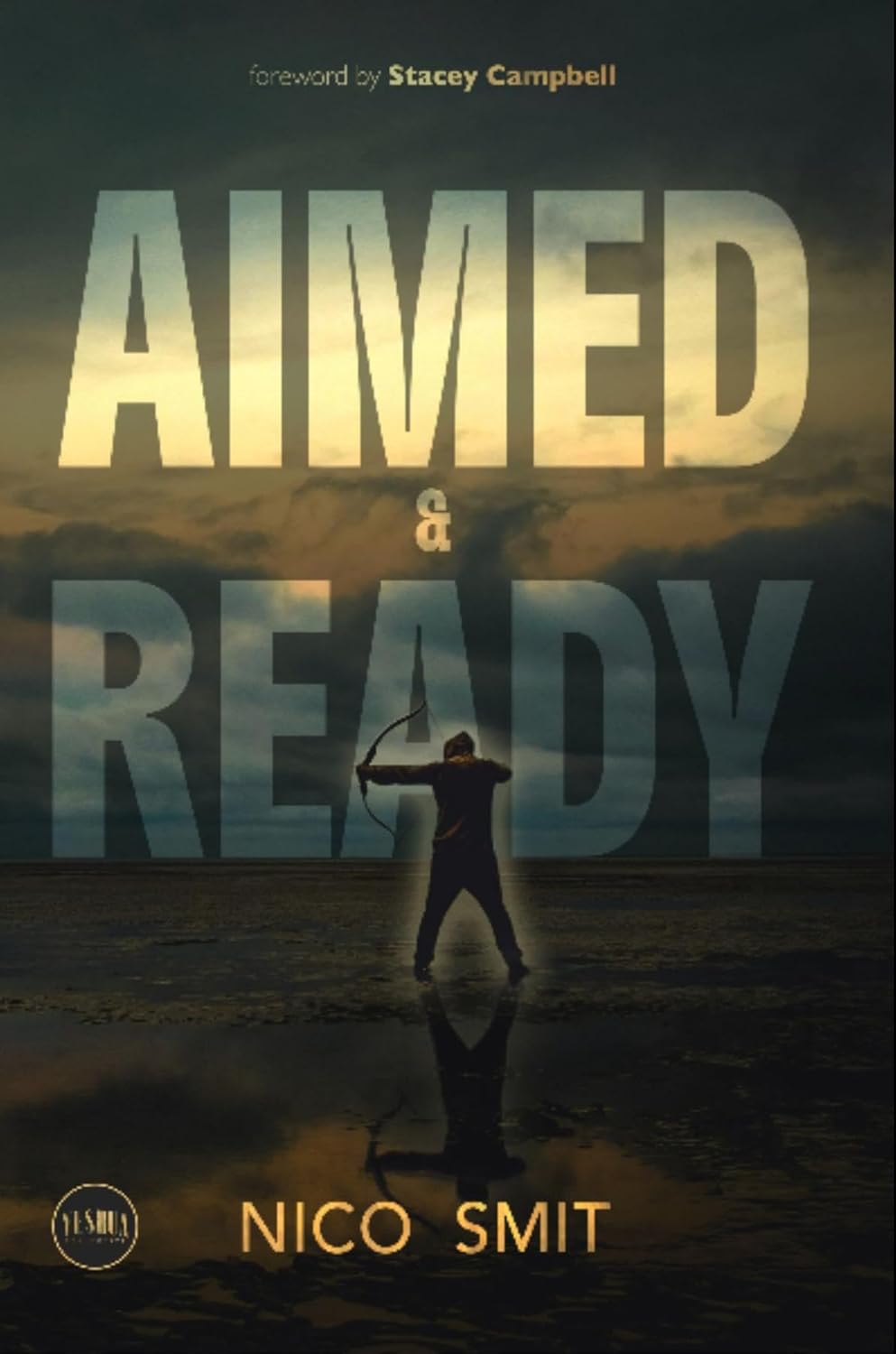
I found Aimed & Ready to be a spiritually focused book about how seasons of delay, silence, loss, and apparent backward movement can actually be forms of divine preparation. Author Nico Smit’s central image is the bow and arrow: the life that feels pulled back is not abandoned, but being aimed. From there, he builds a sustained meditation on surrender, waiting, spiritual alignment, and eventual release, moving through ideas like the “holy hush,” the reset that becomes a re-aim, David’s devastation at Ziklag, and the insistence that hope is not sentimental optimism but evidence that God is still at work. It’s a book written for readers who feel stalled and bruised, and it keeps returning to the same steady conviction that what looks like burial may be the first stage of resurrection.
What stayed with me most was the emotional steadiness of the book. Smit writes with the urgency of a preacher, but also with a pastoral tenderness that keeps the message from feeling harsh or abstract. I liked the way he lingers over images until they start to feel lived in. The bare fruit tree, the buried seed, the rowers facing one way while still moving forward, the ruined city of Ziklag, all of it feeds the same argument from slightly different angles, and that repetition gives the book a kind of devotional pulse. At its best, the writing has real lift. There are passages that feel genuinely bracing, especially when he reframes pressure as alignment and refuses the easy language of defeat. I also appreciated that he opens by reminding readers that this book is not Scripture and shouldn’t replace Scripture. That note of humility matters, and it gives the book a better spiritual proportion than it might otherwise have had.
Smit is so committed to the pullback/comeback framework that nearly everything gets absorbed into it. For readers already attuned to prophetic Christian language, that will probably feel clarifying and consoling. I admired the conviction. The prose can also swell into exhortation. Still, even when I felt the book pressing too insistently on one note, I couldn’t deny the sincerity behind it. Smit clearly believes these ideas down to the bone, and that kind of belief gives the book warmth, gravity, and a persuasive emotional center.
The book gives discouragement a shape people can actually work with. Smit turns spiritual exhaustion into something legible through the bow-and-arrow metaphor, the “holy hush,” and the Ziklag section, so a reader in a hard season can feel less lost inside their own experience. A lot of encouraging books tell you to hold on, but this one tries to explain what holding on feels like from the inside. I think that interpretive quality is one of its real strengths.
I found Aimed & Ready earnest, vivid, and often moving. It’s a book that wants to steady the heart, reframe suffering, and call the reader back into trust. I’d especially recommend it to Christians who are living through a season of disappointment, transition, spiritual fatigue, or long waiting, and to readers who respond to devotional writing that leans on metaphor, exhortation, and hope. For the right reader, this will feel less like a lecture than a hand at the shoulder, firm, warm, and convinced that the story isn’t over yet.
Pages: 168 | ASIN : B0GK9NMGRY
Depth, Honesty, and Context

Through the Lens of an Ancient Yisra’elite Bible Study walks readers through the history, language, culture, and theology of the ancient Yisra’elites. What inspired you to write this theological guide?
Writing a book was never my original intention. My goal at first was simply to research, gather data, and develop a study I could teach in local churches or through online platforms. Over time, people who attended those studies offered thoughtful feedback and repeatedly encouraged me to publish the material in book form.
What ultimately inspired me was a growing concern that much of modern teaching approaches Scripture through a Western lens that ignores the linguistic, cultural, and historical world of ancient Yisra’el. I saw pastors avoiding difficult topics and doctrines being taught without a solid scriptural foundation, often because that ancient context was missing. The more I studied, the more I realized how much meaning is lost without it.
After prayer and reflection, it became clear that transforming the study into a book was the right choice. My intention is not to argue for novelty, but to help readers engage Scripture as its earliest communities would have understood it—with depth, honesty, and context.
Did you learn anything that surprised you during your research for this book?”
Absolutely. The research process was full of surprises. One of the most eye-opening discoveries for me was realizing how differently ancient Yisra’elites understood concepts we often take for granted—things like covenant, identity, honor and shame, communal responsibility, ritual purity, and even time itself. These ideas do not translate neatly into our modern Western categories, and I was often surprised by how much meaning is lost when we try to fit them into our own frameworks.
I also encountered linguistic surprises. Hebrew names, idioms, and expressions that modern translations flatten—sometimes for readability—carry layers of meaning that change the tone of a passage entirely. For example, understanding terms tied to covenant language, marriage imagery, or the “appointed times” of Yahweh revealed connections I had never been shown in church settings. Even the way ancient Yisra’el measured days and months reshaped familiar timelines, such as the biblical festivals or the crucifixion and resurrection accounts.
Another area that surprised me was how much clarity emerges when we consult non-canonical literature—not as Scripture, but as cultural context. Works like Ḥanok (Enoch), Jubilees, or Jasher reflect the worldview, vocabulary, and assumptions of Second Temple Judaism. These writings don’t replace the Bible, but they help us understand how ancient communities thought about angels, the afterlife, judgment, marriage customs, and cosmic order. When you combine that with linguistic study and the biblical text itself, the result is a fuller and more coherent picture of the ancient world.
All of this taught me how much beauty and continuity live beneath the surface when Scripture is allowed to speak from within its original cultural world. Passages that once seemed disconnected suddenly fit together with remarkable clarity. That realization humbled me and reminded me that the Bible was written within a real historical context, to real people who shared a worldview very different from ours. Honoring that world not only deepens our understanding but also brings us closer to the heart of the text itself.
What is one thing you hope readers take away from your book?
If there is one thing I hope readers take away from this book, it is a deeper appreciation for how transformative Scripture becomes when we honor its original context. The Bible did not emerge in a vacuum, and when we approach it through the language, culture, and worldview of ancient Yisra’el, we begin to see truths that modern traditions often overlook or soften. That awareness can bring both clarity and curiosity—clarity in understanding what the text is actually saying, and curiosity to keep asking hard questions without fear.
At the same time, I hope it renews a sense of awe for the God who reveals Himself within that context. My prayer is that readers walk away not only with stronger historical and linguistic insight, but with a deeper faith—one rooted in truth, not assumption. If this book encourages believers to read with fresh eyes, greater humility, and a sincere hunger for the heart of Scripture, then it has accomplished its purpose.
Author Links: Goodreads | X (Twitter) | Facebook | Website | Amazon
More than a devotional guide and more grounded than a theological essay, this book functions as a lens-cleaner for students of Scripture who want to see the biblical text on its own terms. With clarity and accessibility, it explores how concepts such as honor and shame, communal identity, covenantal relationships, Hebraic idioms, and ancient Near Eastern worldview shaped the original meaning and intent of biblical passages.
Written from within a Hebraic worldview, and with a commitment to both historical integrity and discipleship, the study reframes familiar themes through the eyes of the ancient Yisra’elite community. The result is not speculation or novelty, but restoration—helping modern readers hear the biblical message as its first audience would have understood it.
In this study you will explore:
How the ancient Yisra’elite worldview differs from modern Western assumptions
Why concepts like honor, shame, covenant, kinship, and communal ethics are essential for understanding Scripture
The impact of Hebraic language and idioms on meaning and interpretation
How the Bible communicates through patterns, cycles, and narrative structures rather than abstract doctrines
The difference between covenantal relationships and modern contract-thinking
What happens when Scripture is read within its own cultural soil rather than through later philosophical frameworks
Ideal for readers who:
Want to understand the Bible in its historical and cultural context
Sense a disconnect between ancient Scripture and modern Western interpretation
Teach or lead Bible studies, small groups, or discipleship courses
Are exploring the Hebraic roots of the faith
Desire a deeper, more grounded approach beyond commentary-driven theology
Are curious how honor-shame culture shapes biblical narratives and ethics
Re-Imagining Contentment: Living Life from God’s Perspective

ReShone L. Moore’s Re-Imagining Contentment is a heartfelt roadmap to finding peace amid life’s hardships. Blending scriptural wisdom with her lived experience of chronic illness, Moore guides readers through a seven-step journey toward contentment, defined not by worldly measures but by spiritual alignment with God’s will. From the metaphor of the Potter in Jeremiah to her own battle with multiple sclerosis, Moore illustrates how surrender, trust, and reflection are vital tools for emotional and spiritual healing.
I found Moore’s writing both intimate and grounding. She doesn’t sugarcoat the reality of pain—physical, emotional, or spiritual. Her vulnerability in the “Prologue,” where she recounts her diagnosis and the day she experienced “foot drop,” is raw and powerful. But rather than wallow, she transforms this pain into purpose. In Chapter 1, “The Potter,” she reflects on how disobedience and striving without God led her to discontent, and how returning to the Creator reframed her view. The metaphor is simple yet effective: God, as the potter, molds us, mess and all. It’s a reminder that even in brokenness, we are in divine hands.
What struck me most was Moore’s pushback against the notion that contentment equals complacency. Her step-by-step breakdown, especially in chapters like “Step #1 – Reflect” and “Step #2 – Reject,” teaches that being content doesn’t mean giving up dreams—it means releasing the burden of control. She writes about surrender not as defeat, but as “a position of power and peace.” Her honesty when describing letting go of her beloved high heels—a small but symbolic act—was strangely emotional for me. I saw in that moment the thousands of compromises we all make with grief, and how dignity can survive change.
Chapter 7, Concluding with a Plan (Repeat When Needed), brings the journey full circle by reinforcing the idea that contentment isn’t a destination—it’s a continual process. Dr. Moore reminds readers that the seven steps outlined in the book are not one-time fixes but tools to be revisited as life unfolds. She encourages becoming a “lifelong learner,” emphasizing the importance of spiritual growth, reflection, and renewal. This chapter feels like a gentle nudge to stay the course, no matter how many times we stumble.
I’d recommend this book to anyone struggling with transition, loss, or burnout, particularly those whose faith is part of their healing journey. It’s not a self-help book in the traditional sense; it’s more like a long, healing letter from someone who’s been through it and found the light anyway. Moore writes with soul, spirit, and strength. Her journey through MS becomes a ministry of encouragement for the rest of us. This book helped me breathe deeper, think wider, and pray more honestly.
Pages: 132 | ASIN : B0DW4H8XL8
Faith Builders : For Christians and Skeptics

George R. Jensen Jr.’s Faith Builders: For Christians and Skeptics sets out to do exactly what its title promises, construct a sturdy foundation for belief in God and Jesus Christ. The book is packed with arguments, explanations, and biblical references aimed at both strengthening the faith of believers and persuading those who doubt. Jensen presents 50 reasons for God’s existence, 50 reasons why Jesus is the Son of God, and in-depth biblical explorations of love, salvation, miracles, and more. It’s an ambitious work that attempts to make faith logical, compelling, and accessible.
One thing I admire about this book is its sheer thoroughness. Jensen leaves no stone unturned in making his case, covering everything from the fine-tuning of the universe to the moral implications of human consciousness. One of the more compelling sections, in my view, is his discussion of DNA as a blueprint for life, arguing that its intricate structure and information-coding properties point toward intelligent design. Whether or not you agree with him, it’s hard to deny that he presents his points with conviction and a sense of wonder at the complexity of the world.
That said, at times the book feels more like a collection of apologetics arguments than a conversational exploration of faith. The writing is clear but can be repetitive, and the structure, while logical, sometimes overwhelms with its density. Some of the arguments, like the reliability of biblical manuscripts, are well-argued, while others, such as the assertion that the persistence of hope proves God’s existence, feel more subjective. I found myself wanting more personal anecdotes or reflections from Jensen himself rather than just a structured presentation of evidence.
Another strong point is the inclusion of biblical passages that support Jensen’s claims. The chapters dedicated to Jesus’ miracles, salvation, and the afterlife give a broad yet structured overview of key Christian teachings. However, skeptics who approach this book expecting an evenhanded debate may find it lacking in counterarguments. Jensen makes a passionate case for Christianity, but he rarely engages deeply with opposing views beyond dismissing them as insufficient explanations.
Faith Builders is a solid read for those who are looking to reinforce their faith with logical arguments or for Christians who want a reference guide when discussing their beliefs. It’s best suited for readers who already have an openness to faith or who are at least curious about Christianity. If you’re searching for an engaging, in-depth defense of belief in God and Jesus Christ, Jensen’s book delivers, though with a style that leans more academic than personal. Whether you walk away convinced or not, you’ll certainly walk away thinking.
Pages: 564 | ASIN : B0DVCDZMZJ
A Stable and Sure Foundation

A Hypnotizing World: Discovering an Unshakable Hope in a Confusing Culture is a thought-provoking book that explores the questions plaguing humanity and provides answers and hope through a Christian perspective. Why was this an important book for you to write?
This book was important for me to write because I was called to do it. It was an act of obedience to God. I believe God called me to write it because of the times we are living in. People are searching for a stable and sure foundation, something that doesn’t change with the political climate of our time. People are searching for truth. This book points them to the source of truth–God.
How much research did you undertake for this book, and how much time did it take to put it all together?
This was a fifteen year long project. I spent much time studying the Bible and history, theology, apologetics, psychology, philosophy, and many other subjects. When I make statements and provide explanations about different subjects, I want to have a good understanding of the topic before sharing it with others. And I want the facts. Research is not a quick Google search. It takes time to filter through the opinions and get to the facts of the matter. So, research was a huge part of writing this book.
What were some goals you set for yourself as a writer in this book?
I set many goals over the course of fifteen years, but I was humbled by the fact that everything happens in God’s timing. The final and published version of this book is the eighth time I completely rewrote my book. This was from the Lord’s leading. God wasn’t simply wanting me to quickly write a book for the people who would read it; He was working on transforming my heart and mind in the process. With that said, I made goals to finish my manuscript in a year, but this happened several times.
What is one thing that you hope readers take away from A Hypnotizing World?
The main thing I want readers to take away is the importance of asking the hard and big life questions for the purpose of searching for the truth, even if the truth isn’t what you want to hear. Don’t let fear, feelings, or the culture’s social status get in the way of your pursuit of the truth. Don’t settle for opinion or simply follow the majority. Get to the facts. Demand evidence. Be objective and unbiased.
Author Links: GoodReads | Facebook | Instagram | Website | Amazon
Why is the world so messed up? War, poverty, crime, sickness, and death run rampant. Is there a root problem to all this? What if there is more to these issues than meets the eye? After all this time, it seems humanity would’ve worked out the kinks. There must be some reason the world is like this. Is there hope for this depressing world? If society continues down the same path, what does the future hold? Does God exist? Is death our final destination?
In A Hypnotizing World, Weston Knudtson will take you on a step-by-step journey to discover the answers to these complex questions. You will learn:
– How we have all accepted lies as the norm
– Where the world’s problems really started
– The three fears common to humanity and how to overcome them
– Clear guidelines for navigating your way
– Where our true hope lies amidst a world in turmoil
In this thought-provoking book, Weston lays out a logical plan to seek true answers to the questions that have haunted humanity for thousands of years. You will find out why knowing the truth matters.


