Blog Archives
Greed and Treachery
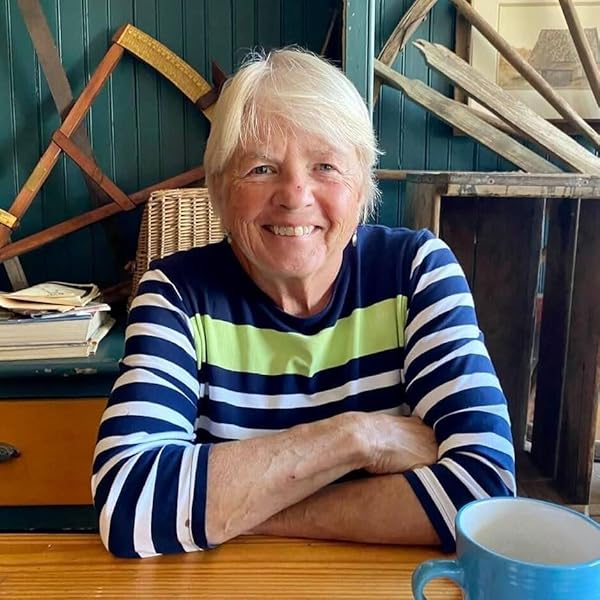
The Image Maker follows three men chasing opportunity, legacy, and identity in the Pennsylvania oil fields during the Civil War era, whose lives intersect during this pivotal time in history. What was the inspiration for the setup of your story?
The inspiration for the setup for the story told in The Image Maker was a conversation with a friend a couple of summers ago. Her family has a rich archive of information about their great-grandfather, who was an integral part of the processing of crude oil shortly after it was first pumped from the ground by Drake in 1859. Before this, oil was a commodity that the Indians used for salves, war paint, and to caulk their canoes. The early settlers found it a nuisance, contaminating their well water and always floating on the shallow oil creek waters.
I met, through the first family, another whose great-grandfather was a roustabout, doing all jobs required to get oil out of the ground. He became an oil scout, a spy for an oil company who hid behind bushes to find out whether the competitor’s well was a gusher or if it was a bust, often in peril of his life. He became the editor of the international oil newspaper, the Oil City Derrick, a resource for all oil people on current production, a breakdown of what was happening and where, and new tools invented on the spot to make oil production easier. Papers, photographs, and family tales from these two sources gave me the impetus to tell their stories. I added a photographer who became as famous, and Brady, who photographed the Civil War atrocities at about this same period. John Mather, glass negative by glass negative, taken in the fields, and often in danger from the gushing oil, documented the complete history of the infancy of the petroleum industry.
What intrigues you about this time period enough to write such an interesting and engaging period piece?
This time is within that of my grandparents and great grandparents, who were all alive when I was growing up, across the PA border from where this happened. Around 1880, oil was being found in the southern half of our county. So much of the background information needed to write about another period didn’t come from books or the internet, but from my 101-year-old father, a historian, who read the chapters, one by one, and helped my accuracy and added the smells and tastes of that time. His sharp mind and his love for history molded my writing career. My other books include the Book of Fretz, a 1750 historical novel on Kindle about one of my relatives coming at great risk to his life to America. I’ve also written a history book called The Bemus Point-Stow Ferry: A History about the early history of the Chautauqua Lake region. This Ferry started as a raft in 1811, crossing the narrows of the lake, and over the years became a barge carrying cars and people across the lake. It was fun showing how the whole history of our region was centered by this small ferry, now in her 114th year of continuous service. I gave the proceeds of the book to the Ferry to help with the maintenance of this aging piece of history.
What were some themes that were important for you to explore in this book?
The themes of this book included the prevailing greed and treachery of the early days of oil coming out of the ground in a very rural farming area, an area where the only export was wood from their hilly farms. The sudden wealth was mind-altering, making some folks very rich while others lost everything. The towns of only several hundred people were suddenly cities full of hotels, barrooms, brothels, and churches. Factories for processing the oil were along the shallow oil creek, while the barrels of oil, carried on barges, could only get to the deep flowing Allegany River by flooding the creek from the oil logging ponds along the way. Railroads were built, and when the independent drillers were at their best, along came Standard Oil and the underhanded buying up of all transportation, processing, and drilling businesses. You joined them, or you were doomed. The story is told from the three main characters and their families and friends. It gives the story an ability to relate to their feelings of hope, of despair, and of the importance of family. All three characters have flaws, but don’t we all?
What is the next book that you’re working on, and when can your fans expect it out?
I am currently writing a story, quite unlike The Image Maker. A friend read it and came to me saying her Great Grandmother was “something else, quite a character.” I was intrigued right away. She provided hours of family stories that I recorded, papers, short pieces written by Lila, and thousands of slides to plow through. Lila was born in 1906 in North Dakota. She got off the farm to live with her older sister in Chicago in 1930, working at Cook County Hospital in the typing pool. She was assistant to the CEO within 2 years. From there, after being jilted by her pilot boyfriend as WWII started, she joined the WACS. She went directly to Italy, where she was an administrative assistant to Patton as he took Italy and marched on to Germany. After the war, she took a job as an administrative assistant to the Army Corps of Engineers in Alaska, where she worked summers, spending her winters in San Diego. There she started going on trips, wherever the vessel went, on trawlers and freighter ships. She eventually circumnavigated the globe several times in her lifetime. She was never married but was seldom alone. What a setup! This should be out late 2027.
Author Links: GoodReads | Facebook | LinkedIn | Amazon
A Cowboy’s Quest
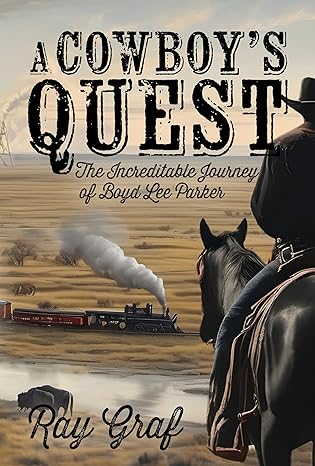

In A Cowboy’s Quest, by Ray Graf, the life of Boyd Lee Parker unfolds in a sweeping story that charts his evolution from a vulnerable 10-year-old orphan into a man of exceptional character. Graf takes readers on an emotional journey, weaving together the highs and lows of Boyd’s life as he navigates military service, forms enduring friendships, and earns the admiration of a Native American chief and community. Alongside these achievements, Boyd pursues his entrepreneurial aspirations while confronting heartbreak, lost love, and moments of deep loss. Through his struggles and triumphs, Boyd emerges as a figure of integrity, leaving a lasting impact on those around him.
The novel’s expansive timeline is one of its most compelling features. Spanning Boyd’s adolescence through his later years, the story unfolds with precision and care, avoiding the pitfalls of feeling rushed or drawn out. Graf’s pacing is exceptional, allowing readers to grow alongside Boyd, experiencing his triumphs and challenges in vivid detail. The immersive nature of the narrative is bolstered by the author’s meticulous attention to historical accuracy. Every detail, from the era-appropriate settings to the authenticity of the characters’ attire and lifestyles, reflects extensive research and thoughtful craftsmanship. The result is a rich and believable world that fully draws the reader in.
While the main story effectively centers on Boyd’s journey, I would have loved to have seen some of the side stories further developed. These subplots show great promise, but their resolutions come a bit too quickly for me and left me wanting to explore them more. It’s clear that the author prioritized Boyd’s central arc to maintain the story’s focus, yet a deeper dive into these secondary threads might have added additional layers to an already rich and engaging narrative.
A Cowboy’s Quest remains a fascinating and highly enjoyable read. Graf has crafted a story that resonates with authenticity and emotional depth, making it a must-read for adult audiences who appreciate cowboy tales and stories set in bygone eras. This historical fiction novel is more than a recounting of one man’s life, it’s a testament to resilience, growth, and the enduring power of the human spirit.
Pages: 385 | ASIN : B0D7WPZCNS

Fan of Historical Novels

Hard Road to Freedom follows a Union officer through his imprisonment into the political and social aftermath of the Civil War. What inspired you to write this book?
Having taken a course on American history while at university, I became interested especially in the events leading to, during, and after the US Civil War. This interest was revived 50 years later when my dying mother asked me to write a bio. I refused, saying if I did so. I’d be arrested. We laughed but having done so I remembered my student interest in the Civil War and thus inspired, started to write, not knowing that I had so little time to present something worthwhile to my mother (who was also a fan of historical novels) before she passed on.
What were some of your inspirations as a writer?
First of all, I don’t consider myself to be a competent writer as such. I am more of a poet as my 4 books of poetry will attest to. With that said, other than my mother, my inspirations were fine writers such as Margaret Mitchell, John Jakes, Ernest Hemingway, Arthur Hailey, Alex Haley, James Michener, and my father Anthony Carter who wrote 4 illustrated books on native legends of British Columbia.
How much research did you undertake for this book, and how much time did it take to put it all together?
For 4 months, writing from 5 am to 10 pm every day (thousands of hours doing research) I finished books 1-3 just in time for my dying mother to read them. Book 4 was written a month later. The next 17 years was spent editing and re-writing (I suffer from mild dyslexia, two-finger typing, and now old age ..I’m 79), and then a few years ago I added illustrations to each book.
Can you give us a glimpse inside book 4 of the Matari series? Where will it take readers?
Full of action-packed suspense, Book 4, The Bastard Ground, was written mainly because my readers at the end of Book 3 were left wondering if the villain Lucas Garrow having fallen into the rapids of the Tennessee River had somehow escaped due justice. Thus provoked I wrote Book 4 as a post-Civil War ‘western’ to conclude the series with a satisfactory ending. Book 4 deals with the reconstruction phase that occurred when the Confederates were defeated on the battlefield but not in their hearts or minds. As a result, the Jim Crow laws persecuted blacks south of the Mason-Dixon line and to some extent north of it. Blacks also suffered the violence of the KKK and others so inclined. Through lynching, intimidation, the Lost Causers, and other racist methods, the defeated attempted to regain their honor as exemplified in Lucas Garrow. To counter this persecution, utopian colonies sprang up, Harambee being just one of them. Book 4 will satisfy those readers willing to partake in a wild and unpredictable adventure that personifies the times in which they occurred.
Author Links: Website
The Light from Darkness
![The Light from Darkness: A Story of the Civil War (The Life and Redemption of Teddy Miller) by [John Bebout]](https://m.media-amazon.com/images/I/41ZURrOIzkL.jpg)
The Light From Darkness follows Teddy Miller who, after years of sending unanswered letters to his father, decides to break his father out of Fort Jefferson, a behemoth of a prison. Author John W. Bebout has written a fast-paced action-adventure novel with lots of sharp twists as Teddy gets himself into more trouble than he anticipated.
The Light From Darkness is a short novel but suspenseful historical adventure novel that captures the heart of the reader and guides them Teddy’s emotional turmoil. Readers are provided with a quick section at the beginning of the story to know what Teddy sets out to do and from there the adventure begins, many things open up to Teddy and challenge him which makes him feel guilty, unsure, and lost. Most of these moments will pull at readers heart, if not fully allowing them to empathize with the character.
This is a fast paced story of the Civil War that sets a quick pace early on that rarely stops for details. The charm and humor embedded within the story provides a nice contrast to the emotionally-charged adventure that Teddy sets out on. Numerous times I found myself chuckling or grinning. This made the atmosphere a bit more light-hearted and fun in contrast to some heavy moments. This all paired well with the prose which was simple and easy-to-read, which works especially well with short novels.
The author effectively made the setting both grounded and vibrant even with the tense undertones of opposing cultures and peoples existing. This was achieved through the side characters being fun and lively while also making clear how uncaring and, at times, destructive nature can be, especially when at sea for long periods of time. Even when Teddy was not at sea, he seemed to stay close enough which allowed for new characters to be introduced while still holding love for the ocean.
The Light From Darkness is a riveting historical fiction novel that follows an intriguing character on an unforgettable journey that readers will certainly enjoy.
Pages: 193 | ASIN: B08SHTPCSP

Keeper of Slaves
![Keeper of Slaves: Book Two of Antebellum Struggles by [Erman, Dickie]](https://images-na.ssl-images-amazon.com/images/I/51dSTj4W1rL.jpg)
Collette should be one of the happiest women around. As the wife of a wealthy plantation owner, she has everything she could possibly want and lives in the home of her dreams. Her husband, however, makes living her best life impossible. As he has taken up with Amana, one of their slaves, Collette’s life has taken quite a tragic and sad turn. When Amana finds herself in just the right place at the ideal moment to save Collette’s life, both women begin to realize there is much more to their relationship than either of them could have ever imagined.
Keeper of Slaves, Antebellum Struggles Book 2, by Dickie Erman, traces the drama surrounding Trent and Collette Winters and the battle to survive via the Underground Railroad. Erman skillfully crafts a cast of characters who are deeply involved in making the Underground Railroad successful. The author appeals successfully to readers’ emotions and describes incredibly intense scenes of fearful and anxious moments of planning as the book’s main characters attempt to do what feels like the impossible given the time period and the extreme circumstances of their lives.
Even though Erman includes a brief summary of events from Book 1 at the outset, I feel there are several key elements I was missing as I read. Quite a bit of time was spent trying to visualize situations and subplots. There is a history between this entire cast of characters that is begging to be read.
I am beyond intrigued by the “ghost ship.” I found it to be a fantastic addition to the plot and was able to visualize each and every aspect of the ship and its lack of life, the missing supplies, and the eerie and overwhelming silence. Though it sounds a bit out of place in a story of this genre, it actually works quite well.
I would be remiss if I didn’t mention the concern I have over the dialect. While the bulk of the dialogue feels quite authentic, there are a few things I found distracting as I read. Accents and turns of phrase felt accurate throughout the book for the most part, but a few terms like “machismo” and “space aliens” struck me as odd and felt out of place for the book’s antebellum setting. Periodically, the reader is given the impression that the third person narrator is, indeed, part of the story. While this works in some cases, it doesn’t feel effective here. I was especially confused when, in the narration, the alligator that attacks Collette is referred to as a “gata.” The sudden switching on and off of the more personal narration is a bit difficult to reconcile with the rest of the book.
I am giving Keeper of Slaves, Antebellum Struggles Book 2, by Dickie Erman, 4 out of 5 stars. Fans of historical fiction who desire a bit of romance in their plots will enjoy Erman’s work. I highly recommend Keeper of the Slaves, Antebellum Struggles Book 2 to those who are particularly attracted to Civil War stories with generous amounts of character interaction and authentic dialogue.
Pages: 211 | ASIN: B07NN5ZF8X
Cottonblood – Trailer
This saga begins amid the wealth of Southern plantation owners and Northern investors. By identifying the equities gained, greater concerns began to rise among the nation’s abolitionists. As a consequence, regional politicians began moving the citizenry into opposing camps.
COTTONBLOOD tracks the lives of two adolescent murderers: The first, a mixed-breed Canadian entering American waters as a deckhand aboard a French freighter. The second, a youngster captured from Sierra Leone to a foreign land where a strange language is spoken. Although the two men never meet, their journeys lattice one another as each search for some form of security. When false hope leads one into an unsolicited life of labor, the other haphazardly finds a future of opulence.
The plot traces their lives, and relations, through generations of survival leading the inheritors into the first year of America’s horrendous Civil War.
Unusual Genealogy

Anita Bunkley Author Interview
The Twisted Crown is a fascinating story about a free black woman from the North searching for her mother in the post-Civil War South. What served as your inspiration while writing this novel?
My father’s family is from Moncks Corner, SC, and we still own property there. I was born in Ohio and grew up in the North. I have always been fascinated by stories about our land in Moncks Corner, called Bryan Tract, and how it was acquired, as well as our family’s unusual genealogy. My great-grandfather was a white man from Iowa, who went to South Carolina during Reconstruction, and eventually became a wealthy state senator. I have always felt that period in American history was not well documented from the female, Afro-centric point of view. So, I decided to focus on that time period. Once I began to acquire primary source documents that provided details of my great-grandfather’s life, I wanted to pen the novel from the point of view of a woman from the North who travels into the South during Reconstruction.
This is an entertaining novel that is high in social commentary. What were some themes you wanted focus on in this book?
Romance: My family’s mixed race background demonstrates the crossing of racial lines at that time, as is really evident throughout history. I wanted to present this aspect of society through characters who could see past the racial, cultural, and societal barriers that existed during this time period. Political: I wanted to better define what Reconstruction actually was. It was not rebuilding bridges and constructing new buildings, but an effort to establish a solid political structure and an economic base to replace the defeated Confederate government. Societal: My goal was to showcase the work of the Freedman’s Bureau and underscore its importance in helping freed slaves establish new lives in freedom after the Civil War.
Eva is an intriguing character that continued to develop as the story progressed. How did you capture the thoughts and emotions of a young black woman during this tumultuous time in history?
As a novelist of historical fiction, I have always focused on examining a period in history through the eyes of an African-American woman. My own family experiences, coupled with years of researching the role of black women throughout pivotal periods in history helped me shape Eva.
What is the next story that you are working on and when will it be available?
Writing historical fiction takes time, detailed research, and inspiration. I always spend time traveling to the geographic locations that I plan to use in my books I’m mulling time periods, traveling, and pulling my next story together without any release date in mind.
Author Links: Website | Facebook | Linkedin
![The Twisted Crown by [Richmond Bunkley, Anita]](https://images-na.ssl-images-amazon.com/images/I/510vwG6og9L.jpg)
The Twisted Crown takes readers from the bustling streets of Boston at the height of the Abolitionist movement to the war-ravaged landscape of Reconstruction-era South Carolina.
In 1867, Eva Phillips, who was born a slave yet lived in freedom, travels across the chaotic landscape of South Carolina in search of the mother who gave her away. During her journey, she is befriended by a black political activist promoting the rights of the newly freed slaves, a wealthy northern Carpetbagger, and a gutsy lady gambler who teaches Eva how to survive in the tumultuous Post-war environment.
When the spirited young widow’s quest draws her into a dangerous web of theft, lies, and murder, she becomes the target of a long-awaited confrontation that forces her into a fight for her life.
The Twisted Crown
![The Twisted Crown by [Richmond Bunkley, Anita]](https://images-na.ssl-images-amazon.com/images/I/510vwG6og9L._SY346_.jpg)
The Twisted Crown, the newest historical fiction novel by Anita Bunkley is a fascinating look into the post-Civil War South. Focused on the story of a free black woman from the North, Eva Phillips takes advantage of the abolition of slavery in the South to embark on a treacherous journey to South Carolina to try to find the mother who gave her a chance at freedom as a child. Along her way, readers meet a captivating cast of characters ranging from cunning professional gamblers to complex carpetbaggers to innocents turned corrupt by hardship. Eva has to navigate a part of the country decimated by the bitterest of fighting as it struggles to regain its footing. And like Eva, readers will never know if the character with the checkered past they just met will be someone who can be trusted or or who will surprise them with an unexpected betrayal.
Along the way she meets up with Chicago lawyer and profiteer Trent Hartwell who, against the recommendations of his new Charleston acquaintances, offers to help Eva in her quest. Although he came to the South to benefit from the financial opportunities blossoming in the wake of so many people’s misfortunes, he can’t quite understand the unwritten rules governing the South about the proper roles of white people and black people and why there should be any difference.
This book also sheds light on the important and dangerous work that took place during this time by black activists to promote equal participation in government for all races. This work made many who benefited from the pre-war social structure very angry and prone to violence, so the lobbying had to be done secretively.
While the story is solid and flows well, I thought that the characters and dialogue lacked some depth. This book kept me very engaged, however. The quick pace, many edge-of-your-seat situations, and several sultry moments kept me reading along without any lulls.
I also came away with a much clearer understanding of what life in the South was like after the Civil War for both whites and blacks. I didn’t know the depth of poverty freed slaves were faced with and this book provided a very interesting example of the creative and sometimes unfortunate ways that people used to survive and start a new life. Anita Bunkley is famous for writing stories that show what a famous period in history was like from the perspective of black women, and I really appreciated having the opportunity to experience this after so many other Reconstruction books (Gone With the Wind, That Bright Land, ect.) only focus on the white experience. This is important because, clearly, this was a period where the African-American experience is integral to understanding the situation appropriately.
I highly recommend joining Eva on her exciting voyage to the land of her birth and learning more about the United State’s most interesting periods of history in The Twisted Crown by Anita Bunkley.
Pages: 336 | ASIN: B07G7GPX2F



 LITERARY TITAN