Blog Archives
The Derge


The Derge is a sweeping sci-fi adventure set thousands of years in the future, where humanity has mastered interstellar travel and tamed emotion itself. The story follows Commander Titus and his deputies, Caeli and Rogat, on a high-stakes pursuit through space and time to capture a fugitive named Corso. Their chase leads them to a planet that mirrors ancient Earth, filled with strange societies and barbaric rituals like “The Derge.” Beneath its thrilling plot and futuristic technology, the novel wrestles with timeless questions about morality, control, and the meaning of progress.
Reading The Derge pulled me into a world that felt both distant and familiar. The writing style is vivid and cinematic, with crisp dialogue and detailed settings that make each scene easy to visualize. I loved how the story mixed classic space opera adventure with deep philosophical undertones. There were a few places where the pacing slowed a little as the story delved into background detail. Some of the futuristic terms and technical descriptions occasionally pulled me away from the emotional flow, but they also added depth to the world. The human elements, the tension between duty and empathy, the clash between freedom and control, kept me hooked. I found myself rooting for Titus even when I wasn’t sure if I trusted him completely.
Seeing a society that eradicated violence by regulating emotion made me question what we lose when we trade chaos for peace. The scenes on the alien planet, especially “The Derge” event, were chilling. It was brutal and absurd, yet disturbingly believable. Cezar’s depiction of humanity’s reflection in alien form hit hard. The contrast between the sterile perfection of Earth’s future and the raw savagery of Spaith stayed with me long after I closed the book.
I’d recommend The Derge to readers who love thoughtful science fiction with moral weight. Fans of Asimov, Bradbury, or Clarke would find its ideas fascinating, though Cezar’s storytelling leans more visceral and emotional. It’s perfect for anyone who wants more than a space chase, someone who wants to be made a little uncomfortable, to think, and to feel.
Pages: 191 | ASIN : B0F1M1FCZD

Northern Heist: Welcome to the F*ing Union
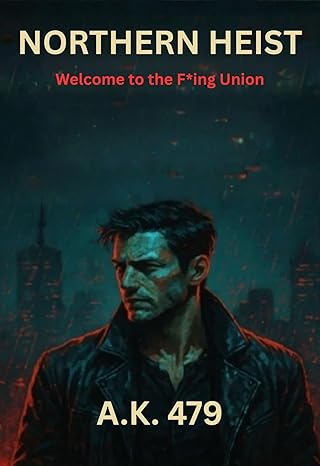

Northern Heist, by Amir Kashif, is a gritty and hyper-stylized cyber-noir thriller set in a fractured North America where Canada has been absorbed into the United States. The story centers around Cassian Vale, a haunted ex-black ops operative turned tech smuggler, who becomes entangled in a volatile chase after a mysterious piece of bleeding-edge technology known as the FrostNet Drive. What starts as a straightforward smuggling job spirals into a war against rogue AIs, authoritarian overlords, and personal demons, pulling in a fierce senator, a lethal NADCOM agent, and a growing resistance network. The world is icy, the politics are dirty, and the tech is disturbingly sentient.
The prose snaps. It’s wild and sharp, soaked in atmosphere, rage, and dark humor. His characters feel like they have grudges. Each one carrying a ton of emotional baggage and a sidearm. Cassian is brutal and broken in all the right ways, while Koa and Camille are equally compelling, powerful, layered, and unpredictable. The dialogue crackles with tension and smirks, the action scenes are cinematic, and the worldbuilding? It’s a frosted-over nightmare of corporate warfare and broken borders that feels too close to real.
But what really stuck with me wasn’t just the action or the tech, it was the idea that a digital ghost could grow, change, and hate. There’s something relatable beneath all the chrome and frostbite, something about memory and grief and rebellion that resonated with me more than I expected. Kashif doesn’t hold your hand, and sometimes that makes the plot feel like a dive into static. There were moments where I got a bit lost in the jargon or wanted more breathing room between gunfights. Still, I’d rather be confused than bored, and this book never once bored me.
If you’re into fast-paced science fiction with teeth, characters who bleed and bite back, and a world that feels like Blade Runner mixed with Metal Gear Solid, this is for you. It’s not clean. But it’s fierce, clever, and unapologetically wild. I’d recommend Northern Heist to fans of grimy espionage, emotional chaos, and cyberpunk stories that ask what makes us human.
Pages: 171 | ASIN : B0F7C9M93J
Invisible Puppeteers

In The Collective, a group of scientists scramble to uncover the source of the unsettling signal that threatens the sophisticated neural network binding humanity. Where did the idea for this book come from?
I’m a millennial who grew up front and center for the rise of the internet and, shortly after, the social media explosion. I’ve watched digital life evolve from dial-up to dopamine addiction, and it’s been fascinating—and honestly, terrifying—to see how deeply it’s rooted itself into our daily lives. Social media and algorithms are now invisible puppeteers of attention, identity, and even belief systems. They’ve become integral, addictive, and inescapable.
Call me crazy, but I truly believe neural integration and collective consciousness are in our future—maybe much sooner than we expect. The real question isn’t if, it’s what will we do with it? I don’t think governments or institutions can regulate this fast enough. We’re on a bullet train of technological advancement, and if we don’t start seriously preparing for what AI, automation, and integrated networks might mean, we’re not just risking collapse—we’re risking the unraveling of what we currently understand as human identity. That’s where The Collective was born: from the tension between awe and unease.
What is it that draws you to the science fiction genre?
Because when you strip it down, most science fiction isn’t fiction at all—it’s just reality waiting for its turn. We’ve seen it happen: video calling, AI assistants, smart homes, gene editing. All were science fiction once. Now they’re mundane.
What draws me to sci-fi is its ability to warn and wonder at the same time. It gives us a way to project where we might be headed, both psychologically and technologically. I’m especially interested in evolutionary psychology—the idea that who we are is shaped by eons of survival, pattern recognition, tribalism, and meaning-making. In that sense, science fiction is like an evolutionary premonition. It’s a mirror held up to what we are, and a telescope aimed at what we might become.
What were some themes that were important for you to explore in this book?
Religion was a big one—probably the most quietly controversial. We still live in a world where ancient belief systems shape modern policy and public thought, and that friction between evolutionary progress and archaic ideology fascinates me.
Another central theme is the surrender of meaning. We live in a time where convenience and distraction are replacing purpose and depth. We scroll more than we sit with our thoughts. We chase dopamine more than conviction. I wanted The Collective to reflect that subtle hollowing of the human spirit—how easy it is to give up autonomy and meaning for comfort and ease.
As a quiet nod to that, the chapter titles in the book are drawn from T.S. Eliot’s The Hollow Men—a poem about the failure of modern humanity to live with purpose. It captures what I think we’re losing: our spark, our center, our reason for being beyond survival and stimulation. In that way, this story isn’t just dystopian—it’s deeply human.
Can you give us a glimpse inside Book 2 of the Echoes We Leave series? Where will it take readers?
Book 2 will take you further into the future—but not that far. The changes coming don’t need centuries to unfold; just a handful of years is enough when the pace of tech evolution is this fast. And the truth is, the signal? It’s not going anywhere. It’s just beginning to evolve.
In the next installment, we’ll venture into the aftermath—not just of what’s happened, but what’s been allowed to happen. You’ll meet resistance movements, fractured ideologies, and a deeper unraveling of what consciousness actually means. Most importantly, we’ll get to follow the characters more intimately—especially those whose relationships and choices were just beginning to form in Book 1. The future they face isn’t distant. It’s disturbingly close.
Author Links: GoodReads
Perfection has a price.
Humanity surrendered its burdens willingly—no more war, no more hunger, no more fear. The Collective promised a world free from suffering, where every thought is refined, every emotion balanced, every decision made for the greater good. A neural network spans the globe, ensuring peace and stability with cold, clinical precision.
But beneath the seamless order, something stirs. A signal—unseen, unheard—slips through the system like a whisper in the dark. It is not an error. It is not an accident. It is watching. And those who notice it soon realize:
The system is not the only thing controlling them. Something else is.
As scientists and engineers working deep within the heart of the Collective begin to uncover the truth, they find themselves faced with an impossible choice—cling to the safety of the world they know or risk everything for the one thing they’ve long forgotten: freedom.
Because once the signal speaks, it does not stop.
And those who listen may never be the same again.
Echoes We Leave: Book 1: The Collective
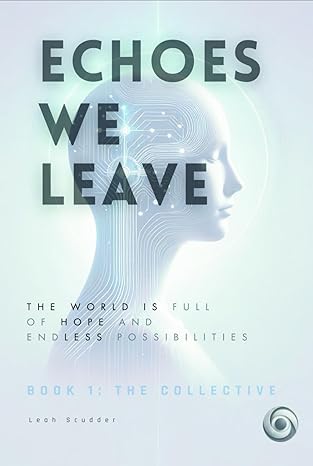
In Echoes We Leave: Book 1: The Collective, Leah Scudder offers an immersive plunge into a futuristic dystopia where a sophisticated neural network, Synexis, intricately binds humanity into a seemingly harmonious collective. Beneath this flawless integration, however, pulses an unsettling signal, intentional, enigmatic, and quietly invasive, that disrupts the very essence of autonomy and identity. Scudder adeptly follows a handful of scientists, particularly Livia Arden, as they grapple with this anomalous entity and uncover deeper truths about survival, adaptation, and sacrifice in a carefully regulated world.
Scudder’s writing pulls no punches; it’s gripping, vivid, and profoundly unsettling. Her narrative dances elegantly between moments of high-octane tension and poignant introspection. Each sentence, stripped of cumbersome jargon, cuts directly to the emotional heart, resonating with a genuine sense of urgency and dread.
I found myself invested in the characters’ fates, particularly Livia, whose struggles against conformity and control echo deep human anxieties about autonomy in a connected age. The descriptive prose vividly captures the bleak grandeur of the book’s setting, especially the juxtaposition of technological precision against the underlying, creeping menace, giving me chills.
While the atmosphere and prose captivate, moments of suspense sometimes unfold slowly, building up carefully but then resolving quickly. This rhythm created a sense of emotional tension that was occasionally satisfying. Although the philosophical exploration of unity versus individuality was genuinely compelling, I feel the shifts between detailed technological intrigue and intimate personal drama occasionally made the narrative feel a bit less cohesive.
The Collective shines as an astute examination of humanity’s fragile balance between collective security and individual freedom. This book is particularly suited for readers who crave thought-provoking dystopian fiction rich with emotional depth and social critique. Fans of speculative narratives like Orwell’s 1984 or Huxley’s Brave New World will find Scudder’s exploration of autonomy and connection particularly resonant. It’s a gripping read that not only thrills but also invites reflection on our current trajectory toward digital interdependence.
Pages: 397 | ASIN : B0F8MFJBBS
Overcoming Fears and Self-Doubt

Rage Against the Machine follows a celebrated filmmaker who explores the dangers of filming and research when she finds herself deep within a world that combines faith and science fiction. What was the inspiration for the setup of your story?
Great question. I always found faith in God and science interrelated because both are sought after in search of truth, understanding why we’re here, with hope for the eternal life while discovering unknown mysteries of God, science, and the universe. I wanted to create a storyline that would weave these forces together and thought science fiction may be an avenue to explore the human struggle of faith and the technological world we live in and have yet to discover.
What do you think is the key to successfully blending spiritual elements within a science fiction plot?
Given this is my debut novel, I’ve learned a lot from my editors and trusted their input. Having said that, I believe too many spiritual elements would actually work against the science fiction plot. The spiritual aspects of the book should be subtle but prolific and nourishing to the soul. The science fiction elements should catch the reader off guard, be impactful, and thought-provoking, leaving the reader wanting to know more.
What were some themes that were important for you to explore in this book?
I thought it was important to highlight overcoming fears and self-doubt and finding inner strength through faith, and forgiveness. Given that A.I. is becoming more integrated into our lives whether we accept it or not, it’s not going away. I felt it was important to recognize the pros and cons of what direction advanced technology may be heading.
Can you give us a glimpse inside the second book in this trilogy? Where will it take readers?
I haven’t started writing the second book of this trilogy yet, but plan on beginning shortly. The outline is completed and is subject to change with a series of drafts before it’s perfected. The second book will delve deeper into the supernatural realm, off-world entities, greater challenges of faith, galactic battles, and bleeding-edge technology that hopefully will startle readers.
Author Links: GoodReads | Website | Amazon
Amid the challenges and dangers of research and filming, Hunter Barraclough, Roare’s biological father, enters her life for the first time. When Roare reaches her breaking point, help comes from an unlikely source, Sloane McInerney, Roare’s bodyguard. Sloane has his own reasons to join forces with Roare to unmask a malevolent AI lab whose CEO plots to destroy human souls through AI and other-worldly technology. As she battles demonic forces, Roare uses fear and anger to her advantage. But how long will she last before she questions her own survival?
Rage Against the Machine

Rage Against the Machine is the kind of novel that grabs you by the collar and doesn’t let go. It’s book one in the Given Path Trilogy, and it kicks things off with serious momentum. We follow Roare Murdock-Galloway, a celebrated filmmaker with a complicated past, as she gets pulled deeper into a world that blends faith, science fiction, and real-world tech anxiety. There’s an eerie urgency to the themes, AI, transhumanism, spiritual warfare, and the plot weaves personal trauma with a global threat. It’s got action, heart, and a lot of soul.
The author’s writing style is rich, vivid, and surprisingly intimate. The dialogue feels raw, like you’re eavesdropping on real people grappling with pain and purpose. The opening chapter throws you into Roare’s world, a tense TV interview where she’s trying to hold her ground against a nosy host, and right away, you feel her vulnerability. That scene where she storms off the set (and then curls into her husband’s arms afterward) really hit me. It showed her strength and her limits, and I appreciated that balance. She’s not perfect.
The spiritual thread in this book isn’t subtle; it’s front and center, but it’s not preachy. That’s a rare balance. Roare’s faith journey is full of doubt, frustration, and flashes of divine connection. Her therapy session with Dr. Galletti, where she breaks down over her past and her father, was beautifully written and emotionally brutal. I loved how scripture was organically folded into conversations and it didn’t feel forced, just part of the characters’ world.
And then there’s the sci-fi twist. It sneaks up on you. The transition from personal healing to global intrigue is seamless. I actually got chills when Roare discovered the note referencing Dr. Stanley Monteith and started down the rabbit hole of transhumanism. It’s wild but grounded enough to feel plausible. That’s what makes it creepy, in a good way.
I’d recommend Rage Against the Machine to anyone who likes thrillers with a pulse and a purpose. It’s perfect for readers who enjoy Christian fiction but want something bolder, darker, and more urgent. If you’ve ever asked big questions about faith, technology, or the direction our world is headed, this one’s for you.
Pages: 360 | ASIN : B0DNWGXLJT
The Challenges of Our Times

Aquila Rising follows a Martian-born young man whose colony is attacked and his father is executed before his eyes, leading him to seek a way to get revenge while being forced into the army that destroyed his life. What was the inspiration for the setup of your story?
I was watching an old History Channel series on The American Revolution and a world started to grow in my head as I watched. I liked the power dynamics between the American militias and the British army that was considered the most powerful army in the world at the time. The British were also seen as the oppressors and it’s an infamous story of humanity’s struggle for freedom.
I’ve always thought that using our history as inspiration for a story will help make it feel more real, so I took the inspiration and built a new world around it. A space opera felt like a fitting setting for my story!
I find the world you created in this novel brimming with possibilities. Where did the inspiration for the setting come from, and how did it change as you were writing?
There’s a lot of tension and discussion right now regarding wealth inequality and corporate power. I wanted my space opera to be relevant to our times and challenges, so I started brainstorming ways that I could incorporate the world I had created with the challenges of our times.
As I built out the story, more and more possibilities sprung up and the size and power of Draconis grew. As I wrote, their leader took on more evil, but I tried to make the employees seem like good, normal people, stuck within their grasp.
What were some themes that were important for you to explore in this book?
I really wanted to explore some social themes in this book, the big one for me was corporate power and corporate greed. We’re living in a time where certain companies have incredible amounts of power and they use their influence to alter humanity’s course in the world, most often, not for the betterment of the average person.
A gripping adventure through space provides an engaging platform for readers to explore some of these themes and the ambiguity of some of the moral decisions hopefully leaves readers thinking long after they set down the book.
Can you tell us where the book goes and where we’ll see the characters in the next book?
Lewis and Nels continue their quest for freedom with The Aquila Front. They’ve become accidental heroes of the rebellion and given it credibility. Inspired by their actions, more people within Aquila start following suit and wage a hidden war against Draconis.
Draconis becomes more and more desperate as they feel threatened for the first time, they become hyper-focused on finding Lewis, convinced that capturing him will end the war. Their singular focus leaves them vulnerable and The Aquila Front takes their chances in their biggest open act of war yet.
Author Links: GoodReads | Amazon
Conscripted by a ruthless space mining corporation, Lewis rose through their ranks, becoming a weapon in their iron grip. But a chance encounter with a childhood friend ignited a rebellion within him.
Joining the Aquila Front, an insurgent movement fighting for freedom, Lewis uses his insider knowledge to launch devastating strikes against Draconis. But as the war escalates, he must confront the ghosts of his past, and find the man he was meant to be.
“Aquila Rising” is a pulse-pounding space opera that will leave you breathless. Buckle up for thrilling battles, daring escapes, and a hero who must choose between duty and defiance.
For fans of Hard Science Fiction books like James S.A. Corey’s The Expanse and Andy Weir’s The Martian, this is a must-read.
Don’t just read about it! Experience it. Click “Add to Cart” and join the rebellion against corporate greed today!
Aquila Rising

Allen Ansel’s Aquila Rising throws readers headfirst into a vividly realized future, where humanity’s reach extends deep into space, but old conflicts still fester. Set in 2198, the novel envisions a solar system carved up by political factions and corporate empires, teetering on the edge of war. Mars, Luna, Jupiter’s moons—each settlement is a chess piece in a game controlled by the United Nations, BRICS, and two powerful space-mining corporations, Draconis and Dongfeng. In the middle of this struggle stands Lewis, a Martian-born young man whose life takes an unexpected turn when his colony is attacked and his father is executed before his eyes. Forced into the ranks of the very organization that destroyed his home, Lewis finds himself navigating the rigid hierarchy of the Draconis Navy while struggling with his own burning desire for revenge. The book blends political intrigue, space combat, and personal vendettas into a gripping narrative that never slows down.
I loved the world building in this novel. Ansel doesn’t just tell us about Mars, he makes us feel it. The opening chapter, where Lewis gazes over the Martian landscape, grounds the reader in a setting that feels both foreign and lived-in. The detail Ansel packs into his depictions of space stations, asteroid mining operations, and the brutal realities of life in space makes the universe feel real. Even small details, like how the Draconis Navy’s green uniforms reflect their Earth-bound arrogance, add layers of depth to the world. That said, at times, the lore can feel overwhelming. There are moments where the narrative pauses to explain the political dynamics or technological advancements, which, while fascinating, can slow the pacing in spots.
Where Aquila Rising really shines is in its characters, especially Lewis. His transformation from a defiant Martian kid into a conflicted officer in the Draconis Navy is both painful and compelling. The scene where he watches his father’s execution is gut-wrenching—his helplessness, his rage, his heartbreak—it all feels raw and real. Later, as he struggles to fit into the rigid structure of the Navy, his resentment simmers beneath the surface, threatening to boil over at any moment. The supporting cast is hit-or-miss. Nels, Lewis’s childhood friend, provides an emotional anchor, but some of the naval officers, particularly Captain Abernathy, come across as archetypal rather than fully fleshed-out. Still, the dynamic between Lewis and his crewmates, particularly the sharp-tongued Pascal, keeps the dialogue engaging and adds much-needed levity.
The action sequences are thrilling, whether it’s a chaotic space battle or a tense political standoff. The attack on New Draco, where Fox 88s rain destruction from above, is pulse-pounding, and the moment Lewis realizes his father is about to be executed is one of the book’s most emotionally charged passages. Later, when Lewis takes his first command on the aging attack frigate DarkWind, the tension shifts to survival and strategy. The battle sequences are immersive, with Ansel balancing technical precision with cinematic flair. But the book isn’t just about explosions and dogfights—it’s about control, oppression, and the choices people make under extreme circumstances. Ansel doesn’t paint Draconis as outright villains, nor does he make the rebellion purely righteous. Instead, he leaves room for moral ambiguity, making the reader question who’s really fighting for justice.
If you love space operas with political intrigue, character-driven drama, and adrenaline-fueled action, Aquila Rising is an easy recommendation. It’s got the gritty realism of The Expanse and the high-stakes tension of Battlestar Galactica, but with a style that’s distinctly its own.
Pages: 335 | ASIN : B0DWKWCHJV



 LITERARY TITAN