Blog Archives
Line ‘Em Up!
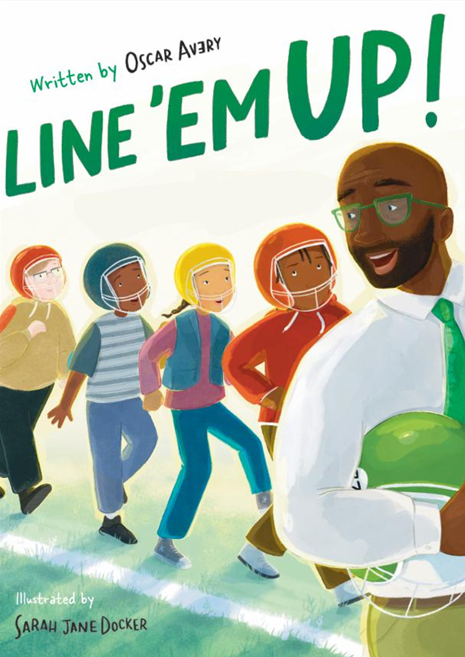

Line ’Em Up!, by Oscar Avery, follows a class of kids who feel written off by everyone until a new teacher, Mr. Murant, walks in and completely changes their world. He teaches them pride and discipline and shows them how greatness starts inside. The class learns about science, math, football, and life, all while building confidence through something as simple as forming a straight line. Then the story shifts as the group discovers their beloved Mr. Murant has been struggling with CTE.
Reading this children’s book honestly resonated with me more than I expected. I went in thinking it would be a light little school story, and instead found myself caught up in the way Mr. Murant pushes his students to believe in themselves. The writing feels warm and punchy and a little chaotic in a fun way. It mirrors a real classroom where jokes fly, and kids interrupt, and learning happens sideways. I kept smiling at the little back-and-forth moments, especially when Savannah had something sharp to say. The pacing jumps fast from day to day, and that gives the whole thing a breathless energy that makes you want to keep reading.
The author doesn’t shy away from the hard stuff, and I really appreciated that. I felt the kids’ confusion and frustration, and that slow sinking feeling when they wonder whether they were truly cared for. The story handles disability and illness in a way that feels simple but sincere. It made me think about how much one adult can change a child’s whole view of themselves. The illustrations have such a warm, authentic classroom vibe that really draws you in. I love the soft, painterly texture. It gives each scene a gentle feel. Mr. Murant’s expressions are clear, and small details add a fun touch to the scenes.
I’d recommend Line ‘Em Up! to kids who enjoy stories about school life and friendship and to adults who love picture books with heart and a message that sticks. It’s great for classrooms, families, and anyone who wants a story that lifts you up while lovingly addressing coping with loss.
Weeds To Wishes: Blossoming into the Leader You Are Meant to Be

Weeds to Wishes follows Sheryl Brown’s journey as a teacher and principal who learns to lead through listening, healing, encouraging others, and growing through hardship. The book moves through eight “keys” to leadership that blend personal stories, school memories, emotional turning points, and practical activities that teams can use to connect and communicate. The mix of stories and reflections creates a guide that shows how leadership rises from real life and not from titles or rules.
While reading this book, I felt pulled in by the author’s warmth and honesty. The stories hit hard because they feel like moments pulled straight from a life lived fully in service to others. I kept thinking about the scene with the bomb threat evacuation and how she steadied herself in chaos. I could almost feel the cold air and the fear and the fierce need to protect people. Her writing style is simple and easy to fall into. There were times I stopped and thought, wow, she really went through that, yet she still chooses hope. I liked that. Her voice feels like someone sitting with you at a table, talking softly, telling you the truth. It got to me more than I expected.
The ideas in the book made me think about leadership in a more human way. She focuses on trust, grace, listening, and being present. Those are not flashy things. They are small habits that change everything over time. I caught myself reflecting on my own tendencies to jump to solutions instead of hearing what people are really saying. Her chapter on “Whispering” resonated with me because it showed how leadership grows in quiet rooms, on long car rides, and in moments when your heart is breaking but you still choose to show up. I loved the activities she built into each chapter. They felt practical and playful, which made the leadership lessons feel less heavy and more doable.
I would recommend Weeds to Wishes to new leaders, veteran educators, and anyone who wants to lead with more heart and less noise. The book is especially good for people who are burned out or doubting their path. It feels like a gentle hand on your shoulder, reminding you that you are allowed to grow, stumble, try again, and still make a difference.
Pages: 203 | ASIN : B0G1CSM2GG

Breaking Barriers: A Bold Vision for Pakistan’s Future
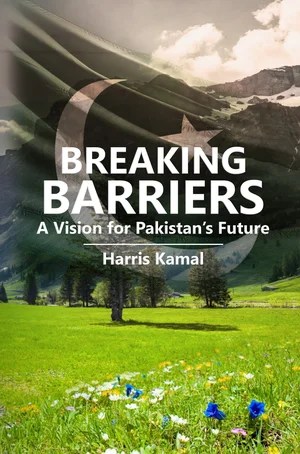

Breaking Barriers: A Bold Vision for Pakistan’s Future is part memoir, part diagnosis, part blueprint. Harris Kamal starts in Karachi and uses his own story as a doorway into Pakistan’s wider journey. He traces the rise from early “Asian Tiger” optimism to a present filled with corruption, broken institutions, and deep inequality. He then moves through the big systems that shape daily life: bureaucracy, police, courts, politics, education, gender relations, and the economy. Finally, he lays out a future agenda that leans on youth, better governance, and social inclusion, with long chapters on schools, women’s empowerment, and structural reforms in everything from taxation to resource use.
I enjoyed the way he mixes hard facts with personal feeling. The Karachi passages have texture and warmth, and the opening section on Pakistan’s “promise and peril” feels tight and focused. The writing is clear and direct. At times, it sounds like a long op-ed. At other time,s it sounds like a friend talking late at night about home. I liked the concrete cases he uses when he talks about law, such as famous murder trials, the Panama Papers, and the battles around Justice Qazi Faez Isa, and his comparison with Kenya’s judicial reforms gives the book a more global feel. The message stays strong, yet I felt that some sections could have been leaner, with fewer long lists of problems and more storytelling on how change actually happens on the ground.
The book moved me more than I expected. The anger at feudal politics, bloated bureaucracy, and daily injustice is clear, but it is grounded in love for the country rather than simple ranting. I found the chapters on women, education, and the digital divide especially powerful, because they show how big structures hit real people in homes, schools, and workplaces. His call for coeducation, broader career paths for girls, and real financial independence for women feels both practical and values-driven. I also liked his focus on tax justice and agricultural income, which many authors avoid. The vision is bold and hopeful, but I sometimes wanted more nuance.
The book does not hide how deep the problems go, yet it refuses to give up on the idea of a fair, modern, confident Pakistan. I would recommend Breaking Barriers to readers in the Pakistani diaspora, to students in Pakistan who are trying to make sense of their own country, and to policy folks or diplomats who want an insider’s passionate brief on what is broken and what could be rebuilt. It reads more like a long, heartfelt briefing from someone who has seen both Karachi’s flooded streets and America’s functioning institutions and still believes Pakistan can rise if enough people decide to push in the same direction.
Pages: 702 | ISBN: 9783127323207
Faith in Faith

Miracles Beyond the Crowd is a heartfelt call to push past spiritual passivity and step into a faith that moves, reaches, climbs, and refuses to settle. What is a common misconception you feel people have about living their faith?
Faith is not a theory or an empty ritual. A common misconception is that faith just exists without investigation and exploration. The truth is, everyone must wrestle with what they believe and practice how to hold fast to that conviction. It is personal, and it is relational. It is a firm conviction so powerful that it can turn a hopeless situation into a hope-filled pursuit.
There is a saying that says: We do what we believe, and we don’t do what we think is futile. Many people have faith in faith, but when challenged, they find it hard to pinpoint what their faith is ultimately built on. Faith must have a foundation, a source, or a place where believing can stand. This kind of faith is dynamic and alive, not static. It grows, shifts, matures, and deepens as we live it out.
Now, how we live by faith is different and looks different for everyone. It is easy to believe what you can trust. I believe in God, His promises, His nature and character, His history, and His word. I trust His integrity and His capacity to do what He says. That makes it easy for me to live by faith.
What were some ideas that were important for you to share in this book?
Heaven has not run out of miracles. For those willing to press through fear, doubt, and societal pressure, a deeper encounter with God awaits. My hope and passion for every reader of this book is that by reading what I have written, it will awaken a relentless, persistent, and resilient faith in the person, promises, and goodness of God. To those who pursue Jesus wholeheartedly, miracles are not accidents. My heart is that people will be inspired to look beyond the obvious distractions, troubles, and obstacles of everyday life and see that pushing deeper into God is where miracles can be found.
I also hope every reader will see they are not disqualified, unworthy, or broken beyond God’s ability to renew, restore, and bless their life. It is scandalous what grace can do when a life is surrendered to God! I pray the love of God bacons all to hear their life is valuable and important.
What do you hope is one thing readers take away from Miracles Beyond the Crowd?
I hope they take away hope! Big, crazy, and impossible hope. Hope is the beginning of faith. If hope lives, then faith is not far behind.
Author Links: GoodReads | X (Twitter) | Facebook | Website | Amazon
Step into a 10-week journey of powerful persevering faith and transformation. Based on the popular book Miracles Beyond the Crowd, this 50-day interactive devotional helps you move from watching miracles to living them. It is an invitation into faith that moves — not just in Sunday moments, but in the ordinary walk of life.
Across 10 weeks, you’ll explore what it means to:
• Press past the noise and hear God’s voice
• Reach beyond barriers and touch Jesus
• Walk in obedience before you see the path
• Finish strong when the crowd has left
Inside you’ll find Scripture, original excerpts from Miracles Beyond the Crowd, daily reflection questions, faith-in-action exercises, and a full 100-question application questionnaire to help you embed what you discover and carry it forward.
Ideal for personal study, small groups and corporate settings. This devotional workbook will guide you beyond survival into possession, beyond visitation into habitation, and beyond promise into fulfilment.
This is not a book for spectators—it’s a roadmap for those who dare to move beyond the crowd.
– FOR BEST EXPERIENCE it is recommended (not necessary) that this devotional workbook is used with the original book ‘Miracles Beyond The Crowd- The Power of Persevering Faith ‘ by Nico Smit. Whether used individually or in a group, this workbook is a tool, a challenge and a commission—to rise in faith, move forward with purpose, and passionately pursue the presence of God, no matter the cost.
Litter Lady Leads: in a Litter-Filled Land

Litter Lady Leads, written by Martha Goldner, is a sweet and simple story about an older woman who cannot stop tidying the world around her. Page after page, she strolls through beaches, parks, trains, ballparks, grocery stores, even windstorms, always scooping up trash with her pointy-tipped cane. Kids adore her. She feeds them cookies, picks up after everyone, donates useful things to people in need, and somehow keeps going even when she is tired. By the end, the kids learn to help her clean, and the whole picture book wraps up with a cheerful idea that we can all make the world a brighter place.
I found the whole book very charming. The writing is short and punchy, which fits a children’s book, but it still gave me little bursts of feeling. I kept smiling because Litter Lady is drawn with this stern face that kind of hides how soft-hearted she is. The pictures on the pages add a funny mood, too. They are colorful, a bit messy, and that rough style works because the story is about mess itself. It made me feel like the book was hand-colored with real love.
I also caught myself thinking about the book’s message more than I expected. It is simple. It is repetitive. Yet it got to me because I know people like her–people who clean up without asking for thanks and who make small corners of the world better just because they care. When the kids finally asked if they could help, I felt a tiny lump in my throat. Her not having cookies for them at the bus stop made me worry about her as if she were my own neighbor. This book surprised me with how much heart it carries in so few words.
I would recommend Litter Lady Leads in a Litter-filled Land to young kids, early readers, teachers, and anyone who wants a gentle story about kindness and caring for your community. It is simple in the best way. It is warm and sweet and gives a little nudge to be helpful. If you like picture books that mix humor with a feel-good lesson, this one will certainly make you smile.
Pages: 32 | ASIN : B0CZ6SRBTZ
The Biggest Financial Decisions of Their Lives
Pay Less for College is a college financial aid and affordability guide that lays out for parents and students a clear and practical roadmap for cutting the true cost of a college degree. Why was this an important book for you to write?
Families are often making one of the biggest financial decisions of their lives in a fog. Students and parents are rightfully overwhelmed. And the guidance they get is often cookie-cutter for a system that doesn’t financially reward a cookie-cutter approach. During our 15 years in this field we have seen and heard about the financial landmines families step on – sometimes from inexperience, misinformation, desperation, or other factors. We wanted to clear out the fog and help families create a realistic, step-by-step plan to keep college affordable. Instead of vague advice, we focus on what actually moves the needle on cost– the things families can control.
In your book, you cover the latest and upcoming changes to the FAFSA, PLUS Loans, Pell Grants, and college financial aid policies. What are some key points that parents and students need to know about these options for financial aid?
The FAFSA and Pell Grants underwent major changes that were fully implemented in the 2024-25 academic year. The book walks readers through every part of the new FAFSA and breaks down the updated undergraduate Pell Grant eligibility rules. In spring 2025, Congress passed a budget bill that changed PLUS Loans, including significantly lower annual and lifetime limits for new borrowers of undergraduate loans. This may leave private loans with their less favorable terms as the only borrowing option for parents in the student’s third or fourth years.
What are some common mistakes or oversights that people make when deciding what college to attend, and what advice do you have to help others avoid these mistakes?
Colleges should be right for students academically, socially, and financially. Students often only apply to colleges they have heard of, ones their relatives want them to go to, or the ones their friends are applying to. They fill out the required financial aid forms and cross their fingers. Those schools may be okay academically or socially but financial fit is more complicated. It is often the most misunderstood part of the college search process.
If saving money is important to you, dig into the college’s financial aid policies to see how they align with your individual financial situation. Also, look for colleges that will love you back – those where your genuine interests and capabilities meet or exceed what the college is looking for. And finally, submit an application that showcases your strengths and makes it easy for the admissions officers to see your value.
What is one thing that you hope readers take away from Pay Less for College?
That they have more control than they think. When families build a smart college list, apply at the right time and in the right way, understand how aid really works, evaluate offers carefully, and trim costs–both big and small–before, during, and after college, they can meaningfully cut the real cost of a college degree.
Author Links: Amazon | GoodReads
Choosing a college is about finding a place where you belong—a place that fits your goals, your heart, and your wallet. Paying for college may be one of the biggest financial challenges you’ll ever face–but it doesn’t have to be harder than going to college. You can honor your dreams without sacrificing your financial future.
Pay Less for College is the go-to college financial aid and affordability guide for parents and students who want to make smart, confident choices. It offers clear, actionable insights to help you save real money—often tens of thousands of dollars—by:
Finding the colleges most likely to be generous
Understanding how and why a college will love you back
Demonstrating your value to that school
Avoiding common, costly mistakes
Cutting costs, both big and small
Why pay more than you have to?
Smart strategies. Real savings. The confidence to say yes to the dream—and afford it.
_____________________________________________What’s new in the 4th Edition
Fully updated to cover the latest and upcoming changes to the FAFSA, PLUS Loans, Pell Grants, and college financial aid policies.
Expanded tools and examples that help families understand college costs, maximize need-based and merit aid, compare true net prices, and submit standout applications.
Inside you’ll find
Part I: College Costs and Financial Aid
Understand exactly what college will cost and how financial aid works.
Part II: How to Pay Less for College
Learn how to increase aid eligibility and find the most generous colleges.
Part III: Planning
Turn knowledge into action with concrete family planning tools.
Part IV: Resources and Tools
10 detailed appendices, including guides to the FAFSA, CSS Profile, Pell Grants, and financial aid if your parents are unmarried, divorced, separated, remarried, or widowed, as well as tools to help you identify your academic strengths, social needs, and college priorities, and how to make your personal outreach most effective.
Scams are the World’s Fastest-Growing Crime

Scams Are the World’s Fastest-Growing Crime is a straight-talking field guide to modern scams. Author Ken Ray walks through how scams evolved, why they work, and how they hit regular people in every channel of life, from phone and email to social media, crypto, fake stores, and in-person tricks. He starts with history and psychology, then gives a simple four-step model of every scam: setup, lure, attack, hook. After that, he moves into detailed profiles of common schemes, global impact, why victims stay silent, and how scammers pick their targets. He wraps it all up with danger scales, checklists, legal context, a glossary, and a very raw victim story, all tied to Scam Watchdogs’ mission to protect, educate, and expose.
What I liked most was the human focus. Ray keeps reminding me that scams are not about clever tech. They are about emotions and habits. He lays out trust, fear, greed, love, guilt, and overconfidence as levers that scammers pull, then shows how those levers show up in real situations like “grandparent” calls, romance cons, and fake tax threats. I felt angry reading the sections on shame and silence, and how victims stay quiet because they blame themselves or worry no one will listen. The chapters on the snowball effect and the global scale of the problem hit pretty hard too. They show how a tiny “test payment” can snowball into life-changing loss and how those losses add up across families, small businesses, and even trust in basic institutions. Reading that, I felt a mix of frustration and urgency, like this is not just sad stories; this is a public safety issue.
I liked how practical and plain the book feels. The tone is warm and professional but still sounds like a real person talking, not a legal brief. The early chapters give clear frameworks, then the scam profiles repeat the same structure each time with “setup, lure, attack, hook” and a danger rating. That rhythm made it easy for me to skim to what I needed. I also appreciated the checklists, the “Stay Safe” section, and the simple definitions at the back, since those are easy to share with less tech-savvy family members. The author’s note about using AI tools like ChatGPT as a helper, while taking responsibility for the facts, felt transparent and current, which I liked.
I came away feeling both rattled and oddly reassured. Rattled, because the examples show how easy it is for smart, cautious people to get pulled in, especially through investment and romance scams that mix money with emotion. Reassured, because the book keeps coming back to simple habits that anyone can build: pause, verify, talk to someone, report what happened. There is a steady compassion for victims that cuts through the usual blame, especially in the dedication and the closing message that every report turns a private loss into a public shield.
I would recommend this book to everyday readers who want to protect themselves and their families, especially people who do not live in the world of cybersecurity but still live on their phones and laptops all day. It is a strong choice for parents, caregivers, community leaders, and small business owners who need something they can hand to others without translation. People looking for a clear, empathetic starter guide and a reference you can dip into whenever a weird text or email pops up, it does the job very well.
Pages: 175 | ASIN : B0G35VCVP1

Education and Evangelism

From Hill Town to Strieby explores the life of Reverend Islay Walden, a man born into slavery who overcame blindness and hardship to return home as a minister and educator, and the legacy the Hill and Lassiter families left on the community. Why was this an important book for you to write?
As descendants of the original families that helped found the church and who continue as trustees today, we worried as we watched the last of the generation before us pass away that our history would be lost if we did not make a concerted effort to preserve, share, and uplift it. As the writer in the group, they looked to me to help that happen. In addition, just as other African American community descendants are concerned about erasure, not just benign neglect, we wanted to do all we could to be certain that the history of the church, school, community and its founder, Rev. Islay Walden, would always be an acknowledged and celebrated part of Randolph County, North Carolina history, and be part of the broader American History of African Americans and the rural South. I didn’t want anyone in Randolph County to ever say again as someone once had, “Strieby? Never Heard of It.”
With regards to Islay Walden himself, I had come to realize, as I researched his life, that in his lifetime, he was not an obscure poet, as some had portrayed him. In addition, I realized that none of the biographical essays about him had really understood that his passion was not poetry, regardless of his success. His passion was education and evangelism. No one had reflected on that in writing about him, so I wanted to pay homage to him as a 19th century African American poet, but even more important for me to elucidate was his legacy in education and ministry.
How much research did you undertake for this book, and how much time did it take to put it all together?
At the time that I made the decision to finally write the book, I had been researching the community for over twenty years and had already written a book about the history of one family, the Miles Lassiter family. At the same time as discussions about writing the book, family members were also asking about historical preservation. As part of that, I prepared an extensive, documented history of the church, historic school, and cemetery in application for the county’s Cultural Heritage Site designation, which we received. That application became the first draft. It took two more years of research and writing before the book was completed in 2016.
What were some ideas that were important for you to share in this book?
The level of educational excellence that the school stood for had been praised and celebrated at every turn by the entire community. This was a community with nearly 100% literacy in the early 1900s, when that achievement was rare for any community in the rural South. This community had placed a high premium on education, and members had gone to great lengths to seek additional opportunities, even leaving the community to do so, yet always returning to share love and encouragement with the next generation. In fact, this community had produced at least one young teacher by 1900, and several more soon followed.
What is one thing that you hope readers take away from From Hill Town to Strieby?
I hope readers see that rural communities of color have been seeking the same things that their urban siblings have been seeking — opportunity. They seek educational opportunities, which they hope, like everyone else, will provide them with other opportunities, including economic security, whether they leave the countryside or not.
Author Links: Goodreads | Facebook | LinkedIn | Website | Amazon



 LITERARY TITAN