Blog Archives
The Hatbox Letter: Based on a True Tale of a Lost Love
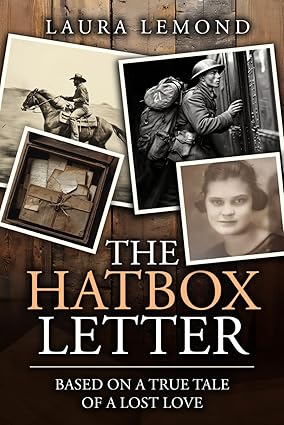

Laura LeMond’s The Hatbox Letter is a nostalgic, heartfelt journey through love, loss, and the echoes of history. Based on true events, the novel revolves around Gladys Charlesworth, a young woman in early 20th-century America, and her unexpected romance with Johnny Fry, a man with a deep, complicated heritage and ties to the legendary Pony Express. As their story unfolds, we are taken through moments of youthful passion, family expectations, and the weight of historical circumstances. The book explores themes of tradition, self-discovery, and societal change, making it both an intimate romance and a reflection on an era in transition.
LeMond crafts a world that feels lived-in and rich with the details of early 1900s Missouri. The opening scene, where Gladys is exhausted from a long, sweltering Sunday, sets the tone beautifully, painting a picture of a time when family rituals and social propriety dictated much of daily life. The descriptions of the Charlesworth family’s English traditions, especially the Sunday meal with its Yorkshire pudding and Victorian sponge cake, gave the story an authentic, tangible feel. LeMond has a way of making you feel like you’re sitting right at the table with them.
One of my favorite aspects of the book is Johnny Fry’s character. His backstory and his connection to the Pony Express, his Cree heritage, and his struggle to navigate both white and Native American cultures adds so much depth to the novel. His moments of introspection, such as when he rides home cataloging the flora around him, give him a quiet strength that is incredibly compelling. And yet, he’s also a young man in love, stumbling through the excitement and uncertainty of his feelings for Gladys. The scene where he is startled and hurt after Gladys brushes him off in favor of her sewing project is particularly well done because it captures that universal feeling of unexpected heartbreak, and I genuinely felt for him.
Gladys, on the other hand, is a wonderfully stubborn and ambitious protagonist. Her obsession with Coco Chanel and fashion gives her a modern, forward-thinking edge that contrasts with the traditional expectations of her family and small-town life. Her excitement over new fabric shipments and her dreams of moving to Chicago make her feel real and relatable. I loved how she and Johnny challenged each other. Their romance isn’t just about sweet words and longing glances, it’s built on conversations, moments of tension, and the push and pull of two people figuring out what they want. The fig-picking scene, where Johnny playfully teases her on a ladder, is such a perfect example of their chemistry, lighthearted, flirtatious, but layered with deeper emotion.
By the time the novel reaches its later chapters, the stakes feel real. War is looming, societal changes are creeping in, and the carefree days of courtship start to give way to difficult decisions. The historical context of the book is subtly woven in, never feeling like a history lesson but always present enough to remind us that these characters are living in a time of great upheaval. The final moments, where love and fate collide, leave a bittersweet impression that lingers long after the book is closed.
I’d highly recommend The Hatbox Letter to readers who enjoy historical fiction with a strong emotional core. If you love books about family secrets, passionate yet complex love stories, and the beauty of everyday moments, this novel is for you. It has the charm of The Notebook, the historical richness of Atonement, and the heartfelt authenticity of a story passed down through generations. LeMond has written something special, a love letter to the past, wrapped in the tender mystery of a forgotten romance.
Pages: 122 | ASIN : B0DTLFFNTR

Feast Of Valentine: Where Love Binds More Then Just Hearts (Pottersville’s Dark Valentine Book 1)
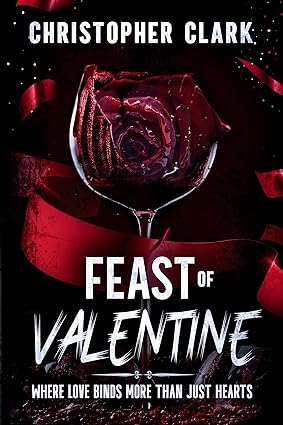

Angie had no clear vision for her future, but she knew one thing for certain, love had no place in it. Her return to Pottersville was born of necessity, not nostalgia, spurred by the passing of her mother. Though she found herself back in her childhood home, her stay was meant to be temporary. Yet, Pottersville had a way of holding onto people, especially as Valentine’s Day approached. The town’s very identity was entwined with love, its defining statue, the Heart Binder, standing as a symbol of unity, reinforced by the town’s mantra: Bonded by Heart, Together We Stand. But for Angie, love was about to reveal itself in starkly contrasting forms, one freely given, the other imposed. How she responded would shape the course of her future.
Christopher Clark’s Feast of Valentine is a gripping romantic thriller that threads the eerie history of Pottersville into the lives of Angie, her sister Alicia, and the men who orbit them. Angie, after more than 15 years away, is only just discovering the town’s unsettling past when she suddenly finds herself drawn almost inexplicably to a mysterious stranger. As her fascination teeters on obsession, the lines between folklore and reality begin to blur. The deeper she falls, the more bizarre and perilous her world becomes, forcing her to question whether Pottersville’s legends are merely stories or sinister truths waiting to be unearthed.
Clark’s prose is immersive, laced with dreamlike imagery and shifting perspectives that mirror Angie’s spiraling sense of uncertainty. The novel thrives on atmosphere, treading the delicate space between reality and fantasy, pulling the reader into Angie’s growing unease. Each revelation is a fragment of a larger, enigmatic puzzle, one she must piece together with only fleeting guidance. Despite its compelling premise, Feast of Valentine falters where it should shine. The Heart Binder, a central symbol of the town’s legacy, remains frustratingly underexplored. Hinted at rather than truly dissected, its significance lingers on the periphery rather than being meaningfully integrated into the narrative’s climax.
At its core, the novel brims with potential, delivering moments of gripping tension and intrigue. The suspense builds masterfully, reaching exhilarating heights that keep the pages turning. While the conclusion unfolds with an unexpected abruptness, it leaves room for interpretation, encouraging readers to ponder its deeper implications. Feast of Valentine is a fascinating enigma, both captivating and thought-provoking, compelling yet open-ended. It held me spellbound until the very last page, leaving me eager for more and reflecting long after the final chapter.
Pages: 291 | ASIN : B0DTGXQR1H
Cleave the Sparrow
Some books tell a story. Others drag you into a chaotic, unrelenting experience that scrambles your brain and leaves you questioning everything. Cleave the Sparrow is the latter. It’s a fever dream wrapped in satire, political absurdity, existential horror, and bursts of unfiltered genius. The plot follows Tom, a hapless nobody turned political pawn, as he stumbles through a world of cults, conspiracies, and reality-shattering revelations. With a cast of characters that includes a lizard-skinned scientist, a woman who smells fantastic but may or may not be leading a revolution, and a man hell-bent on proving existence itself is a lie, the book barrels forward like a runaway train powered by hallucinogens and bad decisions.
There’s something hypnotic about the way the book is written. The dialogue is rapid-fire, the narration drips with cynicism, and the absurdity is turned up to eleven. One moment, Tom is navigating political disaster control for a debate where his candidate is outed for a romantic relationship with a coffee machine, and the next, he’s deep in a cave listening to a ten-year-old mutant threaten to cut off his genitals. The pacing doesn’t just keep you engaged, it holds you hostage. The prose shifts between sharp, witty banter and sprawling, mind-bending monologues about the nature of perception and reality. And yet, it never loses its bite. The humor is dark, the satire is ruthless, and the commentary on politics, media, and human nature is as unsettling as it is hilarious.
The concept of tetrachromats (people who can see more colors than the rest of us) expands into an existential metaphor about perception and control. The idea that we only see what we need to survive, and that our understanding of reality is inherently flawed, becomes a driving force behind the book’s most unsettling moments. Tom is thrown into a world where people want to break the system, not by fixing it, but by blowing it up, sometimes literally. And, disturbingly, the book makes a compelling argument for why they might be right. One of the best moments is when Wilder Crick, a lunatic or a prophet (or maybe both), lays out his plan to destroy the cosmic projector that creates our false reality. It’s so ridiculous that it loops back around to being plausible. The book constantly dares you to laugh at its insanity only to make you realize, with a sickening twist, that the joke is on you.
That being said, Cleave the Sparrow is not for the faint of heart. It revels in discomfort. It gets grotesque. It crosses lines, sometimes gleefully. The Howitzer House sequence, where people willingly undergo extreme psychological torture as an entertainment experience, is a stomach-churning look at human masochism and our obsession with “real” horror. It’s sick. It’s fascinating. It’s also an extreme version of things that already exist. And that’s what makes this book so effective. It takes absurdity and stretches it just far enough that you can still see its roots in our own world.
Cleave The Sparrow is for people who enjoy satire so sharp it draws blood, philosophy so deep it makes your head hurt, and humor so dark you feel guilty laughing. It’s for fans of Catch-22, Infinite Jest, and Dr. Strangelove. It’s for anyone who has ever looked at the world and thought, this can’t be real. Because maybe, just maybe, it isn’t.
Pages 300
AGAINST THE BLUE WALL: A Dan Burnett Thriller
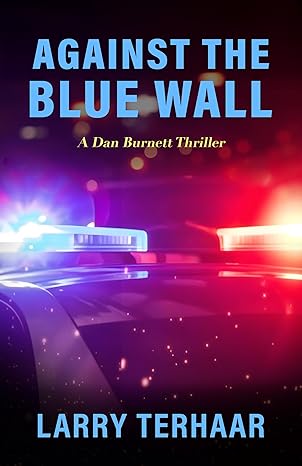
Larry Terhaar’s Against The Blue Wall is a gripping and unapologetically raw novel that tackles systemic racism and police brutality with a hard-hitting narrative. The story revolves around the brutal beating of Jerome Jordan, a young Black man, at the hands of two police officers during a routine traffic stop. As the case unfolds, former NYPD detective-turned-private investigator Dan Burnett takes on the task of uncovering the truth. What he finds shakes him to the core, forcing him to confront his own past and the “Blue Wall of Silence” that has protected corrupt officers for decades. With compelling characters and a storyline that mirrors real-world injustices, Terhaar delivers a thriller that is as infuriating as it is necessary.
The author’s writing is sharp and relentless, never shying away from the horror of police violence. The opening chapter throws the reader into a stomach-churning scene of unchecked brutality, setting the tone for the rest of the novel. Officer Sean O’Riley is depicted as a man drunk on power, embodying the worst aspects of law enforcement’s unchecked authority. His actions are sickening, his thoughts even more so. There’s no ambiguity and Terhaar wants you to hate him. The sheer visceral impact of these early pages makes it impossible to look away, much like watching a tragic news story unfold on live television.
Dan Burnett, on the other hand, is a deeply conflicted character. He carries the weight of his thirty years on the force, and while he has always prided himself on doing the right thing, he now faces a test that challenges his loyalty. His internal struggle feels real and heavy, a tug-of-war between his past and his conscience. His interactions with Mia, his new love interest, offer a softer, more introspective side to his character, making him more than just another hard-nosed detective. The novel does a fantastic job balancing the personal and professional stakes, making his journey both heartbreaking and inspiring.
Terhaar structures the story like a crime drama unfolding in real time, and the inclusion of news reports, press conferences, and legal maneuvers keeps the tension high. The media frenzy surrounding Jerome’s case feels eerily familiar, echoing real-world incidents that have sparked nationwide protests. Seth Bodner, the attorney representing Jerome’s family, is a standout character, he is sharp, passionate, and unwavering in his pursuit of justice. His press conference scene is particularly powerful, a moment that encapsulates the fury and desperation of those fighting against systemic corruption.
Against The Blue Wall is a must-read for anyone who wants to understand the realities of police violence and the difficulty of seeking justice within a flawed system. It’s perfect for fans of social justice thrillers, true crime enthusiasts, and readers who aren’t afraid to confront uncomfortable truths. If you’re looking for a book that will challenge you, anger you, and make you think, this one is it.
Pages: 247 | ASIN : B0DNKL6388
Iguana
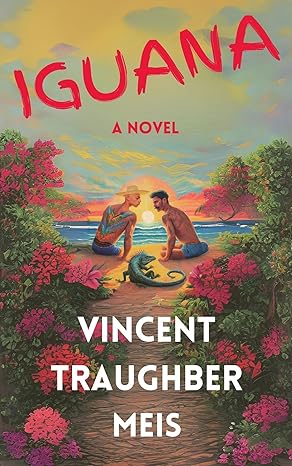
Vincent Traughber Meis’s Iguana is an evocative and immersive novel that follows Dawson Wozniak’s journey as he uproots his life and moves to Mexico in search of reinvention. As he navigates his new world—full of vibrant streets, enigmatic encounters, and the weight of personal history—he finds himself entangled in a growing attraction to Ivan, a brooding building manager. What begins as an introspective exploration of self quickly takes a dramatic turn when a tragic accident unfolds, throwing Dawson into the heart of a mystery. At once a meditation on identity, desire, and human connection, Iguana grips the reader with a blend of lush descriptions, internal musings, and the undeniable pull of suspense.
Meis has a gift for painting a vivid scene. From the opening encounter with the titular iguana—an ominous, almost mythical creature perched above Dawson on a branch—the novel layers its themes of observation, displacement, and power. The way the iguana stares, unbothered and unmoved, mirrors Dawson’s internal struggle as an outsider looking in, constantly trying to decode his place in a land that both welcomes and resists him. There’s something hypnotic about the prose, how it lingers on the humidity in the air, the marketplace’s sensory overload, and the quiet tension that seems to simmer beneath every conversation.
But beyond the scenery, Iguana excels in its complex and flawed characters. Dawson’s attraction to Ivan is frustrating in the best way. Meis captures that intoxicating mix of longing and uncertainty so well. One of the book’s most compelling moments is when Dawson and Ivan share their charged, rain-soaked night on the balcony. It’s raw, electric, and then suddenly shattered by the tragedy unfolding above them. The push-and-pull dynamic between these two men is rendered with such depth that you feel every hesitation, every moment of vulnerability, and every unspoken truth hanging between them.
The novel’s pacing shifts dramatically after the rooftop accident, and that’s where Iguana truly becomes something more than just an expat’s musings on a new life. The tension builds as Dawson and Ivan navigate the aftermath, their connection becoming a casualty of guilt and self-preservation. The weight of secrets—what’s spoken and what’s withheld—adds an almost noir-like quality to the story. The way Meis handles the police investigation, the social dynamics at play, and the quiet, gnawing suspicion that the truth will never fully come to light is fantastic. And through it all, there’s a heartbreakingly human element—Dawson’s need to be seen, to be understood, to be loved—clashing against the realities of a world that often doesn’t allow for such easy resolutions.
By the time I reached the final pages, I felt gutted in the best way. Iguana isn’t a book that ties things up neatly with a bow, and I love that about it. If you enjoy literary fiction that blends rich settings, slow-burning romance, and a hint of mystery, this is for you. It’s for those who appreciate characters that feel painfully real and narratives that don’t force closure where there is none.
Pages: 351 | ASIN : B0DZ99B2B9
Reciprocity

D.C. Gilbert’s Reciprocity is a high-octane thriller packed with action, intrigue, and morally complex characters. The story follows a cast of ex-military operatives, crime bosses, and corrupt officials, navigating a dangerous world of underground fights, organized crime, and government conspiracies. At its core, the book explores themes of justice, revenge, and redemption, as characters with violent pasts seek their own form of moral balance in a world that rarely plays fair.
The writing is gritty and immersive, pulling me straight into a sweaty, blood-soaked underground fight in the Philippines. Taylor, a haunted ex-soldier drowning in alcohol and self-destruction, makes for a compelling protagonist. His fight scenes are brutal and visceral, making me wince and cheer in equal measure. The novel doesn’t just deliver on action; it builds a shadowy, morally ambiguous world where every victory comes with a cost. There’s a raw energy in Gilbert’s prose that reminds me of classic action thrillers—lean, sharp, and relentless.
While I appreciate rich world-building, there were moments when I wanted the plot to move faster. And while the dialogue generally felt authentic, some conversations leaned a bit into exposition. Still, the authenticity in military and combat sequences, combined with the sheer adrenaline of the story, more than made up for this.
If you love action-packed thrillers with hardened warriors, ruthless villains, and a deep dive into the seedy underworld of crime and corruption, Reciprocity is for you. Fans of Lee Child, Vince Flynn, or Mark Greaney will find plenty to enjoy here. It’s rough, intense, and occasionally brutal, but it delivers a gripping ride that doesn’t let up.
If you’re looking for a book that keeps you on edge with a mix of action, espionage, and personal demons, Reciprocity is worth your time.
Pages: 322 | ASIN : B0DZK6GKH1
Fallen Deer (A Cadence Mystery #6)

Dianne L. Hagan’s Fallen Deer drops readers straight into the stormy heart of Cadence, New York, a town brimming with history, secrets, and an eerie knack for attracting trouble. When Marian Greene, our ever-curious protagonist, sets out on a simple errand, she never expects to find herself staring into the lifeless eyes of a man who quite literally falls out of the sky. What begins as a routine morning quickly spirals into an intricate mystery involving arson, hidden children, and a chilling murder that seems to connect to forces far greater than the town itself. As Marian and her steadfast group of friends, family, and law enforcement unravel the layers of Cadence’s latest catastrophe, they uncover deep-rooted corruption, harrowing secrets, and the resilience of a community determined to protect its own.
What I love most about this book is how effortlessly Hagan blends cozy small-town dynamics with high-stakes suspense. The relationships feel real—warm, complicated, and filled with the kind of teasing and deep loyalty that makes the town of Cadence feel like home. Take Lester and Marian’s banter, for instance. Their long-standing love is evident in the way they bicker, support, and challenge each other. And then there’s Enoch, who, despite his gruff exterior, carries a quiet wisdom that grounds the story. Every character feels like someone you’d meet in real life.
The writing itself is a mix of sharp, punchy dialogue and beautifully immersive descriptions. The moment when Marian’s windshield shatters as a deer crashes onto her car is a masterclass in tension. The scene unfolds in slow motion, pulling the reader into the same breathless shock Marian experiences. And just when you think she’s caught a break, she looks up—only to lock eyes with a dead man. It’s moments like these that showcase Hagan’s ability to build suspense without sacrificing the intimate, small-town feel that makes Cadence so special.
That said, the book isn’t all heartwarming friendships and gripping mysteries. It also digs into weighty, real-world themes. The arrival of two buses of migrants, the racial history of Cadence, and the trauma carried by the town’s residents add layers of social commentary that make this more than just a mystery novel. One of the most gut-wrenching moments comes when a malnourished child is found hiding in the woods, terrified and alone. The urgency of finding the missing mother and the fear that something far more sinister is at play give the story a deeper emotional weight.
If you’re looking for a mystery that balances thrilling suspense with rich character relationships and meaningful themes, Fallen Deer is for you. Fans of Louise Penny’s Three Pines series or Julia Spencer-Fleming’s Clare Fergusson/Russ Van Alstyne Mysteries will feel right at home in Cadence. It’s a book for readers who love a good whodunit but also crave depth, humor, and a little bit of history woven into their mysteries.
Pages: 258 | ASIN : B0DWYP2ZCV
Down and Out in the River City

Wm. Stage’s Down and Out in the River City is a gritty, no-nonsense dive into the underbelly of St. Louis, where homelessness, crime, and corruption bleed into each other under the glow of neon tavern signs. The story follows Francis, a process server whose job forces him to navigate both the seedy and bureaucratic sides of the city. What starts as a routine attempt to serve a legal document quickly turns into something much bigger as Francis gets swept into the chaos of a city-wide protest, a police crackdown, and a mystery surrounding the overdose of a troubled young man. The novel paints a vivid and often brutal picture of a city grappling with racial tension, crime, and the slow erosion of morality in the face of desperation.
Stage’s writing is sharp, fast-paced, and packed with a dark wit that makes even the bleakest moments sting with humor. Francis is a character who sees the world in shades of gray, a refreshing break from the typical hero. He’s cynical yet strangely principled, acknowledging the corruption on both sides of the law while trying to keep his head above water. One of the most compelling parts of the book is the way Francis interacts with different factions of St. Louis society like bar regulars who rib him for getting arrested with protesters, hardened cops who see him as an outsider, and the desperate people caught in the crossfire. The riot scene early in the book is electric. Its filled with tension and sharp dialogue that makes you feel like you’re right in the middle of the chaos. It’s one of the best examples of how Stage captures the raw energy of a city on edge. While the novel thrives on its gritty realism and immersive atmosphere, there are moments where I felt the story meanders. I think some of Francis’ internal monologues and interactions, especially in barroom settings, could be trimmed down to maintain the narrative’s momentum.
One of the book’s strongest aspects is its unflinching look at race relations and police violence. The story doesn’t shy away from the ugliness on both sides, whether it’s protesters eager to turn a tragedy into an opportunity for anarchy or police officers who have lost all patience and resort to brute force. The courtroom scene following the Stockley verdict is gut-wrenching, a moment where you can feel the weight of history pressing down on the city. Stage doesn’t try to push an agenda, he just presents the chaos as it is, which makes it all the more powerful. Francis’ own discomfort in navigating these tensions adds depth to the story, making him a compelling guide through this moral minefield.
Despite its heavy themes, the book doesn’t drown in its own darkness. The dialogue is lively, the humor biting, and the characters feel like people you’d run into at a South City dive bar. The subplot involving Francis being hired to investigate the death of Austin Lambert, a privileged kid who spirals into drug addiction and homelessness, adds a noir-like mystery element to the book. The scenes where Francis and his partner Cale chase leads through homeless encampments and sketchy motels are gripping, giving the novel a detective story edge that keeps you hooked.
Down and Out in the River City is for readers who like their fiction raw, real, and unpolished. Fans of Elmore Leonard or George Pelecanos will appreciate its punchy prose and morally complex characters. If you’re looking for a book that doesn’t sugarcoat reality but still delivers an entertaining and thought-provoking ride, this one’s a must-read.
Pages: 272 | ASIN : B0DZ7MJ2MK



 LITERARY TITAN