Blog Archives
Refuge for Human Civilization
Fragments of Light follows a young Archivist named Keela as she uncovers relics of a forgotten civilization while ancient machines awaken beneath the ice. What was the inspiration for the setup of your story?
Winter. It all started with that. I live where winter is a VERY present concept, and as much of an avid reader as I am, rarely did I ever find a compelling SciFi story that took place in winter or somewhere where winter was the norm. So I figured that starting everything there would be something that could generate a different type of texture to the narrative. And one of those threads is the impact – or I should probably say “impacts” – of climate change. As harsh an environment as the Arctic is, climate change has a disproportionate effect on it; everything seems magnified. So to me, that area would likely be a natural refuge for human civilization should the World go to Hell in a handbasket…
Keela’s emotional journey feels incredibly intimate. Was her character shaped by any personal experiences or themes you wanted to explore?
No personal experience per se. However, being a parent, I see that many young people – and having been one myself – are unsure of the potential in them; of the strength that inhabits them. Sometimes it’s easier to wait for someone else to do what needs to be done, but most of the time, YOU could do it, and you could probably do it better. As for the archivist part, that’s purely projection: I’m a big history nerd! I just find it fascinating – good and bad – how technology throughout the ages shaped humans; how it creates a virtuous (or perverted, depending on where you stand) cycle where humans create technology that changes them and allows them to create more “advanced” or different technology that in turn changes them again, and so on and so forth.
What were some themes that were important for you to explore in this book?
Resilience. Ambiguity. Adventure. Friendship. And as corny as it sounds, humor. Because I really do not want to live in a world where even during the worst of the worst we are not able to smile or laugh. Maybe not at what’s happening, but surely at how we deal with ourselves and others.
The machines beneath the ice feel both mythical and scientific. What was your process for designing their nature and purpose?
Well, in Fragments of Light, machines are not generally “under the ice.” Some are, but it’s more because of their purpose, really. In the subsequent books, we see that Keela and Anina need to go outside the safety of their known world – the Arctic – and cross entire continents to continue their quest and get to interact with many different societies, machines, and people.
.
Without spoiling too much, let’s just say that machines are left over from a technologically advanced world that existed pre-Fracture. One where geo-engineering was seen as the way to stop/reverse/curb global environmental collapse. Think huge sun reflecting mirrors, carbon catchers, water purifiers, methane gas processors, etc. These would need to be massive, on a scale that would blow your mind, in order to affect the climate of a system as big and complex as the Earth. And you are right, as with anything that is old, eventually they did drift into mythology or quasi-myth.
Author Links: GoodReads | Amazon
Keela was meant to guard the past, not be claimed by it. In the frozen city of Lumik, she touches a relic that hums with memory, and nothing stays buried. Her quiet life shatters, pulling her into a truth no one else will face.
With Anina, a gifted technician who reads machines like language, Keela follows its call across a fractured Earth. Engines stir beneath snow. Salvage-built cities whisper of healing long abandoned. Wonder ignites, but so does danger, as rivals twist awe into power.
This is not destiny. It is choice. And when no one else steps forward, Keela must.
For fans of Skyward, Scythe, The 100, and Ship Breaker. Discovery-driven sci-fi with brave heroines, hidden tech, and the courage to do what must be done. Scroll up to begin.
Assimilation


Assimilation tells the story of Kercy, a fragile and often isolated young woman whose life is split between the harshness of her family and the eerie beauty of the Soshone Islands. The calm of her summers fractures when she hooks a grotesque, severed limb in the lake, only to be visited that same night by strange beings who invade her room and her body. That moment becomes the axis of her entire life, leading her toward hidden truths about her parents, her own biology, and the horrifying forces lurking beneath the water. The book follows her journey from isolated child to self-possessed adult as she navigates love, danger, loss, and the long shadow of whatever visited her that night.
Reading it pulled me around emotionally in ways I didn’t expect. Some sections felt tender and slow, almost sleepy with the warmth of summer afternoons, then suddenly the story lurched into fear and chaos. I kept feeling this knot in my stomach because the writing toys with dread in such a quiet way. Busch’s descriptions of water and landscape are gorgeous and simple. They gave me a sense of calm. Then he ripped it away with scenes so bizarre I actually had to pause. The alien encounter scene hit me hardest. It felt weirdly intimate, almost like watching someone relive a trauma they barely understand. It made my skin prickle because it blended dream logic with physical detail in a way that felt too real.
But the part that stayed with me most wasn’t the creatures. It was the messy and painful bond between Kercy and her parents. Her father’s coldness stung every time he appeared. Her mother’s love felt too thin in some moments and heartbreakingly fierce in others. The whole time, I felt this quiet anger building under the surface. He disappears early in the book, yet his absence keeps shaping her life like a bruise that never fully heals. By the time the story reaches its later chapters, where Kercy reflects on the ruins of her past from adulthood, I felt this soft ache for everything she carried that nobody helped her set down.
Assimilation struck me as a story for readers who love emotional tension mixed with strange, unsettling mystery. Assimilation blends the emotional depth of The Girl with All the Gifts with the eerie, slow-burn dread of Annihilation and the intimate character focus of Room, creating a story that feels both tender and terrifying. If you like atmospheric fiction with sci-fi elements woven into human pain, or if you enjoy stories that linger in your mind, this one will absolutely grab you.
pages: 335 | ASIN: B0FSSJP5CP

How Identity Survives

My Twelve-Year-Old Wife follows a desperate man searching for his missing wife, who has a twelve-year-old girl with his wife’s memories show up at his door, claiming to be her. What was the inspiration for the setup of your story?
The initial spark came from a simple, unsettling question: What if the person you love most disappears… and then returns as a child, still believing they are your wife? That idea gripped me because it collides love, memory, morality, and time in a way that instantly creates emotional and ethical tension. I wasn’t interested in explaining it with heavy science fiction rules. I wanted to explore how far love stretches, where it breaks, and how identity survives when reality bends. The premise let me push a psychological and emotional boundary in a very human way.
Were you able to achieve everything you wanted with the characters in the novel?
For the most part, yes. Dan and Celia evolved as I wrote them. They stopped being just “characters” and started behaving like people with real trauma, confusion, loyalty, and fear. What surprised me most was how much restraint I actually had to show—what they don’t say or do often carries more power than what they do. There are still layers I’m continuing to explore more deeply in Book Two, but I feel I created honest, flawed, believable people in an impossible situation.
When you first sat down to write this story, did you know where you were going, or did the twists come as you were writing?
I had a few major anchor points in mind, but the story very much revealed itself as I wrote it. Certain scenes appeared suddenly in my head, sometimes late at night, and demanded to be written. The twists weren’t plotted on a board — they came from asking myself, “What is the most emotionally honest (and disturbing) thing that could happen next?” In many ways, the story surprised me while I was writing it.
What is the next book that you are working on, and when will it be available?
I’m in the middle of an intense release window and will be launching three books within the next several months. The first is My Twelve-Year-Old Wife 2: Erased Memories, which expands the timeline fracture and deepens the emotional and psychological consequences introduced in the first novel. The second is Memoirs of a Serial Killer: Book Two, continuing the disturbing and introspective descent of the series. The final release is a reimagined and expanded edition of Chloroform Wars, retitled Rhea’s Game — which was a runner-up at the Paris Book Festival — now featuring several additional chapters and a sharper focus on Rhea’s perspective within the dystopian world.
Together, the three books continue to explore identity, power, memory, and moral collapse in different but interconnected ways.
Author Links: GoodReads | Facebook | Website | Amazon
By morning, a twelve-year-old girl stood on his porch — carrying his wife’s memories.
Finalist — 2025 American Writing Awards (Fiction, Psychological)
From Dan Uselton, author of Chloroform War — Runner-Up (Wild Card), Paris Book Festival
Updated Edition – November 2025: Revised timelines, refined pacing, and new author edits for the most immersive reading experience yet.
Dan Fox can’t explain it. The girl knows intimate details from his marriage—things no one else could possibly know. She remembers everything.
As Dan hunts for answers, he’s dragged into a twisting psychological nightmare where memory and identity fracture and:
A masked predator stalks them through shifting realities
Every revelation spirals into deeper deception
One impossible choice could erase the woman he loves forever
My Twelve-Year-Old Wife is a dark psychological thriller about grief, devotion, and the terrifying grip of the past. Fans of The Silent Patient, Verity, Gone Girl, and Behind Her Eyes will be hooked until the final page.
The Long Game
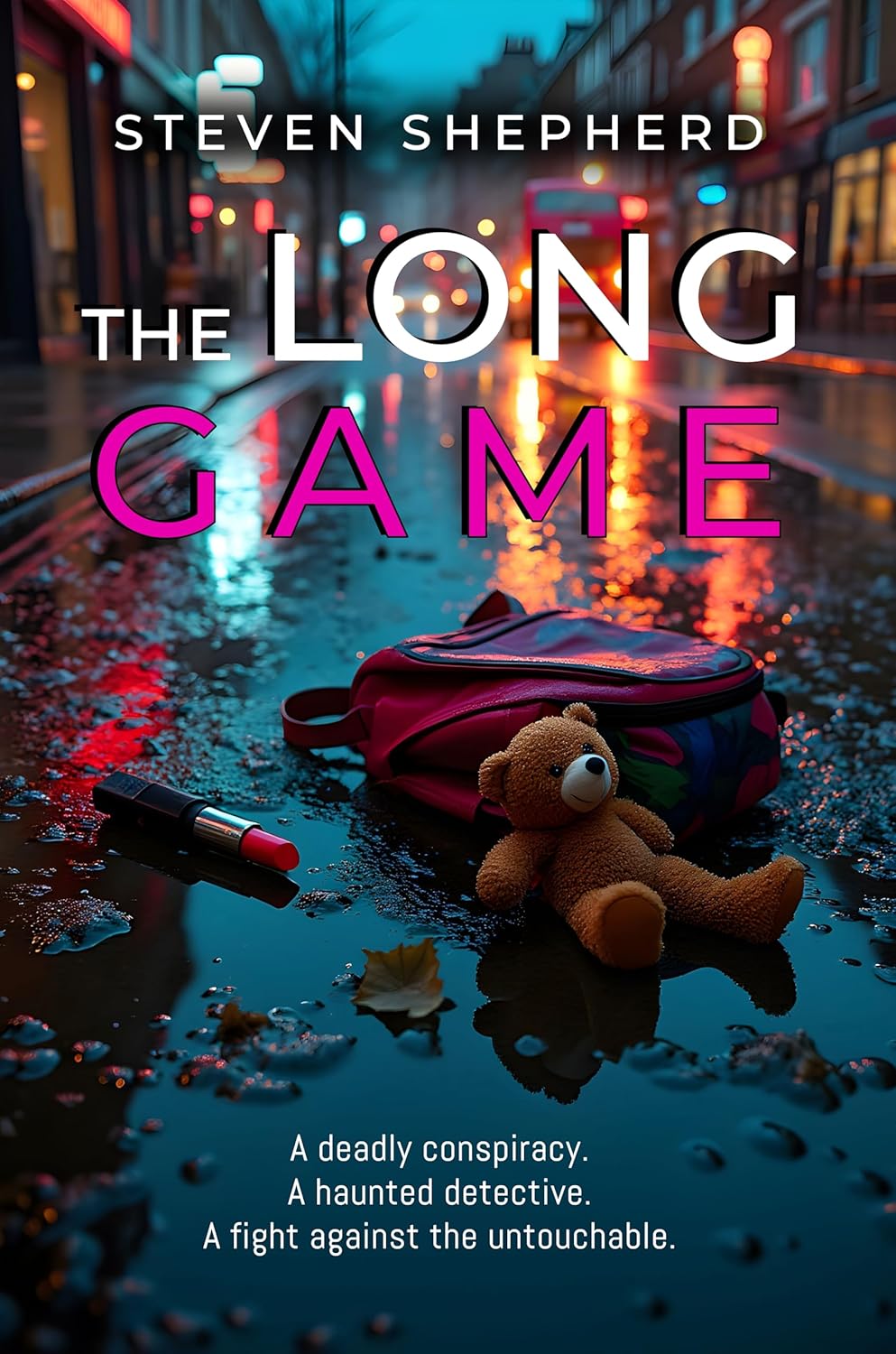
The Long Game is a dark and twisty crime thriller that follows Detective Inspector Michael Dack as he hunts for the people behind a series of disappearances and murders of young girls in London. The story widens fast. What begins as a grim investigation becomes a deep dive into trafficking, corruption, and the awful truth that some monsters hide behind polished shoes and important titles. The book moves through police politics, secret operations, and terrible betrayals, all while pushing Dack into situations that test every part of him.
The writing is punchy and quick, and it doesn’t waste time easing into a scene. It throws you in, cold water to the face. Sometimes the dialogue hit hard and felt real. Other times, it came across a bit theatrical, like people knew they were standing under a spotlight. Still, the energy made it fun. I loved the way tension simmered through even the quieter chapters. I could almost feel the weight on Dack’s shoulders. I caught myself clenching my jaw more than once.
I’ll be honest, though. The book made me uneasy at points. Not because of the writing, but because of the subject matter. It pushes you into rooms you don’t want to imagine. It shows people who feel frighteningly believable in their cruelty. I admired that the story didn’t shy away from horror or emotion. The pacing kept me reading faster than I expected. The emotional gut punches landed, especially whenever the victims came into focus.
The Long Game hits with the same gritty punch as thrillers like The Girl with the Dragon Tattoo and The Reacher series, but it dives even deeper into the shadows where power, corruption, and human cruelty collide. I’d recommend The Long Game to readers who enjoy crime fiction with grit, speed, and a healthy dose of anger at the world. If you like stories where the hero crawls through darkness to drag the truth into the light, this one will keep you turning pages.
Pages 304 | ASIN : B0DYYZ3NY1
Take My Hand
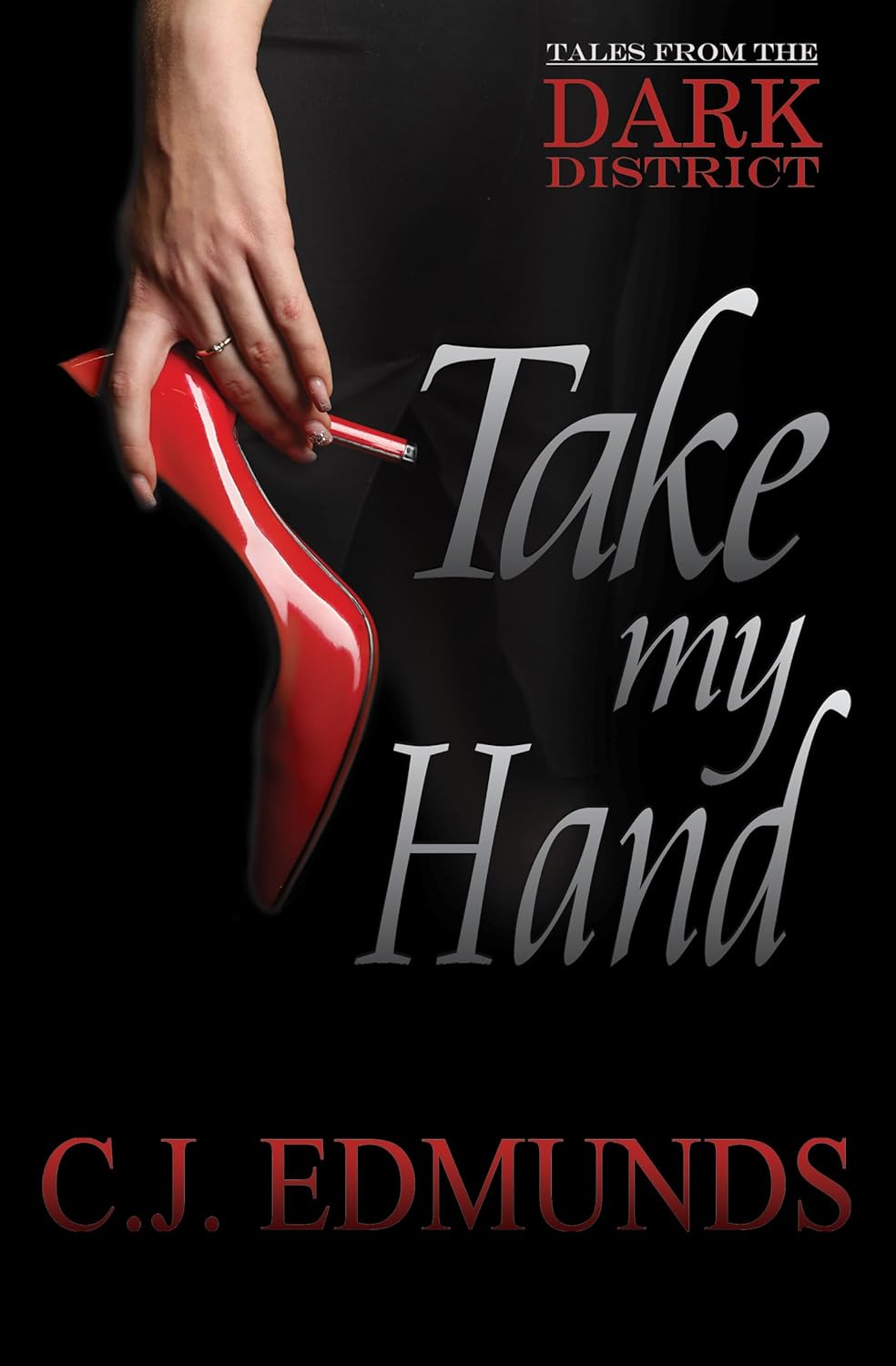

Take My Hand follows Trina, a guidance counselor in the magical and queer-rich Dark District, as she navigates danger, desire, identity, and the messy, tender work of becoming who she is. The story swings between an attack at a local bar, her growing attraction to a new teacher named Robert, and the deeper, rawer layers of her identity as Timothy. The book blends urban fantasy, queer longing, Filipino culture, and personal history into something that feels both intimate and loud. It’s a story about wanting connection. It’s a story about fear. It’s a story about what happens when desire and truth keep bumping into each other until something finally gives.
The writing feels hungry. Emotional. A little chaotic in the best way. The scenes in the school had me smiling. The quiet moments in Trina’s office hit me harder than I thought they would. And the flashbacks to the orphanage knocked the wind out of me. I felt the ache in her voice. I felt the weight of all those years she kept her real self tucked away. The book swings from funny to sensual to heartbreaking with this almost reckless energy. I loved that the author just lets the story breathe and swell without trying to make everything neat.
There were moments that made me squirm because they felt too real. The longing for Robert. The guilt. The shame. The humor she hides behind. All of it felt familiar. The writing is loose and bold. Sometimes messy. Sometimes sharp. And the queer representation, especially around desire and gender and the body, felt honest in a way that isn’t common. I liked how the magic sits in the background. Never overwhelming. Just shaping the world the way emotions shape a person from the inside.
By the end, I felt protective of Trina. I wanted her to win. I wanted her to love someone who actually sees her. I wanted her to stop tearing herself apart just to fit into a skin she didn’t choose. The book made me feel a lot, and I liked that. I didn’t want it to be safe. I wanted it to stay exactly as wild and vulnerable as it is.
If you enjoy queer urban fantasy with plenty of heat, heart, and personal struggle, this book will hit the spot. If you like stories that mix magic with Manila vibes and real emotional weight, you’ll feel at home here. And if you want a character who is flawed, yearning, dramatic, funny, and painfully human, Trina is a character you’ll remember.
Although Take My Hand works perfectly well as a stand-alone story, it’s actually the second book in an ongoing series set in the Dark District. Readers who want the full experience can follow the chronology starting with Take Me Now, and even go further back with its prequel Sojourn. Both earlier works were previously compiled as a duology in the Dark District Primer, so new readers can choose to jump in here or enjoy the series in order for a richer sense of the world.
Pages: 400 | ASIN : B0DJ7JTG4S
The Reality of the Broken

The Demon’s Deceit follows a washed-up addict who wakes up and finds herself under the control of a wealthy, manipulative demon, and is offered a deal: freedom from pain and fear, in exchange for becoming an assassin. What was the inspiration for the setup of your story?
It all started with the question of what would happen if an average woman suddenly found herself with superpowers. I was getting tired of reading fantasy books with suspiciously capable and barely adult protagonists, so I wrote a book that I wanted to read about older and imperfect women like me. The follow-up question then became: how would she get the superpowers to begin with? I can’t help but challenge religion, so I created a race of twisted supernatural beings who may or may not have inspired most religions and who laugh at humanity from the shadows.
There was a lot of time spent crafting the character traits in this novel. What was the most important factor for you to get right in your characters?
I wanted them to feel authentic and unique. I’ve had the privilege of being inspired by so many people from different backgrounds and ways of life, and I wanted to represent the beauty of the unconventional and the reality of the broken.
What were some themes that were important for you to explore in this book?
Redemption and recovery were the main themes revealed during my writing process. Having struggled with mental illness and addiction myself, I wanted my protagonist to “win” after dealing with grief and substance abuse for so long. It’s cathartic for me and hopefully for readers.
When will Book Two be available? Can you give us an idea of where that book will take readers?
The Angel’s Bane (Divine Evolution Book 2) is coming early 2026:
By all accounts, Jeanie Bennett is living the dream: money, power, love—but happiness comes at a cost. A growing paranoia threatens to ruin everything she’s worked so hard to build, because loving a divine means accepting that death lurks around every corner. And another loss is not something she can endure.
In addition to protecting Sam from demons thirsting for his angelic blood, she’s juggling the launch of two non-profits, working through her unresolved grief, and battling her mental illness and addictions. When the mounting challenges become too much to bear, she goes back to her roots to find the perfect second assistant. He’s more than qualified, but his motives might not be so pure.
Now they just have to contend with demons, rival angels, kidnappers, mobsters, and a mysterious foe who gives Jeanie her greatest challenge yet. Will she be able to stop him from taking everything she holds dear before it’s too late?
Author Links: <a href="http://22 Nov 2025 13:16:47 -0800 Andria Carver GoodReads | Website | Amazon
Jeanie’s day started off like any other—hungover in a back alley after another epic bender. But the one-way ride on her downward spiral was about to come to an abrupt end. Kidnapped by a bloodthirsty demon, she is thrown into the dark world of the divines, a supernatural species living secretly among humans.
As the new assistant to a divine intent on rising through the ranks, Jeanie is given an assignment: kill an angel so her demon can take his place, or die trying. In order to achieve the impossible, she’ll have to rely on the powers given to her by her new master, along with her quick wit and talent for bluffing.
But not all divines are what they seem, and Jeanie must choose to either defy her morality or die in utter agony. A dangerous incubus steps in and promises to help her, or is he just using her too?
Wickedly funny, unexpectedly moving, and delightfully twisted. The Demon’s Deceit slashes through genre conventions with a bloody dagger in one hand and a smoldering joint in the other. Think Fleabag as Buffy the Vampire Slayer with extra helpings of humor, peril, and passion thrown in.
Contains sexual content, references to drug addiction and abuse, and probably too many curse words (definitely too many)
Believable Dark Fantasy

The Siren’s Daughter follows a young, spirited girl, drawn irresistibly to the sea, who finds a mysterious conch shell that lures her away from her family. What inspired you to retell this story in this manner?
I was working on another project, making cultural heritage cards. When researching CHamoru legends, I found that the Marianas had their own sea siren lore. Because of my Latino heritage, I know that “sirena” is Spanish for “siren.” While “Sirena” is a beautiful name, I started wondering if maybe the legend wasn’t actually about a girl named Sirena, but was a warning based on what happened to a girl claimed by a siren. A Spanish word for a warning instantly placed the story in Spanish colonial times, and I imagined that it was a priest who wrote the warning and did not care to keep the girl’s name. The details of the rest of the story just fell into place as I imagined it more. I really liked the whole premise of a siren claiming the girl as her own, and the details being lost to time because of colonial control. I liked it more and more as I kept developing the story.
What were some themes that were important for you to explore in this book?
The legend of Sirena is a Guam legend, but I wanted to make it more of a general CHamoru legend by integrating it with siren lore in the other Mariana Islands.
As with my other works, I want to share CHamoru heritage with readers everywhere. In The Siren’s Daughter, I saw an opportunity to share with audiences another part of CHamoru history – Spanish colonization. I wanted to mention the wars against the Spanish. I also wanted to mention the loss of spiritual and traditional knowledge because the Spanish killed off traditional healers.
What were some goals you set for yourself as a writer in this book?
My main goal was to create a believable dark fantasy that shares CHamoru heritage with readers. I wanted to give a glimpse of life under Spanish rule. But to be honest, I really liked the story that I had imagined, and I was excited to write it.
What story are you currently in the middle of writing?
I am currently working on Books 2 and 3 of what I am calling The Yo’Åmte Trilogy. The Makana’s Legacy is Book 1. I like the outlines that I have, and I wish I had the time to devote to these stories. These next two books will actually bring up topics that even many CHamorus might not have thought about. Because these stories delve deeper into the role of Yo’Åmte (traditional healers) in CHamoru society, I will be consulting with an expert on the topic of Yo’Åmte to help me stay accurate and respectful in my portrayal of Yo’Åmte.
Author Links: GoodReads | Facebook | Instagram | Website | Amazon
After the wars, Hagåtña fell hushed. Tasi – restless and bright – slipped to the reef where a siren waited with a black opal conch. At home, her mother’s patience frayed; her grandmother warned that spirits were listening. One bitter outburst became a curse, and the sea answered.
Sailors spoke of a girl in the foam. Priests spread a warning about la sirena – the siren. The word traveled farther than the truth – until it swallowed the girl’s name.
The Siren’s Daughter is a haunting CHamoru retelling set just after the Spanish-Chamorro wars: a tale of mothers and daughters, desire and duty, and what the ocean keeps while history erases.
Includes a traditional telling of the Sirena legend and an Author’s Note.
Exploring Fear

Fear Struck follows a crime writer who, while writing his latest murder mystery, has his door broken down by police and is arrested for a murder that looks like one of the scenes in his book. What was the inspiration for the setup of your story?
As a writer, I often feel like a conduit for someone else’s ideas, with words flowing so quickly that I sometimes wonder where they are coming from. This experience sparked a question for me: what if a writer suddenly became the instrument for someone else’s story in a very real and dangerous way? This personal connection to the story became the seed for Fear-Struck and its psychological thriller setup.
The truth is, many of my novels begin with a simple “what if.” Whispering Lessons is a good example. I asked myself, what if someone had secretly followed Jesse James and his gang, watched them bury their stolen treasure, and then dug it up after they rode away? Could that be why so many of those legendary treasures have never been found? Those two words, “what if,” open the door to endless possibilities, and they are often the starting point for my strongest storylines.
What are some things that you find interesting about the human condition that you think make for great fiction?
There are so many layers to the human condition that writers need to pay attention to, because those layers are what make fiction feel real. In Fear-Struck, I delved deep into the debilitating impact fear can have on a person. It doesn’t just consume the main character. The suspect gets overwhelmed by it, too. Even the people in the prison around him react out of fear.
Fear is universal. It shapes decisions, drives behavior, and sometimes clouds judgment. Our minds are incredibly powerful, and our thoughts can either protect us or harm us. In this story, fear becomes almost a character in its own right, influencing everyone in its path. That kind of emotional truth, rooted in what people really experience, is what makes fiction resonate.
When you first sat down to write this story, did you know where you were going, or did the twists come as you were writing?
For Fear-Struck, I actually did know the storyline before I began writing. That is unusual for me, as I am not usually a plotter, but in this case, I could clearly see the characters and the journey ahead of them. I knew the ending, and I knew how I wanted to move from the moment of the arrest all the way to the final reveal.
What mattered most to me was exploring fear, not just telling a crime story. I wanted to look at how fear shapes people from the inside out. The reviews have been incredible, and many readers mention how closely they connect with the characters and their reactions. I think that connection exists because fear is something we all face in one way or another. It is a profound human experience, and that truth comes through in the story.
What is the next book that you are working on, and when can your fans expect it to be out?
I am currently writing Book Two in the series. It starts as Kutter is still dealing with the emotional aftermath of what happened in Book One, where he was arrested for a murder that resembled a scene in his own book. These lingering effects push him into a situation unlike anything he has ever faced before. This new challenge forces him to grow in unexpected ways.
In this next installment, Kutter, the main character from Fear-Struck, finds himself sitting across from an unapologetic and prideful serial killer. His personal revulsion toward this man directly clashes with his responsibility to uncover the names of the victims. That internal battle is something many of us understand, because we all face moments where our emotions collide with what we know we must do.
I am thrilled to share that I am aiming to have the next book ready for readers in early 2026. I cannot wait to continue Kutter’s journey and share the next chapter with you all.
Author Interview: GoodReads | BlueSky | Facebook | Pinterest | Website
Detective Tweed believes Kutter’s pages hold the truth. Kutter swears he’s innocent. Yet with each revelation, a darker reality emerges—one bound to him by blood.
Relentless and chilling, Fear Struck will keep you guessing until the final, shocking twist.



 LITERARY TITAN