Blog Archives
A Confounding World
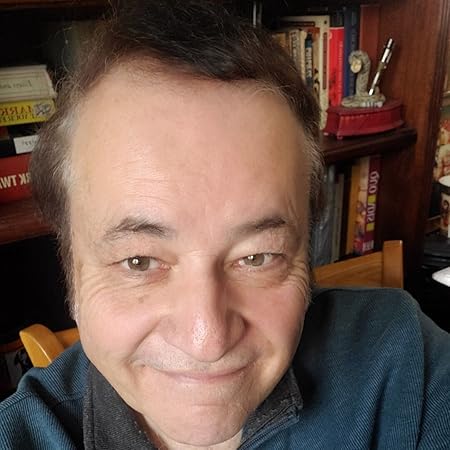
Not Yet Your Time follows a self-deprecating office worker whose mundane New York life derails after a near-death encounter with a mysterious woman, leading him to question everything he knows about time, fate, and faith. What was the inspiration for the setup of your story?
I have always felt that the best drama or comedy follows from individuals being placed in situations for which they are utterly unprepared. (Being trapped on Everest while climbing is not the same as crash landing on Everest in your swim trunks) I have also always had the sneaking suspicion that our history, our myths, and the foundations of our culture are on very wobbly grounds. Finally, as someone who spent a full career in marketing, I know that reality is just a press release away from changing.
I found Titus to be an interesting character who gets pulled into a strange situation and manages to adapt despite everything that happens to him. Were you able to achieve everything you wanted with the characters in the novel?
When I embark on creating, in effect, an entire world, I need a central character to react to, digest, and pass through it. I needed Titus to be that person. I gave him the vulnerabilities and hidden strengths to attempt to deal with a confounding world that has sucked him in against his will, only because he was attracted to a mysterious woman. I was also pleased with Kanenas, my, in effect, flawed and reluctant messiah. A good man with ideas, totally unprepared for the greatness that is hung on his shoulders. (Inside secret) I patterned him after the attitude and speech mannerisms of the late actor Peter O’Toole, also a great and deeply flawed person.
I found this novel to be a cutting piece of satire. What is one thing that you hope readers take away from your novel?
Absorb all you can in life from as many sources as you can tolerate because no one person or philosophy has all the answers.
What is the next book that you are working on, and when can your fans expect it to be out?
The world’s greatest historian has a dark secret. He travels back in time and gets deathbed confessions from great figures in history. A Gesture to the Wind is narrated by the historian’s unsuspecting assistant, who is drawn into a world of illegal historic relic dealers, Russian spies, EPA investigators, and the Battle of San Juan Hill, all while developing a deep and abiding friendship with a time-displaced Ben Franklin. (As you can see, I’m having fun.)
Author Links: GoodReads | X (Twitter) | Facebook | LinkedIn | Website | Amazon
This odd trio embark on a perilous odyssey that includes imprisonment in a labyrinthine security complex under the ruins of the World Trade Center; flight through a murky unfinished tunnel beneath the Hudson River, a safe house masquerading as a defunct museum; and a perilous train ride to link up with a terror cell. Ultimately, the reluctant Titus will face a rendezvous with life, love, death, and destiny in the green wilds of New York’s Hudson Valley.
Deadly Antagonist

The Whistle of Revenge finds Sherlock Holmes and Irene Adler married and living under assumed identities, fighting to rescue their son who has been kidnapped by their nemesis. What was the inspiration for the setup of your story?
I wanted to write book four of the Sherlock Holmes and Irene Adler Mysteries with kidnapping as the premise. Finding a worthy adversary for Holmes was the tricky part.
I enjoyed the shifts in perspective. What do you find to be the most challenging aspect of writing from various characters’ points of view?
After much deliberation, I decided on Jack Stapleton, the deadly antagonist from The Hound of the Baskervilles. Although Jack was presumed dead, meeting an a grisly end on the Great Grimpen Mire, his body was never found. He was such a great character to resurrect. I decided to give him his own POV so readers could get to know a bit more about the celebrated Detective’s old nemesis and discover what he’d been up to for the past seventeen years.
Writing from Jack’s perspective was the most challenging because so little was known about him. I enjoyed developing the character. Some of my readers told me they felt a little sorry for him at times.
How do you balance story development with shocking plot twists? Or can they be the same thing?
It’s tricky to balance the two. I am a panster writer, so plot twists and story development come to me as I go along. However, I did a fair bit of outlining for Whistle, mainly due to the complexity of the story.
Can fans look forward to more from Holmes and Adler? What are you currently working on?
I plan to start book five before the end of this year, which will find Sherlock and Irene in the USA, which will make a nice change from all those tricky Italian translations. It’s going to be another controversial story with a shocking plot twist that readers will not see coming, involving events from Sherlock and Irene’s past, which will have far-reaching consequences for our intrepid duo. I can’t wait to get started.
Author Links: GoodReads | X (Twitter) | Facebook | Website | Amazon
If you loved Conan Doyle’s, The Hound of the Baskerville, prepare to be enthralled by KD Sherrinford’s captivating follow-up, The Whistle of Revenge.
The deadly antagonist, Jack Stapleton, makes a spectacular return to the city of Milan in pursuit of his old nemesis, the celebrated Detective Sherlock Holmes.
Adopting the enigmatic persona of Janus, a vengeful Stapleton, along with the Italian mafia, wreak havoc on the Italian horse racing fraternity and fledgling car manufacturing industry, and kidnapping Holmes’s beloved son as part of their evil and well-executed master plan—Operation Whistle.
Will Holmes, Irene Adler, and their trusted ally, Inspector Romano, crack the code, rescue the boy, and unmask the deadly Janus?
Set against the backdrop of modern Milan, mind games and misdeeds of the highest order play out as the story reaches its thrilling and memorable conclusion.
Friday at Four


Gert Richter’s Friday at Four opens as a story about a man, his marriage, and his dog, but it quickly becomes something far more mysterious. The narrator, David, is a researcher whose logical world begins to blur when he finds an unexpected way to communicate with his dog, Lea. What starts as an odd experiment turns into a quiet, haunting meditation on connection, identity, and what it really means to be understood. The novel moves gently between the ordinary and the uncanny, asking big questions in the smallest moments.
What I found most striking about this book is Richter’s ability to blend warmth with unease. The early scenes feel almost playful. David’s tone is ironic, funny, even a little smug, but slowly, the edges soften. There’s something raw and human beneath his intellect. Richter writes with an understated confidence that makes even the strangest moments feel believable. You can feel the pull between love and loneliness, curiosity and fear, running through every page.
The prose itself is clear and unhurried, yet full of quiet emotion. Richter’s descriptions of everyday things, a glance, a walk by the river, the silence after a conversation, carry a strange electricity. I found myself rereading certain lines just to feel their rhythm again. The book doesn’t lecture; it invites reflection. You sense the author’s fascination with how people and animals connect, how relationships can both reveal and dissolve who we are.
What makes Friday at Four memorable isn’t its plot, but its mood, the sense of drifting between clarity and confusion, between science and feeling. It’s not a loud book, but it lingers. I finished it feeling both calmed and unsettled, the way you might after a long, searching conversation that doesn’t quite end.
I’d recommend Friday at Four to readers who enjoy introspective fiction, books that take their time, that ask more questions than they answer. It’s especially for those who like stories that explore thought and emotion without ever spelling things out. If you’ve ever found yourself looking into your pet’s eyes and wondering what they see when they look back at you, this novel will feel strangely familiar.
Pages: 320 | ISBN : 978-2940364602

Give the World a Consciousness

Wasp Oil follows a haunted cop as she navigates a web of corruption and faces off with an otherworldly presence that feeds on fury. Where did the idea for this novel come from?
I’m a big Stephen King fan. In which some of his early novels had a messy direction and at times absurd riffing on certain subject matter. In the best way possible, of course. During the process of writing the first draft, I listened to the audiobook of his novel, Tommyknockers. It was strange, gripping, zig-zagged in theme and direction, basically, you had no idea where the story was gonna go, and there were so many moments where I paused and audibly said: WHAT? WHY STEPHEN, WHY?
Knowing he wrote the story while under the influence of drugs for the most part, I asked myself: What would a sober version of this story look like? Would it be tamer or in your face in such a stomach- clenching and suffocating way that the reader becomes swallowed by the atmosphere of the world and the character’s blood-curdling anger and anxiety?
In addition, when I was watching TV one day, totally spaced out from the program, becoming background noise while I was staring at my TV, I remembered the grossest injury I had. I was working at a zoo. Repurposing old shipping containers with lead-based paint and thinning rusty steel. I was cutting sections of a metal wall my co-worker and I had fabricated as a divider for the three black bears that were going to use these containers as a hibernating den. I had all my safety gear on and started cutting one of the center pieces with a grinder. Silly me forgot the blade spun in my direction and locked it on. Thinking I was safe. Well, a bur I couldn’t see snagged the disk, the grinder locked on it, then flew at my face. In a fraction of a second, I could’ve had my brain severed or my skull cracked. I swung out of the way as this red-hot tool flew at me, then bam!
The disk cut through my arm. Deep into my skin, fatty, and muscle tissue. I screamed my head off until I got paper towel to put pressure on my wound, then called for help while I was in shock. First aid came, giving me the courage to look at my gaping wound, which was surprisingly not bleeding, and then the rest was history. That moment of my life was so eye-opening and biologically invigorating, etched into my brain, that it inspired the brutality and ick factor in Wasp Oil.
What is it that draws you to the fantasy genre?
Fantasy allows me to embrace the level of imminent danger for mortal characters. While also creating questions of what the right circumstances are, I can impart on my characters and give the world a consciousness that could dictate what level of power and effectiveness it has on who or what drives the story forward. Fantasy also increases the reader’s interest, especially if I create characters with mortal limits. Furthermore, any characters with fantastical capabilities could either be seen as all-powerful or blind by the reasoning behind their otherworldly and even mortal agenda.
What were some themes that were important for you to explore in this book?
Anger was the most important theme. I spent so many years hating myself due to my belief that I had to behave a certain way to keep those closest to me happy. Give them a sense of trust in the version of me that makes them feel good in terms of what role I play in their life. Once I saw that my truer self didn’t bother anyone, and especially myself, I recognized how much toxic anger and energy I was wasting on destroying and even hiding from who I truly am. Even questioning if I ever was my true self. In my 20s I was actively dating and had friends come and go in my life. But none of those relationships were ever genuine because I was never kind to myself. I gave everyone I loved what I believed made them happy and feel safe. Hoping I’d get the same in return. Which I did in most cases, but the love and trust never felt real or steady.
Goods and evils of anger are what truly summarized all my thoughts as I was writing this book. I knew anger as the main theme, especially as an umbrella term for other themes such as anxiety, regret, and maddening drive, would rub people either the wrong way or be overwhelmed by the rawness of the extremes I put my characters through. Nevertheless, I fought my nerves that wanted me to stop writing and do it anyway. Even if some readers might be put off by how intense the story is.
Can readers look forward to seeing more releases from you soon?
I will be writing one more book taking place in Halburton. Making it third to Black Rose Cocoon and Wasp Oil. The book will be called: Dead Mirrors Follow. The theme being: How do we deal with the ghosts of our past? Be they people, our mistakes, and the moments in which we wished we reacted differently. As for the storyline, all I’ll say is that it won’t be as wonderfully messy as Wasp Oil, but it will surprise you, scare, and hold you in ways you might not know how to feel. Storytelling is not about making you feel, then move on with your life. It’s about giving you pause in the rhythm and pattern you created to reorient yourself and appreciate the good in your life.
Author Links: GoodReads | X (Twitter) | Facebook | Amazon
Funhouse Mirror

DimWitts: The Big Stupid is a genre-crossing novel with elements of fantasy, dystopian, and satire as well. Did you start writing with this in mind, or did this happen organically as you were writing?
I wanted to write something funny in the speculative fiction category without committing entirely to one genre. Admittedly, a few subplots emerged organically along the way, but the core story and the character arc of the protagonist remained largely consistent with my original outline.
Some events in the book were chillingly similar to real-life events. Did you take any inspiration from real life when developing this book?
My inspiration came directly from the last American election. It occurred at the same time the Canadian Parliament was being prorogued, and the rest fell into place around it.
I found this novel to be a cutting piece of satire. What is one thing that you hope readers take away from your novel?
Fulfillment. Enlightenment. The best satire is a funhouse mirror; it exaggerates flaws to ridiculous proportions, allowing an audience to see what could happen if a bad idea is given too much credence. I hope to scratch that surface, at least a little, and maybe get some laughs along the way.
Will this novel be the start of a series, or are you working on a different story?
This is book one of three. I am currently working on the “dark middle child” of the series and hope to have it finished by the spring of 2026. Book three is stewing nicely on the back burner and will likely be in print shortly thereafter.
Author Links: GoodReads | Website | Amazon
Lancaster Dirk, the newly elected American president, is on a race to destroy his enemies and restore the glory of the republic. But to do it, he needs something extremely important. Something Canadian.
A dirty old smelter in a dirty old B.C. mountain town — with an even dirtier old secret.
Balanced between worlds, the past and future collide in a tale that spans the globe — and the very edges of reality itself.
Terra Secundus: A Novel of Colonization of Titan

Terra Secundus is a richly imagined sci-fi novel that follows Paul Rexton, a soldier-turned-news-explorer sent to report on humanity’s colonization of Titan, Saturn’s largest moon. Through his journey, the book explores ambition, identity, and the dangers of unchecked progress. From Earth’s “Longevity Wars” to the discovery of Blue Ice, a mysterious energy source that could reshape civilization, the story blends political drama, personal reflection, and wonder at the unknown.
The author paints a future that feels both vast and believable, filled with new technologies, evolving religions, and the long shadow of human history. The glossary of terms felt like stepping into a fully realized civilization. Yet, at its core, the story stays personal. Paul isn’t a stereotypical space hero; he’s a curious, conflicted observer trying to make sense of a world that keeps expanding faster than its morality.
The writing often feels old-fashioned in a good way, dense, descriptive, and philosophical. When Paul’s editor, Lana Emerson, sends him on his Titan assignment, their exchange brims with tension and respect. It’s less “blast-off adventure” and more about duty, curiosity, and the cost of truth. I especially loved the sections describing Titan itself: the orange skies, the methane seas, and the eerie silence of an alien world. The conversation between Paul and Evelyn Best, a local officer, about Blue Ice and the fragile ecosystem beneath Titan’s crust perfectly captures the book’s sense of awe and unease.
What makes Terra Secundus stand out is its focus on people, not just technology. The Artborn androids, like Erika, Paul’s robotic companion, are more than machines. They’re reflections of humanity’s desire to create, control, and connect. The pacing is slow at times, but it suits the introspective tone. Each scene feels like it’s building toward something deeper, a question about what progress really means.
Terra Secundus isn’t flashy space opera; it’s thoughtful, emotional, and quietly haunting. It’s perfect for readers who enjoy rich, idea-driven science fiction like The Expanse or Solaris. If you like stories that make you think long after the last page, this one will stay with you like a distant echo from the edge of space.
Pages: 157 | ASIN: B0FPBN7GQ8
Time to Publish

The Long Red Hair and Other Short Stories is a collection of short stories, flash fiction, essays, and some true stories, shifting seamlessly between humor, nostalgia, and reflection. What was the inspiration for this collection of stories?
I felt it was time to publish a collection.
How did you decide on the themes that run throughout your book?
There were no particular themes. The author notes best describe what happens in the book.
Were there any stories that were particularly difficult to write? If so, why?
Writing about both childhood and adult sexual abuse, such as in my story, “Evie’s Shadows,” was challenging.
What is the next book that you are working on, and when can your fans expect it to be out?
I am in the process of writing a novel. Sorry, no spoiler on the topic. It is going slowly. I hope to complete it within a year.
Author Links: GoodReads | Facebook | Website | Amazon
I am indebted to the many good folks taking part in various writing groups who have included me over many years. We shared our work, listened to others’ writing, and offered writing prompt suggestions; some of the fiction stories here originate from these suggestions.
What Might Be Possible

Dark Place centers around three students who stumble on an unsettling truth that society is being manipulated, and those labelled as “dispossessed” are being erased from existence. Where did the idea for this novelette come from?
I wanted to develop a near-future story in which a worldwide authority invokes extreme emergency powers to control a burgeoning population, resulting in the loss of freedom and rights.
The idea of a hidden penal colony came to mind, and a social scoring system would be the mechanism to segregate and banish the dispossessed.
My writing of the story started as a typical dystopian trope, but as it grew, I didn’t want it to be stark black and white: ‘good’ idealistic rebels versus ‘evil’ authority. So it becomes more nuanced when the three protagonists are stranded in the Dark Place and learn that it has a greater purpose with profound consequences. The protagonists must navigate not only external dangers but also their own internal struggles, confronting differences between themselves and moral dilemmas.
Dark Place has been described as subverting dystopian tropes and I hope readers find that rewarding.
What are some things that you find interesting about the human condition that you think make for great fiction?
There is a degree of anxiety in the world today about the future. Perhaps every generation in the past has had similar misgivings.
My intention is to write about what might be possible a few steps down the road. I don’t want to write far-future settings with fantastical technologies far removed from what we have now. Grounding the story in a familiar world, echoing some of today’s challenges, has more resonance.
The science inserted in the fiction, I felt, was well-balanced. How did you manage to keep it grounded while still providing the fantastic edge science fiction stories usually provide?
A lifelong interest in the societal implications of technology began in the 1980s when I taught the new technologies of microelectronics and microcomputers in colleges and universities. This early professional life directly influenced my creative pursuits, leading to my first story Larrs’ Ghost (published in a computing magazine) which explored a “computer-generated world” long before virtual reality was a common term. More recently Close To You is a cautionary tale about the imminent dominance of big corporations developing ever more powerful artificial intelligence and virtual reality.
Dark Place is set in a time just down the road from now, so the technology is a plausible extension of today: drones are becoming more advanced; flexible microelectronic circuits (I call them membranes) already exist in rudimentary form; AI is advancing at speed.
Can we look forward to more work from you soon? What are you currently working on?
I feel there’s a lot more to develop with the premise of Dark Place. Although the ending finished with a profound reveal, I deliberately left some aspects of the story open-ended that mirrors the uncertain future facing the characters and the broader society. The lack of a neat, conclusive resolution hopefully encourages readers to reflect on the story’s themes beyond the final page.
So now I’m working on parts two and three. Part two is how the people in the camps progress in the knowledge that the outside world is in total collapse and how they rise to the challenges they face. Part three is how they defend themselves from an external existential threat. How much will they fall back on technology to protect their new world? The three protagonists will have increasingly conflicting ideas on how they see their future world.
Author Links: Facebook | Website
In a near-future world ravaged by resource depletion, society is controlled by the Authority, which enforces a strict social credit system. Failure to maintain a high enough score means banishment to the mysterious “Dark Place.”
When three inquisitive students, Ros, Femke, and Domhnal, discover that parts of a hidden Earth have been concealed from the privileged population of the “Light Place,” they are determined to expose the Authority’s brutal culling system. To do so, they must intentionally lower their scores and enter the Dark Place, only to discover it holds secrets far more profound than they ever imagined.
Dark Place is a gripping novelette that transcends typical dystopian narratives. Praised for its compelling dialogue and nuanced characters, a testament to author Christopher Kell’s experience as an award-winning playwright, the story is a masterful exploration of moral ambiguity, technology’s ethical implications, and the enduring resilience of the human spirit. It is a thought-provoking journey that invites readers to reflect on the nature of freedom, the quest for truth, and what it truly means to survive. This powerful and multi-layered examination of contemporary issues through a dystopian lens is a key element of the novelette’s intellectual value and demonstrates the author’s ability to imbue a short work with significant philosophical weight.



 LITERARY TITAN