Blog Archives
The Wisdom of Wood Volume 1 – Hazelnut


The book unfolds as a mythic tale woven through time, place, and spirit. It follows Samuel Alexander and his descendants as they become entangled with Glastonbury’s mysteries, sacred symbols, and the haunting legacy of a ring unearthed at Bride’s Well. The story moves between dream and waking life, myth and history, layering Celtic lore, Druidic traditions, and Arthurian echoes into a generational saga. Characters are guided by visions, by voices from the otherworld, and by trees themselves, whose spirits carry wisdom and warning. The narrative blends myth with personal struggle, and family with fate, to create a tapestry that is both mystical and relatable.
What struck me most was the style of the writing. It has a rhythm that feels almost incantatory. The sentences often unfold like chants, looping and layering symbols until I found myself immersed in the cadence rather than just the plot. At times, I’ll admit, I felt adrift, as if the story cared less about holding my hand and more about pulling me into its current. Yet I also liked that sense of surrender. It mirrored the characters’ own confusion when faced with forces larger than themselves. Some passages soared with imagery that felt cinematic. Others slowed down, but always with a sense that something sacred was just out of reach.
On a more emotional level, I found myself unexpectedly moved by the family thread running through the myth. Samuel’s death and the passing of his journal and ring to Eleni and Sophie gave the narrative a raw anchor in grief and legacy. The mystical voices, priestesses, and mythic archetypes would have been too abstract for me without those human losses at the center. That’s where the book hit hardest. It made me think about how much we inherit without knowing, and how myths are not just stories but shadows we live under. Still, I sometimes wished for a bit more grounding in the everyday. The dreamlike prose was beautiful, but it could also feel heavy.
I think this book is best for readers who enjoy being swept up in myth and who don’t mind when the line between story and symbol blurs. If you like Joseph Campbell or Marion Zimmer Bradley, you’ll probably find yourself right at home. For me, it was enchanting. I’d recommend it to anyone willing to slow down, sink into layered imagery, and let the wisdom of wood whisper its way through their imagination.
Pages: 381 | ASIN : B06XCPG7W1

Infernal Wonderland

When I first cracked open Infernal Wonderland, I wasn’t sure what to expect. What I found was a sprawling, neon-drenched fever dream of a story. It follows Jadecan, an akiko, who stumbles into the submerged Amber City, a broken metropolis that feels alive and dead all at once. From the very first chapter, the world is suffocating, strange, and brimming with danger. Automatons sell people for parts, reptilian gangs lurk in the shadows, and a drug called Ichor twists minds and bodies. The book unfolds in five parts, each one pushing Jadecan deeper into madness, violence, and strange alliances, while the PA system keeps whispering about revolution like a ghost that refuses to die.
This is a unique book. Sometimes thrilling, sometimes disorienting, and often unsettling. Killam has this way of painting a scene that engages your senses. There were moments where I wanted the story to breathe, to let the horror and beauty of Amber City sit with me instead of racing ahead to the next grotesque fight or cryptic exchange. Still, the book’s voice stuck with me. It’s sarcastic, it’s grim, and it doesn’t let you forget that the world is cruel. I found myself both grinning at the dark humor and wincing at the relentless blood and guts.
What really hooked me, though, was the mix of philosophy and pulp. Amidst all the gore and chaos, characters stop to talk about the meaning of life, about want versus need, about existing without actually wanting to exist. Those conversations gave the book an odd tenderness that surprised me. I could feel the author reaching for something bigger.
Infernal Wonderland is haunting and oddly beautiful. It’s not a book for someone looking for a straightforward plot or a clean arc. It’s for readers who want to sink into a unique atmosphere, who don’t mind being jarred, and who can handle equal parts gore and poetry. If you’ve ever loved stories like Bioshock or Blade Runner but wished they were darker and stranger, this book will feel like home.
Pages: 421 | ISBN: 978-1-957195-18-6
Shaking the Trees

Shaking the Trees is a raw and compelling novel about moral courage, inner turmoil, and the weight of trying to save a dying planet. It follows Jake, an environmental activist, who is pushed to sabotage a coal rail line in a desperate act of protest. The story unfolds through Jake’s psychological descent, torn between love and revolution, and is narrated alongside the perspective of his dead great uncle, whose memories of war echo Jake’s own struggle. The book dives into themes of fear, hopelessness, resistance, and love that is deeply personal and political at the same time.
I was floored by the emotional honesty of this book. It’s not clean or easy or heroic in the usual way. The writing grabs you by the collar and pulls you through Jake’s mess of thoughts. His anger, his guilt, his love for Julie, and his bone-deep exhaustion with the state of the world. The style feels like a quiet storm. Sharp, poetic, broken in all the right places. Sometimes the language is jagged. Sometimes it flows like music. There are no simple answers here, and the writing makes you sit with the discomfort. I admired how brave it was.
The ideas in this thing are brutal. It’s about climate catastrophe, sure, but more than that, it’s about how humans lie to themselves to stay comfortable. It made me angry in a way I didn’t expect. Not righteous rage, but this cold, rattling kind of grief. I could feel Jake’s frustration. The protests that don’t work, the submissions no one reads, the same battles fought over and over. And the people around him, well-meaning and stuck. It hit hard. The author doesn’t romanticize activism. He shows what it costs you. How it tears up your insides. And still, you keep going. Or you don’t. That’s the ache at the heart of it.
This book is for anyone who’s ever felt helpless about the state of the world. It’s for activists. It’s for idealists who are starting to crack. It’s also for people who love someone who’s drowning in purpose. The story is haunting, personal, and painfully relevant. If you’ve got a soft spot for stories about inner conflict and quiet rebellion, read this. But be warned: it doesn’t let you off easy. It makes you feel everything. And it’s worth it.
Pages: 380 | ASIN : B0FJVR3V7L
Case Files from the Nightfall Detective Agency: Fury of the Vampire
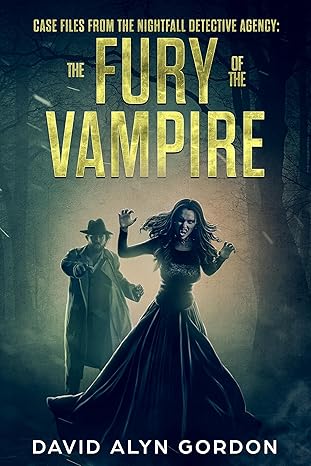
David Alyn Gordon’s Fury of the Vampire is a sweeping supernatural thriller that jumps across centuries, from ancient Jerusalem to 1920s Arizona, weaving together myth, history, and horror. The story follows vampires, werewolves, jinn, and humans caught in webs of betrayal, love, and ambition. At its heart is the eternal struggle between Lilith, Abram, and a cast of characters tied to mystical objects like the Ring of Solomon. Intertwined with this are political conspiracies, mob dealings, and the simmering tension of racial injustice in early 20th-century America. It’s a bold mix of folklore, pulp action, and noir detective work.
I enjoyed how daringly the author blends myth with history. Seeing Lilith spar with Abram in one chapter and then finding myself in the smoke-filled dance halls of Prohibition-era Tucson in the next kept me hooked. The pacing is brisk, and the action scenes pop with energy. I found myself leaning in whenever vampires clashed with werewolves or when political schemers whispered in dark corners. The dialogue can be blunt, sometimes even melodramatic, but it fits the pulpy, high-stakes feel of the book. It reminded me of flipping through an old serialized adventure, where the thrill matters more than polish.
Some passages carry raw emotional weight, like Malia grieving for her cousin, while other scenes are exaggerated. That didn’t ruin the ride for me, though. If anything, it made the book feel unpredictable. I enjoyed how unapologetically it leaned into its own wildness. It’s not a quiet or subtle novel; it’s brash, bloody, and loud. And I have to admit, I had fun with that. Sometimes I rolled my eyes, other times I grinned, and a few moments genuinely made me pause and think, especially the parts dealing with cultural memory and injustice.
I’d say Fury of the Vampire is best for readers who love fast-moving supernatural adventures, who don’t mind a little chaos in their fiction, and who want something that feels both familiar and refreshingly strange. If you’re into folklore reimagined as a gritty pulp detective saga, this is your book. It’s messy, it’s fierce, and it absolutely has bite.
Pages: 164 | ASIN : B0FLTB1L71
Everyone Is Valuable

Santa’s Last Ride follows the Claus family after Santa throws out his back feeding the reindeer and decides it is time for his twelve-year-old son to take over; however, he does not want the job, but his sister does. What was the inspiration for the setup of your story?
The story originated with James. Getting tired of Christmas songs on the hours long trip to Iowa for Christmas, he began to tell this story to his kids to pass the time. He has two children – an older son and younger daughter also aged two years apart. They were his greatest inspiration.
I loved the interactions between Christopher and Kristy; they were believable and entertaining, with heartwarming moments as well. What was your approach to writing the interactions between characters?
James and I are siblings. There were five more of us growing up. We are stuffed full of sibling interactions, mostly of a humorous nature. We grew up in a rambunctious and laughter filled environment.
What were some themes that were important for you to explore in this book?
Most important is the idea that everyone is valuable in their own way and not even a disability or a perceived disability changes that. In fact, I got involved in this book when James sent me an email of a very bare bones version of the story and asked me to put it in legible form. James has dyslexia, which was why he asked for my help. After much internet interact, we added to and filled out the story until it became ‘our’ book.
Will there be a follow-up novel to this story? If so, what aspects of the story will the next book cover?
We have had feedback from a number of fans asking what comes next. Some want to know when the movie is coming out. There are a number of issues we see that could be addressed in future. Considering their new positions in the Claus family how do Chris and Kristy, still quite young, handle the adults in the world they will have to interact with? From the North Pole how do you go to school, college, or date? With the planet warming up what will the family do about a shrinking North Pole? There’s no ground under the North Pole ice. What’s next for Mr. and Mrs. Claus?
Author Links: GoodReads | Website
While Santa’s mind is fixed on training Christopher, Mrs. Claus, daughter, Kristy, and Christopher are determined to find a way to tell Santa the obvious – which he seems to be stubbornly ignoring – that Christopher is unsuitable for the job. The family is keeping Christopher’s secret and it will only be sprung on Santa on Christmas Eve. Meanwhile Kristy, just ten years old, feels she is up to the task of taking Santa’s place.
Christmas Eve finds Santa and his trainee taking off for high flying adventures around the world, including natural disasters – angry dogs, cracking ice – and some disasters not so natural – smoking chimneys, frightening encounters with jets. When Santa discovers his family has tricked him, he nearly turns the sleigh around, to end the flight. Christopher and Kristy have to impress their father with their talents. Kristy especially has to believe in herself enough to convince Santa that, working together, they just might be able to save Christmas.
The Hope Not Plot: A Novel of Churchill’s Final Farewell
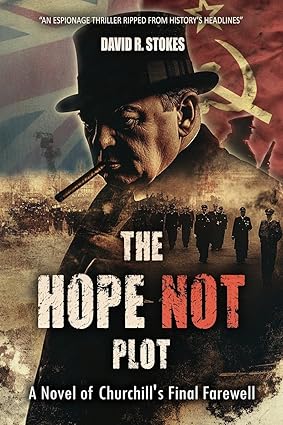

From the very first chapter, The Hope Not Plot swept me into a moment in history that I thought I already understood. But author David R. Stokes brings it to life in a way that feels fresh and immediate. The book opens on the eve of Winston Churchill’s death and quickly builds a riveting narrative that blends fact and fiction with surprising grace. As the British government prepares for the looming farewell of one of its greatest statesmen, the novel introduces a shadowy plot that threatens not only Churchill’s legacy but international stability. It’s part historical drama, part espionage thriller, and part quiet tribute to the man at the center of it all.
The writing is cinematic. Every room, every face, every foggy London street corner is drawn so clearly I could almost hear the hush of the crowd gathered outside Churchill’s home. Stokes has a gift for pacing. The dialogue is believable and loaded with character, whether it’s the gruff authority of Prime Minister Wilson or the nervy conscience of David Ormsby-Gore. There’s also something haunting about how he weaves in the paranoia and geopolitics of the Cold War without turning it into a lecture. It felt smart without being smug. The emotional weight hit me hardest in the quiet moments like Churchill’s final appearance at the window, the whispered memories of wartime sacrifice, the reluctant plotting in smoke-filled rooms.
But what really stayed with me was the central idea behind it all. The way a death, especially a death this big, can send ripples far beyond grief. Stokes plays with that idea masterfully. Churchill becomes not just a man, but a symbol of greatness, of tradition, of defiance, and everyone around him must figure out what to do when that symbol fades. The sense of loss is personal and political, and it made me think a lot about how we handle the passing of giants in our own time.
I’d recommend The Hope Not Plot to anyone who loves historical fiction with teeth. If you’re into John le Carré or Alan Furst, you’ll feel right at home. It’s also a solid pick for readers who want more than just facts, they want the heartbeat behind the headlines. It’s a book that respects history but isn’t afraid to imagine the “what ifs.” Smart, moving, and genuinely thrilling.
Pages: 410 | ASIN : B0FJZYXJL1
Tim Rees’ Original Earth: Book One
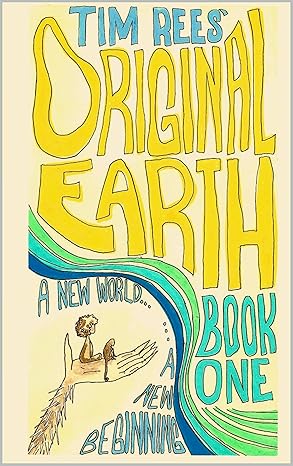
When I opened Tim Rees’ Original Earth: Book One, I expected a familiar survival tale. Instead, I found an emotional journey that runs from the claustrophobic passages of a crippled starship to the harsh beauty of an alien planet. Humanity’s last thousand survivors drift in space for generations before sabotage forces an emergency landing on a world they call Earth 2. Tim Rees explores not just survival, but whether people can truly change when given a second chance. At the heart of it all is Anu, an eight-year-old girl whose honesty and quiet courage cut deeper than the words of most adults.
The opening chapters carried a warmth that drew me in. Anu’s algae-block “strawberry” breakfast was both sweet and heartbreaking, and it showed me how well Rees balances innocence with underlying loss. That sense of comfort didn’t last. The sabotage of the algae vats shattered it in an instant. The frantic scramble to abandon ship, paired with Juno’s ruthless grab for power, made me feel just how fragile their world had always been.
The landing on Earth 2 was one of the most striking sections for me. Rees describes grass beneath bare feet, birds overhead, and the shock of real air with such vividness that I felt the settlers’ exhilaration. Yet he cuts that wonder short with the sudden appearance of a dinosaur-like creature, a jarring reminder that this new world is as dangerous as it is beautiful. Survival becomes grueling, and the endless cycle of hunting, gathering, and securing water presses heavily on every page. Rees captures that grind with a stark honesty that left me uneasy but deeply invested.
For me, Juno’s tightening grip was one of the most unsettling parts of the book. His obsession with water control felt alarmingly real, and it made me think about how fragile any society can be when power rests on basic needs. At the same time, I found myself drawn to Emrys and Onua’s struggle to hold their family together, even as Onua’s injuries dragged them down. What struck me most was Anu’s quiet strength in these chapters. Watching her comfort her brother with a maturity far beyond her years was both moving and painful.
The latter portion of the narrative resonated with me. The pages carried betrayals, losses, and a sliver of hope that felt almost too fragile to hold. Anu’s reflection near the end on what survival truly costs stunned me. It wasn’t neat, and it wasn’t reassuring. Rees doesn’t hand out easy answers. Instead, he leaves us with the harsh truth that humanity has to keep trying, even when the odds feel impossible.
Tender and tense, Tim Rees’ Original Earth: Book One blends discovery, danger, and humanity’s flaws with remarkable honesty. For readers who love survival stories with heart and grit, this book delivers.
Pages: 338 | ASIN : B0DLPGDKQF
What If?
Waiting for Them to Come Back follows a boy growing up in a home filled with abuse and searching for love and comfort, only to be left yearning. Where did the idea for this story come from, and how did it develop over time?
I had thought about ‘what if.’ The question was ‘What if my siblings and I stopped talking to my mother?’ This is where the idea came to be, where I thought about that terrible thought over and over again. And imagined my mother looking out the window, waiting for her children to come home.
I knew I didn’t want a happy ending. I want to show that this is a reality for many people, for whatever reason. Life isn’t full of promises and happiness.
What are some things that you find interesting about the human condition that you think make for great fiction?
I think our selfishness and our ability to hurt one another are both fascinating and terrifying. What makes us human is what makes us inhuman too, for example: stubbornness, where we often learn the lesson the hard way. Pain is often a good place to start a great fiction, too.
What themes were particularly important for you to explore in this book?
Pain is a good theme for this book. Physical pain and emotional pain are what Walter experienced throughout the book. And then It was his mother’s turn.
What is the next book that you are working on, and when will it be available?
I’m working on this sci-fi (which is a departure from my first book, drama) called ‘Revenge In The Hospital.’ Hopefully, it will be available in August 2026.
Author Links: Facebook | Website



 LITERARY TITAN