Blog Archives
Everything is Energy
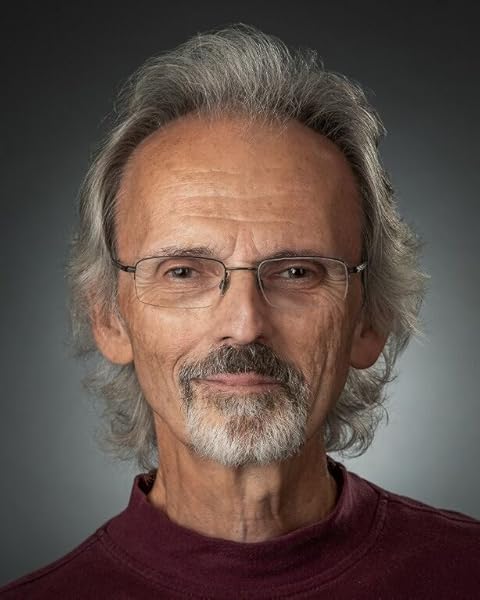
The Power of Shamanism and Energy Medicine is a heartfelt exploration of healing and connection through shamanic practice, told through personal stories that honor both the mystery and humanity of spiritual work. Why was this an important book for you to write?
Having worked with shamanic healing and energy medicine for 15 years and seeing the benefits to my clients, I wanted to make shamanic healing practices and the benefits of energy medicine available to a larger audience, to let people know what is possible.
How do you see energy medicine integrating with mainstream clinical mental health practices?
With the increasing evidence emerging from the study of quantum physics that everything is energy, including both the physical plane of matter and the more abstract plane of the mind, vibrating with information that we can engage and interact with, Shamanic healing and energy medicine is a natural evolution and addition to traditional mental health practices as it allows us to access and work with the energetic aspects of our mental health symptoms. I have had medical doctors and nurses in my classes and as clients who have made use of shamanic healing and energy medicine in their personal lives.
What practices or experiences in your own journey have most surprised you or challenged your beliefs?
I have had the spirits of deceased persons show up while working with a client who had information for them regarding their healing. For example, while working with a person who had received a complete lung transplant who was having difficulty with new feelings and changes in preferences, saying the hadn’t felt like herself since the transplant and feeling somewhat guilty that she was able to live when someone else had to die, the person whose lungs she had received appeared in the office. I was able to facilitate a conversation between them that helped her let go of the guilt and understand the changes she was experiencing, setting her free to embrace her new life. I’ve also had parts of a person’s soul show up once we did healing work around a trauma that made space for that particular part of the soul to return.
If someone is feeling spiritually disconnected but skeptical of shamanism, what would you say to help them approach the work with openness?
I teach them that everything is energy and that we are connected to everything. I then introduce them to heart-focused breathing that connects them to their heart and to the quantum field. I then guide them to connect with experiences that give them direct experiences with energy fields that contain the information both from the past and from the future.
Author Links: GoodReads | X (Twitter) | Facebook | Website | Amazon
The reader is invited to discover their inner shaman, learn the ancient rituals designed to deepen their spiritual practice, and reconnect with nature and the natural world. You will meet real-life people who have practiced Shamanism to restore themselves to a greater sense of wholeness, to feel self-love, and to better themselves overall. Meet those who, through the practice of cord-cutting, were able to release energetic connections to people, traumatic events, and places in their past that were continuing to influence them in negative, destructive ways. “The Power of Shamanism and Energy Medicine” is a valuable resource for anyone seeking to transform their life through the ancient wisdom of Shamanism and connect to the sacred.
“The Power of Shamanism and Energy Medicine” is a valuable resource for anyone seeking to transform their life through the ancient wisdom of shamanism and a connection to the sacred.
The Willingness to Redefine Ourselves
Buried Treasure follows two women navigating pivotal crossroads in their lives who attend a mystical retreat, embarking on a journey of self-discovery and healing. What was the inspiration for the setup of your story?
I felt inspired to write a story embracing Practical Spirituality in a way that encouraged waking up. But pondered how to share this in a wise, loving, and non-judgmental way. Finally, the idea took root to bring an older and younger woman together and then what better place to have them meet than at an Angelic Retreat. Bringing the characters together in this way allowed me to use the tools of conversation and reflection to weave the story. Interestingly the book didn’t follow the format I had originally envisaged. Yes, meeting at the retreat was always going to be the beginning. But then Buried Treasure evolved and took me along on the journey as well. And a memory of my own surfaced and was fulfilled. I had always wanted to write a story where the character ends up in another dimension. Couldn’t perceive how that would happen. But it did happen with ease, great delight, and joy.
Both Cassie and Stella undergo transformative journeys, each in their own way, in your book. What were some of the emotional and moral guidelines you followed when developing your characters?
Both women are seeking to live lives in alignment with their own truth and clarity about their individual life paths. To be able to step out of confusion and the need to please others without voicing their own needs. They both find that doing so requires them to draw on their inner strengths to stand firm in order to discover what is best for themselves. While also understanding and without standing in judgment of another, that what may be true for each of them may not be true for another. They also both come to understand that they need to trust themselves and that they do have the ability to recognise and overcome the challenges that can hinder their journeys of transformation.
What were some themes that were important for you to explore in this book?
Firstly, something important for me is to get the message across that when we make choices that don’t work. We haven’t done anything wrong, and rather than stand in wrongness, use what you have learned to choose again.
Secondly, journeys of self-discovery take courage, then the willingness to redefine ourselves, and of course then trust the path we are taking on this journey.
Thirdly, the theme of remembering is very important for me. To remember that even though our minds and experiences might wish to prove otherwise. We are love and light beings. The saying we are here on earth as ‘spiritual beings having a human experience‘ is well worth remembering. And to move from focusing so much on past mistakes and regrets and begin to focus more on love.
And finally to remember that our core, or our essence, or our Soul–whatever name one gives to it, is our true self. Again, Stella says it often throughout the book. Because that is true for me it doesn’t mean it needs to be true for you.
What is the next book that you are working on, and when can your fans expect it to be out?
At present, I am working on a couple of projects, while slow will come together. One is developing wisdom cards. Especially focused on my love of acronyms. A wee bit quirky. And weaving story and poetry together. Unsure when this will be accomplished.
Author Links: GoodReads | Amazon
Create Yourself Anew From Above Down: By CHOOSING Who and What YOU Prefer to Be in this Multiverse of ALL POSSIBILITIES


Create Yourself Anew From Above Down is a spiritual and philosophical meditation on the nature of identity, healing, and human potential. It’s less a traditional book and more a guided conversation with the reader’s soul, where the author nudges, encourages, and sometimes challenges the reader to drop the weight of ego and conditioning in order to rediscover their divine origin. Rooted in Christian metaphysics and laced with poetic rhythms, the work explores how we can transcend physical, emotional, and mental limitations by aligning ourselves with a higher consciousness—the God above and within.
I enjoyed the tone of the book. It was tender but firm, like a mentor who’s seen some things and knows you need more than just a pep talk. The phrase “from above down” becomes a kind of mantra throughout, suggesting that transformation starts not from effort or grit, but from surrender. The book doesn’t offer steps or techniques. No charts, no tasks. Instead, it repeats like a prayer: remember who you are. I wanted to resist that simplicity. But the more I read, the more I felt a shift, like layers peeling back.
The writing is unconventional. It flows like a stream of consciousness, filled with repetition, symbolic language, and a kind of rhythmic insistence that keeps echoing long after you put it down. At times, it felt like the words were circling me, not just speaking to me but trying to repattern something inside. There were moments I had to close the book and sit with the words. It’s rare to find writing that feels more like song or prayer than essay—but that’s exactly what this is. This book doesn’t explain—it awakens.
Create Yourself Anew From Above Down is for the seeker, the one tired of fixing, hustling, analyzing. It’s for anyone who’s sat in silence and whispered, “There must be more than this.” If you’ve ever felt like you’re standing at the edge of something sacred but don’t know how to step into it, this book might be the invitation you’ve been waiting for.
Pages: 194 | ASIN : B0DG11JNXK

Childhood Trauma’s Lifelong Impact

Dispatches from the Couch is a raw and fiercely intelligent memoir about the enduring scars of childhood sexual abuse and the intricate, often agonizing process of healing. Why was this an important book for you to write?
Writing the early drafts gave me permission to spend as much time as I needed to interrogate my memories and the intrusive thoughts they manifested. I was in such a dark place that I didn’t believe I deserved to talk to my therapist repeatedly about particular memories or challenges. I’d put myself on a healing schedule with a ridiculously short timeline. Writing suspended that clock. In later drafts, the editing process required I interrogate every description of my experiences that I was developing. It allowed me to revisit and reconsider what our therapy sessions revealed. Editing my manuscript with the goal that readers could better understand childhood trauma’s lifelong impact and perhaps identify how their or a loved one’s story might relate to mine ultimately allowed me to understand it and myself as well.
What was the most challenging part of writing your memoir and what was the most rewarding?
The most challenging part was deciding what to keep and what to cut. Therapy is a slow, repetitive process. One that sometimes was made even slower by my scientific mind’s penchant to step outside what I was experiencing and overanalyze things. We can feel stuck in the mud for weeks, even months. The two steps forward, three steps back, one step forward nature of the process is difficult to convey in a way that keeps a reader engaged. It was challenging but ultimately rewarding to retain the truth of what it feels like to slog one’s way through therapy that doesn’t read as a slog. This is where candid but gentle editors and beta readers are essential. My first developmental editor, author Tessa Fontaine, was vital to this effort. As was my ongoing relationship with Melissa Walker of HeyDay Coaching as my writing coach.
How has writing your memoir impacted or changed your life?
It answered a question I first articulated as a teenager: Who might I have been had the man I call Mr. Jay never been a part of my life? The six bouts of therapy prior to working with my current therapist, identified as Piper in the book, helped. They allowed me to process the trauma of child sexual abuse and keep going. However, working with Piper as I wrote out the dialogues of our sessions and later worked and reworked them into a coherent story created opportunities for us to revisit an issue until I felt I had exorcised it from my brain and body. It gave us the chance to think more critically about the more nuanced ways trauma shaped my understanding of the world and my place in it. We went from asking the question: What happened to you? to the question: What did it do to you? Today, I no longer see myself as damaged goods making the best of the scrap heap a pedophile left me to work with. I am a woman with a voice and the privilege of an education that allows me to understand trauma through a unique combination of scientific knowledge and personal experience.
What do you hope is one thing readers take away from your story?
Fight the unkind things your brain tells you, along with the sadness, fear, or frustration they bring. We live in an overwhelming world. Accept help. We so often feel like burying ourselves under the covers in isolation and loneliness. Whatever might cause you to think no one cares or no one could possibly understand, challenge those beliefs however you can. Give it everything you’ve got. Not one person whom I eventually reached out to averted their eyes or walked away. Had I written the Acknowledgements of my book before I wrote the book, I might not have needed to write it. (I am still glad I did!) There are people, whether through professional or personal relationships, who want to and can help you find your way through whatever your brain is telling you will be impossible to overcome.
Author Links: GoodReads | Instagram | Facebook | Website | Amazon
As Professor Hettes, her classes focus as much on neuroscience’s beauty and wonder as its facts and theories. Fellow faculty members see her as a fair but outspoken leader on a campus steeped in the blended patriarchies of academia and southern gentility.
At an emotionally charged forum on sexual violence, she takes a stand against a colleague’s reckless verbal assault, outing herself as a sexual abuse survivor in the process. Professor Hettes must continue her work even as Stacey finds herself resubmerged in the sights, sounds, and smells of her memories with Mr. Jay, a Pentecostal church deacon.
With exceptional candor, Dispatches from the Couch invites readers to take a seat beside her in the office of her new therapist, Piper. This debut memoir reveals the laborious, complex, but promising work of revisiting the past in order to extract its remnants of shame and loneliness from the present.
Emotional Depth
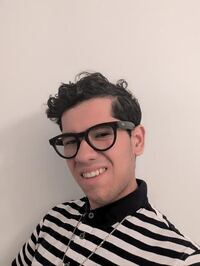
Ain’t No Way This Is Real is a poignant exploration of friendship, heartbreak, and self-reclamation—when a lifelong bond shatters over love and shifting priorities. What was the inspiration for the setup of your story?
So, the inspiration behind this short story is my own friendship in high school. I met this kid in my freshman year, who ended up becoming my best friend for 5 years. We got so close, we saw each other as brothers. But, we sadly ended it shortly after graduation.
The book has a poetic and lyrical style. Was that intentional from the start, or did it evolve as you wrote?
I wrote it this way as I wanted to put a bit more emotional depth into the story, and poetry and lyrics have that ability. The narrator’s emotions feel incredibly raw and real.
Was there a particular scene or moment that was the hardest for you to write?
Throughout the entire writing process, I had to take breaks, break down, and had to call my support people. But, if there were particular moments I felt the hardest to write about were related to our past memories and connection to my mental health.
What do you hope readers take away from the narrator’s journey of loss and healing?
I wrote Ain’t No Way This Is Real as a way to heal, but I later realized my story could help others heal. Help other young adults and teens like me who are going through or went through a similar situation like mine, but never found anyone to relate to. As in the media, romantic relationships and breakups are pushed to be seen as the most important relationships and the most painful relationships to end,compared to friendships.
Author Links: GoodReads | Facebook | Website | Amazon
Ain’t No Way This Is Real is based on the author’s friendship with his best friend from high school. We see through the lens of his personal experiences the difficult journey of healing when close friendships come to an end.
Eco-Conscious Lifestyle

Born to Live Green shares your story of being failed by the modern medical system, which was ill-equipped to diagnose or treat your condition, and your journey of self-learning and self-healing. What inspired you to share your story and knowledge?
What inspired me to share my story and knowledge was the awareness that I could motivate others to create a more eco-conscious lifestyle. One, that with a holistic approach, would support them in nourishing wellness in their bodies and the earth.
What were some ideas that were important for you to share in this book?
Our earth is hurting, because we’ve lived unconscious of how our actions, choices, and behaviors have denigrated and polluted it.
Because we are an integral part of the earth’s ecological system, we are not immune from environmental illness.
In the same way that the earth’s terrestrial body carries a burden of toxicity, so do our human bodies.
To manage and heal the symptoms of environmental illness within our bodies and the earth, we must learn why and how to become consumers of a clean, green lifestyle production system, and adopt lifestyle habits that support clean, green, non-toxic living.
Healing our bodies requires us to be in a healthy relationship with our bodies, minds, hearts, and souls, –while healing the earth requires us to be in a healthy relationship with nature, plants, animals, insects, ecosystems, and the greater cosmos.
Relationships are the key to our health, happiness, and ecological well-being. Only when we discover how they govern our wholeness and what they require from us to be nourished, will we feel fulfilled as eco-stewards.
What was the most challenging part of writing your memoir, and what was the most rewarding?
The most challenging part of writing my memoir was, I suppose, sharing my vulnerabilities. I bared my heart and soul in my story because I wanted to create an intimate experience in which my readers could feel close to me during the years of my life (from puberty through menopause) to find health and enlightenment. While I sometimes felt naked in the writing process, I felt that being authentic was more important than guarding my privacy. The most rewarding part of writing my memoir was revisiting all the events in my life that led me to awaken my innate eco-intelligence and pave a path toward self-discovery and self-empowerment. As a writer, I’m part poet, and in the process of writing the second half of my memoir, I decided to weave metaphors into my story to illustrate the high points and the low points I experienced while emerging in the world as an Eco-Mentor. Because that process required me to create an eco-lifestyle curriculum for humanity, and because the creative process symbolized a decade-long labor of love in which I had to practice trusting (and giving voice to) my feminine wisdom, –I compare it to the act of conceiving a baby, being pregnant with it, giving birth to it, and even enduring the “postpartum blues” that so often follow labor.
Challenges I Faced (with Rewarding Learning Outcomes)
Challenge: In my story, I share past traumas, such as being exposed to toxic chemicals in my mother’s womb, which led me to experience life-long physical health issues and mental health stress. Reward: This led me to understand how toxins can be passed from one generation to the next, and how important it is to live a clean life if we want life to go on for future generations.
Challenge: I share the sense of confusion, shame, and disempowerment I often felt while in the presence of allopathically trained medical doctors who, because they were not trained in environmental medicine, didn’t understand my health issue and didn’t have the tools to treat it. Reward: This led me to study alternative medicine and embark on a path of natural healing, which supported me in becoming a self-healer.
Challenge: I share the insecurities and anxiety I faced while attending school as a child, because of the behavior of certain teachers in my educational life who abused their authority in the classroom and who didn’t recognize that students like me required a heart and soul-centered approach to learning vs. a brain-centric approach alone. Reward: I learned the value of becoming a sensitive, compassionate person who trusted the authority of every person I met on my life path, and who recognized that being a good teacher entails the ability to “draw out” the innate gifts that all people possess.
Challenge: I share my fear of becoming a feminine leader, which was precipitated by my socially conditioned belief that female leaders are highly visible, handsomely paid, and vocal, rather than women like myself, who, albeit introverted, possess a heartfelt passion for making a difference in the world. Reward: I plumbed the depths of my soul, listened to its guidance, tapped into my feminine wisdom, and bravely used my voice to pen a bold new eco-lifestyle curriculum whose framework for learning is grounded in the six steps to eco-intelligent living that my healing journey revealed to me.
What do you hope is one thing readers take away from your book?
I hope what readers take away from my book is the knowledge that pain offers to be a brilliant teacher in our lives. Through our pain, we can experience many “awakenings” that foster deeper self-knowledge and self-love. We can use this knowledge and love to imagine and discover our true sense of place, purpose, and belonging in the world. I found my sense of belonging and purpose when after entering into a loving relationship with Mother Earth and utilizing her wisdom to transform my health, I realized that my calling was to support others in doing the same. It’s a wonderful feeling when we can use our personal healing journeys as a catalyst for planetary transformation!
Author Links: GoodReads | X (Twitter) | Facebook | Website | Eco-Intelligent Eating | Amazon
Green is the color that symbolizes life, fertility, growth, rebirth, harmony, and healing.
When Candia Lea Cole missed her high school graduation due to illness, it would not be the first or last time she dealt with a health challenge that invited suffering and confusion into her life. And because allopathic doctors weren’t trained to diagnose or treat her condition, she felt she had no choice but to carve out her own path of self-learning and self-healing.
What Candia discovered on her path was that her mother’s womb was the place where her illness originated from, and it was exacerbated by the toxins she was exposed to once she emerged from it, which her body was ill-equipped to detoxify. Unraveling her health mystery was a long and intensive process, but one that ultimately led her to know that “getting well” depended on her ability and willingness to create a clean, green, non-toxic lifestyle.
In the process of creating this lifestyle, Candia developed a deeply intuitive understanding about the link between her health challenges and the Earth’s. And she recognized the vital importance of nurturing the relationships that she discovered governed her health, including her body, mind, heart, and soul, as well as the natural world and all living things within it.
The holistic health wisdom that blossomed in Candia’s being through the awakening of her eco-intelligence and through the adoption of knowledge that several pioneering healthcare practitioners offered her was not meant for her benefit alone, she realized. It was meant to be shared with humanity at large, in the form of a 21st-century eco-lifestyle curriculum whose inspirational, multi-faceted healing themes would support the “birth” of the Eco-Mentor within her, as well as those she was destined to serve.
BORN TO LIVE GREEN -Awakening My Heart’s Wisdom to the Path of Eco-Intelligent Living, Learning, Healing & Mentoring
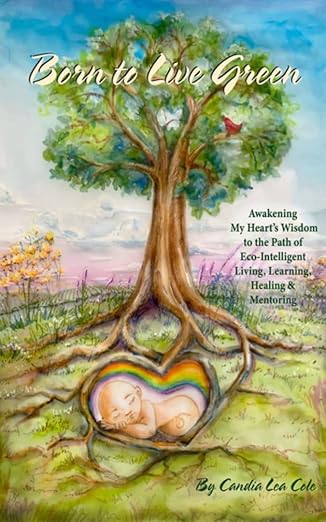

Candia Lea Cole’s Born to Live Green is part memoir, part manifesto, and part eco-education handbook. Through her personal journey of battling environmental illness, she uncovers a deeper calling to live in harmony with the Earth and to mentor others in eco-intelligent living. The book follows her transformation from a teenager struggling with unexplained health issues to an advocate for sustainable living. She intertwines her own experiences with a broader message: our personal well-being is directly connected to the well-being of the planet. It’s a deeply personal and, at times, a poetic call to action for those ready to embrace a greener, more mindful way of life.
Cole doesn’t sugarcoat her experiences with chronic fatigue, fibromyalgia, and chemical sensitivities. Instead, she lays them bare, allowing readers to step into her shoes. Her description of missing her high school graduation due to illness was heartbreaking. It wasn’t just about missing a party; it was about losing a rite of passage, a moment of celebration that every teenager looks forward to. That level of personal storytelling makes her journey compelling. She connects the dots between her health issues and environmental toxins, arguing that our modern world is making us sick. And frankly, it’s hard to disagree with her. The way she describes factory-farmed meat, chemical-laden foods, and the toxic household products we use daily makes you rethink your choices immediately. Her excitement about visiting a local food co-op for the first time was charming, it felt like a child discovering a hidden treasure. And the time she spent living off the land in a rural township was amusing, if not a testament to her hardiness in the face of hardships. I appreciated that Cole doesn’t just preach; she walks the walk. Her detailed descriptions of learning to detoxify her lifestyle, adopting whole foods, and engaging in sustainable practices are inspiring.
The book’s second half shifts from memoir to mentorship. It invites her readers to witness her process of becoming an Eco-Mentor. She uses birthing metaphors to describe this process, such as “conception”, “labor”, “birth” and “postpartum blues.” Conception describes the spark of life she felt when she realized her new “life calling” –the calling to educate young people about eco-intelligent living. “Labor” describes the path that she paved to create an eco-leadership event for teens and young adults. “Birth” describes the eco-lifestyle curriculum that evolved from her work with young people, and it introduces the six principles of eco-intelligent living that a spiritual vision revealed to her. “Postpartum Blues” describes Candia’s “dark night of the soul”, an experience resulting from exhaustion, that found her disabled. Her disability, we learn, forced her to retreat from the “upper world” and descend into the “lower world”, a place that she describes as “the womb” of Mother Earth. In this womb, she finds herself “holding space” for the birth of a new earth and discovers the role that endurance plays in shaping a healer and feminine leader.
What truly stood out for me was her belief that healing the planet starts with healing ourselves. She ties personal wellness to planetary wellness in a way that feels intuitive and urgent. At times, her passion borders on overwhelming (because personal and planetary healing can be an intensive process), but in a world where environmental activism often feels clinical and data-driven, her deeply personal approach is refreshing.
Born to Live Green is an intimate, heartfelt book that blends personal narrative with a powerful environmental message. She presents a hopeful vision of a world where people reconnect with nature and make conscious, sustainable choices. Her view of alternative education and self-directed learning is especially thought-provoking, it invites you to question how traditional education often stifles eco-awareness rather than nurtures it. The book is best suited for readers who are drawn to holistic wellness, eco-conscious living, and personal transformation. If you want a story that weaves together environmental awareness, self-healing, and a call to action, it’s a meaningful and inspiring read. Cole’s voice is passionate, urgent, and deeply personal, making this book a thought-provoking journey rather than just another guide to green living.
Pages: 257 | ASIN : B0BHQBPK5S
Soothing Stories for Grown-up Hearts: When I Remember . . .
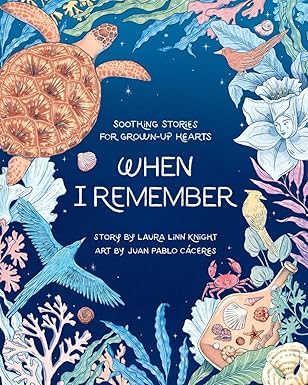
When I Remember, by Laura Linn Knight, with vibrant illustrations by Juan Pablo Cáceres, is a gentle, beautifully crafted exploration of grief and healing. This thoughtful work seamlessly blends childlike wonder with adult realities, offering readers a path to process loss through poetic language, practical tools, and evocative visuals. Through both prose and poetry, Knight provides five proven strategies for navigating grief: somatic body awareness, building a support network, journaling, mindfulness, and playful self-care. These tools are presented with sensitivity and clarity, creating an accessible framework for anyone seeking solace and strength in difficult times.
Knight’s writing feels timeless, echoing the comforting cadence of childhood stories while addressing the weight of complex adult emotions. Rhymes and rhythms lighten the depth of the themes, offering a soothing balm to heavy hearts.
Juan Pablo Cáceres’ illustrations bring the narrative to life, immersing readers in a world of storybook magic. From start to finish, his art adds a layer of visual storytelling that enhances the book’s atmosphere, pulling readers into a space where healing feels possible and imagination becomes a refuge.
Knight’s expertise shines through her compassionate approach. With a background in psychology, she explains grief and its challenges in a way that feels both informed and deeply personal. While the book focuses on the loss of a loved one, its tools extend far beyond that context. Grief takes many forms, whether it’s mourning a relationship, a lost dream, or life not unfolding as expected. Knight captures its long, nonlinear nature—the highs, the lows, and everything in between. While reading, I reflected on a personal experience of rejection—being denied admission to a university I desperately hoped to attend. At the time, the grief was overwhelming, a complex process of self-doubt and disappointment. Knight’s insights resonated deeply, and I couldn’t help but wonder if this book might have offered comfort and clarity during that difficult chapter of my life.
When I Remember is a book that doesn’t ask much of its reader, yet gives so much in return. Its simplicity is its strength—accessible, heartfelt, and impactful. Whether you’re actively grieving, healing, or simply yearning for the nostalgic magic of a storybook, this book will meet you where you are. If I have one regret, it’s reading this book throughout the day instead of saving it for bedtime. The gentle tone and rhythmic prose make it the perfect nighttime companion, one that soothes the soul before sleep. I eagerly await more of Laura Linn Knight’s work and would recommend this book to anyone seeking comfort, understanding, or a reminder that healing can coexist with hope.
Pages: 71 | ASIN : B0DC9S9PZ9



 LITERARY TITAN