Blog Archives
People Are Complex

Maximizing Organizational Performance is a practical guide that delves deeply into the power of performance coaching within organizations, outlining a clear, real-world approach to building coaching systems that help individuals grow and perform at their best. Why was this an important book for you to write?
The driving force behind Maximizing Organizational Performance: A Guide to Effective Performance Coaching was a need to reframe how we see and use coaching. I don’t view it as a profession in itself. I see it as a tool, one of many that come under the wider discipline of organizational development. As an OD practitioner first and a coach second, I am primarily interested in the system, that is, in how structure, process, leadership behaviors, culture, and other factors interplay and serve to facilitate—or sometimes constrain—performance.
Coaching is a means to that end. It’s a way of helping people and teams work more effectively. I wrote this book because I saw a need for more context in the way that coaching is being applied. It’s too often used as a tactical intervention, deployed against individuals without consideration of the broader system they inhabit. But individual performance can’t be elevated in a vacuum. If we want to build real, lasting performance, it has to be intentional and systemic. It has to connect to strategy, talent, culture, and other levers of organizational transformation.
That’s what this book is about. In it, I try to offer a different perspective on how coaching can be used. I try to give leaders and HR professionals a roadmap for weaving it into the DNA of their organizations so it can become a central part of how performance is created and sustained, not a niche service available to a select few.
What were some ideas that were important for you to share in this book?
I think one of the important ideas I wanted to convey is that performance coaching is not this ethereal thing that only happens at the C-suite level or during major life-or-death situations. It’s an everyday practice — a way of thinking, a way of leading, a way of showing up for and supporting one another at all levels of an organization. In my experience, coaching has the most impact when it becomes part of a manager’s normal leadership routine rather than an event that takes place quarterly, behind closed doors, with an external coach.
Another key idea for me was personalization. We often fall into the trap of thinking that performance can be optimized through standardized processes alone. How many organizations today still have standardized KPIs, standardized quarterly reviews, and serve only generic training programs? The hard truth is, people are complex. They bring unique strengths, challenges, motivations, and life experiences to work every day. Coaching works best when it’s attuned to that complexity, when it’s tailored and human. And it is only through that level of personalization that coaching can do more than keep people compliant. It’s only then that coaching can foster true growth and commitment.
And, I guess, if I have to pick the most foundational idea, it is that organizations aiming to sustain their competitive advantage can no longer afford to treat coaching as a discretionary add-on. If you’re serious about adaptability, that is, if you’re serious about building a resilient, high-performing team that can thrive in the conditions we all face today, then coaching is not a frill. It is a strategic infrastructure.
What is one piece of advice you wish someone had given you when you were younger?
If I could send a letter to my younger self, one message would be clear and resounding: “Lead with curiosity, not control.” In the early stages of my leadership journey, I equated being a good manager with knowing all the answers, moving fast, and pushing hard. Hyperfocused on outcomes, I regularly burned out and missed breakthroughs. I didn’t realize, as I do now, that sustainable leadership isn’t about being the best person in the room; it’s about setting the stage for others to be their best selves.
Curiosity makes all the difference. It starts conversations that would otherwise be shut down. It builds trust. It signals safety to experiment and learn. It lets people know that you see them not just as performers but as professionals with potential still to be realized. Shifting my stance from directing to inquiring has been one of the most liberating lessons of my career, one I wish I had learned much earlier.
What is one thing that you hope readers take away from Maximizing Organizational Performance?
If there is one thing I hope readers take away from this book, it is that coaching is a multiplier — not only for everything we do to strengthen and support individual performance, but also for culture, engagement, innovation, and sustainable success. Coaching is not fixing. Coaching is about unlocking what’s already inside and connecting that to the purpose, values, and direction of the business.
The real beauty of coaching is that it moves us away from the reactionary leadership models that lead so many of our organizations to scramble after performance problems, react to disengagement, and attempt to fill talent gaps at the eleventh hour. Coaching allows us to think and act more proactively, to have an intentional framework to develop people in a way that is both strategic and radically human.
I hope that when readers finish this book, they have more than new tools at their disposal. I hope that they will look at coaching and development as fundamental leadership practices and leave this book even more inspired to create work cultures where development is not limited to the chosen few who receive development, but where it is part of the way we talk to one another every day, the way we measure success, and the very DNA of our culture.
Author Links: GoodReads | X (Twitter) | Facebook | Website | Amazon
Dr. Patrick Behar-Courtois, with over two decades of international consulting experience, offers a fresh approach to performance coaching that transcends traditional methods. This practical guide tackles pressing issues such as remote work, diversity, employee retention, and technological integration, equipping leaders, HR professionals, and coaches with strategies to measure coaching effectiveness and build high-performing teams. Packed with immediately applicable tools and real-world case studies, Maximizing Organizational Performance bridges theory and practice, offering insights that resonate in today’s complex business environment.
So don’t let your organization fall behind. Unlock its full potential and prepare for the future with this essential resource!
Why Aren’t Things Improving?

Unlocking Innovation introduces leaders to a framework called the ABCs—Behavior, Architecture, and Culture — by blending personal anecdotes, fictionalized case studies based on real people, and practical tools to guide readers through the psychological, structural, and cultural challenges that make or break innovation efforts. Why was this an important book for you to write?
For a long time, I resisted the idea of writing a book. Having spent most of my career in corporate innovation, the one thing I knew for certain was that the world did NOT need another book about innovation! There are thousands, maybe millions, out there, yet none of them have changed the results that corporates get from their innovation investments.
But then it hit me: If there are so many books about how to improve something, why aren’t things improving?
As I reflected on my experiences, patterns emerged: brilliant executives treating innovation like operations, teams getting crushed by unrealistic expectations, and 90% of corporate labs shutting down within three years. But it all boiled down to one thing.
Innovation isn’t an idea problem. It’s a leadership problem.
We’ve got plenty of ideas. What we don’t have are leaders who understand that everything that made them successful operators will doom them as innovators. This book exists because every executive tasked with innovation deserves better than innovation theater and false hope.
What were some ideas that were important for you to share?
First, do the opposite of your instincts. Like George Costanza, if every instinct you have is wrong, then the opposite would have to be right. It’s a simple concept that is incredibly hard to adopt. After all, your professional success created and honed your instincts, so ignoring them isn’t just difficult, it’s illogical. But innovation and operations are opposite worlds, which is why you need to do the opposite of the instincts that made you a successful operator.
Second, stop obsessing over finding the perfect process or structure for innovation. Those things are necessary but not at all sufficient for success. Instead, take a holistic approach by building the ABCs: Architecture, Behavior, and Culture. And focus on leadership behavior first because that’s what makes or breaks innovation investments.
Third, innovation is not an event. Stop wasting time and money on one-off hackathons, shark tanks, and startup field trips. Innovation ROI requires long-term investment not a one-day offsite.
What is one piece of advice you wish someone had given you when you were younger?
“I don’t have time” means “It’s not a priority,” and that’s perfectly fine because not everything can be a priority. As leaders, though, we need to own it and be honest about why we’re not engaging in something. And, as innovators, if we think something should be a priority, we need to work to figure out why it’s not and how to make it one.
Also, reflection isn’t navel-gazing; it’s how you turn experience into wisdom. Make time for it.
What is one thing you hope readers take away?
Success isn’t about beating the odds—it’s about changing lives. Every time you show someone they’re capable of more than they imagined, you’ve won. The real innovation isn’t the product you launch. It’s proving that doing the impossible is actually possible.
Plus, you should definitely have a cookie while doing all this. I recommend chocolate chip.
Only 1 in every 50,000 incubated ideas reaches $1 million in sales. If you ask most corporate executives why their companies’ innovation efforts fail, they’ll blame a lack of ideas or not enough big ideas. Innovation expert Robyn M. Bolton knows that innovation isn’t an idea problem, it’s a leadership problem. To drive real innovation, executives must defy the very instincts and behaviors that made them successful operators.
In Unlocking Innovation, Bolton draws on her twenty-five years of advising leaders to provide a practical, holistic innovation framework. Her ABCs of Innovation show leaders how to reshape their roles, teams, and organizations to create new value and catalyze corporate renewal from within. Using real-life stories, Bolton follows innovation leaders’ trajectories from heading up a new team and generating first results to navigating the inevitable crosswinds, complications, and conflicts—and ultimately delivering success. Unlocking Innovation is the essential guide for any leader tasked with innovating inside an established organization.
Literary Titan Book Award: Nonfiction

The Literary Titan Book Award recognizes outstanding nonfiction books that demonstrate exceptional quality in writing, research, and presentation. This award is dedicated to authors who excel in creating informative, enlightening, and engaging works that offer valuable insights. Recipients of this award are commended for their ability to transform complex topics into accessible and compelling narratives that captivate readers and enhance our understanding.
Award Recipients





















Why Don’t Spinning Tops Fall: Conversations With Curious Caroline by Charles DeLisi
Visit the Literary Titan Book Awards page to see award information.
Maximizing Organizational Performance: A Guide to Effective Performance Coaching


Maximizing Organizational Performance is a practical guide that dives deep into the power of performance coaching within organizations. Dr. Patrick Behar-Courtois lays out a clear, real-world approach to building coaching systems that help people grow and perform at their best. The book covers everything from understanding coaching fundamentals and identifying performance gaps to measuring success and adapting to hybrid work environments. Each chapter is full of case studies, personal stories, and actionable tools meant to empower leaders, HR professionals, and coaches alike to create high-impact coaching cultures.
What stood out most to me was the author’s voice. It’s rare to find a book that mixes business savvy with raw honesty in such a relatable way. Patrick’s early career failures and triumphs set the tone right away. It didn’t feel like he was preaching from a mountaintop. Instead, it felt like sitting across from someone who’s been through the trenches. Someone who learned the hard way that performance isn’t just about pushing people harder, but about supporting them smarter. The stories about his early coaching experiences gave the book emotional depth. I found myself pausing at moments just to reflect on my own leadership habits. His writing struck a balance between tough love and genuine care. It made me think more deeply about how I show up for my team.
As for the ideas themselves, they’re refreshingly no-nonsense. The book doesn’t try to dazzle with corporate buzzwords or theories. Instead, it’s packed with down-to-earth advice that works. I appreciated how Behar-Courtois emphasized tailoring coaching plans to individuals, respecting each person’s unique strengths, struggles, and pace. He also tackled common leadership blind spots like overestimating one’s impact or skipping structured feedback, with clarity and candor. While some concepts like SMART goals or 360-degree feedback aren’t new, the way they’re applied here, layered with real examples and plenty of practical detail, makes them feel fresh and worth revisiting. I also loved the emphasis on creating a coaching culture, not just one-off interventions. That shift in mindset is key.
I think this book delivers what so many leadership guides promise but rarely accomplish, it teaches you how to help people get better in ways that actually stick. If you’re an HR leader, coach, or people manager trying to drive real change, Maximizing Organizational Performance is a must-read. It’s perfect for those who want to grow their people with purpose.
Pages: 232 | ASIN : B0FDGT5PZZ

Essential Safeguards

The Teaching Guarantee: Three Things is a heartfelt manifesto on education, distilling a lifetime of leadership into three essential reflections: what excites, what concerns, and what truly matters in schools today. How did you decide on the “three things” structure?
Effective communication across all levels in a school community is the foundation of a well-functioning, supportive, and successful educational environment. It enhances collaboration, trust, and accountability, leading to better school outcomes and a more harmonious school culture.
As a school leader, effective communication is a priority for me. As with everything I do, I ask myself, how can I improve this? How can I ensure that my message reaches everyone? It is by no means an easy thing to accomplish.
Towards the end of 2022- 2023, I experimented with the 3 Things approach at weekly school assemblies. It ensured my message was simple, pertinent, and received. Ramble on too much, and any message can get lost and quickly forgotten. This approach enabled effective communication!
Ever since then, any time I talk, I relate it to the three things framework. My first mention of the model was in The Teaching Guarantee: Every Day is Different (Chapter 63: School Assemblies)
You express optimism about AI in education. What safeguards do you believe are essential to ensure it enhances rather than harms learning?
Drawing on decades of educational leadership experience, here are the essential safeguards I believe schools need for AI implementation:
Academic Integrity Foundation
The most critical safeguard is teaching students when and how to use AI appropriately, not simply banning it. Just as we taught proper research methods when the internet emerged, we must establish clear guidelines for AI as both a learning tool and a shortcut.
Teacher Professional Development
First Having led through multiple technology transitions, I’ve learned that successful implementation always begins with comprehensive teacher training. Educators need hands-on experience with AI tools before they can effectively guide students. Without this, we risk either complete avoidance or misuse.
Graduated Implementation by Grade Level
Primary school students need different AI exposure than secondary school students. I recommend starting with AI as a brainstorming partner in upper elementary, progressing to research assistance in middle school, and finally introducing advanced applications in high school.
Transparent Usage Policies
Students, parents, and teachers must understand exactly when AI use is permitted, required, or prohibited. These policies should be as transparent as our existing guidelines for calculators, spell-check, or internet research.
Critical Thinking Enhancement, Not Replacement
The key safeguard is ensuring AI amplifies human reasoning rather than replacing it. Students should learn to question AI outputs, verify information, and understand AI limitations.
Regular Assessment of Learning Outcomes
We must continuously monitor whether AI is improving learning or creating dependency. This requires new assessment methods that distinguish between AI-assisted and independent student work.
The technology has changed, but the fundamental principle remains: any educational tool should increase student agency and understanding, not diminish it.
What advice would you give to new teachers feeling overwhelmed by bureaucracy and burnout?
Drawing from five decades of watching new teachers navigate these same challenges, here’s the advice that has proven most effective:
Start with Your “Why”
When bureaucracy feels suffocating, reconnect with what brought you to teaching. Keep one photo or note from a student’s breakthrough on your desk. I’ve seen countless teachers weather difficult seasons by anchoring themselves to their core purpose rather than the administrative noise.
Master the Essential Ignore the Optional
Every school has required tasks and “strongly suggested” initiatives. Learn quickly to distinguish between them. Focus your energy on what directly impacts student learning and meets actual mandates. The rest can wait.
Find Your Teacher Tribe
Identify 2-3 very experienced teachers who still love their work despite the challenges. These aren’t the complainers in the faculty room, but rather the ones who have learned to work within the system while maintaining their passion. Their wisdom is invaluable.
Create Non-Negotiable Boundaries
Decide your work hours and protect them fiercely. I’ve watched too many promising teachers burn out in their second year because they tried to do everything perfectly. Excellence in a few areas beats mediocrity across all areas.
Document Everything Simply
Keep basic records of parent communications, student interventions, and administrative requests. This isn’t about distrust—it’s about protecting your time from repetitive questions in the future.
Using What Works to Improve What Doesn’t
Reflect deeply on your approaches that work well with your classes. Identify the key actions or processes that ensure success. Then apply these to those approaches that do not work to your expectations and enjoy the difference.
Remember: This Too Shall Pass
Educational initiatives come and go. I’ve witnessed six major reform movements. The bureaucracy that feels overwhelming today will likely be replaced by something else in three years. Focus on timeless teaching principles.
The students in your classroom need you to survive and thrive, not to burn out trying to satisfy every administrative demand.
In your experience, what’s the single most underappreciated quality in effective school leadership?
Institutional memory.
After 52 years, I’ve come to believe this is the most underappreciated quality in effective school leadership—and the one that separates truly transformational leaders from those who simply manage crises.
Most leaders focus on immediate challenges: this year’s test scores, next month’s budget deadline, and today’s parent complaint. However, the most effective school leaders I’ve known—and have learned to become myself—understand that every decision exists within a larger institutional narrative.
When I see a principal who knows why the third-grade team resists new math curriculum (because they lived through three failed adoptions in five years), or who remembers that the current discipline problems mirror patterns from a decade ago that were solved through specific community partnerships—that’s institutional memory at work.
This quality manifests in several critical ways:
· Recognising which “new” initiatives are recycled ideas that failed before.
· Understanding the deeper cultural currents that drive staff resistance or enthusiasm.
· Knowing which community relationships took years to build and must be carefully maintained.
· Seeing how current challenges connect to historical patterns.
Technology has changed dramatically since I began, but the human dynamics in schools follow remarkably consistent patterns. Leaders with strong institutional memory can navigate these patterns more effectively than those who constantly reinvent solutions.
Without this quality, even brilliant leaders find themselves fighting the same battles repeatedly, wondering why their excellent ideas meet unexpected resistance, or why their predecessor’s “failed” programs might have been ahead of their time.
Schools are living institutions with long memories. The most effective leaders honour and learn from that institutional wisdom.
Author Links: GoodReads | Website | Amazon

Entrepreneurship and Intrapreneurship

Advanced Career Intelligence is a far-reaching, no-nonsense guide for navigating the higher tiers of professional life by examining strategy, emotional intelligence, work culture, & ethical success. What were your goals when writing this companion guide to your first book?
My goal with Advanced Career Intelligence was to build directly upon the foundation established in General Career Intelligence, diving deeper into the more complex and nuanced challenges professionals face as they advance in their careers. While the first book focused on core principles—like personal integrity, foundational traits, decision-making, and soft skills—this second volume takes on the higher-order dimensions of leadership, entrepreneurship, ethical influence, managing diverse teams, and navigating cultural and organizational dynamics.
I wanted to deliver real-world, distilled insights—practical and immediately applicable—without unnecessary fluff, jargon, or abstract theory. The intent was to save readers the countless hours (and dollars) it would take to absorb the same knowledge from a full library of business books, articles, and case studies. This two-volume series is meant to serve as a comprehensive, soup-to-nuts career playbook for the modern professional—whether they’re stepping into management, leading a team, building a business, or simply striving to thrive in today’s fast-paced and often chaotic work environment.
Ultimately, I wrote Advanced Career Intelligence to empower readers with confidence, clarity, and the tools to grow with purpose—professionally and personally—while staying grounded in ethics, emotional intelligence, and long-term success.
What were some ideas that were important for you to share in this book?
Several core ideas were especially important for me to highlight in Advanced Career Intelligence. First, I wanted to challenge the myth that success at higher levels is all about technical skill or raw ambition. Instead, I emphasize that sustainable success depends on emotional intelligence, ethical leadership, cultural awareness, and the ability to manage complexity with clarity and integrity.
I also felt it was critical to tackle real-world issues that professionals often encounter but aren’t always trained to handle—things like navigating toxic work environments, leading diverse and inclusive teams, maintaining work-life balance, and building organizations that prioritize long-term value over short-term gains.
Entrepreneurship and intrapreneurship were other key themes. Whether someone is launching a business or innovating within an existing one, they need practical, grounded advice that goes beyond platitudes. I wanted to demystify those journeys and offer insights that are both strategic and deeply human.
Equally important was the message that it’s completely okay to fail, to stumble, or even to get laid off—because most of us do at some point in our careers. These moments don’t define us. What matters most is how we respond, what we learn, and how we grow. None of us are perfect, and none of us have all the answers. In fact, our greatest strengths often lie in our ability to reflect, to adapt, and to keep moving forward. Flexibility, nuance, and emotional resilience are powerful traits that shape not only what we achieve, but who we become—and they ultimately play a vital role in the fulfillment and meaning we find in our work and lives.
Finally, I wanted to encourage readers to see their careers not just as a ladder to climb, but as a platform to give back—to mentor others, influence positive change, and leave a meaningful legacy.
I really appreciated you sharing your stories about mentoring and role models, and how they played a part not just in your success, but also in how you viewed success. What advice do you have for leaders considering taking on a mentee?
Mentoring is one of the most meaningful and impactful responsibilities a leader can embrace. It’s not just a way to give back—it’s a powerful tool for shaping the next generation of thinkers, doers, and leaders. But in my experience, mentoring also holds up a mirror. It forces us to examine how we lead, how we listen, and whether we’re still growing ourselves.
One key piece of advice: stay humble. As people advance and succeed in their careers, it’s easy—almost natural—to fall into the trap of believing we have all the right answers. That mindset often gives rise to a rigid, command-and-control leadership style that slowly drains the enthusiasm, creativity, and initiative from otherwise exceptional teams. I’ve seen this happen time and again. Confidence is vital, but unchecked confidence can slide into arrogance—and when that happens, mentoring becomes a one-way transmission of information instead of a two-way exchange of growth and trust.
True mentorship is not about telling someone what to do. It’s about helping them uncover their own path, develop their voice, and build their judgment. It requires vulnerability, active listening, and a willingness to let others thrive—even surpass you. That kind of leadership transforms teams. A great team is always more than the sum of its parts, and when every individual is encouraged, equipped, and empowered to reach their true potential, something extraordinary happens. You get innovation. You get trust. You get momentum that can’t be manufactured through control—it has to be nurtured.
And here’s the beautiful paradox: while personal success may boost your self-esteem, it pales in comparison to the fulfillment that comes from seeing someone you mentored grow into their own greatness. Watching someone stretch beyond what they thought possible—knowing you played a small part in that—is one of the most rewarding experiences in any career.
So if you’re considering mentoring, don’t just do it out of duty. Do it because you believe in people. Do it to stay grounded. And do it because, at its best, mentoring doesn’t just change someone else’s trajectory—it changes yours too.
What is one thing that you hope readers take away from Advanced Career Intelligence?
If there’s one thing I hope readers walk away with, it’s the understanding that there’s nothing mystical, unreachable, or reserved about advanced roles like entrepreneurship, team leadership, project management, or even executive leadership. These roles aren’t reserved for the extraordinary few—they’re built on human qualities that we all possess in one form or another. Every one of us brings something valuable to the table. We may think and operate differently, but it’s that very diversity—in background, perspective, temperament, and life experience—that allows us to solve hard problems, lead effectively, and create progress in today’s fast-moving world.
You don’t need to be perfect or have every answer, or tick every box to succeed. In fact, emotional intelligence, strong behavioral ethics, a sense of purpose, and a can-do attitude can more than offset areas where experience or technical skills are still developing. Values matter. Empathy matters. Integrity matters. And more than anything, the willingness to learn, collaborate, and adapt is often what separates enduring leaders from short-lived ones.
I also want readers to walk away with a sense of peace—and purpose. Too many professionals get caught up in chasing validation, trying to meet someone else’s idea of success. But in the long run, what matters most is not what others think of you—it’s how you live, what you stand for, and how you impact the people around you.
Live in a way that serves as a positive example. Make the most of the gifts you’ve been given and the time you have. Use your position—whatever it may be—to lift others up, to make things better, and to leave a trail of encouragement, not exhaustion. We all have a role to play in shaping the world around us. Every day, we get to decide: Are we making things better—or worse?
The beauty of Advanced Career Intelligence is that it reminds us that our careers are not just vehicles for personal advancement, but platforms for human connection, contribution, and meaning. That’s the takeaway I hope stays with readers long after the final page.
Author Links: GoodReads | Facebook | Website

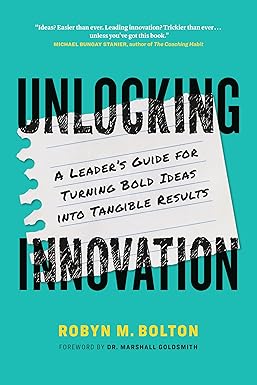
Unlocking Innovation: A Leader’s Guide for Turning Bold Ideas Into Tangible Results
After reading Robyn M. Bolton’s Unlocking Innovation, I can confidently say this book is a grounded, clear-eyed roadmap for any leader tasked with driving innovation inside a large organization. Structured around a three-year journey, the book presents a framework called the ABCs—Behavior, Architecture, and Culture—to help leaders navigate the real-world messiness of turning ideas into results. Bolton blends personal anecdotes, fictionalized case studies based on real people (like Hope, Faith, and Victor), and practical tools to guide readers through the psychological, structural, and cultural challenges that make or break innovation efforts. It’s not about dreaming up ideas; it’s about executing them.
Bolton’s voice is smart and strategic without being stiff. She has a gift for calling out corporate B.S. in a way that makes you laugh. Her stories, especially those that show leaders hitting roadblocks or being sidelined, felt familiar. The emphasis on behavior was a refreshing twist. Most business books obsess over frameworks and processes, but this one starts with the leader’s instincts, habits, and emotional resilience. It reminded me that sometimes, the biggest barrier to innovation isn’t the budget or the board, it’s us. Her advice to “do the opposite” of what made you successful in traditional roles resonated with me.
The year-by-year breakdown sometimes felt rigid, but even then, Bolton anticipates this and builds in flexibility. Her “Know Your” sections and TL;DR summaries are smart additions—like breadcrumbs through a dense forest. And the running joke about cookies was both charming and weirdly effective.
Unlocking Innovation is one of the few business books I’d recommend without hesitation to anyone leading innovation inside a complex organization. It’s especially useful for middle and senior managers who feel stuck between the C-suite’s demands and their team’s frustrations. If you’re tired of fluffy innovation talk and want something that respects both your intelligence and your time, this book is for you.
Pages: 223 | ASIN : B0DTRXX23S

Advanced Career Intelligence
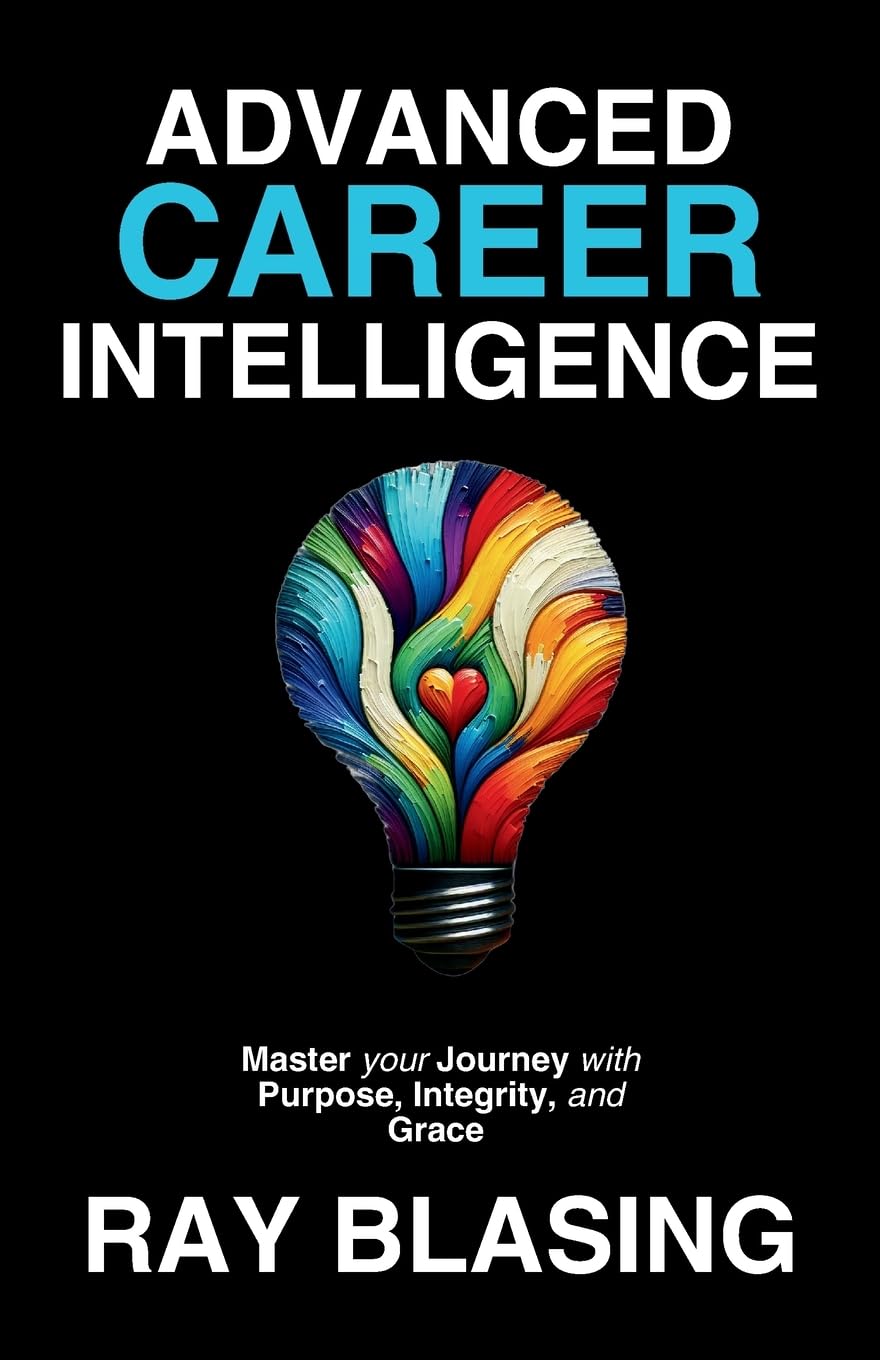
Ray Blasing’s Advanced Career Intelligence is a far-reaching, no-nonsense guide for navigating the higher tiers of professional life. From executive leadership and mentorship to innovation, entrepreneurship, and legacy-building, the book delivers a buffet of insights grounded in personal experience and extensive research. It’s the second volume in Blasing’s series, and it builds on foundational career advice by diving deep into the realms of strategy, emotional intelligence, work culture, and ethical success. It also challenges readers to think about fulfillment, retirement, and the meaning behind our work. The central themes—ambition with purpose, achievement with integrity, and legacy with grace—tie everything together with heart.
Blasing’s writing style is refreshingly clear and straight-shooting. He doesn’t try to impress you with jargon or fluff. Instead, he hits you with real talk about executive egos, toxic leadership, and the often overlooked importance of kindness. One chapter that stood out to me was on “Brutal CEOs”—he doesn’t excuse the Steve Jobses and Elon Musks of the world, but he doesn’t demonize them either. It’s a raw and thoughtful take that respects nuance. That kind of balance is rare. I found myself nodding along. It’s honest, it’s personal, and it doesn’t feel like corporate lip service.
What I appreciated most, though, was Blasing’s recurring theme of grace. So many business books preach about hustle, growth, and scaling. This one? It reminds you that success isn’t just about rising—it’s about lifting others as you go. His stories about mentoring, personal role models, and the joy of helping others gave the book a warmth I didn’t expect. There’s this genuine belief that workplaces can be both high-achieving and humane. And in a world where “grind culture” still dominates, that’s a powerful and necessary reminder.
I’d recommend Advanced Career Intelligence to mid-to-senior professionals who are climbing the ladder but want more than just promotions. It’s ideal for anyone leading teams, founding startups, or rethinking what their legacy might be. If you’re hungry for success but don’t want to lose yourself in the process, this book is for you. It’s sharp. It’s thoughtful. And it just might help you become the kind of leader people actually want to follow.
Pages: 435 | ASIN: B0FCPH5CM2



 LITERARY TITAN