Blog Archives
Literary Titan Book Award: Nonfiction

The Literary Titan Book Award recognizes outstanding nonfiction books that demonstrate exceptional quality in writing, research, and presentation. This award is dedicated to authors who excel in creating informative, enlightening, and engaging works that offer valuable insights. Recipients of this award are commended for their ability to transform complex topics into accessible and compelling narratives that captivate readers and enhance our understanding.
Award Recipients





















Mythical Creatures: The Worldbuilding Guide to Korean Fantasy by Huck Kahng
Visit the Literary Titan Book Awards page to see award information.
I’ve Lived It

Stoic Empathy is a sharp and heartfelt exploration of how two seemingly opposing traits, stoicism and empathy, can be merged into a potent tool for influence, resilience, and personal growth. Why was this an important book for you to write?
Because I’ve lived it. I’ve had to. I grew up in war-torn Tehran, navigating missile strikes and ideological oppression, and then started over as a refugee in Canada. Years later, I was leading high-stakes negotiations in sleek boardrooms as a corporate lawyer in America. Through it all, I found myself constantly reaching for two tools: my ability to stay calm and principled under pressure (stoicism), and my deep desire to understand and connect with others (empathy). People often see these as opposites, but in my life, they were partners—my survival tools, my leadership compass, my parenting strategy. I wrote Stoic Empathy because I wanted to offer a roadmap for others who are trying to live with power and integrity at once, in a world that often tells them they have to choose.
What were some ideas that were important for you to share in this book?
One was that self-control is not about suppression—it’s about clarity.
The other was that empathy doesn’t have to make you soft; it can actually make you sharper.
I wanted to challenge the misconception that empathy is merely emotional absorption. In truth, it can be tactical, discerning, and fierce. I also wanted to speak to people who feel deeply but don’t know what to do with that depth—especially those in leadership positions. And lastly, I needed to share the idea that influence doesn’t require dominance; it requires alignment—between who we are, what we believe, and how we show up.
Did you find anything in your research of this book that surprised you?
Yes—how many ancient philosophers were deeply attuned to what we now call emotional intelligence. I expected to pull heavily from modern psychology and neuroscience, and I did, but what surprised me was how relevant the writings of Epictetus and Marcus Aurelius felt when filtered through the lens of human connection. I also discovered fascinating neurological evidence that validated what I’d experienced instinctively as a survivor of oppression and war, but also as a lawyer and a mother—that our brains are wired to both mirror and regulate emotions, and that mastering that dance is what gives us real power.
What is one thing that you hope readers take away from Stoic Empathy?
That strength and sensitivity are not at odds. In fact, our most effective leaders, partners, and creators are often those who can feel deeply but act with discipline. If there’s one thing I hope readers take away, it’s this: You are allowed to feel everything—but you don’t have to do everything those feelings suggest. Power lies not in shutting down or giving in, but in standing calmly at the center of it all, discerning what matters, and choosing how to move forward with grace.
Author Website
Stoicism combined with empathy may sound like a contradiction in terms. But when these seemingly opposing forces are harnessed together, they have the power to change your life.
From surviving missile attacks and political oppression in Iran to leading high-stakes legal teams and negotiations in corporate America, Shermin Kruse’s journey fuels her mission to merge empathy and stoicism as tools for navigating power, justice, and human connection in every facet of life. In this eye-opening book, she offers you this radical perspective shift—anchored in up-to-the-minute research—to help you navigate life’s challenges with power and principles.
We often think of empathy as an emotional stance: we feel what someone else is feeling. But Kruse outlines a form of empathy that’s based in cognition, not emotion—a way for us to understand what the other person is thinking and feeling while keeping a distance from their feeling state—and shows us how we can strategically maneuver our level of engagement from “emotional empathy” to “cognitive empathy” in different circumstances. Then she utilizes Stoic philosophy and modern science to outline the how of emotional regulation and control. The bridge she builds between Stoicism and empathy gives us the knowledge and discipline we need to:
Calmly assess the power dynamics of any situation
Understand and manage our own emotions as well as the emotions of others
Defuse danger and turn conflict into connection
Skillfully steer a challenging conversation toward the result we want
Whether you’re a leader striving to succeed in your role with integrity, an educator seeking to guide curious minds with compassion, a parent nurturing resilience in your children, or simply facing a personal or professional crossroads, Stoic Empathy is an essential toolkit for negotiating success in every area of your life.
Stoic Empathy: The Road Map to a Life of Influence, Self-Leadership, and Integrity
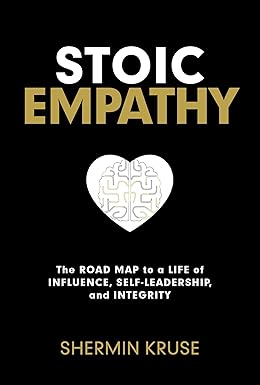

Shermin Kruse’s Stoic Empathy is a sharp and heartfelt exploration of how two seemingly opposing traits, stoicism and empathy, can be merged into a potent tool for influence, resilience, and personal growth. The book mixes personal history, ancient philosophy, neuroscience, and practical advice to introduce the concept of “Stoic Empathy,” the intentional blend of emotional awareness and emotional control. Kruse breaks down cognitive and emotional empathy, offers techniques from both domains, and delivers them through compelling stories, case studies, and reflections from her own turbulent journey from Iran to North America. The message is clear: you can be strong without being cold, and kind without being soft.
What struck me right away was Kruse’s voice. She doesn’t hide behind academic detachment or preach from a mountaintop. Instead, she lays her life bare—stories of war, immigration, trauma, injustice, love, and ambition. And she does it in prose that is raw but composed, often poetic but never indulgent. I felt moved, more than once, not just because of what she lived through, but how she translated those scars into strength. Her writing is both precise and deeply emotional, a difficult balance she pulls off with skill. Kruse somehow made a guidebook feel like a memoir.
Now, in terms of the ideas, some of them hit like a lightning bolt. The way she differentiates cognitive and emotional empathy, then teaches you when to use each, is flat-out brilliant. I’ve read plenty of books on leadership and emotional intelligence, but few are this actionable and easily understood. She doesn’t just give you theory, she shows how it plays out in hard rooms with high stakes. There’s pain in this book. There’s injustice. But Kruse doesn’t wallow. She’s honest about the ugliness in the world, but relentless in her belief that we can navigate it ethically, if we keep both a cool head and a warm heart.
I’d recommend Stoic Empathy to anyone who leads, whether that’s in a boardroom, a classroom, a household, or a movement. It’s especially relevant for folks juggling high-pressure decisions with a desire to stay kind and ethical. But more than that, it’s for anyone who’s ever felt torn between being tough and being tender. Kruse shows you how to be both, and more importantly, how to use that combination to change your world.
Pages: 288 | ASIN : B0D3YVPRX6

The Energetic Investor: Nurturing Mind, Body & Investment Mastery for Lasting Prosperity
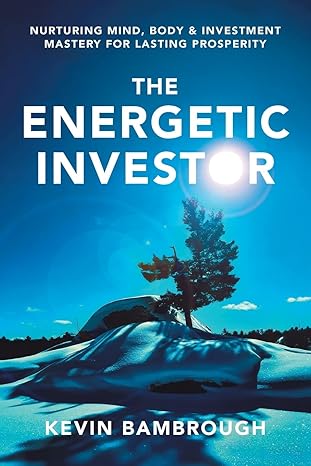
The Energetic Investor is Kevin Bambrough’s deeply personal and unconventional guide to mastering wealth, health, and mindset. Blending memoir with self-help and investment strategy, the book is structured into three sections: Discover, Diagnose, and Deploy. It begins with a gripping and emotional account of a traumatic event that catalyzed Bambrough’s transformation. From there, he explores how burnout, biology, trauma, and ingrained behaviors sabotage our ability to thrive, not just financially, but mentally and physically. By treating the body like a complex investment portfolio and focusing on energy management at the cellular level, Bambrough challenges readers to align mind, body, and money for lasting prosperity.
What struck me immediately was how raw and real this book felt. It’s not some cookie-cutter investment guide sprinkled with generic life advice. Bambrough doesn’t hold back—he dives headfirst into his personal struggles with addiction, loss, and burnout. That honesty gives his ideas serious weight. His writing veers from high-intensity financial breakdowns to soul-searching reflections, which makes for an unexpected and powerful rhythm. I appreciated that he didn’t talk down to the reader or sugarcoat the truth. Whether he’s discussing dopamine hijacks by modern marketing or the role of trauma in our financial decisions, he keeps things direct, urgent, and human.
The book jumps across biology, psychology, economics, and life philosophy without much handholding. At times, it feels like drinking from a firehose of insight, anecdotes, and science-backed strategies. But oddly enough, I liked that. It kept me on my toes. The passion behind his words is undeniable. He’s not just giving advice, he’s living the transformation he preaches. His investment insights, especially his contrarian thinking and analysis of herd behavior, are gold for any investor who’s tired of shallow market noise. But it’s the blend of personal healing and financial intelligence that makes this book stand out.
The Energetic Investor isn’t for the faint of heart or someone looking for a tidy ten-step plan to get rich. It’s for those who are ready to do some soul-digging and gut-checking. If you’re a driven professional, a burned-out entrepreneur, or someone chasing success but feeling stuck, this book might just knock the wind out of you—and then teach you how to breathe again.
Pages: 236 | ASIN : B0F6D3T26Z
The Goldilocks Team: Master Retention and Hiring
After reading The Goldilocks Team by Minal Joshi Jaeckli, I found it to be a sharp, highly personal, and refreshingly candid book about fixing the glaring blind spots in how organizations build and retain their teams. The book is structured around one central premise: most hiring and retention strategies are outdated, ineffective, and flawed because they ignore the human need for connection and meaning at work. Jaeckli introduces a fresh blueprint that emphasizes values and interpersonal alignment—what she calls the key ingredients for building a “Goldilocks” team that’s “just right.” Drawing on her global career in science, tech, and finance, and her own disengagement crisis, she argues that organizations don’t have a hiring problem, they have a connection problem.
What struck me most about this book was the author’s voice: honest, conversational, and unapologetically opinionated. She doesn’t dance around clichés or pad her arguments with buzzwords. Instead, she calls out corporate nonsense like forced rankings, tone-deaf internal communications, and overhyped engagement surveys with the bluntness of someone who’s seen behind the curtain and is tired of pretending it’s all fine. Her storytelling, especially around her own time at Credit Suisse, adds grit and credibility to her ideas. It’s rare to see someone balance heartfelt anecdotes with hard stats, but Jaeckli pulls it off. And she does it with a style that feels like you’re chatting over coffee, not stuck in a drab HR training.
But what really won me over was the core idea that it’s not about hiring “the best.” It’s about hiring people who are right for you, for your team, and for your mission. That shift alone is revolutionary. Her emphasis on the importance of personal alignment and the science behind what makes people feel connected and committed at work felt incredibly validating. I wish more companies would take these insights seriously.
If you’re a team leader, a founder, or just someone who’s fed up with pointless turnover and ghosting employees, this book is for you. Jaeckli doesn’t promise a magic solution, but she offers something better: a smart and human approach that actually makes sense. I’d recommend The Goldilocks Team to anyone who’s tired of hiring roulette and wants to build a team that sticks, thrives, and feels right.
Pages: 118 | ASIN: B0DY87Z1F7

Team Spirit: The Power of Purposeful Gatherings
Team Spirit is a hands-on guide to designing and leading team gatherings that are intentional, energizing, and effective. Drawing on years of experience as a facilitator and coach, Antonia Milkop shares practical tools, personal stories, and easy-to-apply frameworks that help managers and facilitators rethink the way teams come together. The book introduces the “3 Ps”—Purpose, Planning, and Presence—as the key ingredients for successful gatherings. Milkop structures her book with engaging metaphors, real-world examples, and repeatable templates (“Cookie Cutters”) that readers can pick up and run with.
I didn’t expect a book about meetings—well, “gatherings,” as Antonia wisely reframes them—to feel this fresh. But it is. Milkop writes like she’s right there in the room with you, rolling up her sleeves, helping you figure out what’s not working and why. Her voice is both warm and firm—like a good facilitator should be—and her practical wisdom feels earned, not theoretical. I loved the way she leaned into real examples, from clunky Zoom calls to stalled leadership retreats. I found myself nodding (and laughing) more than once. The metaphors—yes, even the cooking ones—actually helped. It’s a smart way to talk about structure without sounding stuffy.
What really struck me, though, was how this book made me feel. Inspired, mostly. Seen, a bit. It gave me a sense of permission to take more care in how I design the moments my team shares. Milkop doesn’t just want you to run better meetings—she wants you to build better teams. Her emphasis on rhythm, intention, and emotional presence is something that resonated with me. She reminds us that team culture is created one conversation at a time. The simplicity of her methods is deceptive—this is deep work. And it matters.
I’d recommend Team Spirit to anyone who leads, supports, or shows up for a team. Whether you’re managing your first group of interns or facilitating strategy sessions for execs, there’s something in here that will shift your perspective—and give you the tools to make real changes.
Pages: 184 | ASIN : B0D89PL3CZ
Literary Titan Book Award: Nonfiction
The Literary Titan Book Award recognizes outstanding nonfiction books that demonstrate exceptional quality in writing, research, and presentation. This award is dedicated to authors who excel in creating informative, enlightening, and engaging works that offer valuable insights. Recipients of this award are commended for their ability to transform complex topics into accessible and compelling narratives that captivate readers and enhance our understanding.
Award Recipients





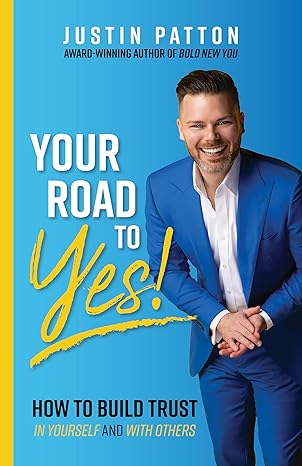

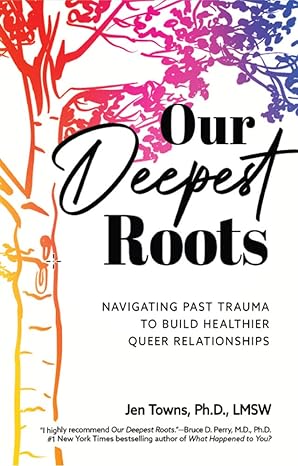



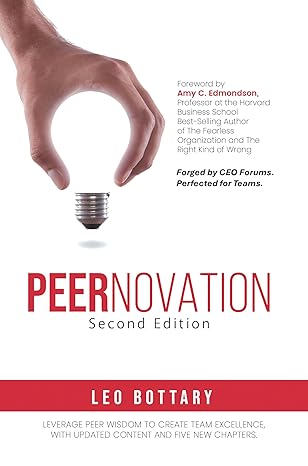








Visit the Literary Titan Book Awards page to see award information.
Leadership Presence
Justin Patton’s Leadership Presence is a passionate guide that challenges traditional leadership models and proposes a fresh, heart-centered alternative rooted in emotional intelligence, authenticity, and, above all, gentleness. Rather than relying on fear, titles, or tactics, Patton encourages leaders to “shake up the world” by showing up fully and leading with trust, empathy, and self-awareness. The book is structured like a conversation with a wise mentor. Intimate, challenging, and hopeful. Patton mixes personal stories, clear frameworks, and direct coaching advice into a motivating roadmap for anyone looking to lead with more purpose and presence.
What really got me hooked was Patton’s fierce defense of gentleness as the foundation of great leadership. That’s not something you hear every day in a business world obsessed with domination and results. He opens with a bold statement: “Gentleness is the essence of leadership presence.” And throughout the book, he proves it with stories. Like the mother on a flight who calmed her disabled son with quiet grace, and the new company president who earned trust not by flexing credentials, but by leading with empathy when questioned by a skeptical employee. They’re not just inspiring, they’re a call to action. I found myself reflecting on how I show up in tough conversations and whether I lead with compassion or control. Spoiler: not always compassion. But this book made me want to try harder.
Where Leadership Presence really shines is in its practicality. The section with “11 Actionable Tips” (like “Act like you belong” and “Vent in private, lead in public”) is gold. Patton doesn’t just preach from the mountaintop, he gets into the mud with us. He admits his own flaws, from defensiveness to over-intensity, and walks us through how he, and his coaching clients, worked to grow. I loved the story about the executive who constantly tried to prove he was the smartest person in the room, only to realize his relationships were falling apart as a result. Patton helped him pivot from transactional behavior to more intentional presence. It’s moments like these that make the book not just informative but deeply human. I felt like I was in therapy for my leadership style, and I enjoyed it.
Leadership Presence made me think hard about how my energy, my words, my silence impact the people around me. It’s the kind of book that leaves you feeling both seen and challenged. I’d recommend it to new managers, seasoned executives, teachers, parents, anyone who wants to be a better human while also being a stronger leader. If you’re ready to trade performance for presence, and power games for real connection, this book will be your guide.
Pages: 85 | ASIN : B08BGXND5H



 LITERARY TITAN