Blog Archives
Hidden Meanings

Fists in the Eye that Blinks on a Pin is a collection of poetry that feels both raw and surreal, and moves between moments of tenderness and moments of violence, exploring themes of memory, loss, and fractured identity. What inspired you to write this particular collection of poems?
This collection of poems was actually inspired by a very specific event. I was gearing up to see Billy Corgan perform at the Good Things festival when there was a sudden announcement that he would be performing an intimate acoustic set at a small venue called The Gem. The Gem is a tiny bar in a suburb called Collingwood in Melbourne, Australia. I managed to secure tickets and was huddled in this room of maybe 100 people, watching the legend Billy Corgan perform this unbelievable, stripped-back acoustic set. Truly a dream come true.
He opened up the floor to questions, and I asked how he manages to separate the emotional connection to his songs from the need to view them objectively for release to the world. His answer mesmerised me, as he talked about themes of going back to the freedom of creativity you have in childhood… reminiscing on how we have this creative flare that lets us do anything, we draw rabbits that are red with blue feet, we colour outside the lines; and it’s only once people start telling us that we’re wrong and that our drawing is terrible, that we focus on how we perceive things should be… he advocated for returning to the freedom of creativity before someone told us it was wrong. And so that’s what I tried to do with this book – just write with freedom and creativity, without concern for anything else.
How did you decide on the themes that run throughout your poetry book?
Following on from question one, there really were no preconceived themes or concepts. I didn’t set out to write the book with a particular arc or angle; nor did I know where it was going to go. Everything that was written was just written organically with a kind of spur-of-the-moment enthusiasm for creating something with freedom and enjoyment.
How do you strike a balance between clarity and ambiguity in your poetry?
It’s a good question, but probably not one I can answer. I think each reader would have a different perception of the balance between clarity and ambiguity in the book. For me, I like the idea of poetry that is more on the ambiguous side; that demands a bit of curiosity and a willingness to look for hidden meanings. But I don’t think the wider audiences like to unpack poetry anymore; people don’t want to sit down and read something that doesn’t make sense, and that they have to unravel like a code… but to me that’s what poetry is supposed to be – it’s supposed to be ambiguous, decoded…it’s supposed to challenge the reader to look deeper than merely reading the words. So who knows?
How has this poetry book changed you as a writer, or what did you learn about yourself through writing it?
I enjoyed the freedom of writing for myself first. I think my other poetry works have all been written with somewhat of a plan, a structure, a sense of narrative, and thematic linking points; I had fun writing as a homage to an experience, for the mere outcome of creating something. That was fun.
Author Links: GoodReads | Amazon
This is a rabbit painted red, with colour outside the lines; a blue foot, an orange ear – creative bliss and a child’s mind
An Emotional Journey

The Stories We Cannot Tell follows two pregnant women who are forced to make difficult choices in life and the bond they form as they navigate this point in their life. What was the inspiration for the setup of your story?
Getting pregnant and staying pregnant is such an emotional journey for a lot of women. I wrote this book so hopefully, women going through infertility or making a choice not to continue a pregnancy will feel less shame than society has made them feel. I didn’t have an easy time getting pregnant, and I had many friends going through hell to have a child and not a lot of these women shared their stories. I wrote this book before Roe Vs. Wade was overturned, something I never thought was a possibility in our country. I’m hoping the readers, no matter what their views on this topic are, realize that what’s right for them, may not be right for everyone, and having compassion and empathy is all most women in these situations want.
Was the character’s backstory something you always had, or did it develop as you were writing?
I had written a lot of the backstory for each of the women before I started writing the book. I wanted to get to know their quirks and personalities ahead of time, so I could incorporate them into who they are and the individual journey that they were going through. That being said, there were things that came out in the dialogue or in their stories as the writing of the book went on.
What were some themes that were important for you to explore in this book?
The themes that were important for me to explore were friendship, loss, love, family, and hope. I also wanted to explore how a woman views her pregnancy issues differently than a male partner, and when something happens to the baby, how his pain is just as genuine, but he may express it in a different way.
What is the next book you are working on, and when can your fans expect it to be out?
I’m just beginning my next book so I’m not sure yet when it will be out. It’s the story of three sisters who go on a journey together to figure out what happened to their mother and end up finding things about their past they never knew.
Author Links: GoodReads | Instagram | Twitter | Facebook | Website
Resembling A Moth
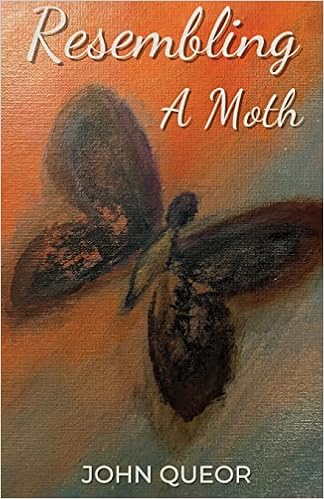

Resembling a Moth by John Queor is a compelling anthology of deeply introspective poetry that takes readers on a profound journey of self-discovery and introspection. Through his meticulously crafted verses, Queor masterfully touches on themes of self-reflection and transformation, leaving an indelible mark on the reader’s consciousness. With resonantly titled pieces such as “There’s a Silver Lining to My Suffering,” the poet artfully constructs imagery that ignites a gamut of emotions in his readers.
This collection sees Queor traverse a plethora of subjects, skillfully interlacing elements of astral projection, divorce, nirvana, and cigarettes, to name a few. Each poem is a heartfelt reflection of Queor’s own experiences, spanning across his lifetime from childhood through adulthood. The content is abundant and varied, affording readers a unique perspective into the intricate lattice of the poet’s life experiences.
Engaging with Resembling a Moth is akin to exploring a deeply personal diary, curated with thoughtful intent and opened up for public perusal. The contemplative nature of the verses piques curiosity. It stimulates deep thought, making it clear that these poems serve dual purposes, not just as a vehicle for self-expression but also as a therapeutic tool for the poet, thereby revealing his inherent poetic prowess.
Several of the poems are complemented by evocative photographs, each narrating its own distinctive tale. From cherished pets to starkly desolate bars, from personal selfies to intimate shots of loved ones, these visuals offer readers additional insight into Queor’s world. While the links between certain photographs and their corresponding poems might be readily discernible, others maintain an air of mystery, adding an element of intrigue and surprise. For those seeking more understanding, Queor kindly includes explanations for some of the photos at the conclusion of the collection, shedding further light on his artistic process.
While Resembling a Moth might not deliver an easily discernible theme or a traditional narrative arc, it exudes power in its specificity, effectively spotlighting the author’s unique thoughts and lived experiences. Some poems may challenge readers with their abstractness or may not resonate universally, but the collection as a whole beckons readers into the depths of Queor’s poetic cosmos. Here, self-examination and personal evolution form a complex, intertwined constellation, making for a truly engaging literary experience.
Pages: 210 | ASIN : B0BN5JR5YS

My Personal Struggles With Grief

Grief: the Beacon of Love is a collection of 12 notes which provide insight into how to cope with the loss of a loved one. Why was this an important book for you to write?
It was important to me to share my personal struggles with grief and the consequent health problems that I experienced. I thought these experiences would be of great benefit to all those who struggle with an undefined grief. The deaths from the pandemic underlined the need for defined coping skills in dealing with overwhelming world-wide grief.
What is a common misconception you feel people have about grief?
If we do not forgive others, we will not be forgiven. Matthew 6:15. God is love. I John 4:7-12
What is one piece of advice someone gave you that changed your life?
Grief The Beacon of Love Know God’s perspective on grief. He loves you through your joys and your sorrows. Accept Him as your Lord and your Saviour.
What do you hope is one thing readers take away from your book?
Grief will just go away if not discussed and processed.
Author Links: Website | GoodReads
I Infuse Raw Emotion and Honesty Into My Work

Guiding Spirits: (Veritas) is a collection of poetry from your mid-twenties. What made you decide to publish these poems now?
Frankly, I decided to publish now because the conditions were finally right. In regards to poetry, there are only two ways to get published – a publishing company or self-publishing. Most publishing houses don’t really want to deal with poetry unless it comes from a well-known person because then they have a chance for their endeavor to be cost-effective. Self-publishing, until at least fifteen years ago, was always done at great cost to the poet/author. You had to publish so many books, and if they didn’t sell, then you ate that cost and were stuck with a lot of books.
Self-publishing today is completely different. The only cost to the poet is their time and effort to complete their work, and then get it published on platforms like Amazon Kindle Publishing. Only a book that gets ordered gets published and the poet gets a percentage of the royalties that would have gone to the publisher or their agent otherwise. An author can take their destiny into their own hands. They don’t have to face dozens of rejections from publishers who often let writers like J.K. Rowling slide through their fingers because their opinions are subjective. Independent, self-publishing allows that book to get out into the universe to be bought by readers based on their preferences – not what the publisher thinks readers may or may not like.
I’ll take my chances on the readers. My books will either sell or not sell depending on their own merits . . . and authors and poets like me can now get their work out into the universe when they would never have been given that opportunity before with the technology that hadn’t existed until about fifteen years ago.
What was it like going back and reading these poems at this point in your life? Do they still resonate with where you are currently in life?
One of my greatest concerns was that I had been self-delusional in my youth and maybe my poetry wasn’t as good as I remembered it to be. My poetry style today is much more complicated and definitely less repetitious. I was really surprised at how well the poetry had held up over time. I think it was because of the raw emotion and honesty I was able to infuse into my work. It definitely was like a diary entry for me. My stepfather had died around this time period, so it made me question everything, including my place in the universe. I could still relate to the poetry because of that emotion.
What poem from this collection has held the most meaning for you and why?
My favorite poem in the book is “Sweet Music.” I just love the rhythmic movement of it and the imagery. It’s about the ultimate expression of a woman and a man’s love. Lovemaking is more than about the physicality of the act – when done right, it is the blending of two souls into the closest thing human beings can attain towards bringing Heaven to Earth.
Do you plan to publish additional collections of poetry written from this stage of your life?
Yes, there will be many more poetry books to come. By the end of the year, I’ll have two more poetry books published. They still have a simplicity and emotional honesty to them, but they cover stages in my life throughout the years. Guiding Spirits was about opening myself to the universe. The next book is about the anger of realizing I gave away my power to others and taking it back. The third poetry book is how my journey of self-discovery transforms my life.
Author Links: GoodReads | Twitter | Instagram | Facebook | YouTube
The beauty of poetry is that we try to express with the fewest words possible the entirety of life and our natures and what it is like for us to live upon this planet. Words become a song that we sing out into the universe, trying to reach out to like-minded souls. It is our nature to express ourselves and share who we are with the cosmos. There’s a certain fearlessness attached to a poem when it’s presented to the world. There’s always that one iota of fear where the poet feels that they are alone in their views and someone else will not get them at their most basic level of humanity. Poetry is saying, “Here I am universe. Take me as I am. I hope you love me, but, if that cannot happen, I will be satisfied if you just don’t ignore me.” To be heard is to matter, and that is all any of us want – to fulfill the wish that our lives matter. That what we think and feel and hope matters to someone other than ourselves.
This book is an exploration and experiencing of the world around us through the poet’s eyes when she was much younger than she is now. Through any age, we all experience the same emotions, desires, wants, dreams, and just a heart-felt wish that we matter to someone in this universe – even if it’s ourselves.
Guiding Spirits
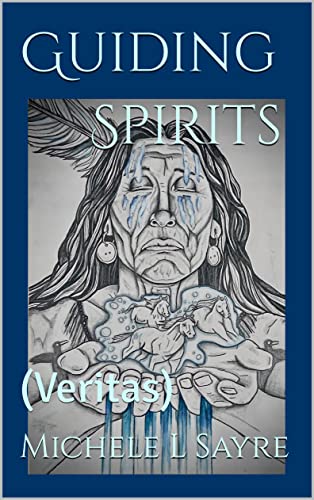

Veritas is a Latin phrase that stands for “Truth is mighty and will prevail.” Guiding Spirits by author Michele L Sayer is a compilation of poems exploring the constant truths in life like love, family, God, emotion, and change. The poems were written at a much younger age in the author’s life. A time when her life was filled with dynamic changes, her mid-twenties. This is a point in life where you are figuring out who you are and where life may take you. While we all are still grappling with the idea of being adults, there are a lot of critical life-altering decisions that we make. There is no one to tell us what to do, and whatever we do at this stage decides the trajectory of our lives. Sayer talks about these very timeless issues in these poems.
The poems are written in a very personal tone, as they were once in Sayre’s diary. A significant tone of the book is relatability and connection. From a literary point of view, the poems are very basic. The poem style varies across the book, with repetition being the dominant literary device. The poet uses repetition to highlight the all-encompassing nature of these emotions, like loneliness in the poem “I am Lonely.” The themes covered and the messages conveyed are straightforward without a lot of symbolism. I found it interesting that the book’s format looks raw and basic, almost like reading a personal diary filled with poems. It made it seem like the author was sharing a piece of her writing that is close to her, making the poems very relatable.
Throughout the book, there is artwork done by three different artists: Brycen Pancrazio, Isabel Sayre, and Gabriel Sayre. What is unique about these artists is they are all children. Each of them is special in Sayer’s life and adds a special touch to the poems included in this collection.
Guiding Spirits: (Veritas) is a thought-provoking collection of poetry. Written when the author was in her mid-twenties, the topics are highly relatable to that age group. however, anyone that is at a stage of life undergoing significant changes will find this collection meaningful.
Page: 214 | ASIN : B09SZ9LZWH
Abraham’s Tears
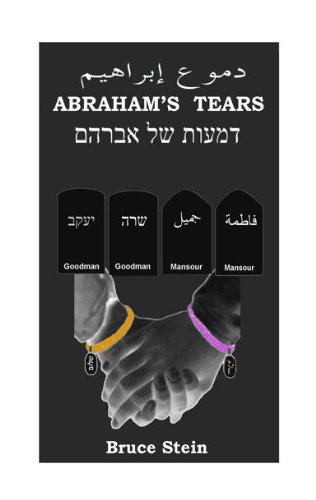
Bruce Stein’s novel, Abraham’s Tears, takes readers on an educational and eye-opening journey surrounding the conflict in the Middle East. We learn the values and beliefs of two families- one of Israeli/Jewish decent and the other with a Palestinian/Muslim background. The question of what can be done to bring peace between the religions and the ethnicities is explored through an emotional and exciting tale, supporting Ghandi’s prophecy of “An eye for an eye makes a whole world blind.”
The two protagonists are Jamil Monsour and Jacob Goodman. Proud of their religion and heritage, they have strong views surrounding the reasons for the divided state of the middle East and solutions for peace. Jamil grew up believing he was a Shiite, then learns he was actually born a Sunni that had been adopted as a baby. Jacob grew up believing he was Jewish and was even serving in the IDF, only to learn that he was also adopted and had been born to an Arab/ Muslim family. The revaluation of their previously unknown identities comes as a shock to both young men, making them question their beliefs. This realization brings into question if someone is who they are born as, or who they are raised as. Through horrible loss and tragedy, hope is instilled in the end, as two women from opposing sides are brought together to fight for peace and an end to the senseless fighting and killings. Author Bruce Stein creates rich, believable and empathetic characters in his thought-provoking novel. I really enjoyed the thoughtful character development and the emotional journey the characters embark on.
Abraham’s Tears will appeal to readers looking for an educational novel. This is a thought provoking story that provides readers with different viewpoints and reasons for the events that are happening in the Middle East. This book brought a humanistic aspect to the topic, making it feel close to home. Bruce Stein has created characters that are easy to identify with. Seeing the way this conflict affects everyone involved, no matter where they are living, was an eye-opening realization.
Pages: 185 | ASIN: B009368OLE

If Grandma Were Here

If Grandma Were Here, by Amber L. Bradbury is a heartwarming children’s story to remind kids that their grandma is always with them. The book goes through the many activities children would have with their grandmother. From hugs in the morning to a story at night, there are many things to read about.
If Grandma Were Here is an easy to read book, with detailed illustrations to help the reader visualize each scene. The drawings are filled with bright colors and motion, showing the excitement of spending time with grandma. Throughout the book, the tone is playful and enthusiastic to remind kids that memories of deceased loved ones are happy memories.
Bradbury tells a fun story to teach children that losing a loved one is sad but it is important to remember all the good times you had together. Each event makes it easy for the reader to relate, making it feel more personal. If Grandma Were Here is a beautiful children’s book that will help family’s discuss grief and help young ones understand how to cope with loss. The charming illustrations and heartwarming storyline make Amber L. Bradbury’s children’s book an engaging and entertaining story for anyone.
ASIN: B08QMM18YW | Pages: 17


 LITERARY TITAN