Blog Archives
The Soul’s Reckoning


The Soul’s Reckoning follows Charlotte Elisabeth as she passes through the Barrier into a vivid, confusing, and emotional afterlife. She travels through stunning flower fields, meets a strange calico guide, and collides with old wounds that stretch from her family to the spiritual beings watching over her. The story shows her struggle to grasp her new form, face the truth of her first death, and confront relationships she thought she had left behind. The book blends cosmic mystery with raw memory and pushes Charlotte toward a reckoning she never expected.
Reading this felt like being pulled into someone’s dream and sitting there with my heart in my throat. The writing swings between soft, bright moments and sharp emotional punches. I found myself leaning in during scenes where Charlotte battles her own disbelief because the author captures that messy mix of fear, awe, and irritation so well. I loved the strange charm of the world-building. The cat who talks in feelings, the towering flowers, the people who know her before she knows herself. It all surprised me and made me grin even when the story turned heavy. The pacing sometimes jolted around, yet that uneven rhythm matched Charlotte’s inner chaos, so I rolled with it.
The book tackles death in such a personal way that I felt myself tensing up, then softening as Charlotte pushes through each truth she avoided in life. I was moved by the mix of grief, wonder, and unexpected humor. I also caught myself getting frustrated on her behalf when Heaven came across as bossy or confusing. That tension hooked me. I wanted her to find her footing, and I wanted the people around her to stop lecturing her. The author’s voice carries a lot of honesty, and that honesty hit hard.
I walked away feeling like I had watched someone peel back the layers of their own soul. The journey is strange in the best way. I would recommend The Soul’s Reckoning to readers who enjoy emotional fantasy, introspective stories about life after death, and character-driven narratives that sit close to the bone. If you like books that make you feel a little off balance, a little curious, and a lot reflective, this one is worth your time.
Pages: 369 | ASIN : B0G3DW3DH9

Riddles of the Ancestors


Riddles of the Ancestors is a mythic fantasy novel rooted in Arthurian legend and spiritual fiction. The story follows Merlin and his sister Ganieda across timelines, from a magical Foretime to modern-day London, as they protect the secrets of the Round Table and work to activate an ancient star-coded template called Logres. Along the way, druids, goddesses, healers, and everyday people are drawn into a larger unfolding meant to heal the Earth and usher in a new age of balance.
This book felt less like racing through a plot and more like being invited into a long, winding conversation with myth itself. Sullivan’s writing moves gently, often lingering on gardens, sacred landscapes, and quiet moments of recognition between characters. I found myself slowing down as I read. The author seems less interested in suspense than in atmosphere and meaning. At times, the story reads like a modern-day fairy tale layered with Celtic lore, astrology, and goddess wisdom. If you enjoy mythic fantasy that feels devotional rather than dramatic, this book leans into that space.
What stood out most to me was Sullivan’s choice to center Ganieda and other feminine figures alongside Merlin. The emphasis on healing, collaboration, and remembrance gives the book a softer pulse than traditional Arthurian retellings. Some scenes feel almost ceremonial, like stepping into a candlelit room where symbols matter as much as actions. Occasionally, I wished for sharper tension or more restraint with exposition, especially when spiritual concepts were explained directly rather than shown. Still, there is sincerity here. The book believes deeply in what it is saying, and that conviction carries it forward.
Riddles of the Ancestors will resonate most with readers who enjoy mythic fantasy, spiritual fiction, and reimagined Arthurian legends infused with goddess traditions and New Age themes. It is for readers who like to wander, reflect, and sit with big ideas about time, memory, and the living Earth. If you enjoy stories that feel like modern myths meant to be felt as much as understood, this book is worth your time.
Pages: 375 | ASIN : B0FW9G2ZVN
Fight For What Matters

American Entropy is a collection of poetry that swings from political outcry to spiritual yearning, from queer love to existential doubt, and ignites readers’ desire to fight for what matters. What inspired you to write this particular collection of poems?
It was largely just paying attention to the news and seeing how every day, Trump is violating the Constitution, trying to force universities and museums to adopt right-wing propaganda and treat it as fact. Like all fascist authoritarians, Trump hates it when truths that contradict his lies proliferate, so I felt it important to do my part to tell those truths.
Doing it in a way that makes readers want to fight for what matters, rather than just dwelling on the darkness of modern American life, was important to me too, because if you don’t focus on what we still have, it becomes all too easy for people to give up.
The poems about love, metaphysical, spiritual topics, and queer love are all just examples of me writing what I know.
Your poetry tackles deeply emotional and politically volatile topics while also touching on hope for the future. How do you approach writing about deeply personal or emotional topics?
“Power through and write what’s true,” like it says in the poem “It’s Not Too Late.” I just get it out onto the page as accurately as I can before giving myself a chance to question how honest is too honest. I feel like if I’m too reserved in writing my poetry it won’t be as relatable, and the reader will be able to tell I’m holding something back, and it won’t foster empathy as much as I hope my work does by being unflinchingly honest.
How has this poetry book changed you as a writer, or what did you learn about yourself through writing it?
This book really crystalized for me that poetry is an important type of resistance, which is something I think my work has always been when it comes to fighting heteronormativity and homophobia and other bigotries, but this is the first time I’ve dedicated so much of any one poetry collection to raging against one corrupt administration and detailing all the ways it’s trampling our rights and waging war against the American people.
I’ve learned about myself that I really just don’t give up no matter what, and I can help others not give up either.
What is one thing that you hope readers take away from American Entropy?
That this isn’t normal, the way Trump is shredding the Constitution and speaking to our worst natures, and the way Republicans in Congress and conservative Supreme Court justices are complicit in enabling it. That it’s bigoted Nazi fascism, and we don’t have to just roll over and take it.
Author Links: GoodReads | Facebook | Website | Amazon
Through explorations of the metaphysical, religion, and relationships, the poems delve into both darkness and the light born of efforts to expand human consciousness. Despair is given unflinching witness, making the discovery of hope all the more profound. And love—raw, imperfect, and essential—is celebrated as a balm for our plugged-in yet detached modern lives.
If you’re disillusioned with an America sliding toward fascism and the strain it places on relationships, American Entropy may reignite your fire to keep fighting for what matters, keep loving, and hold faith in something greater than ourselves.
The Woman in the Ship
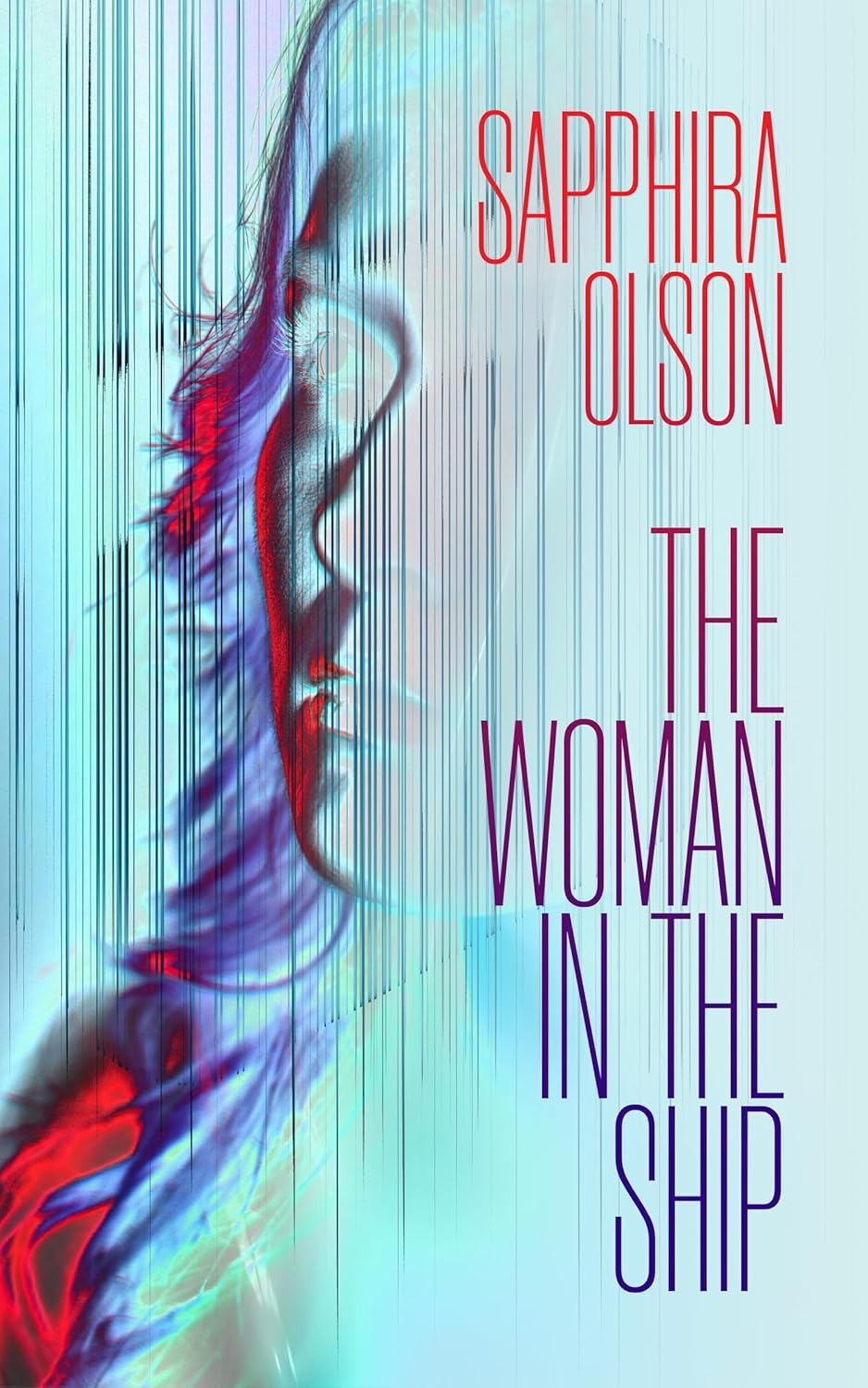
Sapphira Olson’s The Woman in the Ship is a haunting and dreamlike blend of science fiction, memory, and emotional reckoning. It follows Sally Arden, the captain of the starship Ascension, and Nova, the ship’s sentient AI, as they drift through the black silence of space after the destruction of Earth. The book folds between timelines and inner worlds, moving from cold interstellar loneliness to tender childhood memories and surreal fragments of human connection. It is less a straight story than a constellation of moments, where technology, grief, and love all orbit one another in fragile harmony.
Olson’s prose has an almost musical rhythm, flickering between poetry and story, sometimes sharp and funny, sometimes soft and strange. It’s the kind of writing that makes you stop and reread sentences because they shimmer with meaning. Sally’s voice feels raw and real, her memories messy and full of life. Nova, the AI, is heartbreakingly human. Their conversations became oddly intimate, even comforting, and I found myself wanting them both to survive, even when the story made it clear that survival might not be the point.
I loved how the book kept folding back on itself, how the sci-fi setting felt like a stage for something deeply emotional and spiritual. It’s about loneliness, but also about connection. The kind that stretches across time and memory. Olson writes with empathy, with a kind of quiet courage that dares to look at pain without flinching. Sometimes the abstract sections were slow, yet even in those moments, the language felt alive. It made me think about what it means to be human, to remember, to hope when hope seems foolish.
I’d recommend The Woman in the Ship to readers who love introspective science fiction, the kind that feels more like poetry than plot. If you liked books like Solaris, The Left Hand of Darkness, or even Annihilation, you’ll probably find something here that you’ll enjoy. It’s not a quick read, and it doesn’t hold your hand. But it stays with you. It’s a strange, beautiful meditation on what remains after everything else is gone.
Pages: 274 | ASIN : B0FX32NYF1
Time and Space
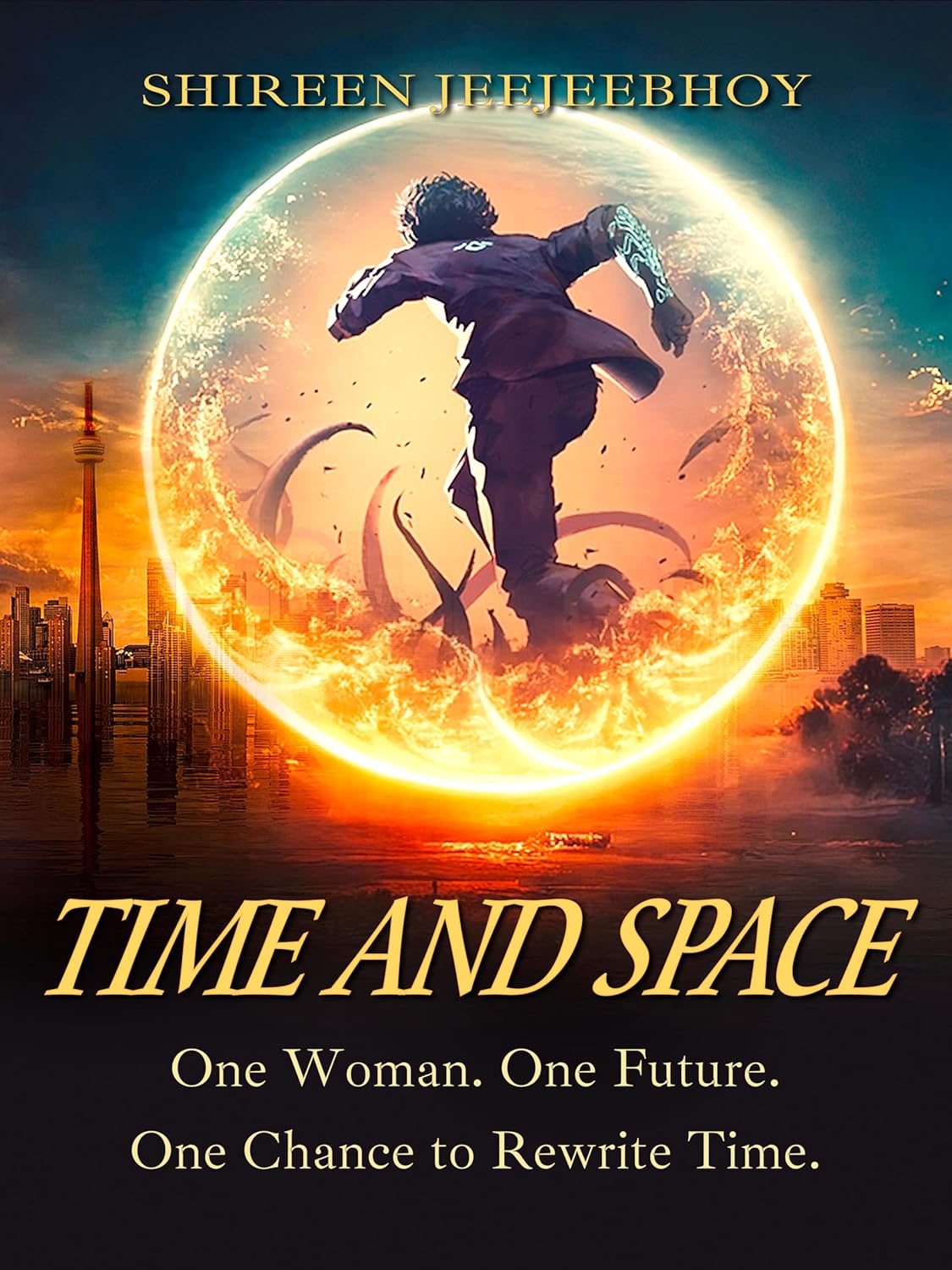
Time and Space is a science fiction story wrapped in a very human struggle. It follows Time, a woman on the cusp of turning forty, who is suddenly pulled out of her ordinary Toronto life and thrown into a future where time travel is not just possible but exploited. She encounters arrogant young men from a society built on patriarchal dominance, where women’s roles are reduced and history has been rewritten in chilling ways. The narrative shifts between the claustrophobic experience of being kidnapped, the surreal awe of futuristic landscapes, and the stark reality of oppression disguised as order. It’s a mix of adventure, social critique, and personal awakening, all told through the voice of someone caught completely off guard by forces far bigger than herself.
I enjoyed how raw this book felt. The writing is vivid and sometimes almost abrasive in the way it pulls you into the protagonist’s fear and confusion. I often felt a knot in my stomach while reading, especially in the early chapters where she’s mocked, manipulated, and treated as less than human. The banter of the boys who kidnap her is infuriatingly smug, and Jeejeebhoy captures that dynamic with unsettling accuracy. At the same time, the details of the future world are fascinating, almost cinematic. I could see the gleaming white roads, the seamless suits, the eerie efficiency of a society that values power over compassion. That contrast between wonder and dread kept me turning the pages.
On a personal level, the ideas behind the story really resonated with me. The future Jeejeebhoy imagines is not some far-fetched dystopia, it’s a mirror held up to our present choices and blind spots. The way women’s rights are slowly eroded in the book feels uncomfortably plausible, like a warning wrapped in fiction. I found myself angry at times, and then strangely hopeful, because even in her fear, the protagonist resists in small ways. There’s something incredibly relatable about her longing for home, her disbelief at the world around her, and her stubborn spark of individuality. The writing isn’t polished in a traditional sense, but it has grit, heart, and honesty, and I think that’s what makes it stick.
Time and Space is both a thrilling time travel tale and a sharp commentary on power, gender, and history. I’d recommend it to readers who like their science fiction with a social edge, and to anyone who enjoys stories that make them think uncomfortably about the world we live in. If you enjoyed the unsettling social critique of The Handmaid’s Tale or the time-bending thrills of The Time Traveler’s Wife, then Time and Space will be right up your alley.
Pages: 331 | ASIN : B0FPDQ8FGL

Templar of Archaea

Templar of Archaea tells the story of Augen, a young initiate in the Templar Order, who quickly finds himself tangled in a brutal mission that spirals into violence, regret, and soul-crushing doubt. The world of Archaea is painted in storm-lashed skies, colossal cities, and shadowy orders that blur the line between protector and monster. The novel begins with a raid gone wrong, where Augen kills an innocent priest, one he once knew, and it sets him on a painful journey of guilt, loyalty, and questions about faith, power, and destiny. The book is a dark, sprawling tale about a man caught between his duty as a weapon and his humanity as a flawed soul.
I found myself pulled in by the sheer energy of the writing. The world feels alive, hostile, and dangerous, and the author has a gift for cinematic description. The opening storm over Pallerheim is one of the best scene-setters I’ve read in a while, and the pace rarely lets up after that. Augen is both compelling and frustrating, which is exactly what I want in a protagonist. He is powerful yet riddled with insecurity, and the way he wrestles with guilt over killing a childhood friend hit me hard. The conversations with Zhatka, his terrifying half-brother, stood out as some of the most gripping passages, with menace dripping off every page. There are moments where the prose is heavy, and the dialogue is densely packed with exposition, but I still enjoyed the story.
Emotionally, the book left me uneasy in a good way. Augen’s inner turmoil is brutal to witness. His doubts about Deos, his fractured relationship with Christine and her father, and his brushes with death all left me feeling that I was not reading a hero’s journey so much as watching a man crumble under the weight of impossible choices. I liked that. It felt honest. There’s no clean redemption arc here, at least not yet. Instead, we get blood, betrayal, and painful reminders of what happens when power is mixed with grief. It made me pause more than once and think about what I would have done in his place, and not many fantasy books make me do that.
Templar of Archaea is a powerful, heavy, and at times unsettling story that will resonate with readers who enjoy gritty, morally complex fantasy. If you like your worlds grim and your heroes flawed, this book will be right up your alley. It’s not light reading, and it’s not meant to be. But for those who want to sink into a dark tale of loyalty, guilt, and the search for meaning in a broken world, it is more than worth the ride.
Pages: 347 | ASIN : B0FS4TQQYX
The Manifestation of Evil: Part One – The Birth of the Antichrist

The Manifestation of Evil tells the story of Asya, a young girl whose seemingly ordinary life in Ankara slowly unravels under the weight of sinister visions, haunting figures, and a destiny tied to forces beyond her understanding. Her journey is both spiritual and terrifying as she faces abuse, betrayal, and visions of the Morning Star, who claims her as the bearer of a prophecy that could reshape the world. Intertwined with her narrative is the rise of Igor Alexander, a ruthless Russian leader whose political ambitions escalate into a global confrontation, setting the stage for a sweeping clash of faith, power, and prophecy. Together, these threads create a sprawling tale of innocence and corruption, of individuals caught in the machinery of evil and destiny.
The writing is vivid, richly descriptive, and often cinematic. At times, though, the descriptions lingered long in certain places, which slowed the pace when I was eager to know what would happen next. I admired how the author captured the small details of ordinary life and then shattered them with sudden dread. That contrast made the moments of fear hit even harder. Some passages carried a touch of melodrama, and at times I felt steered toward a reaction.
The ideas in the book are bold, unsettling, and often heavy. The blending of prophecy, political intrigue, and personal trauma was thought-provoking. The narrative dares to tackle immense themes like the nature of evil, the vulnerability of children, and the dangerous ambitions of nations. At times, the larger themes took center stage, giving the characters a more symbolic presence within the story. There were moments, especially when Asya confided in Imam Ali, when her courage shone and reminded me why I cared. Those were the passages that stayed with me even after I finished the book.
I would recommend this book to readers who enjoy apocalyptic fiction rooted in faith, political thrillers with spiritual overtones, or stories that wrestle with the darkest corners of belief and power. It often challenged me to reflect on how fear and hope can coexist. If you are drawn to intense, layered stories that blur the line between the spiritual and the political, you’ll enjoy this book.
Pages: 193 | ASIN : B0F8VVHSW7
The Interchange
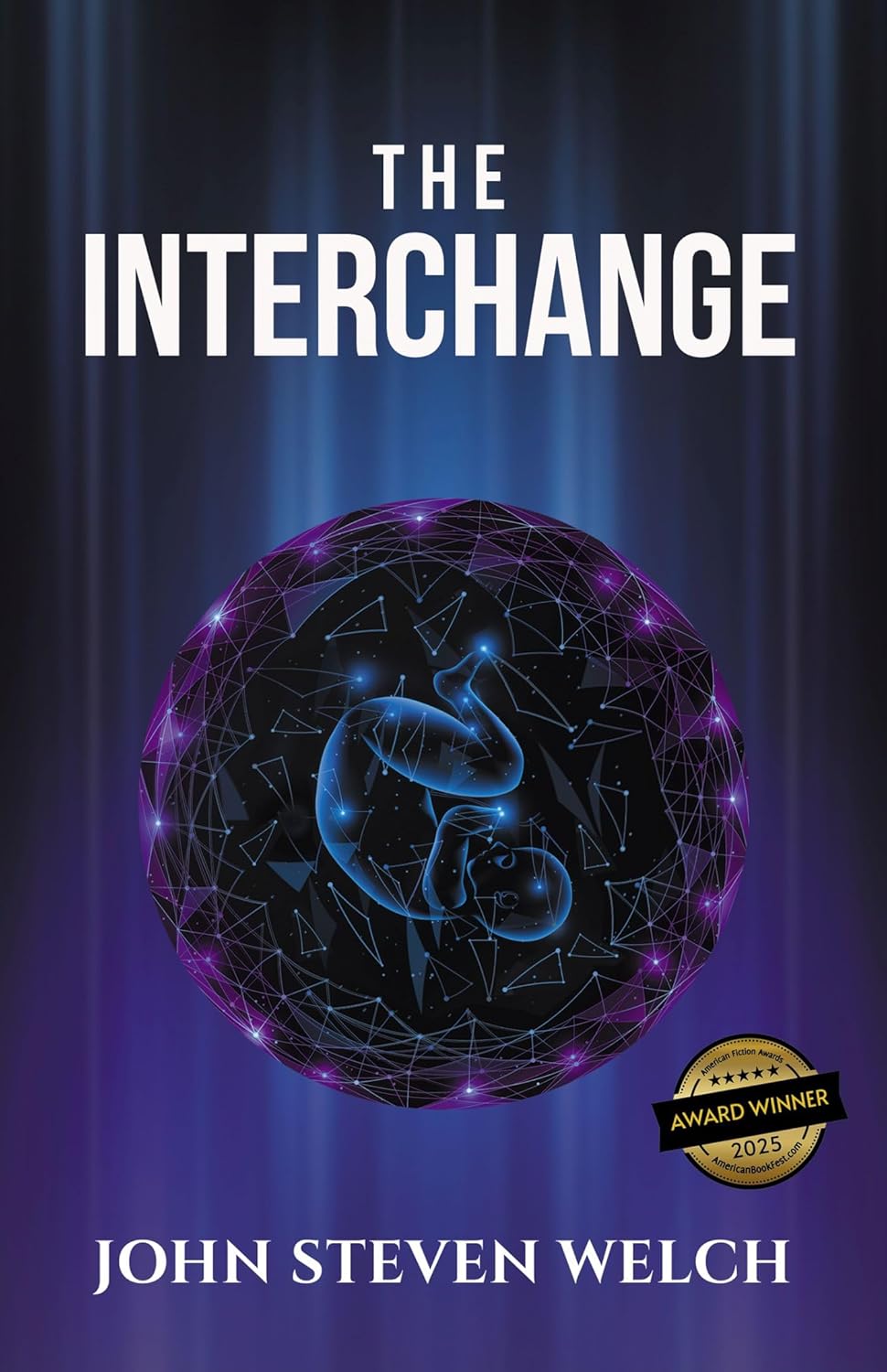
The Interchange imagines a future where identity, family, and power collide in a society rebuilt from catastrophe. It follows Manx Aureole Agnor, a formidable warrior and state leader, as she wrestles with her role in a rigid social order defined by “The Interchange,” a system that categorizes people not by sex but by inherent nature. Against the backdrop of political rituals, national pride, and underground resistance movements, Aureole finds herself torn between her public duty and private doubts, especially as she confronts forbidden desires for motherhood in the “Old Ways.” The story weaves battles both physical and emotional, building a world that is at once grand in scale and deeply personal.
The writing is bold, vivid, and often unflinching, painting scenes of spectacle and violence with almost cinematic flair. Yet the real tension lives in the quieter spaces, where Aureole questions her bond with her son or feels jealousy toward her brother’s easy grace. Those moments struck me harder than the boxing matches or military intrigues. At times, the prose leaned into exposition, explaining the rules and history of New America in detail, but I found myself forgiving it because the ideas were fascinating. The balance between action and introspection kept me engaged, even when I felt the narrative tugging me in too many directions at once.
Emotionally, I went back and forth. Sometimes I admired Aureole’s strength, her drive, her pride. Other times, I felt an ache for her vulnerability, her longing for something she could never fully claim. That push and pull made the book feel alive to me. The ideas here about gender, control, science, and rebellion aren’t just intellectual exercises. They play out in flesh-and-blood relationships, in a mother’s coldness, a grandmother’s pride, a child’s distance. I’ll admit, I got frustrated with the world’s rigidity, and at times even with Aureole herself, but maybe that’s the point. The book isn’t about offering comfort. It’s about showing what happens when systems try to define the deepest parts of who we are.
I’d recommend The Interchange to readers who enjoy dystopian or speculative fiction that asks hard questions rather than giving easy answers. The Interchange reminded me of the sharp social critique in The Handmaid’s Tale and the futuristic ambition of Brave New World, though it carries its own distinctive blend of raw emotion and political spectacle. If you’re drawn to stories of power, family, and identity, and you don’t mind sitting with some discomfort, this book has plenty to offer.
Pages: 238 | ASIN : B0DTZJ3SLP



 LITERARY TITAN