Blog Archives
Empowering Teens

Money Skills For Teens lays out a clear and practical roadmap for teenagers, beginning with the basics and then moving into lessons on budgeting, saving, and spending wisely. Why was this an important book for you to write?
This book was deeply personal for me because it began as something I wanted to give my son when he turned thirteen this year—a guide that would help him grow into a confident, capable young adult. I realized that so many essential life skills, like managing money, building confidence, or handling emotions, aren’t taught in school. That’s when I decided Money Skills for Teens would be just the beginning. It’s the first book in my nine-book Teen Life Skills Mastery Series, which I’m creating to help teens develop the practical, emotional, and real-world skills they need to thrive. Each book in the series builds on the same goal: empowering teens to step into adulthood with confidence, independence, and a strong sense of self.
I appreciated that your book covers topics like peer pressure and emotional spending. How did you decide which topics related to teens were essential for you to share in this book?
I wanted this book to reflect what teens are truly experiencing today. It’s not just about earning or saving—it’s about the emotions, social pressures, and digital influences that shape their choices every day. I included topics like peer pressure and emotional spending because those are the areas where many teens struggle the most but rarely talk about. They’re learning to find their own identity in a world full of social media trends and constant comparison. I wanted to create a space where teens feel understood and supported, not judged. Future books in the series will explore other life challenges—like communication, home skills, mindset, and emotional wellness—so teens can grow stronger in every area, not just financially.
What is one piece of advice you wish someone had given you when you were younger and learning how to manage money?
I wish someone had told me that money is more about confidence than calculation. Managing it wisely isn’t just about numbers—it’s about how you think and feel about your choices. I used to believe financial knowledge was something adults figured out later, but the truth is, starting young gives you power and freedom. Every small step, like saving a few dollars or setting a goal, builds the foundation for independence. That’s the message I want teens to hear early—that learning to manage money isn’t just about having cash, it’s about building courage, discipline, and control over your future.
What is one thing that you hope readers take away from Money Skills For Teens?
I hope every teen who finishes this book feels capable and proud of themselves. I want them to realize that money confidence is something they can build, no matter where they start. My biggest wish is that they walk away understanding that financial freedom begins with small, smart choices—and that every mistake is simply a lesson, not a failure. And beyond that, I hope this book inspires them to explore the rest of the Teen Life Skills Mastery Series—because money skills are just the first step toward mastering all the skills they’ll need to live independently, make good choices, and believe in their own potential.
Author Links: Amazon | GoodReads
Give your teen the one skill school rarely teaches—how to handle money with confidence.
Money Skills for Teensisn’t just another financial guide; it’s a heartfelt gift that prepares your teen for real-world success. With warmth, encouragement, and practical wisdom, it helps teens build independence, responsibility, and lasting confidence with money.
Money Mistakes Are Expensive—Confidence Is Free.
Does your teen run out of money too quickly?
Are they struggling to save for the things they want?
Do you wish someone could finally explain budgeting in a way that actually makes sense?
Money Skills for Teensis the go-to personal finance guide for teenagers who want to earn, save, and spend wisely. Written in a friendly, relatable voice, it turns confusing financial topics into real-world lessons that teens can actually enjoy learning.
Inside, your teen will discover how to:
✅ Budget, save, and spend without giving up the fun things they love
✅ Avoid scams and online shopping traps—protect their money in the digital world
✅ Tell the difference between wants and needs—and handle peer pressure around spending
✅ Start investing early—understand compound interest and lifelong wealth habits
✅ Find safe side hustles and jobs—even before they can drive
✅ Build healthy money habits that lead to lifelong confidence and freedom
Packed with simple lessons, real-life stories, and interactive exercises, this empowering guide helps teens practice smart habits and make informed choices—skills that will serve them for life.
Perfect for parents, teachers, homeschoolers, and mentors, Money Skills for Teensmakes the perfect graduation, holiday, or “just because” gift for any teen ready to take their first step toward independence.
Give the gift of financial confidence today—click “Buy Now” and help your teen start building a smarter, stronger future.
The Edge of Enough


Emma Vallin’s The Edge of Enough is a powerful, deeply personal manifesto for high achievers teetering on the brink of burnout. Part memoir, part guidebook, the book explores how our drive for success, often celebrated, can quietly morph into a self-destructive cycle. Vallin uses her own story, client experiences, and loads of research to paint a vivid picture of achievement addiction, and then hands us a toolkit to reclaim balance, resilience, and a new, healthier definition of success.
Right from the intro, I was hooked. Vallin doesn’t just talk about burnout in theory; she lived it. Lying in a hospital bed while three months pregnant, her body literally shutting down from stress, is a far cry from the Instagrammable “hustle” narrative we’re all fed. I appreciated how she was brutally honest about her perfectionism and how that internal pressure, mixed with toxic corporate expectations, almost cost her her child. That rawness sets the tone for the rest of the book.
What really stayed with me was Vallin’s concept of the “three-headed dog”: self-imposed pressure, corporate expectations, and societal standards. She doesn’t let any of those off the hook, which I respected. She talks about how perfectionism isn’t just about doing everything perfectly, but about tying your self-worth to performance. When she dives into the story of tennis star Robin Söderling, who collapsed under pressure despite global success, it made me think about how normalized burnout has become for “high performers.” You see yourself in these stories, and that’s what makes it so unsettling and important.
I also loved the practical side of the book. Vallin introduces the “Sustainable Performance Framework,” and this was the shift I needed. She doesn’t suggest you give up ambition. Instead, she offers a smarter way to channel it. She urges us to explore our “Achievement Archetype” and recognize patterns that no longer serve us. Her “Edge of Enough” isn’t about settling, it’s about knowing where to stop pushing so you don’t fall off the cliff. The case studies and reflection exercises weren’t gimmicks; they genuinely made me pause and rethink the way I operate day to day.
This book isn’t a pep talk. It’s a nudge (or shove) to stop confusing burnout for success. Vallin speaks to people like me: ambitious, driven, addicted to “doing more.” If you’re leading a team, this book will also show you how your overachievement might be setting the wrong tone. Her writing is smart, clear, and despite the heavy topics, full of compassion and hope.
The Edge of Enough is perfect for high achievers who know deep down that something’s gotta give. It’s for the exec who’s hitting KPIs but can’t sleep, for the parent juggling two calendars and a migraine, and for the leader who wants to build something sustainable.
Pages: 287 | ASIN : B0F7V17JLB

Trust, Candor, and Accountability

Cultivate: The Power of Winning Relationships presents readers with a thoughtful and highly practical exploration of the critical role relationships play in achieving professional success. Why was Cultivate: The Power of Winning Relationships an important book for you to write?
Relationships are the heartbeat of business—and life. Early in my career in finance and leadership development, I saw time and again that it wasn’t technical skill that made or broke success. It was how people navigated the human side of work. Who they trusted. Who they avoided. Who had their back—or didn’t.
Cultivate was my way of capturing the patterns I saw in teams and leaders around the world—and offering a clear, practical path forward for building the kinds of relationships that elevate performance, trust, and impact.
The pandemic brought this need into even sharper focus. As we navigated remote work, hybrid environments, and the fundamental reshaping of our workplace connections, the principles in Cultivate became not just important but essential. That’s why I’ve expanded the second edition to address these new challenges and opportunities.
What ideas were important for you to share in this book?
First, that relationships are not a “nice to have”—they are mission critical. Second, that we all have a Relationship Ecosystem™—and whether we’re aware of it or not, we’re constantly influencing and being influenced by the people around us.
I wanted to help readers diagnose the health of their relationships, understand the dynamics at play (Ally, Supporter, Rival, or Adversary), and most importantly—equip them to shift those dynamics with intentional action.
The Ally Mindset at the heart of the book shows how five essential practices—Abundance & Generosity, Connection & Compassion, Courage & Vulnerability, Candor & Debate, and Action & Accountability—create the foundation for transformational relationships. These concepts were so powerful that we expanded them into their own book, You, Me, We: Why We All Need a Friend at Work (and How to Show Up as One!), which serves as a perfect companion to Cultivate.
What is a common misconception you feel people have about building relationships in a professional environment?
That it’s about being liked, or that it’s all just “soft stuff.”
In reality, the strongest professional relationships are rooted in trust, candor, and accountability. You don’t need to be best friends with everyone at work—but you do need to be willing to show up with integrity, listen generously, and have the tough conversations.
Another myth? That relationships happen organically. The truth is, high-trust, high-impact relationships are built intentionally. This becomes even more critical in our hybrid and remote environments, where the natural touchpoints of in-person interaction are limited. We must now deliberately create the conditions for connection that used to happen in hallways and break rooms.
Perhaps the most damaging misconception is that investing in relationships takes time away from “real work.” The data proves otherwise—teams with strong relationships are more innovative, more resilient, and deliver better results. As I explore in both Cultivate and You, Me, We, relationship-building isn’t separate from the work—it’s what makes the work possible.
What do you hope is one thing readers take away from Cultivate?
That you have more influence than you realize. Whether you’re an executive or a new team member, you have the power to shape the culture and health of your relationships.
It starts with one conversation, one check-in, one moment of courage. Start there—and the ripple effect can be profound.
In today’s workplace, where technology often creates the illusion of connection, I hope readers take away the understanding that genuine human relationships remain the cornerstone of success. We must all work to create cultures of connection in a world that often feels disconnected, one conversation and one relationship at a time. Because we truly are #BetterTogether.
Author Links: GoodReads | Website | LinkedIn
New & Updated Vibrant, Practical, and Unapologetically Real
Success in business isn’t just about what you know—it’s about how you connect. In today’s fast-paced, tech-driven world, genuine human relationships are the key to unlocking peak performance, strong teamwork, and lasting success. Cultivate is your go-to guide for turning everyday interactions into powerful, real connections.
Are you finding it tough to build trust in virtual and hybrid work settings? Do colleagues sometimes come off more like competitors than supportive teammates? And do those difficult conversations seem too risky to tackle? This book shows you how to break down those barriers and transform team and communication challenges into genuine opportunities.
In this expanded second edition, Morag Barrett – founder and CEO of SkyeTeam – introduces her groundbreaking Relationship Ecosystem™ model, giving you the practical tools to:
• Strengthen Your Communication: Cut through the noise and build authentic trust in every conversation.
• Tackle Tough Talks with Confidence: Learn how to approach challenging discussions in a way that clears up misunderstandings and builds stronger bonds.
• Transform Workplace Dynamics: Turn quick chats into lasting connections that boost your day-to-day impact and set you up for long-term success.
• Enhance Your Leadership Impact: Become the go-to colleague who not only drives results but also inspires others—fueling your success today and paving the way for a thriving career tomorrow.
If you’re ready to step beyond surface-level interactions and truly make a difference in your work life, Cultivate is here to help you build relationships that work as hard as you do.
Cultivate: The Power of Winning Relationships
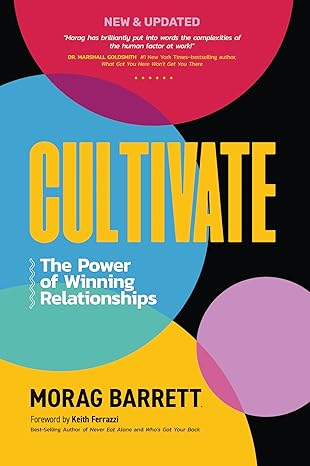
In Cultivate, Morag Barrett presents a thoughtful and highly practical exploration of the critical role relationships play in achieving professional success. Barrett, drawing on her extensive leadership development experience, introduces the “Relationship Ecosystem,” a clear, actionable framework that categorizes workplace relationships.
What sets Cultivate apart is its balance between strategic insight and practical application. Barrett moves beyond theory, offering readers diagnostic tools, self-assessments, and concrete strategies to both strengthen beneficial relationships and repair challenging ones. Rather than focusing solely on building alliances, she emphasizes the importance of navigating difficult interpersonal dynamics, making the book both realistic and immediately useful.
Barrett’s writing style is clear, engaging, and conversational, making complex interpersonal concepts accessible to a wide audience. She supports her advice with real-world examples that resonate across industries and organizational levels. Particularly timely is her updated focus on relationship-building in hybrid and remote work environments, ensuring the book remains relevant in today’s evolving workplace.
Cultivate: The Power of Winning Relationships is an insightful, practical, and empowering read that offers lasting value for anyone serious about leading and thriving through the power of human connection. It is particularly valuable for executives, team leaders, and emerging professionals who recognize that technical skills are only part of the equation—relationship mastery is equally essential.
Pages: 270 | ASIN : B0F2NVKYNP
Sell Your HOME for More
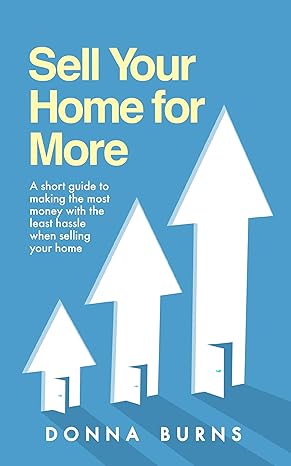
As a working real estate agent, I’ve seen my fair share of books claiming to help sellers, but Sell Your HOME for More by Donna Burns genuinely surprised me with how practical, accessible, and, most importantly, honest it is. The book is a crisp, straight-talking guide for homeowners who want to get top dollar with the least amount of stress. Burns lays out everything clearly from prepping a home, to pricing it right, to hiring the right agent. What I appreciated most is how she doesn’t sugarcoat the work involved, but she also shows sellers where the payoff comes in, emotionally and financially.
What stood out to me, and hit close to home, was the section on curb appeal and the psychological weight of first impressions. I can’t tell you how many deals start or die at the driveway. Burns lays it out with punchy examples and even stats, like how a new garage door can return 103% ROI. I’ve told clients the same thing, and here it is, in black and white. She compares selling a house to going on a first date, if the roof’s a mess or the door’s chipped, the buyer’s already halfway out. That part made me laugh because it’s so true. She also dives into pricing mistakes, reminding sellers not to let emotion steer the ship. Her breakdown of the “Endowment Effect” and how sellers overvalue their own homes, yeah, I’ve lived that argument too many times. Burns explains it in a way that’s simple but backed by real psychology.
While I admired her thoroughness, some parts, like the long lists of what not to do or her deep dive into interior design suggestions, felt repeated. That said, her tone is warm and witty, which makes those sections easier to get through. And when she talks about hiring the right agent? Let’s just say I might have underlined that whole chapter. Her tips on how to interview agents and the traps to avoid, like hiring a friend or choosing someone just because they’re cheap, are solid gold. I’ve been in the room with folks making exactly those mistakes.
Sell Your HOME for More is not just for people ready to list tomorrow. It’s for anyone thinking ahead, even by a year or two. I’d recommend it to every homeowner I work with who wants to understand the process and make informed, profitable choices. It’s a guide I wish more sellers read before our first meeting. It might save us both a lot of time and make them a whole lot more money.
Pages: 87 | ASIN : B0F4TBWRNH
Cultivate Good Money Habits

Tom Learns About Money follows a young boy who gets money for his birthday, and his older sister tries to teach him how to manage it. What was the inspiration for the setup of your story?
My children and our everyday life inspire the stories. They are based on true events, with a touch of fantasy added to enrich the tale. However, children seem to connect more easily when the message comes from a “friend,” someone their age. For this reason, the role of teacher or guide in the book is played by Tomi’s sister, Ellie.
What were some educational aspects that were important for you to include in this children’s book?
To be honest, my main goal was to demonstrate that financial literacy can be fun, playful, and extremely simple. Reading and math skills should not be obstacles to learning about money.
I believe it is important to cultivate good money habits and other useful practices from a very young age. When the characters in the book make mistakes and learn new skills to manage money wisely, it becomes easier for young readers to relate to them and look up to them as role models. I consider it crucial to focus on developing the right mindset rather than anything else.
What is interesting about this children’s book is it blends activities into the lessons seamlessly to help children understand the concepts without feeling like they are in school. How did you come up with the format and activities for this educational book?
This book was something I needed to teach my children about financial literacy. It is primarily designed as a tool for parents, making it easier for them to nurture good money habits in their children. Over time, it became clear that the book also works well as a study guide in schools.
The questions at the end of each chapter are designed to foster deeper engagement with the material and help families relate the lessons to their financial circumstances.
The “clouds” at the end of each chapter serve as gentle reminders of the key financial wisdom covered in that section. Recognizing that play is one of the most effective ways to learn and reinforce knowledge, I made it a priority to include games at the end of every chapter.
Is this the first book in the series? If so, when is the next book coming out, and what can your fans expect in the next story?
The book Tom Learns About Money is designed as a collection of ten different financial literacy stories. These stories cover the most essential topics in the field, offering a clear and comprehensive understanding of how the „money game“ is played in the real world.
It’s possible that in the future, Tom and Ellie will delve deeper into the world of investing, or we might uncover the story of how Ellie gained her financial knowledge. Time will tell!
Author Links: GoodReads | Rinn Tuttelberg | Facebook | Tom õpib rahamängu | Website | Amazon
Tom and the readers learn about the consequences of not knowing money, the importance of having three money jars, distinguishing between needs and wants, making wise shopping decisions, understanding borrowing, budgeting and investing, choosing a job, and being entrepreneurial. Tom gains this financial wisdom from his incredibly wise sister, Ellie.
The book contains 10 stories, each providing knowledge and lessons about money. Each story ends with discussion points, wisdom clouds, and a small game to reinforce the learning.
The book offers various tools for organising finances, making money, and spending the allowance. Most importantly, the content is presented in a fun and easy-to-understand manner for children.
Learn the real-life money game with joy and ease!
It is best suited for children aged 6–10 but is great for anyone who needs a reminder about the important things in life and wants to gain financial knowledge simply and playfully.
Tom Learns About Money
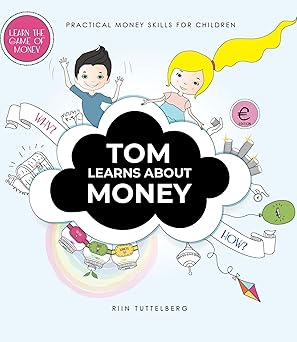
In Tom Learns About Money, Riin Tuttelberg introduces young readers to Tom and his older sister, Ellie, as they navigate essential money management lessons. Ellie, being the wiser and more experienced sibling, takes it upon herself to teach Tom practical skills about saving and spending. Tom, however, has other plans—every coin he gets seems destined for toys and candy. Ellie knows better. She understands that managing money wisely is key, especially when saving for bigger goals, and she’s determined to help Tom see the bigger picture. Ellie breaks down the concept of dividing money into three categories: “Donate,” “Save,” and “Spend.” While Tom initially resists, arguing that he should be free to spend his money as he wishes, Ellie patiently helps him grasp the importance of making thoughtful financial decisions. The story unfolds with charm and relatability, leading readers to wonder: Will Tom embrace Ellie’s approach and adopt better money habits?
This book is a valuable tool for introducing children to foundational financial concepts in a way that is both approachable and engaging. Few resources on this subject cater specifically to young audiences, and Tuttelberg deserves recognition for addressing this gap with creativity and purpose. The lessons are woven seamlessly into the narrative, avoiding any hint of being overly didactic. Instead, Ellie’s teaching moments feel natural and relatable, making it easy for children to connect with the story.
One standout feature of the book is its practicality. Ellie not only explains the basics of saving but also suggests ways for Tom and, by extension, young readers to earn money. Ideas like doing extra chores, saving Tooth Fairy money, or recycling bottles to both earn cash and help the environment are tangible actions that children can apply in their own lives. These examples ground the book’s lessons in real-world scenarios, encouraging children to see the value of effort and planning. Each chapter concludes with interactive elements designed to reinforce the lessons. The “Discuss and Ask” section prompts parents and children to explore the chapter’s concepts together, fostering understanding and dialogue. The “Remember” section highlights key takeaways, while “Solve the Puzzle” introduces fun activities that align with the chapter’s theme. These elements enhance the book’s educational value, making it an excellent resource for both parents and educators.
The illustrations by Triin Sarapuu are another highlight, complementing the text perfectly. Nearly every page features vibrant, engaging visuals of Ellie and Tom demonstrating the concepts discussed. These illustrations not only capture the reader’s attention but also help younger children better understand the ideas being presented.
Tom Learns About Money is a must-have resource for parents, guardians, and teachers aiming to equip children with the tools they need for financial literacy. The lessons are adaptable, growing with the child’s understanding and age. Riin Tuttelberg has created an exceptional guide that is both entertaining and practical, setting a strong foundation for lifelong money management skills.
Pages: 80 | ASIN : B0D6BVDHZL

All the Presidents’ Money: How the Men Who Governed America Governed Their Money

Megan Gorman’s All the Presidents’ Money: How the Men Who Governed America Governed Their Money is an engaging dive into the personal financial lives of America’s most powerful figures, its presidents. The book explores how these leaders managed their finances, often paralleling their successes and struggles with the economic realities faced by everyday Americans. Gorman brings us stories of debt, thrift, and lavish spending, creating a narrative that humanizes the men who governed the nation. Through these financial lenses, she provides an intimate look at their decision-making and personalities, showing how their financial behaviors mirrored their governance styles.
Gorman makes history relatable. For example, FDR’s ill-fated investment in a lobster business gives him a surprisingly human, almost vulnerable, quality. This mix of personal and fiscal details, like Lincoln scrimping to save for a larger home or JFK sipping beer to avoid New York’s pricy Stork Club, makes the presidents feel less like historical statues and more like everyday people with real financial anxieties. One of the most surprising sections was the focus on Warren Harding. Harding is often maligned for his political scandals, but Gorman does a fantastic job of reframing him as a savvy businessman. He managed to turn a $300 investment in a small-town newspaper into a multimillion-dollar empire. This balance of storytelling combines political and personal, adding layers to the presidents that we don’t often see. It was fascinating to read how Harding, despite being one of the lowest-ranked presidents historically, had financial foresight that rivals the best. Thomas Jefferson’s financial downfall paints a picture of a man whose love for wine and extravagant dinners outpaced his ability to save. His eventual financial ruin feels oddly relatable in today’s world of consumer debt. The recurring theme that struck me was how similar their financial problems were to ours. The pressures, bad investments, and outright mismanagement were not unique to their times, and Gorman’s exploration of these mishaps felt refreshing, almost comforting in a strange way.
All the Presidents’ Money: How the Men Who Governed America Governed Their Money is a must-read for anyone interested in the intersection of money, power, and history. It’s not just for history buffs; it’s for anyone who’s ever wondered if leaders have the same struggles as the rest of us. If you’re a fan of presidential history or financial stories, you’ll enjoy this book’s unique angle. It reminds us that even those at the top are only human, after all.
Pages: 372 | ASIN : B0D3T7TGMZ


 LITERARY TITAN