Blog Archives
First Time Homebuyer Gold


In First Time Homebuyer Gold, J. Baptiste offers a practical, plainspoken guide for readers preparing to buy their first home, walking them through the emotional and financial terrain of the process with an emphasis on preparation, restraint, and self-advocacy. The book moves from early questions about budget, location, and research into the mechanics of offers, purchase and sale agreements, deposits, appraisals, inspections, credit, debt-to-income ratios, insurance, property boundaries, and the final walk-through. What emerges is less a glossy dream-home manual than a protective companion, one intent on helping a nervous buyer understand what can go wrong, what must be verified, and where confidence matters most.
I appreciated the book’s steady insistence that a first-time buyer should not drift passively through the mortgage process. Baptiste repeatedly returns to the same empowering idea: read everything, ask questions, check the numbers, and trust your instincts when something feels off. The advice feels realistic, especially when paired with concrete examples such as the debt-to-income scenario where a buyer moves from a comfortable 17.3 percent DTI to a disqualifying 63.1 percent after buying furniture and an expensive car. Moments like that give the book its strongest pulse. They translate abstract financial warnings into something immediate and almost visceral, the sickening realization that one impulsive decision can endanger an entire closing.
The writing is direct, encouraging, and accessible. There are places where the prose leans on repetition and instruction, and some sections read more like a detailed checklist. I found a real warmth beneath that structure. Baptiste’s voice has the quality of someone sitting across the table from a first-time buyer and saying, with care but firmness, “slow down, look again, don’t let anyone rush you.” The discussions of “as-is, where-is” properties, underground oil tanks, flood insurance, HOA fees, and final walk-throughs carry a quiet urgency. I liked that the book doesn’t romanticize homeownership. Its ideas are grounded in caution, responsibility, and the dignity of being informed before making one of life’s largest commitments.
First Time Homebuyer Gold is a sincere and useful guide with a strong educational purpose and a compassionate heart. It’s best suited for first-time buyers who feel intimidated by mortgages, contracts, credit requirements, inspections, and closing-day responsibilities, especially readers who want explanations in everyday language rather than industry jargon. I’d recommend it to cautious planners, young buyers, and anyone who needs a confidence-building primer before entering the housing market, because the book’s greatest gift is its steady reminder that knowledge can turn fear into agency.
Pages: 72 | ASIN : B0C7DCBQ33

One for the Tenant

J. Baptiste’s One for the Tenant is a short and practical guide for people who are preparing to rent a home or apartment. It walks readers through the process step by step, starting with the simple question of why someone might rent, then moving into money, roommates, credit scores, rental searches, inspections, leases, moving costs, and eventually vacating the property. The book says early on, “This book will outline some key factors that you should be aware of prior to deciding to rent,” and that’s exactly what it does.
The strongest part of the book is its workbook-like structure. Baptiste doesn’t just explain what tenants should think about; she gives them tasks, questions, and blank lines where they can calculate debt, income, available funds, deposits, and other costs. That makes the book feel less like something you read once and more like something you’d keep nearby while preparing to apply for a rental.
The tone is straightforward and encouraging, which works well for the subject. Renting can feel intimidating for first-time tenants, especially when leases, deposits, credit reports, insurance, and inspections all start piling up. Baptiste keeps the information approachable by breaking each topic into small sections and reminding readers to ask questions, keep records, and confirm details in writing.
The book also does a good job connecting renting with broader financial habits. The savings section is especially useful because it gives a concrete example of how small, repeated deposits can add up over time. Baptiste’s advice, “Remember to save, no matter how small the amount you put aside each time,” fits the book’s overall message: being a tenant isn’t just about finding a place to live; it’s about learning how to protect yourself and manage responsibilities.
One for the Tenant is a helpful beginner’s guide for renters who want a clear picture of what to expect before, during, and after a lease. It’s simple, direct, and focused on practical action. Readers who are new to renting will likely appreciate how the book turns a complicated process into a series of manageable steps.
Pages: 39 | ASIN : B0CJ95L98P
Pursuit of the Impossible Dream

Pursuit of the Impossible Dream is part memoir, part success manual, and part manifesto about turning private ambition into public impact. Author Dee Brown frames the book around a life built in defiance of scarcity, doubt, racism, institutional betrayal, and plain old exhaustion, then organizes that life into lessons on dreaming big, education, resilience, branding, leadership, and building through partnership. What gives the book its spine is not just accomplishment, though there’s plenty of that, but the insistence that achievement means more when it widens the path for other people. The throughline is clear from the start, in the sections about Brown’s mother, his early hunger to outrun limits, and later the P3 philosophy of joining public purpose with private execution.
Brown writes like someone who has had to argue with despair in real time, and the chapter on his indictment and comeback gives the book a bruised, persuasive gravity that the more conventional motivational passages alone wouldn’t have carried. When he moves from the exhilaration of buying land, structuring deals, and becoming “the first” in room after room to the wreckage of prosecution, reputation loss, and rebuilding brick by brick, the book stops being merely instructive and becomes genuinely affecting. I also liked that his ambition is never presented as dainty or abstract. It lives in a mile race, he declared before he could run it, in a Geo Tracker he talked his way into as a teenager, in municipal projects, Navy contracts, community clinics, and the stubborn refusal to let someone else’s version of reality become his own.
The book is strongest when Brown drops the polished keynote cadence and lets the lived detail do the work. Now and then the prose leans on affirmation, but even that feels consistent with the genre he’s working in and the audience he wants to reach. The ideas themselves are not radically new. Dream bigger. Keep learning. Protect your name. Build partnerships. Give back. But what gives them weight here is the specificity of the life underneath them. I found the P3 philosophy interesting because it moves beyond self-help bromides into a concrete way of thinking about profit, infrastructure, and community benefit at the same time. And I appreciated the tension in the book between self-creation and obligation. Brown wants wealth, reach, and legacy, yes, but he also returns again and again to his mother’s sacrifice, to mentorship, to education as leverage, and to the moral burden of being first. That tension gives the book more texture than a standard victory lap.
I read Pursuit of the Impossible Dream as a hard-earned personal doctrine, delivered with conviction and real feeling. It’s earnest, sometimes blunt, often stirring, and at its best it carries the force of testimony rather than branding. I’d recommend it most to readers who are building something under pressure, especially entrepreneurs, first-generation strivers, professionals trying to recover from a serious setback, or anyone who wants a motivational book with scars still visible on the surface. This is a book for people who need to be reminded that ambition can be both expansive and useful, and that surviving the fall can become part of the architecture of the rise.
Pages: 127 | ASIN : B0GS4B8LCR

Sell Your HOME for More

As a working real estate agent, I’ve seen my fair share of books claiming to help sellers, but Sell Your HOME for More by Donna Burns genuinely surprised me with how practical, accessible, and, most importantly, honest it is. The book is a crisp, straight-talking guide for homeowners who want to get top dollar with the least amount of stress. Burns lays out everything clearly from prepping a home, to pricing it right, to hiring the right agent. What I appreciated most is how she doesn’t sugarcoat the work involved, but she also shows sellers where the payoff comes in, emotionally and financially.
What stood out to me, and hit close to home, was the section on curb appeal and the psychological weight of first impressions. I can’t tell you how many deals start or die at the driveway. Burns lays it out with punchy examples and even stats, like how a new garage door can return 103% ROI. I’ve told clients the same thing, and here it is, in black and white. She compares selling a house to going on a first date, if the roof’s a mess or the door’s chipped, the buyer’s already halfway out. That part made me laugh because it’s so true. She also dives into pricing mistakes, reminding sellers not to let emotion steer the ship. Her breakdown of the “Endowment Effect” and how sellers overvalue their own homes, yeah, I’ve lived that argument too many times. Burns explains it in a way that’s simple but backed by real psychology.
While I admired her thoroughness, some parts, like the long lists of what not to do or her deep dive into interior design suggestions, felt repeated. That said, her tone is warm and witty, which makes those sections easier to get through. And when she talks about hiring the right agent? Let’s just say I might have underlined that whole chapter. Her tips on how to interview agents and the traps to avoid, like hiring a friend or choosing someone just because they’re cheap, are solid gold. I’ve been in the room with folks making exactly those mistakes.
Sell Your HOME for More is not just for people ready to list tomorrow. It’s for anyone thinking ahead, even by a year or two. I’d recommend it to every homeowner I work with who wants to understand the process and make informed, profitable choices. It’s a guide I wish more sellers read before our first meeting. It might save us both a lot of time and make them a whole lot more money.
Pages: 87 | ASIN : B0F4TBWRNH
Rejection is Inevitable

For Such a Time as This chronicles your journey from a working-class life in Louisiana to multifamily real estate success, blending candid storytelling with faith-driven resilience and practical insights. Why was this an important book for you to write?
This book was written in real-time while I was negotiating and closing my first deal. It was born out of business journaling. As my dream was becoming a reality, I realized how much I had learned and the transformation that took place to bring me to this point. After watching countless RE Investors give up, I knew I had a story to tell and an obligation to share that nothing is beyond one’s grasp.
Can you share a specific moment when you almost gave up, and what kept you going?
The closest I got to giving up was when I terminated the contract for a 31-unit building and was able to back out without losing my earnest money deposit. The deal presented challenges that I wasn’t prepared for and I had gotten really close to losing investor money. What kept me going was the encouragement from my coach and reassurance that I made a smart, calculated decision. At first, I felt like a fraud, but my mentor showed me that in fact, I was acting like an experienced investor.
What advice would you give to someone facing rejection in their journey to success?
Rejection is inevitable, don’t shy away from it. Lean into it and take note of what went wrong and why. Plug the holes and try again as a better version than before.
How did your faith shape your approach to the challenges and risks of real estate investing?
From the moment I decided to get involved in REI, I chose to do it for the glory of God, and through the ups and downs, wins and failures, I knew God’s hand was on me. As long as I was doing His will, I knew success was inevitable in His perfect timing.
Author Links: GoodReads | Facebook | Website | Amazon
From the very first page, you’ll dive into the raw emotions of ambition and resilience, facing one crushing setback after another. Imagine losing a significant deposit and facing repeated loan denials that threatened to derail everything I’ve worked for. Yet, through each trial, I discovered new depths of determination and learned invaluable lessons in negotiation and perseverance.
This isn’t just a story about overcoming financial hurdles; it’s about the profound personal growth that comes from navigating life’s toughest challenges. It’s about faith, family, and the unwavering belief that setbacks are not the end but the beginning of something greater.
Join me on this journey as I share how I turned defeat into deeds, proving that with resilience and unwavering determination, even the most daunting obstacles can be transformed into stepping stones toward success.
Backstage Guide to Real Estate


In Backstage Guide to Real Estate, author Matt Picheny discusses real estate, investments, financial freedom, and life hurdles, among other exciting topics. The author is insightful and discusses crucial in-depth subjects that involve money and living a good life. The author starts his book by writing about his journey as an accidental investor, his trial and error methods, and how he got rich through real estate.
I appreciate the author for his openness and being genuine with his readers. Matt Picheny writes that it took him time to amass wealth from real estate. His journey was not simple, but through determination, he made it.
This book gives you a step-by-step guide on what to do, the suitable investments to pick, the path to take, and your relationship with money. I found the author’s discussions on the relationship with money profound. Matt Picheny does not conceal his experiences; he writes about his highs and lows and even invites the reader to his world.
Readers that enjoy rags to riches stories will love this book. Matt Picheny shares life lessons and encourages anyone on a self-making journey not to give up hope. I like the language he uses in ‘this book. It is unassuming. He uses few words, but the message gets home. When talking about his personal experiences, the author knows what to filter and what will benefit the reader.
I like that Matt Picheny owns his mistakes with grace and is willing to admit that he was wrong and correct his ways. The author is articulate and lays down his points skillfully. The financial concepts in the book are applicable, and the author’s objectivity is admirable.
Backstage Guide to Real Estate is for all ambitious people in business. The financial gems in this book are plenty. Some of the significant takes from this book include; teamwork, making the dream work, building a community of trust, Learning to pivot i.e., being flexible with change, and When you are sinking, don’t let go of the boat.
Pages: 270 | ASIN : B09MGJ39TW

Harvard Can’t Teach What You Learn from the Streets
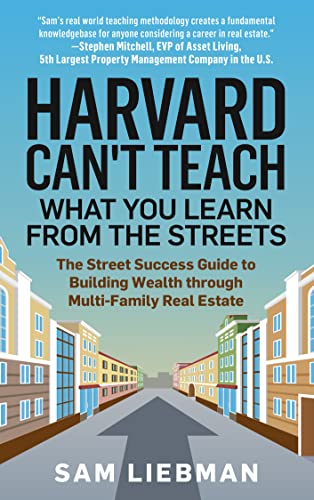
Samuel Liebman welcomes you to the world of real estate in an unorthodox but interesting way. His eye-opening book, Harvard Can’t Teach What You Learn from the Streets: The Street Success Guide to Building Wealth through Multi-Family Real Estate steps away from information traditionally taught in the classroom. Instead, it focuses on taking readers into the world and experiencing firsthand what goes into real estate. The author is raw, honest, and does not shy away from the hard topics. Sam Liebman is open with his life, career, engagements, and how he interacts with professionals in the industry.
The topics in the book are significant in today’s world. The chapters are distinctly titled, and the author makes it easy for the reader to follow his work. The subject matter is broken down into lessons that are accessible for all. The intent is to prevent novices from making the same mistakes others made. Once you read this thought-provoking book, you will understand just how passionate Sam Liebman is about Real Estate. There is no elitism in his text, no patronizing tone even when addressing those that are new, and no brushing off of issues affecting Real Estate.
Chapters include information on analytical concepts in the real estate business, basic methods to increase property value, and decreasing property’s operating expenses were my favorite. The author will give you a clear sight of just how things are and what needs to be done to benefit both clients and realtors.
I appreciate the author for talking about cap rates. The last chapter has everything you need to know about changes in cap rates, issues that lead to a low cap rate environment, cap rates in the 90s vs. 2000s, and much more. Readers will feel enlightened by the end of this educational book and will be able to make an impartial decision about properties.
Harvard Can’t Teach What You Learn from the Streets is an objective and informative look at the real estate market. Readers will learn practical, real-life information that can help them advance in this field.
Pages: 354 | ASIN : B09M7TZMT6
The “Urban Explorer” Subculture

Gordon MacKinney Author Interview
Follow Me Down is a thrilling novel that follows Lucas as he seeks justice for his family while uncovering corruption in the city’s largest real estate development company. What was your inspiration for this novel and the setup to the story?
The never-used subway beneath Cincinnati is real—built during the Depression but abandoned and sealed up. I lived for years near Cincinnati, both scared and intrigued by ghosts beneath my feet. When I later learned about the “urban explorer” subculture, I HAD to write the story.
One thing I really appreciated in this story was the authenticity of the relationships. What were some themes you wanted to capture while creating your characters?
Observant readers will notice one consistent theme for the four main characters: the plight of the underdog. Lucas, suppressed by corporate corruption. Alfred Blumenfeld, put down by cruel social mores, and Tricia Blumenfeld too, unwilling to play the part of the “good girl.” And Reuben, victimized for being short and Jewish. These characters deserved a voice and a shot at justice.
Lucas explores Cincinnati’s underground in this novel and the scenes were detailed and well developed. Why did you choose this setting for the novel?
In the story, protagonist Lucas reflects on a childhood experience descending voluntarily into a well on his grandfather’s farm. That scene resembles my own childhood “adventure.” What urban explorers do is just damn cool, risking capture and physical dangers in very cool places. Also, the noblest among these modern-day adventurers respect and revere the places they infiltrate. I admire them.
I find a problem in well-written novels, in that I always want there to be another book to keep the story going. Is there a second book planned?
Thank you! While I’m finished with Lucas for now, two new stories are underway. The first fictionalizes a true 1980’s battle between an auto manufacturer and an underdog labor union. The second, set in small-town USA, explores the plight of another underdog, a young woman unjustly blamed for a deadly accident.
Author Links: GoodReads | Twitter | Facebook | Website
![Follow Me Down by [MacKinney, Gordon]](https://i0.wp.com/images-na.ssl-images-amazon.com/images/I/51mpGewBYTL.jpg?w=604&ssl=1)
Urban explorer Lucas Tremaine should buckle down and complete his Masters in Architecture, but the past torments him. Six years earlier, Drax Enterprises’ negligence killed his father and left his mother strung out on Valium. Lucas longs to punish the corrupt behemoth of Cincinnati real estate development, but what can one man do?
“Plenty,” says old Mr. Blumenfeld, Lucas’s boss and a former photojournalist with too many secrets. Evidence to bury Drax exists, he claims, but to find it, Lucas must breach the city’s welded-shut subway system. Lucas takes the plunge, aided by his best friend and moral compass, Reuben Klein.
The deeper the duo infiltrates the dangerous underground, the further back they turn the clock. They learn that Drax’s corruption intertwined with fascism’s rise in Germany. That campfire tales of a subway crypt were true. That no one can be trusted, not even Lucas’s boss.



