Blog Archives
Not Yet Your Time
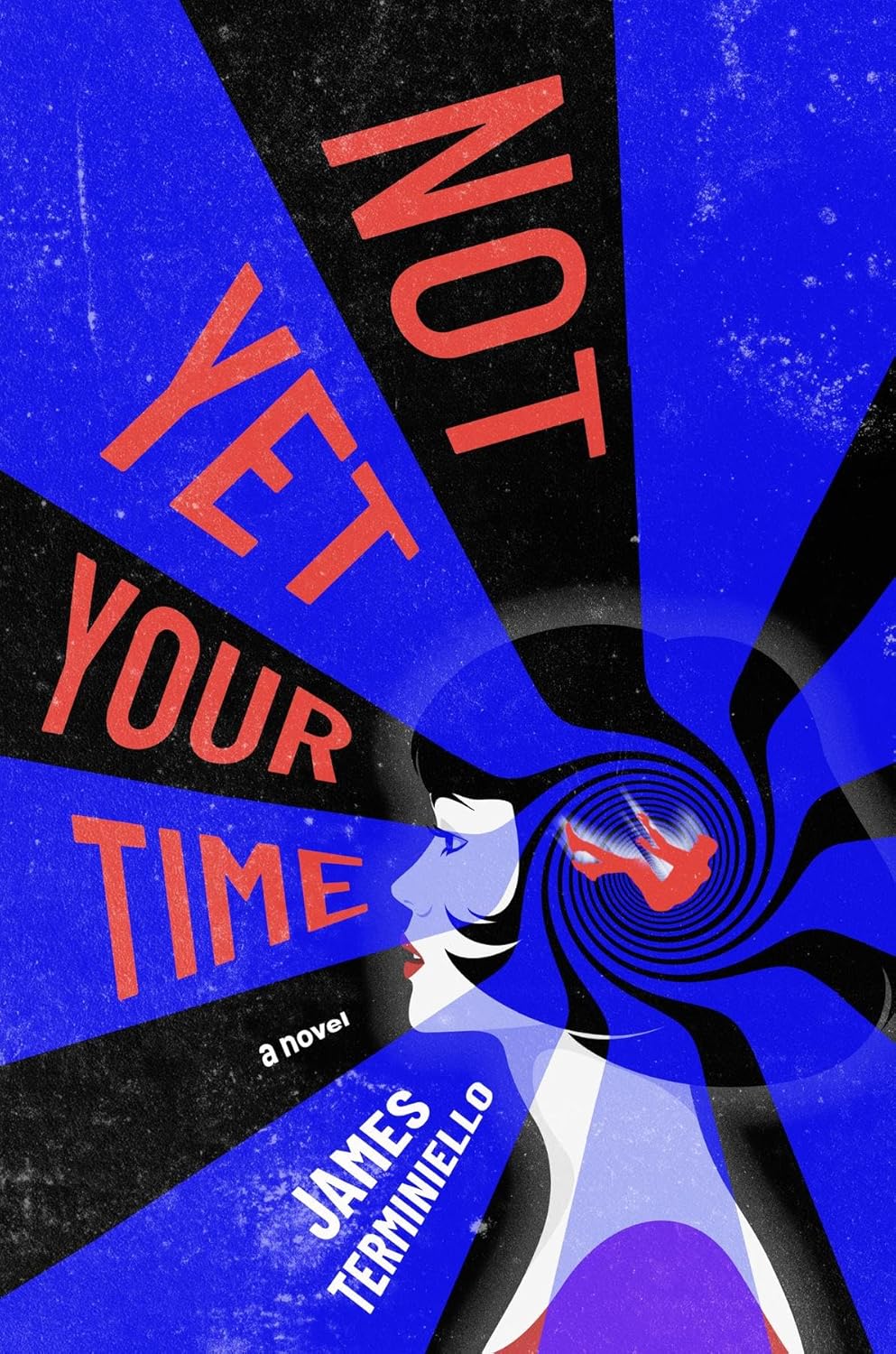

James Terminiello’s Not Yet Your Time is a strange, sharp, and funny novel that refuses to play by any ordinary rules. The story follows Titus Carneades, a self-deprecating office worker whose mundane New York life derails after a near-death encounter with a mysterious woman he dubs the “Benevolent Pumpkin.” What begins as a simple act of rescue spins into an absurd web of government agents, terrorist dance troupes, cultish believers, and philosophical riddles about time, fate, and faith. The tone flips easily between satire and suspense, and the plot lurches forward with a cinematic kind of chaos that somehow always lands on its feet.
Reading this book felt like falling down a rabbit hole built by Kafka and decorated by Mel Brooks. The dialogue snaps with dry wit, and the narrative voice never takes itself too seriously. Terminiello clearly enjoys skewering bureaucracy, politics, and the media, and he does it with a mix of intelligence and goofiness that’s both refreshing and exhausting. Some scenes stretch on like fever dreams full of bureaucratic jargon and absurd acronyms, but that’s part of the joke. Beneath the humor, though, there’s a weird tenderness. Titus, for all his bumbling and sarcasm, starts to feel like an everyman trying to locate meaning in a world so absurd it can only be laughed at. The book made me laugh, then think, then laugh again because I realized how close the nonsense hits to home.
The writing style took me a while to settle into. The sentences wander, full of digressions and witty detours, but there’s a rhythm to it, like jazz. The story moves in bursts, then slows to reflect on life’s ironies, then speeds up again in a flurry of chaos. I liked how Terminiello uses humor to talk about big ideas without sounding preachy. The world he builds feels surreal but eerily plausible, and that combination stuck with me. Sometimes I wanted a breath, a quiet moment without a punchline. But then again, that’s life in Titus’s head, too much, too fast, and too real to pause.
In the end, Not Yet Your Time is an absurdist romp with a beating human heart underneath all the noise. I’d recommend it to readers who enjoy satire with teeth, or anyone who’s ever felt trapped in the grind and wondered if the universe is just messing with them for sport. It’s witty, weird, and surprisingly soulful. If you like your fiction bold, funny, and a little philosophical, this one’s worth your time.
Pages: 186 | ASIN : B0FMHB61S5

Will Humans Become Obsolete?

100 Years to Extinction follows two sisters and their cousin who are caught in a world of chaos where pandemics, gun violence, climate change, and political division all overlap, and they make a pact to do something to save humanity’s future.
I found the science in the novel to be well-developed and engaging. What kind of research did you conduct to ensure you got it right?
My research, combined my knowledge, books on space exploration and AI, help from a fellow physicist on speed of light space travel, advice from a physician on medical issues, use of Google search for articles and the Google AI function, and advice from a NASA expert on the magnetic field for Mars.
What were some themes that were important for you to explore in this book?
The main theme is a world threatened by the Tyranny of Technology and dysfunctional politics. My three young Gen Z protagonists, Liz, Aster, and Milo, want a better world for everyone. The subthemes are the threats from global warming, nuclear security, unchecked AI, and misused genetic engineering. The cover image is a future that my protagonists fantasize: Genetic engineering creates a super-humanoid species that wipes out humans only to be eliminated by robots. All with the background of melting glaciers.
I find a problem in well-written stories, in that I always want there to be another book to keep the story going. Is there a second book planned?
Yes. My three protagonists, a little older now, are living in what is called the AI Singularity, predicted to occur in 2045. It is at this point that Artificial Intelligence becomes as intelligent and as powerful as humans. What will occur then? Will humans become obsolete? My three protagonists use their skills, intelligence and experience to ensure that humans and AI live together in harmony for mutual benefit.
My new novel, 12 YEARS TO AI SINGULARITY,follows Liz, Aster and Milo as they cope with the new reality. It is coming out in the spring of 2026.
Author Links: X | Facebook | Website
When EMT Liz Arvad is shot while saving a life, her recovery sparks a deeper awakening. Maybe the world isn’t just chaotic, it’s unraveling. Alongside her genius sister, Aster, and politically charged cousin, Milo, Liz makes a vow—do something, anything, to help save humanity. It starts with a promise in a sunlit room, and becomes a mission that could change everything.
In 100 Years to Extinction, physicist and award-winning STEM author Peter Solomon, Ph.D., blends heart-pounding fiction with scientific foresight. Inspired by Hawking’s dire warning that humans may face extinction by 2117, this gripping novel explores the runaway threats we can no longer ignore: climate collapse, pandemics, war, gene editing, AI, disinformation, and more.
But this story isn’t just about what’s going wrong—it’s about what we can still do. Backed by decades of experience founding clean-tech companies, leading multimillion-dollar government research, and writing 300+ scientific papers, Solomon brings unmatched clarity and urgency to the question: Can we still save ourselves?
With characters who feel heartbreakingly real and science that hits close to home, 100 Years to Extinction is both a wake-up call and a rallying cry. It dares readers to imagine a better future … and to fight for it.
Will you join the Earthling Tribe?
Pick up your copy today—and take the first step toward making Earth great again… before it’s too late.
About the Author: Blending heart-pounding fiction with clear, accessible science, physicist and award-winning STEM author Peter Solomon, PhD, explores the runaway threats we can no longer ignore—climate collapse, pandemics, nuclear war, genetic engineering, artificial intelligence, disinformation, and more. Solomon offers unmatched clarity on the question: Can we still save ourselves, and how might we do it?
The Whistle of Revenge


K.D. Sherrinford’s The Whistle of Revenge is a fast-paced, emotionally rich continuation of the Sherlock Holmes and Irene Adler mysteries. Set in early 20th-century Milan, the book blends crime, romance, and vengeance with theatrical flair. Holmes and Irene, now married and living under assumed identities, find their world shattered when their son Nicco is kidnapped by an old nemesis from The Hound of the Baskervilles. From that point, the story spirals into a game of deceit and endurance as love, loyalty, and intellect collide.
The first few chapters hooked me right away. The prologue, where Irene describes her marriage to Sherlock, is both tender and revealing, not the cold, calculating Holmes we usually see, but a man capable of deep affection. The Venice scenes in Chapter One are lush and cinematic; I could almost feel the sun bouncing off the Adriatic as Irene and Sherlock share champagne and Beethoven under the stars. However, just as I began to settle into the tenderness of their romance, the narrative abruptly shifts, Nicco’s kidnapping strikes with the force of a sudden, devastating blow. The abrupt shift from idyllic calm to dread mirrors real life’s unpredictability, and I loved that Sherrinford didn’t rush that emotional whiplash.
What stands out most is that the book is told from five points of view: Sherlock, Irene, Nicco, Inspector Romano, and Jack Stapleton. Irene’s chapters pulse with maternal anguish and strength, while Nicco’s chapters, especially his terrifying imprisonment in the “church prison,” showcase an eerie intelligence beyond his years. One scene that stuck with me is when Nicco deciphers a way to slip clues into a ransom letter using his father’s methods. That mix of fear and logic, hope and despair, feels so authentic. The writing isn’t just descriptive; it’s visceral. I could practically hear the echo of his footsteps in that cold, stone chamber. Sherrinford really leans into sensory detail, the smell of damp walls, the flicker of candlelight, giving even the darkest moments a strange beauty.
At times, the prose tends toward the ornate, with Irene’s introspective passages occasionally drifting, particularly during the evocative flashbacks to La Scala and Venice. Yet this quality contributes to the novel’s distinctive allure; the work does not aspire to be a restrained detective tale but rather a lush, romantic thriller with operatic grandeur, where even the antagonists possess a certain dramatic elegance. One particularly striking scene occurs when Irene recalls the abductor’s mask, likening it to “the devil himself,” a moment rendered with such vivid intensity that it sent a genuine chill through me. The melodrama works because it fits the story’s world: a place of music, love, and betrayal, where every feeling is turned up to eleven.
By the end, when Holmes and Irene close in on their son’s captors, I was genuinely tense. There’s a mix of detective intrigue and raw emotion that reminded me why this pairing, Holmes and Adler, works so well under Sherrinford’s pen. It’s less about deduction and more about devotion, about two fiercely intelligent people grappling with love and revenge.
The Whistle of Revenge is a rich, passionate ride. It’s not just for fans of Sherlock Holmes, it’s for anyone who loves mysteries with heart, romance with bite, and storytelling that sweeps you away. If you like historical thrillers wrapped in lush description and emotional depth, this one’s for you.
Pages: 335 | ISBN : 978-1487442514

Endless Fiction

I, Monster follows a boy born into poverty, abuse, and neglect who is shaped by these experiences into a predator that aims to not only silence those in the concentration camp, but also erase their existence. What was the inspiration for the setup of your story?
I had done extensive research on the Nazi SS and their rise to power for a nonfiction book when I was still a professor. I had always wanted to know how could a person commit such acts of terror, document that terror, and still function as a human being? That is when I got the idea of following some of the prominent SS figures and charting their course. I had found that a number of them were outcasts, bullied, and considered on the fringe socially.
So, I used my extensive psychology background and created Hans, who grew up in the post-World War 1 era and the punitive Treaty of Versailles, where hardship, deep resentment of the West, poverty, and political instability thrived. That was the fuel; now all you needed was a spark. Enter the National Socialist German Workers Party, a.k.a. the Nazis, and you have Hans.
What are some things that you find interesting about the human condition that you think make for great fiction?
I believe that the human condition is a source of endless fiction because life is full of contradictions, struggles, and the intense desire to do or have something. Yet, at the same time, much of life is routine—we work, eat meals, sleep, and get up to do it all over again. Fiction allows me to reveal the strangeness that lurks beneath the ordinary. This offers me the ability to remind readers that life is stranger and more fragile than it appears.
What were some themes that were important for you to explore in this book?
It was probably the overarching theme that embodies the “monster” within an otherwise rational man. The novel makes the unsettling point that “monstrosity” is not an external force—it already exists within the human condition, just waiting for the right circumstances and choices to call it forth.
What is the next book that you are working on, and when can your fans expect it to be out?
My next book is actually a love story, Framed in Love, that is steeped in fantasy and explores the psychological condition of “How far will you go, and what are you willing to do to keep that love alive?” In a world where love can be bound by spell and sacrifice, a devoted lover discovers that devotion has no bottom, and is preserving love worth losing everything that makes a person human?
Author Links: GoodReads | Amazon
To the world, he was just a bureaucrat in a coat too neat, boots too polished. But behind those cold eyes was a man obsessed with silence. Where others saw genocide, he saw design. And now, decades later, as investigators unearth the ruins and whispers resurface, the question echoes louder than ever: What happens when the monster is the one who writes the ending—and signs no name?
A Dark, Morally Ambiguous Story

The Grotesque follows three people, each broken in their own ways, who are haunted by childhood trauma and seeking to escape it and control their own futures. What was the inspiration for the setup of your story?
My original concept was to tell a story about three people who each saw the world in very different ways due to their individual experiences. I envisioned a scene of three people sitting together in a café that sat across from a park. In the park would be a father, yelling corrections out to his young son as they tossed a football back and forth. One of the three in the café might perceive a wonderful father-son moment, something they never had as a child. The second might feel disgusted or angered by the sight of a father berating his son for not being good enough. And the third might feel heartbroken by the sight of the young boy, nearly in tears, trying and failing to please his dad, too afraid to tell his father that he clearly doesn’t enjoy football. The exact same sight, but three different perspectives based solely on individual experience.
Of course, this would be a boring scene to write at length, let alone read. But I loved the idea behind it. And the most interesting aspect, to me, was the exploration of how three such people might have very similar backgrounds but react in extremely different ways due to slight differences in their original perspectives. And trauma seemed a fitting place to start since it would create such a larger, more intricate reaction across their entire lives.
I felt that your book delivers the drama so well that it flirts with the grimdark genre. Was it your intention to give the story a darker tone?
I love the grimdark comparison! Yes – absolutely, my intent was always for this to be a dark, morally ambiguous story. The first image I had for this story was the little boy hiding beneath the bed, which became a recurring theme throughout the story. Things were never going to lighten up much from there.
My characters were affected by childhood trauma—physical and/or emotional. So, while what happened to each of them was definitively wrong, their responses to it would always be much less black and white. They’re each responding to the darkness that shaped them, all while living in a society that never stepped up to help them when they needed it most, so they’re naturally going to be skeptical of the world. While they’re dependent on their own survival instincts, they also feel a responsibility to save others from suffering their same fates, but lack the role models to guide them. So it’s fitting that the story would involve characters who do seemingly horrible things, but for reasons they believe are morally good. And some of their decisions will accordingly go very wrong.
What were some themes that were important for you to explore in this book?
There are several themes that I hope will emerge from The Grotesque. Family is a big one, both actual and found. Within that, there’s also the theme of self-reliance and how it may be in conflict with our connection to the world, specifically in seeking help when we need it most. These also impact the ideas of perceived guilt and assumed responsibility.
The biggest theme, though, to me, is the question of how we see ourselves in the world. The person we feel we could be versus the person we think we actually are in everyday life versus the person others see. This gets played out a lot in the Frankenstein comparisons within the novel. And it encompasses the entire story as a question of perspective itself and how it shapes the ways we might interpret the world, ourselves, and each other.
What were some goals you set for yourself as a writer in this book?
There were several variations of this story. In converting the original screenplay version into a novel, I wanted two things: to get it on paper, and to explore all the tiny details of every scene – details that you don’t add to a screenplay. That first novel version was a tad boring and overwritten. It was also light on emotion, which was the point of telling the story in the first place.
For the rewrite, I wanted to find a way to dig deeper into the minds of my characters and to really see the world through their eyes. In other words, I wanted to learn to become a much better writer than I’d previously been. I also wanted to ‘find my voice as a writer.’ You hear that phrase a lot when reading books on writing, and I’d never fully understood it before, until I really started to narrow down what it was that I loved about certain other writers.
I also wanted to free myself from caring how my writing might sit with a general crowd. Of course, I want people to like, even love my book, but it doesn’t need to be everyone. I know my writing style won’t be for everyone. And that’s okay. I needed to do what was right for me and for the story I had to tell.
Author Links: GoodReads | BlueSky | Facebook | Website | Amazon
It was their house. He had no right. No right at all. But that man took what he wanted, just to cap off that sad little boy’s already unspeakable childhood. And for the next thirteen years, that pathetic useless child would cower and hide, hallucinate and obsess. Thirteen years. Until the past started circling back.
This Halloween, one way or another, things are going to change.
Because the focus of that boy’s obsession—that desperate, failing dancer—has an agenda of her own: to escape his watchful eye and rid herself of the volatile boyfriend who takes anything he wants. To live the dream she’s worked so hard to achieve.
For Katrina, Jared, and Michael, every dream for the future is forever chained to the traumas of their childhoods. But it all ends when they become integral parts of a deadly masquerade to absolve the guilt-ridden secrets of the past.
No more living in the shadows. It’s time to spotlight the ugly truth. In a world where the innocent are broken, beaten, and betrayed, everything is a dance. Everyone is the audience.
It’s time to make it or break it all.
Whispers of Luck

Sophie Bartow’s Whispers of Luck blends small-town charm with a swirl of mystery, romance, and destiny. Set in Swan Harbor, the story follows Shay O’Reilly, a new oral surgeon who arrives in town after feeling an unshakable pull to leave her old life behind, and Justin Simpson, an orthopedic surgeon haunted by a tragic loss. Their paths collide in ways that feel both inevitable and magical, weaving together a tale that balances grief, hope, and the strange energy of a town that seems to whisper its own secrets. The book carries readers through moments of heartache, intimacy, and wonder, while hinting at something larger than the people who live in Swan Harbor.
Reading it, I felt a mix of warmth and curiosity. Bartow’s writing is smooth and easy to sink into. The characters are written with real affection, and you can tell the author knows this town inside and out. Shay’s arrival is painted with just the right amount of unease and hope, and Justin’s struggle with loss is raw and relatable. What really stuck with me was how the supernatural elements never fully overshadowed the human story. The “nudges” and cryptic scrolls add a layer of intrigue, but the true heart is in how people heal, connect, and risk themselves for love again. I’ll admit there were moments where I rolled my eyes at the intensity of their attraction, but then I’d find myself grinning because the chemistry felt so alive.
Some of the dialogue carried an extra layer of sentiment, and a few of the mystical moments left me a little puzzled. Yet I couldn’t deny that I was pulled along. I cared about whether Shay and Justin would open themselves up or let their pasts keep them shut down. And the setting itself almost felt like a character. Swan Harbor is drawn with immersive detail. There’s a comfort in that, like being let in on a secret world that’s both ordinary and enchanted.
Whispers of Luck is a heartfelt start to the Mystical Waters Canyon series. It’s a book that would be perfect for anyone who loves small-town romances, especially those with a hint of magic threaded through real-life struggles. If you want a story that mixes hospital corridors with whispered prophecies, that gives you both heartbreak and swoony embraces, this is the kind of book you’ll curl up with on a quiet evening.
Pages: 391 | ASIN : B0DY87G8D6
Swimming with Manatees
When I opened Swimming with Manatees, I expected a quiet story about nature and maybe a bit of reflection. What I found instead was a crime novel tangled in saltwater and shadows. At its heart, the book follows the mysterious death of April Seagram, discovered floating near manatees in Crystal Cove. Detectives Ava Martinez and Dan Riley dig into the case, which quickly grows beyond a single drowning. Propeller wounds, bruises, biker gangs, pharmaceutical secrets, and corporate greed all mix with the rhythm of a small Florida town. What starts with a body in the bay unfolds into a twisting investigation that pulls the detectives deeper into corruption and loss.
The writing is lush and alive, especially in the opening scenes with the water and wildlife. Bennett knows how to paint a picture that feels both beautiful and uneasy, the kind that makes your stomach tighten even when the sun is still shining. The dialogue between Ava and Dan crackles with wit and tension, and their partnership feels natural without falling into clichés. At the same time, the violence lands heavily. The murders are described with a blunt honesty that refuses to look away, which left me unsettled in the best possible way. It felt raw, relatable, and grounded, even when the plot veered into conspiracies about corporations and hidden labs.
Some chapters gave me whiplash, shifting from gorgeous descriptions of manatees drifting peacefully to gritty crime-scene details that almost felt like a sharp contrast. There were stretches where Ava’s inner thoughts circled the same worries. Still, I found myself forgiving those lulls because the characters kept pulling me back in. Ava’s grit, Dan’s warmth, Ben’s quiet steadiness, these weren’t just plot drivers, they felt like people I wanted to root for, even when tragedy hit hard.
Swimming with Manatees is more than a murder mystery. It’s a book about the thin line between beauty and brutality, about the way fragile places and fragile people can be scarred and still carry on. This book feels like a blend of Where the Crawdads Sing and Gone Girl, with the lush atmosphere of small-town nature writing wrapped tightly around the sharp edges of a murder mystery. I’d recommend it to readers who enjoy crime fiction layered with atmosphere and heart, especially those who like a story that isn’t afraid to linger in grief and still find something worth protecting.
Pages: 378
The Last Ghost
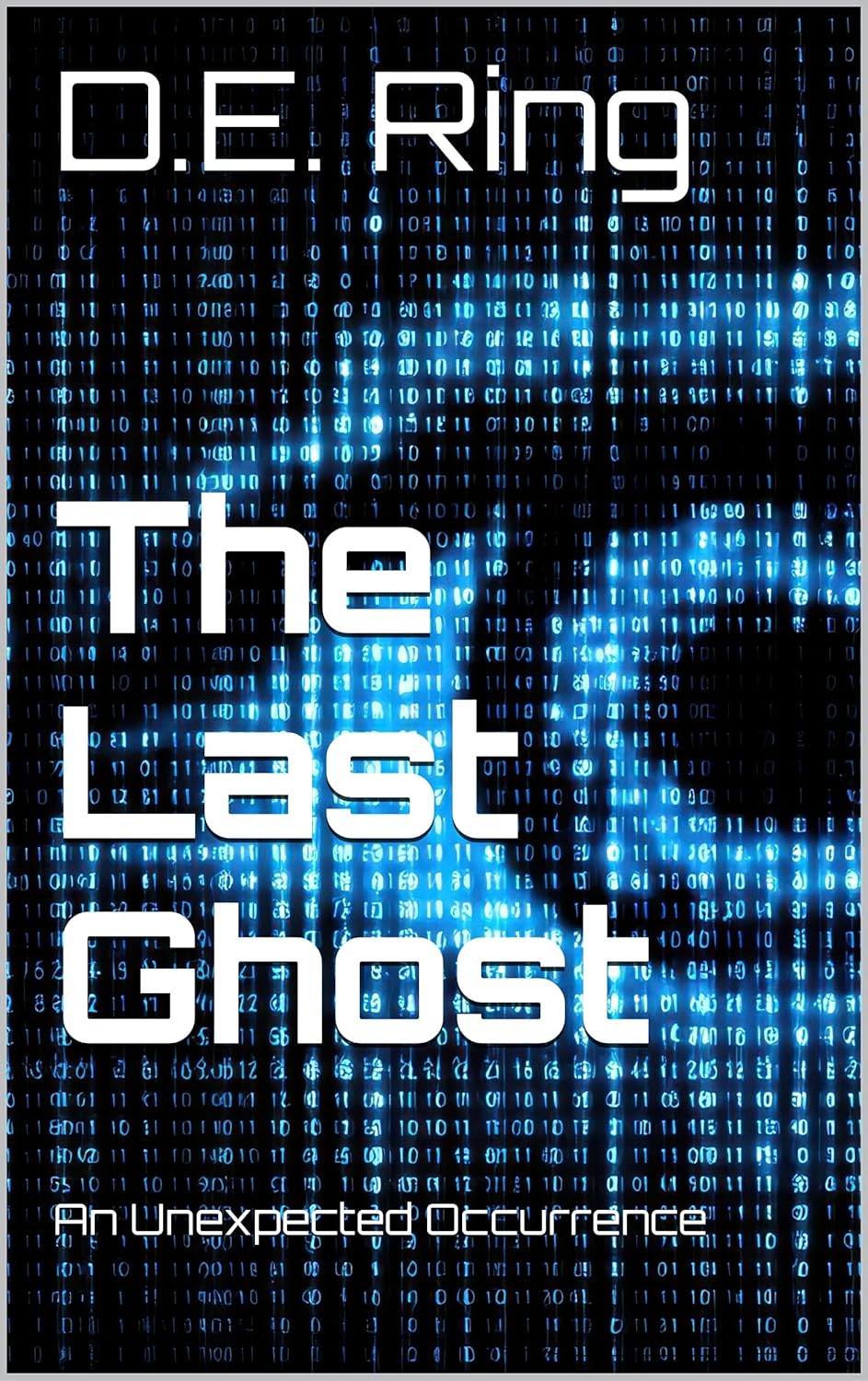
The Last Ghost tells the story of Joshua Stewart, a boy who loses his parents in a tragic fire in Thailand and is raised by his aging grandparents in Toronto. What begins as a quiet, tender domestic story about loss and love evolves into a moving reflection on family, morality, and the strange intersection between faith and logic. It’s a coming-of-age story shaped by grief, education, and a world that seems to change faster than anyone can understand. The book carries Joshua from childhood through adolescence, from the safety of his grandfather’s theological certainty to the uncertainty of global chaos and financial collapse. In the background are ghosts, literal and figurative, the memories and moral lessons that cling to life long after the living are gone.
The prose is elegant but warm, never showy. Author D.E. Ring writes dialogue that feels alive, filled with pauses and silences that say more than the words themselves. The pacing is slow in the best way. I found myself caring deeply for Caleb and Marianne, those kind, weary grandparents trying to raise a boy while the modern world races past them. Joshua’s curiosity, his moral sense, and his grief are rendered so gently that when emotion hits, it hits hard. I caught myself tearing up more than once. The way Ring balances tragedy with moments of simple beauty, a walk by the lake, a child’s question about God, is fantastic. It’s literary without being pretentious, and it touches something primal about family and forgiveness.
That said, this isn’t a light read. The novel asks you to think. Some chapters stretch with patient detail about conversation or setting. The story builds a world that feels lived in. So much so that when the supernatural edges in, it feels believable. Ring doesn’t write jump-scares or gothic gloom. His ghosts come through in memory, regret, and the quiet ways people haunt one another. I loved that restraint. It’s the kind of ghost story that leaves you thinking rather than trembling. Still, I found myself haunted anyway, not by spirits, but by love, loss, and how time slips away no matter how much we hold on.
I’d recommend The Last Ghost to readers who love literary fiction with heart, people who appreciate family sagas, subtle hauntings, and moral reflection. It’s for those who like their ghost stories human, not horrific. I’d hand it to anyone who believes that real hauntings come from memory, conscience, and the ache of unfinished love.
Pages: 291 | ASIN : B0FS1W4T5Q


 LITERARY TITAN