Blog Archives
Courage Is Contagious

Dusty Roads is the biography of Barbara “Dusty” Roads, a flight attendant who challenged the airline industry’s sexist standards in the 1950s and ’60s and became one of the first female lobbyists fighting for women and against gender discrimination. Why was this an important book for you to write?
While a few books on the women’s movement mentioned one or two of Dusty’s major achievements, they rarely captured the depth or accuracy her story deserved. One book dedicated an entire chapter to Dusty and her colleague and mentor, Nancy Collins. Still, even that left out the most important part: Dusty made it her lifelong mission to fight for her fellow flight attendants. I couldn’t believe no one had suggested writing her biography to preserve her legacy. When I asked if I could write it, she said, “I’ve just been waiting for someone to ask!”
Dusty was fearless. She confronted union leaders, challenged pay disparities between men and women, and fought the airline industry’s discriminatory rules about age, marriage, weight, and appearance. Her persistence helped overturn many regulations that had held women back in the 50s and 60s and beyond. Whether negotiating contracts or lobbying Congress members, she never stopped advocating for her colleagues.
I began writing this book to honor Dusty’s accomplishments for both female and male flight attendants and to make sure her legacy isn’t forgotten. I knew I had a compelling story the moment I saw Dusty thank Gloria Steinem, and she replied, “Oh no, Dusty, I should be thanking you. You’re the one who started it all.” Dusty cried afterward, finally understanding the true significance of her impact. At that moment, I knew I had to write this book. I was the only one who knew her well enough to collect all her stories, and I didn’t want this part of airline and American history to disappear.
What were some ideas that were important for you to share in this book?
One key idea I wanted to communicate is that persistence really matters. Dusty’s story shows how one determined woman can challenge deep-seated misogyny and transform an entire industry. I also wanted to help readers see that real progress often starts with ordinary people refusing to accept injustice—and that lasting change requires both women and men standing together. I hope Dusty’s legacy inspires others to keep moving forward because the fight for equality continues.
Did you find anything in your research of this story that surprised you?
Yes! One of the most profound discoveries was learning about Sonia Pressman Fuentes, the first female legal counsel at the Equal Employment Opportunity Commission after Title VII passed. Through JSTOR, I uncovered her articles describing the misogyny she witnessed at the EEOC, including the delays in addressing discrimination complaints from flight attendants. The most startling fact was that nearly one-third of all complaints in the EEOC’s first year came from flight attendants—yet most were ignored by the male commissioners, except for Aileen Hernandez, the only woman and the first Black commissioner. That neglect is what prompted Betty Friedan to propose creating the National Organization for Women, an organization I joined in 1970.
When I found Sonia’s phone number, she generously shared her story with me. She knew that two flight attendants had filed the first EEOC complaint but didn’t realize it was Dusty and Jean. Sonia and Dusty had never met, yet both had spent their careers fighting similar injustices from different angles—one through law and the other through labor. One Christmas, I brought them together on a Zoom call, breaking their “six degrees of separation.” Watching them finally meet was a deeply moving reminder of how many women worked, often unknowingly, in parallel to change history.
What is one thing that you hope readers take away from Dusty Roads?
I hope readers finish this book feeling confident in their own strength and understanding that knowing their rights is the first step in fighting injustice. Dusty showed me that progress isn’t automatic. It moves in cycles, and each generation must learn what those before them endured and achieved so we never forget how far we’ve come or how much further we still need to go.
She understood that the true goal has always been fairness, especially in a world that too often relegates women to second-class status. Her legacy is a reminder that courage is contagious and that every act of standing up for equality lights the way for others.
Author Links: X | Facebook | Instagram | LinkedIn | Website
If you are concerned about the impact of politics on women …
Dusty Roads will be a wake-up call for you.
Meet Dusty Roads, one of the few brave voices way out in the wilderness, where women worked in the world of the 1950s and 60s, when it was mandatory for stewardesses to:
Wear girdles and submit to flick checks to ensure they did.
Maintain weight standards that would be shocking and unrealistic today.
Be willing to be paid less than men in the same job.
Phrases like sex discriminationand women’s rights hadn’t yet entered the nation’s vocabulary.
The captivating story of Barbara “Dusty” Roads sets the stage for an eye-opening read as Dusty begins her fight in 1953 against American Airlines’ employment policies, including firing stewardesses if they married or reached the age of 32. Airline leadership believed stewardesses had to be perpetually young, single, and attractive to entice traveling businessmen to buy tickets. Other airlines followed American’s lead.
Incensed, Dusty vowed to change the policies they were forced to work under. As the most influential voice in her union and one of the first female lobbyists in Washington, DC, Dusty quickly learned she was fighting for all women and against national gender discrimination. Then, in 1965, she filed the first-ever U.S. Equal Employment Opportunity Commission discrimination complaint on behalf of a colleague who was about to be fired for turning 32, a year after Title VII and the Civil Rights Act were passed. Her actions helped to pave the way for workplace equality for both men and women in the airline industry and nationwide.
“I should be thanking you for everything you’ve done. You’re the one who started it all!” -Gloria Steinem.
Author Elaine Rock drew on extensive interviews with Dusty Roads to bring her inspiring persistence alive for readers. Elaine is a former history teacher, technology executive, and women’s rights advocate. She writes about little-known but heroic women and men whose perseverance and resilience helped shape history, making them trailblazers. To view the color print versions of photographs and other bonus materials from her book on her website, please go to the link on the “Contact” page at ElaineRock.com.
Every Mile Matters: Turning Triathlon Training Into Cancer Triumph


Every Mile Matters is the story of Dr. Jeffrey L. Reynolds. He’s an Ironman, a real endurance nut. Then, life throws him a massive curveball. He gets cancer. He beats it. Then, amazingly, he gets cancer again. This second one is a real monster, Stage 3B colorectal cancer. The book is his first-person account of this journey. He uses his entire mindset from triathlon training, all that grit and discipline, to fight his way through the diagnosis, the chemo, and the radiation. It’s a story about turning an athlete’s focus inward to battle a disease.
I found the writing incredibly raw. Reynolds doesn’t shy away from the ugly parts. We’re talking about the parts that make most guys squirm. Biopsies. Scared thoughts about his penis not working. A deep, real fear of needing a colostomy bag. He just puts it all on the table. This honesty is the book’s biggest strength. It feels real. You are not reading a medical textbook. You are in the room with a guy who is scared but is digging deep to find his strength. The core idea, linking triathlon to cancer survival, could have been corny, but he makes it work. It’s not just a metaphor; it’s the actual toolkit he used.
What I really liked, though, was the emotional side. The book is about more than just “embracing the suck” of chemo. It’s about his relationships. His partner, Jillian, is a rock. His talks with his kids are heartbreaking and real. He even explores the bigger picture, like the chapter on health disparities. He knows he’s lucky. He has good insurance, a great job, and a support system. He’s smart enough to know that many people fighting the same battle don’t have those things. This self-awareness makes his story so much more powerful. It’s not just a “me” story. It’s a “we” story. He’s vulnerable, and that vulnerability is his superpower.
I was genuinely moved by this book. It’s a story of incredible resilience, but it’s told in a way that feels relatable and grounded. It’s not a preachy self-help book. It’s a story of survival, one mile at a time. I would absolutely recommend this, and not just for athletes. If you or someone you love is facing a tough diagnosis, this book is a must-read. It’s a roadmap for finding strength you didn’t know you had. Honestly, even if you’re just looking for a story about the human spirit’s ability to endure, this one is a winner.
Pages: 264 | ASIN : B0FJPGGWWD

The Outer Game of Leadership: How to Unite and Inspire Teams in Times of Challenge & Crisis

Paul O’Neill’s The Outer Game of Leadership is an insightful exploration of how leaders can create safety, unity, and resilience within teams under pressure. The book dives into neuroscience, psychology, and the art of human connection to show that true leadership is less about control and more about atmosphere. Through concepts like “safety-embedded structures” and “safety priming,” O’Neill teaches readers how to build trust not just through policy but through presence. He breaks leadership down into something tangible yet relatable, blending science and empathy to reveal how group dynamics shape performance far more than strategy ever could.
Reading this book felt like being coached in real time. O’Neill’s writing is calm but firm, rich with moments that make you stop and reflect on how you show up in a room. I found myself nodding often, especially when he described how leaders unknowingly drain energy from a team just by tightening their tone or missing a cue. His examples, stories of tense meetings, defensive managers, and silent teams, hit close to home. There’s a raw honesty in how he writes about leadership failure, and that vulnerability gives the book its strength. He doesn’t just explain what great leaders do; he exposes the tiny missteps that make teams shut down. It’s practical without being mechanical, reflective without drifting into cliché.
What I loved most was O’Neill’s respect for the emotional side of work. He brings warmth into the science of leadership, reminding us that trust lives “in the space between people.” I felt his compassion on every page. At times the depth of theory, especially around neuroception and behavioural systems, can feel heavy. I had to slow down and reread sections to absorb the meaning. But those pauses were worth it. His voice is steady and thoughtful, like someone who has lived through what he teaches. The book feels less like a manual and more like a mirror for anyone willing to look honestly at their impact on others.
I’d recommend The Outer Game of Leadership to anyone who leads people, managers, teachers, coaches, or even parents. It’s not a quick-fix kind of book. It’s for those who care about depth, who want to understand why connection matters more than control. If you’ve ever walked into a room and felt something “off” without knowing why, this book will teach you to see it, name it, and gently set it right.
Pages: 274 | ASIN: 1764063937
The Joy Molecule

Larry Kesslin’s The Joy Molecule is part memoir, part guide, and part heartfelt meditation on what it means to live a connected, meaningful life. The book takes readers through Kesslin’s own journey, from a young, success-driven engineer at GE to a man transformed by his encounters with people who taught him that joy has nothing to do with circumstance. Through chapters like “Circumstance Does Not Define You” and “Redirecting Capital,” Kesslin shares stories of real people who changed the way he sees purpose, self-worth, and happiness. His central idea is simple but powerful: joy isn’t found in chasing achievements, but in knowing what you are, who you are, and why you are here.
Reading this book felt like sitting down with a friend who’s done a lot of soul-searching and just wants to tell you what he’s learned. The writing is straightforward and conversational, which makes the ideas easy to grasp, even when they’re deep. Sometimes I found myself smiling, other times tearing up a little. Kesslin doesn’t try to impress you with big words or fancy theories. He tells stories, some messy, some beautiful, and he’s honest about his mistakes. The story of Armstrong, the young Ugandan man chasing his dream to be a pilot, hit me hardest. It’s told with warmth and humility, and it makes you see how giving can ripple across lives in unexpected ways.
The lessons about joy, ego, and self-awareness circle back on themselves, but the sincerity of the writing keeps it from dragging. I could tell Kesslin really means every word. His tone feels genuine, even vulnerable. There’s something refreshing about an author who doesn’t pretend to have it all figured out. The book’s rhythm, switching between reflection, story, and takeaway, made it easy to read in bursts but also meaningful if you sit with it for a while. It’s not a manual. It’s a lived experience, told with a big heart.
I’d recommend The Joy Molecule to anyone feeling restless or stuck, especially people who’ve done well on paper but still feel like something’s missing. It’s perfect for readers who crave inspiration but can’t stand clichés. Kesslin’s message is hopeful without being cheesy: joy isn’t out there waiting for you. It’s already in you, and it grows when you share it.
Pages: 116 | ASIN: B0FMY2B7FM
Unveiled, A Journey to Soul Realization
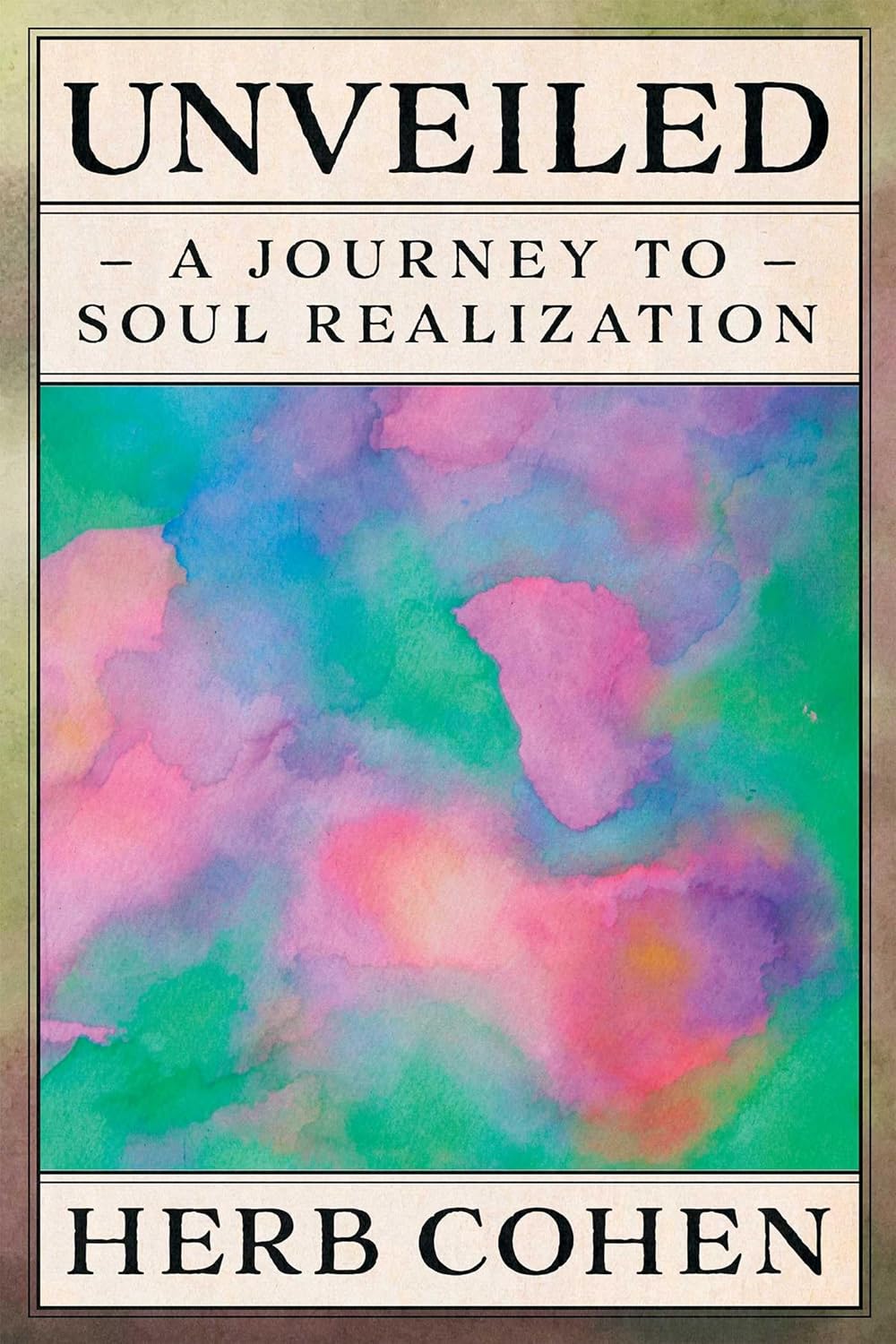

Herb Cohen’s Unveiled: A Journey to Soul Realization is part memoir, part spiritual roadmap, and part therapeutic manual. It weaves together personal stories, neuroscience, energy work, and metaphysical exploration into one cohesive, soul-centered narrative. The book begins with Cohen’s background as a trauma therapist and gradually unfolds into a layered study of consciousness, ego, and the soul. Through detailed examples from his practice, he connects emotional pain and trauma to spiritual evolution. He invites readers to step beyond intellectual understanding and instead experience transformation through awareness, energy, and love. The book blends science and spirituality, often questioning what we believe to be possible while presenting exercises for emotional healing and personal awakening.
The writing has a rhythm that’s equal parts therapy session and spiritual transmission. Cohen’s approach is brave, at times raw, and occasionally unconventional. He doesn’t shy away from merging clinical insight with mystical belief, and that tension between grounded psychology and ethereal spirituality makes the book compelling. I found myself pulled in by his metaphors, especially his “rancid food” analogy for emotional pain. It’s simple and unforgettable. The science sections can get dense, yet they serve a purpose. They anchor the spiritual claims in something familiar, and that balance keeps the material from floating too far into abstraction.
What struck me most, though, was that Cohen’s idea of “unveiling” isn’t only about peeling back old layers over time, but about reaching a single, electrifying moment when the soul is revealed in its fullness. Through his Flow technique and compassionate guidance, he describes how the shift happens all at once, the veil lifts, and in that instant, everything feels wide open, limitless, and vividly alive. It’s not a slow climb toward realization but a sudden, breathtaking recognition of who we truly are. That moment, he says, is available to anyone willing to surrender and allow Flow to move through them, and reading his account made me feel the rush of that possibility.
The book ranges from trauma recovery to near-death experiences, from energy work to quantum consciousness. At times, it reads more like a collection of awakenings. Cohen’s voice carries humility and warmth, and his belief in human potential feels genuine. The way he talks about awareness, about simply noticing, resonated with me. There’s a sense of relief in his words, a reminder that maybe we don’t need to fix ourselves as much as we need to see ourselves clearly.
I’d recommend this book to anyone standing at the edge of their own transformation, therapists, healers, or anyone who’s tired of looping through the same pain and wants to see meaning in it. It’s not light reading. It asks you to think, to feel, and to let go of what you think you know. But if you’re ready for that kind of journey, Unveiled offers a heartfelt and practical guide to becoming whole.
Pages: 158 | ASIN : B0FJYMJFY8
Identity Crisis: Who Am I, Really?
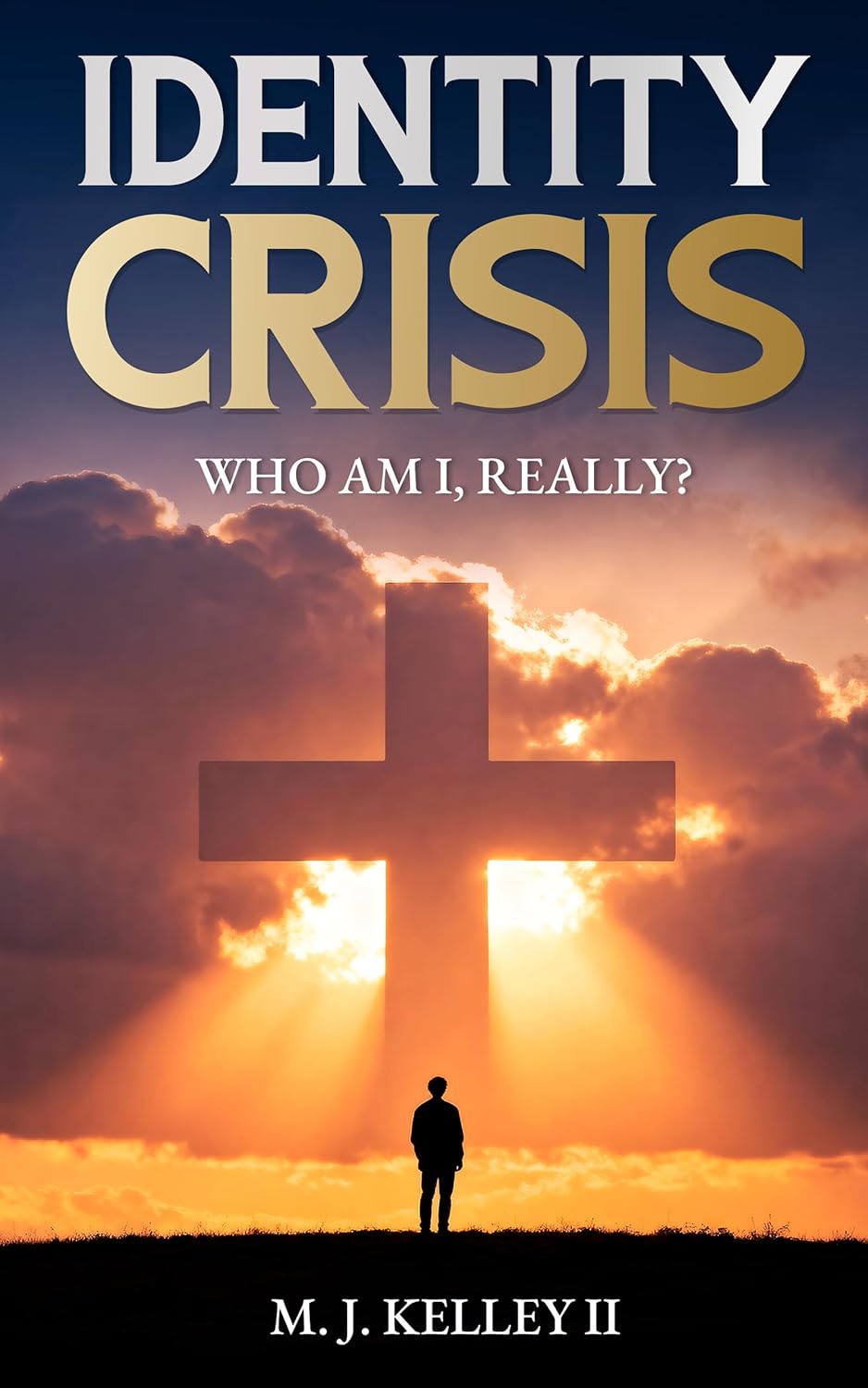
Identity Crisis: Who Am I, Really? offers a striking blend of memoir and theology, tracing one man’s journey from abandonment and anger to spiritual renewal. The author begins with a vivid recollection of his upbringing in foster care, marked by instability, neglect, and emotional wounds. His story unfolds through a lens of deep honesty, moving from survival and self-reliance to the gradual recognition of divine purpose. What begins as a personal account of loss transforms into a broader reflection on how individuals construct their identities in an age of distraction, performance, and comparison.
The opening chapter establishes both the emotional and philosophical weight of the work. When the author describes “the names I had been called were weapons,” the reader is immediately drawn into his internal conflict between strength and brokenness. His career as a police officer becomes a metaphor for control, an outward display of stability masking an inward fragility. This contrast anchors the book’s central theme: that human worth cannot be secured through achievement, image, or reputation. The author’s eventual encounter with faith reframes identity not as something earned, but as something received.
Beyond the personal narrative, the book engages thoughtfully with cultural issues. In “The Crisis of Identity,” the author critiques the social and psychological consequences of the digital age, arguing that social media’s obsession with validation has eroded authentic self-worth. His discussion of the “comparison trap” is particularly compelling, weaving together research on narcissism and mental health with theological reflection. The prose maintains clarity even when exploring complex ideas, inviting readers to think critically about how technology shapes the self.
One of the most powerful sections, “When Labels Become Limiting,” exposes the damage caused by societal categorization and contrasts it with the Christian understanding of identity as being “created in the image of God.” The author’s exploration of spiritual adoption, our becoming children of God with a new name and inheritance, provides the emotional and theological resolution of the narrative. This theme of restoration lends the book both its moral force and its hope.
Identity Crisis is deeply personal yet widely relevant. It speaks to anyone wrestling with self-worth, purpose, or belonging in a world that prizes performance over authenticity. The author’s courage in revisiting his past, combined with his grounded biblical insight, makes the work both reflective and redemptive. Readers seeking a thoughtful, faith-centered examination of identity will find this book profoundly moving and intellectually satisfying.
Pages: 241 | ASIN : B0G1NK5V76
Words for a Wounded World: Scriptural Poems of Truth and Hope to Awaken, Convict, and Heal
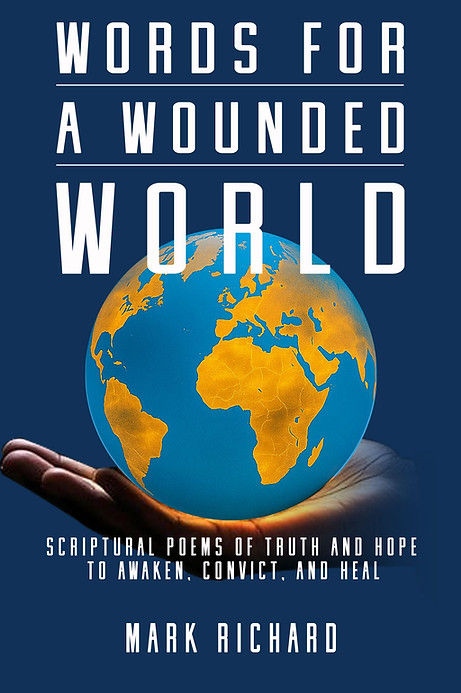
Mark Richard’s Words for a Wounded World is a striking collection of scriptural poetry that bridges devotion and art. Structured in four parts, it journeys from the foundations of faith to the trials of endurance, calling readers toward reflection, repentance, and renewal. Each poem is rooted deeply in Scripture and followed by supporting verses, reflection questions, and prayer prompts, turning what might have been a simple poetry book into a comprehensive devotional experience.
The opening poem, “From Fig Leaves to White Robes,” immediately reveals Richard’s strength as both a poet and teacher. His retelling of humanity’s fall and redemption through Christ captures the tension between sin and grace with vivid simplicity. The combination of biblical narrative and lyrical rhythm sets the tone for the rest of the collection, earnest, reverent, and unashamedly focused on God’s mercy.
Throughout the book, Richard writes with pastoral sincerity. Many of the poems were originally written for individuals he ministered to, and that intimacy infuses each line with authenticity. His words are direct and urgent, reflecting his desire to reach those caught in spiritual struggle. At times, the tone feels intense, more prophetic than poetic, but it remains grounded in compassion rather than condemnation.
Several poems stand out for their emotional resonance. “Think Again, Let Christ Define” is particularly compelling in its treatment of identity and mental renewal, reminding readers that transformation begins in the mind: “Your thoughts, dear soul, are not benign—They shape your heart, your path, your mind.” Similarly, “Believe in Prayer” offers a tender reflection on faith’s persistence, inviting readers to approach God with both confidence and humility.
By the end, it becomes clear that Words for a Wounded World is not meant for hurried reading. Its structure, poem, Scripture, reflection, and journaling space encourage contemplation and engagement. It is ideal for those seeking a devotional guide that combines poetic beauty with spiritual depth.
This book will particularly resonate with readers who appreciate Scripture-centered writing and desire to deepen their personal walk with God. Thoughtful, sincere, and rooted in faith, Richard’s work reminds us that even in a wounded world, the Word still heals.
Pages: 135 | ISBN : 13: 978-1-63746-564-6
Beginner’s Guide to Growing Wealth and Investing: Planting Seeds & Growing Riches

The book lays out a clear journey for beginners who want to understand wealth building from the ground up. It uses a gardening metaphor to explain how money grows slowly through planning, patience, and consistent action, beginning with mindset shifts and ending with long-term habits that shape a legacy. The guide repeatedly emphasizes becoming the kind of person who can invest, not just learning about investing itself, and frames the reader as the CIO of their own financial life, responsible for planting and tending the seeds of their future. It walks through core financial concepts, tools, behavioral pitfalls, and emotional management, finishing with a message that wealth is cultivated over time and that every decision contributes to a family’s long-term future.
I found the writing warm, steady, and surprisingly comforting. The gardening metaphor is everywhere, and while metaphors can get tired fast, this one works. It made the book feel patient and grounded, almost like someone was sitting with me at a kitchen table, showing me how to repot a plant. The message that wealth grows “underground before it blossoms” hit me in a personal way because it captures how slow progress can feel when you’re just starting out. At times, the tone is motivational, almost like a pep talk, and I caught myself nodding along anyway. The author seems to know that readers might come in with fear or shame, and the writing gently pushes against that with encouragement.
I also appreciated how direct the book is about mindset. The idea that every dollar is an employee and that you are responsible for directing them made the whole wealth-building process feel more intentional and less mysterious. I liked the sections that broke down risk, fees, time, and inflation in simple terms. They avoided jargon and kept everything practical. Some sections felt a bit repetitive since the book often circles back to the same big ideas, but I didn’t mind too much because the repetition made the advice sink in. The emotional guidance in later chapters feels honest and helpful, especially the reminders to stay grounded during uncertainty.
Beginner’s Guide to Growing Wealth and Investing impressed me with its mix of heart and straightforward teaching. I’d recommend it to anyone who feels overwhelmed by money or stuck in old habits. It works well for readers who want a simple path, a friendly voice, and a sense of direction rather than complex charts or intimidating math. If someone wants a book that eases them into investing and gives them a little hope while teaching them the basics, this is a great place to start.
Pages: 170 | ASIN: B0FXTY8PJX


 LITERARY TITAN